
Report Feature
Human Pathogen Testing Service Market Trends and Forecast
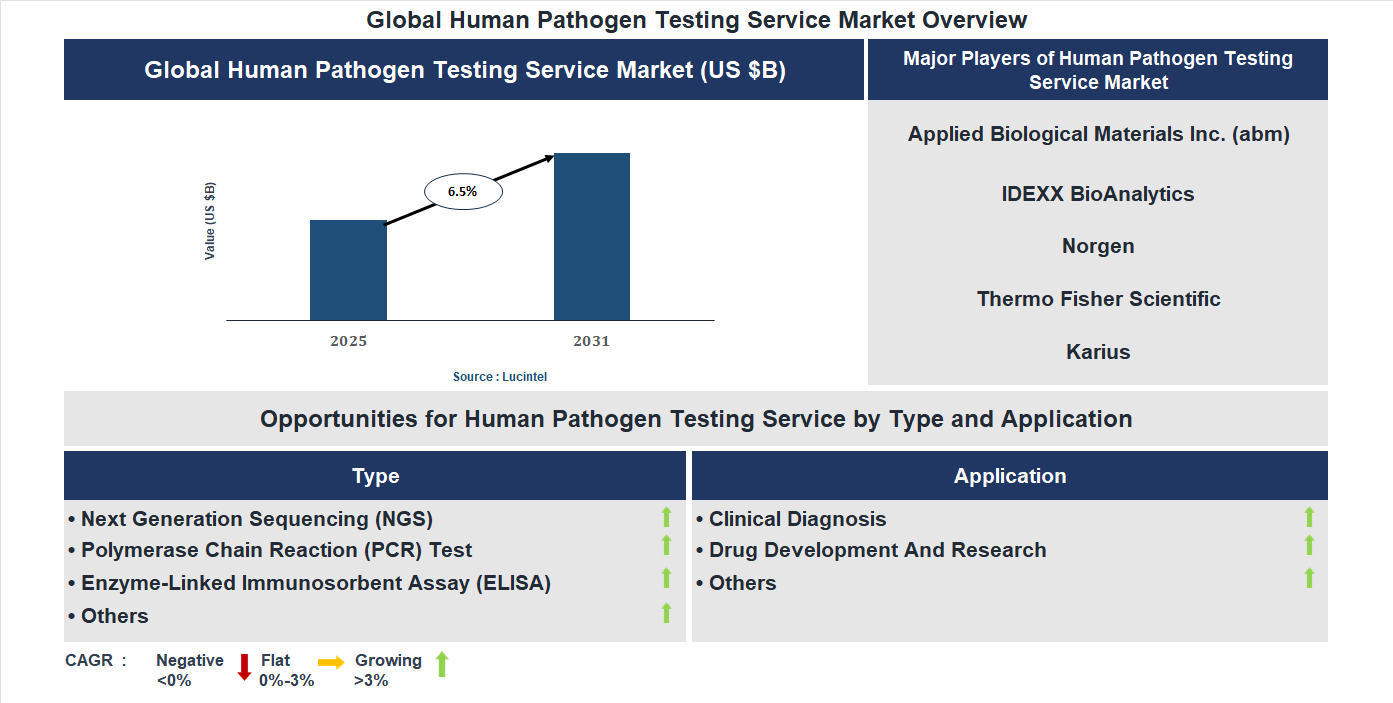
The future of the global human pathogen testing service market looks promising with opportunities in the clinical diagnosis and drug development & research markets. The global human pathogen testing service market is expected to grow with a CAGR of 6.5% from 2025 to 2031. The major drivers for this market are the rising demand from pharmaceutical & biotechnology industry, the growing awareness about foodborne & waterborne pathogen, and the increasing integration of automation & high-throughput technology.• Lucintel forecasts that, within the type category, polymerase chain reaction (pcr) test is expected to witness the highest growth over the forecast period.
• Within the application category, clinical diagnosis is expected to witness higher growth.
• In terms of region, APAC is expected to witness the highest growth over the forecast period. Gain valuable insights for your business decisions with our comprehensive 150+ page report. Sample figures with some insights are shown below.
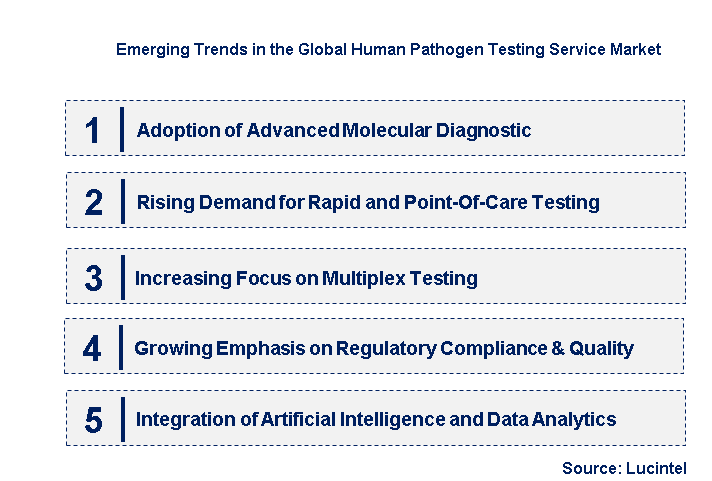
Emerging Trends in the Human Pathogen Testing Service Market
The human pathogen testing service market is experiencing rapid evolution driven by technological advancements, increasing health concerns, and regulatory changes. As global health threats such as pandemics and infectious diseases rise, the demand for accurate, rapid, and cost-effective testing solutions is intensifying. Market players are adopting innovative approaches to improve testing efficiency, expand service offerings, and meet stringent regulatory standards. These developments are not only transforming the competitive landscape but also enhancing public health responses worldwide. The following key trends highlight the major shifts shaping this markets future trajectory.• Adoption of Advanced Molecular Diagnostics: The market is increasingly integrating next-generation sequencing (NGS), PCR, and other molecular diagnostics. These technologies offer higher sensitivity, specificity, and faster turnaround times, enabling early detection of pathogens. This shift improves disease management, outbreak control, and patient outcomes. As costs decrease and technology becomes more accessible, laboratories and healthcare providers are adopting these methods widely, leading to more accurate and comprehensive pathogen detection.
• Rising Demand for Rapid and Point-of-Care Testing: There is a growing preference for rapid testing solutions that can be deployed at the point of care. These tests provide immediate results, facilitating timely clinical decisions and infection control measures. Innovations in portable testing devices and lateral flow assays are making it easier to conduct on-site testing in hospitals, clinics, and remote locations. This trend enhances disease surveillance, reduces transmission, and improves patient management, especially during outbreaks.
• Increasing Focus on Multiplex Testing: Multiplex testing allows simultaneous detection of multiple pathogens from a single sample, saving time and resources. The market is witnessing a surge in multiplex panels for respiratory, gastrointestinal, and blood-borne infections. This approach improves diagnostic accuracy, aids in differential diagnosis, and streamlines laboratory workflows. The expansion of multiplex assays is driven by the need for comprehensive testing in complex clinical scenarios and outbreak investigations.
• Growing Emphasis on Regulatory Compliance & Quality: Stringent regulatory frameworks and quality standards are shaping the market landscape. Companies are investing in validation, accreditation, and quality assurance processes to meet international guidelines. This focus ensures test reliability, enhances market credibility, and facilitates global expansion. Regulatory compliance also fosters trust among healthcare providers and patients, driving demand for certified testing services.
• Integration of Artificial Intelligence and Data Analytics: The incorporation of AI and advanced data analytics is revolutionizing pathogen testing. These tools enable pattern recognition, predictive modeling, and data management, leading to improved diagnostic accuracy and outbreak prediction. AI-driven insights assist laboratories in optimizing workflows, reducing errors, and making informed decisions. This technological integration is expected to significantly enhance the efficiency and effectiveness of pathogen testing services. In summary, these emerging trends are collectively reshaping the human pathogen testing service market by improving diagnostic capabilities, accelerating testing processes, and ensuring higher standards of quality and reliability. They are enabling healthcare systems to respond more effectively to infectious disease threats, ultimately contributing to better public health outcomes worldwide.
Recent Development in the Human Pathogen Testing Service Market
The human pathogen testing service market has experienced significant growth driven by increasing global health concerns, technological advancements, and stringent regulatory requirements. As infectious diseases become more prevalent and awareness about public health rises, demand for accurate and rapid testing services has surged. Innovations in testing methodologies, along with expanded applications across healthcare, food safety, and environmental sectors, are shaping the market landscape. Additionally, the COVID-19 pandemic has accelerated the adoption of advanced testing solutions, highlighting the importance of early detection and containment. These developments collectively influence market dynamics, creating new opportunities and challenges for industry stakeholders.• Technological Advancements: The introduction of molecular diagnostics and rapid testing methods has improved detection accuracy and turnaround times, enabling quicker responses to outbreaks and infections, thus expanding market reach and customer trust.
• Regulatory Enhancements: Stricter government regulations and quality standards have driven laboratories to adopt more reliable testing protocols, increasing demand for certified testing services and fostering market growth.
• Expansion into Emerging Markets: Growing healthcare infrastructure and awareness in developing regions have opened new avenues for service providers, boosting market penetration and revenue streams.
• COVID-19 Impact: The pandemic significantly increased demand for pathogen testing services, especially for SARS-CoV-2, leading to innovations in testing kits and increased investments in testing infrastructure.
• Integration of Digital Technologies: Adoption of data management systems and AI-driven analytics has improved testing efficiency, data accuracy, and reporting capabilities, enhancing overall service quality and customer satisfaction. These developments are collectively transforming the human pathogen testing service market by increasing efficiency, expanding reach, and ensuring higher standards of accuracy and reliability, ultimately supporting better public health outcomes.
Strategic Growth Opportunities in the Human Pathogen Testing Service Market
The human pathogen testing service market is experiencing rapid growth driven by increasing health concerns, regulatory requirements, and technological advancements. As the demand for accurate and timely detection of human pathogens rises across various sectors such as healthcare, food safety, and environmental monitoring, key growth opportunities are emerging. These opportunities are shaping the future landscape of pathogen testing services, enabling providers to expand their offerings and improve detection capabilities. Companies that capitalize on these trends can gain a competitive edge, meet evolving customer needs, and contribute to public health safety. The following are five key growth opportunities across different applications within this market.• Healthcare Diagnostics: The rising prevalence of infectious diseases and the need for early diagnosis are driving demand for advanced pathogen testing services in hospitals and clinics. Improved sensitivity and rapid turnaround times enable better patient management and containment of outbreaks, boosting market growth.
• Food Safety Testing: Increasing foodborne illness outbreaks and stringent regulatory standards are prompting food producers to adopt comprehensive pathogen testing. This reduces contamination risks, enhances consumer confidence, and supports compliance, thereby expanding the market.
• Environmental Monitoring: Growing awareness of environmental pathogens in water, soil, and air necessitates regular testing. This helps prevent disease transmission, supports environmental safety initiatives, and opens new avenues for testing service providers.
• Pharmaceutical & Biotech Applications: The pharmaceutical industry relies on pathogen testing for product safety and research purposes. Growing investments in biopharmaceuticals and vaccines are fueling demand for specialized testing services, impacting market expansion.
• Public Health Surveillance: Governments and health agencies are increasingly utilizing pathogen testing for disease surveillance and outbreak management. This proactive approach enhances public health responses and sustains market growth. In summary, these growth opportunities across healthcare, food safety, environmental, pharmaceutical, and public health applications are significantly impacting the human pathogen testing service market. They drive innovation, expand service offerings, and improve detection accuracy, ultimately contributing to better health outcomes and market resilience.
Human Pathogen Testing Service Market Driver and Challenges
The human pathogen testing service market is influenced by a variety of technological, economic, and regulatory factors. Advances in diagnostic technologies, increasing healthcare awareness, and stringent regulatory standards are shaping the market landscape. Economic growth in emerging regions and rising investments in healthcare infrastructure further propel market expansion. However, challenges such as high testing costs, regulatory complexities, and the need for skilled personnel pose significant hurdles. Understanding these drivers and challenges is essential for stakeholders to navigate the evolving environment effectively and capitalize on growth opportunities while addressing potential risks. The factors responsible for driving the human pathogen testing service market include:-• Technological Advancements: The development of rapid, accurate, and cost-effective testing methods, such as molecular diagnostics and next-generation sequencing, has revolutionized pathogen detection. These innovations enable early diagnosis, improve patient outcomes, and reduce healthcare costs. As technology continues to evolve, the market benefits from increased testing efficiency and broader application scopes, including emerging infectious diseases. The integration of artificial intelligence and automation further enhances testing accuracy and throughput, making pathogen testing more accessible and reliable.
• Rising Incidence of Infectious Diseases: The global increase in infectious diseases such as COVID-19, influenza, HIV/AIDS, and tuberculosis has significantly boosted demand for pathogen testing services. Governments and healthcare providers prioritize early detection and containment, leading to increased testing volumes. The growing prevalence of antimicrobial-resistant pathogens also necessitates comprehensive testing to guide appropriate treatment strategies. This rising disease burden directly correlates with increased market demand for reliable and rapid testing services.
• Growing Healthcare Expenditure: Increased healthcare spending worldwide, especially in emerging economies, supports the expansion of diagnostic services, including pathogen testing. Investments in healthcare infrastructure, laboratory facilities, and skilled personnel facilitate the delivery of advanced testing services. Additionally, insurance coverage expansion and government funding initiatives reduce patient out-of-pocket costs, encouraging more frequent testing. This economic support accelerates market growth by making testing services more accessible and widespread.
• Regulatory and Reimbursement Policies: Stringent regulatory standards ensure the safety, accuracy, and reliability of pathogen testing services, fostering trust among healthcare providers and patients. Favorable reimbursement policies and government incentives further promote the adoption of advanced testing methods. Conversely, complex approval processes and inconsistent reimbursement frameworks can hinder market growth. Navigating these regulatory landscapes is crucial for market players to introduce new tests and expand their reach effectively.
• Increasing Focus on Preventive Healthcare: The shift towards preventive healthcare emphasizes early detection and management of infectious diseases, driving demand for pathogen testing services. Public health campaigns and awareness programs encourage routine screening, especially for high-risk populations. This proactive approach reduces disease transmission and healthcare costs, supporting market expansion. The integration of pathogen testing into wellness and screening programs underscores its importance in modern healthcare strategies. The challenges facing this Market include:-
• High Testing Costs: Advanced diagnostic technologies often involve significant capital investment and operational expenses, leading to high costs for laboratories and healthcare providers. These costs can limit access, especially in low-resource settings, and may deter routine testing. Additionally, reimbursement rates may not always cover the full costs, impacting profitability and market growth. Cost-effective solutions and technological innovations are needed to address this challenge and expand testing accessibility.
• Regulatory Complexities: The pathogen testing market is subject to rigorous regulatory approval processes that vary across regions. Navigating these complex frameworks can delay product launches and increase compliance costs. Stringent standards for accuracy, safety, and efficacy require extensive validation and documentation, which can be resource-intensive. Regulatory uncertainties may also hinder innovation and market entry for new testing methods, impacting overall growth.
• Skilled Workforce Shortage: The demand for highly trained personnel to perform and interpret complex diagnostic tests is increasing. However, a shortage of skilled laboratory technicians and specialists hampers service delivery and quality assurance. This gap affects turnaround times and test accuracy, potentially compromising patient care. Addressing workforce shortages through training programs and automation is essential to sustain market growth and ensure reliable testing services. In summary, the human pathogen testing service market is driven by technological innovations, rising infectious disease prevalence, increased healthcare investments, supportive policies, and a focus on preventive healthcare. However, high costs, regulatory hurdles, and workforce shortages pose significant challenges. These factors collectively influence market dynamics, requiring stakeholders to innovate, adapt, and collaborate to foster sustainable growth. Overcoming these challenges will be crucial for expanding access, improving diagnostic accuracy, and enhancing global health outcomes.
List of Human Pathogen Testing Service Companies
Companies in the market compete on the basis of product quality offered. Major players in this market focus on expanding their manufacturing facilities, R&D investments, infrastructural development, and leverage integration opportunities across the value chain. With these strategies human pathogen testing service companies cater increasing demand, ensure competitive effectiveness, develop innovative products & technologies, reduce production costs, and expand their customer base. Some of the human pathogen testing service companies profiled in this report include-• Applied Biological Materials Inc. (abm)
• IDEXX BioAnalytics
• Norgen
• Thermo Fisher Scientific
• Karius
• Labcorp
• Quest Diagnostics
• Eurofins Scientific
• BioMerieux
• Hologic
Human Pathogen Testing Service Market by Segment
The study includes a forecast for the global human pathogen testing service market by type, application, and region.Human Pathogen Testing Service Market by Type [Value from 2019 to 2031]:
• Next Generation Sequencing (NGS)
• Polymerase Chain Reaction (PCR) Test
• Enzyme-Linked Immunosorbent Assay (ELISA)
• Others
Human Pathogen Testing Service Market by Application [Value from 2019 to 2031]:
• Clinical Diagnosis
• Drug Development And Research
• Others
Human Pathogen Testing Service Market by Region [Value from 2019 to 2031]:
• North America
• Europe
• Asia Pacific
• The Rest of the World
Country Wise Outlook for the Human Pathogen Testing Service Market
The human pathogen testing service market has experienced significant growth driven by increasing health awareness, technological advancements, and the need for rapid diagnostics. Governments and the private sectors are investing heavily to improve testing capabilities to combat infectious diseases and ensure public safety. The market is characterized by innovations in molecular diagnostics, automation, and data management, which enhance accuracy and efficiency. As global health concerns rise, countries are adopting stricter regulations and expanding testing infrastructure. This dynamic environment fosters competition and collaboration among industry players, shaping the future landscape of pathogen testing services worldwide. United States: The US market has seen rapid adoption of advanced molecular testing technologies, including PCR and next-generation sequencing, driven by high healthcare expenditure and regulatory support. The COVID-19 pandemic accelerated demand for rapid testing solutions, leading to innovations in point-of-care testing and automation. Major players are expanding their service offerings and investing in R&D to improve sensitivity and turnaround times. The US government’s initiatives, such as the CDC’s emphasis on pathogen surveillance, further bolster market growth. Additionally, increasing awareness about infectious diseases and stringent regulatory standards are shaping the market landscape. China: China’s pathogen testing market is expanding swiftly due to government initiatives to strengthen public health infrastructure and disease control measures. The country has invested heavily in developing rapid and affordable testing methods, including nucleic acid amplification tests. The COVID-19 crisis spurred the adoption of large-scale testing and automation, with local companies innovating in point-of-care diagnostics. The government’s focus on digital health and integration of testing services with health records is enhancing efficiency. Growing domestic demand, coupled with rising healthcare expenditure, positions China as a key player in the global market. Germany: Germany’s market is characterized by a strong emphasis on quality, regulatory compliance, and technological innovation. The country is a leader in molecular diagnostics and laboratory automation, supported by a robust healthcare system. Recent developments include the integration of AI and data analytics to improve pathogen detection accuracy. Germany’s focus on research collaborations and public-private partnerships has fostered advancements in testing methodologies. The country’s stringent regulatory environment ensures high standards, while increasing investments in biotech startups are driving innovation. The COVID-19 pandemic highlighted the importance of resilient testing infrastructure, prompting further modernization efforts. India: India’s pathogen testing market is rapidly growing, driven by increasing healthcare awareness, government initiatives, and a large population base. The pandemic underscored the need for scalable and affordable testing solutions, leading to the adoption of rapid antigen and RT-PCR tests. Local companies are innovating to reduce costs and improve accessibility, especially in rural areas. The government’s focus on strengthening healthcare infrastructure and establishing testing laboratories nationwide has boosted market expansion. Additionally, collaborations with international firms and investments in biotech startups are fostering technological advancements. The market is poised for continued growth as India aims to enhance its disease surveillance capabilities. Japan: Japan’s market is characterized by high technological adoption and a focus on precision diagnostics. Recent developments include the integration of AI and automation in pathogen testing to improve speed and accuracy. The country’s aging population has increased demand for reliable testing services for infectious diseases and healthcare-associated infections. Japan’s regulatory framework supports innovation, with government agencies promoting research and development. Collaborations between academia and industry are driving advancements in molecular diagnostics and point-of-care testing. The COVID-19 pandemic prompted investments in testing infrastructure, and ongoing efforts aim to enhance early detection and disease management capabilities.
Features of the Global Human Pathogen Testing Service Market
Market Size Estimates: Human pathogen testing service market size estimation in terms of value ($B). Trend and Forecast Analysis: Market trends (2019 to 2024) and forecast (2025 to 2031) by various segments and regions. Segmentation Analysis: Human pathogen testing service market size by type, application, and region in terms of value ($B). Regional Analysis: Human pathogen testing service market breakdown by North America, Europe, Asia Pacific, and Rest of the World. Growth Opportunities: Analysis of growth opportunities in different type, application, and regions for the human pathogen testing service market. Strategic Analysis: This includes M&A, new product development, and competitive landscape of the human pathogen testing service market. Analysis of competitive intensity of the industry based on Porter’s Five Forces model.
FAQ
Q1. What is the growth forecast for human pathogen testing service market? Answer: The global human pathogen testing service market is expected to grow with a CAGR of 6.5% from 2025 to 2031. Q2. What are the major drivers influencing the growth of the human pathogen testing service market? Answer: The major drivers for this market are the rising demand from pharmaceutical & biotechnology industry, the growing awareness about foodborne & waterborne pathogen, and the increasing integration of automation & high-throughput technology. Q3. What are the major segments for human pathogen testing service market? Answer: The future of the human pathogen testing service market looks promising with opportunities in the clinical diagnosis and drug development & research markets. Q4. Who are the key human pathogen testing service market companies? Answer: Some of the key human pathogen testing service companies are as follows:• Applied Biological Materials Inc. (abm)
• IDEXX BioAnalytics
• Norgen
• Thermo Fisher Scientific
• Karius
• Labcorp
• Quest Diagnostics
• Eurofins Scientific
• BioMerieux
• Hologic Q5. Which human pathogen testing service market segment will be the largest in future? Answer: Lucintel forecasts that, within the type category, polymerase chain reaction (pcr) test is expected to witness the highest growth over the forecast period. Q6. In human pathogen testing service market, which region is expected to be the largest in next 5 years? Answer: In terms of region, APAC is expected to witness the highest growth over the forecast period. Q7. Do we receive customization in this report? Answer: Yes, Lucintel provides 10% customization without any additional cost.
Table of Contents
List of Figures
List of Tables
Methodology
- In-depth interviews of the major players in this market
- Detailed secondary research from competitors’ financial statements and published data
- Extensive searches of published works, market, and database information pertaining to industry news, company press releases, and customer intentions
- A compilation of the experiences, judgments, and insights of Lucintel’s professionals, who have analyzed and tracked this market over the years.


Buy Now
Choose a license that fits your team. Instant PDF delivery.
Prices exclude taxes. Instant delivery. Custom licensing available on request.
Key Questions
- • What are some of the most promising, high-growth opportunities for the human pathogen testing service market by type (next generation sequencing (ngs), polymerase chain reaction (pcr) test, enzyme-linked immunosorbent assay (elisa), and others), application (clinical diagnosis, drug development and research, and others), and region (North America, Europe, Asia Pacific, and the Rest of the World)?
- • Which segments will grow at a faster pace and why?
- • Which region will grow at a faster pace and why?
- • What are the key factors affecting market dynamics? What are the key challenges and business risks in this market?
- • What are the business risks and competitive threats in this market?
- • What are the emerging trends in this market and the reasons behind them?
- • What are some of the changing demands of customers in the market?
- • What are the new developments in the market? Which companies are leading these developments?
- • Who are the major players in this market? What strategic initiatives are key players pursuing for business growth?
- • What are some of the competing products in this market and how big of a threat do they pose for loss of market share by material or product substitution?
- • What M&A activity has occurred in the last 5 years and what has its impact been on the industry? For any questions related to Human Pathogen Testing Service Market, Human Pathogen Testing Service Market Size, Human Pathogen Testing Service Market Growth, Human Pathogen Testing Service Market Analysis, Human Pathogen Testing Service Market Report, Human Pathogen Testing Service Market Share, Human Pathogen Testing Service Market Trends, Human Pathogen Testing Service Market Forecast, Human Pathogen Testing Service Companies, write Lucintel analyst at email: helpdesk@lucintel.com. We will be glad to get back to you soon.


