
Market Report · July 22, 2026

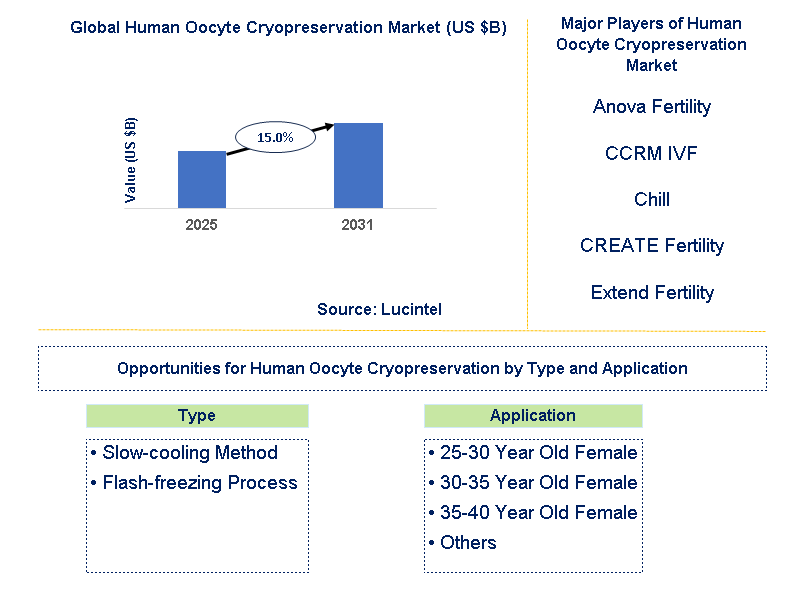
Key data points: The growth forecast = 15% annually for the next 7 years. Scroll below to get more insights. This market report covers Trends, opportunities and forecasts in human oocyte cryopreservation market to 2031 by type (slow-cooling method and flash-freezing process), application (25-30 year old female, 30-35 year old female, 35-40 year old female, and others), and region (North America, Europe, Asia Pacific, and the Rest of the World)
We'll send your sample report shortly.
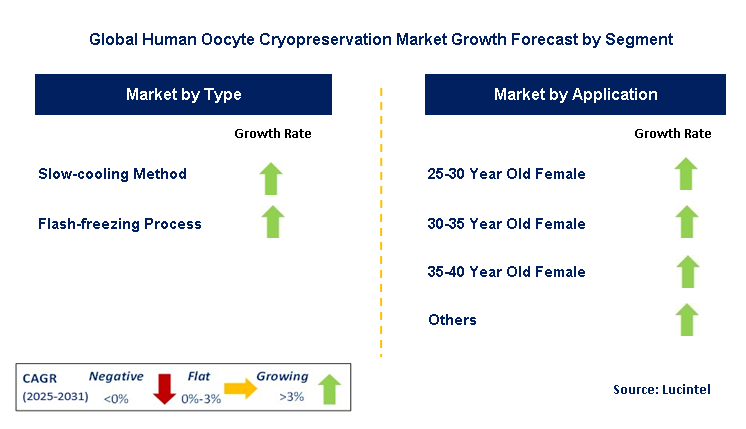
• Lucintel forecasts that, within the type category, flash-freezing process is expected to witness higher growth over the forecast period.
• Within the application category, 30-35 year old female is expected to witness the highest growth.
• In terms of region, North America is expected to witness the highest growth over the forecast period.
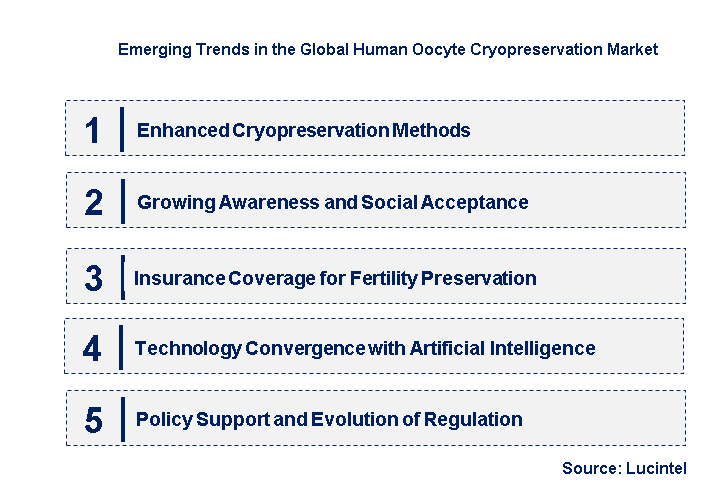
• Enhanced Cryopreservation Methods: Advances in cryopreservation methods, particularly vitrification, have significantly enhanced the success rates of oocyte cryopreservation. Vitrification does away with ice crystal formation during freezing, safeguarding the structural integrity of eggs and enhancing survival rates. This method has made egg freezing more dependable and widespread, leading to its uptake. With advancing technology, advances in cryopreservation methods are bound to increase the quality and quantity of eggs that can be preserved, growing the market even further.
• Growing Awareness and Social Acceptance: With changing social norms, more and more women are opting for fertility preservation for career or individual needs. Growing awareness about oocyte cryopreservation and its advantages is driving this demand, specifically among women aged between 30 and 40 who would like to defer pregnancy. Media exposure and activism have helped normalize egg freezing as an ordinary aspect of reproductive well-being. Increased social acceptance of assisted reproductive technologies is likely to enhance the demand for egg freezing services across the world.
• Insurance Coverage for Fertility Preservation: Fertility preservation services in certain regions are becoming increasingly covered by insurance companies, which is making oocyte cryopreservation more economically viable. The trend is best observed in the United States, where insurance coverage is starting to cover egg freezing as part of fertility preservation benefits. As insurance coverage increases, a greater number of women will be financially empowered to avail themselves of oocyte cryopreservation, hence increasing market growth and making these services more accessible to a broader population.
• Technology Convergence with Artificial Intelligence: Artificial intelligence (AI) integration in the human oocyte cryopreservation procedure is a new trend. AI is being utilized to maximize egg selection for freezing, evaluate oocyte quality, and enhance embryo culture methods. AI tools have the ability to examine large databases and determine the success rates of egg freezing while enhancing the decision-making function for patients and fertility experts. As AI keeps making fertility treatment more accurate and efficient, it is bound to drive the oocyte cryopreservation market forward in a major way.
• Policy Support and Evolution of Regulation: Policy makers are providing more guidelines regarding fertility preservation, which results in increased standardization and safety for the market. In most countries, the policy environment is undergoing changes to ensure the increased popularity of oocyte cryopreservation. Governments are also starting to provide policy incentives for fertility preservation, particularly as part of initiatives to meet declining birth rates. These policy developments offer clearer channels for fertility clinics to proceed and provide oocyte cryopreservation services and ensure patient success and safety. The human oocyte cryopreservation market is undergoing revolutionary changes, influenced by enhanced cryopreservation technologies, changing society, and increased regulatory support. Trends like developments in techniques, increased social acceptance, insurance coverage extension, integration of AI, and changing policies are revolutionizing the landscape of fertility preservation. These trends not only enhance the growth of the market but also enhance accessibility, affordability, and the overall success rates of oocyte cryopreservation services.
• Developments in Vitrification Technology: Cryopreservation via vitrification, a technology of the last decade, transformed the human oocyte cryopreservation industry. The technique shields the cells against ice crystal damage during freezing and thus enhances preserved egg quality, as well as success rates when thawed, thereby becoming a widely accepted technology for freezing eggs, leading to the extensive implementation of oocyte cryopreservation. This technology has rendered egg freezing more efficient and reliable, with better results for women who opt to store their fertility.
• Increase in Fertility Preservation Services: Faced with increasing demand, fertility centers are now offering oocyte cryopreservation services more frequently. Centers are now broadening their services to include egg freezing packages for women who wish to delay childbearing as a result of career or personal factors. Besides, fertility preservation services are increasingly becoming affordable and accessible, allowing a wider population to benefit from egg freezing. This growth is fueling market expansion, especially in urban centers where women can access fertility clinics and services.
• Government Policy Support for Fertility Preservation: Governments in various nations are starting to support fertility preservation as part of national policy efforts to address shrinking birth rates. For instance, in Japan and certain European nations, lawmakers are persuading women to freeze their eggs by offering support through financial aid or reduced-cost health care alternatives. The support is aiding the process of normalizing egg freezing as a reproductive health treatment, thus encouraging its expansion and availability. With changes in government policies, the oocyte cryopreservation market is also set for continued growth.
• Greater Emphasis on Egg Freezing for Medical Purposes: Oocyte cryopreservation is now more frequently being done for medical purposes, like helping to preserve fertility for women who are receiving cancer treatment or other medical conditions that can impact the reproductive system. As word gets out about the possibility of medical egg freezing, more women are using cryopreservation to preserve their fertility before receiving treatments that can damage their ability to have children. This healthcare use of egg freezing is widening the market beyond elective fertility preservation, making increased demand for cryopreservation services.
• Integration of Technology with AI for Egg Quality Analysis: The application of AI to evaluate the quality of eggs for freezing is a new trend in the market. AI technology is being incorporated into fertility clinics to evaluate oocyte quality and estimate the probability of success upon fertilization. This integration ensures that cryopreservation becomes more efficient and successful by ensuring that eggs of the highest quality are preserved. AI-powered tools are becoming an integral part of the fertility treatment process, fueling innovation within the oocyte cryopreservation industry. New developments within the human oocyte cryopreservation market, such as innovation in vitrification technology, increased service options, governmental policy endorsement, growth of medical egg freezing, and AI implementation, are revolutionizing the market. These changes are stimulating market expansion, increasing accessibility, and advancing fertility preservation success rates, eventually giving women more control over their reproductive life and paving the way for general acceptance of oocyte cryopreservation.
• Growth in Developing Markets: Developing countries across Asia, Africa, and Latin America hold enormous growth opportunities for oocyte cryopreservation services. Due to increased awareness about fertility preservation and enhanced healthcare infrastructure, there is growing demand from women in these markets for fertility services. Clinics and healthcare providers extending into these emerging markets can fill the growing need for egg freezing services, increasing market growth.
• Collaborations with Insurance Companies: With increasing frequency in fertility preservation, collaborations between insurance companies and fertility clinics can facilitate the affordability of oocyte cryopreservation services. By integrating egg freezing in health insurance packages, providers can increase the accessibility of these services to a broader population, especially women aged in their 30s and 40s who might be considering fertility preservation due to medical or personal factors.
• Technological Advancements in Cryopreservation: Techniques Ongoing advancements in cryopreservation technologies, such as ongoing refinement of vitrification, provide expansion opportunities for businesses engaged in oocyte cryopreservation. Through investing in research and development of improved and improved cryopreservation methods, stakeholders are able to further enhance egg survival and thawing success rates, which will increase customer satisfaction and adoption of services.
• Focus on Fertility Preservation for Medical Reasons: As more people become aware of the need to preserve fertility prior to exposure to treatments such as chemotherapy, fertility clinics that provide specialized services to women who are receiving medical treatment have ample opportunity for growth. Offering cheap and accessible egg freezing for medical purposes, such as treating cancer, can allow clinics to reach a new set of patients and grow market demand for cryopreservation services.
• Integration of AI with Egg Quality: The use of AI in the integration of egg freezing services poses great growth possibilities. AI enhances the quality control of eggs frozen, thus heightening success and enhancing patient success. Fertility clinics that apply AI technology for their cryopreservation processes improve their competitive positioning and attract new patients by utilizing sophisticated, accuracy-based fertility therapy. human oocyte cryopreservation market holds huge growth possibilities in emerging regions, collaborations with insurance companies, development in cryopreservation techniques, medical condition-based fertility preservation, and artificial intelligence integration. All these chances are likely to drive the expansion of the market through enhanced access, increased success rates, and improved patient experiences. By acting on these drivers, market participants can expand their market share as well as propel the development of fertility preservation across the globe.
• Anova Fertility
• CCRM IVF
• Chill
• CREATE Fertility
• Extend Fertility
• HRC Fertility
• IVF Australia
• Kindbody
• London Women’s Clinic
• Manchester Fertility
• Slow-cooling Method
• Flash-freezing Process
• 25-30 Year Old Female
• 30-35 Year Old Female
• 35-40 Year Old Female
• Others
• North America
• Europe
• Asia Pacific
• The Rest of the World
• United States: Oocyte cryopreservation has been quickly adopted in the United States, particularly by women who desire to defer childbearing due to personal or professional reasons. Improvements in cryopreservation procedures, including vitrification, have dramatically increased egg survival and success rates. Fertility centers nationwide are providing egg freezing services, with an emphasis on providing cost-effective options and accessibility to a wider range of demographics. Additionally, regulatory monitoring by the FDA means that safety procedures are upheld, helping to build confidence among consumers. Oocyte cryopreservation is increasingly available via insurance reimbursement in some areas, again fueling the market growth.
• China: China's human oocyte cryopreservation market is expanding, though, albeit with distinctive challenges, given cultural attitudes towards childbearing and fertility, as well as family planning regulations. Although China's one-child policy has been relaxed, cultural expectations regarding family size and childbearing are still prevalent. However, urbanization and changing social structures have created the growing need for fertility preservation. The Chinese government has recently also endorsed egg freezing in some clinics, especially in women with health conditions that jeopardize their ability to conceive. With ongoing technology improvements in assisted reproductive technologies, China's market for oocyte cryopreservation is ready to grow in the future, primarily in major metropolitan areas.
• Germany: Germany's human oocyte cryopreservation market has been growing steadily, driven by growing acceptability for assisted reproductive technologies and shifting social attitudes towards family planning. The nation boasts a highly regulated healthcare system with high standards for fertility preservation. Although oocyte cryopreservation is easily accessible in fertility clinics, ethical and legal considerations hold substantial influence over the market. The German government's stringent laws regarding reproductive technologies, such as restrictions on the number of embryos that can be preserved, have shaped the uptake of oocyte cryopreservation, particularly among women who wish to postpone childbearing for professional or personal purposes.
• India: India's oocyte cryopreservation market is growing at a fast pace, fueled by growing awareness of fertility preservation and expanding fertility clinic coverage in urban India. Indian women, especially those in urban cities, are increasingly turning towards egg freezing thanks to shifting societal norms, delayed marriages, and the need to pursue careers. Improvements in cryopreservation technologies and more developed healthcare facilities are also allowing women to maintain their fertility. While cost still acts as a deterrent for the majority, improved affordability and availability of fertility procedures are making oocyte cryopreservation a feasible choice for women in India.
• Japan: In Japan, oocyte cryopreservation is becoming popular, particularly with women postponing childbirth because of career goals and social pressures. Japan has the lowest fertility rates in the world, and freezing eggs is perceived as a likely solution for females who wish to retain their reproductive choices. There are government policies that have been supporting fertility preservation, and improvement in cryopreservation technology has been enhancing egg freezing success. Yet, social beliefs regarding reproductive technology continue to transform, and market expansion is conditioned by cultural perspectives on children and family, coupled with regulatory complications.


• Anova Fertility
• CCRM IVF
• Chill
• CREATE Fertility
• Extend Fertility
• HRC Fertility
• IVF Australia
• Kindbody
• London Women’s Clinic
• Manchester Fertility Q5. Which human oocyte cryopreservation market segment will be the largest in future? Answer: Lucintel forecasts that, within the type category, flash-freezing process is expected to witness higher growth over the forecast period. Q6. In human oocyte cryopreservation market, which region is expected to be the largest in next 5 years? Answer: In terms of region, North America is expected to witness the highest growth over the forecast period. Q7. Do we receive customization in this report? Answer: Yes, Lucintel provides 10% customization without any additional cost.


Choose a license that fits your team. Instant PDF delivery.
Prices exclude taxes. Instant delivery. Custom licensing available on request.
Market Report · July 22, 2026
Market Report · July 22, 2026
Market Report · July 22, 2026
Trusted partner for strategic intelligence and business growth


Receive a complimentary market analysis tailored to your industry. Our analysts will identify key growth opportunities and competitive dynamics specific to your business.

Market size, growth rate, and key trend analysis for your specific sector.

Top competitor positioning and market share analysis.

Strategic recommendations backed by data-driven insights.
Get curated market intelligence and competitive moves straight to your inbox.
By subscribing, you agree to receive our monthly insights. Unsubscribe anytime.
Receive a complimentary market analysis tailored to your industry. Our analysts will identify key growth opportunities and competitive dynamics specific to your business.
Market size, growth rate, and key trend analysis for your specific sector.
Top competitor positioning and market share analysis.
Strategic recommendations backed by data-driven insights.
Get curated market intelligence, emerging trends, and competitive moves straight to your inbox each month.
By subscribing, you agree to receive our monthly insights. Unsubscribe anytime.
We'll send your sample report shortly.