
Market Report · July 22, 2026

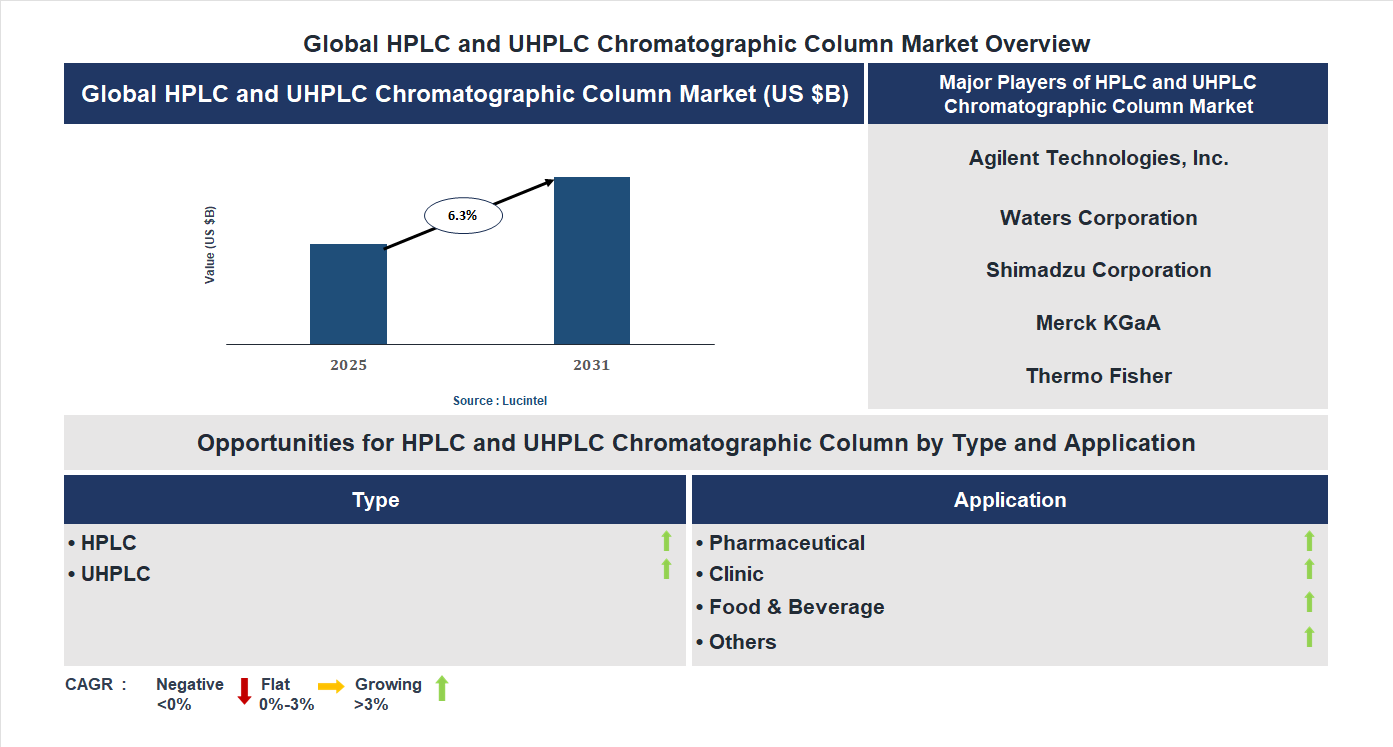
Key data points: The growth forecast = 6.3% annually for the next 7 years. Scroll below to get more insights. This market report covers trends, opportunities and forecasts in HPLC and UHPLC chromatographic column market to 2031 by type (HPLC and UHPLC), application (pharmaceutical, clinic, food & beverage, and others), and region (North America, Europe, Asia Pacific, and the Rest of the World)
We'll send your sample report shortly.
• Lucintel forecasts that, within the type category, UHPLC is expected to witness higher growth over the forecast period.
• Within the application category, pharmaceutical is expected to witness the highest growth.
• In terms of region, APAC is expected to witness the highest growth over the forecast period. Gain valuable insights for your business decisions with our comprehensive 150+ page report. Sample figures with some insights are shown below.
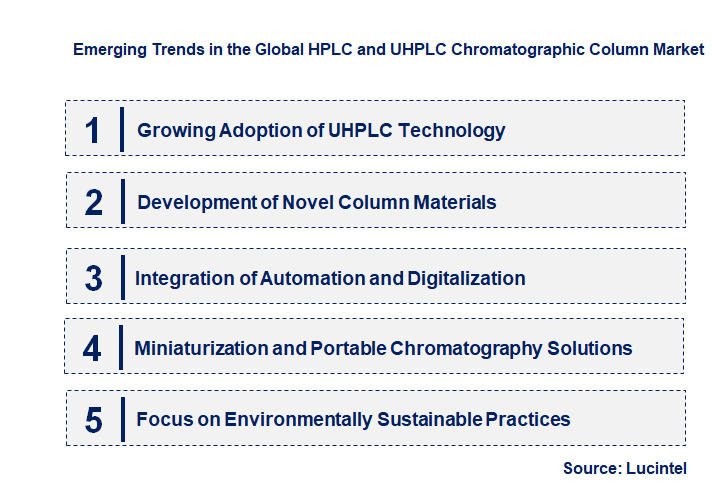
• Growing adoption of UHPLC technology: The demand for ultra-high-performance liquid chromatography (UHPLC) is increasing due to its superior speed, resolution, and sensitivity. This trend is driven by the need for faster analysis times and higher throughput in pharmaceutical and biotech industries. UHPLC columns, with their ability to handle high pressures and provide better separation, are becoming essential for complex sample analysis. As laboratories seek more efficient workflows, the adoption of UHPLC is expected to continue rising, significantly impacting market growth and product development strategies.
• Development of novel column materials: Innovation in column materials, such as sub-2-micron particles, core-shell particles, and hybrid materials, is transforming the market. These advanced materials offer enhanced separation efficiency, durability, and chemical resistance. The introduction of these materials allows for better performance in challenging applications, including complex biological matrices and environmental samples. This trend is driving manufacturers to invest in research and development, leading to more robust, versatile, and cost-effective columns that meet the evolving needs of end-users.
• Integration of automation and digitalization: Automation in sample preparation, column switching, and data analysis is becoming a key trend. Digitalization, including remote monitoring and control, improves reproducibility, reduces human error, and increases laboratory productivity. Automated systems enable high-throughput screening and real-time data management, which are critical for industries like pharmaceuticals and food safety. This integration is reshaping operational workflows, making chromatographic analysis more efficient, reliable, and accessible to a broader range of users.
• Miniaturization and portable chromatography solutions: The development of smaller, portable chromatographic columns and systems is gaining momentum. These solutions are ideal for on-site testing, field analysis, and point-of-care diagnostics. Miniaturization reduces sample and reagent consumption, lowers costs, and allows for rapid analysis outside traditional laboratory settings. This trend is expanding the market reach, especially in environmental monitoring, clinical diagnostics, and food safety, where quick, on-the-spot results are essential.
• Focus on environmentally sustainable practices: Eco-friendly innovations, such as the use of greener solvents, recyclable columns, and energy-efficient systems, are increasingly prioritized. Manufacturers are developing columns that require less solvent and generate less waste, aligning with global sustainability goals. This trend not only reduces the environmental footprint but also appeals to environmentally conscious consumers and regulatory bodies. Sustainable practices are becoming a competitive differentiator and are expected to influence future product development and market strategies. In summary, these emerging trends—advancements in UHPLC technology, novel materials, automation, miniaturization, and sustainability—are collectively reshaping the HPLC and UHPLC chromatographic column market. They are driving innovation, improving analytical performance, and expanding application possibilities, ultimately leading to a more efficient, versatile, and environmentally responsible industry landscape.
• Introduction of Hybrid Column Technologies: Hybrid columns combining different stationary phases have been developed to improve selectivity and stability. This innovation enhances the ability to analyze complex mixtures with higher resolution and reproducibility, making it valuable for pharmaceutical and environmental testing. The impact is increased analytical accuracy and broader application scope, leading to more reliable results and faster decision-making processes.
• Advances in Column Material Durability: New materials such as fused silica and polymer-based composites have increased column lifespan and resistance to harsh solvents. This development reduces operational costs and minimizes downtime, which is crucial for high-throughput laboratories. The improved durability ensures consistent performance over extended periods, boosting user confidence and operational efficiency.
• Automation and High-Throughput Capabilities: Integration of automation in column handling and sample processing has accelerated analysis times and reduced human error. Automated systems facilitate large-scale screening and quality control processes, especially in pharmaceutical manufacturing. This advancement enhances productivity, lowers labor costs, and ensures consistent, high-quality data output.
• Miniaturization and Microbore Columns: The development of smaller, microbore columns has enabled analysis of limited sample volumes with increased sensitivity. These columns are ideal for applications requiring minimal sample consumption, such as clinical diagnostics and forensic analysis. The impact includes faster analysis times, reduced reagent use, and improved detection limits, expanding the market for niche applications.
• Sustainable and Eco-Friendly Column Technologies: Manufacturers are focusing on environmentally friendly materials and solvent-saving designs. These sustainable columns reduce chemical waste and energy consumption, aligning with global environmental standards. The shift towards eco-friendly solutions appeals to environmentally conscious customers and regulatory bodies, fostering market growth and corporate responsibility. In summary, these recent developments are significantly transforming the HPLC and UHPLC chromatographic column market by enhancing performance, reducing costs, and expanding application possibilities. The innovations are driving increased adoption across various sectors, improving analytical accuracy, and supporting sustainable practices. As a result, the market is poised for continued growth, driven by technological advancements and evolving industry needs.
• Pharmaceutical Industry: Personalized Medicine and Drug Development : The demand for high-throughput, accurate chromatography solutions is rising to support personalized medicine and complex drug development processes, driving growth in specialized columns and innovative technologies.
• Biotechnology Sector: Bioprocess Monitoring and Quality Control : The increasing need for monitoring bioprocesses and ensuring product quality is boosting the adoption of advanced HPLC and UHPLC columns, facilitating better bioprocess control and regulatory compliance.
• Environmental Testing: Pollution and Contaminant Analysis : Growing environmental concerns and stricter regulations are expanding the use of chromatographic columns for detecting pollutants, toxins, and contaminants in air, water, and soil samples.
• Food Safety and Quality Assurance: Detection of Adulterants and Contaminants : The food industry is increasingly adopting chromatographic techniques to ensure safety, detect adulterants, and verify ingredient authenticity, thereby expanding market opportunities.
• Clinical Research and Diagnostics: Biomarker Discovery and Disease Diagnosis : The rise in clinical research activities and diagnostics is fueling demand for highly sensitive columns capable of detecting low-abundance biomarkers, enhancing early disease detection. In summary, these growth opportunities across key applications are significantly impacting the HPLC and UHPLC chromatographic column market by driving innovation, expanding application scope, and increasing demand for specialized solutions. This evolution is fostering market expansion and offering new avenues for industry players to capitalize on emerging trends.
• Technological Advancements: The continuous development of innovative chromatographic materials and column designs enhances analytical performance, sensitivity, and speed. These innovations enable laboratories to conduct more accurate and efficient testing, which is crucial in pharmaceutical, environmental, and food safety applications. As technology evolves, manufacturers are able to offer more specialized columns tailored to specific analytical needs, thereby expanding market reach and customer base. The adoption of UHPLC, with its higher resolution and faster analysis times, further accelerates market growth by meeting the demand for high-throughput testing.
• Growing Pharmaceutical and Biotech Industries: The expanding pharmaceutical and biotechnology sectors worldwide are major drivers. The need for rigorous quality control, drug development, and clinical research relies heavily on chromatography techniques. As these industries grow, so does the demand for high-performance columns capable of handling complex samples with high precision. The increasing prevalence of personalized medicine and biologics also necessitates advanced chromatographic solutions, fueling market expansion. This trend is particularly prominent in emerging economies where healthcare infrastructure is rapidly developing.
• Stringent Regulatory Standards: Regulatory agencies such as the FDA and EMA impose strict guidelines for drug approval, quality control, and safety testing. These regulations require highly reliable and reproducible analytical methods, which in turn drive the demand for advanced chromatographic columns. Manufacturers are compelled to innovate and improve their products to meet these standards, ensuring compliance and reducing the risk of product rejection or delays. The regulatory landscape thus acts as both a catalyst for technological advancement and a barrier for entry, shaping market dynamics.
• Increasing Adoption of UHPLC Technology: UHPLC offers faster analysis, higher resolution, and greater sensitivity compared to traditional HPLC. Its adoption is driven by the need for high-throughput testing in pharmaceutical, environmental, and food industries. As laboratories seek to improve efficiency and reduce analysis time, UHPLC becomes the preferred choice, prompting manufacturers to develop specialized columns compatible with this technology. The growing adoption of UHPLC significantly contributes to market growth, especially in regions with advanced research infrastructure.
• Rising Focus on Environmental and Food Safety Testing: The increasing emphasis on environmental monitoring and food safety standards is a key driver. Governments and regulatory bodies are implementing stricter testing protocols to detect contaminants and ensure public health. Chromatographic columns are essential tools in these testing procedures, and their demand is rising accordingly. The need for reliable, sensitive, and fast analytical solutions to meet these regulatory requirements is fueling innovation and expansion within the market. The challenges facing this HPLC and UHPLC chromatographic column market include:-
• High Equipment and Consumable Costs: The initial investment for chromatographic systems and the ongoing costs of high-quality columns are significant barriers, especially for small and medium-sized laboratories. These costs can limit adoption in cost-sensitive regions and hinder market penetration. Additionally, the need for frequent replacement of consumables adds to operational expenses, impacting overall profitability and slowing market growth.
• Regulatory Complexities and Compliance: Navigating the complex regulatory landscape can be challenging for manufacturers and end-users. Ensuring compliance with diverse international standards requires continuous product innovation and documentation, which increases costs and development time. Non-compliance risks include legal penalties, product recalls, and loss of market credibility, which can hamper market expansion and innovation.
• Technological Limitations and Compatibility Issues: Despite advancements, certain limitations persist, such as the difficulty in analyzing highly complex or unstable samples. Compatibility issues between columns and various analytical instruments can also restrict flexibility and adoption. These technological constraints may lead to suboptimal performance, limiting the scope of applications and slowing the adoption of newer chromatographic solutions. In summary, the HPLC and UHPLC chromatographic column market is driven by technological innovations, expanding industries, and regulatory demands, which collectively foster growth and development. However, high costs, regulatory hurdles, and technological limitations pose significant challenges. The interplay of these factors influences market dynamics, requiring stakeholders to innovate continuously and adapt strategies to sustain growth. Overall, the market is poised for substantial expansion, provided that these challenges are effectively managed through technological and regulatory advancements.
• Agilent Technologies, Inc.
• Waters Corporation
• Shimadzu Corporation
• Merck KGaA
• Thermo Fisher
• Hamilton Company
• Danaher
• Mitsubishi Chemical
• PerkinElmer, Inc.
• Nacalai Tesque, Inc.
• HPLC
• UHPLC
• Pharmaceutical
• Clinic
• Food & Beverage
• Others
• North America
• Europe
• Asia Pacific
• The Rest of the World
• United States: The US market has seen rapid adoption of UHPLC technology, driven by pharmaceutical and biotech sectors demand for high-throughput analysis. Major companies are investing in innovative column materials and automation solutions. Regulatory agencies like the FDA are encouraging advanced analytical methods, boosting market growth. The focus on personalized medicine and drug development has further increased the need for precise chromatographic tools. Additionally, collaborations between academia and industry are fostering new product development, making the US a leader in chromatographic advancements.
• China: China’s market is expanding due to increasing investments in pharmaceutical manufacturing and environmental testing. The government’s emphasis on quality control and regulatory reforms has accelerated demand for high-performance columns. Local manufacturers are gaining ground by offering cost-effective products, while international players are expanding their presence. The adoption of UHPLC is rising in food safety testing and traditional Chinese medicine analysis. Technological innovation and infrastructure development are key drivers, positioning China as a rapidly growing market for chromatographic columns.
• Germany: Germany remains a key hub for high-quality analytical instrumentation, with a focus on precision and durability. The market benefits from the strong presence of global pharmaceutical and chemical companies. Recent developments include the integration of automation and miniaturization in column design, improving efficiency and reducing costs. Germany’s emphasis on sustainable and environmentally friendly solutions is influencing product innovation. The country’s robust research ecosystem and collaborations with European institutions continue to propel advancements in chromatographic technology, maintaining its leadership position in the European market.
• India: The Indian market is witnessing significant growth due to expanding pharmaceutical and food industries. Increasing regulatory standards and quality assurance practices are driving demand for advanced chromatographic columns. Local manufacturers are improving product quality and affordability to compete with international brands. The adoption of UHPLC is increasing in research institutions and laboratories. Government initiatives supporting biotech and pharmaceutical sectors are further boosting market prospects. Investments in infrastructure and technological upgrades are enabling India to become a notable player in the global chromatographic column market.
• Japan: Japan’s market is characterized by high technological innovation and a focus on research and development. The country’s pharmaceutical, chemical, and environmental sectors are adopting advanced chromatographic solutions for precise analysis. Recent developments include the integration of smart and automated systems, enhancing analytical efficiency. Japan emphasizes environmentally sustainable products, with innovations aimed at reducing solvent consumption and waste. The strong presence of multinational corporations and research institutions continues to drive technological progress, ensuring Japan remains a significant contributor to global chromatographic column advancements.


• Agilent Technologies, Inc.
• Waters Corporation
• Shimadzu Corporation
• Merck KGaA
• Thermo Fisher
• Hamilton Company
• Danaher
• Mitsubishi Chemical
• PerkinElmer, Inc.
• Nacalai Tesque, Inc. Q5. Which HPLC and UHPLC chromatographic column market segment will be the largest in future? Answer: Lucintel forecasts that, within the type category, UHPLC is expected to witness higher growth over the forecast period. Q6. In HPLC and UHPLC chromatographic column market, which region is expected to be the largest in next 5 years? Answer: In terms of region, APAC is expected to witness the highest growth over the forecast period. Q7. Do we receive customization in this report? Answer: Yes, Lucintel provides 10% customization without any additional cost.


Choose a license that fits your team. Instant PDF delivery.
Prices exclude taxes. Instant delivery. Custom licensing available on request.
Market Report · July 22, 2026
Market Report · July 22, 2026
Market Report · July 22, 2026
Trusted partner for strategic intelligence and business growth


Receive a complimentary market analysis tailored to your industry. Our analysts will identify key growth opportunities and competitive dynamics specific to your business.

Market size, growth rate, and key trend analysis for your specific sector.

Top competitor positioning and market share analysis.

Strategic recommendations backed by data-driven insights.
Get curated market intelligence and competitive moves straight to your inbox.
By subscribing, you agree to receive our monthly insights. Unsubscribe anytime.
Receive a complimentary market analysis tailored to your industry. Our analysts will identify key growth opportunities and competitive dynamics specific to your business.
Market size, growth rate, and key trend analysis for your specific sector.
Top competitor positioning and market share analysis.
Strategic recommendations backed by data-driven insights.
Get curated market intelligence, emerging trends, and competitive moves straight to your inbox each month.
By subscribing, you agree to receive our monthly insights. Unsubscribe anytime.
We'll send your sample report shortly.