
Market Report · July 31, 2026

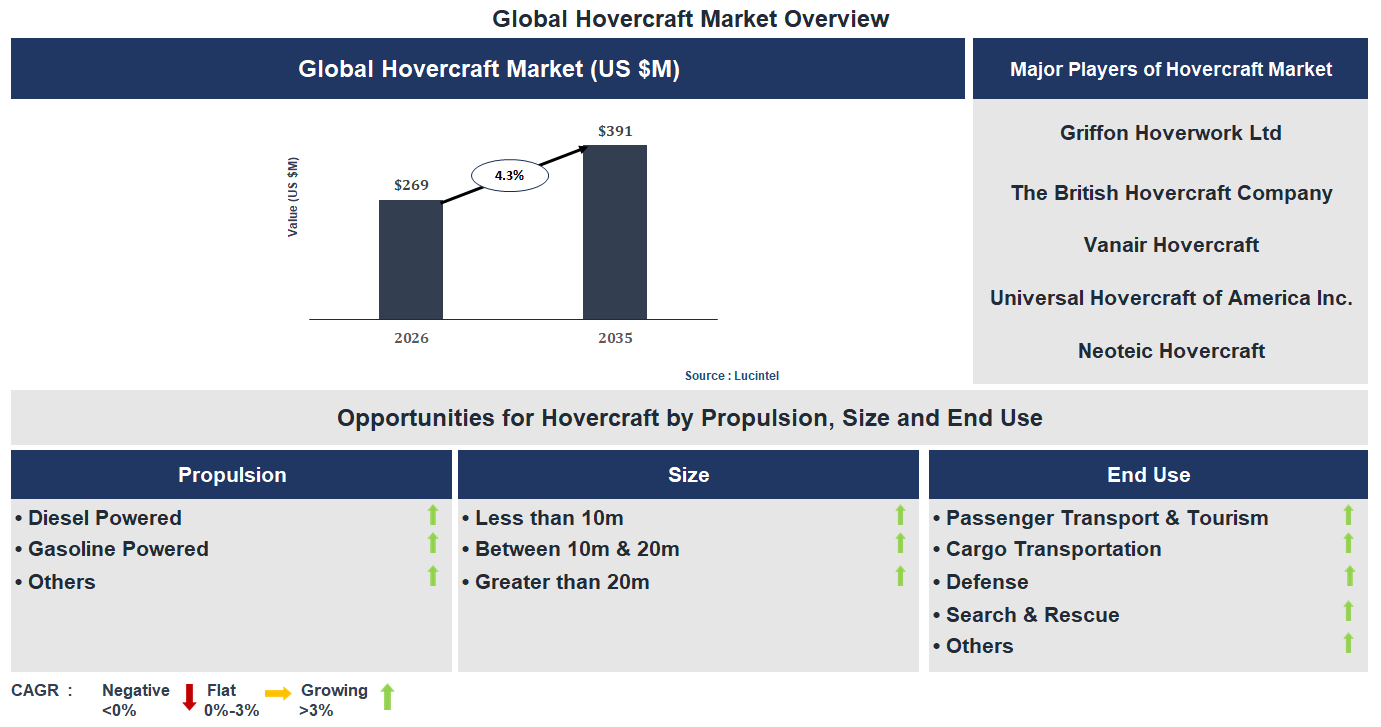
Key data points: The market size in 2035 = $391 million, growth forecast = 4.3% annually for the next 8 years. Scroll below to get more insights. This market report covers trends, opportunities and forecasts in hovercraft market to 2035 by propulsion (diesel powered, gasoline powered, and others), size (less than 10m, between 10m & 20m, and greater than 20m), end use (passenger transport & tourism, cargo transportation, defense, search & rescue, and others), and region (North America, Europe, Asia Pacific, and the Rest of the World)
We'll send your sample report shortly.
• Lucintel forecasts that, within the propulsion category, diesel powered is expected to witness higher growth over the forecast period.
• Within the end use category, passenger transport & tourism is expected to witness the highest growth.
• In terms of region, APAC is expected to witness the highest growth over the forecast period. Gain valuable insights for your business decisions with our comprehensive 150+ page report. Sample figures with some insights are shown below.
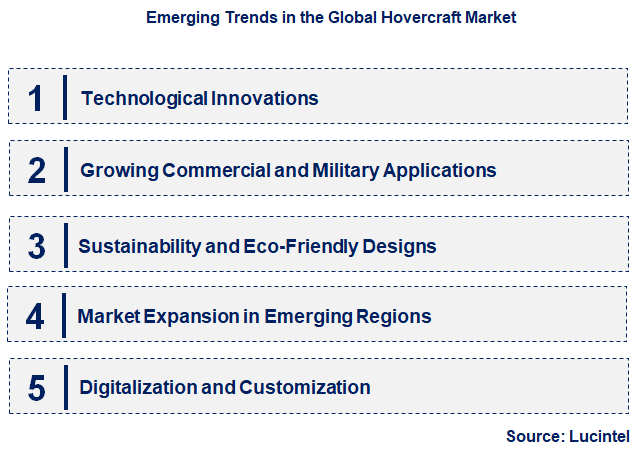
• Technological Innovations: Advancements in materials and propulsion systems are enhancing hovercraft performance. New lightweight composites and energy-efficient engines improve speed, maneuverability, and fuel efficiency. These innovations enable hovercraft to operate in more challenging environments, such as shallow waters and ice-covered regions, broadening their application scope. Additionally, integration of smart technologies like GPS and automation systems increases safety and ease of operation, making hovercraft more appealing to commercial and military users.
• Growing Commercial and Military Applications: The demand for hovercraft in commercial sectors such as tourism, cargo transport, and emergency services is rising. Their ability to access remote or difficult terrains makes them ideal for disaster relief, offshore oil and gas operations, and military reconnaissance. Governments and private companies are investing in specialized hovercraft to improve logistical efficiency and response times in inaccessible areas, thereby expanding the market beyond traditional uses and fostering new revenue streams.
• Sustainability and Eco-Friendly Designs: Environmental concerns are prompting the development of greener hovercraft models. Manufacturers are focusing on reducing emissions through electric and hybrid propulsion systems. Use of sustainable materials and noise reduction technologies also contribute to eco-friendly operations. These initiatives align with global sustainability goals, attract environmentally conscious customers, and comply with stricter regulations, ultimately positioning hovercraft as a sustainable transportation alternative in sensitive ecosystems.
• Market Expansion in Emerging Regions: Increasing infrastructure development and urbanization in regions like Asia-Pacific and Africa are creating new opportunities for hovercraft deployment. These areas often face challenging terrains and limited road networks, making hovercraft a practical solution for transportation and logistics. Local governments and private enterprises are investing in hovercraft to improve connectivity, support economic growth, and enhance disaster management capabilities, thereby expanding the market geographically and diversifying its customer base.
• Digitalization and Customization: The integration of digital technologies such as IoT, data analytics, and remote monitoring is transforming hovercraft operations. Customizable features tailored to specific industry needs improve user experience and operational efficiency. Digital platforms facilitate maintenance scheduling, real-time performance tracking, and predictive analytics, reducing downtime and costs. This trend enhances the overall value proposition of hovercraft, making them more adaptable and attractive to a broader range of users seeking innovative, data-driven transportation solutions. These emerging trends are significantly reshaping the hovercraft market by driving innovation, expanding application areas, and emphasizing sustainability. They are enabling manufacturers to develop more efficient, versatile, and environmentally friendly products, which in turn is broadening market reach and increasing competitiveness. As these trends continue to evolve, the hovercraft market is poised for sustained growth and increased relevance across multiple sectors worldwide.
• Growing Demand in Transportation Sector: The increasing need for versatile, efficient, and cost-effective transportation solutions is driving hovercraft adoption. Their ability to operate on water and land makes them ideal for remote areas, disaster relief, and urban mobility. Governments and private companies are investing in hovercraft infrastructure, expanding their use in passenger and cargo transport. This growth is expected to reduce congestion and improve connectivity, especially in regions with challenging terrains, thereby opening new markets and revenue streams.
• Technological Innovations Enhancing Performance: Advances in materials, propulsion systems, and control technologies are significantly improving hovercraft capabilities. Lightweight composites and energy-efficient engines increase speed, payload, and fuel efficiency. Enhanced navigation and automation systems improve safety and ease of operation. These innovations are making hovercraft more reliable and accessible, encouraging wider adoption across industries. The improved performance also enables hovercraft to undertake more complex tasks, broadening their application scope and market reach.
• Expansion into Military and Defense Applications: The military sector is increasingly utilizing hovercraft for reconnaissance, troop deployment, and logistics in difficult terrains. Their ability to traverse water and land seamlessly offers strategic advantages. Recent developments include stealth features and advanced weapon integration. Governments are investing heavily in military hovercraft, which boosts market growth. This expansion enhances operational flexibility and reduces logistical challenges, positioning hovercraft as vital assets in defense strategies and creating lucrative opportunities for manufacturers.
• Rise of Eco-Friendly and Sustainable Designs: Environmental concerns are prompting the development of eco-friendly hovercraft with reduced emissions and noise pollution. Innovations include electric propulsion systems and sustainable materials, aligning with global sustainability goals. These environmentally conscious designs appeal to eco-sensitive markets and regulatory bodies. The shift towards green technology not only enhances market reputation but also opens avenues for government grants and incentives. Sustainable hovercraft are poised to dominate future markets, especially in eco-tourism and conservation projects.
• Increasing Investment and Market Penetration: Investment from private and public sectors is fueling market expansion. Strategic partnerships, research funding, and government initiatives are accelerating product development and commercialization. Emerging markets in Asia-Pacific and Africa present new growth opportunities due to infrastructural needs and tourism development. Market players are focusing on customization and cost reduction to penetrate diverse sectors. This influx of capital and strategic focus is driving innovation, increasing competition, and expanding the global footprint of hovercraft technology. The recent developments in the hovercraft market are significantly transforming its landscape by enhancing performance, expanding applications, and promoting sustainability. Increased investments and technological innovations are broadening market reach across transportation, military, and eco-friendly sectors. These advancements are fostering a competitive environment that encourages continuous improvement and diversification. Overall, these developments are poised to accelerate market growth, improve operational efficiency, and establish hovercraft as a vital component in future mobility and defense solutions worldwide.
• Expanding Use in Military and Defense Applications: The military sector increasingly adopts hovercraft for amphibious operations, coast guard patrols, and logistical support due to their ability to traverse diverse terrains. Advancements in durability, speed, and payload capacity enhance operational efficiency. Governments are investing in modernizing their fleets, creating a lucrative opportunity for manufacturers to develop specialized, high-performance hovercraft tailored to defense needs, thus driving market growth and technological innovation.
• Growing Demand in Commercial Transportation and Logistics: The commercial sector is leveraging hovercraft for transporting goods and passengers across water and land, especially in remote or inaccessible areas. Their ability to operate on shallow waters and marshy terrains makes them ideal for logistics in regions with limited infrastructure. Increasing investments in infrastructure development and tourism boost demand, encouraging companies to innovate with larger, more efficient models to meet rising logistical and transportation needs.
• Rising Adoption in Emergency and Disaster Response: Hovercraft are increasingly used in disaster management for rescue operations in flood-prone and rugged terrains. Their capacity to access hard-to-reach areas quickly and carry multiple passengers or supplies makes them invaluable during emergencies. Governments and relief agencies are investing in specialized hovercraft for rapid deployment, creating opportunities for manufacturers to develop versatile, durable models optimized for emergency response, thereby expanding market applications.
• Technological Innovations Enhancing Performance and Safety: Continuous R&D efforts focus on improving hovercraft safety, fuel efficiency, and operational capabilities. Innovations such as hybrid propulsion systems, advanced navigation, and automation are making hovercraft more reliable and environmentally friendly. These technological advancements open avenues for premium product offerings, attracting new customers and expanding applications in commercial, military, and rescue sectors, ultimately fueling market growth through enhanced performance and safety standards.
• Increasing Focus on Sustainable and Eco-Friendly Designs: Environmental concerns are prompting the development of eco-friendly hovercraft with reduced emissions and noise pollution. Use of alternative fuels, lightweight materials, and energy-efficient designs are gaining traction. Governments and organizations are incentivizing sustainable practices, creating opportunities for manufacturers to innovate in green technologies. This shift not only aligns with global environmental goals but also broadens market appeal, attracting eco-conscious clients and expanding the overall market footprint. These strategic growth opportunities are poised to significantly influence the hovercraft market by fostering innovation, expanding application areas, and addressing environmental and safety concerns. Stakeholders who capitalize on these trends can expect to enhance their market position, drive revenue, and contribute to the evolving landscape of hovercraft technology and applications.
• Technological Innovation: Advances in lightweight materials, propulsion systems, and automation have significantly improved hovercraft performance, safety, and fuel efficiency. These innovations reduce operational costs and expand potential applications in rescue operations, tourism, and military uses. As technology continues to evolve, hovercraft are becoming more versatile and accessible, encouraging increased adoption across various sectors. The integration of hybrid and electric propulsion systems further enhances environmental sustainability, aligning with global green initiatives. This ongoing technological progress is a key driver fueling market expansion and opening new avenues for growth.
• Growing Tourism and Recreational Activities: The increasing popularity of adventure tourism and water-based recreational activities is a major driver for the hovercraft market. Hovercrafts ability to operate on water, ice, and land makes them ideal for remote and inaccessible locations, attracting adventure seekers and tourists. Governments and private operators are investing in hovercraft services to promote eco-tourism and enhance visitor experiences. The versatility and novelty of hovercraft appeal to a broad customer base, boosting demand in leisure markets. This trend is expected to continue as consumers seek unique travel experiences, thereby expanding the market scope.
• Infrastructure Development in Remote Areas: The need for efficient transportation solutions in remote and inaccessible regions is a significant market driver. Hovercraft can traverse difficult terrains such as marshlands, ice, and shallow waters where traditional vehicles cannot operate effectively. Governments and organizations are investing in hovercraft for rescue missions, supply deliveries, and transportation in Arctic, Antarctic, and island communities. This infrastructure development enhances connectivity, supports economic activities, and improves emergency response capabilities. As infrastructure projects expand in these challenging environments, the demand for hovercraft is poised to grow substantially.
• Environmental Regulations and Sustainability Initiatives: Increasing emphasis on reducing environmental impact influences the hovercraft market positively. Regulations promoting eco-friendly transportation and sustainable tourism encourage the adoption of cleaner propulsion technologies like electric and hybrid systems. Hovercraft, with their ability to operate with minimal land disturbance and lower emissions, align well with these policies. Governments are incentivizing green innovations through subsidies and grants, further stimulating market growth. Compliance with safety and environmental standards ensures market players can expand their operations while adhering to regulatory frameworks, fostering long-term sustainability and market confidence.
• Strategic Partnerships and Market Expansion: Collaborations between manufacturers, government agencies, and service providers are accelerating market growth. Strategic alliances facilitate technology sharing, joint ventures, and entry into new geographic markets. Companies are expanding their product portfolios to include specialized hovercraft for military, rescue, and commercial applications. Market expansion into emerging economies with increasing infrastructure needs and tourism activities is also a key driver. These partnerships and strategic initiatives enable companies to leverage resources, reduce costs, and enhance innovation, thereby strengthening their market position and fostering overall industry growth. The challenges facing the hovercraft market include:
• High Manufacturing and Operational Costs: The production of hovercraft involves advanced materials, complex engineering, and specialized components, leading to high manufacturing costs. These expenses translate into higher purchase prices for consumers and operators, limiting market penetration, especially in price-sensitive regions. Additionally, operational costs such as maintenance, fuel, and skilled personnel requirements further constrain profitability. The high costs pose a barrier for widespread adoption, particularly among small operators and in developing markets, hindering the markets overall growth potential.
• Regulatory and Certification Barriers: Stringent safety, environmental, and operational regulations vary across regions, creating compliance challenges for manufacturers and operators. Obtaining certifications and approvals can be time-consuming and costly, delaying product launches and market entry. Regulatory uncertainties and evolving standards may also restrict certain applications or operational areas, impacting market expansion. Navigating these complex regulatory landscapes requires significant resources and expertise, which can deter new entrants and limit innovation within the industry.
• Limited Awareness and Market Penetration: Despite technological advancements, awareness of hovercraft capabilities remains limited among potential users and stakeholders. This lack of familiarity hampers market penetration, especially in regions where traditional transportation methods dominate. Additionally, the niche nature of hovercraft applications restricts widespread adoption, and misconceptions about safety and operational costs persist. Overcoming these barriers requires targeted marketing, education, and demonstration projects to showcase benefits, which can be resource-intensive and slow to influence market growth. The hovercraft market is driven by technological advancements, tourism growth, infrastructure needs, environmental policies, and strategic collaborations. However, high costs, regulatory complexities, and limited awareness pose significant challenges. These factors collectively influence the markets trajectory, requiring stakeholders to innovate, adapt, and promote awareness to capitalize on emerging opportunities. The interplay of these drivers and challenges will determine the pace and scope of future market development, emphasizing the need for strategic planning and investment.
• Griffon Hoverwork Ltd
• The British Hovercraft Company
• Vanair Hovercraft
• Universal Hovercraft of America Inc.
• Neoteic Hovercraft
• Hovertechnics
• Textron Inc.
• AirLift Hovercraft
• Garden Reach Shipbuilders and Engineers
• Aerohod Ltd
• Diesel Powered
• Gasoline Powered
• Others
• Less than 10m
• Between 10m & 20m
• Greater than 20m
• Passenger Transport & Tourism
• Cargo Transportation
• Defense
• Search & Rescue
• Others
• North America
• Europe
• Asia Pacific
• The Rest of the World
• United States: The U.S. has seen increased investment in military hovercraft technology, focusing on enhancing operational range and payload capacity. The commercial sector is expanding with new tourism applications and innovative rescue operations, supported by government grants and private sector collaborations. Advances in materials and propulsion systems have improved efficiency and safety standards.
• China: China is rapidly advancing its hovercraft industry, emphasizing domestic manufacturing and technological innovation. The country has launched several large-scale projects for coastal defense, passenger transport, and logistics. Government policies favoring infrastructure development and environmental sustainability are driving market growth, with significant investments in research and development.
• Germany: Germany is focusing on integrating hovercraft technology into its defense and emergency response systems. The country is also exploring commercial applications such as passenger ferries and cargo transport in flood-prone regions. Innovations in eco-friendly propulsion systems and lightweight materials are key trends, supported by strong research institutions and industry partnerships.
• India: India is witnessing growing interest in hovercraft for military, disaster management, and tourism purposes. The government is promoting indigenous manufacturing and technological development to reduce reliance on imports. Recent projects include deploying hovercraft for flood relief and border patrol, with a focus on affordability and operational efficiency.
• Japan: Japan is advancing hovercraft technology primarily for defense and disaster response, especially in regions prone to flooding and tsunamis. The country is investing in high-speed, fuel-efficient models with enhanced safety features. Collaboration between government agencies and private companies is fostering innovation, with a focus on sustainable and resilient transportation solutions.


• Griffon Hoverwork Ltd
• The British Hovercraft Company
• Vanair Hovercraft
• Universal Hovercraft of America Inc.
• Neoteic Hovercraft
• Hovertechnics
• Textron Inc.
• AirLift Hovercraft
• Garden Reach Shipbuilders and Engineers
• Aerohod Ltd Q6. Which hovercraft market segment will be the largest in future? Answer: Lucintel forecasts that, within the propulsion category, diesel powered is expected to witness higher growth over the forecast period. Q7. In hovercraft market, which region is expected to be the largest in next 8 years? Answer: In terms of region, APAC is expected to witness the highest growth over the forecast period. Q8. Do we receive customization in this report? Answer: Yes, Lucintel provides 10% customization without any additional cost.


Choose a license that fits your team. Instant PDF delivery.
Prices exclude taxes. Instant delivery. Custom licensing available on request.
Market Report · July 31, 2026
Market Report · July 31, 2026
Market Report · July 31, 2026
Trusted partner for strategic intelligence and business growth


Receive a complimentary market analysis tailored to your industry. Our analysts will identify key growth opportunities and competitive dynamics specific to your business.

Market size, growth rate, and key trend analysis for your specific sector.

Top competitor positioning and market share analysis.

Strategic recommendations backed by data-driven insights.
Get curated market intelligence and competitive moves straight to your inbox.
By subscribing, you agree to receive our monthly insights. Unsubscribe anytime.
Receive a complimentary market analysis tailored to your industry. Our analysts will identify key growth opportunities and competitive dynamics specific to your business.
Market size, growth rate, and key trend analysis for your specific sector.
Top competitor positioning and market share analysis.
Strategic recommendations backed by data-driven insights.
Get curated market intelligence, emerging trends, and competitive moves straight to your inbox each month.
By subscribing, you agree to receive our monthly insights. Unsubscribe anytime.
We'll send your sample report shortly.