
Market Report · May 18, 2026

This market report covers trends, opportunities, and forecasts in the global host hardware security module market to 2031 by technology (network-attached hsm, pcie-based hsm, usb-based hsm, cloud-based hsm, and virtual hsm), end use industry (banking, financial services, and insurance (bfsi), government, healthcare, retail, telecommunications, and it and cloud services), and region (North America, Europe, Asia Pacific, and the Rest of the World)
We'll send your sample report shortly.
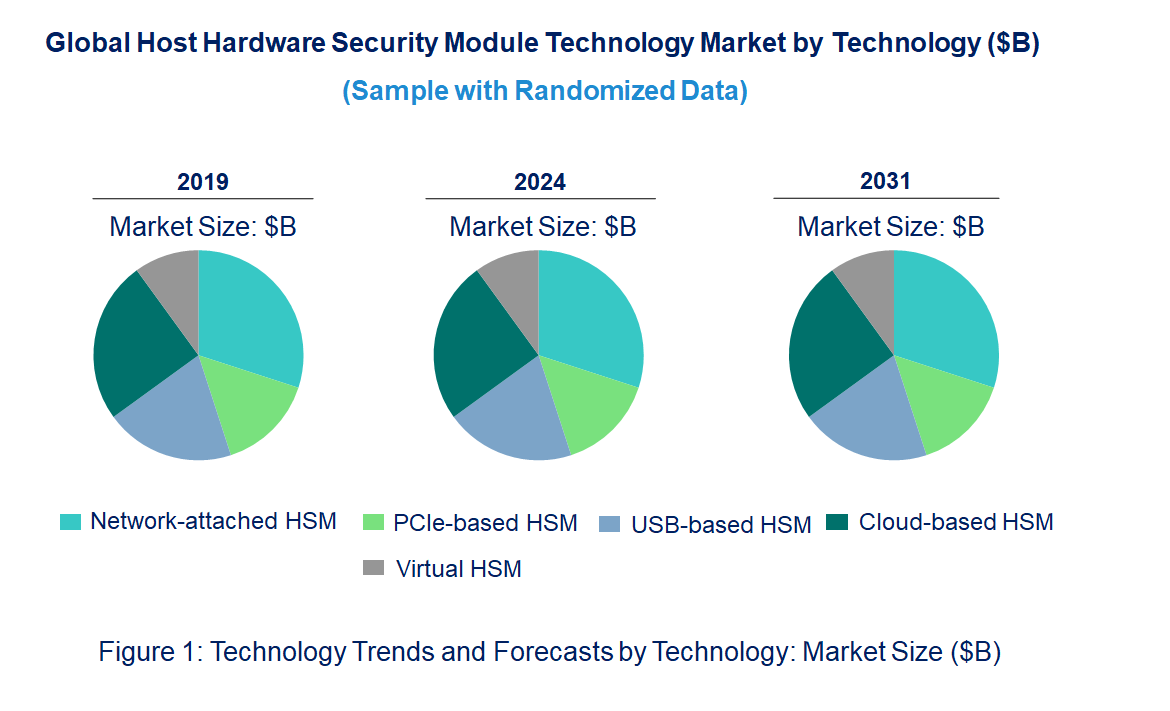
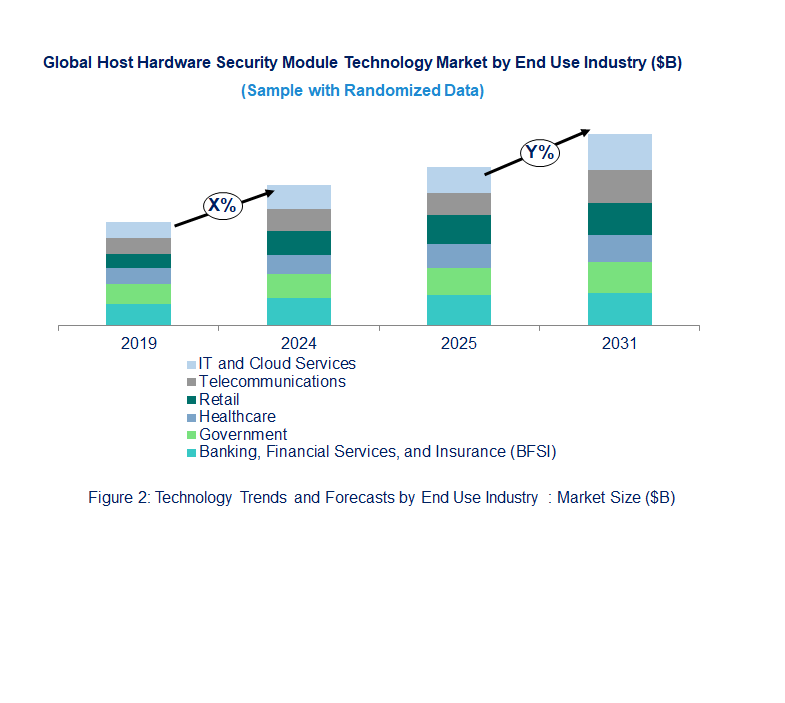
• Shift to Cloud-Based HSMs: Enterprises are transitioning from traditional on-premises HSMs to cloud-based offerings. Cloud HSMs deliver scalability, cost savings, and remote access, enabling organizations to securely manage cryptographic keys in elastic cloud infrastructures while reducing hardware maintenance overhead.
• Virtualization of HSMs: Virtual HSMs eliminate physical hardware constraints by providing software-defined cryptographic modules. This virtualization allows flexible, rapid deployment within existing infrastructures, enhancing agility and integration with DevOps workflows while maintaining security controls.
• Integration with Multi-Cloud and Hybrid Environments: Modern HSM solutions now support interoperability across multiple cloud providers and hybrid setups. This cross-platform compatibility simplifies key management, strengthens security posture, and supports digital transformation strategies requiring diverse cloud environments.
• Enhanced Compliance and Certifications: Rising regulatory demands, including FIPS 140-3 certification and GDPR compliance, drive market adoption of certified HSMs. Compliance ensures organizations meet legal requirements for data protection, fostering trust and mitigating risks associated with breaches.
• Improved Performance with Network-Attached and PCIe HSMs: Optimized network-attached and PCIe form factor HSMs offer high throughput and low latency for cryptographic operations, making them ideal for data centers and enterprises requiring rapid processing of encryption, decryption, and key management tasks. These converging trends are transforming the host HSM market into a flexible, scalable, and compliance-driven ecosystem. By embracing cloud integration, virtualization, multi-cloud support, and performance enhancements, organizations can strengthen their cryptographic security frameworks, ensuring data protection and operational efficiency in increasingly complex IT landscapes.
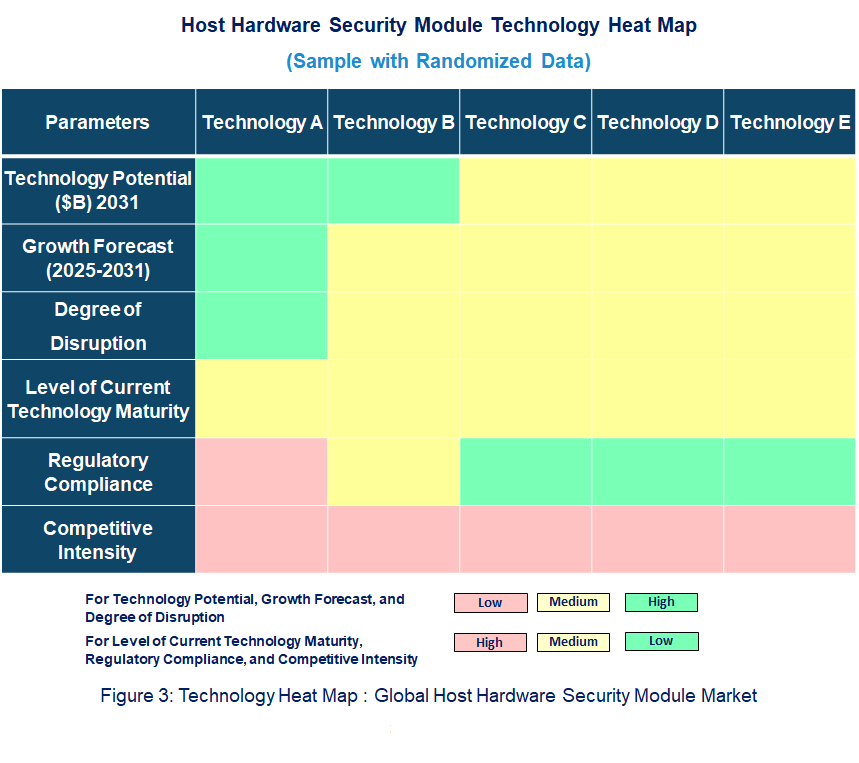
• Technology Potential: The host hardware security module (HSM) market holds significant technology potential due to the increasing need for secure cryptographic key management amid rising cyber threats and digital transformation. Advances such as cloud-based HSMs and virtualized security modules enable flexible, scalable deployment models that adapt to modern hybrid and multi-cloud infrastructures. This flexibility allows organizations to integrate strong hardware-rooted security without compromising agility or accessibility, driving innovation across industries.
• Degree of Disruption: The degree of disruption is moderate to high as traditional on-premises HSM deployments shift toward cloud-native and virtualized solutions. This transition challenges legacy security models and infrastructure investments but unlocks enhanced operational efficiency, cost savings, and rapid scalability. Cloud and virtual HSMs are reshaping how enterprises manage cryptographic keys and secure sensitive data, impacting the broader cybersecurity ecosystem.
• Level of Current Technology Maturity: The current technology maturity of host HSMs is high. Leading vendors provide robust, FIPS 140-2/3 and Common Criteria-certified hardware modules with proven reliability in data centers and cloud environments. The widespread adoption of network-attached and PCIe HSMs attests to the market’s established nature, while continuous innovation supports evolving use cases.
• Regulatory Compliance: Regulatory compliance is a critical driver, with increasing mandates such as GDPR, HIPAA, and updated cryptographic standards (FIPS 140-3) requiring certified, auditable key management solutions. Compliance ensures trust and legal adherence, making certified HSMs essential for enterprises handling sensitive or regulated data.
• Thales: Thales launched the Luna Network HSM 8, enhancing cryptographic processing capabilities and supporting quantum-resistant algorithms. This advancement enables organizations to secure emerging applications like blockchain and digital payments, ensuring long-term data protection in evolving digital landscapes.
• Utimaco: Utimaco introduced an upgraded Trust as a Service marketplace in May 2024, offering flexible deployment options for General Purpose HSMs. This service allows businesses to seamlessly choose between on-premise or cloud-based solutions, reducing capital and labor expenses while maintaining robust security measures.
• Futurex: Futurex unveiled the Excrypt Cloud HSM in June 2024, a scalable solution designed for cloud-native environments. This HSM provides high-throughput cryptographic operations and supports multi-cloud architectures, facilitating secure key management and compliance with industry standards.
• IBM: IBM expanded its Cloud Hyper Protect Crypto Services with the introduction of the IBM z16 hardware security module. Tailored for enterprise-level encryption and key management, the z16 HSM offers enhanced capabilities for securing sensitive data in both cloud and on-premises environments.
• Yubico: Yubico released YubiHSM 2 firmware version 2.4 in September 2024, introducing features like secure backups using asymmetric cryptography and ’Bring Your Own Key’ (BYOK) support. These enhancements enable organizations to securely manage cryptographic credentials in multi-cloud environments, ensuring regulatory compliance and data security.
• Synopsys: Synopsys launched the HSM-4000 series in August 2024, offering high-performance cryptographic modules for hardware-based key management. The HSM-4000 series supports a wide range of algorithms and is optimized for integration with embedded systems, providing secure cryptographic operations in IoT and automotive applications.
• Swift: Swift introduced the SecureKey HSM in July 2024, designed for secure key management in financial institutions. The SecureKey HSM supports industry standards such as PCI-DSS and FIPS 140-2, ensuring compliance and enhancing the security of financial transactions and data storage. These developments reflect the industry’s commitment to advancing cryptographic security solutions. The integration of quantum-resistant algorithms, cloud compatibility, and enhanced compliance features positions HSMs as critical components in safeguarding digital infrastructures against evolving threats. As organizations continue to navigate complex security landscapes, these innovations provide the necessary tools to protect sensitive data and maintain regulatory adherence.
• Cloud-Based HSM Adoption: Cloud-native HSMs enable organizations to manage encryption keys remotely while maintaining high assurance security. This shift reduces infrastructure costs, supports global scalability, and aligns with cloud-first IT strategies—making it easier for enterprises to secure data in hybrid and multi-cloud environments.
• Integration with Multi-Cloud and Hybrid Architectures: Modern HSMs are designed for interoperability across AWS, Azure, Google Cloud, and on-prem systems. This capability enhances centralized key management, data residency compliance, and overall data security in diverse enterprise IT ecosystems.
• Quantum-Resistant Cryptography Support: As quantum computing emerges, HSMs are being upgraded to support quantum-safe algorithms. This future-proofs data protection strategies and reassures organizations operating in long-data-retention industries such as finance, defense, and healthcare.
• Growth in Fintech, IoT, and Digital Identity Solutions: The rapid expansion of fintech, IoT devices, and digital identity frameworks increases demand for secure cryptographic services. HSMs offer tamper-resistant encryption and signing operations, enabling trust in real-time transactions and data exchanges.
• Regulatory Compliance and Data Sovereignty Requirements: Stricter data protection laws (e.g., GDPR, CCPA, FIPS 140-3) are driving adoption of certified HSMs. Compliance-focused organizations rely on HSMs to demonstrate encryption standards, auditability, and control over cryptographic keys in sensitive environments. Key Challenges
• High Deployment and Maintenance Costs: HSMs require specialized hardware, skilled management, and high initial investments. For small to mid-sized enterprises, these costs can be prohibitive, limiting market penetration.
• Complex Integration with Legacy Systems: Many enterprises still rely on legacy infrastructure, where integrating modern HSMs can be technically complex and time-consuming. This slows adoption and increases implementation risks.
• Lack of Skilled Personnel: Operating HSMs and managing cryptographic systems require advanced skills that are in short supply. This talent gap affects deployment timelines and system reliability.
• Evolving Threat Landscape: Despite strong physical and logical protections, HSMs must continuously evolve to counter emerging attack vectors—including side-channel attacks and supply chain vulnerabilities—necessitating constant updates and innovation. The host HSM market is being reshaped by cloud integration, compliance mandates, and the rise of emerging technologies like IoT and quantum computing. These growth drivers are expanding the scope and application of HSMs, making them central to enterprise security strategies. While cost and complexity remain hurdles, ongoing innovation and regulatory demand ensure the market’s continued growth and strategic relevance in securing critical digital assets.
• Thales
• Utimaco
• Futurex
• IBM
• Yubico
• Synopsys
• Technology Readiness by Technology Type: Network-attached HSMs are fully mature and deployed across sectors like banking and government, offering centralized, high-assurance key management. PCIe-based HSMs are also mature and used in on-premise environments requiring high throughput and low latency, though limited in scalability. USB-based HSMs are ready for production in portable and lower-risk environments, offering convenience but limited enterprise-grade compliance. Cloud-based HSMs are highly mature and adopted at scale, delivering strong compliance and integration with cloud-native applications. Virtual HSMs are approaching full readiness for cloud-first organizations, though trust parity and regulatory certifications remain ongoing challenges.
• Competitive Intensity and Regulatory Compliance: The host HSM market is marked by intense competition, particularly among network-attached and PCIe-based HSM providers, which must adhere to stringent standards like FIPS 140-2/3 and Common Criteria. USB-based HSMs compete on cost and portability, often targeting niche or developer markets, with moderate compliance requirements. Cloud-based HSMs are a focal point for hyperscalers and managed service providers, demanding adherence to SOC 2, ISO 27001, and data sovereignty regulations. Virtual HSMs are rapidly growing, but must overcome trust and regulatory challenges to match the assurances provided by physical devices. Compliance is critical across all technologies, influencing vendor selection in regulated sectors like finance, healthcare, and government. The competitive landscape is evolving as more cloud-native solutions emerge. Certification, integration capability, and pricing structure are key differentiators. Vendors in virtual and cloud spaces are rapidly innovating to meet both market demand and evolving compliance mandates. Regulatory adherence now plays a central role in shaping product viability and market access.
• Disruption Potential by Technology Type: Network-attached HSMs have high disruption potential by centralizing cryptographic services across distributed systems, especially in high-security industries. PCIe-based HSMs, while legacy, still offer low-latency and high-performance encryption, though they are being gradually displaced by more scalable models. USB-based HSMs disrupt at the lower end by offering portable and affordable security for individuals and small businesses. Cloud-based HSMs are the most disruptive, offering on-demand cryptographic operations with seamless integration into cloud infrastructures. Virtual HSMs represent a shift toward software-defined security, enabling quick provisioning and scalable deployment in DevOps environments. The rise of cloud-native applications and remote work accelerates adoption of virtual and cloud HSMs. Traditional HSMs face disruption as organizations seek elastic, remote, and compliance-ready solutions. Cloud and virtual models reduce infrastructure costs while enhancing operational flexibility. Security-as-a-service models challenge the dominance of on-prem HSMs. Collectively, these technologies are transforming the host HSM market from hardware-dependent to agile, service-driven architectures.
• Network-attached HSM
• PCIe-based HSM
• USB-based HSM
• Cloud-based HSM
• Virtual HSM
• Banking, Financial Services, and Insurance (BFSI)
• Government
• Healthcare
• Retail
• Telecommunications
• IT and Cloud Services
• North America
• Europe
• Asia Pacific
• The Rest of the World
• Latest Developments and Innovations in the Host Hardware Security Module Technologies
• Companies / Ecosystems
• Strategic Opportunities by Technology Type


Choose a license that fits your team. Instant PDF delivery.
Prices exclude taxes. Instant delivery. Custom licensing available on request.
Market Report · May 18, 2026
Market Report · May 18, 2026
Market Report · May 18, 2026
Trusted partner for strategic intelligence and business growth


Receive a complimentary market analysis tailored to your industry. Our analysts will identify key growth opportunities and competitive dynamics specific to your business.

Market size, growth rate, and key trend analysis for your specific sector.

Top competitor positioning and market share analysis.

Strategic recommendations backed by data-driven insights.
Get curated market intelligence and competitive moves straight to your inbox.
By subscribing, you agree to receive our monthly insights. Unsubscribe anytime.
Receive a complimentary market analysis tailored to your industry. Our analysts will identify key growth opportunities and competitive dynamics specific to your business.
Market size, growth rate, and key trend analysis for your specific sector.
Top competitor positioning and market share analysis.
Strategic recommendations backed by data-driven insights.
Get curated market intelligence, emerging trends, and competitive moves straight to your inbox each month.
By subscribing, you agree to receive our monthly insights. Unsubscribe anytime.
We'll send your sample report shortly.