
Market Report · July 31, 2026

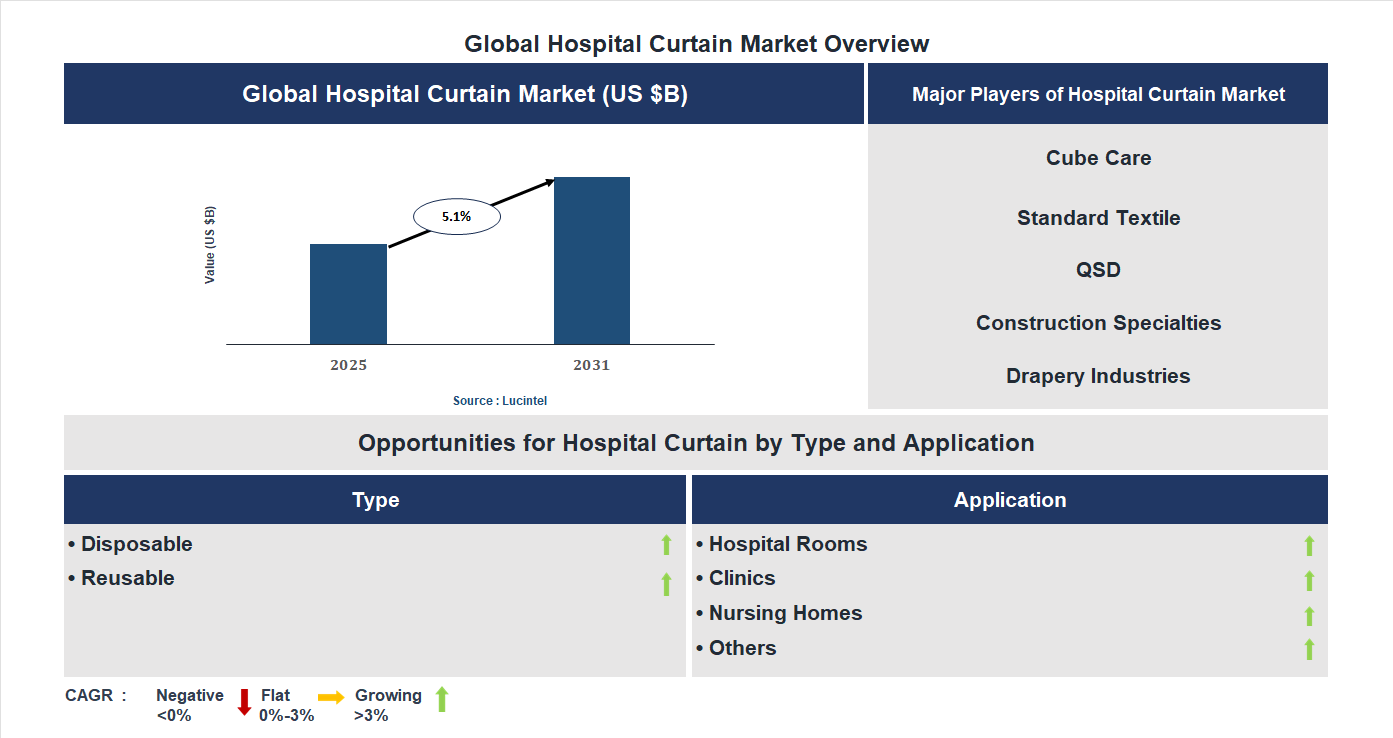
Key data points: The growth forecast = 5.1% annually for the next 7 years. Scroll below to get more insights. This market report covers trends, opportunities and forecasts in hospital curtain market to 2031 by type (disposable and reusable), application (hospital rooms, clinics, nursing homes, and others), and region (North America, Europe, Asia Pacific, and the Rest of the World)
We'll send your sample report shortly.
• Lucintel forecasts that, within the type category, disposable is expected to witness higher growth over the forecast period.
• Within the application category, hospital room is expected to witness the highest growth.
• In terms of region, APAC is expected to witness the highest growth over the forecast period. Gain valuable insights for your business decisions with our comprehensive 150+ page report. Sample figures with some insights are shown below.
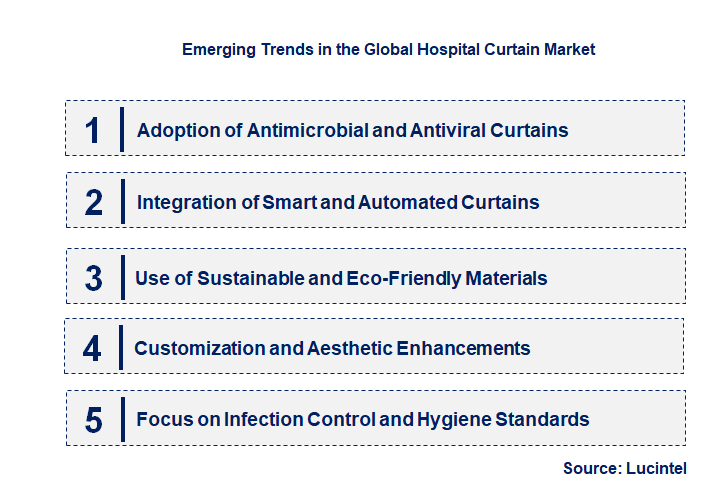
• Adoption of Antimicrobial and Antiviral Curtains: These curtains are embedded with antimicrobial agents that inhibit the growth of bacteria and viruses, significantly reducing infection transmission in healthcare settings. Their use is driven by the need for enhanced infection control measures, especially in the wake of global health crises. These curtains help hospitals comply with strict hygiene standards, improve patient safety, and reduce healthcare-associated infections, making them a vital innovation in the market.
• Integration of Smart and Automated Curtains: Smart hospital curtains equipped with automation features, such as motorized operation and sensor-based controls, are gaining popularity. They enable easy adjustment, improve privacy management, and reduce manual labor for staff. These curtains can be integrated with hospital management systems for better operational efficiency and patient comfort. The adoption of automation also supports infection control by minimizing contact points, aligning with modern healthcare’s focus on hygiene and efficiency.
• Use of Sustainable and Eco-Friendly Materials: Environmental concerns are prompting manufacturers to develop curtains from sustainable, biodegradable, and non-toxic materials. These eco-friendly options reduce the hospital’s carbon footprint and align with green building standards. They also appeal to healthcare providers aiming to demonstrate environmental responsibility. The shift towards sustainable materials is expected to drive innovation and expand market options, contributing to a more environmentally conscious healthcare infrastructure.
• Customization and Aesthetic Enhancements: Hospitals are increasingly opting for customizable curtains that match their interior design and branding. Aesthetic improvements include the use of vibrant colors, patterns, and high-quality fabrics that create a welcoming environment. Customizable curtains also offer functional benefits such as better light control and noise reduction. This trend enhances patient comfort and satisfaction, while also allowing healthcare facilities to project a professional and caring image, thereby influencing purchasing decisions.
• Focus on Infection Control and Hygiene Standards: The market is witnessing a heightened emphasis on infection control through the development of curtains that are easy to clean, resistant to mold and mildew, and capable of withstanding frequent disinfection procedures. Innovations include antimicrobial coatings and materials that prevent microbial growth. These features are critical in reducing hospital-acquired infections and ensuring compliance with stringent hygiene standards. This trend underscores the importance of safety and hygiene in healthcare environments, driving demand for high-performance, infection-resistant curtains. In summary, these emerging trends are fundamentally reshaping the Hospital Curtain Market by emphasizing infection control, automation, sustainability, customization, and hygiene. They are enabling healthcare facilities to improve patient safety, operational efficiency, and environmental responsibility, ultimately leading to more advanced, patient-centric hospital environments.
• Adoption of Antimicrobial Fabrics: The use of antimicrobial fabrics in hospital curtains has increased, reducing the risk of infections. This development enhances patient safety and aligns with infection control protocols, leading to higher demand for these advanced curtains in healthcare facilities worldwide.
• Integration of Automated Curtain Systems: Automation technology has been incorporated into hospital curtains, allowing for touchless operation and improved hygiene. These systems help minimize cross-contamination, streamline hospital workflows, and improve patient and staff convenience, significantly impacting hospital infrastructure.
• Customization and Design Flexibility: Manufacturers now offer customizable curtains tailored to specific hospital needs, including size, color, and material. This flexibility improves aesthetic appeal and functional performance, enabling healthcare providers to create more patient-friendly environments.
• Focus on Sustainable Materials: The market is witnessing a shift towards eco-friendly and sustainable curtain materials. These environmentally conscious options reduce hospital carbon footprints and meet regulatory standards, appealing to healthcare providers committed to sustainability.
• Technological Innovations in Material Durability: Advances in fabric technology have resulted in more durable, stain-resistant, and easy-to-clean curtains. These innovations extend product lifespan, reduce maintenance costs, and improve overall hygiene standards within hospital settings. In summary, these recent developments are transforming the Hospital Curtain Market by enhancing infection control, operational efficiency, customization, sustainability, and durability. These trends are driving market growth, improving healthcare environments, and meeting evolving hospital requirements for safety and comfort.
• Patient Privacy Enhancement: The demand for hospital curtains that provide superior privacy is increasing, driven by patient comfort and confidentiality needs. Advanced materials and designs that offer better soundproofing and visual separation are gaining popularity, improving patient experience and satisfaction.
• Infection Control Solutions: The rising focus on infection prevention is boosting the adoption of antimicrobial and antibacterial curtains. These curtains help reduce the spread of infections within healthcare facilities, supporting compliance with health regulations and improving patient outcomes.
• Customizable and Modular Curtains: The need for adaptable solutions has led to growth in customizable and modular curtain systems. These allow hospitals to modify layouts easily, optimize space, and improve workflow efficiency, especially in emergency and intensive care units.
• Technological Integration: Integration of smart features such as antimicrobial coatings, automated opening/closing, and sensor-based controls is creating new growth opportunities. These innovations enhance hygiene, reduce manual handling, and streamline hospital operations.
• Sustainability and Eco-friendly Materials: The shift towards environmentally sustainable products is influencing market growth. Curtains made from recyclable, biodegradable, or low-impact materials are increasingly preferred, aligning with global sustainability goals and hospital green initiatives. In summary, these growth opportunities are transforming the hospital curtain market by promoting safer, more efficient, and patient-centric healthcare environments. The integration of advanced materials, customization, and sustainability is driving innovation, expanding market reach, and improving overall healthcare delivery standards worldwide.
• Technological Innovations: The development of antimicrobial fabrics, automated curtain systems, and customizable designs enhances infection control, patient comfort, and operational efficiency. These innovations meet the increasing demand for hygienic and adaptable solutions in healthcare settings, encouraging hospitals to upgrade their infrastructure. As technology advances, the market benefits from improved product features, longer durability, and ease of maintenance, which collectively boost market growth and competitiveness.
• Rising Healthcare Expenditure: Increasing investments in healthcare infrastructure, especially in developing countries, are fueling demand for hospital curtains. Governments and private sectors are allocating funds to upgrade hospital facilities, including patient privacy solutions. This economic trend supports the procurement of high-quality, compliant curtains, thereby expanding the market and encouraging manufacturers to innovate and diversify their product offerings.
• Growing Focus on Infection Control: The global emphasis on preventing healthcare-associated infections (HAIs) has led to a surge in demand for antimicrobial and hygienic curtains. Hospitals are adopting advanced materials that inhibit microbial growth, aligning with stringent health regulations. This focus on infection prevention not only improves patient outcomes but also drives market growth by creating a need for specialized, high-performance curtains.
• Increasing Hospital Infrastructure Development: The expansion of healthcare facilities, especially in emerging economies, is a key driver. New hospitals and clinics require a large volume of curtains for patient rooms, operating theaters, and other areas. This infrastructure growth is supported by government initiatives and private investments, creating a sustained demand for hospital curtains and encouraging manufacturers to scale production.
• Adoption of Sustainable and Eco-friendly Materials: The shift towards environmentally sustainable products influences the market. Hospitals are increasingly opting for eco-friendly, biodegradable, and recyclable curtains to meet environmental regulations and corporate social responsibility goals. This trend promotes innovation in sustainable materials and expands the market for green hospital curtain solutions. The challenges facing the hospital curtain market include:-
• High Costs and Budget Constraints: The adoption of advanced, antimicrobial, and automated curtains often involves higher costs, which can be a barrier for budget-conscious healthcare providers. Limited budgets may restrict the procurement of premium products, leading to reliance on cheaper, less effective alternatives. This financial constraint hampers market growth, especially in developing regions where healthcare funding is limited.
• Regulatory and Compliance Challenges: Stringent regulations regarding material safety, fire resistance, and infection control standards complicate product development and approval processes. Navigating diverse regulatory landscapes across countries can delay product launches and increase compliance costs. These hurdles may discourage innovation and limit market entry for new players, impacting overall market expansion.
• Supply Chain Disruptions: Global supply chain issues, including shortages of raw materials and logistical delays, have affected the production and distribution of hospital curtains. Such disruptions can lead to delays in fulfilling orders, increased costs, and reduced product availability. These challenges threaten to hinder market growth, especially during times of global crises or economic downturns. In summary, the Hospital Curtain Market is driven by technological advancements, increased healthcare investments, infection control priorities, infrastructure development, and sustainability trends. However, high costs, regulatory complexities, and supply chain issues pose significant challenges. These factors collectively influence market dynamics, requiring stakeholders to innovate, adapt, and strategize effectively. The overall impact is a market poised for growth, provided that challenges are managed through technological innovation, regulatory compliance, and resilient supply chains.
• Cube Care
• Standard Textile
• QSD
• Construction Specialties
• Drapery Industries
• Covoc
• Hospital Curtain Solutions
• FABTEX
• Waverley
• On The Right Track
• Disposable
• Reusable
• Hospital Rooms
• Clinics
• Nursing Homes
• Others
• North America
• Europe
• Asia Pacific
• The Rest of the World
• United States: The US market has seen a rise in antimicrobial and fire-resistant curtains, driven by stringent safety regulations and infection control protocols. Hospitals are adopting smart curtains with integrated sensors for enhanced hygiene monitoring. The focus on patient comfort has led to the development of customizable and aesthetically appealing designs. Additionally, increased funding for healthcare infrastructure post-pandemic has accelerated market growth.
• China: China is experiencing rapid expansion in healthcare infrastructure, leading to increased demand for hospital curtains. Innovations include the use of eco-friendly, antibacterial fabrics and automation in curtain installation. The government’s emphasis on healthcare modernization and infection prevention measures has spurred local manufacturing and technological advancements, making China a significant market player.
• Germany: The German market emphasizes high-quality, durable, and environmentally sustainable curtains. There is a growing trend toward using biodegradable materials and energy-efficient manufacturing processes. Germany’s strict regulatory environment ensures that hospital curtains meet high safety and hygiene standards, fostering innovation in antimicrobial and fire-retardant fabrics.
• India: India’s hospital curtain market is expanding due to increased healthcare infrastructure and government initiatives to improve healthcare access. Cost-effective, durable, and easy-to-maintain curtains are in high demand. Innovations include the integration of antimicrobial coatings and lightweight materials suitable for diverse climatic conditions, supporting the country’s growing healthcare needs.
• Japan: Japan focuses on advanced, space-efficient, and hygienic curtain solutions, driven by its aging population and high standards of healthcare. The market features smart curtains with integrated sensors for infection control and automation. Sustainability is also a priority, with a shift toward eco-friendly materials and energy-efficient manufacturing practices to meet environmental regulations.


• Cube Care
• Standard Textile
• QSD
• Construction Specialties
• Drapery Industries
• Covoc
• Hospital Curtain Solutions
• FABTEX
• Waverley
• On The Right Track Q5. Which hospital curtain market segment will be the largest in future? Answer: Lucintel forecasts that, within the type category, disposable is expected to witness higher growth over the forecast period. Q6. In hospital curtain market, which region is expected to be the largest in next 5 years? Answer: In terms of region, APAC is expected to witness the highest growth over the forecast period. Q7. Do we receive customization in this report? Answer: Yes, Lucintel provides 10% customization without any additional cost.


Choose a license that fits your team. Instant PDF delivery.
Prices exclude taxes. Instant delivery. Custom licensing available on request.
Market Report · July 31, 2026
Market Report · July 31, 2026
Market Report · July 31, 2026
Trusted partner for strategic intelligence and business growth


Receive a complimentary market analysis tailored to your industry. Our analysts will identify key growth opportunities and competitive dynamics specific to your business.

Market size, growth rate, and key trend analysis for your specific sector.

Top competitor positioning and market share analysis.

Strategic recommendations backed by data-driven insights.
Get curated market intelligence and competitive moves straight to your inbox.
By subscribing, you agree to receive our monthly insights. Unsubscribe anytime.
Receive a complimentary market analysis tailored to your industry. Our analysts will identify key growth opportunities and competitive dynamics specific to your business.
Market size, growth rate, and key trend analysis for your specific sector.
Top competitor positioning and market share analysis.
Strategic recommendations backed by data-driven insights.
Get curated market intelligence, emerging trends, and competitive moves straight to your inbox each month.
By subscribing, you agree to receive our monthly insights. Unsubscribe anytime.
We'll send your sample report shortly.