
Market Report · July 31, 2026

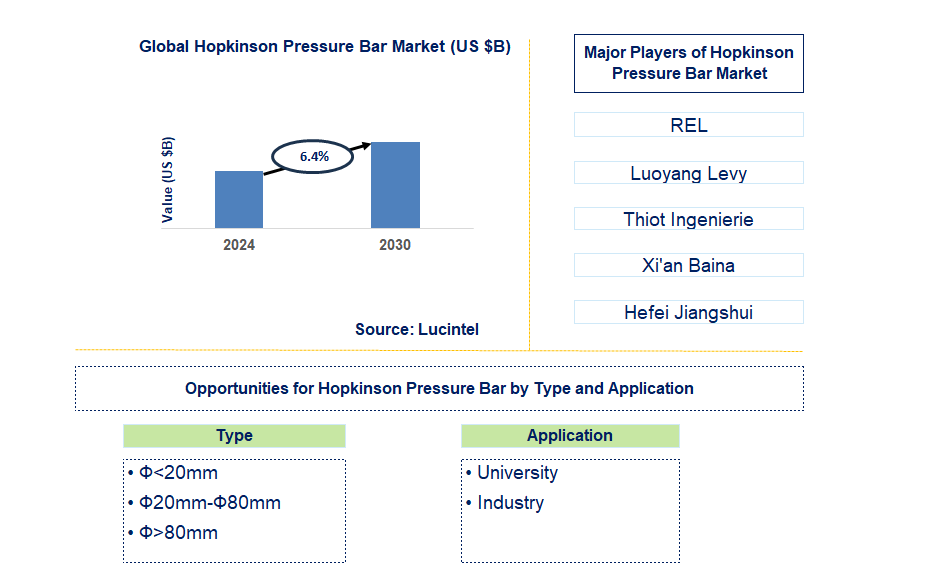
Key data points: The growth forecast = 6.4% annually for the next 6 years. Scroll below to get more insights. This market report covers trends, opportunities, and forecasts in the global hopkinson pressure bar market to 2030 by type (φ<20mm, φ20mm-φ80mm, and φ>80mm), application (university and industry), and region (North America, Europe, Asia Pacific, and the Rest of the World)
We'll send your sample report shortly.
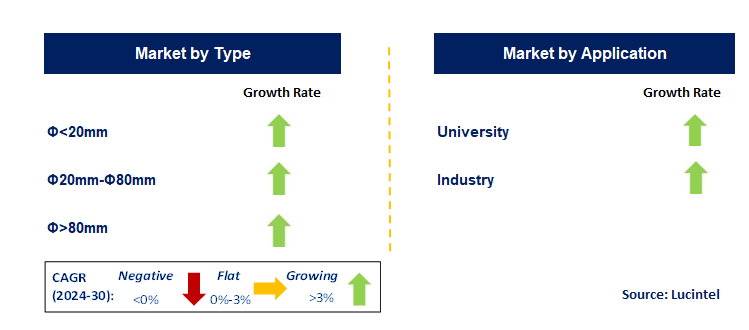
• Lucintel forecasts that, within the type category, the φ20mm-φ80mm segment is expected to witness higher growth over the forecast period.
• Within the application category, the industry will remain a larger segment.
• In terms of regions, APAC will remain the largest region over the forecast period due to the presence of major players in the region. Gain valuable insights for your business decisions with our comprehensive 150+ page report.
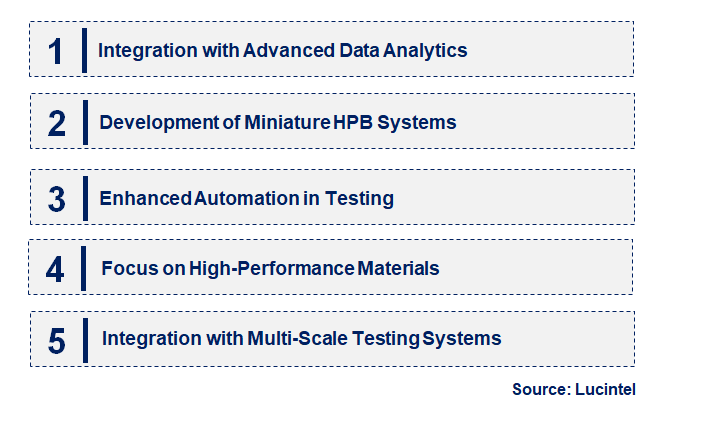
• Integration with Advanced Data Analytics: HPB systems are increasingly integrated with advanced data analytics tools. This trend allows for more detailed analysis of experimental data, improving accuracy and providing deeper insights into material behavior under high strain rates.
• Development of Miniature HPB Systems: There is a growing trend toward developing miniature HPB systems. These compact systems offer improved accessibility and versatility, making them suitable for a wider range of applications, including small-scale research and educational purposes.
• Enhanced Automation in Testing: Automation is increasingly incorporated into HPB systems. Automated systems streamline testing processes, reduce human error, and improve reproducibility and efficiency in material testing.
• Focus on High-Performance Materials: There is a growing emphasis on using HPB systems to test high-performance and composite materials. This trend supports advancements in industries like aerospace and automotive, where precise material performance data is crucial.
• Integration with Multi-Scale Testing Systems: HPB technology is being integrated with multi-scale testing systems, combining data from different testing methods. This integration enhances the understanding of material behavior across various scales, supporting more comprehensive material research. These emerging trends are reshaping the Hopkinson pressure bar market by enhancing data accuracy, expanding applications, and integrating advanced technologies. These developments are driving innovation and improving the capabilities of HPB systems across various industries.
• Advancement in Sensor Technology: Recent improvements in sensor technology are providing more accurate and reliable measurements in HPB systems. Enhanced sensors enable better data resolution and precision in testing materials under high strain rates.
• Introduction of Real-Time Data Analysis: The integration of real-time data analysis tools into HPB systems allows for immediate feedback and adjustments during experiments. This development enhances the accuracy of results and the efficiency of testing processes.
• Expansion of Research Facilities: New and upgraded research facilities equipped with advanced HPB systems are being established. These facilities support a broader range of material testing applications and contribute to advancements in material science and engineering.
• Integration with Computational Modeling: The integration of HPB systems with computational modeling tools is improving the simulation and interpretation of experimental data. This development supports a better understanding and prediction of material behavior under high-strain conditions.
• Advancements in Testing Capabilities: HPB systems are being upgraded to test a wider range of materials, including advanced composites and high-strength alloys. These advancements support the needs of industries such as aerospace and automotive for precise material performance data. These recent developments are enhancing the capabilities and applications of Hopkinson pressure bar systems. Advancements in technology and infrastructure are driving innovation and improving material testing processes across various industries.
• Expansion into Emerging Markets: There is an opportunity to expand HPB systems into emerging markets with growing research and industrial needs. This expansion can support local research capabilities and contribute to advancements in material science and engineering.
• Development of Advanced HPB Systems: Investing in the development of advanced HPB systems with enhanced capabilities presents growth opportunities. These systems can address the needs of high-performance material testing and support research in various industries.
• Integration with Industry-Specific Applications: Tailoring HPB systems for specific industry applications, such as aerospace or automotive, offers growth opportunities. Customizing systems to meet industry requirements can attract new clients and support specialized research.
• Collaboration with Research Institutions: Collaborating with research institutions can drive innovation and market growth. Partnerships can lead to the development of new testing methodologies and applications, expanding the use of HPB systems in cutting-edge research.
• Advancements in Automation and Digitalization: Investing in the automation and digitalization of HPB systems offers growth opportunities by improving efficiency and accuracy. Enhanced automation can streamline testing processes and attract clients seeking advanced solutions. These strategic growth opportunities are shaping the future of the Hopkinson pressure bar market by driving innovation, expanding applications, and enhancing system capabilities. Companies that leverage these opportunities can achieve growth and improve their market position.
• Technological advancements: Innovations in sensor technology and data analysis are driving growth in the HPB market. These advancements improve measurement accuracy and data interpretation, supporting the development of more precise and efficient testing systems.
• Growing demand for high-performance testing: Increased demand for high-performance material testing in industries like aerospace and automotive is driving the HPB market. The need for accurate data on material behavior under high strain rates supports market growth.
• Investment in research and development: Investment in research and development is a key driver for the HPB market. Funding for advanced research facilities and technology upgrades supports the development of new testing methodologies and capabilities.
• Regulatory requirements: Stricter regulatory requirements for material testing are influencing the HPB market. Compliance with these regulations drives the need for advanced testing systems and accurate data, impacting market dynamics.
• Economic factors: Economic conditions can affect investment in HPB systems. Budget constraints and economic downturns may limit funding for new installations and upgrades, impacting market growth. Challenges in the Hopkinson pressure bar market include:
• High cost of advanced systems: The high cost of advanced HPB systems can be a barrier to adoption. Companies must balance the benefits of new technology with the associated costs, affecting market accessibility.
• Complexity of integration: Integrating new technologies with existing HPB systems can be complex. Companies may face challenges in ensuring compatibility and achieving optimal performance, impacting implementation efforts.
• Regulatory compliance costs: Meeting regulatory requirements for material testing can be costly. Companies must invest in systems and processes to ensure compliance, affecting overall market costs and dynamics.
• Limited market penetration in emerging regions: Limited market penetration in emerging regions can hinder growth. Expanding market presence in these areas requires strategic investment and local partnerships. Technological obsolescence: Rapid advancements in technology can lead to the obsolescence of existing systems. Companies must continuously update their technologies to stay competitive, posing a challenge in maintaining market relevance. The drivers and challenges impacting the Hopkinson pressure bar market reflect a complex interplay of technological, economic, and regulatory factors. Addressing these elements effectively is essential for navigating the market and achieving growth.
• REL
• Luoyang Levy
• Thiot Ingenierie
• Xi'an Baina
• Hefei Jiangshui
• Luoyang Daosheng
• Φ<20mm
• Φ20mm-Φ80mm
• Φ>80mm
• University
• Industry
• North America
• Europe
• Asia Pacific
• The Rest of the World
• United States: In the US, advancements in digital signal processing and data acquisition systems are improving the accuracy and efficiency of HPB experiments. Enhanced sensor technologies and real-time data analysis are facilitating more precise measurements of material properties under high strain rates.
• China: China is expanding its HPB capabilities with new research facilities and upgraded equipment. The focus is on increasing the range and accuracy of tests, particularly for high-strength and composite materials, to support the growing demand in the aerospace and automotive industries.
• Germany: Germany is leading in the integration of HPB technology with other testing systems, such as high-speed cameras and advanced computational modeling tools. This integration enhances the understanding of material behavior and supports the development of new materials and processes.
• India: India is investing in HPB technology to support its growing research and development sector. New installations and upgrades are aimed at improving the testing of materials used in defense and automotive applications, contributing to advancements in these critical industries.
• Japan: Japan is focusing on miniaturizing HPB systems and integrating them with automation technologies. These advancements are aimed at improving testing precision and efficiency, catering to the needs of advanced manufacturing and materials research.


• REL
• Luoyang Levy
• Thiot Ingenierie
• Xi'an Baina
• Hefei Jiangshui
• Luoyang Daosheng Q5. Which hopkinson pressure bar market segment will be the largest in future? Answer: Lucintel forecasts that φ20mm-φ80mm segment is expected to witness higher growth over the forecast period. Q6. In hopkinson pressure bar market, which region is expected to be the largest in next 5 years? Answer: APAC will remain the largest region over the forecast period due to presence of major players in the region. Q.7 Do we receive customization in this report? Answer: Yes, Lucintel provides 10% customization without any additional cost.


Choose a license that fits your team. Instant PDF delivery.
Prices exclude taxes. Instant delivery. Custom licensing available on request.
Market Report · July 31, 2026
Market Report · July 22, 2026
Market Report · July 20, 2026
Trusted partner for strategic intelligence and business growth


Receive a complimentary market analysis tailored to your industry. Our analysts will identify key growth opportunities and competitive dynamics specific to your business.

Market size, growth rate, and key trend analysis for your specific sector.

Top competitor positioning and market share analysis.

Strategic recommendations backed by data-driven insights.
Get curated market intelligence and competitive moves straight to your inbox.
By subscribing, you agree to receive our monthly insights. Unsubscribe anytime.
Receive a complimentary market analysis tailored to your industry. Our analysts will identify key growth opportunities and competitive dynamics specific to your business.
Market size, growth rate, and key trend analysis for your specific sector.
Top competitor positioning and market share analysis.
Strategic recommendations backed by data-driven insights.
Get curated market intelligence, emerging trends, and competitive moves straight to your inbox each month.
By subscribing, you agree to receive our monthly insights. Unsubscribe anytime.
We'll send your sample report shortly.