
Report Feature
Home Hydrogen Water Machine Market Trends and Forecast
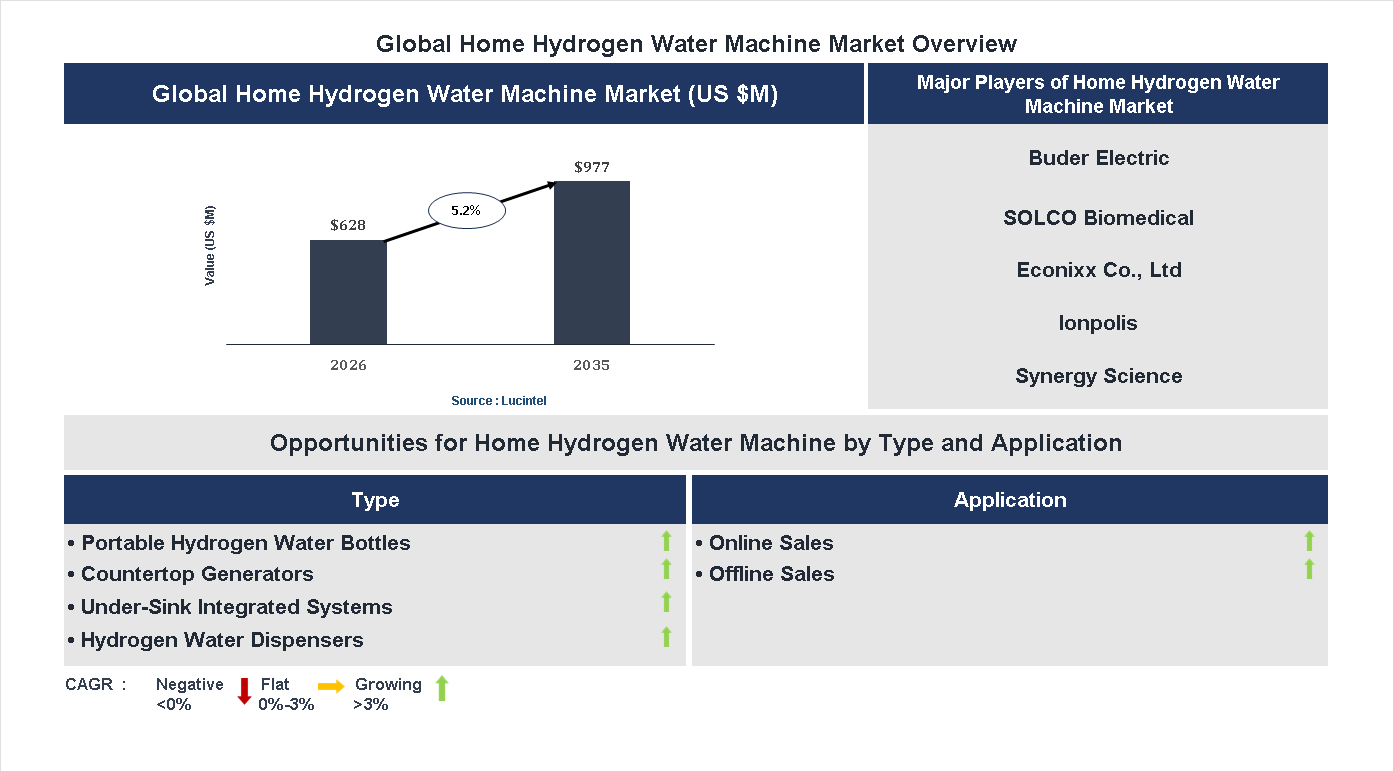
The future of the global home hydrogen water machine market looks promising with opportunities in the online sale and offline sale markets. The global home hydrogen water machine market is expected to reach an estimated $977 million by 2035 with a CAGR of 5.2% from 2026 to 2035. The major drivers for this market are the growing demand for antioxidant-rich water, the increasing interest in wellness trends & hydration technology innovations, and the rising consumer awareness about hydrogen waters health benefits.• Lucintel forecasts that, within the type category, portable hydrogen water bottle is expected to witness the highest growth over the forecast period.
• Within the application category, online sale is expected to witness higher growth.
• In terms of region, APAC is expected to witness the highest growth over the forecast period. Gain valuable insights for your business decisions with our comprehensive 150+ page report. Sample figures with some insights are shown below.
Emerging Trends in the Home Hydrogen Water Machine Market
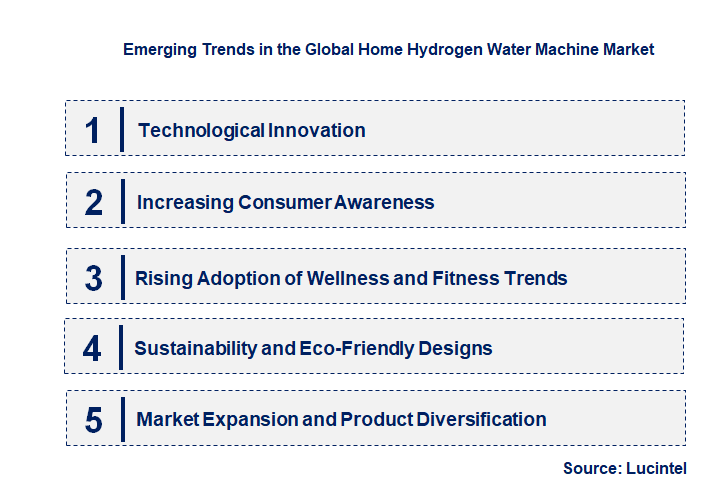
The home hydrogen water machine market is experiencing rapid growth driven by increasing consumer awareness of health benefits, technological advancements, and a rising preference for wellness-oriented products. As consumers seek convenient ways to improve their health and well-being, innovative solutions like hydrogen water machines are gaining popularity. Market players are focusing on product innovation, affordability, and sustainability to meet evolving demands. These developments are transforming the landscape, making hydrogen water machines more accessible and appealing to a broader audience. The following key trends highlight the major shifts shaping this markets future trajectory.• Technological Innovation: Advancements in electrolysis technology are enhancing efficiency and durability. Newer models offer higher hydrogen concentration, better filtration, and user-friendly interfaces. These innovations improve product performance, making hydrogen water more accessible and appealing to consumers. As technology evolves, prices are expected to decrease, broadening market reach and encouraging widespread adoption.
• Increasing Consumer Awareness: Growing awareness of the health benefits associated with hydrogen-rich water, such as antioxidant properties and improved hydration, is driving demand. Marketing campaigns, scientific research, and influencer endorsements are educating consumers about these benefits. This trend boosts consumer confidence and accelerates market growth, as more individuals seek out hydrogen water machines for personal health management.
• Rising Adoption of Wellness and Fitness Trends: The global focus on health, fitness, and preventive healthcare is fueling demand for wellness products. Hydrogen water machines are increasingly integrated into home gyms and wellness routines. This trend reflects a shift towards proactive health management, with consumers investing in products that support their lifestyle goals, thereby expanding the market beyond traditional health sectors.
• Sustainability and Eco-Friendly Designs: Consumers are increasingly prioritizing environmentally friendly products. Manufacturers are adopting sustainable materials, energy-efficient electrolysis processes, and recyclable components. These eco-conscious initiatives appeal to environmentally aware consumers and align with global sustainability goals, enhancing brand reputation and market competitiveness.
• Market Expansion and Product Diversification: Companies are expanding their product portfolios to include portable, compact, and multi-functional hydrogen water machines. This diversification caters to different consumer needs, from on-the-go hydration to family use. Additionally, emerging markets are witnessing increased penetration due to rising disposable incomes and health consciousness, further fueling market growth. Technological advancements, heightened consumer awareness, wellness trends, sustainability efforts, and product diversification are collectively reshaping the home hydrogen water machine market. These trends are making hydrogen water more accessible, affordable, and aligned with modern health and environmental values, thereby driving sustained growth and innovation in the industry.
Recent Development in the Home Hydrogen Water Machine Market
The home hydrogen water machine market is experiencing rapid growth driven by increasing health awareness and technological advancements. Consumers seek convenient ways to improve wellness, prompting innovation in water purification and hydrogen infusion devices. Market players are expanding product features, enhancing affordability, and targeting diverse consumer segments. These developments are reshaping the industry landscape, creating new opportunities for manufacturers and retailers. As demand for health-focused products rises, understanding these key growth areas is essential for stakeholders aiming to capitalize on this expanding market.• Growing Consumer Awareness Of Health Benefits: The increasing awareness of hydrogen waters health benefits, such as antioxidant properties and improved hydration, is driving demand. Consumers are seeking easy-to-use, home-based solutions to incorporate wellness into daily routines. This trend encourages manufacturers to develop innovative, user-friendly machines with advanced features, expanding market reach. The focus on health benefits also boosts marketing efforts, attracting a broader demographic, including fitness enthusiasts and aging populations, thereby fueling market growth.
• Technological Innovations In Water Purification: Advances in water purification technology, including enhanced filtration systems and smart controls, are improving device efficiency and user experience. These innovations enable machines to produce higher purity hydrogen water with minimal maintenance. As a result, consumer confidence increases, and adoption rates rise. Companies investing in R&D are launching smarter, more reliable products, which strengthen brand loyalty and open new market segments, such as premium and portable hydrogen water machines.
• Rising Affordability And Product Accessibility: Price reductions through technological improvements and mass production are making hydrogen water machines more affordable for average consumers. Retailers are expanding distribution channels, including online platforms, to reach wider audiences. This increased accessibility encourages first-time buyers and boosts overall market penetration. As affordability improves, demand from middle-income households grows, leading to higher sales volumes and encouraging manufacturers to diversify product offerings to meet varied consumer needs.
• Expansion Into Emerging Markets: Companies are targeting emerging markets with rising health consciousness and disposable incomes. Local partnerships and tailored marketing strategies are facilitating market entry. These regions offer significant growth potential due to increasing urbanization and awareness of wellness trends. Expanding into these markets not only increases sales but also diversifies revenue streams, helping companies establish a strong foothold early on. This expansion is expected to accelerate market growth globally, driven by rising demand for home health devices.
• Integration With Smart Home Technologies: The integration of hydrogen water machines with smart home ecosystems is enhancing user convenience and control. Features like app connectivity, voice commands, and automation are attracting tech-savvy consumers. This integration allows for personalized hydration routines and remote monitoring, increasing product appeal. As smart home adoption accelerates, manufacturers incorporating these features are gaining competitive advantages, leading to higher sales and customer satisfaction. This trend is transforming the market into a more connected, innovative space. These developments are significantly impacting the home hydrogen water machine market by expanding consumer base, improving product quality, and increasing accessibility. Technological innovations and market expansion strategies are driving growth, making hydrogen water machines more appealing and affordable. As a result, the industry is poised for sustained expansion, with increased competition and innovation fostering a dynamic environment that benefits consumers and stakeholders alike.
Strategic Growth Opportunities in the Home Hydrogen Water Machine Market
The home hydrogen water machine market is experiencing rapid growth driven by increasing health awareness, technological advancements, and a rising demand for wellness products. Consumers are seeking convenient ways to improve their health at home, fueling innovation in hydrogen water technology. Market players are expanding product features, targeting diverse consumer segments, and exploring new distribution channels. This environment presents significant opportunities for companies to capture market share, develop innovative solutions, and meet the evolving needs of health-conscious consumers worldwide.• Increasing Consumer Awareness of Hydrogen Water Benefits: Growing knowledge about hydrogen water’s antioxidant and health-promoting properties is boosting demand. Consumers are actively seeking products that can improve hydration, reduce oxidative stress, and support overall wellness. This awareness is driven by health trends, social media influence, and scientific research, encouraging manufacturers to develop user-friendly, effective, and affordable home hydrogen water machines to meet the rising demand.
• Technological Innovations Enhancing Product Efficiency: Advances in electrolysis technology and materials are improving hydrogen water machine performance. Innovations such as portable devices, smart features, and enhanced filtration systems are making products more accessible and convenient. These developments enable manufacturers to differentiate their offerings, expand into new markets, and cater to diverse consumer preferences, thereby driving market growth and increasing adoption rates across different regions.
• Expansion into Emerging Markets with Growing Health Consciousness: Developing countries are witnessing increased health awareness and disposable income, creating opportunities for market expansion. Local manufacturers and international brands are entering these markets with affordable, compact, and easy-to-use hydrogen water machines. Tailoring products to regional preferences and establishing distribution networks are key strategies to capture market share and foster long-term growth in these emerging economies.
• Diversification of Product Offerings for Different Consumer Segments: Companies are developing a range of products targeting specific demographics, such as portable devices for travelers, premium models for wellness enthusiasts, and budget-friendly options for cost-conscious consumers. This segmentation allows brands to address varied needs, increase market penetration, and boost sales. Customization and branding efforts are crucial to appeal to niche markets and enhance customer loyalty.
• Strategic Collaborations and Partnerships for Market Penetration: Collaborations between technology firms, health organizations, and retail chains are facilitating product innovation and distribution expansion. Partnerships enable access to new customer bases, co-develop advanced features, and enhance credibility. Such strategic alliances are vital for accelerating market adoption, increasing brand visibility, and establishing a competitive edge in the rapidly evolving home hydrogen water machine industry. These growth opportunities are poised to significantly influence the market by fostering innovation, expanding reach, and meeting diverse consumer needs. Companies that leverage technological advancements, target emerging markets, and form strategic partnerships will be well-positioned to capitalize on the increasing demand for home hydrogen water machines, ensuring sustained growth and competitive advantage in this dynamic industry.
Home Hydrogen Water Machine Market Driver and Challenges
The home hydrogen water machine market is influenced by a variety of technological, economic, and regulatory factors. Advances in water purification and hydrogen generation technologies have made these devices more accessible and efficient. Growing health consciousness among consumers and the increasing prevalence of lifestyle-related diseases are driving demand for health-enhancing products like hydrogen water machines. Economic factors such as rising disposable incomes and the decreasing costs of manufacturing components further support market growth. However, regulatory standards concerning water safety and product certification pose challenges. Balancing innovation with compliance and addressing consumer awareness are critical for sustained expansion in this market. The factors responsible for driving the home hydrogen water machine market include:• Technological Innovation: The development of advanced electrolysis technology has significantly improved the efficiency and safety of hydrogen water machines. These innovations enable consumers to produce high-purity hydrogen-rich water at home, fostering market growth. As technology continues to evolve, devices become more user-friendly, compact, and affordable, broadening their appeal. The integration of smart features and IoT connectivity further enhances user experience, making these machines more attractive to health-conscious consumers. Continuous R&D efforts are expected to sustain innovation, ensuring the market remains competitive and responsive to consumer needs.
• Rising Health Awareness: Increasing awareness about the health benefits of hydrogen-rich water, such as antioxidant properties and improved metabolism, is a major driver. Consumers are actively seeking products that support wellness and longevity, especially in aging populations. The proliferation of health-related information through digital platforms and social media amplifies this trend. As more individuals prioritize preventive healthcare, demand for home-based health devices like hydrogen water machines is expected to grow. This shift towards health-centric lifestyles encourages consumers to invest in personal wellness tools, fueling market expansion.
• Economic Growth and Disposable Income: Rising disposable incomes across emerging and developed economies enable more consumers to afford premium health products. As the middle class expands, so does the willingness to spend on innovative health devices like hydrogen water machines. Lower manufacturing costs, driven by technological advancements and economies of scale, make these devices more affordable. This economic upliftment broadens the consumer base, encouraging market penetration in new regions. Additionally, the increasing affordability of these machines supports sustained sales growth, especially in urban areas where health and wellness trends are more prominent.
• Regulatory Support and Certification: Governments and regulatory bodies are increasingly establishing standards for water safety and device certification, which bolster consumer confidence. Certification processes ensure product safety, efficacy, and quality, reducing market entry barriers for reputable manufacturers. Regulatory support, including subsidies or incentives for health-related innovations, can further stimulate market growth. Clear guidelines help prevent counterfeit or substandard products from entering the market, protecting consumers and fostering trust. As regulatory frameworks become more defined, manufacturers are encouraged to innovate within compliant parameters, ensuring sustainable market development.
• Market Expansion and E-commerce Growth: The proliferation of e-commerce platforms has made hydrogen water machines more accessible to a global audience. Online retail channels facilitate direct-to-consumer sales, expanding market reach beyond traditional brick-and-mortar stores. Digital marketing strategies and product reviews influence purchasing decisions, accelerating adoption. Additionally, increasing urbanization and changing lifestyles drive demand for convenient, home-based health solutions. The ability to compare products, access detailed information, and benefit from competitive pricing online enhances consumer engagement. This digital shift is expected to continue supporting market growth and diversification. The challenges facing the home hydrogen water machine market include:
• High Product Costs and Limited Awareness: Despite decreasing manufacturing costs, high retail prices can hinder adoption among price-sensitive consumers. Many potential users remain unaware of hydrogen water benefits or how to use these devices effectively. Lack of widespread knowledge limits market penetration, especially in developing regions. Overcoming this challenge requires extensive consumer education and marketing efforts to demonstrate value and safety, which can be resource-intensive. Without increased awareness, market growth may remain constrained, and manufacturers might struggle to reach a broader audience.
• Regulatory Uncertainty and Certification Barriers: The absence of standardized regulations across different regions creates uncertainty for manufacturers. Variations in safety standards and certification requirements can delay product launches and increase compliance costs. Stringent regulations may also restrict certain technologies or materials, limiting innovation. Navigating complex regulatory landscapes demands significant legal and technical expertise, which can be a barrier for smaller companies. This uncertainty hampers rapid market expansion and may lead to fragmented product offerings, affecting consumer trust and overall market stability.
• Competition and Market Saturation: The increasing number of players entering the market intensifies competition, leading to price wars and reduced profit margins. Many manufacturers offer similar features, making differentiation challenging. Market saturation in developed regions can slow growth and lead to consumer fatigue. Companies must invest heavily in branding, innovation, and after-sales service to maintain market share. Additionally, counterfeit and low-quality products threaten consumer confidence, further complicating market dynamics. Managing competitive pressures while maintaining quality and affordability remains a key challenge for sustained growth. The home hydrogen water machine market is driven by technological advancements, rising health consciousness, economic growth, regulatory support, and expanding digital channels. However, high costs, regulatory uncertainties, and intense competition pose significant challenges. These factors collectively influence market dynamics, requiring stakeholders to innovate, educate, and adapt to regulatory landscapes. The overall impact suggests a promising growth trajectory, provided that companies effectively address these challenges through strategic initiatives, consumer engagement, and compliance. The markets future depends on balancing innovation with affordability and trust, ensuring long-term sustainability and widespread adoption.
List of Home Hydrogen Water Machine Companies
Companies in the market compete on the basis of product quality offered. Major players in this market focus on expanding their manufacturing facilities, R&D investments, infrastructural development, and leverage integration opportunities across the value chain. With these strategies home hydrogen water machine companies cater increasing demand, ensure competitive effectiveness, develop innovative products & technologies, reduce production costs, and expand their customer base. Some of the home hydrogen water machine companies profiled in this report include-• Buder Electric
• SOLCO Biomedical
• Econixx Co., Ltd
• Ionpolis
• Synergy Science
• Olansi
• Saikesaisi
• Zenii
• Cosan
• Gosoit
Home Hydrogen Water Machine Market by Segment
The study includes a forecast for the global home hydrogen water machine market by type, application, and region.Home Hydrogen Water Machine Market by Type [Value from 2019 to 2035]:
• Portable Hydrogen Water Bottles
• Countertop Generators
• Under-Sink Integrated Systems
• Hydrogen Water Dispensers
Home Hydrogen Water Machine Market by Application [Value from 2019 to 2035]:
• Online Sales
• Offline Sales
Home Hydrogen Water Machine Market by Region [Value from 2019 to 2035]:
• North America
• Europe
• Asia Pacific
• The Rest of the World
Country Wise Outlook for the Home Hydrogen Water Machine Market
The home hydrogen water machine market has experienced significant growth driven by increasing health consciousness, technological advancements, and rising demand for wellness products worldwide. Consumers are seeking innovative solutions to improve hydration and overall health, prompting manufacturers to develop more efficient and user-friendly devices. The market dynamics vary across regions, influenced by local health trends, regulatory policies, and technological adoption rates. As awareness about the benefits of hydrogen-rich water grows, countries are investing in research and development to enhance product offerings and expand market reach. This evolving landscape presents new opportunities and challenges for industry players globally.• United States: The U.S. market has seen rapid growth due to rising health awareness and a strong preference for innovative wellness devices. Key advancements include the integration of smart features and improved hydrogen generation technology. Major brands are expanding their product lines, and e-commerce channels are increasingly popular for distribution. Regulatory support and consumer education initiatives are further boosting market penetration.
• China: China remains a dominant player with a large consumer base and increasing adoption of hydrogen water machines. The market benefits from government initiatives promoting health and wellness products. Local manufacturers are investing heavily in R&D to develop cost-effective, high-performance devices. The rapid urbanization and rising disposable incomes are fueling demand, alongside growing awareness of hydrogen water benefits.
• Germany: The German market is characterized by a focus on quality, safety, and eco-friendly products. Technological innovation is driven by strict regulatory standards and consumer preferences for sustainable solutions. Companies are emphasizing product durability and energy efficiency. The market is also witnessing collaborations between local and international firms to enhance product features and expand distribution networks.
• India: India’s market is expanding due to increasing health consciousness and rising disposable incomes. Affordability and accessibility are key factors, with local manufacturers offering budget-friendly options. The market is also driven by urbanization and a growing middle class seeking wellness solutions. Awareness campaigns and online retail channels are playing a crucial role in market growth.
• Japan: Japan exhibits a mature market with high consumer awareness and technological sophistication. Innovations focus on compact design, energy efficiency, and integration with other health devices. The market benefits from a strong culture of health and wellness, with consumers willing to invest in premium products. Regulatory standards ensure product safety and efficacy, supporting sustained growth in the region.

Features of the Global Home Hydrogen Water Machine Market
Market Size Estimates: Home hydrogen water machine market size estimation in terms of value ($M). Trend and Forecast Analysis: Market trends (2019 to 2025) and forecast (2026 to 2035) by various segments and regions. Segmentation Analysis: Home hydrogen water machine market size by type, application, and region in terms of value ($M). Regional Analysis: Home hydrogen water machine market breakdown by North America, Europe, Asia Pacific, and Rest of the World. Growth Opportunities: Analysis of growth opportunities in different types, applications, and regions for the home hydrogen water machine market. Strategic Analysis: This includes M&A, new product development, and competitive landscape of the home hydrogen water machine market. Analysis of competitive intensity of the industry based on Porter’s Five Forces model.
FAQ
Q1. What is the home hydrogen water machine market size? Answer: The global home hydrogen water machine market is expected to reach an estimated $977 million by 2035. Q2. What is the growth forecast for home hydrogen water machine market? Answer: The global home hydrogen water machine market is expected to grow with a CAGR of 5.2% from 2026 to 2035. Q3. What are the major drivers influencing the growth of the home hydrogen water machine market? Answer: The major drivers for this market are the growing demand for antioxidant-rich water, the increasing interest in wellness trends & hydration technology innovations, and the rising consumer awareness about hydrogen waters health benefits. Q4. What are the major segments for home hydrogen water machine market? Answer: The future of the home hydrogen water machine market looks promising with opportunities in the online sale and offline sale markets. Q5. Who are the key home hydrogen water machine market companies? Answer: Some of the key home hydrogen water machine companies are as follows:• Buder Electric
• SOLCO Biomedical
• Econixx Co., Ltd
• Ionpolis
• Synergy Science
• Olansi
• Saikesaisi
• Zenii
• Cosan
• Gosoit Q6. Which home hydrogen water machine market segment will be the largest in future? Answer: Lucintel forecasts that, within the type category, portable hydrogen water bottle is expected to witness the highest growth over the forecast period. Q7. In home hydrogen water machine market, which region is expected to be the largest in next 5 years? Answer: In terms of region, APAC is expected to witness the highest growth over the forecast period. Q8. Do we receive customization in this report? Answer: Yes, Lucintel provides 10% customization without any additional cost.
Table of Contents
List of Figures
List of Tables
Methodology
- In-depth interviews of the major players in this market
- Detailed secondary research from competitors’ financial statements and published data
- Extensive searches of published works, market, and database information pertaining to industry news, company press releases, and customer intentions
- A compilation of the experiences, judgments, and insights of Lucintel’s professionals, who have analyzed and tracked this market over the years.


Buy Now
Choose a license that fits your team. Instant PDF delivery.
Prices exclude taxes. Instant delivery. Custom licensing available on request.
Key Questions
- • What are some of the most promising, high-growth opportunities for the home hydrogen water machine market by type (portable hydrogen water bottles, countertop generators, under-sink integrated systems, and hydrogen water dispensers), application (online sales and offline sales), and region (North America, Europe, Asia Pacific, and the Rest of the World)?
- • Which segments will grow at a faster pace and why?
- • Which region will grow at a faster pace and why?
- • What are the key factors affecting market dynamics? What are the key challenges and business risks in this market?
- • What are the business risks and competitive threats in this market?
- • What are the emerging trends in this market and the reasons behind them?
- • What are some of the changing demands of customers in the market?
- • What are the new developments in the market? Which companies are leading these developments?
- • Who are the major players in this market? What strategic initiatives are key players pursuing for business growth?
- • What are some of the competing products in this market and how big of a threat do they pose for loss of market share by material or product substitution?
- • What M&A activity has occurred in the last 7 years and what has its impact been on the industry? For any questions related to Home Hydrogen Water Machine Market, Home Hydrogen Water Machine Market Size, Home Hydrogen Water Machine Market Growth, Home Hydrogen Water Machine Market Analysis, Home Hydrogen Water Machine Market Report, Home Hydrogen Water Machine Market Share, Home Hydrogen Water Machine Market Trends, Home Hydrogen Water Machine Market Forecast, Home Hydrogen Water Machine Companies, write Lucintel analyst at email: helpdesk@lucintel.com. We will be glad to get back to you soon.


