
Market Report · July 31, 2026

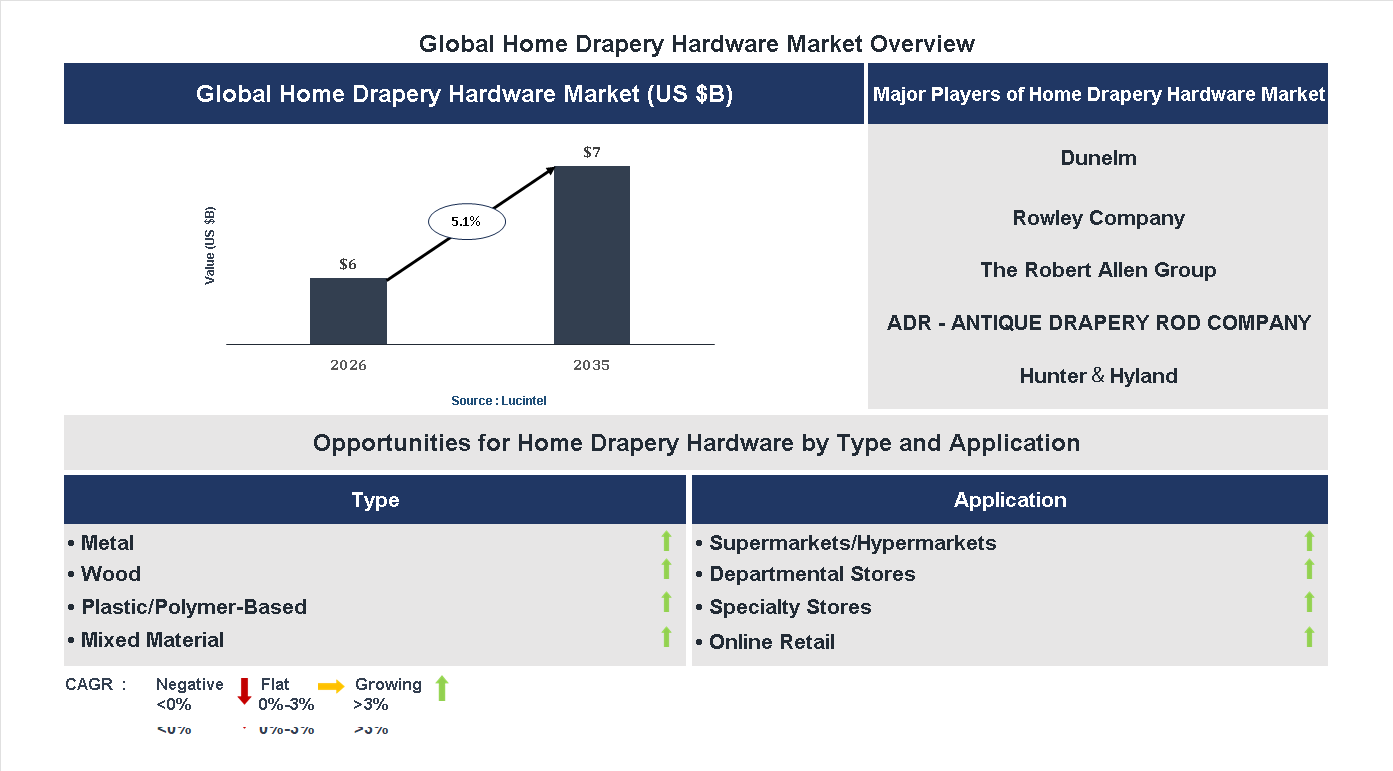
Key data points: The market size in 2035 = $7 billion, growth forecast = 5.1% annually for the next 8 years. Scroll below to get more insights. This market report covers trends, opportunities and forecasts in home drapery hardware market to 2035 by type (metal, wood, plastic/polymer-based, and mixed material), application (supermarkets/hypermarkets, departmental stores, specialty stores, and online retail), and region (North America, Europe, Asia Pacific, and the Rest of the World)
We'll send your sample report shortly.
• Lucintel forecasts that, within the application category, online retail is expected to witness the highest growth over the forecast period.
• Within the type category, mixed material is expected to witness the highest growth.
• In terms of region, APAC is expected to witness the highest growth over the forecast period. Gain valuable insights for your business decisions with our comprehensive 150+ page report. Sample figures with some insights are shown below.
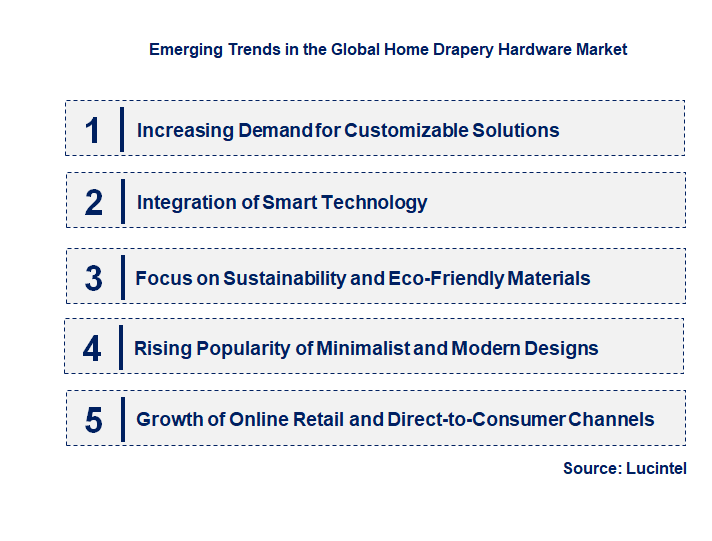
• Increasing demand for customizable solutions: Consumers now prefer tailored drapery hardware that matches their interior decor and personal style. Manufacturers are offering modular and customizable options, allowing customers to select finishes, sizes, and features. This trend enhances customer satisfaction and brand loyalty, as personalized products meet specific aesthetic and functional needs. The rise of online customization tools further facilitates this shift, making it easier for consumers to design their ideal hardware. Overall, customization is driving product innovation and expanding market segmentation.
• Integration of smart technology: The incorporation of smart features into drapery hardware is gaining popularity. Automated curtain systems, remote control, and voice-activated devices are becoming common, offering convenience and enhanced user experience. This trend aligns with the growing adoption of smart home ecosystems, where integrated control of various devices is standard. Manufacturers are investing in IoT-enabled hardware that can be programmed for schedules or voice commands, increasing the appeal for tech-savvy consumers. Smart hardware not only improves functionality but also adds a modern touch to home interiors, boosting market growth.
• Focus on sustainability and eco-friendly materials: Environmental concerns are influencing product development in the market. Consumers are increasingly seeking hardware made from sustainable, recyclable, and non-toxic materials. Manufacturers are responding by using eco-friendly metals, woods, and finishes, and adopting sustainable manufacturing practices. This trend enhances brand reputation and appeals to environmentally conscious buyers. Additionally, eco-friendly products often meet stricter regulatory standards, providing a competitive advantage. Sustainability is becoming a key differentiator, encouraging innovation and responsible sourcing within the industry.
• Rising popularity of minimalist and modern designs: The aesthetic preference for sleek, simple, and functional hardware is shaping product offerings. Minimalist designs with clean lines and neutral finishes are favored for contemporary interiors. This trend reflects a broader move towards decluttered and streamlined home decor. Manufacturers are focusing on creating versatile hardware that complements various styles while maintaining a minimalist appeal. The demand for modern designs is also driven by the influence of social media and interior design trends, encouraging brands to innovate with innovative materials and finishes that align with current aesthetic preferences.
• Growth of online retail and direct-to-consumer channels: E-commerce platforms are becoming primary sales channels for drapery hardware. Consumers appreciate the convenience of browsing, customizing, and purchasing products online, often at competitive prices. Direct-to-consumer models enable brands to build stronger relationships with customers, gather feedback, and offer personalized services. Digital marketing and virtual showrooms are enhancing the shopping experience, expanding market reach beyond traditional retail outlets. This trend is accelerating market growth, reducing distribution costs, and fostering innovation in product presentation and customer engagement strategies. These emerging trends—customization, smart technology, sustainability, modern design, and online retail—are collectively reshaping the home drapery hardware market. They are driving innovation, expanding consumer choices, and fostering a more sustainable and technologically integrated industry. As these trends continue to evolve, they will significantly influence market dynamics, competitive strategies, and overall growth trajectories.
• Growing Demand for Customization and Aesthetic Appeal: The increasing desire for personalized home decor has driven demand for customizable drapery hardware. Consumers seek unique, stylish, and functional solutions that complement their interior design. Manufacturers are offering a wide range of finishes, materials, and adjustable options, which enhance customer satisfaction and boost sales. This trend encourages innovation and diversification in product offerings, leading to higher market competitiveness and growth opportunities.
• Technological Innovations in Smart Hardware: Integration of smart technology into drapery hardware is revolutionizing the market. Automated and motorized systems enable remote control, voice activation, and programmable settings, providing convenience and energy efficiency. These innovations appeal to tech-savvy consumers and those seeking modern, functional solutions. The adoption of smart hardware is expanding market reach, creating new revenue streams, and fostering product differentiation, thus significantly impacting industry growth.
• Rising Preference for Sustainable and Eco-Friendly Materials: Consumers are increasingly prioritizing sustainability in their purchasing decisions. The market is responding with eco-friendly materials such as bamboo, recycled metals, and biodegradable finishes. These sustainable options reduce environmental impact and appeal to environmentally conscious buyers. Manufacturers investing in green materials and sustainable production processes are gaining competitive advantage, fostering industry growth, and aligning with global sustainability goals.
• Expansion of E-commerce and Online Retail Channels: The proliferation of online shopping platforms has broadened market access for drapery hardware products. E-commerce offers consumers convenience, detailed product information, and competitive pricing. Retailers are leveraging digital marketing and virtual showrooms to enhance customer engagement. This shift is driving sales growth, expanding market reach, and enabling brands to target a wider audience, thereby accelerating industry development and innovation.
• Increasing Focus on Functional and Space-Saving Solutions: Urbanization and smaller living spaces are fueling demand for space-efficient drapery hardware. Multi-functional and compact designs optimize space utilization while maintaining aesthetic appeal. Innovations include ceiling-mounted tracks, hidden hardware, and adjustable systems. These solutions cater to modern living needs, enhance user experience, and open new market segments. The focus on functionality and space-saving features is significantly influencing product development and market expansion. The overall impact of these developments is a more dynamic, innovative, and consumer-centric home drapery hardware market. Increased customization, technological integration, sustainability, online retail expansion, and functional solutions are driving growth, enhancing competitiveness, and shaping future industry trends. This evolution benefits manufacturers, retailers, and consumers by offering diverse, efficient, and eco-friendly options, ultimately transforming home interior aesthetics and functionality.
• Growing Demand for Customizable and Aesthetic Hardware: The increasing desire for personalized home decor is fueling demand for customizable drapery hardware options such as motorized tracks, decorative finials, and versatile mounting systems. Consumers seek products that complement interior design themes, leading manufacturers to innovate with diverse finishes, materials, and styles. This trend is particularly prominent in luxury and high-end residential segments, where aesthetic appeal and functionality are equally prioritized, expanding market opportunities for premium product offerings.
• Expansion of Smart and Motorized Drapery Solutions: The integration of smart technology into drapery hardware is transforming the market by offering automated, remote-controlled, and voice-activated systems. These solutions enhance convenience, energy efficiency, and security, especially in smart homes and commercial buildings. The rising adoption of IoT-enabled products is driving innovation, with sub-segments like motorized curtain tracks and automated blinds experiencing rapid growth, catering to tech-savvy consumers seeking modern, functional home automation options.
• Increasing Adoption in Commercial and Hospitality Sectors: The commercial and hospitality sectors are increasingly adopting advanced drapery hardware for aesthetic enhancement and functional benefits such as light control and privacy. Hotels, offices, and conference centers prefer durable, stylish, and easy-to-operate hardware solutions, including heavy-duty tracks and motorized systems. This segment offers growth opportunities through customized solutions, bulk procurement, and durable materials designed to withstand high usage, thereby expanding the overall market footprint.
• Rising Preference for Eco-Friendly and Sustainable Materials: Consumers and manufacturers are prioritizing environmentally sustainable products, leading to the development of eco-friendly drapery hardware made from recycled metals, bamboo, and biodegradable plastics. This shift aligns with global sustainability initiatives and eco-conscious consumer behavior. The demand for green materials is particularly strong in premium and eco-friendly home segments, encouraging innovation in manufacturing processes and expanding the market for sustainable hardware options.
• Technological Innovations in Installation and Maintenance: Advances in installation techniques, such as modular systems and easy-to-install hardware, are reducing setup time and costs for consumers and professionals. Additionally, maintenance-friendly designs with corrosion-resistant and durable materials are gaining popularity. These innovations improve user experience, reduce long-term costs, and expand market reach into DIY segments and rental properties. The focus on ease of installation and low maintenance is expected to drive further growth in both residential and commercial applications. These strategic growth opportunities are poised to significantly influence the home drapery hardware market by fostering innovation, expanding application areas, and meeting evolving consumer preferences. Emphasizing customization, smart technology, sustainability, and ease of installation will enable market players to capitalize on emerging trends. As a result, the market is expected to experience sustained growth, driven by increasing demand for functional, stylish, and eco-friendly window treatment solutions across residential and commercial sectors.
• Technological Innovation: The integration of advanced manufacturing technologies such as automation and 3D printing has revolutionized product design and production efficiency. These innovations enable manufacturers to create customized, durable, and aesthetically appealing hardware, meeting diverse consumer preferences. Moreover, technological improvements in materials, such as corrosion-resistant metals and eco-friendly options, enhance product longevity and sustainability. As consumers increasingly seek innovative and high-quality products, technological advancements serve as a key driver, fostering market expansion and differentiation among competitors.
• Rising Urbanization and Housing Development: Rapid urbanization and increased construction activities globally have led to a surge in residential and commercial building projects. This growth directly boosts demand for home decor and hardware solutions, including drapery hardware. Developers and homeowners prioritize stylish, functional, and easy-to-install hardware to enhance interior aesthetics. The expanding real estate sector, especially in emerging economies, creates a sustained demand for innovative drapery hardware, fueling market growth and providing opportunities for manufacturers to expand their product offerings.
• Increasing Consumer Preference for Aesthetic and Functional Products: Modern consumers prioritize interior design and functionality, seeking hardware that complements their decor while offering ease of use. This trend drives demand for a wide range of styles, finishes, and features such as motorized or cordless options. Manufacturers are responding by offering customizable and innovative products that cater to these preferences. The desire for personalized and stylish solutions enhances market competitiveness and encourages continuous product development, ultimately expanding the market scope and consumer base.
• Growth of E-commerce and Distribution Channels: The proliferation of online retail platforms has transformed how consumers access home decor products, including drapery hardware. E-commerce offers convenience, a broader product selection, and competitive pricing, attracting a wider customer base. Additionally, the expansion of specialized retail outlets and home improvement stores enhances product visibility and availability. This omnichannel approach facilitates market penetration into new regions and demographics, accelerating sales growth and enabling manufacturers to reach consumers directly, thereby fueling overall market expansion.
• Increasing Focus on Sustainable and Eco-friendly Products: Growing environmental awareness among consumers and regulatory pressures are driving demand for sustainable hardware solutions. Manufacturers are adopting eco-friendly materials, such as recycled metals and biodegradable finishes, and implementing environmentally responsible manufacturing processes. This shift not only aligns with consumer values but also helps companies comply with regulations and improve brand reputation. The emphasis on sustainability fosters innovation and opens new market segments, contributing to long-term growth and differentiation in the competitive landscape. The challenges facing the home drapery hardware market include:
• Fluctuating Raw Material Prices: The market heavily depends on metals like aluminum, steel, and brass, whose prices are subject to volatility due to global supply chain disruptions, geopolitical tensions, and fluctuating commodity markets. Rising raw material costs can increase manufacturing expenses, leading to higher product prices that may deter price-sensitive consumers. Conversely, price drops can squeeze profit margins for manufacturers. Managing these fluctuations requires strategic sourcing and inventory management, but persistent volatility remains a significant challenge impacting profitability and pricing strategies.
• Stringent Regulatory Standards: The industry faces increasing regulatory requirements related to product safety, environmental impact, and import-export policies. Compliance with safety standards, such as fire resistance and child safety regulations, necessitates ongoing product testing and certification, which can be costly and time-consuming. Additionally, environmental regulations concerning material sourcing and manufacturing emissions compel companies to adopt sustainable practices, often involving significant investment. Navigating these complex regulatory landscapes can delay product launches and increase operational costs, posing a challenge to market agility and competitiveness.
• Intense Market Competition and Price Pressures: The home drapery hardware market is highly fragmented, with numerous local and international players vying for market share. This intense competition leads to price wars, reducing profit margins and forcing companies to innovate continuously while maintaining affordability. Differentiating products through design, quality, and branding becomes crucial but challenging in a crowded marketplace. Additionally, the rise of private labels and online marketplaces intensifies price competition, making it difficult for smaller or newer entrants to establish a foothold and sustain profitability. The home drapery hardware market is shaped by technological advancements, urbanization, consumer preferences, distribution expansion, and sustainability trends. However, it faces challenges such as raw material price volatility, regulatory compliance, and fierce competition. These drivers and challenges collectively influence market growth, requiring companies to innovate, adapt, and strategize effectively. While opportunities for expansion are significant, addressing the challenges is essential for long-term sustainability and competitive advantage in this evolving industry landscape.
• Dunelm
• Rowley Company
• The Robert Allen Group
• ADR - ANTIQUE DRAPERY ROD COMPANY
• Hunter&Hyland
• DSC Window Fashions
• Brimar
• Byron&Byron
• Classical Elements,Inc
• Forest
• Metal
• Wood
• Plastic/Polymer-Based
• Mixed Material
• Supermarkets/Hypermarkets
• Departmental Stores
• Specialty Stores
• Online Retail
• North America
• Europe
• Asia Pacific
• The Rest of the World
• United States: The US market has seen a surge in smart drapery hardware, integrating automation and remote control features. There is a growing demand for eco-friendly materials and sustainable manufacturing practices. Retailers are expanding online channels, making products more accessible. Customization options are increasingly popular, catering to diverse consumer tastes. The renovation boom post-pandemic has further driven market growth, with increased focus on luxury and high-tech solutions.
• China: Chinas market is characterized by rapid industrialization and technological adoption. Local manufacturers are innovating with affordable, durable, and stylish hardware options. E-commerce platforms dominate sales channels, facilitating quick distribution. The government’s emphasis on sustainable development is encouraging eco-friendly product lines. Urbanization and rising disposable incomes are fueling demand for premium and designer drapery hardware. Additionally, there is a growing trend towards automation and smart home integration.
• Germany: The German market emphasizes quality, durability, and eco-conscious products. Manufacturers are adopting sustainable materials and environmentally friendly production processes. There is a strong preference for minimalist and functional designs aligned with European aesthetic standards. The market is also witnessing increased demand for innovative, space-saving hardware solutions. Regulatory standards for safety and sustainability are influencing product development, and online sales channels are expanding alongside traditional retail outlets.
• India: The Indian market is experiencing rapid growth driven by increasing urbanization and rising disposable incomes. Consumers are seeking affordable yet stylish drapery hardware options. Local manufacturers are expanding their product ranges to include modern and traditional designs. E-commerce platforms are gaining popularity, providing wider access to diverse products. There is a rising awareness of eco-friendly and sustainable materials. The market is also witnessing a shift towards automated and motorized hardware, especially in urban and luxury segments.
• Japan: Japans market focuses on high-quality, innovative, and space-efficient hardware solutions. There is a strong preference for technologically advanced products, including motorized and smart hardware systems. Sustainability and eco-friendliness are important considerations, influencing product design and manufacturing. The market is driven by a mature consumer base that values durability and aesthetic appeal. Retail channels include both traditional stores and online platforms, with a growing emphasis on customization and premium offerings. Technological integration remains a key trend shaping future developments.


• Dunelm
• Rowley Company
• The Robert Allen Group
• ADR - ANTIQUE DRAPERY ROD COMPANY
• Hunter&Hyland
• DSC Window Fashions
• Brimar
• Byron&Byron
• Classical Elements,Inc
• Forest Q6. Which home drapery hardware market segment will be the largest in future? Answer: Lucintel forecasts that, within the application category, online retail is expected to witness the highest growth over the forecast period. Q7. In home drapery hardware market, which region is expected to be the largest in next 5 years? Answer: In terms of region, APAC is expected to witness the highest growth over the forecast period. Q8. Do we receive customization in this report? Answer: Yes, Lucintel provides 10% customization without any additional cost.


Choose a license that fits your team. Instant PDF delivery.
Prices exclude taxes. Instant delivery. Custom licensing available on request.
Market Report · July 31, 2026
Market Report · July 31, 2026
Market Report · July 31, 2026
Trusted partner for strategic intelligence and business growth


Receive a complimentary market analysis tailored to your industry. Our analysts will identify key growth opportunities and competitive dynamics specific to your business.

Market size, growth rate, and key trend analysis for your specific sector.

Top competitor positioning and market share analysis.

Strategic recommendations backed by data-driven insights.
Get curated market intelligence and competitive moves straight to your inbox.
By subscribing, you agree to receive our monthly insights. Unsubscribe anytime.
Receive a complimentary market analysis tailored to your industry. Our analysts will identify key growth opportunities and competitive dynamics specific to your business.
Market size, growth rate, and key trend analysis for your specific sector.
Top competitor positioning and market share analysis.
Strategic recommendations backed by data-driven insights.
Get curated market intelligence, emerging trends, and competitive moves straight to your inbox each month.
By subscribing, you agree to receive our monthly insights. Unsubscribe anytime.
We'll send your sample report shortly.