
Market Report · July 22, 2026

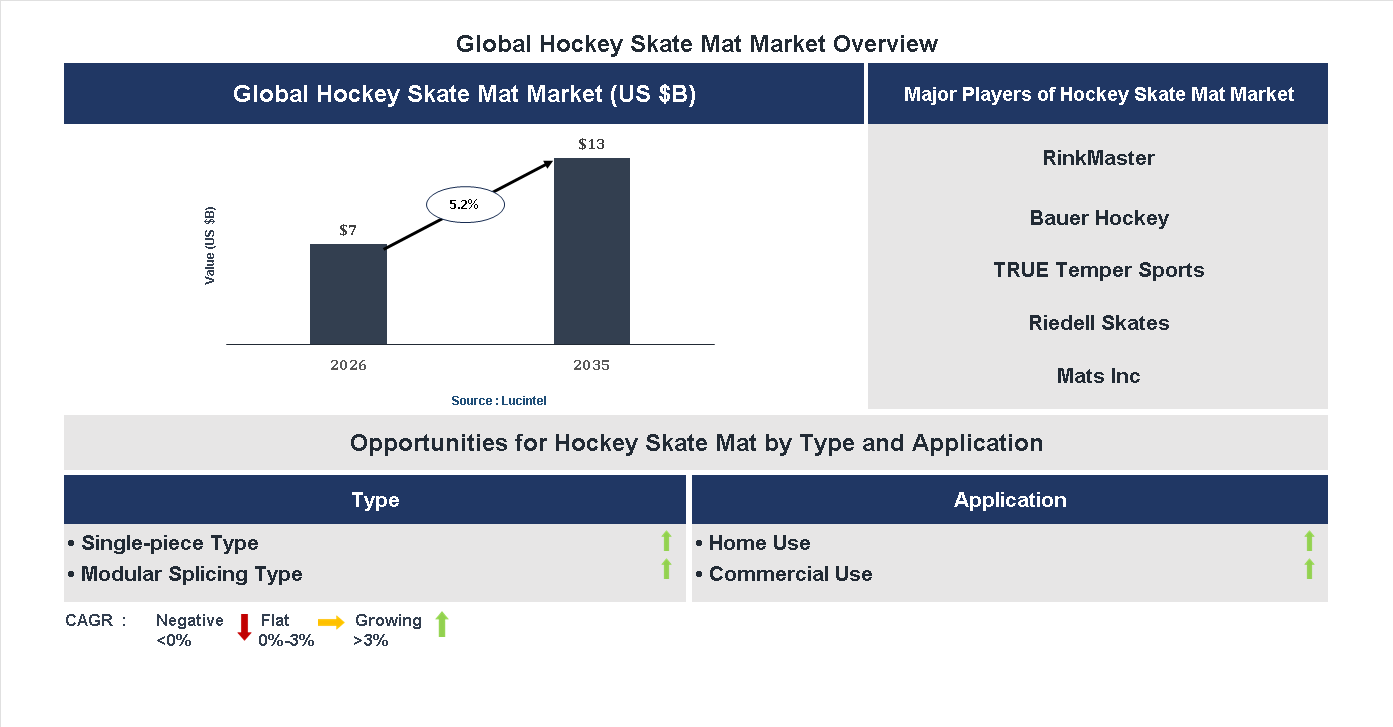
Key data points: The market size in 2035 = $13 million, growth forecast = 5.2% annually for the next 8 years. Scroll below to get more insights. This market report covers trends, opportunities and forecasts in hockey skate mat market to 2035 by type (single-piece type and modular splicing type), application (home use and commercial use), and region (North America, Europe, Asia Pacific, and the Rest of the World)
We'll send your sample report shortly.
• Lucintel forecasts that, within the type category, modular splicing type is expected to witness higher growth over the forecast period.
• Within the application category, commercial use is expected to witness higher growth.
• In terms of region, APAC is expected to witness the highest growth over the forecast period. Gain valuable insights for your business decisions with our comprehensive 150+ page report. Sample figures with some insights are shown below.
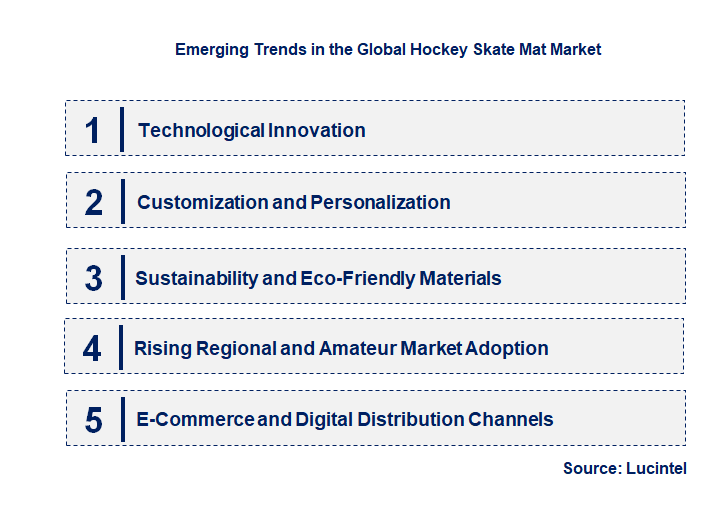
• Technological Innovation: Integration of advanced materials and smart features is transforming skate mats. New materials offer better durability, grip, and shock absorption, enhancing player performance and safety. Smart mats with sensors provide real-time feedback on skating techniques, helping players improve skills and prevent injuries. This trend is driven by the increasing demand for high-performance equipment and the desire for data-driven training. As technology becomes more accessible, expect further innovations that will make skate mats more functional, interactive, and tailored to individual needs, ultimately elevating the overall hockey experience.
• Customization and Personalization: Consumers are seeking tailored solutions to meet their specific needs. Manufacturers are offering customizable skate mats with adjustable features, personalized designs, and branding options. This trend caters to individual players, teams, and leagues looking to enhance their identity and performance. Customization also extends to size, grip levels, and cushioning, providing a more comfortable and effective skating surface. The rise of online platforms facilitates easy customization, making it more accessible and appealing. Personalization enhances user satisfaction and brand loyalty, driving market growth and differentiation.
• Sustainability and Eco-Friendly Materials: Growing environmental awareness is prompting manufacturers to adopt sustainable practices. Use of eco-friendly, recyclable, and biodegradable materials in skate mats is increasing. Companies are exploring renewable resources and reducing chemical usage to minimize environmental impact. This trend aligns with broader sports industry sustainability goals and appeals to environmentally conscious consumers. Sustainable skate mats not only reduce ecological footprints but also enhance brand reputation. As regulations tighten and consumer preferences shift, sustainability will become a key factor influencing product development and market competitiveness.
• Rising Regional and Amateur Market Adoption: The expansion of hockey at grassroots levels and in emerging markets is boosting demand for affordable, durable skate mats. Regional sports development programs and increased participation in amateur leagues are fueling this growth. Local clubs and schools are investing in quality equipment to promote the sport, creating new market opportunities. This trend democratizes access to hockey, fostering talent development and increasing overall market size. As awareness and infrastructure improve, expect continued growth in regional markets, which will diversify and strengthen the global hockey skate mat industry.
• E-Commerce and Digital Distribution Channels: The shift towards online shopping is significantly impacting the market. E-commerce platforms enable manufacturers to reach a broader audience, offer customization options, and provide detailed product information. Digital marketing strategies enhance brand visibility and customer engagement. The convenience of online purchasing, coupled with reviews and comparison tools, influences consumer decisions. This trend reduces reliance on traditional retail outlets, lowers distribution costs, and accelerates product adoption. As digital channels evolve, they will play a crucial role in shaping market dynamics, making hockey skate mats more accessible and appealing to a global customer base. These emerging trends—technological innovation, customization, sustainability, regional market expansion, and digital distribution—are collectively reshaping the hockey skate mat market. They are driving product development, expanding market reach, and enhancing consumer engagement, ultimately fostering a more dynamic, sustainable, and customer-centric industry landscape.
• Market Expansion Through New Applications: The hockey skate mat market is broadening beyond traditional ice hockey training to include indoor skating rinks, home gyms, and virtual training setups. This diversification is driven by technological innovations and consumer demand for versatile, durable, and easy-to-install mats. As a result, manufacturers are developing specialized products for different environments, increasing market reach and revenue streams. The expansion also encourages partnerships with sports facilities and fitness centers, further boosting growth.
• Technological Innovations in Material Composition: Recent developments focus on using advanced materials like high-density foam, non-slip rubber, and eco-friendly composites. These innovations improve durability, safety, and comfort, making skate mats more appealing to consumers. Enhanced shock absorption and moisture resistance are key features that extend product lifespan and performance. Such technological progress not only elevates user experience but also allows companies to differentiate their offerings, leading to increased market competitiveness and customer loyalty.
• Rising Demand for Customization and Branding: Consumers and organizations increasingly seek personalized skate mats featuring logos, team colors, or specific designs. This trend is driven by the desire for unique branding and team identity. Manufacturers are offering customizable options, including size, color, and surface texture, which add value and appeal. Customization also opens new revenue streams and marketing opportunities for sports teams, clubs, and retail brands, fostering stronger customer engagement and loyalty.
• Focus on Sustainability and Eco-Friendly Products: Environmental concerns are prompting market players to develop sustainable skate mats using recyclable and biodegradable materials. These eco-friendly options appeal to environmentally conscious consumers and organizations aiming to reduce their carbon footprint. Certification standards and eco-labeling are becoming important purchase criteria. The shift towards sustainability not only enhances brand reputation but also aligns with global efforts to promote responsible manufacturing, thereby expanding market acceptance and growth potential.
• Integration of Smart Technology and Digital Features: The incorporation of smart features such as embedded sensors, LED indicators, and connectivity with training apps is transforming the hockey skate mat market. These innovations enable real-time performance tracking, technique analysis, and personalized training programs. The integration of digital technology enhances user engagement and training effectiveness, attracting tech-savvy consumers and professional athletes. This trend is expected to drive higher sales, foster innovation, and create new revenue opportunities within the market. The overall impact of these developments is a dynamic, expanding market characterized by increased innovation, customization, and sustainability. These factors are attracting a broader customer base, including amateur players, professional teams, and training facilities. As a result, the hockey skate mat market is poised for sustained growth, with competitive advantages driven by technological advancements and evolving consumer preferences.
• Increasing Adoption of Hockey Skate Mats for Training and Maintenance: The rising popularity of ice hockey worldwide has led to greater demand for skate mats used in training, skate sharpening, and maintenance. These mats help prevent damage to floors and provide a safe, non-slip surface for players. As more amateur and professional teams invest in specialized equipment, the market for high-quality, durable skate mats is expanding, especially in North America and Europe, where hockey is highly popular.
• Technological Innovations in Material and Design: Advances in materials such as high-density foam, anti-slip surfaces, and eco-friendly composites are enhancing skate mat performance. Manufacturers are developing lightweight, portable, and easy-to-clean mats that improve user convenience. These innovations cater to both professional teams and recreational players, broadening the market scope. Customizable designs and multi-purpose mats also open new avenues for growth, especially in retail and sports facilities.
• Growing Demand in Recreational and Amateur Hockey Sectors: The increasing participation in recreational hockey, especially among youth and amateurs, is driving demand for affordable, easy-to-install skate mats. These mats are essential for home rinks, community centers, and training facilities. As awareness of safety and equipment maintenance grows, the market for entry-level and mid-range skate mats is expanding rapidly, supported by local sports initiatives and rising disposable incomes.
• Expansion of Market in Emerging Economies: Emerging economies in Asia-Pacific, Latin America, and the Middle East are witnessing rapid growth in ice hockey infrastructure and sports facilities. This expansion creates new opportunities for skate mat manufacturers to penetrate these markets. Local sports clubs, schools, and recreational centers are increasingly investing in hockey equipment, including skate mats, to promote the sport and meet rising demand for quality training accessories.
• Increasing Focus on Sustainability and Eco-Friendly Products: Consumers and organizations are prioritizing environmentally sustainable products, prompting manufacturers to develop eco-friendly skate mats made from recycled or biodegradable materials. This shift not only aligns with global sustainability goals but also appeals to environmentally conscious buyers. The adoption of green manufacturing practices is expected to boost market growth, especially among professional teams and institutions committed to sustainability. These growth opportunities are poised to significantly influence the hockey skate mat market by fostering innovation, expanding regional reach, and meeting evolving consumer preferences. As the sport continues to grow globally, the market is likely to see increased competition and product diversification, ultimately benefiting players, teams, and recreational users alike.
• Technological Innovation: The development of advanced materials and manufacturing techniques has led to more durable, lightweight, and high-performance hockey skate mats. These innovations enhance user experience and safety, encouraging adoption among amateur and professional players alike. Companies investing in R&D are able to differentiate their products, capture market share, and meet evolving consumer demands. The integration of eco-friendly materials also aligns with regulatory trends and consumer preferences for sustainable products, further boosting market growth.
• Growing Popularity of Ice Hockey: An increase in the popularity of ice hockey across various regions, especially in North America and Europe, is a significant driver. Rising participation rates in recreational and competitive hockey lead to higher demand for quality skating mats that provide safety and comfort. The expansion of hockey leagues and youth programs fuels this trend, creating a steady customer base. Moreover, the sports growing media coverage and professional leagues inspire more individuals to take up the game, thereby expanding the market.
• Economic Growth and Disposable Income: Economic development in emerging markets has resulted in higher disposable incomes, enabling consumers to invest in sports equipment, including hockey skate mats. As disposable income increases, families and individuals are more willing to spend on quality gear for recreational activities. This economic upliftment also encourages sports clubs and institutions to upgrade their facilities with advanced mats, further stimulating market demand and encouraging manufacturers to innovate and expand their product offerings.
• Strategic Partnerships and Sponsorships: Collaborations between manufacturers, sports teams, and retail outlets have enhanced market visibility and credibility. Sponsorships of hockey tournaments and endorsements by professional players influence consumer preferences and boost sales. These partnerships facilitate wider distribution channels and promotional activities, making hockey skate mats more accessible to a broader audience. Such strategic alliances also enable companies to develop customized products tailored to specific customer needs, thereby strengthening their market position.
• E-commerce and Digital Marketing: The rise of online retail platforms and digital marketing strategies has expanded the reach of hockey skate mats to global markets. E-commerce provides consumers with easy access to a wide range of products, competitive pricing, and detailed product information. Digital marketing campaigns, social media engagement, and influencer endorsements increase brand awareness and drive sales. This omnichannel approach allows manufacturers to target niche segments and gather valuable consumer insights, fostering innovation and customer loyalty in a competitive landscape. The challenges facing the hockey skate mat market include:
• Regulatory Compliance and Safety Standards: Stringent safety and environmental regulations pose challenges for manufacturers. Compliance requires investment in research, testing, and certification processes, which can increase production costs. Failure to meet these standards may result in legal penalties, product recalls, or damage to brand reputation. Navigating diverse regulatory environments across regions adds complexity, requiring companies to adapt their products and processes accordingly, potentially slowing down innovation and market entry.
• Fluctuating Raw Material Prices: The market relies heavily on specific raw materials such as high-density foam, rubber, and eco-friendly composites. Volatility in raw material prices due to supply chain disruptions, geopolitical tensions, or environmental factors can impact manufacturing costs and profit margins. Manufacturers may face difficulties in maintaining consistent pricing strategies, which can affect competitiveness and consumer affordability. Managing supply chain risks and securing stable sources of raw materials are ongoing challenges for industry players.
• Intense Market Competition: The hockey skate mat market is highly competitive, with numerous local and international players vying for market share. Price wars, product differentiation, and innovation are critical to gaining a competitive edge. Smaller companies may struggle to keep pace with larger firms that have greater resources for R&D and marketing. Additionally, counterfeit products and grey-market imports can undermine brand integrity and erode profits, making it essential for companies to invest in brand protection and customer loyalty initiatives. The hockey skate mat market is shaped by technological advancements, increasing sport popularity, economic growth, strategic collaborations, and digital marketing efforts. However, it faces challenges such as regulatory compliance, raw material price fluctuations, and intense competition. These factors collectively influence market dynamics, requiring industry players to innovate continuously, adapt to regulatory changes, and optimize supply chains. The overall impact is a market that is poised for growth but must navigate complexities to sustain long-term success.
• RinkMaster
• Bauer Hockey
• TRUE Temper Sports
• Riedell Skates
• Mats Inc
• Pro Hockey Life
• Zebrasclub
• Ice Warehouse
• Hockey Lion Inc
• Dezhou Luming Sports Industry Co., Ltd.
• Single-piece Type
• Modular Splicing Type
• Home Use
• Commercial Use
• North America
• Europe
• Asia Pacific
• The Rest of the World
• United States: The US market has seen rapid expansion due to a surge in youth and amateur hockey leagues. Innovations in anti-slip materials and cushioning technology have improved safety and comfort. Major sports retailers are increasing their product offerings, and online sales channels are growing, making skate mats more accessible. Additionally, there is a rising trend of customized mats tailored to specific player needs, boosting market demand.
• China: China’s hockey skate mat market is experiencing rapid growth driven by government initiatives to promote winter sports ahead of the Beijing Winter Olympics. Local manufacturers are investing in R&D to develop cost-effective, high-quality mats. The increasing popularity of ice hockey among youth and urban populations is expanding the customer base. E-commerce platforms are playing a crucial role in distribution, and collaborations with sports academies are enhancing market penetration.
• Germany: The German market is characterized by a focus on premium, technologically advanced skate mats. There is a strong emphasis on eco-friendly materials and sustainable manufacturing practices. The market benefits from Germany’s robust sports infrastructure and active participation in ice hockey leagues. Innovations in moisture-wicking and shock absorption are gaining traction, catering to professional athletes and serious amateurs.
• India: The hockey skate mat market in India is emerging, with growth driven by increasing awareness of winter sports and the expansion of ice skating rinks. Local manufacturers are entering the market, offering affordable options to attract a broader consumer base. The rise of online retail and sports academies is facilitating access to high-quality skate mats. Government initiatives to promote sports are expected to further boost market development.
• Japan: Japan’s market is characterized by a focus on high-performance skate mats designed for competitive and professional use. Technological advancements in grip and durability are key drivers. The popularity of ice hockey in Japan’s winter sports culture supports steady market growth. Companies are investing in innovative materials to improve safety and longevity, and collaborations with sports teams are enhancing brand visibility.


• RinkMaster
• Bauer Hockey
• TRUE Temper Sports
• Riedell Skates
• Mats Inc
• Pro Hockey Life
• Zebrasclub
• Ice Warehouse
• Hockey Lion Inc
• Dezhou Luming Sports Industry Co., Ltd. Q6. Which hockey skate mat market segment will be the largest in future? Answer: Lucintel forecasts that, within the type category, modular splicing type is expected to witness higher growth over the forecast period. Q7. In hockey skate mat market, which region is expected to be the largest in next 5 years? Answer: In terms of region, APAC is expected to witness the highest growth over the forecast period. Q8. Do we receive customization in this report? Answer: Yes, Lucintel provides 10% customization without any additional cost.


Choose a license that fits your team. Instant PDF delivery.
Prices exclude taxes. Instant delivery. Custom licensing available on request.
Market Report · July 22, 2026
Market Report · July 16, 2026
Market Report · May 18, 2026
Trusted partner for strategic intelligence and business growth


Receive a complimentary market analysis tailored to your industry. Our analysts will identify key growth opportunities and competitive dynamics specific to your business.

Market size, growth rate, and key trend analysis for your specific sector.

Top competitor positioning and market share analysis.

Strategic recommendations backed by data-driven insights.
Get curated market intelligence and competitive moves straight to your inbox.
By subscribing, you agree to receive our monthly insights. Unsubscribe anytime.
Receive a complimentary market analysis tailored to your industry. Our analysts will identify key growth opportunities and competitive dynamics specific to your business.
Market size, growth rate, and key trend analysis for your specific sector.
Top competitor positioning and market share analysis.
Strategic recommendations backed by data-driven insights.
Get curated market intelligence, emerging trends, and competitive moves straight to your inbox each month.
By subscribing, you agree to receive our monthly insights. Unsubscribe anytime.
We'll send your sample report shortly.