
Report Feature
Hirudin Market Trends and Forecast
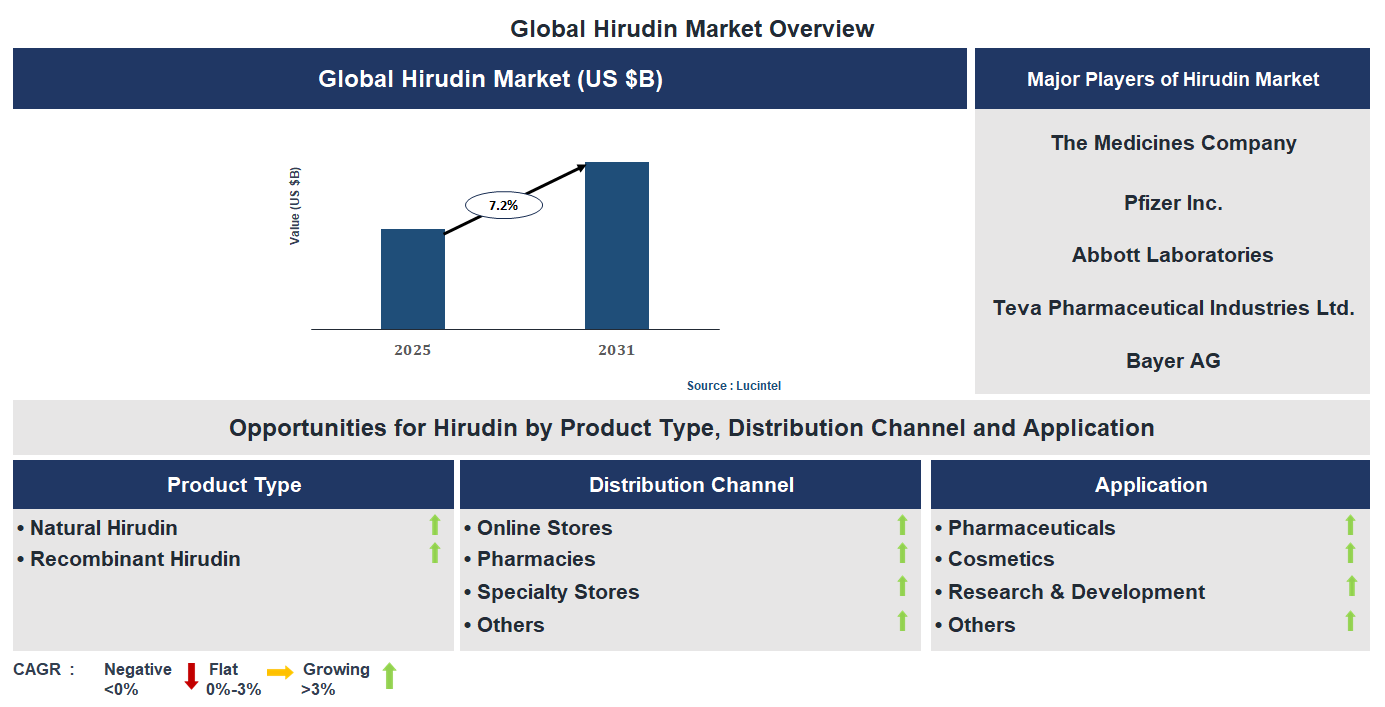
The future of the global hirudin market looks promising with opportunities in the online store, pharmacy, and specialty store markets. The global hirudin market is expected to grow with a CAGR of 7.2% from 2025 to 2031. The major drivers for this market are the increasing use of anticoagulant therapies, the rising prevalence of blood clot disorders, and the growing focus on natural blood thinners.• Lucintel forecasts that, within the product type category, natural hirudin is expected to witness higher growth over the forecast period.
• Within the distribution channel category, online store is expected to witness the highest growth.
• In terms of region, North America is expected to witness the highest growth over the forecast period. Gain valuable insights for your business decisions with our comprehensive 150+ page report. Sample figures with some insights are shown below.
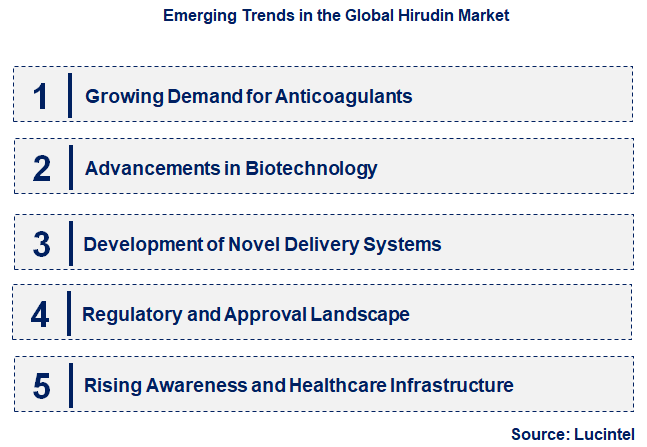
Emerging Trends in the Hirudin Market
The hirudin market is experiencing significant transformation driven by advancements in biotechnology, increasing demand for anticoagulants, and evolving healthcare needs. As medical research progresses, new formulations and delivery methods are emerging, making treatments more effective and accessible. Regulatory changes and rising awareness about blood clotting disorders are also influencing market dynamics. These developments are not only expanding the market size but also improving patient outcomes through innovative therapies. Understanding these key trends is essential for stakeholders to navigate the competitive landscape and capitalize on emerging opportunities in the hirudin market.• Growing Demand for Anticoagulants: The increasing prevalence of cardiovascular diseases and blood clotting disorders is driving the demand for effective anticoagulant therapies, including hirudin-based products. This trend is supported by rising awareness and the need for safer, more targeted blood-thinning agents, which is expanding the market scope and encouraging innovation in product development.
• Advancements in Biotechnology: Innovations in recombinant DNA technology and bioengineering are enabling the production of highly purified and synthetic hirudin. These advancements improve product safety, consistency, and scalability, reducing reliance on natural sources. As a result, the market benefits from increased product availability and reduced costs, fostering broader clinical adoption.
• Development of Novel Delivery Systems: Researchers are exploring new delivery methods such as transdermal patches, injectables, and implantable devices to enhance patient compliance and treatment efficacy. These innovations aim to minimize side effects and improve convenience, thereby expanding the potential patient base and increasing market penetration.
• Regulatory and Approval Landscape: Evolving regulatory frameworks and increased approval activities for hirudin-based therapies are shaping the market. Clearer guidelines and faster approval processes facilitate the introduction of new products, encouraging investment and innovation. This trend also enhances product safety and efficacy standards, boosting consumer confidence.
• Rising Awareness and Healthcare Infrastructure: Improved healthcare infrastructure and increased awareness about blood clotting disorders are leading to higher diagnosis rates and treatment uptake. Educational campaigns and better access to healthcare services are driving market growth, especially in emerging economies, and supporting the adoption of advanced hirudin therapies. In summary, these trends are collectively reshaping the hirudin market by fostering innovation, expanding access, and improving treatment outcomes. The market is becoming more dynamic, competitive, and patient-centric, with technological advancements and regulatory support playing pivotal roles in its evolution.
Recent Development in the Hirudin Market
The hirudin market has experienced notable shifts driven by advancements in biotechnology, increasing demand for anticoagulants, and regulatory changes. As healthcare providers seek more effective and natural anticoagulant options, the market landscape is evolving rapidly. Innovations in extraction and synthesis methods, along with expanding applications in medical treatments, are shaping future growth prospects. Additionally, rising awareness about blood clotting disorders and the need for safer therapies are fueling market expansion. These developments reflect a dynamic environment where scientific progress and healthcare needs intersect, creating opportunities and challenges for industry stakeholders.• Technological advancements in extraction and synthesis: Improved methods for producing hirudin, including recombinant DNA technology, have increased purity and availability, reducing costs and enhancing therapeutic efficacy. This development boosts market growth by enabling wider application in medical treatments and attracting investment in research and development.
• Rising demand for natural anticoagulants: Increasing preference for natural and biocompatible products over synthetic alternatives has driven demand for hirudin, especially in anticoagulant therapies. This trend enhances market prospects by expanding the customer base and encouraging product innovation.
• Regulatory approvals and guidelines: Recent approvals by health authorities for hirudin-based products have facilitated market entry and commercialization. Clear regulatory pathways improve investor confidence and accelerate product launches, positively impacting market growth.
• Expanding applications in medical treatments: Beyond traditional uses, hirudin is now being explored for novel therapies such as wound healing and anti-thrombotic applications. This diversification broadens market scope and opens new revenue streams for industry players.
• Increasing awareness of blood clotting disorders: Growing recognition of conditions like deep vein thrombosis and stroke has increased demand for effective anticoagulants. This awareness drives research, development, and adoption of hirudin-based therapies, further propelling market expansion. In summary, these developments are significantly impacting the hirudin market by enhancing product quality, expanding applications, and increasing demand. Technological innovations and regulatory support are fostering growth, while rising awareness of blood disorders is broadening market reach. Overall, the market is poised for sustained expansion driven by scientific progress and healthcare needs.
Strategic Growth Opportunities in the Hirudin Market
The hirudin market is experiencing significant growth driven by advancements in medical treatments and increasing demand for anticoagulants. As healthcare providers seek more effective and natural options for blood clot prevention and treatment, the market is expanding across various applications. Key growth opportunities are emerging in areas such as cardiovascular therapy, surgical applications, and research. These developments are shaping the future landscape of the hirudin market, offering new avenues for innovation and investment. Understanding these opportunities is crucial for stakeholders aiming to capitalize on the evolving demand and improve patient outcomes through targeted therapies.• Cardiovascular Disease Management: The rising prevalence of cardiovascular diseases is a major driver. Hirudins potent anticoagulant properties make it a preferred choice for preventing blood clots in patients with conditions like deep vein thrombosis and atrial fibrillation, thereby reducing stroke risk and improving patient prognosis.
• Surgical and Postoperative Care: The increasing number of surgeries, especially cardiovascular and orthopedic procedures, creates demand for effective anticoagulants. Hirudins ability to prevent clot formation during and after surgeries enhances patient safety and reduces complications, fostering growth in surgical applications.
• Research and Development: Growing investments in biomedical research are exploring hirudins potential beyond traditional uses. Innovations in drug delivery systems and recombinant hirudin are expanding their application scope, attracting pharmaceutical companies and research institutions.
• Natural and Biotech-Based Therapies: The shift towards natural and biotechnological products is boosting demand for hirudin derived from natural sources. Its biocompatibility and efficacy position it as a preferred anticoagulant in developing safer, more sustainable therapies.
• Regulatory Approvals and Market Expansion: Increasing approvals by regulatory bodies for hirudin-based products are facilitating market entry in new regions. This expansion enhances accessibility and adoption, driving overall market growth and encouraging new product development. In summary, these growth opportunities are significantly impacting the hirudin market by expanding its application base, fostering innovation, and increasing global adoption. The market is poised for sustained growth as these opportunities align with healthcare trends emphasizing safety, efficacy, and natural therapies.
Hirudin Market Driver and Challenges
The hirudin market is influenced by a variety of technological, economic, and regulatory factors that shape its growth trajectory. Advances in biotechnology and pharmaceutical research have facilitated the development of more effective hirudin-based therapies, driving market expansion. Economic factors such as increasing healthcare expenditure and rising prevalence of blood-clotting disorders further propel demand. Regulatory frameworks governing drug approval and safety standards impact market entry and innovation. Additionally, challenges like high production costs and stringent regulations pose hurdles. Understanding these drivers and challenges is essential for stakeholders to navigate the evolving landscape and capitalize on emerging opportunities within the hirudin market. The factors responsible for driving the hirudin market include:-• Technological Advancements: The development of recombinant hirudin and improved extraction techniques has significantly enhanced product efficacy and safety. These innovations enable large-scale production, reduce costs, and improve patient outcomes, thereby expanding market potential. Continuous R&D efforts are expected to further refine these therapies, attracting investments and fostering market growth.
• Rising Prevalence of Blood-Clotting Disorders: Increasing incidences of conditions such as deep vein thrombosis, pulmonary embolism, and stroke are boosting demand for anticoagulants like hirudin. As awareness and diagnosis improve globally, the need for effective blood-thinning agents grows, fueling market expansion across healthcare sectors.
• Growing Adoption in Surgical and Medical Procedures: Hirudins anticoagulant properties make it a preferred choice in surgeries, dialysis, and other invasive procedures. The rising number of such procedures worldwide, coupled with the need for safe anticoagulation options, drives demand for hirudin-based products.
• Regulatory Approvals and Supportive Policies: Favorable regulatory environments and approvals from health authorities facilitate market entry and product commercialization. Supportive policies aimed at improving patient safety and encouraging innovation further stimulate market growth, especially in emerging economies. The challenges in the hirudin market are:
• High Production Costs: The complex extraction and recombinant production processes involve significant expenses, which translate into higher product prices. These costs can limit accessibility and adoption, especially in price-sensitive markets, thereby constraining overall market growth.
• Stringent Regulatory Frameworks: Navigating complex approval processes and compliance standards can delay product launches and increase costs for manufacturers. Variability in regulations across regions adds to the complexity, posing barriers to market expansion and innovation.
• Competition from Alternative Anticoagulants: The availability of other anticoagulants, such as heparin, warfarin, and novel oral anticoagulants, offers consumers more options. This competition can impact hirudins market share, especially if alternative therapies are more cost-effective or easier to administer. In summary, the hirudin market is shaped by technological innovations, increasing disease prevalence, and supportive regulatory policies, which collectively promote growth. However, high production costs, regulatory hurdles, and competition from alternative therapies present significant challenges. These factors influence market dynamics, requiring stakeholders to innovate and adapt strategically. Overall, the markets future will depend on balancing these drivers and overcoming challenges to meet the growing demand for safe and effective anticoagulant therapies.
List of Hirudin Companies
Companies in the market compete on the basis of product quality offered. Major players in this market focus on expanding their manufacturing facilities, R&D investments, infrastructural development, and leverage integration opportunities across the value chain. With these strategies hirudin companies cater increasing demand, ensure competitive effectiveness, develop innovative products & technologies, reduce production costs, and expand their customer base. Some of the hirudin companies profiled in this report include-• The Medicines Company
• Pfizer Inc.
• Abbott Laboratories
• Teva Pharmaceutical Industries Ltd.
• Bayer AG
• Sanofi S.A.
• Novartis AG
• Johnson & Johnson
• Merck & Co., Inc.
• GlaxoSmithKline plc
Hirudin Market by Segment
The study includes a forecast for the global hirudin market by product type, distribution channel, application, and region.Hirudin Market by Product Type [Value from 2019 to 2031]:
• Natural Hirudin
• Recombinant Hirudin
Hirudin Market by Distribution Channel [Value from 2019 to 2031]:
• Online Stores
• Pharmacies
• Specialty Stores
• Others
Hirudin Market by Application [Value from 2019 to 2031]:
• Pharmaceuticals
• Cosmetics
• Research & Development
• Others
Hirudin Market by Region [Value from 2019 to 2031]:
• North America
• Europe
• Asia Pacific
• The Rest of the World
Country Wise Outlook for the Hirudin Market
The hirudin market has experienced notable shifts driven by technological advancements, regulatory changes, and increasing demand for anticoagulant therapies worldwide. As healthcare systems evolve and new research emerges, key players are innovating to improve product efficacy and safety. The United States, China, Germany, India, and Japan are at the forefront of these developments, each contributing uniquely to the global landscape. These countries regulatory environments, research initiatives, and market strategies significantly influence the overall growth and direction of the hirudin market.• United States: The US market has seen increased investment in biotech research, leading to the development of recombinant hirudin products. Regulatory agencies like the FDA are streamlining approval processes for innovative anticoagulants, boosting market growth. Major pharmaceutical companies are expanding their pipelines with advanced formulations, and there is a rising demand for personalized medicine approaches in anticoagulation therapy.
• China: China is rapidly expanding its hirudin market through increased production capacity and local research efforts. Government initiatives support biotech innovation, resulting in the launch of new hirudin-based products. The country’s large patient population and rising healthcare expenditure further drive demand. Additionally, collaborations with international firms are enhancing product quality and technological capabilities.
• Germany: Germany remains a key player in the European hirudin market, focusing on high-quality, safe, and effective products. The country emphasizes rigorous clinical trials and regulatory compliance, which bolster its reputation. German biotech firms are innovating with recombinant hirudin variants, and the country’s strong healthcare infrastructure supports widespread adoption of advanced anticoagulants.
• India: India’s hirudin market is growing due to the increasing prevalence of thrombotic disorders and expanding healthcare infrastructure. Local manufacturers are producing cost-effective hirudin products to meet domestic demand, while international companies are entering the market through partnerships. Government initiatives to promote biotech research and reduce import dependence are also contributing to market expansion.
• Japan: Japan is advancing in the hirudin market with a focus on research and development of novel anticoagulants. The country’s aging population increases the need for effective blood-thinning agents, prompting innovation. Japanese firms are investing in recombinant technologies and clinical trials to develop safer, more efficient hirudin formulations, supported by a robust regulatory framework.

Features of the Global Hirudin Market
Market Size Estimates: Hirudin market size estimation in terms of value ($B). Trend and Forecast Analysis: Market trends (2019 to 2024) and forecast (2025 to 2031) by various segments and regions. Segmentation Analysis: Hirudin market size by product type, distribution channel, application, and region in terms of value ($B). Regional Analysis: Hirudin market breakdown by North America, Europe, Asia Pacific, and Rest of the World. Growth Opportunities: Analysis of growth opportunities in different product types, distribution channels, applications, and regions for the hirudin market. Strategic Analysis: This includes M&A, new product development, and competitive landscape of the hirudin market. Analysis of competitive intensity of the industry based on Porter’s Five Forces model.
FAQ
Q1. What is the growth forecast for hirudin market? Answer: The global hirudin market is expected to grow with a CAGR of 7.2% from 2025 to 2031. Q2. What are the major drivers influencing the growth of the hirudin market? Answer: The major drivers for this market are the increasing use of anticoagulant therapies, the rising prevalence of blood clot disorders, and the growing focus on natural blood thinners. Q3. What are the major segments for hirudin market? Answer: The future of the hirudin market looks promising with opportunities in the online store, pharmacy, and specialty store markets. Q4. Who are the key hirudin market companies? Answer: Some of the key hirudin companies are as follows:• The Medicines Company
• Pfizer Inc.
• Abbott Laboratories
• Teva Pharmaceutical Industries Ltd.
• Bayer AG
• Sanofi S.A.
• Novartis AG
• Johnson & Johnson
• Merck & Co., Inc.
• GlaxoSmithKline plc Q5. Which hirudin market segment will be the largest in future? Answer: Lucintel forecasts that, within the product type category, natural hirudin is expected to witness higher growth over the forecast period. Q6. In hirudin market, which region is expected to be the largest in next 5 years? Answer: In terms of region, North America is expected to witness the highest growth over the forecast period. Q7. Do we receive customization in this report? Answer: Yes, Lucintel provides 10% customization without any additional cost.
Table of Contents
List of Figures
List of Tables
Methodology
- In-depth interviews of the major players in this market
- Detailed secondary research from competitors’ financial statements and published data
- Extensive searches of published works, market, and database information pertaining to industry news, company press releases, and customer intentions
- A compilation of the experiences, judgments, and insights of Lucintel’s professionals, who have analyzed and tracked this market over the years.


Buy Now
Choose a license that fits your team. Instant PDF delivery.
Prices exclude taxes. Instant delivery. Custom licensing available on request.
Key Questions
- • What are some of the most promising, high-growth opportunities for the hirudin market by product type (natural hirudin and recombinant hirudin), distribution channel (online stores, pharmacies, specialty stores, and others), application (pharmaceuticals, cosmetics, research & development, and others), and region (North America, Europe, Asia Pacific, and the Rest of the World)?
- • Which segments will grow at a faster pace and why?
- • Which region will grow at a faster pace and why?
- • What are the key factors affecting market dynamics? What are the key challenges and business risks in this market?
- • What are the business risks and competitive threats in this market?
- • What are the emerging trends in this market and the reasons behind them?
- • What are some of the changing demands of customers in the market?
- • What are the new developments in the market? Which companies are leading these developments?
- • Who are the major players in this market? What strategic initiatives are key players pursuing for business growth?
- • What are some of the competing products in this market and how big of a threat do they pose for loss of market share by material or product substitution?
- • What M&A activity has occurred in the last 5 years and what has its impact been on the industry? For any questions related to Hirudin Market, Hirudin Market Size, Hirudin Market Growth, Hirudin Market Analysis, Hirudin Market Report, Hirudin Market Share, Hirudin Market Trends, Hirudin Market Forecast, Hirudin Companies, write Lucintel analyst at email: helpdesk@lucintel.com. We will be glad to get back to you soon.


