
Report Feature
Hiking Gear and Equipment Market Trends and Forecast
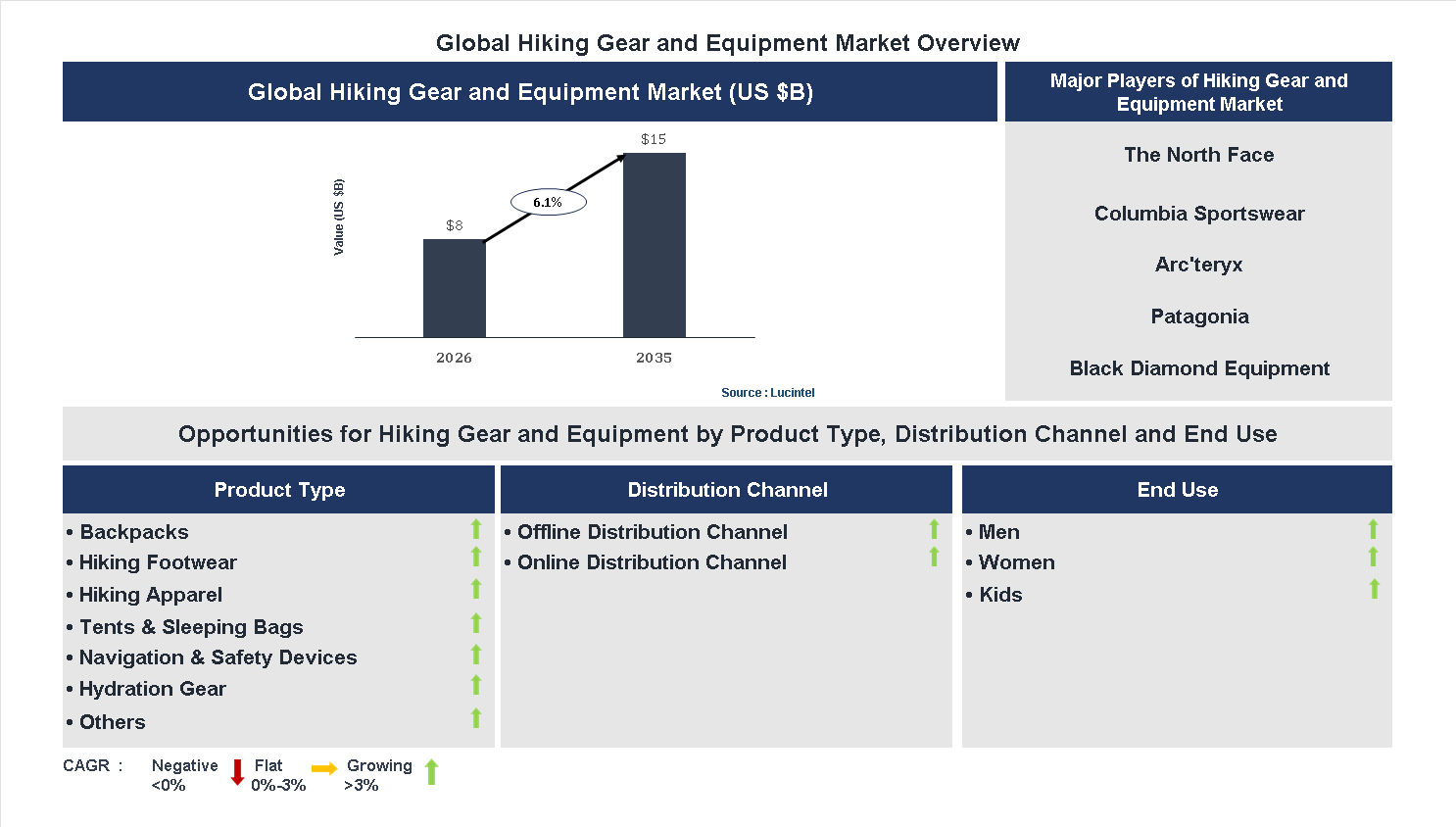
The future of the global hiking gear and equipment market looks promising with opportunities in the men, women, and kid markets. The global hiking gear and equipment market is expected to reach an estimated $15.0 billion by 2035 with a CAGR of 6.1% from 2026 to 2035. The major drivers for this market are the increasing demand for outdoor activities, the rising popularity of eco-friendly gear, and the growing interest in adventure tourism.• Lucintel forecasts that, within the product type category, hiking apparel is expected to witness the highest growth over the forecast period.
• Within the end use category, men is expected to witness higher growth.
• In terms of region, North America is expected to witness the highest growth over the forecast period. Gain valuable insights for your business decisions with our comprehensive 150+ page report. Sample figures with some insights are shown below.
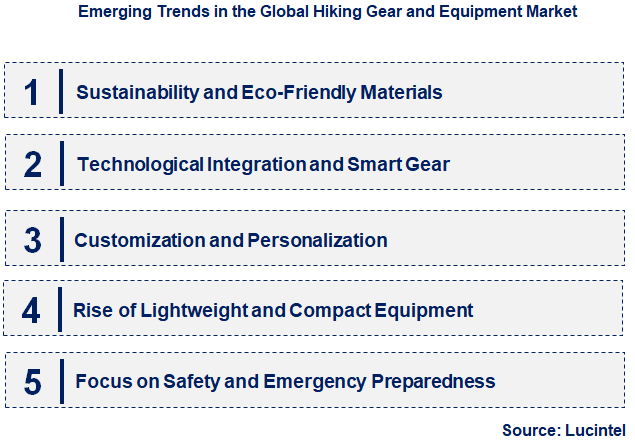
Emerging Trends in the Hiking Gear and Equipment Market
The hiking gear and equipment market is experiencing rapid evolution driven by technological advancements, changing consumer preferences, and a growing emphasis on sustainability. As outdoor activities gain popularity worldwide, companies are innovating to meet the demands of diverse hikers, from casual walkers to serious adventurers. These developments are not only enhancing the functionality and safety of gear but also aligning with environmental concerns and digital integration. The markets future will likely be shaped by these emerging trends, influencing product offerings, consumer behavior, and industry standards. Understanding these key trends is essential for stakeholders aiming to stay competitive and meet the evolving needs of outdoor enthusiasts.• Sustainability and Eco-Friendly Materials: Increasing consumer awareness about environmental impact is driving the adoption of sustainable materials in hiking gear. Companies are utilizing recycled fabrics, biodegradable components, and eco-conscious manufacturing processes to reduce their carbon footprint. This trend appeals to environmentally conscious consumers and encourages brands to innovate with greener alternatives. As sustainability becomes a key purchasing factor, the market is shifting towards products that balance performance with environmental responsibility, fostering a more sustainable outdoor industry.
• Technological Integration and Smart Gear: The integration of technology into hiking equipment is transforming the user experience. Smart backpacks with built-in charging ports, GPS-enabled footwear, and wearable devices that monitor health metrics are becoming popular. These innovations enhance safety, convenience, and connectivity for hikers. The adoption of IoT (Internet of Things) technology allows for real-time data collection and improved navigation, making outdoor adventures safer and more enjoyable. This trend is redefining traditional gear and expanding the market for tech-enabled outdoor products.
• Customization and Personalization: Consumers are seeking gear tailored to their specific needs and preferences. Manufacturers are offering customizable options, such as adjustable fit, modular components, and personalized designs. Advances in manufacturing, including 3D printing, enable rapid prototyping and bespoke products. Personalization enhances user comfort, performance, and satisfaction, fostering brand loyalty. This trend reflects a shift towards more individual-centric products, allowing consumers to select gear that best suits their outdoor activities and personal style.
• Rise of Lightweight and Compact Equipment: There is a growing demand for lightweight, space-saving gear that does not compromise on durability or functionality. Innovations in materials and design have led to more compact tents, ultralight backpacks, and streamlined clothing. This trend caters to hikers who prioritize mobility, ease of transport, and minimal weight, especially for long-distance or multi-day hikes. The market is responding with innovative solutions that enable outdoor enthusiasts to carry less without sacrificing performance, thereby expanding the appeal of hiking to a broader audience.
• Focus on Safety and Emergency Preparedness: Enhanced safety features are becoming standard in hiking gear. This includes integrated emergency communication devices, reflective materials for visibility, and advanced weather-resistant equipment. Manufacturers are also developing gear with built-in safety alerts and survival tools. As outdoor activities become more popular, the emphasis on safety is critical to prevent accidents and ensure preparedness. This trend is driving innovation in protective gear and safety accessories, making outdoor adventures safer and more accessible for all skill levels. These emerging trends are fundamentally reshaping the hiking gear and equipment market by promoting sustainability, integrating advanced technology, enabling customization, emphasizing lightweight design, and prioritizing safety. Collectively, they are enhancing the overall outdoor experience, expanding market reach, and encouraging responsible outdoor practices, thereby positioning the industry for sustained growth and innovation.
Recent Development in the Hiking Gear and Equipment Market
The hiking gear and equipment market is experiencing rapid growth driven by increasing outdoor recreational activities and a rising awareness of health and wellness. Consumers are seeking innovative, durable, and eco-friendly products to enhance their outdoor experiences. Technological advancements and sustainability initiatives are shaping product development, creating new opportunities for brands. Market players are expanding their offerings to meet diverse consumer needs, while e-commerce channels are facilitating wider access. These developments are transforming the landscape, making hiking gear more accessible, functional, and environmentally conscious.• Innovation in Material Technology: Advancements in lightweight, durable, and eco-friendly materials are revolutionizing hiking gear. Companies are developing products that offer enhanced performance, comfort, and sustainability. This innovation reduces weight, improves durability, and minimizes environmental impact, attracting eco-conscious consumers. The integration of smart textiles and moisture-wicking fabrics is also improving user experience. Overall, material innovation is driving product differentiation and expanding market potential by meeting evolving consumer demands for high-performance, sustainable gear.
• Expansion of E-commerce Platforms: The rise of online retail channels is significantly impacting the hiking gear market. E-commerce offers consumers easy access to a wide range of products, detailed reviews, and competitive pricing. Brands are investing in digital marketing and virtual try-on tools to enhance online shopping experiences. This shift enables companies to reach global markets efficiently and reduces reliance on traditional brick-and-mortar stores. As a result, e-commerce is increasing sales volume, broadening customer base, and fostering rapid market growth.
• Focus on Sustainability and Eco-Friendly Products: Sustainability is becoming a key factor influencing consumer choices. Companies are adopting eco-friendly manufacturing processes, using recycled materials, and designing products with minimal environmental impact. Certifications and transparent supply chains are gaining importance. This focus appeals to environmentally conscious consumers and enhances brand reputation. The emphasis on sustainability is driving innovation, creating new product lines, and encouraging industry-wide shifts toward greener practices, ultimately shaping a more responsible market landscape.
• Technological Integration for Enhanced Functionality: Incorporating technology into hiking gear is creating new opportunities. Features like GPS tracking, solar-powered chargers, and smart fabrics are improving safety, convenience, and performance. Wearable devices and app integrations enable users to monitor health metrics and navigation. These innovations attract tech-savvy consumers and differentiate products in a competitive market. The integration of technology is expanding product capabilities, increasing consumer engagement, and fostering a trend toward smarter, more connected outdoor gear.
• Growing Demand for Customization and Personalization: Consumers increasingly seek personalized hiking gear tailored to their specific needs and preferences. Brands are offering customizable options such as adjustable fit, color choices, and specialized features. Digital tools and online configurators facilitate easy customization. This trend enhances customer satisfaction and brand loyalty. The demand for personalized products is encouraging companies to innovate in design and manufacturing processes, thereby expanding market share and catering to a diverse, experience-driven customer base. These developments are significantly transforming the hiking gear and equipment market by enhancing product innovation, expanding digital access, emphasizing sustainability, integrating advanced technology, and offering personalized options. Collectively, they are driving market growth, attracting new customer segments, and fostering a more sustainable and technologically advanced industry. As a result, the market is becoming more competitive, dynamic, and aligned with evolving consumer preferences, ensuring sustained growth and innovation in the outdoor recreation sector.
Strategic Growth Opportunities in the Hiking Gear and Equipment Market
The hiking gear and equipment market is experiencing rapid growth driven by increasing outdoor recreational activities, rising health consciousness, and expanding adventure tourism. Consumers seek innovative, durable, and lightweight products to enhance their outdoor experiences. Technological advancements and sustainability initiatives are also shaping product development. Market players are focusing on expanding distribution channels and customizing offerings to meet diverse consumer needs. This environment presents significant opportunities for brands to innovate, capture new customer segments, and strengthen their market presence.• Growing Demand for Lightweight and Durable Hiking Gear: The increasing popularity of outdoor activities has driven demand for lightweight, durable, and high-performance hiking gear. Consumers prioritize products that offer comfort, safety, and ease of use during long treks. Innovations in materials such as advanced fabrics and composites are enabling manufacturers to produce gear that reduces weight without compromising strength. This trend encourages brands to invest in R&D to develop cutting-edge products, expanding their market share and attracting a broader customer base seeking reliable outdoor equipment.
• Expansion of Eco-Friendly and Sustainable Products: Sustainability is becoming a key factor influencing consumer purchasing decisions in the hiking gear market. Brands are adopting eco-friendly materials, such as recycled fabrics and biodegradable components, to appeal to environmentally conscious consumers. Additionally, sustainable manufacturing practices and transparent supply chains are gaining importance. This opportunity allows companies to differentiate themselves, meet regulatory standards, and build brand loyalty among eco-aware customers, ultimately driving growth in the eco-conscious segment of the market.
• Integration of Smart Technology in Hiking Equipment: The incorporation of smart technology into hiking gear offers enhanced safety, convenience, and performance. Features like GPS tracking, weather sensors, and wearable health monitors are increasingly integrated into backpacks, shoes, and apparel. This technological evolution attracts tech-savvy consumers and outdoor enthusiasts seeking innovative solutions. Companies investing in IoT-enabled products can create premium offerings, improve user experience, and open new revenue streams, positioning themselves as leaders in the connected outdoor gear market.
• Rising Popularity of Customization and Personalization: Consumers are seeking personalized hiking gear tailored to their specific needs and preferences. Customization options include adjustable fit, personalized designs, and specialized features for different terrains or activities. Advances in manufacturing technologies like 3D printing facilitate rapid customization. This trend enhances customer engagement and satisfaction, allowing brands to differentiate their products. The ability to offer tailored solutions supports market expansion into niche segments and fosters brand loyalty among dedicated outdoor enthusiasts.
• Increasing Distribution Channels and E-Commerce Penetration: The growth of online retail platforms and direct-to-consumer sales channels is transforming how hiking gear is marketed and sold. E-commerce provides a wider reach, convenience, and access to a global customer base. Brands are leveraging digital marketing, virtual fitting tools, and online reviews to boost sales. Expanding distribution through specialty stores, outdoor retailers, and online marketplaces enables companies to increase visibility and market penetration. This trend supports rapid growth, especially among younger consumers who prefer shopping online for outdoor equipment. These growth opportunities collectively shape a dynamic and expanding hiking gear and equipment market. Innovation in lightweight, sustainable, and smart products, coupled with personalized offerings and expanded distribution channels, will drive market competitiveness and consumer engagement. Companies that capitalize on these trends can enhance their market share, meet evolving customer expectations, and sustain long-term growth in the competitive outdoor recreation landscape.
Hiking Gear and Equipment Market Driver and Challenges
The hiking gear and equipment market is influenced by a variety of technological, economic, and regulatory factors that shape its growth trajectory. Innovations in materials and design enhance product performance and appeal to consumers seeking durability and comfort. Economic factors such as rising disposable incomes and increased outdoor recreational activities drive demand. Regulatory standards ensure safety and environmental sustainability, impacting product development and manufacturing processes. Additionally, evolving consumer preferences and the proliferation of e-commerce platforms further influence market dynamics. Navigating these drivers and challenges is crucial for stakeholders aiming to capitalize on opportunities and mitigate risks within this competitive landscape. The factors responsible for driving the hiking gear and equipment market include:• Technological Innovations: The integration of advanced materials like lightweight composites, moisture-wicking fabrics, and eco-friendly components enhances product performance. Innovations such as GPS-enabled devices, smart wearables, and improved waterproofing attract tech-savvy consumers. These advancements lead to higher-quality gear, increased safety, and better user experience, fueling market growth. Companies investing in R&D can differentiate their offerings, meet evolving consumer demands, and expand their market share. The continuous evolution of technology ensures that hiking gear remains relevant, functional, and appealing, thereby driving sales and market expansion.
• Rising Outdoor Recreation Trends: Growing awareness of health and wellness, coupled with a desire for adventure tourism, has led to increased participation in hiking and outdoor activities globally. Urbanization and sedentary lifestyles are prompting consumers to seek outdoor experiences, boosting demand for specialized gear. The popularity of social media and influencer marketing further amplifies interest in hiking, encouraging new participants to invest in quality equipment. This trend is supported by government initiatives promoting outdoor activities and the development of hiking trails, which collectively contribute to sustained market growth and diversification of product offerings.
• Economic Growth and Disposable Income: An increase in disposable income levels across emerging and developed economies enables consumers to spend more on outdoor gear. As economies expand, consumers are willing to invest in high-quality, durable, and branded hiking equipment. This economic prosperity also encourages participation in outdoor activities, further stimulating demand. Retailers and manufacturers benefit from this trend through premium product lines and innovative offerings. The overall economic environment, therefore, plays a pivotal role in shaping purchasing power and market size, fostering growth opportunities for industry players.
• E-commerce and Digital Marketing: The proliferation of online retail platforms has revolutionized how consumers access hiking gear. E-commerce offers convenience, a wider product selection, and competitive pricing, attracting a broader customer base. Digital marketing strategies, including social media campaigns and influencer collaborations, enhance brand visibility and consumer engagement. The ability to provide detailed product information and customer reviews influences purchasing decisions. This digital shift enables companies to reach global markets efficiently, adapt quickly to consumer preferences, and increase sales volumes, thereby significantly impacting market growth.
• Environmental Sustainability and Eco-consciousness: Increasing awareness of environmental issues influences consumer preferences toward sustainable and eco-friendly products. Manufacturers are adopting environmentally responsible materials and sustainable production practices to meet this demand. Certifications and eco-labels serve as trust signals, encouraging environmentally conscious consumers to choose sustainable gear. This trend not only aligns with regulatory pressures but also enhances brand reputation and loyalty. The focus on sustainability drives innovation and creates new market segments, fostering long-term growth while addressing ecological concerns. The challenges facing the hiking gear and equipment market include:
• Regulatory Compliance and Standards: Stringent safety, environmental, and quality standards impose significant compliance costs on manufacturers. Navigating diverse regulations across regions can be complex and time-consuming, potentially delaying product launches and increasing expenses. Non-compliance risks include legal penalties, product recalls, and damage to brand reputation. As governments implement stricter environmental regulations, companies must invest in sustainable materials and processes, which may elevate production costs. Balancing innovation with regulatory adherence remains a critical challenge for industry players seeking to maintain competitiveness and market access.
• Supply Chain Disruptions: The global supply chain has been increasingly vulnerable to disruptions caused by geopolitical tensions, pandemics, and logistical challenges. Shortages of raw materials, transportation delays, and increased costs impact production schedules and inventory management. These disruptions can lead to product shortages, delayed deliveries, and reduced customer satisfaction. Small and medium-sized enterprises are particularly susceptible due to limited resources. Ensuring supply chain resilience requires strategic planning, diversification of suppliers, and investment in inventory management, all of which pose operational and financial challenges.
• Intense Market Competition: The hiking gear industry is highly competitive, with numerous established brands and new entrants vying for market share. Price wars, product differentiation, and marketing strategies intensify competition, pressuring profit margins. Companies must continuously innovate and invest in branding to retain customer loyalty. Additionally, counterfeit products and grey markets undermine brand integrity and revenue. Staying ahead requires significant R&D investment, effective distribution channels, and strategic partnerships. The competitive landscape demands agility and innovation, making it challenging for companies to sustain growth and profitability. The hiking gear and equipment market is shaped by technological advancements, consumer trends, economic factors, and sustainability initiatives, which collectively drive growth. However, regulatory complexities, supply chain vulnerabilities, and fierce competition pose significant hurdles. Navigating these drivers and challenges requires strategic agility, innovation, and a focus on sustainability. Overall, the markets future depends on how effectively industry players adapt to evolving technological, economic, and regulatory landscapes, balancing growth opportunities with risk mitigation to sustain long-term success.
List of Hiking Gear and Equipment Companies
Companies in the market compete on the basis of product quality offered. Major players in this market focus on expanding their manufacturing facilities, R&D investments, infrastructural development, and leverage integration opportunities across the value chain. With these strategies hiking gear and equipment companies cater increasing demand, ensure competitive effectiveness, develop innovative products & technologies, reduce production costs, and expand their customer base. Some of the hiking gear and equipment companies profiled in this report include-• The North Face
• Columbia Sportswear
• Arcteryx
• Patagonia
• Black Diamond Equipment
• Osprey Packs
• Deuter Sport
• Mammut Sports Group
• MSR
• REI Co-op
Hiking Gear and Equipment Market by Segment
The study includes a forecast for the global hiking gear and equipment market by product type, distribution channel, end use, and region.Hiking Gear and Equipment Market by Product Type [Value from 2019 to 2035]:
• Backpacks
• Hiking Footwear
• Hiking Apparel
• Tents & Sleeping Bags
• Navigation & Safety Devices
• Hydration Gear
• Others
Hiking Gear and Equipment Market by Distribution Channel [Value from 2019 to 2035]:
• Offline Distribution Channel
• Online Distribution Channel
Hiking Gear and Equipment Market by End Use [Value from 2019 to 2035]:
• Men
• Women
• Kids
Hiking Gear and Equipment Market by Region [Value from 2019 to 2035]:
• North America
• Europe
• Asia Pacific
• The Rest of the World
Country Wise Outlook for the Hiking Gear and Equipment Market
The hiking gear and equipment market has experienced significant growth globally, driven by increasing outdoor recreational activities, health consciousness, and a rising interest in sustainable products. Technological innovations, e-commerce expansion, and evolving consumer preferences have shaped recent trends. Countries are focusing on product innovation, sustainability, and expanding distribution channels to meet the rising demand. The markets dynamics vary across regions, influenced by economic conditions, environmental policies, and outdoor activity popularity. Understanding these regional developments provides insight into the global trajectory of the hiking gear and equipment industry.• United States: The US market has seen a surge in demand for lightweight, durable, and eco-friendly hiking gear. Major brands are investing in innovative materials and sustainable manufacturing practices. E-commerce sales continue to grow, with online platforms offering personalized shopping experiences. The popularity of outdoor activities like trail running and backpacking has expanded the customer base. Additionally, outdoor retail chains are expanding their product lines to include smart gear and wearable technology. Government initiatives promoting outdoor recreation have also contributed to market growth, alongside increased participation in national parks and wilderness areas.
• China: Chinas hiking gear market is rapidly expanding, driven by rising middle-class income and outdoor activity popularity. Domestic brands are gaining ground by offering affordable, high-quality products, while international brands are increasing their presence through partnerships and online sales. E-commerce platforms like Tmall and JD.com are crucial distribution channels. The government’s focus on promoting outdoor tourism and ecological conservation has further stimulated demand. Innovations in lightweight and multifunctional gear are emerging, catering to urban consumers seeking adventure and fitness options. The market is also witnessing a shift towards sustainable and environmentally friendly products.
• Germany: The German market emphasizes high-quality, durable, and sustainable hiking equipment. Consumers are increasingly conscious of environmental impact, prompting brands to adopt eco-friendly materials and ethical manufacturing practices. Retailers are expanding their product ranges to include technical gear suitable for challenging terrains. The rise of outdoor sports clubs and hiking associations has boosted demand. Digitalization has enhanced customer engagement through online stores and virtual product testing. Additionally, Germany’s focus on eco-tourism and outdoor recreation has supported market growth, with a particular emphasis on innovative, functional, and sustainable products.
• India: The Indian hiking gear market is experiencing rapid growth, fueled by rising disposable incomes and a growing youth population interested in adventure tourism. Local brands are emerging, offering affordable and culturally relevant products, while international brands are entering through online channels. The government’s initiatives to promote adventure sports and eco-tourism are also contributing to market expansion. Consumers are increasingly seeking lightweight, versatile, and durable gear suitable for diverse terrains. The rise of social media influencers and adventure tourism campaigns has further boosted awareness and demand. Sustainable and eco-friendly products are gaining popularity among environmentally conscious consumers.
• Japan: Japan’s hiking gear market is characterized by a focus on innovation, safety, and sustainability. Consumers prefer high-performance, lightweight, and multifunctional equipment. The market benefits from a strong outdoor culture and active participation in hiking and trekking activities. Brands are investing in advanced materials and smart technology, such as GPS-enabled gear and moisture-wicking fabrics. Eco-friendly products are gaining traction, supported by Japan’s environmental policies. Retailers are expanding online sales channels and offering personalized services. The market also sees a trend toward compact, space-saving gear suitable for urban and rural outdoor enthusiasts, reflecting Japan’s blend of tradition and modernity in outdoor pursuits.

Features of the Global Hiking Gear and Equipment Market
Market Size Estimates: Hiking gear and equipment market size estimation in terms of value ($B). Trend and Forecast Analysis: Market trends (2019 to 2025) and forecast (2026 to 2035) by various segments and regions. Segmentation Analysis: Hiking gear and equipment market size by product type, distribution channel, end use, and region in terms of value ($B). Regional Analysis: Hiking gear and equipment market breakdown by North America, Europe, Asia Pacific, and Rest of the World. Growth Opportunities: Analysis of growth opportunities in different product types, distribution channels, end uses, and regions for the hiking gear and equipment market. Strategic Analysis: This includes M&A, new product development, and competitive landscape of the hiking gear and equipment market. Analysis of competitive intensity of the industry based on Porter’s Five Forces model.
FAQ
Q1. What is the hiking gear and equipment market size? Answer: The global hiking gear and equipment market is expected to reach an estimated $15.0 billion by 2035. Q2. What is the growth forecast for hiking gear and equipment market? Answer: The global hiking gear and equipment market is expected to grow with a CAGR of 6.1% from 2026 to 2035. Q3. What are the major drivers influencing the growth of the hiking gear and equipment market? Answer: The major drivers for this market are the increasing demand for outdoor activities, the rising popularity of eco-friendly gear, and the growing interest in adventure tourism. Q4. What are the major segments for hiking gear and equipment market? Answer: The future of the hiking gear and equipment market looks promising with opportunities in the men, women, and kid markets. Q5. Who are the key hiking gear and equipment market companies? Answer: Some of the key hiking gear and equipment companies are as follows:• The North Face
• Columbia Sportswear
• Arcteryx
• Patagonia
• Black Diamond Equipment
• Osprey Packs
• Deuter Sport
• Mammut Sports Group
• MSR
• REI Co-op Q6. Which hiking gear and equipment market segment will be the largest in future? Answer: Lucintel forecasts that, within the product type category, hiking apparel is expected to witness the highest growth over the forecast period. Q7. In hiking gear and equipment market, which region is expected to be the largest in next 5 years? Answer: In terms of region, North America is expected to witness the highest growth over the forecast period. Q8. Do we receive customization in this report? Answer: Yes, Lucintel provides 10% customization without any additional cost.
Table of Contents
List of Figures
List of Tables
Methodology
- In-depth interviews of the major players in this market
- Detailed secondary research from competitors’ financial statements and published data
- Extensive searches of published works, market, and database information pertaining to industry news, company press releases, and customer intentions
- A compilation of the experiences, judgments, and insights of Lucintel’s professionals, who have analyzed and tracked this market over the years.


Buy Now
Choose a license that fits your team. Instant PDF delivery.
Prices exclude taxes. Instant delivery. Custom licensing available on request.
Key Questions
- • What are some of the most promising, high-growth opportunities for the hiking gear and equipment market by product type (backpacks, hiking footwear, hiking apparel, tents & sleeping bags, navigation & safety devices, hydration gear, and others), distribution channel (offline distribution channel and online distribution channel), end use (men, women, and kids), and region (North America, Europe, Asia Pacific, and the Rest of the World)?
- • Which segments will grow at a faster pace and why?
- • Which region will grow at a faster pace and why?
- • What are the key factors affecting market dynamics? What are the key challenges and business risks in this market?
- • What are the business risks and competitive threats in this market?
- • What are the emerging trends in this market and the reasons behind them?
- • What are some of the changing demands of customers in the market?
- • What are the new developments in the market? Which companies are leading these developments?
- • Who are the major players in this market? What strategic initiatives are key players pursuing for business growth?
- • What are some of the competing products in this market and how big of a threat do they pose for loss of market share by material or product substitution?
- • What M&A activity has occurred in the last 7 years and what has its impact been on the industry? For any questions related to Hiking Gear and Equipment Market, Hiking Gear and Equipment Market Size, Hiking Gear and Equipment Market Growth, Hiking Gear and Equipment Market Analysis, Hiking Gear and Equipment Market Report, Hiking Gear and Equipment Market Share, Hiking Gear and Equipment Market Trends, Hiking Gear and Equipment Market Forecast, Hiking Gear and Equipment Companies, write Lucintel analyst at email: helpdesk@lucintel.com. We will be glad to get back to you soon.


