
Market Report · July 29, 2026

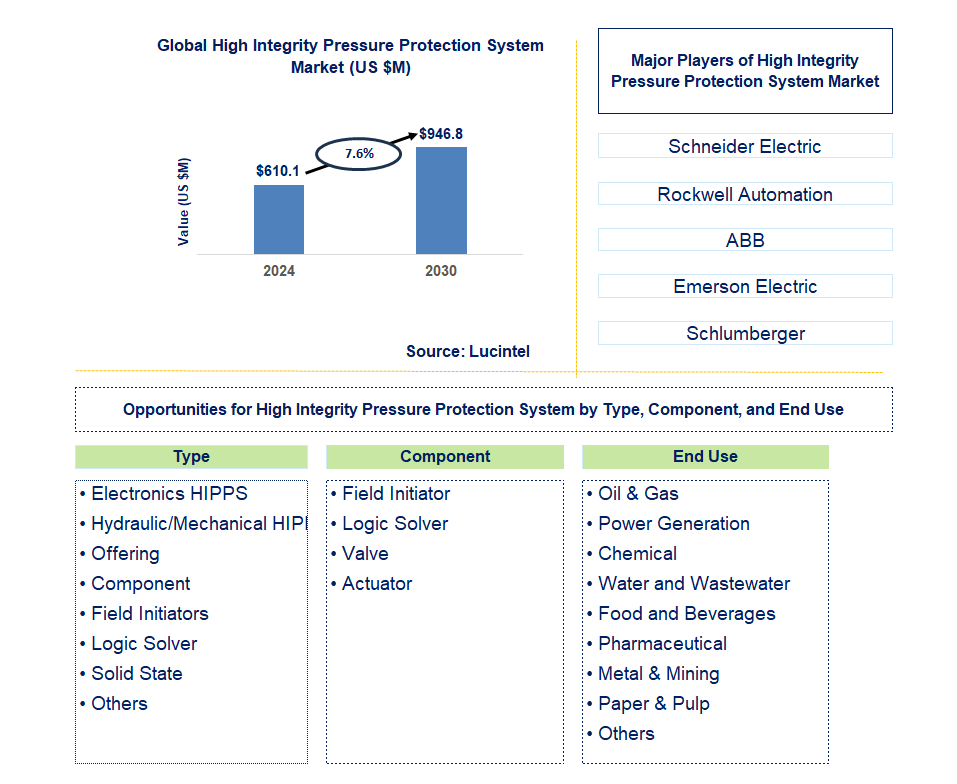
Key data points: The market size in 2030 = $946.8 million, growth forecast = 7.6% annually for the next 6 years. Scroll below to get more insights. This market report covers trends, opportunities, and forecasts in the global high integrity pressure protection system market to 2030 by type (electronics hipps, hydraulic/mechanical hipps, offering, component, field initiators, logic solver, solid state, and others), component (field initiator, logic solver, valve, and actuator), end use (oil & gas, power generation, chemical, water and wastewater, food and beverages, pharmaceutical, metal & mining, paper & pulp, and others), and region (North America, Europe, Asia Pacific, and the Rest of the World)
We'll send your sample report shortly.
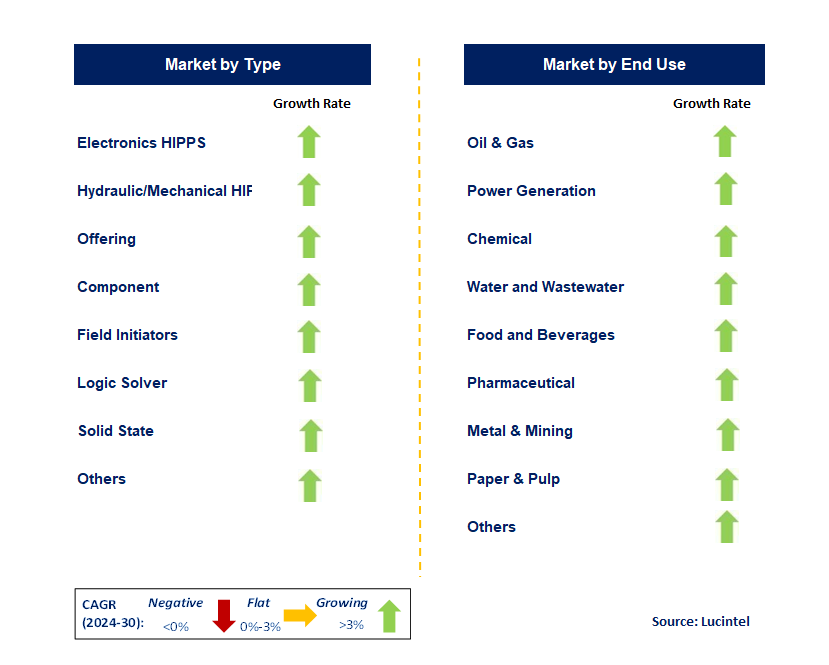
• Lucintel forecasts, within type category, field initiator is expected to witness the highest growth over the forecast period.
• Within the end use industry category market, oil & gas is expected to witness the highest growth over the forecast period.
• In terms of regions, North America is expected to witness highest growth over the forecast period. A more than 150-page report is developed to help in your business decisions.
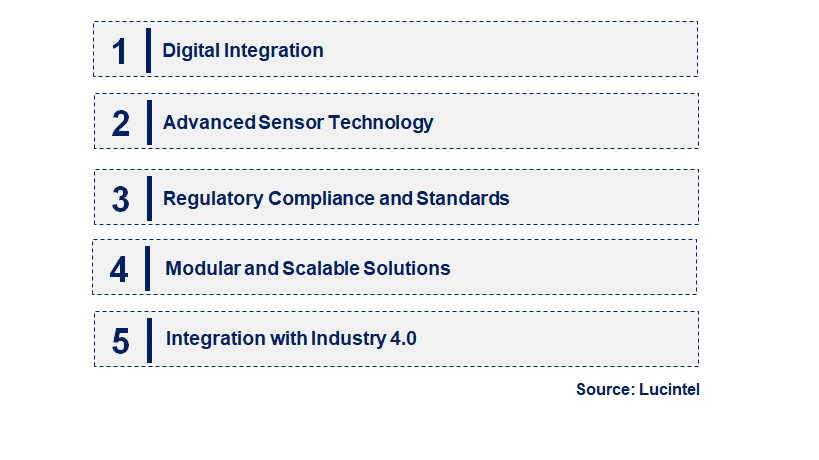
• Digital Integration: IoT, AI, cloud computing, and other digital technologies are transforming HIPPS systems. These technologies enable real-time monitoring, predictive maintenance, and advanced data analytics, enhancing the performance, safety, and efficiency of the system. Digital technologies allow for proactive management of pressure protection systems, optimizing performance to minimize unplanned downtime and enhance reliability.
• Advanced Sensor Technology: Innovations in sensor technology continue to improve the accuracy and reliability of systems. New sensors offer better performance in extreme conditions, providing more accurate pressure measurements and faster response times. This trend is crucial, as maintaining high safety standards and operational demands requires regular maintenance and safety checks.
• Regulatory Compliance and Standards: The demand for HIPPS solutions is increasing with the growing regulatory requirements. The need to meet strict safety standards necessitates higher performance and reliability of pressure protection systems. This trend drives manufacturers to offer solutions that comply with stringent regulations, ensuring operational safety and avoiding penalties.
• Modular and Scalable Solutions: The demand for modular and scalable HIPPS solutions is rising as industries seek flexible and cost-effective options. Modular systems facilitate upgrades and expansions, allowing for quick adaptation to operational changes. This trend encourages the development of customizable solutions that meet specific industry requirements and fluctuating safety demands.
• Integration with Industry 4.0: The introduction of HIPPS technologies within Industry 4.0 enhances the functionality and performance of systems at significant levels. Automation, data analytics, and smart technologies make pressure protection systems more intelligent and responsive. This trend aligns with current industrial practices and technological changes, fueling innovation in HIPPS solutions. These emerging trends are expected to reshape market dynamics by driving technological advances in HIPPS and enabling systems to perform better, setting the pace for further change in the market landscape. As these innovations penetrate various industries, safety, efficiency, and adaptability within the HIPPS market will improve, providing robust pressure protection solutions across a wide range of applications.
• Improved Digital Technologies: In the current digital technology revolution, the adoption of IoT and AI is enhancing HIPPS systems. Advancements in technology enable real-time monitoring, predictive maintenance, and better data analytics. Additionally, increased digital capabilities are improving system reliability and efficiency, helping industries manage pressure protection more effectively and reduce operational disruptions.
• Improved Sensor Capabilities: Changes in sensor technology are propelling the HIPPS market forward. New sensors provide higher accuracy, wear resistance, and improved response rates, making them ideal for extremely harsh environments. Consequently, this enhances the capacity of HIPPS systems to deliver reliable pressure protection and ensure safe operations across various industries.
• Stringent Regulatory Standards: Increased regulatory requirements are encouraging advanced applications for HIPPS. New safety regulations demand improved performance and reliability of protection systems against overpressure. Manufacturers focus on developing solutions that meet these high standards to enhance industrial safety and effectively address regulatory challenges.
• Customizable Solutions: Industries are increasingly demanding systems tailored to specific needs, raising the demand for customizable HIPPS solutions. Designs are often modular and scalable, allowing for flexible installations and easy upgrades. This trend is particularly important in industries where safety requirements are evolving and diverse, necessitating more adaptive and efficient protection solutions.
• Sustainable Solutions: There is a growing emphasis on HIPPS solutions that minimize environmental impact. Innovations aimed at reducing energy consumption and improving system efficiency align with broader industrial trends toward sustainability. These developments support environmental responsibility while helping industries meet their sustainability targets with enhanced pressure protection. Recent trends in the HIPPS market are shaping up to include technological improvements, compliance issues, and customization. These developments will enhance the performance, safety, and adaptability of the systems, as solutions for HIPPS continue to improve in response to changing industry requirements, boosting market growth.
• Oil and Gas Sector: The oil and gas industry presents enormous opportunities for HIPPS solutions due to critical safety requirements and complex operations. Enhanced pressure protection systems can prevent overpressure incidents and ensure safe operations. Investment in this sector is expected to lead to substantial market growth driven by increased demand.
• Chemical and Petrochemical Industries: Chemical and petrochemical plants involve inherently hazardous processes, making reliable pressure protection essential. There is increasing demand for high-grade HIPPS systems capable of withstanding extreme conditions while meeting the latest safety regulations. Companies can capitalize on this opportunity by developing specialized solutions to enhance safety and operational efficiency in these industries.
• Power Generation: The need for robust pressure protection in power plants and energy facilities is driving the adoption of HIPPS solutions in the power generation sector. Additionally, innovations in HIPPS technology contribute to system reliability and efficiency improvements necessary to comply with strict safety standards in the sector.
• Renewable Energy: New opportunities are emerging for HIPPS solutions in renewable energy sources, such as wind and solar. The growing complexity of installing renewable energy facilities is increasing demand for sophisticated pressure protection solutions. Development of tailored solutions can lead to growth in this emerging market by addressing the specific needs of renewable energy applications.
• Industrial Automation: The trend toward industrial automation is driving demand for integrated HIPPS solutions that function seamlessly with automated systems. Development of these solutions ensures the safety and efficiency of automated processes, meeting the needs of industries adopting automation technologies and creating new market opportunities. Key growth strategies in the HIPPS market involve sector-specific demand and technological advancements. Firms that focus on particular applications and emerging trends can expand their operations while contributing to the development of advanced pressure protection solutions.
• Technological Advancements: Rapid development of digital technologies—IoT, AI, and advanced sensors—drives growth in the HIPPS market. These technologies enhance system performance through improved monitoring, predictive maintenance, and data analytics. The integration of digital solutions makes HIPPS systems more efficient and reliable, leading to increased adoption.
• Regulatory Compliance: Stricter regulatory standards, heightened safety regulations, and rising demand for advanced HIPPS solutions drive compliance with stringent safety requirements.
• Industrial Growth: The rapid expansion of industries such as oil and gas, chemicals, and power generation accelerates demand for HIPPS systems. The modernization of these industries necessitates more sophisticated pressure protection solutions to ensure safe and efficient operations, widening market opportunities.
• Focus on Safety and Reliability: Safety and reliability concerns in industrial operations promote the implementation of advanced HIPPS systems. Protection against overpressure incidents is a priority, leading to increased focus on robust pressure protection solutions. This emphasis on safety drives market growth and innovation.
• Innovation in Modular Solutions: Demand for modular and scalable HIPPS solutions is increasing, allowing for flexible upgrades in industries with constantly changing safety needs. This innovation supports the customization and adaptability of pressure protection systems, contributing to market growth. Challenges in the high integrity pressure protection system market include:
• High Implementation Costs: Advanced HIPPS systems are costly, posing a significant barrier to widespread adoption. High investment and installation costs may deter industries from upgrading these systems. Market players must address cost concerns by offering more affordable solutions.
• Complexity of Regulations: HIPPS manufacturers face challenges in navigating complicated and varied regulations across different regions. Compliance with diverse safety standards requires substantial resources and expertise, hindering market entry and growth. An effective strategy to address regulatory challenges is essential.
• Integration with Legacy Systems: Integrating new HIPPS solutions with existing legacy systems can be complex and resource-intensive. Compatibility issues and system upgrades present significant challenges for industries looking to modernize their pressure protection systems. Overcoming these integration challenges is crucial for successful implementation and market growth. Drivers and challenges in the HIPPS market illustrate a complex interplay of industry issues and opportunities. Key growth drivers include technological advancements and regulatory compliance, while high costs and regulatory complexity present significant challenges. Together, these factors guide stakeholders in navigating the market landscape and capitalizing on growth and innovation opportunities.
• Schneider Electric
• Rockwell Automation
• ABB
• Emerson Electric
• Schlumberger
• Electronics HIPPS
• Hydraulic/Mechanical HIPPS
• Offering
• Component
• Field Initiators
• Logic Solver
• Solid State
• Others
• Field Initiator
• Logic Solver
• Valve
• Actuator
• Oil & Gas
• Power Generation
• Chemical
• Water and Wastewater
• Food and Beverages
• Pharmaceutical
• Paper & Pulp
• Others
• North America
• Europe
• Asia Pacific
• The Rest of the World
• United States: The United States HIPPS market is expected to follow the trend of Industry 4.0 technology integrations. Innovations related to digitalization, such as IoT and AI, have enhanced the capabilities of HIPPS systems for better real-time monitoring and predictive analytics. Furthermore, the growing emphasis on strict safety standards and regulations will fuel the demand for advanced and reliable pressure protection solutions in several industries, including oil and gas, chemicals, and power generation.
• China: The HIPPS marketplace in China is developing rapidly due to aggressive industrialization and modernization. The government's broad emphasis on infrastructure upgrading and the improvement of safety standards is driving the implementation of advanced HIPPS technologies. Meanwhile, local manufacturers continue to invest in R&D to reduce costs and offer high-performance solutions that meet the growing demands of industries such as petrochemicals and power generation. Regulatory pressures and environmental concerns are also boosting this market.
• Germany: Germany's HIPPS market is characterized by intense technological development and compliance with high safety standards. Industrial sectors, such as automotive and manufacturing, are implementing advanced HIPPS solutions to maintain higher levels of safety. Innovations in digital technologies are enhancing pressure protection systems through improved sensors and cloud-based analytics. The customization of solutions to meet specific industry needs and regulatory requirements is also being pursued in Germany.
• India: The Indian market is witnessing a surge in industrial activities and strict safety-related regulations concerning HIPPS systems. A push by the government for infrastructure development and expansion across sectors like oil and gas is driving higher demand for state-of-the-art pressure protection systems. Companies in the country strive to develop scalable and economical HIPPS solutions that address the unique challenges of the Indian market. Automation and digital technologies are starting to make their mark in the market.
• Japan: The HIPPS market in Japan is developing through the integration of advanced technologies, increasing the reliability of applied systems. Industrial sectors, particularly manufacturing and energy, are employing sophisticated forms of HIPPS to enhance safety and efficiency in operations. Advancements in sensor technology and data analytics are key drivers of system performance improvement. Japan's commitment to safety and technological advancement will further ensure the country's continuous development and growth in the HIPPS market.


• Schneider Electric
• Rockwell Automation
• ABB
• Emerson Electric
• Schlumberger Q6. Which high integrity pressure protection system market segment will be the largest in future? Answer: Lucintel forecasts that field initiator is expected to witness the highest growth over the forecast period. Q7. In high integrity pressure protection system market, which region is expected to be the largest in next 5 years? Answer: North America is expected to witness highest growth over the forecast period. Q.8 Do we receive customization in this report? Answer: Yes, Lucintel provides 10% customization without any additional cost.


Choose a license that fits your team. Instant PDF delivery.
Prices exclude taxes. Instant delivery. Custom licensing available on request.
Market Report · July 29, 2026
Market Report · July 20, 2026
Market Report · July 20, 2026
Trusted partner for strategic intelligence and business growth


Receive a complimentary market analysis tailored to your industry. Our analysts will identify key growth opportunities and competitive dynamics specific to your business.

Market size, growth rate, and key trend analysis for your specific sector.

Top competitor positioning and market share analysis.

Strategic recommendations backed by data-driven insights.
Get curated market intelligence and competitive moves straight to your inbox.
By subscribing, you agree to receive our monthly insights. Unsubscribe anytime.
Receive a complimentary market analysis tailored to your industry. Our analysts will identify key growth opportunities and competitive dynamics specific to your business.
Market size, growth rate, and key trend analysis for your specific sector.
Top competitor positioning and market share analysis.
Strategic recommendations backed by data-driven insights.
Get curated market intelligence, emerging trends, and competitive moves straight to your inbox each month.
By subscribing, you agree to receive our monthly insights. Unsubscribe anytime.
We'll send your sample report shortly.