
Report Feature
High Flux Hollow Fiber Hemodialyzer Market Trends and Forecast
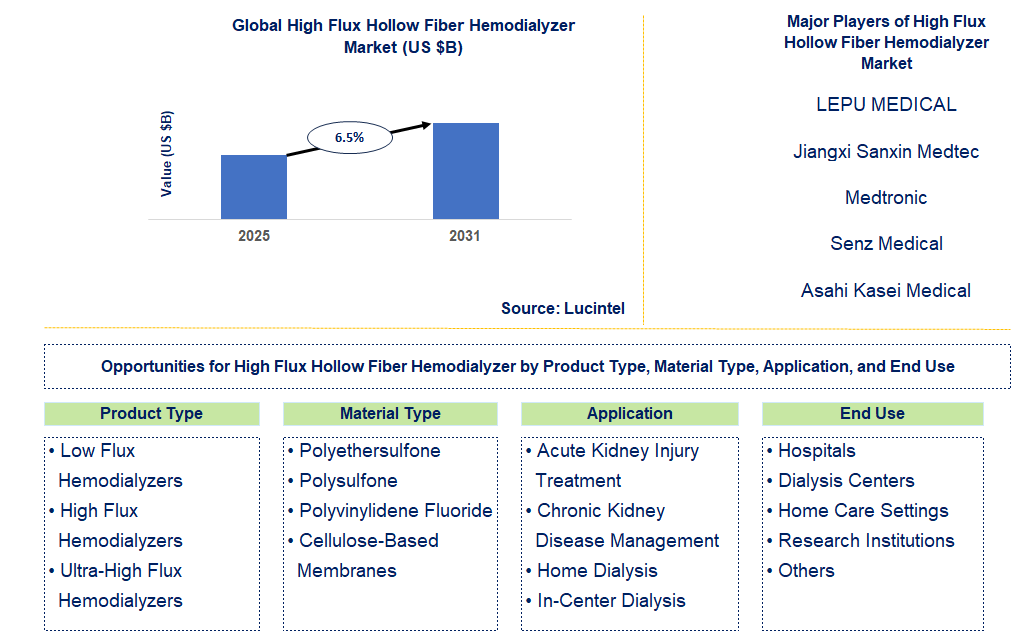
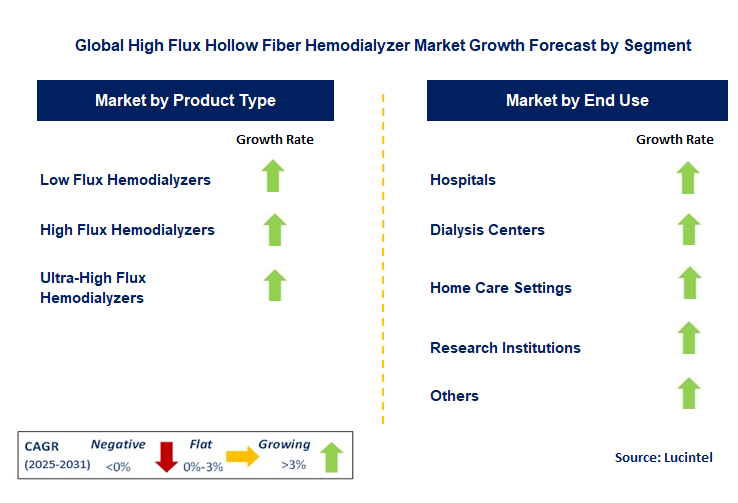
The future of the global high flux hollow fiber hemodialyzer market looks promising with opportunities in the hospital, dialysis center, home care setting, and research institution markets. The global high flux hollow fiber hemodialyzer market is expected to grow with a CAGR of 6.5% from 2025 to 2031. The major drivers for this market are the increasing demand for efficient dialysis treatments, the rising prevalence of chronic kidney diseases, and the growing adoption of advanced dialysis technologies.• Lucintel forecasts that, within the product type category, high flux hemodialyzer is expected to witness the highest growth over the forecast period.
• Within the end use category, dialysis center is expected to witness the highest growth.
• In terms of region, APAC is expected to witness the highest growth over the forecast period. Gain valuable insights for your business decisions with our comprehensive 150+ page report. Sample figures with some insights are shown below.
Emerging Trends in the High Flux Hollow Fiber Hemodialyzer Market
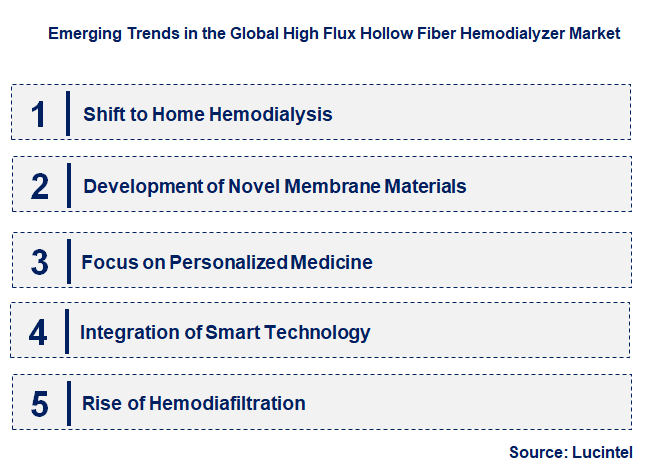
The high flux hollow fiber hemodialyzer market is being redefined by several key trends, reflecting a broader industry shift toward efficiency, personalization, and home-based care. These trends are influencing dialyzer design, material science, and market positioning, moving the market beyond basic filtration to comprehensive solutions for advanced renal care.• Shift to Home Hemodialysis: A key trend is the increasing adoption of home hemodialysis. The impact is a demand for smaller, more user-friendly, and portable high flux dialyzers. This trend is driven by patient preference for greater flexibility and comfort, leading to improved quality of life and better long-term treatment adherence.
• Development of Novel Membrane Materials: The market is seeing a trend toward the use of new materials with enhanced biocompatibility and filtration properties. The impact is a reduction in adverse reactions and an improvement in the clearance of a broader range of toxins. These materials are designed to minimize inflammation and protein loss, leading to better patient outcomes.
• Focus on Personalized Medicine: There is an emerging trend of creating dialyzers that can be tailored to individual patient needs. The impact is a more effective and targeted treatment. This involves customizing dialyzer characteristics like membrane surface area and fiber diameter to optimize solute clearance for a specific patient's body size and condition.
• Integration of Smart Technology: A key trend is the integration of smart technology and real-time monitoring. The impact is a more intelligent and responsive dialysis session. This allows for real-time tracking of dialysis efficacy, enabling clinicians to make immediate adjustments to treatment parameters to maximize toxin removal and fluid management.
• Rise of Hemodiafiltration: This trend involves the increasing use of high flux dialyzers in hemodiafiltration, a more advanced form of dialysis. The impact is superior removal of middle and large-sized molecules. HDF is gaining popularity due to its potential for better patient outcomes and reduced cardiovascular complications, which is a major driver of mortality in dialysis patients. These emerging trends are fundamentally reshaping the high flux hollow fiber hemodialyzer market, making the products more efficient, personalized, and patient-centric. The focus on home care, novel materials, and smart technology is creating new value and transforming the landscape of renal care.
Recent Development in the High Flux Hollow Fiber Hemodialyzer Market
The high flux hollow fiber hemodialyzer market is witnessing a dynamic period of development, driven by a global emphasis on improving patient outcomes and the efficiency of dialysis treatments. These developments are centered on enhancing product functionality, material science, and design to meet the evolving needs of healthcare facilities and patients.• Advancements in Membrane Geometry: A significant development is the introduction of new dialyzer designs with optimized membrane geometry. The impact is better blood flow dynamics and enhanced solute clearance. This leads to more efficient dialysis sessions, which can reduce treatment time and improve patient comfort, while still providing effective toxin removal.
• Launch of Hemodiafiltration-Specific Dialyzers: Manufacturers are launching new high flux dialyzers that are specifically optimized for hemodiafiltration (HDF). The impact is a more effective and safer HDF treatment. These dialyzers are designed to handle the higher flow rates of HDF while maintaining excellent clearance and minimizing protein loss, which is crucial for the procedure's success.
• Improved Sterilization Techniques: Recent developments include the use of new, safer sterilization techniques, such as electron beam or gamma radiation. The impact is a reduction in potential biocompatibility issues and inflammatory responses. This enhances patient safety and comfort during dialysis and reduces the risk of long-term complications.
• Increased Focus on Biocompatible Coatings: There has been an increased focus on the development and use of advanced biocompatible coatings on the dialyzer membranes. The impact is a reduced risk of blood clotting and a lower inflammatory response. This is critical for long-term dialysis patients who need to minimize the stress on their bodies during treatment.
• Market Consolidation and Partnerships: The market is seeing a trend of consolidation, with larger medical device companies acquiring smaller specialized manufacturers. The impact is an increase in research and development funding. This allows for faster innovation and the development of more advanced products that meet evolving customer needs and improve patient care. These recent developments are collectively transforming the high flux hollow fiber hemodialyzer market into a more sophisticated and patient-centric industry. The focus on improved design, new materials, and advanced sterilization techniques is enhancing the quality of the products and fundamentally changing how dialysis is performed.
Strategic Growth Opportunities in the High Flux Hollow Fiber Hemodialyzer Market
The high flux hollow fiber hemodialyzer market offers strategic growth opportunities across key applications, driven by a growing need for efficiency and precision in renal care. These opportunities are focused on expanding into new segments and leveraging the dialyzer's advantages to provide solutions for specific industry needs.• Targeting the Home Hemodialysis Sector: The most significant growth opportunity is in the rapidly expanding home hemodialysis market. The impact is a high-value customer base that requires compact, easy-to-use, and highly efficient dialyzers. This is a high-growth segment driven by patient preference and improved reimbursement policies in many countries.
• Expansion into Acute Kidney Injury Treatment: The market has a strong opportunity to expand into the treatment of Acute Kidney Injury (AKI) in hospitals. The impact is a new revenue stream and a broader market. High flux dialyzers are critical for the efficient and rapid removal of toxins and fluid in these critically ill patients, which can improve survival rates.
• Serving the Pediatric Dialysis Market: The pediatric dialysis market, though smaller, presents a niche growth opportunity. The impact is a demand for specialized high flux dialyzers. These products need to be customized with smaller surface areas and specific flow rates to safely and effectively treat children with renal failure, which is a key growth area.
• Focusing on Emerging Economies: The rapidly growing healthcare infrastructure in emerging economies like China and India presents a significant growth opportunity. The impact is a large, new customer base. By offering affordable and durable high flux dialyzers, companies can secure a strong foothold in these regions.
• Developing Products for Hemodiafiltration: The shift toward hemodiafiltration (HDF) as a superior treatment modality is a major strategic opportunity. The impact is a demand for new, specialized high flux dialyzers. By developing products optimized for HDF, manufacturers can capture a leading position in this premium, high-growth segment. These strategic growth opportunities highlight the market's potential beyond its traditional base. By focusing on high-value applications in home care and AKI treatment, expanding into new sectors like pediatric dialysis, and targeting emerging markets, the market can achieve significant and sustainable growth.
High Flux Hollow Fiber Hemodialyzer Market Driver and Challenges
The high flux hollow fiber hemodialyzer market is propelled by a combination of powerful drivers and significant challenges. The major drivers, including the rising prevalence of chronic kidney disease and technological advancements, are fueling expansion. However, it must also address key challenges related to high costs and competition to maintain its growth trajectory. The factors responsible for driving the high flux hollow fiber hemodialyzer market include: 1. Rising Prevalence of Kidney Disease: The increasing global incidence of chronic kidney disease and end-stage renal disease is a primary driver. This is fueled by factors like aging populations, and the rising prevalence of diabetes and hypertension, creating a constant and growing demand for dialysis treatments and, consequently, high flux dialyzers. 2. Technological Advancements: Continuous innovation in membrane materials and dialyzer design is a major driver. The development of more biocompatible and efficient membranes improves toxin clearance and reduces patient discomfort and complications, making high flux dialyzers the preferred choice over older low flux models. 3. Increasing Demand for Efficient Treatment: Patients and healthcare providers are demanding more efficient dialysis treatments that can be performed in shorter sessions. High flux dialyzers meet this need by providing superior clearance of uremic toxins and fluids, which improves patient outcomes and quality of life. 4. Favorable Reimbursement Policies: In many developed countries, favorable reimbursement policies for high flux hemodialysis and home care are a key driver. This makes the treatment more accessible and affordable for patients, which stimulates market growth and encourages the adoption of these advanced products. 5. Growth of Home Hemodialysis: The shift toward home hemodialysis is a significant driver. This model of care requires smaller, more user-friendly, and highly efficient dialyzers that can be used safely in a home setting, opening up a new and high-growth market segment for manufacturers. Challenges in the high flux hollow fiber hemodialyzer market are: 1. High Cost of Treatment: The high cost of high flux dialyzers and the overall hemodialysis treatment remains a significant challenge. This can limit access to this advanced care, especially in low- and middle-income countries, and can be a financial burden for patients and healthcare systems. 2. Stringent Regulatory Hurdles: The development and commercialization of new medical devices like high flux dialyzers are subject to stringent regulatory approval processes. The time and cost involved in gaining approval from bodies like the FDA and EMA are significant challenges that can delay market entry and innovation. 3. Competition from Substitutes: While high flux hemodialysis is the dominant modality, it faces competition from alternative renal replacement therapies like peritoneal dialysis and kidney transplantation. The availability and increasing adoption of these substitutes can impact the market share and growth of high flux dialyzers. The high flux hollow fiber hemodialyzer market is experiencing robust growth driven by the rising incidence of kidney disease and technological innovation. However, it must navigate significant challenges related to the high cost of treatment and stringent regulatory requirements. Successfully addressing these issues will be crucial for the market's continued expansion and its essential role in improving renal care.List of High Flux Hollow Fiber Hemodialyzer Companies
Companies in the market compete on the basis of product quality offered. Major players in this market focus on expanding their manufacturing facilities, R&D investments, infrastructural development, and leverage integration opportunities across the value chain. With these strategies high flux hollow fiber hemodialyzer companies cater increasing demand, ensure competitive effectiveness, develop innovative products & technologies, reduce production costs, and expand their customer base. Some of the high flux hollow fiber hemodialyzer companies profiled in this report include-• LEPU MEDICAL
• Jiangxi Sanxin Medtec
• Medtronic
• Senz Medical
• Asahi Kasei Medical
• Farmasol
• Guangdong Biolight Meditech
• MEDICA
• Nanchang Kindly
• Medical Technology
High Flux Hollow Fiber Hemodialyzer Market by Segment
The study includes a forecast for the global high flux hollow fiber hemodialyzer market by product type, material type, application, end use, and region.High Flux Hollow Fiber Hemodialyzer Market by Product Type [Value from 2019 to 2031]:
• Low Flux Hemodialyzers
• High Flux Hemodialyzers
• Ultra-High Flux Hemodialyzers
High Flux Hollow Fiber Hemodialyzer Market by Material Type [Value from 2019 to 2031]:
• Polyethersulfone
• Polysulfone
• Polyvinylidene Fluoride
• Cellulose-Based Membranes
High Flux Hollow Fiber Hemodialyzer Market by Application [Value from 2019 to 2031]:
• Acute Kidney Injury Treatment
• Chronic Kidney Disease Management
• Home Dialysis
• In-Center Dialysis
High Flux Hollow Fiber Hemodialyzer Market by End Use [Value from 2019 to 2031]:
• Hospitals
• Dialysis Centers
• Home Care Settings
• Research Institutions
• Others
High Flux Hollow Fiber Hemodialyzer Market by Region [Value from 2019 to 2031]:
• North America
• Europe
• Asia Pacific
• The Rest of the World
Country Wise Outlook for the High Flux Hollow Fiber Hemodialyzer Market
The high flux hollow fiber hemodialyzer market is undergoing a significant evolution, driven by the increasing prevalence of end-stage renal disease and a demand for more efficient and effective dialysis treatments. Recent developments are centered on improving membrane technology, enhancing biocompatibility, and adapting to the growing demand for home-based dialysis solutions, thereby improving patient outcomes and quality of life.• United States: The U.S. market is driven by a strong focus on advanced technology and a shift toward home hemodialysis. Recent developments include FDA approvals for new high flux dialyzers and increased reimbursement policies for home care. This is leading to a greater adoption of more efficient dialyzers that allow for shorter, more frequent dialysis sessions, which has been shown to improve patient outcomes.
• China: China’s market for high flux hemodialyzers is rapidly expanding, fueled by the rising prevalence of chronic kidney disease and a large-scale upgrade of healthcare infrastructure. Recent developments include domestic manufacturers improving their product quality to compete with international players and an increase in local production. This is making high flux dialyzers more accessible and affordable for a larger patient population.
• Germany: Germany's market is characterized by a strong emphasis on precision engineering and clinical outcomes. Recent developments are centered on creating highly biocompatible high flux dialyzers to minimize adverse reactions. The market is also seeing a push for new dialyzer designs that can be used in advanced therapies like hemodiafiltration, reflecting a focus on superior treatment quality.
• India: The Indian market is experiencing a significant increase in demand for high flux hemodialyzers, driven by the rapid growth of its healthcare sector and a rising number of patients with chronic kidney disease. Recent developments include an increase in imports of advanced dialyzers and a rise in local distribution networks, which is improving access to these life-saving medical devices.
• Japan: Japan's market is mature and a global leader in dialysis technology. Recent developments show a strong focus on "super high flux" dialyzers that offer even greater clearance of middle molecules. The market sees a strong demand for products that can improve long-term survival rates and reduce complications for dialysis patients, driven by a well-established and sophisticated healthcare system.

Features of the Global High Flux Hollow Fiber Hemodialyzer Market
Market Size Estimates: High flux hollow fiber hemodialyzer market size estimation in terms of value ($B). Trend and Forecast Analysis: Market trends (2019 to 2024) and forecast (2025 to 2031) by various segments and regions. Segmentation Analysis: High flux hollow fiber hemodialyzer market size by various segments, such as by product type, material type, application, end use, and region in terms of value ($B). Regional Analysis: High flux hollow fiber hemodialyzer market breakdown by North America, Europe, Asia Pacific, and Rest of the World. Growth Opportunities: Analysis of growth opportunities in different product types, material types, applications, end uses, and regions for the high flux hollow fiber hemodialyzer market. Strategic Analysis: This includes M&A, new product development, and competitive landscape of the high flux hollow fiber hemodialyzer market. Analysis of competitive intensity of the industry based on Porter’s Five Forces model.
FAQ
Q1. What is the growth forecast for high flux hollow fiber hemodialyzer market? Answer: The global high flux hollow fiber hemodialyzer market is expected to grow with a CAGR of 6.5% from 2025 to 2031. Q2. What are the major drivers influencing the growth of the high flux hollow fiber hemodialyzer market? Answer: The major drivers for this market are the increasing demand for efficient dialysis treatments, the rising prevalence of chronic kidney diseases, and the growing adoption of advanced dialysis technologies. Q3. What are the major segments for high flux hollow fiber hemodialyzer market? Answer: The future of the high flux hollow fiber hemodialyzer market looks promising with opportunities in the hospital, dialysis center, home care setting, and research institution markets. Q4. Who are the key high flux hollow fiber hemodialyzer market companies? Answer: Some of the key high flux hollow fiber hemodialyzer companies are as follows:• LEPU MEDICAL
• Jiangxi Sanxin Medtec
• Medtronic
• Senz Medical
• Asahi Kasei Medical
• Farmasol
• Guangdong Biolight Meditech
• MEDICA
• Nanchang Kindly
• Medical Technology Q5. Which high flux hollow fiber hemodialyzer market segment will be the largest in future? Answer: Lucintel forecasts that, within the product type category, high flux hemodialyzer is expected to witness the highest growth over the forecast period. Q6. In high flux hollow fiber hemodialyzer market, which region is expected to be the largest in next 5 years? Answer: In terms of region, APAC is expected to witness the highest growth over the forecast period. Q7. Do we receive customization in this report? Answer: Yes, Lucintel provides 10% customization without any additional cost.
Table of Contents
Methodology
- In-depth interviews of the major players in this market
- Detailed secondary research from competitors’ financial statements and published data
- Extensive searches of published works, market, and database information pertaining to industry news, company press releases, and customer intentions
- A compilation of the experiences, judgments, and insights of Lucintel’s professionals, who have analyzed and tracked this market over the years.


Buy Now
Choose a license that fits your team. Instant PDF delivery.
Prices exclude taxes. Instant delivery. Custom licensing available on request.
Key Questions
- • What are some of the most promising, high-growth opportunities for the high flux hollow fiber hemodialyzer market by product type (low flux hemodialyzers, high flux hemodialyzers, and ultra-high flux hemodialyzers), material type (polyethersulfone, polysulfone, polyvinylidene fluoride, and cellulose-based membranes), application (acute kidney injury treatment, chronic kidney disease management, home dialysis, and in-center dialysis), end use (hospitals, dialysis centers, home care settings, research institutions, and others), and region (North America, Europe, Asia Pacific, and the Rest of the World)?
- • Which segments will grow at a faster pace and why?
- • Which region will grow at a faster pace and why?
- • What are the key factors affecting market dynamics? What are the key challenges and business risks in this market?
- • What are the business risks and competitive threats in this market?
- • What are the emerging trends in this market and the reasons behind them?
- • What are some of the changing demands of customers in the market?
- • What are the new developments in the market? Which companies are leading these developments?
- • Who are the major players in this market? What strategic initiatives are key players pursuing for business growth?
- • What are some of the competing products in this market and how big of a threat do they pose for loss of market share by material or product substitution?
- • What M&A activity has occurred in the last 5 years and what has its impact been on the industry? For any questions related to High Flux Hollow Fiber Hemodialyzer Market, High Flux Hollow Fiber Hemodialyzer Market Size, High Flux Hollow Fiber Hemodialyzer Market Growth, High Flux Hollow Fiber Hemodialyzer Market Analysis, High Flux Hollow Fiber Hemodialyzer Market Report, High Flux Hollow Fiber Hemodialyzer Market Share, High Flux Hollow Fiber Hemodialyzer Market Trends, High Flux Hollow Fiber Hemodialyzer Market Forecast, High Flux Hollow Fiber Hemodialyzer Companies, write Lucintel analyst at email: helpdesk@lucintel.com. We will be glad to get back to you soon.


