
High Density Polyethylene (HDPE) Market Report: Trends, Forecast and Competitive Analysis to 2035

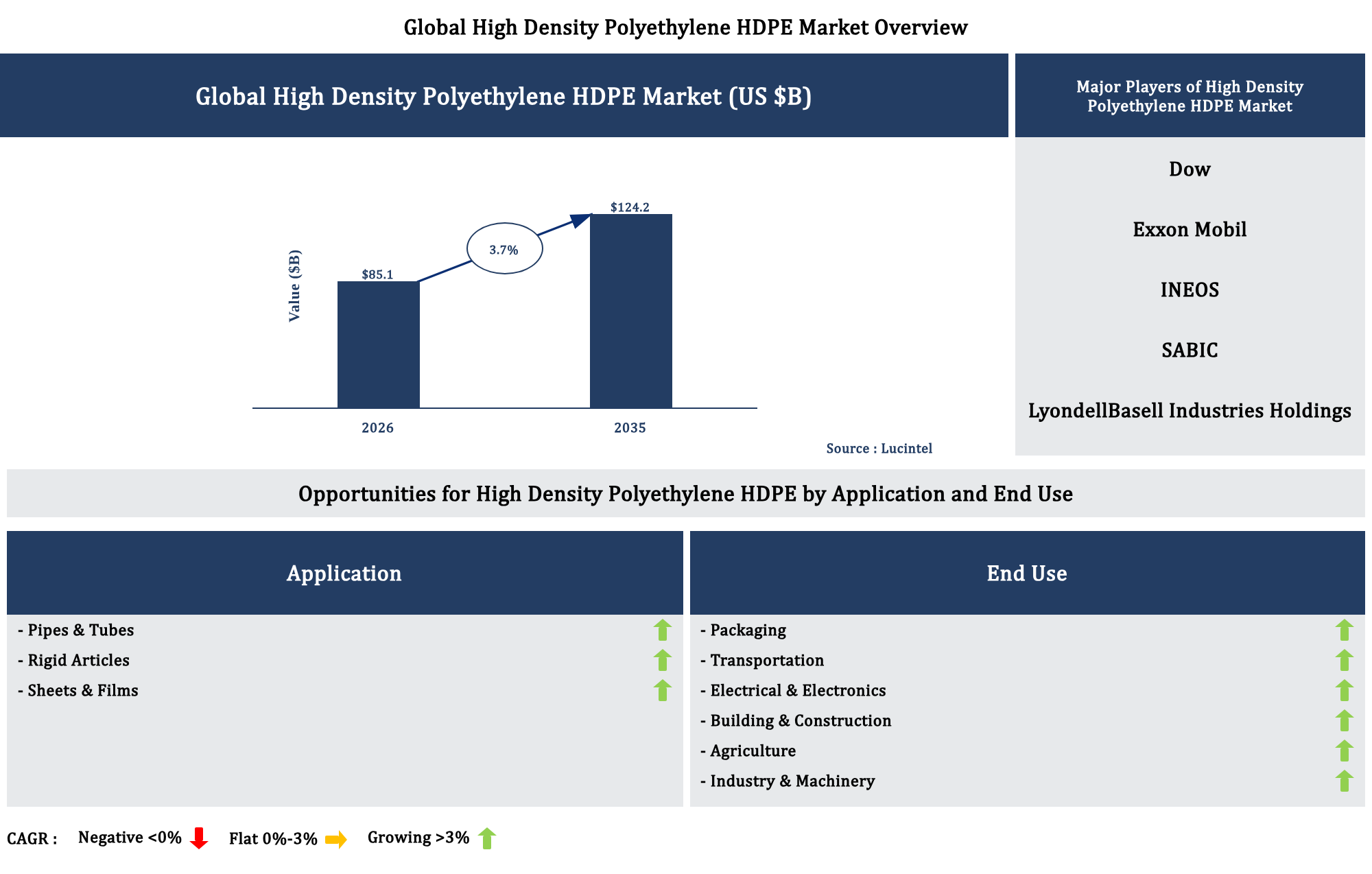
Key data points: The market size in 2035 = $124.2 billion, growth forecast = 3.7% annually for the next 9 years. Scroll below to get more insights. This market report covers trends, opportunities, and forecasts in the global high density polyethylene (HDPE) market to 2035 by application (pipes & tubes, rigid articles and sheets & films), end use (packaging, transportation, electrical & electronics, building & construction, agriculture and industry & machinery), and region (North America, Europe, Asia Pacific, and the Rest of the World)

Publisher: Lucintel Last Updated: July 2026
See Pricing

Download Sample Report

| ✨ New Download Sample report — Get instant insights! | ✨ New Download Sample report — Get instant insights!

High Density Polyethylene (HDPE) Market Report: Trends, Forecast and Competitive Analysis to 2035

High Density Polyethylene (HDPE) Market


The future of the global high density polyethylene (HDPE) market looks promising with opportunities in the packaging, transportation, electrical & electronics, building & construction, agriculture and industry & machinery markets. The global high density polyethylene (HDPE) market is expected to reach an estimated $124.2 billion by 2035 with a CAGR of 3.7% from 2026 to 2035. The major drivers for this market are the increasing packaging demand boosting hdpe consumption, the rising infrastructure projects supporting hdpe applications and the growing industrial activities driving hdpe demand.

• Lucintel forecasts that, within the application category, pipes & tubes will remain the largest segment over the forecast period as the growing irrigation networks driving high density polyethylene pipe adoption.

• Within the end use category, packaging will remain the largest segment due to the the rising food packaging requirements supporting durable plastic solutions.

• In terms of regions, APAC will remain the largest region over the forecast period due to the the growing industrial production driving polymer demand.

Gain valuable insights for your business decisions with our comprehensive 150+ page report.
High Density Polyethylene (HDPE) Market

Emerging Trends in the High Density Polyethylene (HDPE) Market

The high density polyethylene (HDPE) market is undergoing structural change as sustainability pressures, regulatory shifts, and technological innovation reshape demand and supply dynamics globally. Brand owners are rethinking material choices for packaging, infrastructure, and consumer goods, while producers invest in advanced recycling, bio-based feedstocks, and performance-enhancing additives. Digitalization of production assets, evolving trade flows, and circular economy models are redefining competitiveness and margin structures. These emerging trends are creating both risks and opportunities across the value chain, from resin producers to converters and end users, and are likely to determine the long-term growth profile and regional balance of the high density polyethylene (HDPE) market.
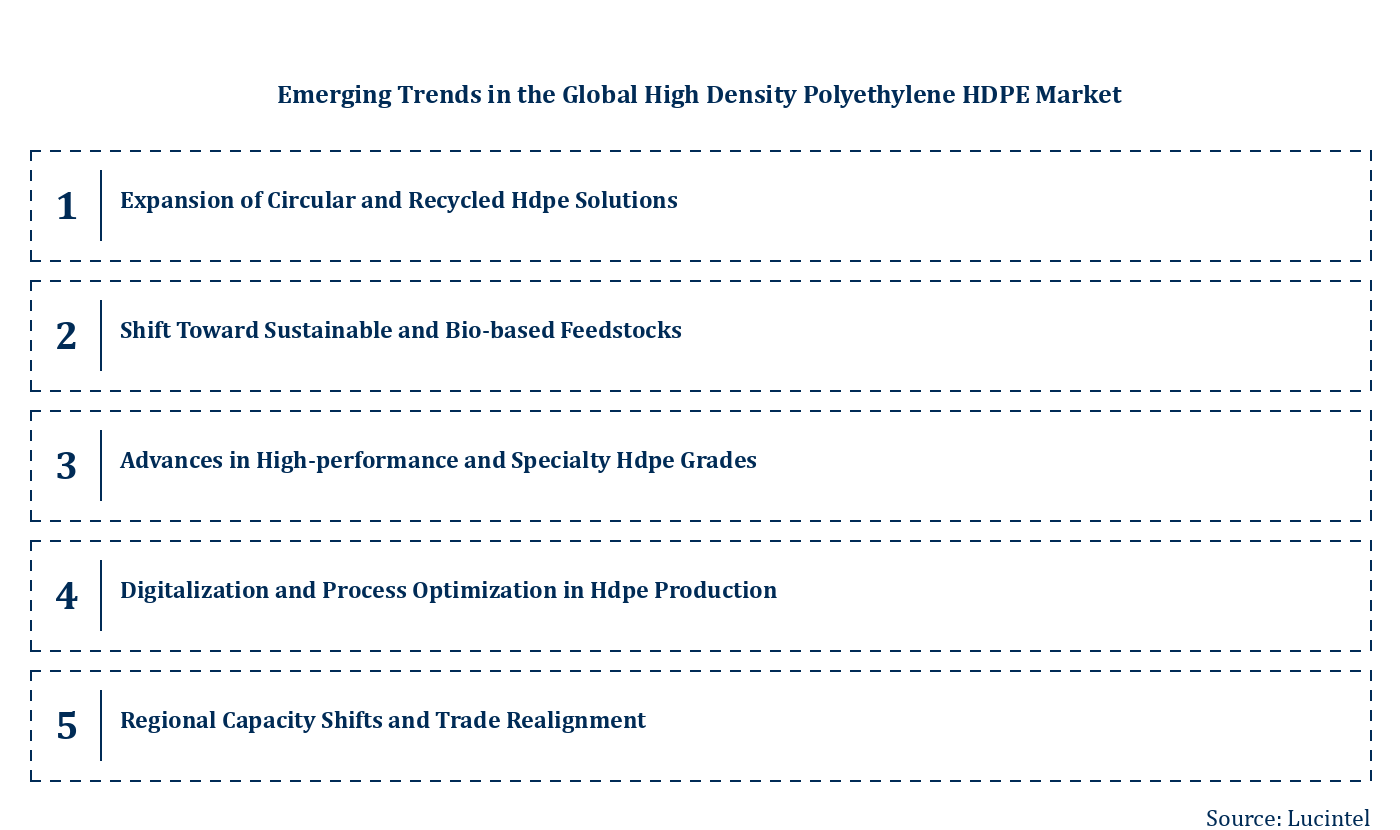
  • Expansion of Circular and Recycled HDPE Solutions: The high density polyethylene (HDPE) market is witnessing strong momentum toward circularity, with producers scaling mechanical and chemical recycling technologies to supply high-quality recycled HDPE (rHDPE) for packaging, construction, and industrial uses. Brand commitments to recycled content and extended producer responsibility regulations are driving demand for food-grade and high-performance rHDPE. Investments in sorting, depolymerization, and compatibilizer technologies are improving yield and quality, allowing higher recycled content without compromising performance. This trend is reshaping supply chains, creating premiums for certified circular materials, and incentivizing long-term offtake agreements between resin suppliers and major consumer brands.
  • Shift Toward Sustainable and Bio-Based Feedstocks: In the high density polyethylene (HDPE) market, there is a growing shift from fossil-based feedstocks to lower-carbon and renewable alternatives such as bio-ethanol and waste-derived naphtha. Producers are developing bio-based HDPE grades with reduced lifecycle emissions while maintaining drop-in compatibility with existing processing equipment. Corporate net-zero targets and carbon pricing mechanisms are pushing resin buyers to evaluate the carbon footprint of materials and favor low-emission options. Certification schemes and mass-balance approaches are gaining traction to verify sustainable content. This trend is creating a differentiated premium segment, influencing investment in new crackers and shaping long-term feedstock strategy.
  • Advances in High-Performance and Specialty HDPE Grades: The high density polyethylene (HDPE) market is evolving from commodity resin toward more specialized, application-specific grades, particularly for pressure pipes, rigid packaging, films, and automotive components. Innovations in catalyst systems, bimodal and multimodal resin design, and additive packages are enabling higher strength, better stress-crack resistance, downgauging, and improved processability. These high-performance grades support infrastructure longevity, lighter packaging, and enhanced barrier properties, helping downstream users meet regulatory, safety, and cost targets. As differentiation increases, producers gain greater pricing power, while converters benefit from more efficient material usage and expanded design flexibility.
  • Digitalization and Process Optimization in HDPE Production: Across the high density polyethylene (HDPE) market, producers are accelerating adoption of digital technologies such as advanced process control, predictive maintenance, and real-time quality analytics. Integration of sensors, machine learning models, and digital twin simulations is improving reactor stability, energy efficiency, and throughput while reducing off-spec production and unplanned downtime. Enhanced visibility across plants and logistics networks supports more agile response to demand fluctuations and feedstock volatility. This trend lowers unit costs, reduces emissions intensity, and strengthens reliability for customers, creating competitive advantages for operators that effectively scale digital capabilities across their asset base.
  • Regional Capacity Shifts and Trade Realignment: The high density polyethylene (HDPE) market is being reshaped by new capacity additions in feedstock-advantaged regions, particularly North America and the Middle East, alongside rationalization of higher-cost assets elsewhere. These investments are increasing export flows into Asia, Africa, and Latin America, intensifying competition and pressuring regional price differentials. At the same time, shifting trade policies, logistical disruptions, and localization strategies are prompting converters and brand owners to reassess sourcing portfolios. This trend is leading to more long-term contracts, portfolio rebalancing between domestic and imported volumes, and a sharper focus on supply security and logistics resilience.

High Density Polyethylene (HDPE) Market by country

Recent Developments in the High Density Polyethylene (HDPE) Market

The high density polyethylene (HDPE) market has witnessed notable shifts as manufacturers, converters, and end users respond to evolving regulatory, technological, and consumer pressures across global value chains. Industry players are prioritizing capacity optimization, circularity, and product differentiation to maintain margins in a competitive commodity landscape. Strategic investments in advanced process technologies, digitalized operations, and performance-grade resins are enabling improved efficiency and new applications. At the same time, sustainability commitments and policy frameworks are reshaping supply, demand, and innovation roadmaps. The following recent developments illustrate how the hdpe market is adapting and repositioning for future growth.

  • Capacity Expansions and Regional Rebalancing: Producers are adding new hdpe capacities in North America, the Middle East, and parts of Asia while rationalizing older, less efficient assets in Europe and other high-cost regions. This rebalancing is reshaping global trade flows, intensifying export competition, and putting pressure on regional price differentials, particularly for commodity blow molding and film grades used in packaging.
  • Acceleration of Circular and Recycled Hdpe (rHDPE) Initiatives: Brand owners and regulators are driving rapid growth in rHDPE demand, especially in packaging and consumer goods applications. Producers and recyclers are investing in advanced mechanical and chemical recycling, food-grade decontamination technologies, and traceability systems. These developments are enabling higher post-consumer content, supporting extended producer responsibility schemes, and helping the hdpe market align with corporate net-zero and plastics circularity targets.
  • Shift Toward High-performance and Specialty Hdpe Grades: The hdpe market is seeing increased development of bimodal and multimodal grades that deliver enhanced stiffness, toughness, crack resistance, and processability. These specialty resins are targeting pressure pipes, geomembranes, blow-molded containers, and automotive components. The shift helps producers move up the value chain, differentiate from low-cost commodity supply, and secure more resilient margins in technically demanding end-use segments.
  • Digitalization and Advanced Process Control in Production: Leading hdpe manufacturers are deploying advanced process control, predictive maintenance, and real-time quality monitoring to optimize polymerization, reduce off-spec material, and improve energy efficiency. Integration of plant data analytics with supply chain visibility tools is enhancing responsiveness to demand volatility, shortening lead times, and supporting more agile, customer-centric production planning across the hdpe market.
  • Regulatory and Sustainability-driven Changes in Packaging Applications: Global regulations targeting single-use plastics, extended producer responsibility, and recycled-content mandates are reshaping hdpe packaging design and material selection. Converters are light-weighting bottles and containers, improving monomaterial structures, and designing for recyclability. These policies are accelerating innovation in closure systems, barrier solutions, and label technologies, while also driving substitution dynamics between hdpe, PET, polypropylene, and alternative materials.

Strategic Growth Opportunities in the High Density Polyethylene (HDPE) Market

The high density polyethylene (HDPE) market is expanding as sustainability, durability, and cost efficiency reshape material choices across industries worldwide. HDPE’s balance of strength, chemical resistance, and recyclability positions it as a preferred polymer for packaging, infrastructure, agriculture, and consumer products. Rising urbanization, stricter regulations on single-use materials, and investment in circular economy models are accelerating adoption in both mature and emerging economies. At the same time, advances in resin design, processing technologies, and performance additives are unlocking higher value applications. These trends create distinct, application-specific growth opportunities for producers, converters, and brand owners in the global value chain.

  • Rigid Packaging and Containers: Growth in food, beverage, household, and industrial packaging is driving higher demand for HDPE bottles, jerrycans, and caps that offer barrier performance, light weight, and recyclability, with opportunities in downgauging, post-consumer recycled content integration, and premium closures focused on safety, convenience, and brand differentiation.
  • Pipes and Water Management: Urban infrastructure upgrades, rural water access projects, and gas distribution expansion are boosting demand for HDPE pressure pipes and fittings that provide long service life, corrosion resistance, and low leakage, creating opportunities in large-diameter pipelines, trenchless installation technologies, and smart metering-enabled distribution networks.
  • Film, Bags, and Flexible Packaging: Retail, e-commerce, agriculture, and industrial sectors are increasing use of HDPE films for carrier bags, liners, shrink wraps, and mulch films, with growth potential in high-strength thin films, mono-material recyclable structures, biodegradable blends, and specialized applications like breathable packaging and protective palletization.
  • Construction and Building Products: The construction sector is using HDPE in geomembranes, roofing underlays, vapor barriers, electrical conduits, and insulation facings, creating opportunities tied to green building codes, energy-efficient envelopes, landfill and mining containment, and modular construction systems that require durable, lightweight, moisture-resistant materials.
  • Automotive and Industrial Components: Automotive, appliances, and general industrial manufacturers are substituting metals and other plastics with HDPE for fuel tanks, reservoirs, ducts, pallets, crates, and machinery housings, enabling weight reduction, corrosion resistance, design flexibility, and recyclability while supporting modular assembly, logistics optimization, and circular supply programs.

High Density Polyethylene (HDPE) Market Drivers and Challenges

The global high density polyethylene (HDPE) market is shaped by a multifaceted set of technological, economic, and regulatory forces. Demand from packaging, construction, automotive, and infrastructure projects interacts with advances in polymer science, recycling technologies, and process efficiency. At the same time, environmental regulations, volatile feedstock prices, and shifting trade policies influence investment decisions and capacity expansions. Market participants must balance the need for cost-effective, high-performance materials with growing pressure to reduce carbon footprints and plastic waste. Understanding these drivers and challenges is critical for producers, converters, and end users seeking resilient growth strategies in the HDPE value chain.

The factors responsible for driving the high density polyethylene (HDPE) market include:

  • Expansion of Packaging and Consumer Goods Applications: The HDPE market benefits significantly from the expansion of rigid and flexible packaging across food and beverages, household chemicals, personal care, and industrial products, as brand owners seek lightweight, durable, and cost-effective materials that protect contents, extend shelf life, and support efficient logistics.
  • Infrastructure and Construction Growth: Global investments in water management, gas distribution, telecom ducts, and building components drive HDPE demand, as the material offers corrosion resistance, durability, and ease of installation for pipes, geomembranes, and structural elements used in both new infrastructure and replacement projects.
  • Advances in Polymer Technology and Product Customization: Continuous improvements in catalyst systems, process technologies, and resin design are enabling HDPE grades with tailored performance attributes, such as enhanced stiffness–toughness balance, improved environmental stress crack resistance, and better processability for blow molding, injection molding, and film applications.
  • Rising Focus on Lightweighting and Resource Efficiency: Manufacturers across packaging, automotive, and industrial sectors are adopting HDPE to reduce material consumption, improve transportation efficiency, and lower overall product weight, thereby cutting costs, enhancing performance, and supporting broader sustainability and carbon reduction objectives.
  • Growth in Emerging Economies and Urbanization: Rapid urbanization and rising incomes in emerging markets are expanding consumption of packaged goods, infrastructure, and consumer durables, which in turn increases demand for HDPE-based pipes, containers, tanks, and household items used in everyday life and public utilities.

The challenges in the high density polyethylene (HDPE) market are:

  • Environmental Concerns and Regulatory Pressure on Plastics: Growing public scrutiny of plastic waste, tighter regulations on single-use plastics, and extended producer responsibility schemes are pressuring HDPE value chains to improve recyclability, increase recycled content, and demonstrate credible end-of-life solutions to maintain market acceptance.
  • Feedstock Price Volatility and Margin Pressure: HDPE producers are exposed to fluctuations in crude oil and natural gas prices, as well as changes in regional ethylene supply–demand balances, which can compress margins, complicate pricing strategies, and discourage long-term investment in new capacity during periods of uncertainty.
  • Intensifying Global Competition and Overcapacity Risks: Large-scale capacity additions in cost-advantaged regions, shifting trade flows, and periodic oversupply situations heighten competitive pressures, leading to price wars, reduced profitability, and the need for differentiation through specialty grades, service quality, and integration across the HDPE value chain.

The HDPE market is propelled by expanding packaging and infrastructure use, advances in polymer science, and the push for lightweight, resource-efficient materials, particularly in rapidly urbanizing regions. At the same time, market participants must navigate environmental scrutiny, regulatory changes, volatile feedstock costs, and global competitive pressures. Together, these drivers and challenges are reshaping investment priorities, innovation agendas, and partnership models across the value chain. Companies that invest in sustainable product design, recycling capabilities, and operational resilience are better positioned to capture growth opportunities while mitigating risks in the evolving global HDPE landscape.

List of High Density Polyethylene (HDPE) Market Companies

Companies in the market compete on the basis of product quality offered. Major players in this market focus on expanding their manufacturing facilities, R&D investments, infrastructural development, and leverage integration opportunities across the value chain. Through these strategies high density polyethylene (HDPE) market companies cater increasing demand, ensure competitive effectiveness, develop innovative products & technologies, reduce production costs, and expand their customer base. Some of the high density polyethylene (HDPE) market companies profiled in this report include-

  • Dow
  • Exxon Mobil
  • INEOS
  • SABIC
  • LyondellBasell Industries Holdings

High Density Polyethylene (HDPE) Market by Segment

The study includes a forecast for the global high density polyethylene (HDPE) market by application, end use, and region.

  • High Density Polyethylene (HDPE) Market by Application [Value ($B) from 2019 to 2035]:
    • Pipes & Tubes
    • Rigid Articles
    • Sheets & Films
  • High Density Polyethylene (HDPE) Market by End Use [Value ($B) from 2019 to 2035]:
    • Packaging
    • Transportation
    • Electrical & Electronics
    • Building & Construction
    • Agriculture
    • Industry & Machinery
  • High Density Polyethylene (HDPE) Market by Region [Value ($B) from 2019 to 2035]:
    • North America
    • Europe
    • Asia Pacific
    • The Rest of the World

Country Wise Outlook for the High Density Polyethylene (HDPE) Market

The global high density polyethylene (HDPE) market is undergoing notable shifts as producers adapt to changing feedstock dynamics, decarbonization pressures, and evolving end-use demand. Capacity expansions in Asia and the United States are reshaping trade flows, while Europe and Japan focus on higher-value, specialty, and recycled grades. Across major economies, brand owners’ sustainability commitments and stricter regulations on single-use plastics are accelerating investment in mechanical and advanced recycling, driving growth in recycled-content HDPE. At the same time, infrastructure, construction, and packaging applications remain core demand pillars, with performance-focused innovations supporting long-term market resilience.

  • United States: The United States HDPE market is driven by abundant shale-based ethylene, enabling competitive large-scale capacity additions along the Gulf Coast. Producers are investing in advanced bimodal resins for pressure pipes, blow-molded packaging, and film applications, emphasizing stiffness–impact balance and processing efficiency. There is growing focus on circularity, with partnerships across brand owners, recyclers, and converters to boost post-consumer recycled (PCR) HDPE integration, particularly in household and personal care bottles. Regulatory and stakeholder pressure is also encouraging lower-carbon production through energy efficiency upgrades, carbon capture pilots, and renewable power sourcing for crackers and polymerization units.
  • China: China’s HDPE market is undergoing rapid capacity growth as coal-to-olefins and integrated refinery–petrochemical complexes come online, shifting the country closer to self-sufficiency. Domestic producers are moving up the value chain into high-performance pipe, film, and blow-molding grades to reduce reliance on imports of specialty resins. Policy support for plastic waste management and circular economy initiatives is stimulating investment in mechanical recycling and emerging chemical recycling projects. At the same time, the transition away from single-use, low-value applications is prompting a product mix upgrade, with emphasis on infrastructure, gas and water pipe, and advanced packaging for e-commerce and fresh food logistics.
  • Germany: Germany’s HDPE market is shaped by stringent environmental regulations and strong demand from automotive, industrial packaging, and infrastructure segments. Producers and converters are prioritizing recycled-content and mono-material solutions to meet EU packaging and waste directives, with HDPE widely used in rigid packaging designed for high recyclability. Energy cost volatility has accelerated efforts to optimize plant efficiency, adopt lower-emission technologies, and explore bio-based or renewable feedstock routes. Collaboration between chemical companies, machinery manufacturers, and research institutes supports development of specialty HDPE grades that offer enhanced stress cracking resistance, barrier performance, and durability for high-end industrial and transport applications.
  • India: India’s HDPE market is expanding quickly, underpinned by government-led infrastructure programs, irrigation networks, and urbanization, which drive strong demand for pressure pipes, telecom ducts, and geomembranes. Local producers are adding capacities and debottlenecking existing assets to reduce import dependence, while also introducing new grades tailored to water management, gas distribution, and agriculture films. Policy attention on solid waste management and extended producer responsibility is gradually encouraging collection and recycling systems, supporting growth in recycled HDPE for non-critical and selected packaging uses. The shift toward organized retail and e-commerce is further boosting demand for durable, lightweight HDPE packaging solutions.
  • Japan: Japan’s HDPE market is relatively mature, with modest volume growth but increasing emphasis on high-value, specialty applications such as fuel tanks, industrial containers, and precision components. Producers focus on resin innovations that deliver superior environmental stress crack resistance, long-term creep performance, and lightweighting benefits, supporting automotive, electronics, and infrastructure sectors. Given limited domestic feedstock advantages, Japanese companies prioritize operational efficiency, high product quality, and differentiation through technology licensing and joint ventures in overseas markets. Strong national commitments to resource efficiency and carbon reduction are also driving initiatives in recycling, closed-loop systems, and development of low-carbon and circular HDPE solutions.

Features of the High Density Polyethylene (HDPE) Market

  • Market Size Estimates: High density polyethylene (HDPE) market size estimation in terms of value ($B).
  • Trend and Forecast Analysis: Market trends (2019 to 2025) and forecast (2026 to 2035) by various segments and regions.
  • Segmentation Analysis: High density polyethylene (HDPE) market size by various segments, such as by application, end use and region in terms of value ($B).
  • Regional Analysis: High density polyethylene (HDPE) market breakdown by North America, Europe, Asia Pacific, and the Rest of the World.
  • Growth Opportunities: Analysis of growth opportunities in different application, end use and regions for the high density polyethylene (HDPE) market.
  • Strategic Analysis: This includes M&A, new product development, and competitive landscape of the high density polyethylene (HDPE) market.
  • Analysis of competitive intensity of the industry based on Porter's Five Forces model.

Article

High Density Polyethylene (HDPE) Market: Are We Entering a New Materials Supercycle?

Dallas, July 17, 2026 – The high density polyethylene (HDPE) market is moving from a mature, utility-oriented segment of the plastics industry into a strategically contested arena shaped by decarbonization, digitalization, and supply chain risk. Once viewed as a basic commodity polymer, HDPE is now at the center of innovation waves spanning advanced recycling, performance additives, and smart manufacturing. These shifts are redefining cost curves, reshaping regional competitiveness, and opening new use cases in technology-heavy industries from telecom infrastructure to data centers and electric vehicles.

What Strategic Trends Are Redefining the HDPE Market Landscape?

The HDPE market is undergoing a structural transition driven by changing regulations, customer expectations, and technology breakthroughs. Several intertwined trends are emerging as the primary forces of disruption across packaging, construction, mobility, and technology-related applications.

  • A prominent trend is the rapid scaling of circular and low-carbon HDPE solutions, including mechanically recycled HDPE (rHDPE), chemically recycled feedstocks, and bio-based HDPE grades that target lower lifecycle emissions while preserving performance.
  • Another trend centers on advanced performance and specialty HDPE grades engineered for demanding applications such as pressure pipes, high-voltage cable jacketing, battery components, and corrosion-resistant infrastructure.
  • Digitalization and process intensification in HDPE production are increasingly important, with producers investing in AI-driven process control, predictive maintenance, and advanced catalyst systems to optimize yields, energy use, and grade consistency.
  • A further development is the regional rebalancing of capacity and trade flows, as new crackers and polymerization units in North America, the Middle East, and parts of Asia challenge traditional export hubs and force portfolio repositioning among incumbents.
  • There is a growing integration of HDPE within broader sustainability-linked value propositions, where brand owners and industrial buyers demand traceability, recycled content verification, and compliance with evolving extended producer responsibility frameworks.

Which Markets Stand to Gain Most from Innovation in HDPE?

Innovation in the HDPE market is not spreading uniformly. Certain end-use segments and value chains are poised for outsized benefits as new materials, processes, and business models scale up.

  • Packaging and consumer goods are likely to see strong impact as brand owners seek drop-in rHDPE and bio-based HDPE solutions for bottles, caps, closures, and rigid containers that meet recyclability and carbon-reduction targets without compromising barrier performance.
  • Pressure pipes and infrastructure will benefit from higher-strength, crack-resistant HDPE grades and bimodal resins that extend asset lifetimes in water distribution, gas transmission, district heating, and mining slurries.
  • Telecommunications and power cable markets are expected to capture gains from enhanced HDPE jacketing and conduit materials that offer improved stress crack resistance, dielectric properties, and installation flexibility, particularly for fiber-to-the-home and grid modernization programs.
  • Automotive and electric mobility applications stand to gain from lightweight, chemically resistant HDPE components used in fluid tanks, battery pack housings, cable management systems, and underbody protection as sustainability requirements intensify.
  • Construction and building products will be impacted by HDPE geomembranes, roofing membranes, and barrier layers that align with green building standards and deliver superior durability under harsh environmental conditions.

How Will These Innovations Disrupt Competitive Dynamics and Value Pools?

The evolving HDPE market is not only about incremental product improvements; it is changing the structure of competition, pricing logic, and value creation across the polymer value chain.

  • In packaging, circular HDPE solutions are likely to erode the traditional premium for virgin material in some applications while creating new premiums for verified recycled content, traceable supply, and certified low-carbon footprints.
  • In infrastructure, performance-enhanced HDPE grades can displace traditional materials such as ductile iron, concrete, and PVC in pipe systems by offering favorable lifecycle economics, particularly where non-revenue water and leakage rates are political priorities.
  • In technology-intensive sectors, higher-specification HDPE grades will shift procurement criteria away from pure price-per-ton metrics toward total cost of ownership, reliability, and regulatory compliance, favoring producers with strong R&D and application development capabilities.
  • As advanced recycling scales, integrated petrochemical players that can blend pyrolysis oils and other circular feedstocks into existing crackers will gain strategic leverage over non-integrated converters by offering differentiated sustainability attributes.
  • The rise of localized supply strategies, driven by geopolitical fragmentation and logistics volatility, may spur regional champions in HDPE who can guarantee availability and regulatory alignment, challenging the dominance of large export-oriented producers.

What Key Challenges Could Slow Momentum in the HDPE Market Shift?

Despite the strong innovation pipeline, several structural challenges risk dampening the pace at which the HDPE market can transition toward higher-value and more sustainable trajectories.

  • Feedstock and energy volatility remains a fundamental concern, as HDPE production is highly sensitive to ethylene pricing, natural gas dynamics, and regional energy transition policies.
  • Regulatory pressures and public scrutiny over plastic waste and microplastics generate uncertainty around allowable applications and may accelerate substitution toward alternative materials in some markets if the industry response is perceived as too slow.
  • Quality variability and supply constraints in recycled HDPE inputs represent a serious barrier, especially for food-contact and high-performance applications where mechanical properties and contamination risks are tightly controlled.
  • Capital intensity and long asset lifetimes in cracking and polymerization infrastructure make rapid shifts in production portfolios difficult, leaving some producers exposed to stranded-asset risk if demand profiles change faster than expected.
  • Technological fragmentation across advanced recycling approaches, such as pyrolysis, gasification, and solvent-based purification, complicates scale-up decisions and raises questions around long-term economics and environmental performance.

Where Are the Most Attractive Opportunities Emerging for Stakeholders?

Even against this challenging backdrop, the HDPE market is rich with opportunities for resin producers, converters, brand owners, infrastructure players, and technology providers that act early and selectively.

  • Value-added circular solutions present attractive growth opportunities through certified rHDPE streams, closed-loop programs with major consumer brands, and portfolio offerings that meet specific recycled content thresholds for priority segments.
  • Specialty HDPE grades customized for pipes, cables, and geomembranes can generate defensible margins by locking in long-term infrastructure and utilities contracts built around performance guarantees and lifecycle support.
  • Digital and data-driven services around HDPE, including process optimization for converters, resin selection decision tools, and traceability platforms, create new adjacent revenue pools and deepen customer lock-in.
  • Partnerships between resin producers, recyclers, packaging converters, and retailers can accelerate commercialization of high-recycled-content solutions and support regional collection and sorting infrastructure upgrades.
  • Emerging markets in Asia, Africa, and Latin America offer opportunities to leapfrog toward more sustainable HDPE-based infrastructure and packaging systems, particularly in water management, sanitation, and affordable housing applications.

How Is the Technology Industry Using HDPE in New and Strategic Ways?

Technology-intensive industries are increasingly tapping into HDPE’s unique combination of mechanical strength, chemical resistance, and processability to support digital infrastructure and advanced electronics ecosystems.

  • Telecom networks rely on HDPE conduits and ducts for fiber optic cable protection, where flexibility, abrasion resistance, and low friction coefficients enable cost-effective installation and long-term network reliability.
  • Data centers are incorporating HDPE piping systems for chilled water distribution and underfloor infrastructure, leveraging corrosion resistance and low maintenance requirements to support uptime-critical operations.
  • Electrical and power distribution applications use HDPE as jacketing and insulation materials for high- and medium-voltage cables, benefiting from its dielectric properties and resistance to environmental stress cracking.
  • Consumer electronics and appliance manufacturers employ HDPE for durable housings, wire and cable management components, and protective packaging that can withstand mechanical shocks during transport.
  • Renewable energy systems, including solar farms and wind installations, use HDPE for cable protection, drainage systems, and environmental barriers, enabling reliable performance in demanding outdoor conditions.

What Recent Developments Are Signaling the Next Phase for the HDPE Market?

Recent announcements, investments, and partnerships across the HDPE value chain indicate that the market is accelerating toward a more interconnected ecosystem of materials innovation, circularity, and digital enablement.

  • Major petrochemical players have announced new world-scale HDPE lines paired with advanced catalyst technologies designed to deliver improved stiffness–toughness balance, higher processability, and better environmental stress crack resistance for pressure pipe and packaging grades.
  • Several integrated energy and chemical companies are commissioning commercial-scale chemical recycling facilities that can convert mixed plastic waste into cracker-ready feedstocks, with stated plans to allocate a significant share of output to circular HDPE production.
  • Global brand owners in beverages, personal care, and household products have launched pilot programs for high-recycled-content HDPE bottles and closures, supported by design-for-recycling guidelines and certified material traceability schemes.
  • Technology providers are deploying AI and machine learning tools in HDPE plants to optimize reactor conditions, reduce off-spec production, and fine-tune grade transitions, thereby lowering operating costs and emissions per ton of resin.
  • Regulators and industry consortia are rolling out new standards and certification frameworks for recycled content, food-contact approvals, and carbon accounting, directly influencing procurement criteria and accelerating differentiation among HDPE suppliers.

How Should Market Participants Position for the Future of the HDPE Market?

The HDPE market is shifting from a volume-driven, price-centric arena to a strategically segmented space defined by sustainability credentials, application performance, and ecosystem partnerships. Producers and downstream users that align portfolios with circularity, invest in specialty capabilities, and build robust data-backed value propositions will be best positioned as regulatory and customer expectations tighten. Those that treat HDPE as a static commodity risk margin compression, stranded capacity, and erosion of relevance in high-growth, technology-intensive applications that increasingly demand more from this versatile material.

Top 5 Companies

1. Dow

  • Headquarters: Midland, Michigan, USA
  • Website: https.www.dow.com
  • Total Revenue (2023): $44.98 Billion
  • Establishment Year: 1897

Dow is a leading global materials science company headquartered in Midland, Michigan, USA, founded in 1897 and employing tens of thousands of people worldwide. The company operates manufacturing sites and commercial offices across North America, Europe, Asia-Pacific, Latin America, and the Middle East, giving it a broad geographic footprint in key High Density Polyethylene (HDPE) demand centers. Dow’s plastics and packaging business is a major producer of HDPE resins used in pressure pipes, blow‑molded containers, caps and closures, films, geomembranes, industrial bulk packaging, and consumer packaging applications. The company offers differentiated HDPE grades with tailored density, molecular weight distribution, and comonomer content to support stiffness, toughness, environmental stress crack resistance, and processability requirements. Dow has invested in new polyethylene assets on the U.S. Gulf Coast leveraging shale‑based ethane feedstock and has expanded logistics and commercial reach into Latin America and Asia to strengthen HDPE supply to high‑growth regions. The company has pursued portfolio actions in polyethylene and related businesses through joint ventures and asset optimization, while focusing on circularity initiatives such as advanced recycling and design for recyclability in HDPE packaging. Dow maintains technical centers and application development labs globally to support converters and brand owners with HDPE product development, performance testing, and regulatory compliance.

2. Exxon Mobil

  • Headquarters: Irving, Texas, USA
  • Website: https.www.exxonmobil.com
  • Total Revenue (2023): $344.58 Billion
  • Establishment Year: 1999

Exxon Mobil, headquartered in Irving, Texas, USA and formed in 1999 through the merger of Exxon and Mobil, is one of the world’s largest integrated energy and petrochemical companies, employing a very large global workforce. The company operates upstream, downstream, and chemical segments with extensive assets across North America, Europe, the Middle East, Asia-Pacific, Africa, and Latin America. Within the High Density Polyethylene (HDPE) market, ExxonMobil Chemical produces a wide range of HDPE grades under well‑known product families, addressing applications such as pressure and non‑pressure pipes, blow‑molded containers, household and industrial chemicals packaging, caps and closures, films, and heavy‑duty sacks. The company offers metallocene‑based and conventional HDPE resins designed for high stiffness, impact resistance, and excellent environmental stress crack resistance. Exxon Mobil has expanded PE and HDPE capacity on the U.S. Gulf Coast, including new cracker and polyethylene units in Texas and Louisiana, to capitalize on cost‑advantaged feedstocks and export opportunities to Asia and other growth regions. The company has also invested in performance polyethylene facilities in Singapore, enhancing its ability to serve Asian converters with specialty HDPE grades. In terms of mergers and acquisitions related to petrochemicals, Exxon Mobil’s large‑scale integration and long‑standing joint ventures in regions such as the Middle East support feedstock access and HDPE value chain synergies, while the company advances circular polymer initiatives, including chemical recycling projects that aim to increase the availability of circular HDPE for packaging applications.

3. INEOS

  • Headquarters: London, United Kingdom
  • Website: https.www.ineos.com
  • Total Revenue (2023): $65.00 Billion
  • Establishment Year: 1998

INEOS is a large privately held chemicals and energy group headquartered in London, United Kingdom, established in 1998 and comprising numerous business units with thousands of employees across Europe, North America, the Middle East, Asia, and other regions. The company has built a strong position in the High Density Polyethylene (HDPE) market through its INEOS Olefins and Polymers businesses, operating production sites in Europe and North America and participating in strategic joint ventures in the Middle East. INEOS offers a wide HDPE product portfolio that covers blow molding, injection molding, film, pipe, and rotational molding applications, including grades used for pressure pipes, fuel tanks, industrial packaging, food and beverage containers, and caps and closures. The company’s technology portfolio includes advanced catalyst systems and bimodal HDPE processes that enable high stiffness, toughness, and environmental stress crack resistance. INEOS has expanded geographically through acquisitions of petrochemical assets and capacity from major oil and chemical companies, reinforcing its integrated ethylene‑to‑HDPE platform. The formation of joint ventures such as INEOS Styrolution and partnerships in the Middle East have strengthened its global presence and feedstock security. In recent years, INEOS has also focused on circular and bio‑attributed polyethylene initiatives, working with brand owners and recyclers to develop HDPE solutions incorporating recycled content and mass‑balance certified feedstocks, while continuing to evaluate acquisition and expansion opportunities that add HDPE capacity or broaden access to high‑growth markets.

4. SABIC

  • Headquarters: Riyadh, Saudi Arabia
  • Website: https.www.sabic.com
  • Total Revenue (2023): $36.72 Billion
  • Establishment Year: 1976

SABIC, headquartered in Riyadh, Saudi Arabia and founded in 1976, is a leading global diversified chemicals company with a substantial workforce and operations spanning the Middle East, Asia, Europe, and the Americas. Leveraging advantaged feedstock positions in Saudi Arabia and global manufacturing hubs, SABIC is a major player in the High Density Polyethylene (HDPE) market. The company’s HDPE portfolio includes unimodal and bimodal grades tailored for pressure pipes, gas and water distribution, blow‑molded containers, caps and closures, geomembranes, films, crates, and industrial bulk packaging. SABIC’s material innovations emphasize high environmental stress crack resistance, stiffness, toughness, and processability to support demanding infrastructure, packaging, and industrial applications. The company operates large integrated complexes in Saudi Arabia and the Netherlands, among other locations, and markets HDPE widely across Asia, Europe, Africa, and the Americas through an extensive sales and distribution network. Geographic expansion related to HDPE has included investment in new polyethylene assets and technology partnerships, as well as participation in joint ventures such as those in the United States that provide additional ethylene and polyethylene capacity for export markets. SABIC has engaged in acquisitions and strategic collaborations in petrochemicals, including integration with Saudi Aramco, which enhances feedstock flexibility and capital strength for future HDPE and polyethylene expansions. The company also pursues circular economy initiatives, including certified circular polymers derived from recycled feedstocks, offering HDPE solutions that support brand owners’ sustainability targets in rigid packaging and infrastructure.

5. LyondellBasell Industries Holdings

  • Headquarters: Houston, Texas, USA
  • Website: https.www.lyondellbasell.com
  • Total Revenue (2023): $42.16 Billion
  • Establishment Year: 2007

LyondellBasell Industries Holdings, headquartered in Houston, Texas, USA and formed in 2007 through the combination of Lyondell Chemical Company and Basell, is one of the world’s largest plastics, chemicals, and refining companies, employing thousands of people with operations in North America, Europe, Asia-Pacific, and Latin America. The company is a key supplier in the High Density Polyethylene (HDPE) market, leveraging its proprietary Hostalen and other process technologies to produce a broad range of HDPE grades. Its portfolio covers pressure and non‑pressure pipes, blow‑molded bottles, industrial containers, household and personal care packaging, caps and closures, films, and automotive applications requiring high stiffness and environmental stress crack resistance. LyondellBasell operates integrated crackers and polymerization units in the United States, Europe, and joint venture sites in the Middle East and Asia, giving it diversified geographic coverage and access to competitive feedstocks. The company has invested in capacity expansions and debottlenecking projects for polyethylene, including HDPE, to address growing demand in packaging, construction, and infrastructure markets. Strategic moves have included acquisitions and joint ventures with regional players to enhance its presence in high‑growth regions and to secure additional ethylene and polyethylene capacity. LyondellBasell is also a leader in polymer recycling technologies and circular economy initiatives, working to scale mechanical and advanced recycling streams that can eventually feed into HDPE production, thereby offering customers circular and sustainable HDPE solutions for rigid and flexible packaging.

Table of Contents

1. Executive Summary

List of Figures

List of Tables

Table 5.1: Attractiveness Analysis for the Global High Density Polyethylene (HDPE) Market by End Use Table 5.2: Market Size and CAGR of Various End Use in the Global High Density Polyethylene (HDPE) Market by Value (2019-2025) Table 5.3: Market Size and CAGR of Various End Use in the Global High Density Polyethylene (HDPE) Market by Value (2026-2035) Table 5.4: Trends of Packaging in the Global High Density Polyethylene (HDPE) Market (2019-2025) Table 5.5: Forecast for Packaging in the Global High Density Polyethylene (HDPE) Market (2026-2035) Table 5.6: Trends of Transportation in the Global High Density Polyethylene (HDPE) Market (2019-2025) Table 5.7: Forecast for Transportation in the Global High Density Polyethylene (HDPE) Market (2026-2035) Table 5.8: Trends of Electrical & Electronics in the Global High Density Polyethylene (HDPE) Market (2019-2025) Table 5.9: Forecast for Electrical & Electronics in the Global High Density Polyethylene (HDPE) Market (2026-2035) Table 5.10: Trends of Building & Construction in the Global High Density Polyethylene (HDPE) Market (2019-2025) Table 5.11: Forecast for Building & Construction in the Global High Density Polyethylene (HDPE) Market (2026-2035) Table 5.12: Trends of Agriculture in the Global High Density Polyethylene (HDPE) Market (2019-2025) Table 5.13: Forecast for Agriculture in the Global High Density Polyethylene (HDPE) Market (2026-2035) Table 5.14: Trends of Industry & Machinery in the Global High Density Polyethylene (HDPE) Market (2019-2025) Table 5.15: Forecast for Industry & Machinery in the Global High Density Polyethylene (HDPE) Market (2026-2035)

Methodology

Lucintel has been in the business of market research and management consulting since 2000 and has published over 1000 market intelligence reports in various markets / applications and served over 1,000 clients worldwide. This study is a culmination of four months of full-time effort performed by Lucintel's analyst team. The analysts used the following sources for the creation and completion of this valuable report:

  • In-depth interviews of the major players in this market
  • Detailed secondary research from competitors' financial statements and published data
  • Extensive searches of published works, market, and database information pertaining to industry news, company press releases, and customer intentions
  • A compilation of the experiences, judgments, and insights of Lucintel's professionals, who have analyzed and tracked this market over the years.

Extensive research and interviews are conducted across the supply chain of this market to estimate market share, market size, trends, drivers, challenges, and forecasts. Below is a brief summary of the primary interviews that were conducted by job function for this report.

Lucintel's methodology for market research

Thus, Lucintel compiles vast amounts of data from numerous sources, validates the integrity of that data, and performs a comprehensive analysis. Lucintel then organizes the data, its findings, and insights into a concise report designed to support the strategic decision-making process. The figure below is a graphical representation of Lucintel's research process.

Primary interviews by job function

Buy Now

Choose a license that fits your team. Instant PDF delivery.

Market Report

1 User PDF

$4,850
Buy Now

Market Report

2-5 Users PDF

$6,700
Buy Now

Market Report

Corporate PDF

$8,850
Buy Now

Market Report

Global PDF

$10,000
Buy Now

Prices exclude taxes. Instant delivery. Custom licensing available on request.

Frequently Asked Questions

What is the High Density Polyethylene (HDPE) Market size?
The global High Density Polyethylene (HDPE) Market is expected to reach an estimated $124.2 billion by 2035.
What is the growth forecast for High Density Polyethylene (HDPE) Market?
The global High Density Polyethylene (HDPE) Market is expected to grow with a CAGR of 3.7% from 2026 to 2035.
What are the major drivers influencing the growth of the High Density Polyethylene (HDPE) Market?
The major drivers for this market are the increasing packaging demand boosting hdpe consumption, the rising infrastructure projects supporting hdpe applications and the growing industrial activities driving hdpe demand.
What are the major segments for High Density Polyethylene (HDPE) Market?
The future of the High Density Polyethylene (HDPE) Market looks promising with opportunities in the Packaging, Transportation, Electrical & Electronics, Building & Construction, Agriculture, and Industry & Machinery markets.
Who are the key High Density Polyethylene (HDPE) Market companies?
Some of the key High Density Polyethylene (HDPE) Market companies are as follows: • Dow • Exxon Mobil • INEOS • SABIC • LyondellBasell Industries Holdings
Which High Density Polyethylene (HDPE) Market segment will be the largest in future?
Lucintel forecasts that, within the Application category, Pipes & Tubes will remain the largest segment over the forecast period.
In High Density Polyethylene (HDPE) Market, which region is expected to be the largest in next 9 years?
In terms of region, APAC is expected to witness the highest growth over the forecast period.
Do we receive customization in this report?
Yes, Lucintel provides 10% customization without any additional cost.

Key Questions

  • What are some of the most promising, high-growth opportunities for the High Density Polyethylene (HDPE) Market by Application (Pipes & Tubes, Rigid Articles, and Sheets & Films), End Use (Packaging, Transportation, Electrical & Electronics, Building & Construction, Agriculture, and Industry & Machinery), and region (North America, Europe, Asia Pacific, and the Rest of the World)?
  • Which segments will grow at a faster pace and why?
  • Which region will grow at a faster pace and why?
  • What are the key factors affecting market dynamics? What are the key challenges and business risks in this market?
  • What are the business risks and competitive threats in this market?
  • What are the emerging trends in this market and the reasons behind them?
  • What are some of the changing demands of customers in the market?
  • What are the new developments in the market? Which companies are leading these developments?
  • Who are the major players in this market? What strategic initiatives are key players pursuing for business growth?
  • What are some of the competing products in this market and how big of a threat do they pose for loss of market share by material or product substitution?
  • What M&A activity has occurred in the last 9 years, and what has its impact been on the industry?
Why Choose Us

The Lucintel Advantage

Trusted partner for strategic intelligence and business growth

25+ Years Excellence

25+ Years Excellence

Quarter century of proven expertise in management consulting and market research across global markets.
Game-Changer Ideas

Game-Changer Ideas

Innovative strategies and actionable insights that help clients become the smartest in their industry.
Global Reach

Global Reach

Extensive coverage across 50+ industries and markets worldwide with localized expertise.
Start Your Growth Journey

Get Your Free
Market Intelligence
Briefing

Receive a complimentary market analysis tailored to your industry. Our analysts will identify key growth opportunities and competitive dynamics specific to your business.

Custom Market Snapshot

Market size, growth rate, and key trend analysis for your specific sector.

Competitive Landscape Overview

Top competitor positioning and market share analysis.

Growth Opportunity Identification

Strategic recommendations backed by data-driven insights.

Subscribe

Subscribe to our Newsletter

Get curated market intelligence and competitive moves straight to your inbox.

By subscribing, you agree to receive our monthly insights. Unsubscribe anytime.

Industry Trends Market Signals Opportunities Competitor Moves