
Market Report · July 31, 2026

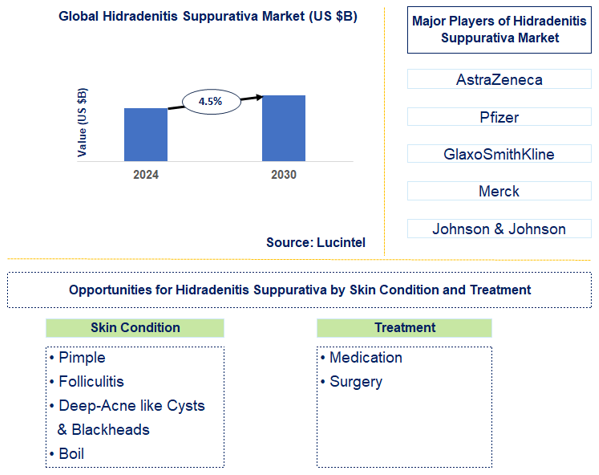
Key data points: The growth forecast = 4.5% annually for the next 6 years. Scroll below to get more insights. This market report covers trends, opportunities, and forecast in the global hidradenitis suppurativa market to 2030 by skin condition (pimple, folliculitis, deep-acne like cysts & blackheads, and boil), treatment (medication and surgery), and region (North America, Europe, Asia Pacific, and the Rest of the World)
We'll send your sample report shortly.
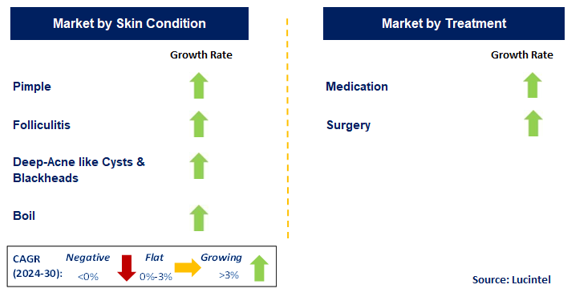
• Lucintel forecasts that, within the skin condition category, pimple is expected to witness the highest growth over the forecast period.
• Within the treatment category, medication is expected to witness higher growth.
• In terms of regions, North America is expected to witness the highest growth over the forecast period. A more than 150-page report is developed to help in your business decisions.
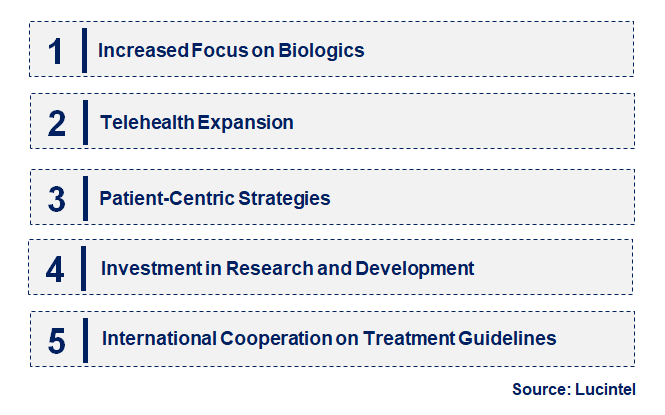
• Increased Focus on Biologics: The emergence of biologic therapies specially designed for HS is leading to new therapy protocols. This practice is moving increasingly from standard treatments to more systemic therapies, as they seem to improve quality of life and outcomes.
• Telehealth Expansion: The use of telehealth is improving the reach of dermatology specialists to patients in remote areas. The service not only offers consultations at convenient times but also places patients under continuous management of their HS conditions, improving adherence and patient outcomes.
• Patient-Centric Strategies: The increasing interest in making the patient an integral part of the decision-making process regarding their treatment is changing the face of care. Programs and plans that create opportunities for more decision-making authority for patients over their care plans will lead to better adherence to therapies and higher satisfaction with the outcomes of care.
• Investment in Research and Development: The greatest promise for new treatment options lies in investments in HS research and development. More pharmaceutical companies are committing to clinical trials for new therapies, which has been recognized as a harbinger of enhanced care and improved patient experiences.
• International Cooperation on Treatment Guidelines: International cooperation among healthcare providers and researchers is leading to the development of uniform treatment guidelines for HS. As a result, more knowledge sharing and standardization of treatments are occurring across different regions. This evolution is gradually changing the hidradenitis suppurativa market, opening up more channels of access to treatment and making the market more patient-centric.
• New Biologics: The recent approval of new biologic treatments, especially those approved for HS, has opened avenues for patients. These drugs are designed to target specific inflammatory pathways and show great promise in managing the disease and even preventing flare-ups.
• More Funding for HS Research: Evidently, funding for HS research initiatives has been increasing. This increased funding has resulted in studies on the pathophysiology of the disease, leading to the development of novel treatment approaches.
• Awareness Campaigns: The efforts of the patient advocacy group have helped increase awareness of HS among both the public and healthcare providers. Early diagnosis and treatment will only be possible with increased awareness, which is necessary to improve the quality of life for those afflicted.
• Telemedicine Integration: The integration of telemedicine is changing the way dermatology patients access their respective doctors for consultations. It alters the access pattern of patients to specialists, enabling timely management of HS and continuous monitoring of treatment responses.
• Global Clinical Trials: Global clinical trials are opening doors for heterogeneous patient populations to be treated with advanced therapies. This improves the coordination of researchers and accelerates the pace at which treatment options are finalized. These developments are impacting the hidradenitis suppurativa market by enhancing treatment options, improving patient engagement, and fostering a more comprehensive understanding of the condition.
• Personalized Therapies: The adoption of personalized treatment in HS will provide multiple growth opportunities. Personalized therapies ensure high drug efficacy and lower side effects. This drives customers to look for new, innovative treatments for managing the disease, which may increase demand over time.
• Expansion of Patient Support Programs: Establishing comprehensive support programs for HS patients can enhance treatment adherence. These programs can include educational resources, mental health support, and community engagement, fostering a holistic approach to disease management.
• Digital Health Solutions: Advances in the increasing dependence on digital health equipment and the development of mobile apps used for symptom monitoring and adherence to treatment are expected to grow and offer significant potential. These solutions allow patients to self-manage in an informed manner and improve communication between doctors and patients.
• Prolific Partnerships with Research Institutions: Appropriate ties between pharmaceutical companies and research institutions can speed up the process of developing new HS treatments. Such collaborations may lead to innovative clinical trials and provide better insights into the disease, further alleviating its symptoms.
• Market Penetration into Emerging Markets: Penetrating emerging markets, characterized by an increase in HS awareness, provides strategic opportunities. Diversified marketing strategies and product offerings that appeal to the demands of various populations may enhance market reach and impact. These growth opportunities are reshaping the hidradenitis suppurativa market by promoting innovation, enhancing patient engagement, and increasing access to highly effective treatments.
• AstraZeneca
• Pfizer
• GlaxoSmithKline
• Merck
• Johnson & Johnson
• Pimple
• Folliculitis
• Deep-Acne like Cysts & Blackheads
• Boil
• Medication
• Surgery
• North America
• Europe
• Asia Pacific
• The Rest of the World
• United States: Significant advancements have been made within the U.S. market, especially with the new biologics approved by the FDA aimed at curbing HS. Campaigns and patient support programs are on the rise, leading to better diagnosis rates and more effective management of treatment. Dermatologists and pharmaceutical companies have made major contributions to multilateral research, resulting in innovative therapies and making the market highly competitive.
• China: Advanced therapies for HS are being introduced in China, which is experiencing a boom in healthcare spending, as is observed across the entire Asia-Pacific region. This boom is increasing public awareness of skin diseases. Additionally, local pharmaceutical companies are focusing on generic formulations of established drugs. A collaborative approach between Western companies and Chinese institutions is driving much-needed research and improving treatments suited to the domestic population.
• Germany: Clinical trials for HS treatments are rising in Germany, with a strong focus on personalized medicine. More integrated telemedicine services are improving access to specialists, diagnosis, and timely interventions. Advanced therapies are starting to be covered by health insurance companies, which increases compliance and makes treatment more accessible.
• India: The HS market in India is growing, driven by rising dermatology awareness and the increasing prevalence of skin diseases. With the development of cost-effective treatment options locally, more people are gaining access to a wider range of therapies.
• Japan: Momentum in Japan's HS market remains relatively slow, primarily due to the limited availability of new biologic therapies and the rise in patient advocacy. Regulatory processes are speeding up the approval of innovative treatments, while research institutions are studying the genetic etiology of HS. A supportive environment will further aid collaboration among stakeholders to improve strategies for patient care.


• AstraZeneca
• Pfizer
• GlaxoSmithKline
• Merck
• Johnson & Johnson Q5. Which hidradenitis suppurativa market segment will be the largest in the future? Answer: Lucintel forecasts that Pimple is expected to witness the highest growth over the forecast period. Q6. In the hidradenitis suppurativa market, which region is expected to be the largest in the next 5 years? Answer: North America is expected to witness the highest growth over the forecast period. Q.7 Do we receive customization in this report? Answer: Yes, Lucintel provides 10% customization without any additional cost.


Choose a license that fits your team. Instant PDF delivery.
Prices exclude taxes. Instant delivery. Custom licensing available on request.
Market Report · July 31, 2026
Market Report · July 31, 2026
Market Report · July 31, 2026
Trusted partner for strategic intelligence and business growth


Receive a complimentary market analysis tailored to your industry. Our analysts will identify key growth opportunities and competitive dynamics specific to your business.

Market size, growth rate, and key trend analysis for your specific sector.

Top competitor positioning and market share analysis.

Strategic recommendations backed by data-driven insights.
Get curated market intelligence and competitive moves straight to your inbox.
By subscribing, you agree to receive our monthly insights. Unsubscribe anytime.
Receive a complimentary market analysis tailored to your industry. Our analysts will identify key growth opportunities and competitive dynamics specific to your business.
Market size, growth rate, and key trend analysis for your specific sector.
Top competitor positioning and market share analysis.
Strategic recommendations backed by data-driven insights.
Get curated market intelligence, emerging trends, and competitive moves straight to your inbox each month.
By subscribing, you agree to receive our monthly insights. Unsubscribe anytime.
We'll send your sample report shortly.