
Market Report · July 31, 2026

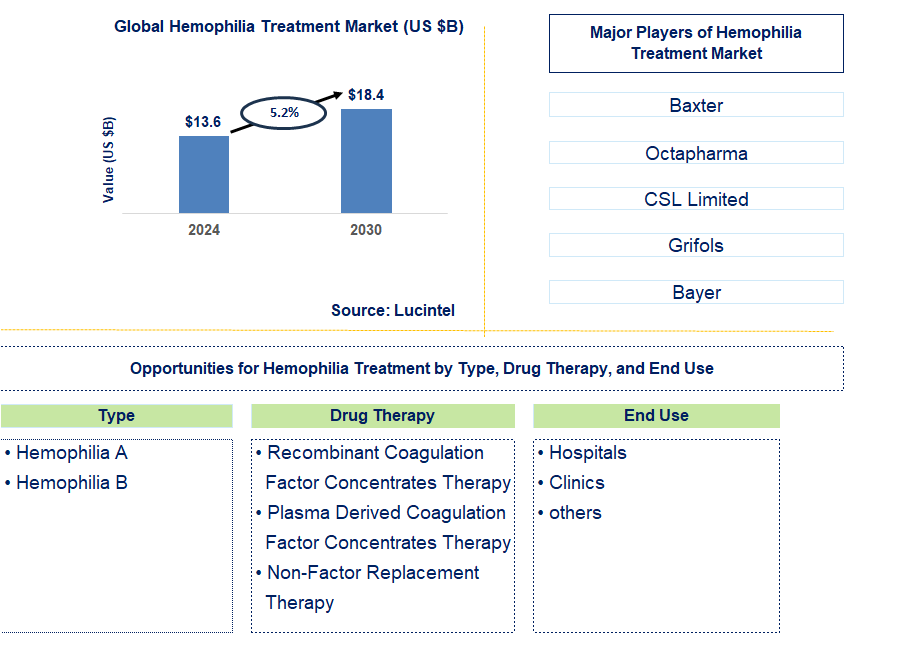
Key data points: The market size in 2030 = $18.4 billion, growth forecast = 5.2% annually for the next 6 years. Scroll below to get more insights. This market report covers trends, opportunities, and forecasts in the global hemophilia treatment market to 2030 by type (hemophilia A and hemophilia B), drug therapy (recombinant coagulation factor concentrates therapy, plasma derived coagulation factor concentrates therapy, and non-factor replacement therapy), end use (hospitals, clinics, and others), and region (North America, Europe, Asia Pacific, and the Rest of the World)
We'll send your sample report shortly.
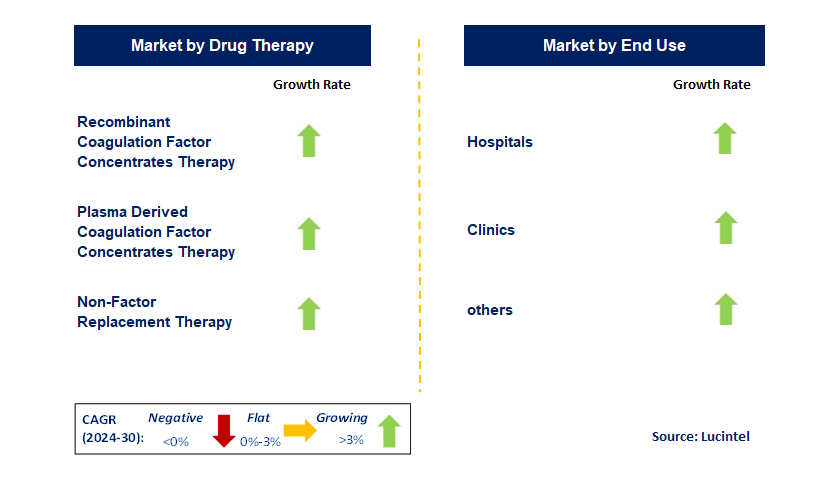
• Lucintel forecasts that, within the drug therapy category, recombinant coagulation factor concentrates therapy will remain the largest segment over the forecast period because of the large number of recombinant technology products available for the treatment.
• In terms of region, Europe will remain the largest region over the forecast period due to increasing number of hemophilic patients and rising awareness about technologically advanced products in the region. Gain valuable insights for your business decisions with our comprehensive 150+ page report.
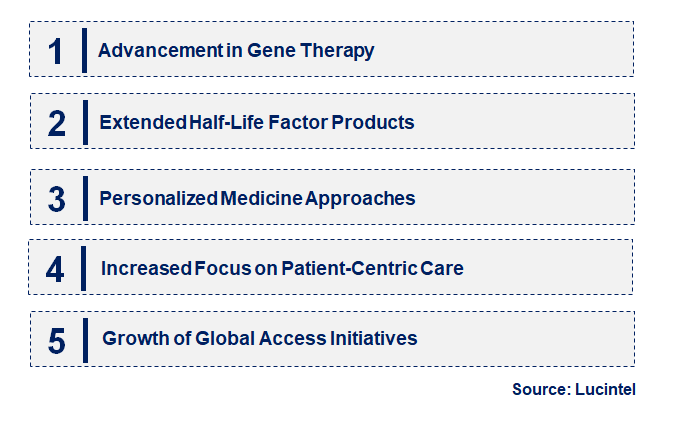
• Advancement in Gene Therapy: Gene therapy is revolutionizing hemophilia treatment by providing potential long-term solutions through one-time treatments. Innovations like AAV-mediated gene transfer are showing promise in reducing or eliminating the need for regular factor infusions.
• Extended Half-Life Factor Products: New factor concentrates with extended half-lives are reducing the frequency of infusions required for effective treatment. These products improve patient adherence and quality of life by minimizing the burden of frequent injections.
• Personalized Medicine Approaches: There is a growing emphasis on personalized treatment plans tailored to individual patient profiles. Advances in genomics and biomarker research enable more precise and effective treatment strategies based on specific genetic and clinical characteristics.
• Increased Focus on Patient-Centric Care: There is a shift toward comprehensive care models that integrate new treatments with ongoing patient support. This approach emphasizes holistic management, including education, psychological support, and regular monitoring to improve overall patient outcomes.
• Growth of Global Access Initiatives: Efforts to increase access to advanced therapies in low- and middle-income countries are expanding. Global health organizations and governments are working to bridge the gap in treatment availability through subsidies, partnerships, and local production initiatives. These trends are reshaping the Hemophilia Treatment market by advancing treatment options, personalizing care, and improving global access. They contribute to enhanced patient outcomes and more effective management of hemophilia.
• Introduction of Gene Therapies: The launch of gene therapies like Hemgenix represents a major breakthrough, offering the potential for long-term remission and reducing the need for regular infusions. These therapies are transforming treatment paradigms and improving patient outcomes.
• Extended Half-Life Products: New extended half-life factor concentrates are providing patients with more convenient treatment regimens. These products reduce the frequency of infusions, enhancing adherence and overall quality of life for individuals with hemophilia.
• Innovative Factor Replacement Therapies: Advances in factor replacement therapies, including novel formulations and delivery systems, are improving the efficacy and safety of treatment. These innovations offer better control over bleeding episodes and fewer side effects.
• Enhanced Diagnostic Tools: The development of advanced diagnostic tools and biomarkers is enabling earlier and more accurate diagnoses of hemophilia. This progress helps in tailoring treatment strategies and improving disease management.
• Expansion of Global Access Programs: Increased efforts to provide access to advanced therapies in underserved regions are expanding treatment availability. Global access initiatives and partnerships are addressing disparities and improving care in low- and middle-income countries. These developments are advancing the hemophilia treatment market by introducing innovative therapies, improving treatment convenience, and expanding access. They are contributing to better patient management and outcomes in the field of hemophilia.
• Expanding Indications of Gene Therapy: Investment in research and development of gene therapies can fulfill a significant unmet need in the market for long-term treatment options. This includes targeting new gene therapy candidates and optimizing existing treatments for broader patient populations.
• Personalized Medicine Growth: Improved market growth is expected from the development of personalized modes of treatment. Using genomics and personalized diagnostics can unlock better treatment modalities for patients with hemophilia.
• Development of New Therapies: Continuous innovation in factor replacement products and other new therapies has created avenues for growth in the industry. New formulations and routes of delivery require investment in R&D to capture market share and improve outcomes for patients.
• Greater Global Access Programs: Expanded global access initiatives tap into underserved markets and bridge gaps in availability. In this regard, developing partnerships and capabilities for local production in emerging markets can spur growth and expand access to advanced therapies.
• Integration of Comprehensive Care Models: The adoption of comprehensive care models, where new therapies are combined with ongoing patient support, provides an opportunity for growth. Such a model contributes to better patient management, adherence, and overall treatment efficacy. These strategic growth opportunities are shaping the hemophilia treatment market by driving innovation, ensuring expanded access, and improving patient care. Hence, they contribute to market growth and better management of hemophilia.
• Growing Demand from Patients for Advanced Treatments: Increasing demand from patients for new treatments and better management options acts as a catalyst for market growth. Patients desire treatments that offer better efficacy and a higher quality of life.
• Supportive Regulatory Environments: Favorable regulatory policies that provide faster approval for newer therapies act as an advantage for market growth. Supportive regulations help bring innovative treatments to market more quickly.
• Increasing Healthcare Investments: The rise in investments by pharmaceutical organizations and governmental bodies in research and development contributes to pushing the boundaries of available treatments and, therefore, boosts the market.
• Global Access Program Expansion: Improving access to advanced therapies in underserved regions can enhance the lives of individuals living in those areas. Treatment disparities also extend market reach, especially in low- and middle-income countries. Challenges in the hemophilia treatment market include:
• High Cost of Advanced Therapies: The high costs associated with gene therapies and novel treatments reduce access and affordability, particularly in lower-income regions, negatively impacting market growth.
• Regulatory Barriers: Complex regulatory requirements, including varying standards across different countries, may create barriers to market access and delay the availability of new treatments.
• Economic Fluctuations: Economic decline and strained budgets decrease healthcare expenditures, which, in turn, reduce investments in new therapies and access to advanced treatments. Drivers and challenges indicate that the hemophilia treatment market is highly dynamic. Addressing these factors is crucial to sustaining growth and improving hemophilia management.
• Baxter
• Octapharma
• CSL Limited
• Grifols
• Bayer
• Pfizer
• Sanofi
• Ferring
• BioMarin
• Sangamo Therapeutics
• Hemophilia A
• Hemophilia B
• Recombinant Coagulation Factor Concentrates Therapy
• Plasma Derived Coagulation Factor Concentrates Therapy
• Non-Factor Replacement Therapy
• Hospitals
• Clinics
• others
• North America
• Europe
• Asia Pacific
• The Rest of the World
• United States: New gene therapies, such as Hemgenix, continue to be developed in the U.S., along with new factor replacement therapies that may offer longer durability and reduce the frequency of infusions. Such treatments will hopefully further improve the quality of life for people affected by hemophilia.
• China: China is making significant strides to improve the management of patients with hemophilia, especially by increasing access to the most advanced therapies. New government policies foster the availability of recombinant factor concentrates and gene therapies, raising the bar for the quality of treatment options available across the country.
• Germany: Germany is one of the leading countries in implementing new therapies, such as extended half-life factor concentrates and gene therapies. There is also a strong emphasis on research and clinical trials regarding the optimization of treatment protocols and further advancement of the standard of care.
• India: With the increasing availability of recombinant factor concentrates and improved awareness and diagnostic capabilities, efforts aim to enhance access to these treatments in both urban and rural settings to meet the current high level of unmet need.
• Japan: Japan has been at the forefront of implementing gene therapy and other advanced factor replacement therapies. It also invests in comprehensive care models that integrate novel treatments with continuous patient support and follow-up.


• Baxter
• Octapharma
• CSL Limited
• Grifols
• Bayer
• Pfizer
• Sanofi
• Ferring
• BioMarin
• Sangamo Therapeutics Q6. Which hemophilia treatment market segment will be the largest in future? Answer: Lucintel forecasts that recombinant coagulation factor concentrates therapy will remain the largest segment over the forecast period because of the large number of recombinant technology products available for the treatment. Q7. In hemophilia treatment market, which region is expected to be the largest in next 5 years? Answer: Europe will remain the largest region over the forecast period due to increasing number of hemophilic patients and rising awareness about technologically advanced products in the region. Q.8 Do we receive customization in this report? Answer: Yes, Lucintel provides 10% customization without any additional cost.


Choose a license that fits your team. Instant PDF delivery.
Prices exclude taxes. Instant delivery. Custom licensing available on request.
Market Report · July 31, 2026
Market Report · July 31, 2026
Market Report · July 31, 2026
Trusted partner for strategic intelligence and business growth


Receive a complimentary market analysis tailored to your industry. Our analysts will identify key growth opportunities and competitive dynamics specific to your business.

Market size, growth rate, and key trend analysis for your specific sector.

Top competitor positioning and market share analysis.

Strategic recommendations backed by data-driven insights.
Get curated market intelligence and competitive moves straight to your inbox.
By subscribing, you agree to receive our monthly insights. Unsubscribe anytime.
Receive a complimentary market analysis tailored to your industry. Our analysts will identify key growth opportunities and competitive dynamics specific to your business.
Market size, growth rate, and key trend analysis for your specific sector.
Top competitor positioning and market share analysis.
Strategic recommendations backed by data-driven insights.
Get curated market intelligence, emerging trends, and competitive moves straight to your inbox each month.
By subscribing, you agree to receive our monthly insights. Unsubscribe anytime.
We'll send your sample report shortly.