
Market Report · July 16, 2026

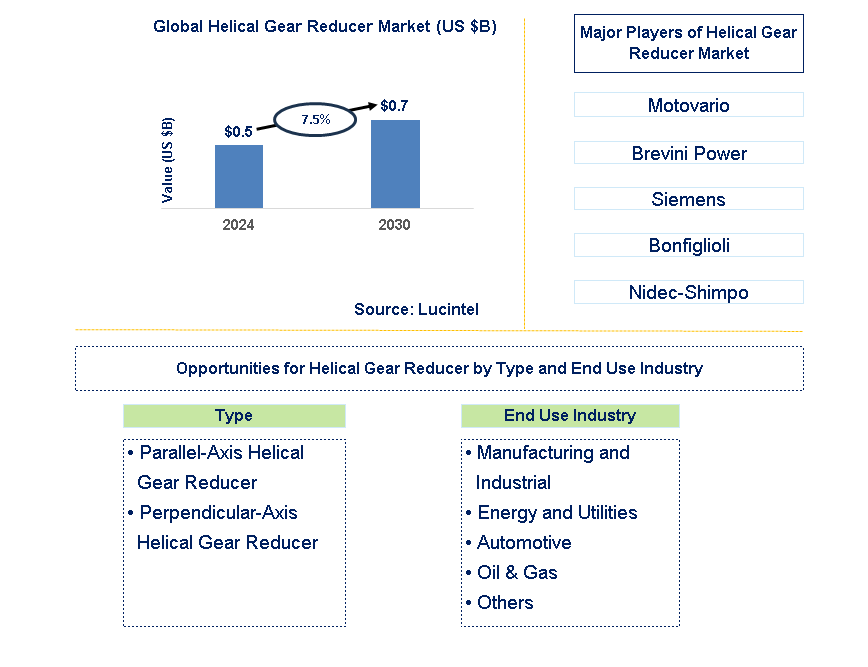
Key data points: The market size in 2030 = $0.7 billion, growth forecast = 7.5% annually for the next 6 years. Scroll below to get more insights. This market report covers trends, opportunities, and forecasts in the global helical gear reducer market to 2030 by type (parallel-axis helical gear reducer and perpendicular-axis helical gear reducer), end use industry (manufacturing and industrial, energy and utilities, automotive, oil & gas, and others), and region (North America, Europe, Asia Pacific, and the Rest of the World)
We'll send your sample report shortly.
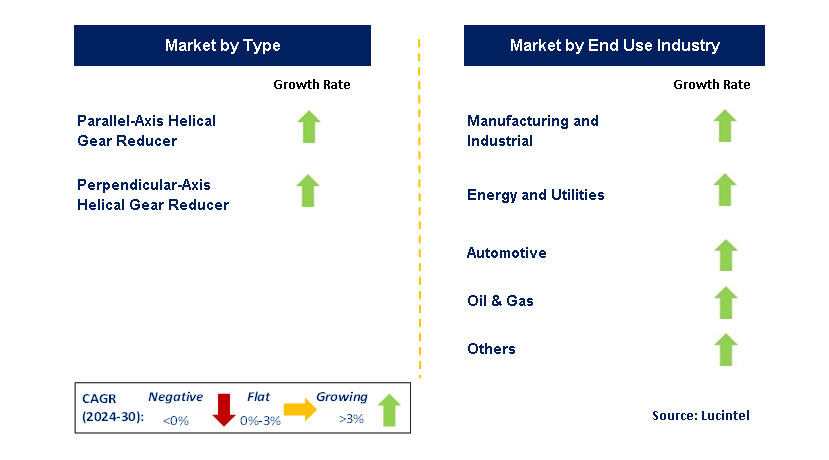
• Lucintel forecasts that, within the type category, parallel-axis is expected to witness a higher growth over the forecast period due to its increasing demand from industrial, mobile, and renewable energy applications.
• Within the end use industry category, manufacturing and industrial is expected to witness the highest growth over the forecast period due to increasing demand for helical gear reducer from cement industry, material handling, mining, power generation, and automotive production.
• In terms of regions, APAC is expected to witness the highest growth over the forecast period due to expanding number of manufacturing units and growing demand for helical gear reducer from various end use industries, such as automotive, food and beverage, and construction sector in the region. Gain valuable insights for your business decisions with our comprehensive 150+ page report.
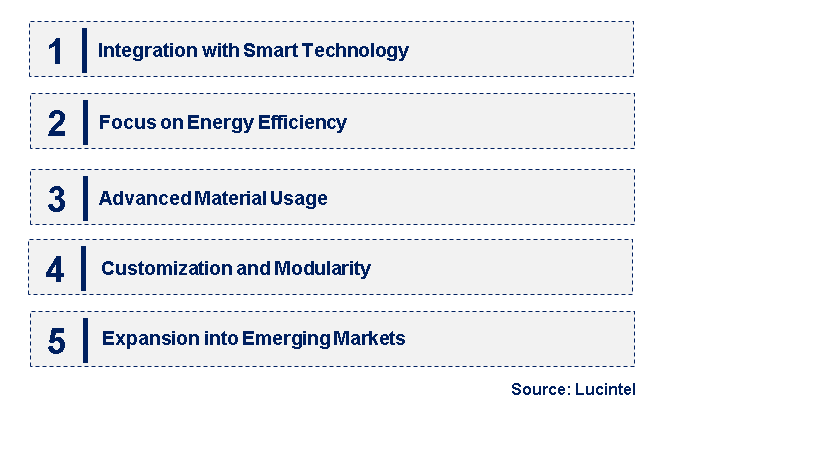
• Integration with Smart Technology: The integration of smart technology in helical gear reducers is a growing trend. Smart gear reducers with IoT capabilities allow for real-time monitoring and predictive maintenance, enhancing operational efficiency and reducing downtime. This trend reflects the broader move toward automation and data-driven decision-making in industrial applications.
• Focus on Energy Efficiency: Energy efficiency is a major trend in the helical gear reducer market. Manufacturers are developing gear reducers that offer improved energy consumption and reduced operational costs. This focus aligns with global efforts to enhance sustainability and meet stringent environmental regulations, driving demand for more efficient and eco-friendly solutions.
• Advanced Material Usage: The use of advanced materials in helical gear reducers is increasing. Innovations in materials, such as high-strength alloys and composites, are enhancing the durability and performance of gear reducers. These materials contribute to longer service life and better performance under high loads, supporting more demanding industrial applications.
• Customization and Modularity: There is a growing trend toward customization and modularity in helical gear reducers. Manufacturers are offering tailored solutions to meet specific application requirements and improve flexibility. Modular designs allow for easier upgrades and maintenance, catering to diverse needs across various industries and applications.
• Expansion into Emerging Markets: Expansion into emerging markets is a significant trend. As industrialization and infrastructure development grow in regions such as Asia-Pacific and Latin America, the demand for helical gear reducers increases. This trend presents opportunities for market growth and expansion, driving manufacturers to explore new regions and applications. Emerging trends such as smart technology integration, energy efficiency, advanced material usage, customization, and market expansion are reshaping the helical gear reducer market. These trends drive innovation, enhance performance, and open new opportunities for growth, reflecting the dynamic nature of the industry.
• Enhanced Efficiency and Performance: Advancements in gear reducer designs have led to significant improvements in efficiency and performance. New technologies and materials are being used to enhance torque capacity, reduce energy consumption, and improve overall operational efficiency. These developments cater to increasing demands for high-performance machinery across various industrial sectors.
• Adoption of Advanced Manufacturing Techniques: The adoption of advanced manufacturing techniques, such as precision machining and additive manufacturing, is revolutionizing the helical gear reducer market. These techniques allow for more accurate and reliable production, leading to higher-quality gear reducers with improved durability and performance.
• Integration of Smart Technologies: Smart technologies are increasingly being integrated into helical gear reducers. Features such as IoT connectivity and real-time monitoring enable predictive maintenance and remote diagnostics, enhancing operational efficiency and reducing downtime. This integration supports the broader trend toward automation and digitalization in industrial applications.
• Focus on Sustainability and Eco-Friendly Solutions: There is a growing focus on sustainability and eco-friendly solutions in the helical gear reducer market. Manufacturers are developing gear reducers with a lower environmental impact, including energy-efficient designs and recyclable materials. This trend aligns with global sustainability goals and regulatory requirements.
• Expansion into New Applications: The helical gear reducer market is expanding into new applications beyond traditional industrial uses. Innovations are enabling gear reducers to be used in diverse sectors such as renewable energy, electric vehicles, and smart technologies. This expansion reflects the increasing versatility and relevance of gear reducers in modern applications. Recent developments, including enhanced efficiency, advanced manufacturing techniques, smart technologies, sustainability efforts, and application expansion, are driving progress in the helical gear reducer market. These advancements improve performance, support innovation, and open new opportunities for growth in the industry.
• Industrial Automation: The growth of industrial automation presents a significant opportunity for helical gear reducers. As industries adopt automation technologies, the demand for reliable and high-performance gear reducers increases. This opportunity allows manufacturers to provide solutions that support advanced automation systems and improve operational efficiency.
• Renewable Energy Sector: The renewable energy sector offers a promising growth opportunity. Helical gear reducers are used in applications such as wind turbines and solar tracking systems. The expansion of renewable energy projects drives demand for robust and efficient gear reducers that can handle the specific requirements of these applications.
• Electric Vehicles: The rise of electric vehicles (EVs) creates a new market for helical gear reducers. EVs require precise and efficient gear reduction systems to optimize performance and energy efficiency. Manufacturers can capitalize on this opportunity by developing gear reducers tailored to the needs of the automotive industry.
• Smart Manufacturing: Smart manufacturing and Industry 4.0 initiatives provide growth opportunities for helical gear reducers. Integration with smart technologies and IoT allows for enhanced monitoring and control of gear reducers. This opportunity supports the development of advanced gear reducer solutions that align with modern manufacturing practices.
• Expansion into Emerging Markets: Expanding into emerging markets offers significant growth potential. Increasing industrialization and infrastructure development in regions such as Asia-Pacific and Latin America drive demand for helical gear reducers. This opportunity allows manufacturers to enter new markets and leverage growth in developing economies. Strategic growth opportunities in industrial automation, the renewable energy sector, electric vehicles, smart manufacturing, and emerging markets are shaping the helical gear reducer market. Leveraging these opportunities will drive innovation, support market expansion, and meet the evolving needs of various industries.
• Technological Advancements: Technological advancements in gear reducer design and manufacturing are driving market growth. Innovations such as advanced materials, precision engineering, and smart technologies improve performance, efficiency, and reliability. These advancements cater to the increasing demand for high-quality and efficient gear reduction solutions.
• Growing Industrial Automation: The growth of industrial automation and smart manufacturing drives demand for helical gear reducers. As industries adopt automated systems, the need for reliable and efficient gear reducers increases. This driver supports market growth by creating opportunities for advanced gear reducer solutions.
• Increasing Demand for Renewable Energy: The expansion of renewable energy projects creates demand for helical gear reducers. Applications in wind turbines, solar tracking systems, and other renewable technologies drive the need for high-performance gear reducers. This driver supports growth in the renewable energy sector and related applications.
• Focus on Energy Efficiency: The emphasis on energy efficiency and sustainability drives market demand for eco-friendly and efficient gear reducers. Manufacturers are developing solutions that reduce energy consumption and environmental impact, aligning with global sustainability goals and regulatory requirements.
• Expansion into Emerging Markets: The expansion into emerging markets presents growth opportunities for helical gear reducers. Increasing industrialization and infrastructure development in regions such as Asia-Pacific and Latin America drive demand for gear reducers. This driver supports market growth and regional development. Challenges in the helical gear reducer market include:
• High Production Costs: High production costs associated with advanced materials and technologies can impact market growth. Manufacturers face challenges in balancing cost and performance, particularly in price-sensitive markets. Managing production costs while maintaining quality is crucial for market competitiveness.
• Regulatory Compliance: Navigating complex regulatory requirements and ensuring compliance with safety and environmental standards can be challenging. Stringent regulations across regions require significant resources and expertise, potentially affecting market entry and product development.
• Supply Chain Disruptions: Supply chain disruptions, including logistical issues and production delays, can impact the availability of helical gear reducers. Addressing these challenges is essential for ensuring timely product delivery and meeting market demand, especially in rapidly growing markets. The helical gear reducer market is influenced by drivers such as technological advancements, industrial automation, renewable energy demand, energy efficiency, and expansion into emerging markets. Challenges, including high production costs, regulatory compliance, and supply chain disruptions, impact market dynamics. Balancing these factors is crucial for optimizing growth and addressing market needs effectively."
• Motovario
• Brevini Power Transmission
• Siemens
• Bonfiglioli
• Nidec-Shimpo
• Boston Gear
• Stm Spa
• Varvel
• Renold
• Rossi
• Parallel-Axis Helical Gear Reducer
• Perpendicular-Axis Helical Gear Reducer
• Manufacturing and Industrial
• Energy and Utilities
• Automotive
• Oil & Gas
• Others
• North America
• Europe
• Asia Pacific
• The Rest of the World
• United States: In the United States, the helical gear reducer market is seeing advancements in high-efficiency designs and smart technology integration. Manufacturers are focusing on improving energy efficiency and reducing noise in gear reducers, addressing the growing demand for environmentally friendly and quieter machinery. Additionally, there is an increased emphasis on customization and advanced materials to meet specific industrial requirements, supporting diverse applications in automation and manufacturing sectors.
• China: China's helical gear reducer market is expanding rapidly due to increased industrialization and infrastructure development. Chinese manufacturers are investing in advanced production technologies to enhance the performance and reliability of gear reducers. There is also a growing focus on producing cost-effective solutions that cater to both domestic and international markets. This expansion is driven by the country's large-scale projects in construction, transportation, and manufacturing.
• Germany: In Germany, the helical gear reducer market is characterized by a strong emphasis on precision engineering and high-quality standards. Recent developments include the adoption of advanced manufacturing processes and materials that enhance gear reducer performance and durability. Germany's focus on Industry 4.0 is also influencing the market, with increased integration of automation and digital technologies into gear reducer systems, aligning with the country's leadership in industrial innovation.
• India: India's helical gear reducer market is growing due to rising industrial activities and infrastructure projects. Indian manufacturers are increasingly adopting advanced technologies to improve the efficiency and lifespan of gear reducers. There is also a trend toward localized production to reduce costs and meet the specific needs of the domestic market. Investments in sectors such as automotive, energy, and construction are driving demand for reliable and cost-effective gear reduction solutions.
• Japan: Japan's helical gear reducer market is marked by technological innovation and a focus on high-performance solutions. Japanese companies are investing in research and development to create gear reducers with enhanced precision, efficiency, and durability. The market is also seeing a shift toward integrating smart technologies and automation to support advanced manufacturing processes. Japan's emphasis on high standards and technological advancements continues to drive growth and competitiveness in the global market.
• Motovario
• Brevini Power Transmission
• Siemens
• Bonfiglioli
• Nidec-Shimpo
• Boston Gear
• Stm Spa
• Varvel
• Renold
• Rossi Q6. Which helical gear reducer market segment will be the largest in future? Answer: Lucintel forecasts that parallel-axis is expected to witness a higher growth over the forecast period due to its increasing demand from industrial, mobile, and renewable energy applications. Q7. In helical gear reducer market, which region is expected to be the largest in next 5 years? Answer: APAC is expected to witness the highest growth over the forecast period due to expanding number of manufacturing units and growing demand for helical gear reducer from various end use industries, such as automotive, food and beverage, and construction sector in the region. Q.8 Do we receive customization in this report? Answer: Yes, Lucintel provides 10% customization without any additional cost.


Choose a license that fits your team. Instant PDF delivery.
Prices exclude taxes. Instant delivery. Custom licensing available on request.
Market Report · July 16, 2026
Market Report · May 18, 2026
Market Report · May 18, 2026
Trusted partner for strategic intelligence and business growth


Receive a complimentary market analysis tailored to your industry. Our analysts will identify key growth opportunities and competitive dynamics specific to your business.

Market size, growth rate, and key trend analysis for your specific sector.

Top competitor positioning and market share analysis.

Strategic recommendations backed by data-driven insights.
Get curated market intelligence and competitive moves straight to your inbox.
By subscribing, you agree to receive our monthly insights. Unsubscribe anytime.
Receive a complimentary market analysis tailored to your industry. Our analysts will identify key growth opportunities and competitive dynamics specific to your business.
Market size, growth rate, and key trend analysis for your specific sector.
Top competitor positioning and market share analysis.
Strategic recommendations backed by data-driven insights.
Get curated market intelligence, emerging trends, and competitive moves straight to your inbox each month.
By subscribing, you agree to receive our monthly insights. Unsubscribe anytime.
We'll send your sample report shortly.