
Market Report · May 18, 2026

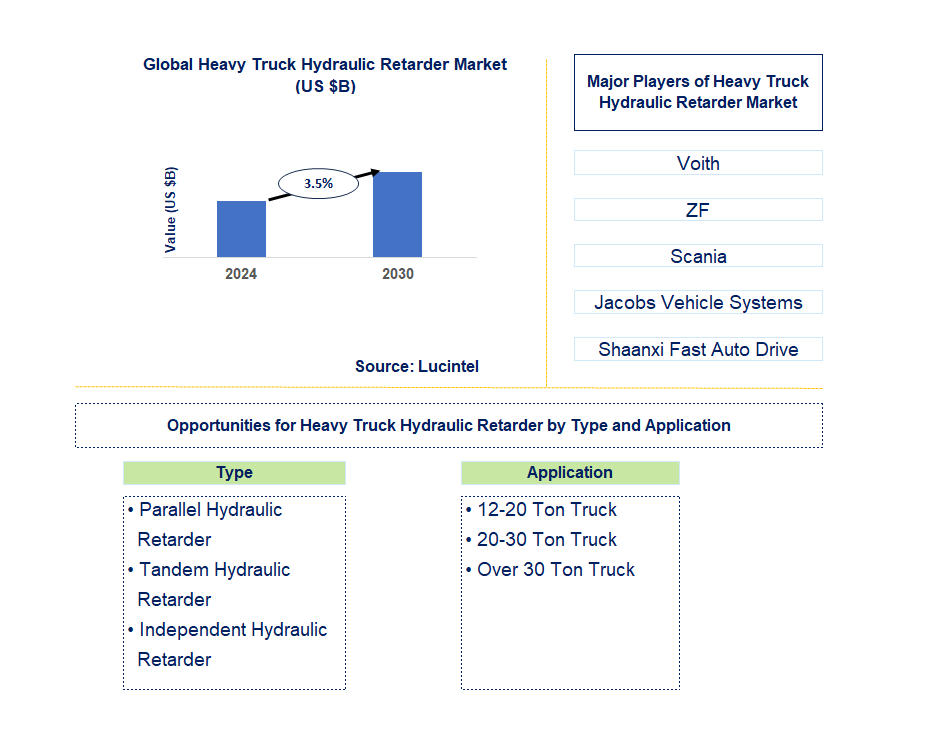
Key data points: The growth forecast = 3.5% annually for the next 6 years. Scroll below to get more insights. This market report covers trends, opportunities, and forecasts in the global heavy truck hydraulic retarder market to 2030 by type (parallel hydraulic retarder, tandem hydraulic retarder, and independent hydraulic retarder), application (12-20 ton truck, 20-30 ton truck, and over 30 ton truck), and region (North America, Europe, Asia Pacific, and the Rest of the World)
We'll send your sample report shortly.
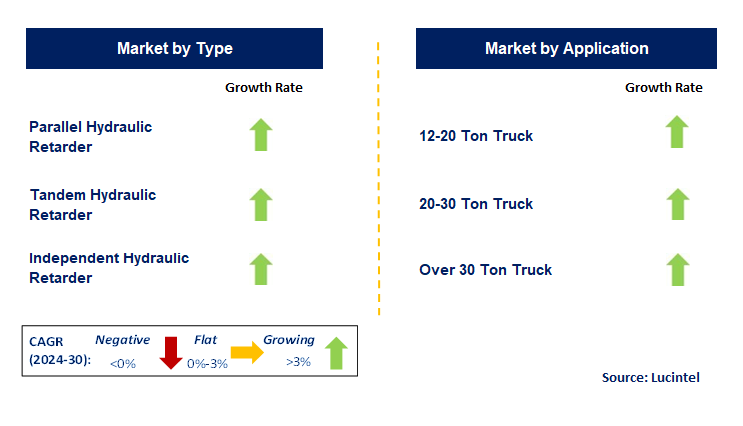
• Lucintel forecasts that, within the type category, 12-20 ton truck is expected to witness the highest growth over the forecast period.
• Within the application category, parallel hydraulic retarder is expected to witness the highest growth.
• In terms of regions, APAC is expected to witness the highest growth over the forecast period. A more than 150-page report is developed to help in your business decisions.
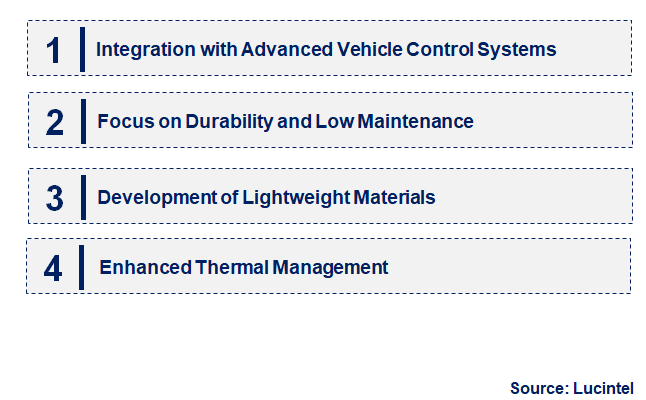
• Integration with Advanced Vehicle Control Systems: There is a growing trend of integrating hydraulic retarders into advanced vehicle control systems such as electronic braking or stability control systems. This enables better modulation with respect to driving conditions while enhancing overall vehicle safety and improving performance, resulting in real-time adjustments that boost braking efficacy by minimizing wear.
• Focus on Durability and Low Maintenance: There has been an increasing focus on designing hydraulic retarders with better durability and lower maintenance requirements. New materials have been used to extend the life cycle of these devices without frequent servicing. The need for lower operating costs and increased reliability in heavy-duty applications has fueled this trend.
• Development of Lightweight Materials: The use of lightweight materials in hydraulic retarders is gathering momentum and helps to reduce the overall weight of heavy trucks. This is achieved through advances in high-strength composites and alloys that maintain performance and safety standards. Lightweight retarders, as opposed to bulky ones, are essential for improving fuel efficiency and vehicle handling.
• Enhanced Thermal Management: Effective dissipation of heat remains critical for hydraulic retarder performance, making it a key trend. Focus has been placed on developing cooling systems that are better than those existing currently, as well as heat-resistant materials aimed at preventing overheating, which affects brake functioning. Expanding thermal management ranges beyond usual operational boundaries increases reliability over time. Finally, these trends show advancements in hydraulic retarder technology, with a focus on integrated vehicle systems, durability, lightweight design, and thermal management to enhance efficacy in heavy-duty trucks.
• Enhanced Material Technologies: Recent developments have been enhanced by the adoption of advanced materials (e.g., high-strength steel alloys and composites). These enhance longevity and heat resistance, enabling hydraulic retarders to withstand higher temperatures, including extended periods during which they are engaged. These advanced materials promote increased serviceability with minimal maintenance requirements, which is crucial in heavy-duty applications where cost-effectiveness is vital.
• Integration with Electronic Control Systems: Today’s hydraulic retarders are becoming part of electronic control systems for improved operations. This integration allows for fine-tuning of brake force based on real-time information acquired from sensors embedded within the vehicle. These advances enhance braking system efficiency by providing stronger control while reducing wear and tear on components.
• Improved Thermal Management Solutions: Recent developments focus on addressing heat dissipation in hydraulic retarders. This involves the development of advanced cooling systems with fireproof materials that are not prone to overheating. In heavy operating conditions, effective thermal management helps sustain the reliability and efficiency of retarders.
• Focus on Lightweight and Compact Designs: The drive towards lightweight and compact hydraulic retarders is gaining momentum. Designers are working on solutions that reduce the total weight of hydraulic retarders while maintaining high performance. Lightweight retarders contribute to better fuel efficiency and handling of heavy trucks due to the industry’s focus on optimizing vehicle weight and efficiency. In summary, these developments highlight the industry's focus on improving material durability, incorporating advanced controls, enhancing thermal management, and reducing weight in response to changing requirements in the heavy truck sector.
• Expansion into Emerging Markets: Hydraulic retarder manufacturers can take advantage of fast-growing markets, such as those in Southeast Asia or Latin America. Expanding operations geographically will help them tap into increased infrastructure spending and rising commercial transportation needs.
• Integration with Hybrid and Electric Vehicles: The rise of hybrid and electric heavy trucks has opened the door for hydraulic retarders using different technologies that can support new powertrain options. Such braking systems will enhance sustainability through improved braking performance during the transition to more ecological transport solutions.
• Advanced Retarder Technologies Development: Investing in research and development (R&D) for advanced retarder technologies, such as improved thermal management and lightweight designs, can provide a competitive advantage. Innovations that increase performance, durability, and efficiency will attract fleet operators and truck manufacturers.
• Increased Aftermarket Sales: Offering a full range of aftermarket services, including maintenance and repair, could generate additional income while building stronger customer relationships. To differentiate themselves in a highly competitive market, manufacturers may offer value-added services such as extended warranties and support packages. Strategic growth opportunities such as expanding into new markets, integrating with emerging vehicle technologies, investing in advanced R&D, and enhancing aftermarket services are important for driving future growth in the hydraulic retarder market.
• Increasing Heavy Truck Demand: This leads to higher demand for heavy trucks used in logistics and the construction industry.
• Regulatory Requirements on Safety and Emissions: Automotive manufacturers have had to develop hydraulic retarders that meet new codes due to stringent regulations on safety standards and emission control. This has spurred innovation and the adoption of advanced braking technology.
• Advancements in Technology: Technology has led to improvements in design materials, which have contributed to better hydraulic retarders. Modernizing vehicle systems has become a priority for most automakers, as older systems are becoming outdated.
• Focus on Fuel Efficiency and Vehicle Performance: There is a global focus on achieving fuel economy by minimizing waste, especially from improper brake use. Challenges in the heavy truck hydraulic retarder market include:
• High Production Costs: Balancing quality with price has been difficult because there are many cheaply available hydraulic retarders in the market.
• Maintenance and Service Complexity: The systems are so complex that they are expensive to maintain or repair, making it challenging for fleet operators to maintain their vehicles.
• Competitive Market Dynamics: There are many players in the market, making it difficult to come up with differentiated products. For example, Chinese manufacturers are producing the most affordable vehicles, while globally recognized companies struggle to compete due to high production and distribution costs.
• Technological Integration Issues: Integrating hydraulic retarders with advanced vehicle control systems is not easy. This has led to the design of new products that may not meet specific requirements in certain countries. Drivers and challenges in the hydraulic retarder market indicate that innovation and adaptation are necessary to meet growing demand, regulatory requirements, and competition, as well as to address pricing and integration concerns.
• Voith
• ZF
• Scania
• Jacobs Vehicle Systems
• Shaanxi Fast Auto Drive
• Allison Transmission
• Telma
• Ningbo Huasheng Auto Parts
• Industrias Zelu S.L. Klam
• Frenelsa
• Parallel Hydraulic Retarder
• Tandem Hydraulic Retarder
• Independent Hydraulic Retarder
• 12-20 Ton Truck
• 20-30 Ton Truck
• Over 30 Ton Truck
• North America
• Europe
• Asia Pacific
• The Rest of the World
• USA: In the US, recent developments have been witnessed focusing on improving hydraulic retarders efficiency as well reducing maintenance costs. It includes advanced materials integration into retarders as well as improved hydraulic fluids that help prolong their life cycles. Furthermore, there has been an emerging trend whereby electronic control systems have been integrated for finer modulation and response thereby improving general vehicle safety and operations.
• China: The Chinese market is characterized by a growing demand for heavy vehicles which has facilitated significant growth of the hydraulic retarder technology due to stringent emission regulations. This evolution encompasses inexpensive products featuring improved heat dissipation capabilities as well as durability together with fatigue resistance among others given Chinese manufacturers stress much on automated systems coupled with fine precision engineering aiming at enhancing product dependability plus performance.
• Germany: Germany concentrates on developing high-performance hydraulic retarders meeting rigorous European safety plus efficiency standards through recent advancements that show how to manage heat better while shedding off weight using hi-tech materials like aluminum. German manufacturers have also been investigating collaboration with sophisticated automobile control systems aimed at optimizing braking performance hence boosting driving safety.
• India: The Indian market is experiencing growth in hydraulic retarder technology driven by the expansion of the heavy truck sector and increasing safety standards. Recent developments include the introduction of cheaper hydraulic retarders that are more efficient and reliable. Also, Indian manufactures are investing heavily in R&D to enhance product performance as well as meet local market demands.
• Japan: In Japan, recent advancements in hydraulic retarders focus on miniaturization and integration with hybrid and electric vehicle systems. Innovations include the development of compact, high-efficiency retarders that provide effective braking while accommodating the design constraints of modern trucks. Japanese manufacturers are also emphasizing precision engineering and durability in their products.


• Voith
• ZF
• Scania
• Jacobs Vehicle Systems
• Shaanxi Fast Auto Drive
• Allison Transmission
• Telma
• Ningbo Huasheng Auto Parts
• Industrias Zelu S.L. Klam
• Frenelsa Q5. Which heavy truck hydraulic retarder market segment will be the largest in future? Answer: Lucintel forecasts that 12-20 ton truck is expected to witness the highest growth over the forecast period. Q6. In heavy truck hydraulic retarder market, which region is expected to be the largest in next 5 years? APAC is expected to witness the highest growth over the forecast period. Q.7 Do we receive customization in this report? Answer: Yes, Lucintel provides 10% customization without any additional cost.


Choose a license that fits your team. Instant PDF delivery.
Prices exclude taxes. Instant delivery. Custom licensing available on request.
Market Report · May 18, 2026
Market Report · May 18, 2026
Market Report · May 18, 2026
Trusted partner for strategic intelligence and business growth


Receive a complimentary market analysis tailored to your industry. Our analysts will identify key growth opportunities and competitive dynamics specific to your business.

Market size, growth rate, and key trend analysis for your specific sector.

Top competitor positioning and market share analysis.

Strategic recommendations backed by data-driven insights.
Get curated market intelligence and competitive moves straight to your inbox.
By subscribing, you agree to receive our monthly insights. Unsubscribe anytime.
Receive a complimentary market analysis tailored to your industry. Our analysts will identify key growth opportunities and competitive dynamics specific to your business.
Market size, growth rate, and key trend analysis for your specific sector.
Top competitor positioning and market share analysis.
Strategic recommendations backed by data-driven insights.
Get curated market intelligence, emerging trends, and competitive moves straight to your inbox each month.
By subscribing, you agree to receive our monthly insights. Unsubscribe anytime.
We'll send your sample report shortly.