
Market Report · July 29, 2026

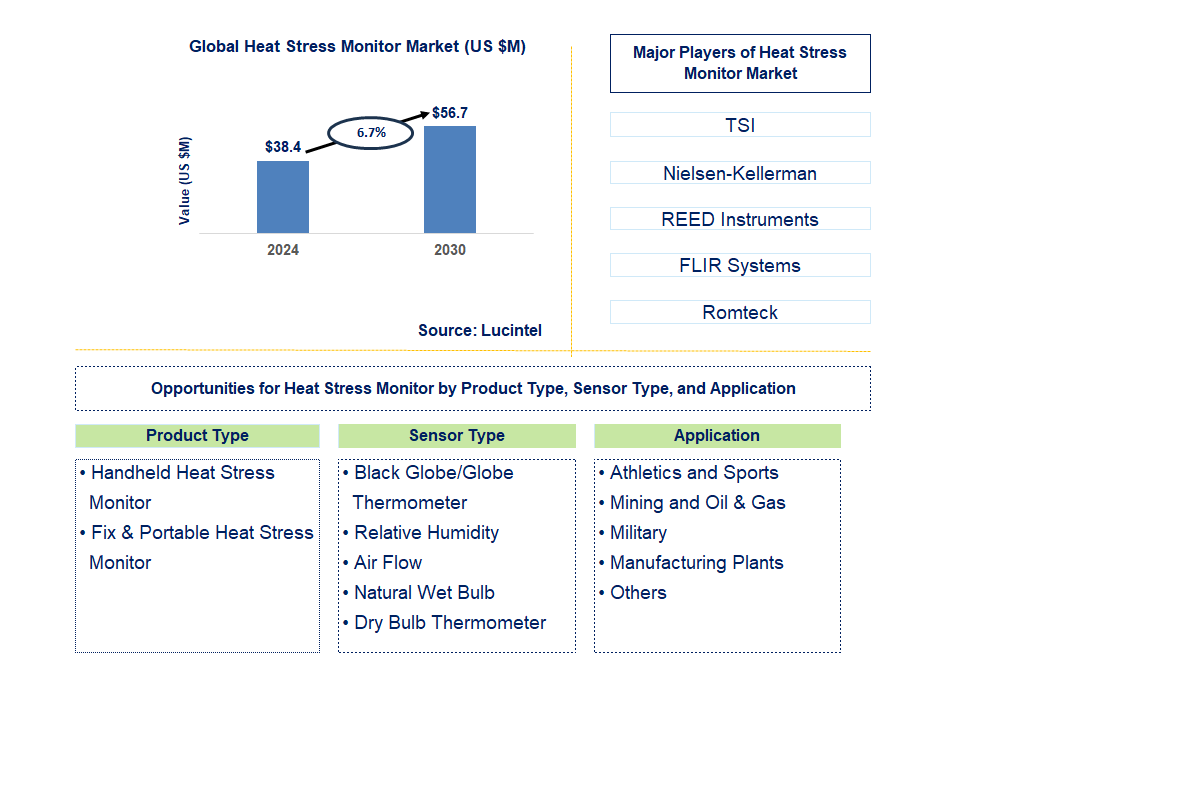
Key data points: The market size in 2030 = $56.7 million, growth forecast = 6.7% annually for the next 6 years. Scroll below to get more insights. This market report covers trends, opportunities, and forecast in the global heat stress monitor market to 2030 by product type (handheld heat stress monitor and fix & portable heat stress monitor), sensor type (black globe/globe thermometer, relative humidity, air flow, natural wet bulb, and dry bulb thermometer), application (athletics and sports, mining and oil & gas, military, manufacturing plants, and others), and region (North America, Europe, Asia Pacific, and the Rest of the World)
We'll send your sample report shortly.
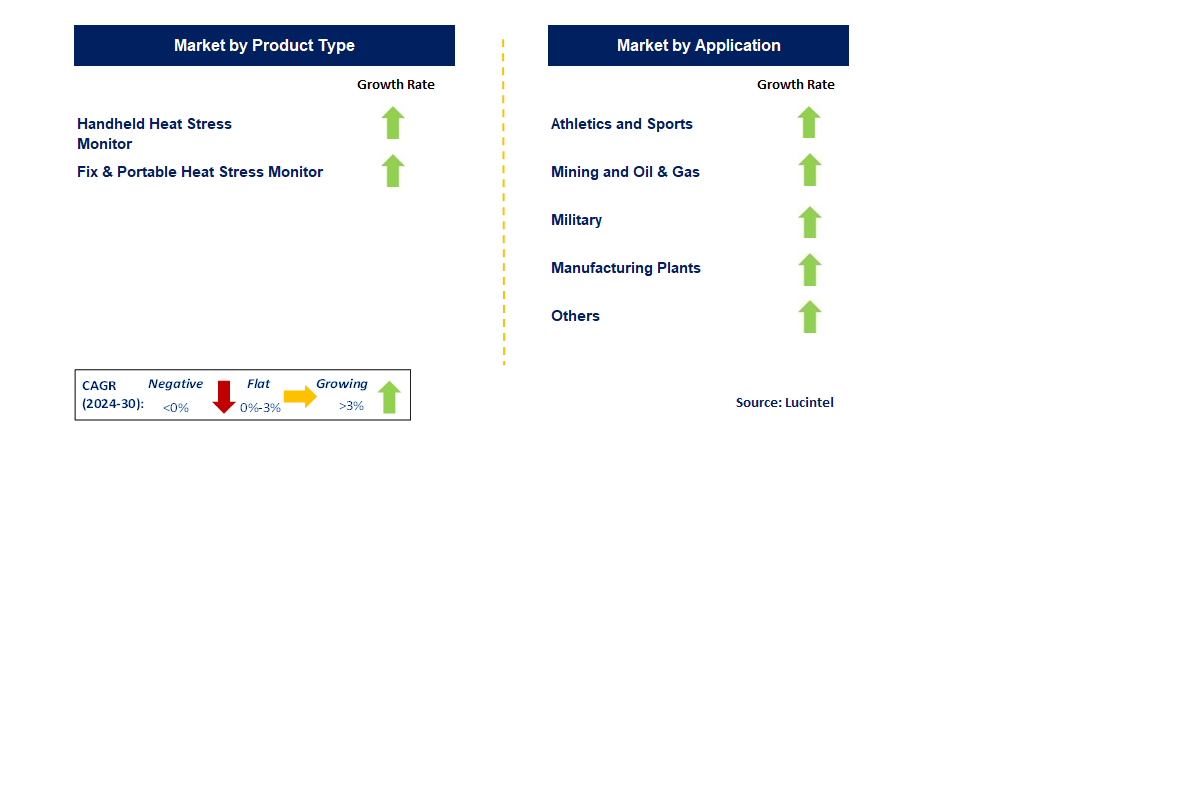
• Lucintel forecasts that, within the product type category, handheld is expected to witness a larger growth over the forecast period.
• Within the application category, athletics and sports are expected to witness the highest growth over the forecast period.
• In terms of regions, North America is expected to witness the largest growth over the forecast period. A more than 150-page report is developed to help in your business decisions.
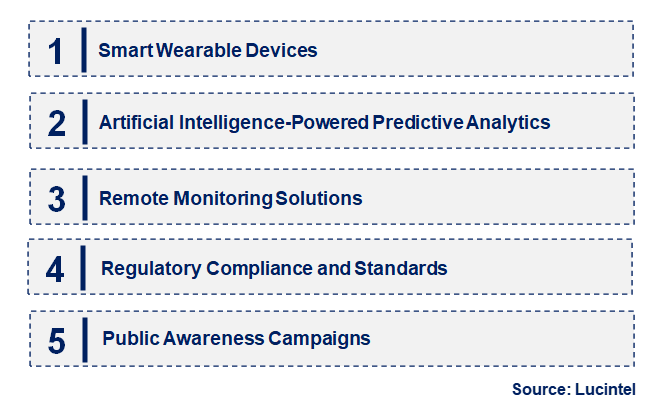
• Smart Wearable Devices: Wearable technologies that track physiological indicators, such as heart rate and body temperature, have revolutionized heat stress monitoring. The information is delivered in real time, empowering individuals to take preventive actions and reduce health risks during high-temperature events.
• Artificial Intelligence-Powered Predictive Analytics: Multiple sources of data processing will be applied through sophisticated algorithms to predict the danger of heat stress, thus offering organizations the opportunity to work proactively. The best outcome from this trend is the increased efficiency of operations and improved decision-making in managing heat exposure.
• Remote Monitoring Solutions: With the growing adoption of IoT devices, there is a need for remote monitoring solutions. Since environmental conditions are often observed over vast areas, this surveillance application is highly utilized with the help of remote monitoring. Such technology is profoundly used in the construction and agriculture industries, where the workforce is spread across large geographical areas.
• Regulatory Compliance and Standards: With the growing awareness of heat-related illnesses, there is a requirement for regulatory compliance to be tightened. Companies are investing in monitoring heat stress to keep their employees safe and avoid lawsuits.
• Public Awareness Campaigns: Greater public concern about heat stress is pushing governments and NGOs to work together to educate various industries. These entities are collaborating to inform people about heat management, thereby increasing demand for monitoring technologies. These changing trends in heat stress monitoring are part of the transition stage in addressing health issues related to heat. Technological innovation is being integrated with data analytics to implement safety measures, especially for vulnerable populations. With growing awareness, these emerging trends could help shape policies and practices regarding heat stress management, potentially leading to healthier conditions.
• AI and Machine Learning: Nowadays, AI technologies in heat stress monitoring systems with predictive modeling are increasingly integrated to assess situations and risks more accurately. In other words, they allow for the customization of alerts based on specific conditions to enhance safety in workplaces.
• Mobile Applications: Many mobile applications designed to monitor heat stress have gained popularity and provide real-time information and advice. These applications help individuals and organizations better manage their exposure to hot conditions and enable prompt responses in dangerous situations.
• Advanced Sensing: Wearables equipped with advanced sensors will continuously monitor physiological responses to heat stress. This capability empowers users with rapid feedback, allowing them to take action in sufficient time to prevent heat-related illnesses.
• Collaboration between Tech Companies and Health Providers: Numerous partnerships between technology firms and health bodies are promoting the development of integrated systems focused on the prevention and early detection of heat stress. This collaboration improves health interventions across different sectors.
• Government Initiatives on Standardization: Governments are starting to standardize guidelines and standards for monitoring heat stress. They encourage sectors to adopt heat stress monitoring technology through regulation. This regulatory push fosters innovation while enhancing safety protocols, especially in high-risk industries. These new developments in heat stress monitoring demonstrate a clear effort toward better management of health risks at the public health level due to heat stress. Advancements in technology, increased collaboration among authorities, and enhancements in regulatory frameworks contribute to more successful monitoring accuracy and response strategies. This progress significantly impacts public health and worker safety.
• Implementation in the Agricultural Sector: Heat stress monitoring in agriculture can optimize the safety of workers as well as crop management in a scenario where extreme weather events become more frequent. Smart sensors and wearable devices can help farmers monitor these conditions, thus improving productivity and reducing health risks.
• Solutions for the Construction Industry: For outdoor workers facing high temperatures, monitoring systems for heat stress risk can significantly enhance safety measures in construction-related jobs. For example, real-time monitoring tools are likely to assist companies in adhering to regulations and protecting employee welfare from heat-related illnesses.
• Smart City Initiatives: In urban areas, monitoring systems for environmental conditions related to heat stress can be very useful. Such systems may inform urban planning efforts aimed at minimizing heat island effects and enhancing public health initiatives, making cities more resilient.
• Corporate Wellness Programs: Organizations are placing a strong emphasis on health and employee safety. The inclusion of heat stress monitoring in corporate wellness programs could lead to proactive health management, improved productivity, and increased organizational satisfaction.
• Improvements in Emergency Response: Heat stress monitoring is an important component of emergency response systems during heatwave events. Such technologies could enable timely interventions, thereby enhancing community resilience against extreme heat events. These growth opportunities represent a new pathway toward integrative heat stress management approaches in a broader context of application. Stakeholders can take advantage of these opportunities to improve safety, compliance, and overall conditions in environments more exposed to heat stress.
• Advancements in Technologies: Advances in sensor and data analysis technologies are helping to develop more efficient systems to monitor heat stress. Advanced technology enables real-time monitoring, allowing for effective management of heat exposure and reducing health risks.
• Increased Awareness of Health Risks: There is growing awareness among individuals and organizations regarding the risks posed by heat stress. Public and organizational awareness increases the necessity to invest in advanced safety technologies across different industries.
• Regulatory Pressure: With companies facing more stringent regulations concerning the safety and health of employees, many organizations seek to adopt heat stress monitoring systems. They feel that without such systems, they may be vulnerable to legal battles and employee dissatisfaction.
• Climate Change Impacts: Climate change results in more frequent and prolonged heatwaves, necessitating increased vigilance regarding heat stress. Organizations are realizing the need for proactive measures to protect workers from extreme conditions in the workplace.
• Economic Incentives: Proper monitoring of heat stress can enhance productivity and lower health costs, leading to increased investments in this field. As companies recognize the long-term benefits, adoption rates of such technologies will rise. Challenges in the heat stress monitor market include:
• High Capital Investment Requirement: Advanced heat stress monitoring systems can be very costly at the point of installation. This presents a significant challenge for smaller organizations, which must find a balance between cost and safety.
• Data Privacy: Since these monitoring systems collect personal health information, organizations may be hesitant to implement them due to concerns about data privacy and confidentiality. There is a need to mitigate these risks to gain the confidence of organizations and encourage actual implementation.
• Resistance to Change: Strong traditional practices or a lack of understanding may lead to resistance against adopting new technology. Communicating and educating stakeholders about the benefits of heat stress monitoring can help alleviate resistance to change. The current drivers and challenges interface to determine the course of the heat stress monitoring market. Economic barriers and data privacy stand out as significant impediments to adoption, while technological innovations and regulatory forces drive growth. Ultimately, addressing these areas is essential for the full exploitation of heat stress monitoring systems.
• TSI
• Nielsen-Kellerman
• REED Instruments
• FLIR Systems
• Romteck
• Sper Scientific
• Runrite Electronics
• BESANTEK
• SCADACore
• PCE Instruments
• Handheld Heat Stress Monitor
• Fix & Portable Heat Stress Monitor
• Black Globe/Globe Thermometer
• Relative Humidity
• Air Flow
• Natural Wet Bulb
• Dry Bulb Thermometer
• Athletics and Sports
• Mining and Oil & Gas
• Military
• Manufacturing Plants
• Others
• North America
• Europe
• Asia Pacific
• The Rest of the World
• USA: Advanced monitoring technologies for heat stress have been more widely adopted in the United States. Agricultural and industrial companies are utilizing wearable sensors and mobile applications for real-time reporting of external conditions and physiological responses. Federal initiatives emphasize standard safety measures in the workplace to prevent heat-related illnesses, which encourages innovation in monitoring systems.
• China: China is accelerating heat stress monitoring by emphasizing both urban heat island effects and labor safety. The government has initiatives for smart cities that utilize environmental sensors with AI analytics for real-time monitoring of heat stress levels. This information is critical for public health management during extreme weather conditions, focusing on protecting outdoor workers in the construction and agricultural sectors.
• Germany: Germany is leading in the adoption of IoT-based heat stress monitoring. Innovative projects in cities involve interconnected sensors that monitor temperature, humidity, and exposure to heat, yielding important data used to craft urban policies. This supports better worker safety while advancing sustainable development by enhancing knowledge on how to reduce risk factors for heat-related dangers in urban areas.
• India: Recent initiatives in India focus on designing wearable technology to track agricultural workers during episodes of heat stress, the most vulnerable population during such occurrences. Start-up companies are developing inexpensive devices that measure vital signs and environmental factors to send alerts when the risk of heat stress begins to rise. Similar initiatives by government agencies and NGOs to raise awareness about heat stress symptoms among workers have also been observed in Japan.
• Japan: Japan has invested in smart technology for monitoring heat stress, particularly concerning its aging workforce. The application of AI to traditional monitoring tools now allows for predictive analytics, making it easier for employers to take proactive measures. It also envisions the improvement of training programs for workers to manage or prevent heat stress, supporting workplace safety.


• TSI
• Nielsen-Kellerman
• REED Instruments
• FLIR Systems
• Romteck
• Sper Scientific
• Runrite Electronics
• BESANTEK
• SCADACore
• PCE Instruments Q6. Which heat stress monitor market segment will be the largest in the future? Answer: Lucintel forecasts that handheld will remain the larger segment over the forecast period. Q7. In the heat stress monitor market, which region is expected to be the largest in the next 5 years? Answer: North America will remain the largest region over the forecast period. Q.8 Do we receive customization in this report? Answer: Yes, Lucintel provides 10% customization without any additional cost.


Choose a license that fits your team. Instant PDF delivery.
Prices exclude taxes. Instant delivery. Custom licensing available on request.
Market Report · July 29, 2026
Market Report · July 20, 2026
Market Report · July 20, 2026
Trusted partner for strategic intelligence and business growth


Receive a complimentary market analysis tailored to your industry. Our analysts will identify key growth opportunities and competitive dynamics specific to your business.

Market size, growth rate, and key trend analysis for your specific sector.

Top competitor positioning and market share analysis.

Strategic recommendations backed by data-driven insights.
Get curated market intelligence and competitive moves straight to your inbox.
By subscribing, you agree to receive our monthly insights. Unsubscribe anytime.
Receive a complimentary market analysis tailored to your industry. Our analysts will identify key growth opportunities and competitive dynamics specific to your business.
Market size, growth rate, and key trend analysis for your specific sector.
Top competitor positioning and market share analysis.
Strategic recommendations backed by data-driven insights.
Get curated market intelligence, emerging trends, and competitive moves straight to your inbox each month.
By subscribing, you agree to receive our monthly insights. Unsubscribe anytime.
We'll send your sample report shortly.