
Report Feature
Heart Health Ingredient Market Trends and Forecast
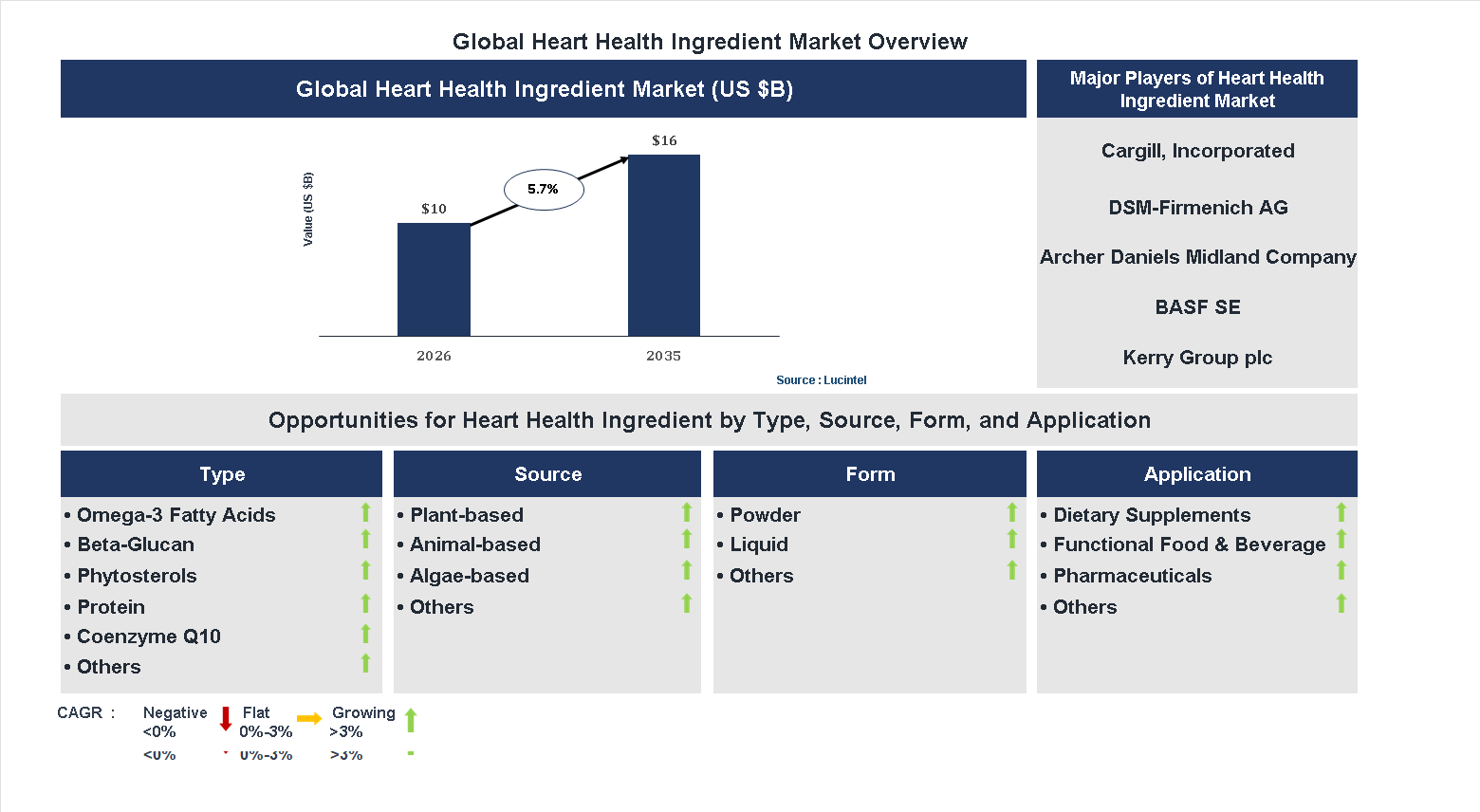
The future of the global heart health ingredient market looks promising with opportunities in the dietary supplement, functional food & beverage, and pharmaceutical markets. The global heart health ingredient market is expected to reach an estimated $16 billion by 2035 with a CAGR of 5.7% from 2026 to 2035. The major drivers for this market are the increasing demand for heart health supplements, the rising awareness of cardiovascular disease prevention, and the growing use of functional food ingredients.• Lucintel forecasts that, within the type category, omega-3 fatty acid is expected to witness the highest growth over the forecast period.
• Within the application category, dietary supplement is expected to witness the highest growth.
• In terms of region, North America is expected to witness the highest growth over the forecast period. Gain valuable insights for your business decisions with our comprehensive 150+ page report. Sample figures with some insights are shown below.
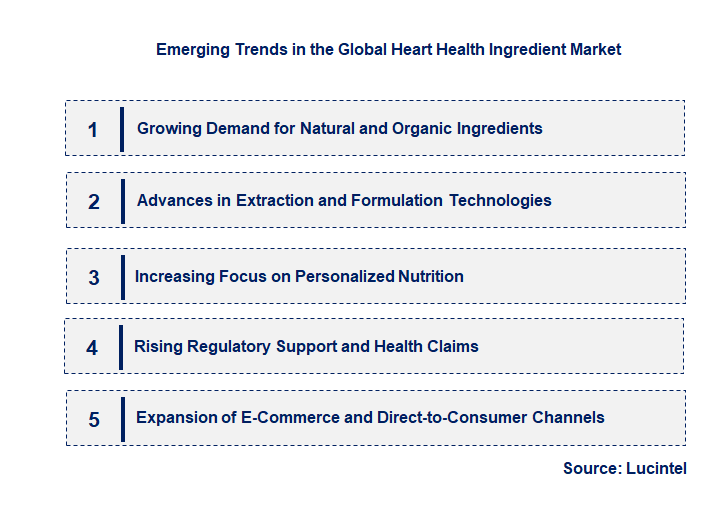
Emerging Trends in the Heart Health Ingredient Market
The heart health ingredient market is experiencing rapid growth driven by increasing awareness of cardiovascular health, technological advancements, and changing consumer preferences. As consumers become more health-conscious, demand for natural, functional, and scientifically backed ingredients is rising. Innovations in extraction and formulation techniques are also expanding the range of available products. Additionally, regulatory support and a focus on preventive healthcare are fueling market expansion. These developments are not only transforming product offerings but also influencing marketing strategies and distribution channels, ultimately reshaping the landscape of heart health ingredients globally.• Growing Demand for Natural and Organic Ingredients: Consumers are increasingly seeking natural, organic, and plant-based ingredients for heart health. This trend is driven by concerns over synthetic additives and a desire for clean-label products. Natural ingredients like omega-3 fatty acids from fish oil, plant sterols, and herbal extracts such as hawthorn and garlic are gaining popularity. This shift encourages manufacturers to innovate with sustainable sourcing and transparent labeling, which enhances consumer trust and supports premium pricing strategies.
• Advances in Extraction and Formulation Technologies: Technological innovations are enabling more efficient extraction of bioactive compounds and improving ingredient stability. Techniques like supercritical fluid extraction and nanoencapsulation enhance bioavailability and shelf life. These advancements allow for the development of more potent and effective formulations, expanding the scope of heart health products. They also facilitate the incorporation of ingredients into various delivery formats such as beverages, gummies, and capsules, broadening market reach and consumer appeal.
• Increasing Focus on Personalized Nutrition: The market is witnessing a move toward personalized heart health solutions tailored to individual genetic profiles, lifestyle, and health conditions. This trend is driven by advancements in genomics and data analytics, enabling targeted supplementation. Personalized products can improve efficacy and consumer engagement, leading to higher satisfaction and loyalty. Companies are investing in research to develop customized formulations, which are expected to become a significant segment within the market, fostering innovation and competitive differentiation.
• Rising Regulatory Support and Health Claims: Governments and regulatory bodies are increasingly endorsing the health benefits of specific ingredients, providing a clearer pathway for product approval and marketing. Scientific validation of ingredients like plant sterols and omega-3s enhances credibility and consumer confidence. Regulatory support also encourages innovation and investment in research, leading to the development of new, evidence-based products. Clear health claims backed by scientific data help brands differentiate themselves and expand their market share in a competitive landscape.
• Expansion of E-commerce and Direct-to-Consumer Channels: The growth of online retail platforms is transforming how heart health ingredients are marketed and sold. E-commerce offers wider reach, convenience, and access to a global customer base. Digital marketing strategies, personalized recommendations, and subscription models are increasing consumer engagement. This trend also facilitates transparency and education about product benefits, fostering trust. As a result, brands are increasingly investing in digital channels to capture emerging demand, making the market more accessible and dynamic. These trends are collectively reshaping the heart health ingredient market by emphasizing natural, innovative, and personalized solutions. They are driving product development, enhancing consumer engagement, and expanding distribution channels. As a result, the market is becoming more competitive, transparent, and aligned with health-conscious consumer preferences. This evolution is expected to foster sustained growth, encourage innovation, and improve overall cardiovascular health outcomes globally.
Recent Development in the Heart Health Ingredient Market
The heart health ingredient market is experiencing rapid growth driven by increasing awareness of cardiovascular health, technological advancements in ingredient formulation, and rising consumer demand for natural and functional foods. As consumers prioritize wellness, companies are innovating to meet these needs with targeted ingredients. Regulatory support and expanding global markets further bolster this sector. These developments are transforming the landscape, creating new opportunities for manufacturers, and shaping future trends in heart health nutrition.• Growing Consumer Awareness: Increased focus on cardiovascular health has led consumers to seek functional ingredients that support heart wellness, boosting demand for omega-3 fatty acids, plant sterols, and antioxidants. This shift encourages product innovation and expands market reach, especially in health-conscious demographics. As awareness spreads through campaigns and education, the market is expected to see sustained growth, with more brands emphasizing heart health benefits in their offerings.
• Technological Innovations in Ingredient Formulation: Advances in extraction, stabilization, and delivery systems have improved the efficacy and shelf life of heart health ingredients. Nano-encapsulation and bioavailability enhancements allow for more potent formulations, increasing consumer trust and product effectiveness. These innovations enable manufacturers to develop novel supplements and fortified foods, opening new revenue streams and expanding the application scope across various food categories.
• Rising Demand for Natural and Plant-Based Ingredients: Consumers prefer plant-derived ingredients like phytosterols, flavonoids, and plant sterols for heart health, driven by clean-label trends and concerns over synthetic additives. This preference encourages the development of organic, non-GMO, and sustainably sourced ingredients, which appeal to eco-conscious consumers. The shift supports market diversification and growth in natural supplement segments, fostering innovation in plant-based formulations.
• Expansion of Global Markets: Emerging economies in Asia-Pacific, Latin America, and Africa are witnessing increased adoption of heart health products due to rising disposable incomes and urbanization. Regulatory frameworks are evolving to support functional foods, creating new opportunities for market players. This expansion enhances global supply chains, diversifies consumer bases, and accelerates market growth, making heart health ingredients more accessible worldwide.
• Regulatory Support and Standardization: Governments and health organizations are establishing guidelines and standards for heart health ingredients, ensuring safety and efficacy. This regulatory clarity boosts consumer confidence and encourages industry investment. Harmonized standards facilitate international trade and product acceptance, fostering innovation and market expansion. As regulations evolve, companies can develop compliant, high-quality products that meet global demand. The recent developments in the heart health ingredient market are significantly impacting the industry by fostering innovation, expanding global reach, and increasing consumer trust. These factors collectively drive market growth, create new business opportunities, and promote healthier lifestyles worldwide. As the market continues to evolve, stakeholders are positioned to benefit from sustained demand and technological advancements.
Strategic Growth Opportunities in the Heart Health Ingredient Market
The heart health ingredient market is experiencing rapid expansion driven by increasing awareness of cardiovascular health, technological advancements in ingredient formulation, and rising consumer demand for functional foods and dietary supplements. Key applications span food and beverages, dietary supplements, and clinical nutrition, offering significant growth potential. Strategic investments and innovation are crucial for capturing market share. This analysis highlights the primary growth opportunities that can shape the future landscape of heart health ingredients, enabling stakeholders to capitalize on emerging trends and consumer preferences.• Expanding Use of Natural Heart Health Ingredients in Functional Foods and Beverages: The rising consumer preference for natural, plant-based ingredients is fueling the incorporation of heart-healthy components like omega-3 fatty acids, plant sterols, and antioxidants into functional foods and beverages. This segment benefits from health-conscious trends, offering opportunities for product innovation in snacks, drinks, and dairy products. Manufacturers are focusing on clean-label formulations to meet demand for transparent, health-promoting options, thereby driving market growth and consumer engagement.
• Growing Demand for Dietary Supplements with Heart-Healthy Benefits: The increasing prevalence of cardiovascular diseases and a focus on preventive healthcare are boosting the demand for dietary supplements containing heart-healthy ingredients such as CoQ10, omega-3 oils, and fiber. The supplement segment offers opportunities for capsule, powder, and liquid formats tailored to various consumer needs. Innovations in delivery systems and personalized nutrition are further enhancing market potential, attracting a broader consumer base seeking convenient, effective heart health solutions.
• Innovation in Clinical Nutrition for Heart Disease Management: Clinical nutrition products designed for patients with cardiovascular conditions are expanding, driven by advancements in formulation and targeted nutrient delivery. These products include specialized formulas with added omega-3s, fiber, and antioxidants to support heart health. The segment offers growth opportunities through collaborations with healthcare providers, development of prescription-grade products, and integration of nutrigenomics to personalize treatments, ultimately improving patient outcomes and market penetration.
• Rising Adoption of Heart-Healthy Ingredients in Sports Nutrition: The sports nutrition sector is increasingly incorporating heart-healthy ingredients like omega-3s, plant sterols, and antioxidants to appeal to health-conscious athletes and fitness enthusiasts. This trend presents opportunities for innovative products such as energy bars, drinks, and supplements that promote cardiovascular health alongside performance. Emphasizing clean-label, plant-based, and sustainable ingredients aligns with consumer values, expanding the market scope and fostering long-term brand loyalty.
• Strategic Collaborations and Product Development for Market Expansion: Partnerships between ingredient suppliers, food manufacturers, and healthcare providers are crucial for developing new formulations and expanding distribution channels. Investment in research and development enables the creation of novel, efficacious heart health ingredients, while strategic marketing enhances consumer awareness. These collaborations facilitate entry into emerging markets and diversify product portfolios, ensuring sustained growth and competitive advantage in the evolving heart health ingredient landscape. These growth opportunities collectively drive innovation, expand application areas, and meet increasing consumer demand for heart health solutions. Embracing natural ingredients, technological advancements, and strategic collaborations will enable market players to capitalize on emerging trends, ensuring sustained growth and a stronger foothold in the expanding heart health ingredient market.
Heart Health Ingredient Market Driver and Challenges
The heart health ingredient market is influenced by a variety of technological, economic, and regulatory factors that shape its growth trajectory. Advances in food technology and nutraceutical formulations have enabled the development of more effective heart health ingredients. Economic factors such as increasing healthcare costs and rising consumer awareness about cardiovascular health are driving demand. Regulatory frameworks around health claims and ingredient safety also play a crucial role in market dynamics. Additionally, demographic shifts, including aging populations, further propel the need for heart health solutions. These interconnected drivers and challenges collectively determine the markets expansion and innovation potential. The factors responsible for driving the heart health ingredient market include:-• Technological Innovations: The development of advanced extraction and formulation techniques has improved the efficacy and bioavailability of heart health ingredients. Innovations such as nanotechnology and encapsulation enhance ingredient stability and absorption, making products more effective. This technological progress allows companies to create targeted solutions for cardiovascular health, boosting consumer confidence and market growth. Moreover, ongoing research and development efforts continue to introduce novel ingredients, expanding the market’s scope and product offerings.
• Rising Consumer Awareness: Increasing awareness about cardiovascular diseases and the importance of preventive health measures is significantly impacting the market. Consumers are actively seeking natural and functional ingredients to support heart health, driven by health campaigns and information dissemination through digital platforms. This heightened awareness encourages demand for dietary supplements, functional foods, and beverages containing heart-friendly ingredients, thereby fueling market expansion.
• Growing Aging Population: The global demographic shift towards an older population is a major driver. Older adults are more susceptible to cardiovascular issues, creating a substantial demand for heart health ingredients. This demographic trend prompts manufacturers to develop specialized products tailored to age-related health concerns, further expanding the market. The aging population also influences healthcare policies and insurance coverage, indirectly supporting market growth.
• Regulatory Support and Health Claims: Favorable regulatory environments and clear health claim guidelines facilitate market growth. Governments and health authorities are endorsing the use of certain natural ingredients for heart health, which encourages product innovation and marketing. Regulatory approval processes, when streamlined, reduce time-to-market for new ingredients, enabling companies to capitalize on emerging trends and consumer preferences more swiftly. The challenges in the heart health ingredient market are:
• Stringent Regulatory Frameworks: While regulations can support market growth, overly strict or inconsistent regulatory standards pose significant hurdles. Approval processes for new ingredients and health claims can be lengthy and costly, delaying product launches. Variability across regions complicates compliance for global companies, increasing operational costs and limiting innovation. Ensuring safety and efficacy while navigating these regulations remains a critical challenge for market players.
• High R&D and Production Costs: Developing effective and safe heart health ingredients requires substantial investment in research and development. The costs associated with clinical trials, ingredient sourcing, and manufacturing can be prohibitive, especially for smaller companies. These high costs may restrict innovation and limit market entry, reducing the diversity of available products and slowing overall market growth.
• Market Saturation and Competition: The increasing number of players and product offerings leads to intense competition, which can drive prices down and reduce profit margins. Differentiating products becomes challenging, especially with similar ingredients and formulations. Market saturation also makes it difficult for new entrants to establish a foothold, potentially stifling innovation and leading to consolidation within the industry. The heart health ingredient market is shaped by technological advancements, rising consumer awareness, demographic shifts, and supportive regulations, all of which foster growth and innovation. However, challenges such as regulatory complexities, high R&D costs, and intense competition pose significant hurdles. These factors collectively influence the pace and direction of market development, requiring stakeholders to navigate carefully to capitalize on emerging opportunities. Overall, the markets future depends on balancing innovation with regulatory compliance and competitive strategy to meet the growing demand for heart health solutions.
List of Heart Health Ingredient Companies
Companies in the market compete on the basis of product quality offered. Major players in this market focus on expanding their manufacturing facilities, R&D investments, infrastructural development, and leverage integration opportunities across the value chain. With these strategies heart health ingredient companies cater increasing demand, ensure competitive effectiveness, develop innovative products & technologies, reduce production costs, and expand their customer base. Some of the heart health ingredient companies profiled in this report include-• Cargill, Incorporated
• DSM-Firmenich AG
• Archer Daniels Midland Company
• BASF SE
• Kerry Group plc
• Tate and Lyle PLC
• Evonik Industries AG
• Croda International Plc
• Super Beta Glucan Inc.
• Marinova Pty Ltd
Heart Health Ingredient Market by Segment
The study includes a forecast for the global heart health ingredient market by type, source, form, application, and region.Heart Health Ingredient Market by Type [Value from 2019 to 2035]:
• Omega-3 Fatty Acids
• Beta-Glucan
• Phytosterols
• Protein
• Coenzyme Q10
• Others
Heart Health Ingredient Market by Source [Value from 2019 to 2035]:
• Plant-based
• Animal-based
• Algae-based
• Others
Heart Health Ingredient Market by Form [Value from 2019 to 2035]:
• Powder
• Liquid
• Others
Heart Health Ingredient Market by Application [Value from 2019 to 2035]:
• Dietary Supplements
• Functional Food & Beverage
• Pharmaceuticals
• Others
Heart Health Ingredient Market by Region [Value from 2019 to 2035]:
• North America
• Europe
• Asia Pacific
• The Rest of the World
Country Wise Outlook for the Heart Health Ingredient Market
The heart health ingredient market has experienced significant growth driven by increasing awareness of cardiovascular health, technological advancements, and rising consumer demand for functional foods and supplements. Governments and health organizations worldwide are emphasizing preventive healthcare, which has spurred innovation and expansion in this sector. The markets evolution is also influenced by regulatory changes, new product launches, and strategic collaborations among key players. As the global population ages and lifestyle-related health issues rise, the market is expected to continue its upward trajectory, with countries adopting tailored strategies to meet local consumer needs and regulatory standards.• United States: The U.S. market for heart health ingredients has seen rapid growth due to rising consumer awareness and a strong supplement industry. Innovations in plant-based and omega-3 formulations are prominent, with increased adoption of functional foods. Regulatory agencies like the FDA are implementing stricter guidelines, encouraging product transparency. Major companies are investing in research to develop evidence-backed ingredients, and e-commerce channels are expanding access to these products. The aging population and increasing prevalence of cardiovascular diseases further drive demand, making the U.S. a key market for new ingredient development and commercialization.
• China: Chinas heart health ingredient market is expanding swiftly, fueled by rising health consciousness and government initiatives promoting preventive healthcare. Traditional Chinese medicine ingredients are increasingly integrated with modern formulations, creating a unique product landscape. The growing middle class and urbanization contribute to higher consumption of functional foods and supplements. Local manufacturers are investing in R&D to develop innovative ingredients, while international brands are entering the market through partnerships. Regulatory frameworks are evolving to ensure safety and efficacy, supporting market growth. The focus on natural and herbal ingredients aligns with consumer preferences for holistic health solutions.
• Germany: Germanys market is characterized by a strong emphasis on scientific validation and quality standards. Consumers prefer clinically proven ingredients, leading to increased demand for omega-3 fatty acids, plant sterols, and antioxidants. The country’s strict regulatory environment ensures high product safety, fostering trust among consumers. Innovation in sustainable sourcing and clean-label products is gaining momentum. German companies are actively involved in research collaborations to develop novel heart health ingredients. The aging population and rising chronic disease rates are key drivers, with a focus on personalized nutrition solutions tailored to individual health needs.
• India: The Indian market for heart health ingredients is witnessing rapid growth driven by increasing awareness of cardiovascular health and a burgeoning middle class. Traditional ingredients like turmeric, garlic, and herbal extracts are gaining popularity alongside modern formulations such as omega-3s and plant sterols. The government’s focus on healthcare and wellness initiatives supports market expansion. Local companies are investing in R&D to develop affordable, effective products suited to regional preferences. The rise of e-commerce and retail outlets has improved accessibility. Additionally, a shift towards natural and herbal ingredients aligns with consumer preferences for holistic health approaches.
• Japan: Japans market is characterized by a high level of innovation and a focus on aging-related health concerns. The country’s consumers prefer scientifically supported ingredients like nattokinase, coenzyme Q10, and omega-3 fatty acids. The aging population drives demand for preventive and functional foods targeting cardiovascular health. Japanese companies are pioneering research in bioactive compounds and functional foods, often integrating traditional ingredients with modern science. Regulatory standards are stringent, ensuring product safety and efficacy. The market also emphasizes sustainability and natural sourcing, with a growing trend toward personalized nutrition solutions to address individual health needs.

Features of the Global Heart Health Ingredient Market
Market Size Estimates: Heart health ingredient market size estimation in terms of value ($B). Trend and Forecast Analysis: Market trends (2019 to 2025) and forecast (2026 to 2035) by various segments and regions. Segmentation Analysis: Heart health ingredient market size by various segments, such as by type, source, form, application, and region in terms of value ($B). Regional Analysis: Heart health ingredient market breakdown by North America, Europe, Asia Pacific, and Rest of the World. Growth Opportunities: Analysis of growth opportunities in different types, sources, forms, applications, and regions for the heart health ingredient market. Strategic Analysis: This includes M&A, new product development, and competitive landscape of the heart health ingredient market. Analysis of competitive intensity of the industry based on Porter’s Five Forces model.
FAQ
Q1. What is the heart health ingredient market size? Answer: The global heart health ingredient market is expected to reach an estimated $16 billion by 2035. Q2. What is the growth forecast for heart health ingredient market? Answer: The global heart health ingredient market is expected to grow with a CAGR of 5.7% from 2026 to 2035. Q3. What are the major drivers influencing the growth of the heart health ingredient market? Answer: The major drivers for this market are the increasing demand for heart health supplements, the rising awareness of cardiovascular disease prevention, and the growing use of functional food ingredients. Q4. What are the major segments for heart health ingredient market? Answer: The future of the heart health ingredient market looks promising with opportunities in the dietary supplement, functional food & beverage, and pharmaceutical markets. Q5. Who are the key heart health ingredient market companies? Answer: Some of the key heart health ingredient companies are as follows:• Cargill, Incorporated
• DSM-Firmenich AG
• Archer Daniels Midland Company
• BASF SE
• Kerry Group plc
• Tate and Lyle PLC
• Evonik Industries AG
• Croda International Plc
• Super Beta Glucan Inc.
• Marinova Pty Ltd Q6. Which heart health ingredient market segment will be the largest in future? Answer: Lucintel forecasts that, within the type category, omega-3 fatty acid is expected to witness the highest growth over the forecast period. Q7. In heart health ingredient market, which region is expected to be the largest in next 8 years? Answer: In terms of region, North America is expected to witness the highest growth over the forecast period. Q8. Do we receive customization in this report? Answer: Yes, Lucintel provides 10% customization without any additional cost.
Table of Contents
List of Figures
List of Tables
Methodology
- In-depth interviews of the major players in this market
- Detailed secondary research from competitors’ financial statements and published data
- Extensive searches of published works, market, and database information pertaining to industry news, company press releases, and customer intentions
- A compilation of the experiences, judgments, and insights of Lucintel’s professionals, who have analyzed and tracked this market over the years.


Buy Now
Choose a license that fits your team. Instant PDF delivery.
Prices exclude taxes. Instant delivery. Custom licensing available on request.
Key Questions
- • What are some of the most promising, high-growth opportunities for the heart health ingredient market by type (omega-3 fatty acids, beta-glucan, phytosterols, protein, coenzyme Q10, and others), source (plant-based, animal-based, algae-based, and others), form (powder, liquid, and others), application (dietary supplements, functional food & beverage, pharmaceuticals, and others), and region (North America, Europe, Asia Pacific, and the Rest of the World)?
- • Which segments will grow at a faster pace and why?
- • Which region will grow at a faster pace and why?
- • What are the key factors affecting market dynamics? What are the key challenges and business risks in this market?
- • What are the business risks and competitive threats in this market?
- • What are the emerging trends in this market and the reasons behind them?
- • What are some of the changing demands of customers in the market?
- • What are the new developments in the market? Which companies are leading these developments?
- • Who are the major players in this market? What strategic initiatives are key players pursuing for business growth?
- • What are some of the competing products in this market and how big of a threat do they pose for loss of market share by material or product substitution?
- • What M&A activity has occurred in the last 7 years and what has its impact been on the industry? For any questions related to Heart Health Ingredient Market, Heart Health Ingredient Market Size, Heart Health Ingredient Market Growth, Heart Health Ingredient Market Analysis, Heart Health Ingredient Market Report, Heart Health Ingredient Market Share, Heart Health Ingredient Market Trends, Heart Health Ingredient Market Forecast, Heart Health Ingredient Companies, write Lucintel analyst at email: helpdesk@lucintel.com. We will be glad to get back to you soon.


