
Market Report · July 31, 2026

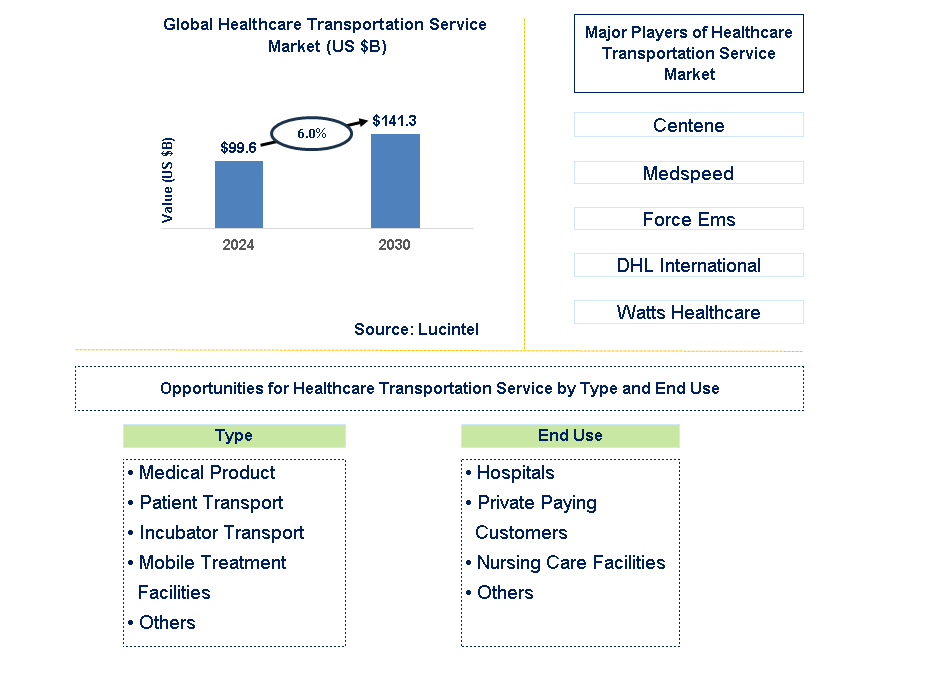
Key data points: The market size in 2030 = $141.3 billion, growth forecast = 6.0% annually next 6 years. Scroll below to get more insights. This market report covers trends, opportunities, and forecast in the global healthcare transportation service market to 2030 by type (medical product, patient transport, incubator transport, mobile treatment facilities, and others), end use (hospitals, private paying customers, nursing care facilities, and others), and region (North America, Europe, Asia Pacific, and the Rest of the World)
We'll send your sample report shortly.
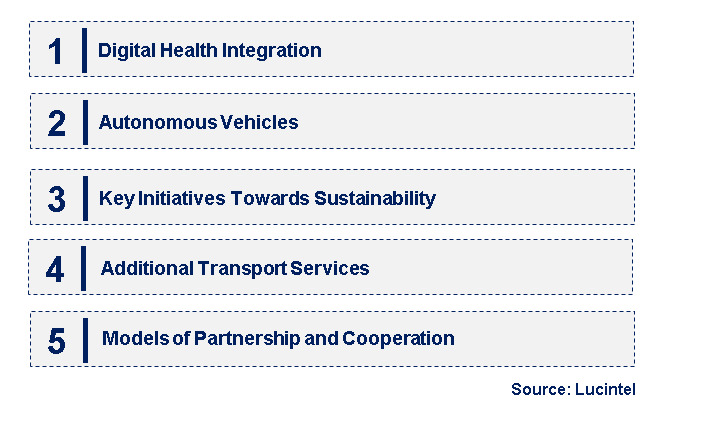
• Digital Health Integration: The integration of telehealth technology, such as the Internet of Things, with transport services has been increasingly observed. This trend allows for real-time communication between health professionals and transport service providers, enhancing patient transport management. Additionally, mobile applications for reserving and locating healthcare transportation have become more utilized, making the process more user-friendly and clear-cut for all users of the services.
• Autonomous Vehicles: The introduction of autonomous vehicles (AVs) is predicted to boost the healthcare transportation market. AVs are currently being tested for non-emergency medical transportation and the supply of medicines. These vehicles are anticipated to reduce incidents of human error, cut costs, and increase efficiency in timely transportation, especially in congested cities. The introduction of AVs is likely to optimize the delivery of healthcare transport services in terms of both quality and safety for at-risk groups.
• Key Initiatives Towards Sustainability: The focus on reducing carbon footprints is becoming a sustainability imperative in healthcare transport. The use of electric and hybrid vehicles in business is rising due to regulatory requirements and corporate social responsibility initiatives. These methods of transportation are increasingly seen as clean and economically viable in the long run from the perspective of health providers.
• Additional Transport Services: The necessity for additional means of transport targeting specific patient groups, such as the chronically ill or disabled, is growing. This includes the introduction of vehicles with special medical fittings to ensure that long-distance patients are monitored during transport. Support staff requiring temperature-sensitive protective gear may also have specific needs in the transportation of transplant organs.
• Models of Partnership and Cooperation: Various institutions, such as healthcare providers, transportation industries, and IT companies, are forming partnerships more frequently than in the past. Such collaborations aim to improve healthcare transport services. For instance, collaborations within “Uber” have incorporated non-emergency medical transportation (NEMT) services, enhancing medical assistance for previously underserved populations. These cooperative models also contribute to advancements in service and technology. These emerging trends are changing the very fabric of the healthcare transportation service industry, promoting creativity and reducing costs in health transportation. With time and market dynamics, these trends will continue to reshape healthcare transportation services globally.
• Adoption of AI and Big Data: Healthcare transportation services are rapidly transforming into highly efficient systems due to the utilization of AI and Big Data. Implementing algorithms for patient flow forecasting, routing, and cost reduction are among the objectives achieved through AI technologies. Big Data analytics enable providers to evaluate service provision and improve delivery by assessing trends and identifying deficiencies. These technologies are making transportation solutions more effective, focusing on delivering quality services to patients.
• Expansion of NEMT Services: Non-Emergency Medical Transportation (NEMT) services are spreading quickly, especially in areas with elderly residents and low access to medical care. This expansion is partly propelled by government efforts to enhance healthcare access and private investment in NEMT applications. The increase in NEMT delivery systems is assisting in improving access to health services, thus preventing healthcare gaps for vulnerable populations.
• Sustainability Efforts: In healthcare transport, sustainability has become mandatory, with measures taken to decrease carbon footprints and advocate for less detrimental modes of transportation. The adoption of new technologies, electric vehicles (EVs), and hybrids is increasingly supported by government initiatives and corporate sustainability strategies. This transition towards greener transportation is beneficial for the environment and aligns with healthcare policies aimed at improving public health.
• Synergy with Smart City Strategies: The concept of creating an integrated healthcare transportation services network comes to life through understanding smart city systems and strategies. In these smart cities and metropolitan areas, various IoT (Internet of Things) devices facilitate a faster and more efficient transportation framework, eliminating hurdles in healthcare movement. This integration enhances coordination between healthcare institutions and transport systems, reducing waiting times for patients and minimizing exposure to danger in urban settings.
• Emergence of Transport Systems Integrated with Telehealth Services: Recently, the penetration of telehealth services has led to the emergence of telehealth-enabled transport. This service facilitates effective healthcare communication throughout patients’ transport procedures without interruption. The primary advantage of telehealth-enabled transport is its focus on patients in non-urban areas or countries where hospitals are far away, improving services and reducing complaints about being bounced from one hospital to another. These recent developments significantly impact the healthcare transportation service industry in terms of process capabilities, new services, and technology enablers. The evolving dynamics of current disease causation threats will continue to redefine healthcare transport to accommodate increasing diversity in patients and patient-centered needs.
• Non-Emergency Medical Transportation (NEMT): NEMT services offer significant prospects for expansion, especially in aging regions lacking healthcare facilities. With government support and advancements in NEMT platforms, at-risk populations are gaining better access to healthcare. By providing affordable and reliable transportation, NEMT services minimize no-shows for medical appointments and enhance the quality of care, making this a key area for market success.
• Patient-Centered Approaches: With the enhancement of patient-centered care models, the demand for personalized medical transportation services is increasing. Such models emphasize patients’ needs and preferences, enabling supportive transport that improves patient experience and satisfaction. A crucial development area is the provision of inclusive transport services for chronic care patients, disabled persons, and the elderly, propelled by health providers’ efforts to offer comprehensive, patient-oriented care.
• Use of Telemedicine Services: Telehealth transportation services create new opportunities by providing healthcare transportation. With telehealth correspondence aiding transport services, remote consultations are possible, and ongoing care is facilitated as patients are transported to treatment locations, reducing the need for hospital visits. This is particularly beneficial for health systems serving rural and underserved areas, where patients often must travel for services. The demand for transport services that enhance telehealth delivery is expected to grow alongside the uptake of telehealth services.
• Technological Advancement: Advancements in artificial intelligence, the Internet of Things, and Big Data analytics are transforming the healthcare transportation market. These sophisticated technologies use real-time analysis for route tracking, minimization, and improved communication between healthcare providers and transportation service users. The increased uptake of autonomous vehicles (AVs) and logistics platforms powered by AI presents substantial growth prospects. These mechanisms improve the effectiveness, reliability, and safety of healthcare transportation services.
• Geographical Expansion of Healthcare Infrastructure: The geographical expansion of healthcare infrastructure, especially in developing countries, provides growth opportunities for healthcare transportation services. The growing demand for such services results from commitments to develop new hospitals, clinics, and other healthcare facilities. Establishing effective healthcare transport systems in these areas is fundamental to achieving effective patient care, which drives market growth. These specific areas of opportunity are redefining the healthcare transportation service industry and improving services within targeted applications. As healthcare transportation evolves, former prospects will remain vital in meeting the expanding and varying needs of patient transportation services. Consequently, this will positively impact the overall process of medical service provision in many countries.
• Technological Advancements: Healthcare transportation fleets benefit from AI, Internet of Things, and Big Data technologies, enabling real-time monitoring and rerouting. Cost reductions, enhanced service efficiency, and improved patient health are among the benefits these technologies provide to both service providers and users. The emergence of unmanned vehicles and telehealth-supported transport has significantly advanced technology in the market, opening new channels for development and growth.
• Aging Population: The increasing number of elderly individuals is a significant factor driving healthcare transportation services. This demographic shift necessitates non-emergency medical transportation (NEMT) for patients with chronic conditions and accessible services. Such changes create new opportunities for developing medical and transportation services in advanced countries to address the needs of the elderly population.
• Government Initiatives and Funding: Governments worldwide are recognizing the role of healthcare transportation in achieving equitable healthcare distribution. Various government initiatives and funding programs are being implemented to enhance healthcare transportation systems, especially in rural and underserved areas. These programs facilitate market expansion by promoting the growth of NEMT services, emergency medical services (EMS), and telehealth-based transport solutions.
• Increased Focus on Patient-Centric Care: The healthcare system is increasingly orienting care models around patients and their preferences. This shift is driving demand for targeted transport services, such as transportation for disabled individuals and elderly patients. Emerging patient-centric care models are creating opportunities for more customized transport options that better meet patients' needs, thereby improving satisfaction and health outcomes.
• Rise of Telehealth Services: The growing trend of telehealth services is reshaping the healthcare transportation market. Telehealth transport allows consultations and healthcare services while a patient is being transported, enhancing access to healthcare, especially in remote or rural regions. The integration of telehealth and transportation has increased demand for solutions that facilitate telemedicine provision. Challenges in the healthcare transportation service market are:
• Exorbitant Operational Expenses: High operational costs in healthcare transportation services, including fuel, vehicle maintenance, and labor, present significant challenges. These costs can be unmanageable for small service providers, hampering their growth and entry into new technologies. Additionally, the costs associated with medical equipment and supplies during transportation can burden providers.
• Regulatory Compliance: Local service providers often struggle to comply with various legal frameworks and stringent regulations in the healthcare transport sector, particularly in regions with advanced healthcare infrastructures. Service providers must ensure compliance with rules regarding patient safety, privacy during medical examinations, and the condition of vehicles and drivers, which can vary by region. The cost of adhering to these regulations is high, encompassing personnel, technology, and facilities.
• Infrastructure Constraints: Inadequate transport infrastructure, particularly in undeveloped and rural areas, remains a major obstacle in healthcare transportation. Poor terrain, limited access to healthcare, and a shortage of specialized vehicles can hinder timely responses to healthcare emergencies. These deficiencies can lead to increased waiting times for patient care and reduced efficiency in healthcare transportation services, especially during emergencies. The drivers and challenges in the healthcare transportation service market influence its advancement while presenting potential barriers. Technological progress, an increasing elderly population, and greater government support contribute to market improvement, while operational costs, regulatory hurdles, and infrastructure limitations pose challenges. Addressing these issues will be crucial for sustaining growth and development in the healthcare transportation market.
• Centene
• Medspeed
• Force Ems
• DHL International
• Watts Healthcare
• Crothall Healthcare
• Patriot Medical Transport
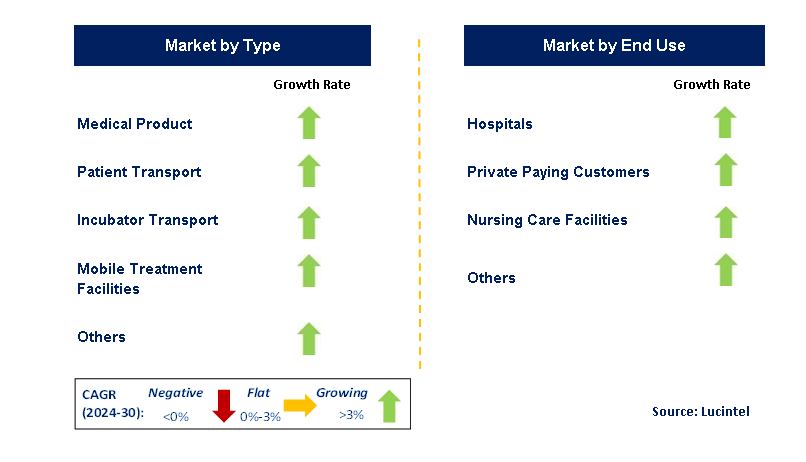
• Medical Product
• Patient Transport
• Incubator Transport
• Mobile Treatment Facilities
• Others
• Hospitals
• Private Paying Customers
• Nursing Care Facilities
• Others
• North America
• Europe
• Asia Pacific
• The Rest of the World
• United States: In the United States, there has been a significant increase in investment in digital health platforms that enable real-time monitoring and coordination of transportation services. There is still room for improvement regarding the application of artificial intelligence to enhance patient routing. Notably, the use of non-emergency medical transportation (NEMT) services, especially for the elderly and disabled, is increasing, aided by recent legislation facilitating easier access to these services in many states.
• China: The healthcare transportation service industry in China is booming, primarily due to government policies focused on rural health development. The introduction of telemedicine services, along with sophisticated logistics networks, is improving the availability of healthcare services to citizens. The Chinese government is also supporting the establishment of critical medical supply transportation units to avoid past issues.
• Germany: Germany is actively transitioning toward ecological transportation services in healthcare systems to improve carbon footprints. The emergence of electric and hybrid vehicles in the healthcare sector is notable. There is also growing interest in integrating healthcare transportation services with smart city innovation programs, enhancing connections between healthcare providers and transport services while minimizing transport duration.
• India: In India, the healthcare transportation market is rising as urban and rural areas become more amenable to these services. The proliferation of medical transport services through ridesharing platforms is evident. Additionally, government efforts to improve emergency medical services (EMS) through advanced ambulances and quicker response times are fueling market growth. Increasingly, private companies are partnering with the government to extend healthcare transportation services.
• Japan: In Japan, the elderly population is creating a significant demand for specialized healthcare transportation services. Research into robotic aids for travel and self-driving vehicles is underway to provide solutions for transporting elderly and disabled patients. Simultaneously, Japan is investing in digital solutions that enable timely and effective healthcare services through collaboration among patients, healthcare facilities, and transport providers, even in remote areas.


• Centene
• Medspeed
• Force Ems
• DHL International
• Watts Healthcare
• Crothall Healthcare
• Patriot Medical Transport Q6. Which healthcare transportation service market segment will be the largest in future? Answer: Lucintel forecasts that patient transport will remain the largest segment due to the increasing number of patients, coupled with the growing aging population, and research & development proficiencies for healthcare transport services. Q7. In healthcare transportation service market, which region is expected to be the largest in next 5 years? Answer: North America will remain the largest region due to surge in aging population that requires medical assistance and the presence of high-quality healthcare facilities in the regions. Q.8 Do we receive customization in this report? Answer: Yes, Lucintel provides 10% customization without any additional cost.


Choose a license that fits your team. Instant PDF delivery.
Prices exclude taxes. Instant delivery. Custom licensing available on request.
Market Report · July 31, 2026
Market Report · July 31, 2026
Market Report · July 31, 2026
Trusted partner for strategic intelligence and business growth


Receive a complimentary market analysis tailored to your industry. Our analysts will identify key growth opportunities and competitive dynamics specific to your business.

Market size, growth rate, and key trend analysis for your specific sector.

Top competitor positioning and market share analysis.

Strategic recommendations backed by data-driven insights.
Get curated market intelligence and competitive moves straight to your inbox.
By subscribing, you agree to receive our monthly insights. Unsubscribe anytime.
Receive a complimentary market analysis tailored to your industry. Our analysts will identify key growth opportunities and competitive dynamics specific to your business.
Market size, growth rate, and key trend analysis for your specific sector.
Top competitor positioning and market share analysis.
Strategic recommendations backed by data-driven insights.
Get curated market intelligence, emerging trends, and competitive moves straight to your inbox each month.
By subscribing, you agree to receive our monthly insights. Unsubscribe anytime.
We'll send your sample report shortly.