
Market Report · May 16, 2026

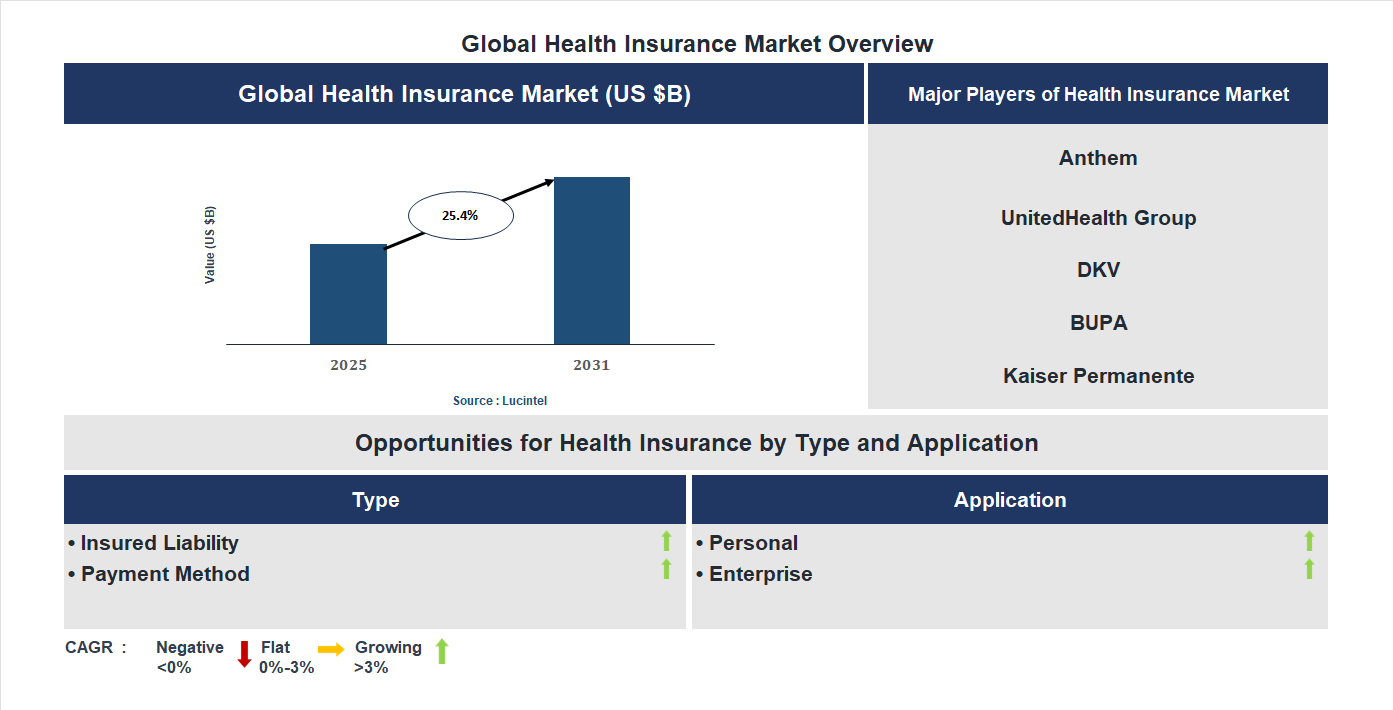
Key data points: The growth forecast = 25.4% annually for the next 7 years. Scroll below to get more insights. This market report covers trends, opportunities and forecasts in health insurance market to 2031 by type (insured liability and payment method), application (personal and enterprise), and region (North America, Europe, Asia Pacific, and the Rest of the World)
We'll send your sample report shortly.
• Lucintel forecasts that, within the type category, payment method is expected to witness higher growth over the forecast period.
• Within the application category, enterprise is expected to witness higher growth.
• In terms of region, APAC is expected to witness the highest growth over the forecast period. Gain valuable insights for your business decisions with our comprehensive 150+ page report. Sample figures with some insights are shown below.
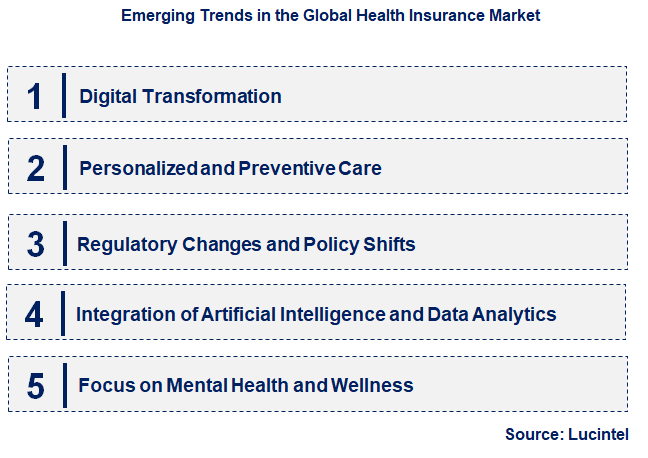
• Digital Transformation: The adoption of digital platforms and telehealth services is revolutionizing health insurance. Insurers are investing in user-friendly apps, online claim processing, and virtual consultations, which enhance customer experience and operational efficiency. This shift allows for real-time data collection, personalized offerings, and improved accessibility, especially for remote or underserved populations. Digital transformation also facilitates better risk management and cost control, making health insurance more adaptable and consumer-centric.
• Personalized and Preventive Care: There is a growing emphasis on personalized health plans and preventive care strategies. Insurers are leveraging data analytics and AI to tailor coverage options based on individual health profiles, lifestyle, and genetic information. This approach encourages proactive health management, reduces long-term costs, and improves health outcomes. The focus on prevention and customization is attracting consumers seeking more relevant and effective coverage, thereby driving market growth and innovation.
• Regulatory Changes and Policy Shifts: Evolving regulations and government policies significantly impact the health insurance landscape. Recent reforms aim to expand coverage, control costs, and improve transparency. Insurers must adapt to new compliance requirements, such as mandates for coverage of specific treatments or data privacy standards. These regulatory shifts influence product offerings, pricing strategies, and market entry barriers, shaping the competitive environment and ensuring consumer protection.
• Integration of Artificial Intelligence and Data Analytics: AI and data analytics are transforming risk assessment, fraud detection, and customer engagement in health insurance. Insurers utilize machine learning algorithms to predict health trends, personalize marketing, and streamline claims processing. This integration enhances decision-making accuracy, reduces operational costs, and improves customer satisfaction. As AI becomes more sophisticated, it will further enable insurers to develop innovative products and improve overall market efficiency.
• Focus on Mental Health and Wellness: Increasing awareness of mental health issues is prompting insurers to expand coverage and wellness programs. Insurers are incorporating mental health services, counseling, and stress management into their offerings. This trend reflects a broader shift towards holistic health care and recognizes the importance of mental well-being in overall health. By addressing mental health proactively, insurers can reduce long-term costs and improve quality of life for policyholders, aligning with societal shifts towards mental health awareness. In summary, these emerging trends are fundamentally reshaping the health insurance market by fostering innovation, enhancing consumer engagement, and promoting more inclusive and efficient healthcare solutions. As digital tools, personalized care, regulatory adaptations, AI integration, and mental health focus become central, the industry is moving towards a more dynamic, accessible, and patient-centered future.
• Digital Transformation: Adoption of telehealth and digital platforms has expanded access to healthcare services, reducing costs and improving convenience for consumers. This shift enables insurers to offer more personalized plans and real-time support, enhancing customer engagement and satisfaction.
• Regulatory Changes: Governments worldwide are implementing reforms to increase coverage and reduce costs, such as mandates for pre-existing condition coverage and price transparency initiatives. These policies aim to improve affordability and protect consumers, but also pose challenges for insurers in managing risk and profitability.
• Rise of Consumer-Driven Plans: High-deductible health plans and health savings accounts are gaining popularity, empowering consumers to make more informed healthcare decisions. This trend encourages cost-conscious behavior and shifts some financial responsibility to consumers, impacting insurer revenue models.
• Data Analytics and AI: Advanced data analytics and artificial intelligence are enabling insurers to better assess risk, detect fraud, and personalize offerings. These technologies improve operational efficiency and enable more accurate pricing, ultimately benefiting both insurers and consumers.
• Focus on Preventive Care: There is an increasing emphasis on preventive services to reduce long-term healthcare costs. Insurers are investing in wellness programs and screenings, which promote healthier lifestyles and can lead to lower claims and improved health outcomes. In summary, these developments are transforming the health insurance market by enhancing accessibility, affordability, and efficiency. Digital innovations and regulatory reforms are fostering a more consumer-centric environment, while technological advancements enable better risk management. The focus on preventive care and consumer-driven plans is likely to lead to a more sustainable and personalized healthcare ecosystem, benefiting all stakeholders involved.
• Digital Health Platforms: Expanding access and convenience : Digital health platforms enable insurers to offer online enrollment, claims processing, and health management tools, improving customer experience and operational efficiency. This growth enhances accessibility for consumers, reduces administrative costs, and fosters engagement through user-friendly interfaces.
• Personalized Insurance Plans: Tailoring coverage to individual needs : Personalized plans leverage data analytics and health assessments to create customized coverage options. This approach increases customer satisfaction, improves retention, and attracts health-conscious consumers seeking tailored solutions.
• Telemedicine Integration: Extending healthcare access remotely : Incorporating telemedicine services into insurance offerings allows members to consult healthcare providers virtually. This reduces costs, improves health outcomes, and appeals to tech-savvy, remote, or underserved populations.
• Wellness and Preventive Programs: Promoting healthier lifestyles : Insurers are investing in wellness initiatives and preventive care programs to reduce long-term costs. These initiatives foster healthier behaviors, lower claim frequencies, and enhance overall customer loyalty.
• Data Analytics and AI: Enhancing decision-making and risk management : Advanced analytics and artificial intelligence enable better risk assessment, fraud detection, and personalized marketing. This technological integration improves profitability and enables proactive health management strategies. In summary, these growth opportunities are transforming the health insurance market by increasing efficiency, personalization, and accessibility. They are driving innovation, improving customer engagement, and enabling insurers to better meet evolving healthcare demands. As a result, the market is becoming more competitive, customer-centric, and sustainable in the long term.
• Technological Innovation: The integration of digital health solutions, telemedicine, and data analytics enhances customer experience, improves risk assessment, and streamlines claims processing. These advancements reduce operational costs and enable personalized insurance plans, attracting a broader customer base. As technology continues to evolve, insurers can offer more efficient, accessible, and tailored services, fostering market growth and competitiveness.
• Increasing Healthcare Expenditure: Rising healthcare costs globally compel consumers and employers to seek comprehensive health insurance coverage. This trend is driven by expensive medical treatments, advanced diagnostics, and an aging population requiring long-term care. As healthcare expenses escalate, the demand for insurance products that mitigate financial risks grows, fueling market expansion and product innovation.
• Demographic Shifts: An aging population and increasing prevalence of chronic diseases significantly impact the health insurance landscape. Older adults require more frequent and specialized medical services, prompting insurers to develop targeted policies. Additionally, younger generations’ growing awareness of health and wellness influences product offerings, creating opportunities for market segmentation and diversification.
• Regulatory Environment: Governments worldwide are implementing policies to improve healthcare access and quality, such as mandating coverage and establishing standards for insurers. These regulations influence product design, pricing, and market entry strategies. While regulatory frameworks can pose compliance challenges, they also create opportunities for insurers to innovate within legal boundaries and expand their market share. The challenges in the health insurance market are:
• Regulatory Complexity: Navigating diverse and evolving regulatory requirements across regions can be burdensome for insurers. Compliance demands significant resources and expertise, and changes in policies can disrupt existing operations. This complexity may hinder market entry, limit product innovation, and increase operational costs, impacting profitability and growth prospects.
• Rising Claims and Fraudulent Activities: Increasing claims, especially for chronic and complex conditions, strain insurer resources and impact profitability. Additionally, fraudulent claims pose a significant challenge, leading to financial losses and higher premiums for consumers. Insurers must invest in advanced fraud detection systems and risk management strategies to mitigate these issues.
• Market Competition and Price Pressure: The health insurance sector faces intense competition from traditional insurers, new entrants, and digital health startups. Price wars and commoditization of products can erode profit margins and reduce differentiation. Insurers need to innovate and offer value-added services to maintain competitiveness and attract customers in a crowded marketplace. In summary, the Health Insurance Market is shaped by technological progress, demographic trends, and regulatory developments, which collectively drive growth and innovation. However, challenges such as regulatory complexity, claims management, and fierce competition pose significant risks. Navigating these drivers and challenges requires strategic agility, technological adoption, and regulatory compliance. Overall, the market’s future hinges on how effectively stakeholders can leverage opportunities while mitigating risks, ensuring sustainable growth in an evolving healthcare landscape.
• Anthem
• UnitedHealth Group
• DKV
• BUPA
• Kaiser Permanente
• Aetna
• PICC
• Insured Liability
• Payment Method
• Personal
• Enterprise
• North America
• Europe
• Asia Pacific
• The Rest of the World
• United States: The US health insurance market has seen increased adoption of digital health platforms and telemedicine services, especially post-pandemic. Policy reforms aim to expand coverage through the Affordable Care Act, with ongoing efforts to reduce costs and improve transparency. Private insurers are innovating with personalized plans and wellness programs, while government programs like Medicaid and Medicare continue to evolve to serve more beneficiaries. The market also faces challenges related to rising premiums and healthcare disparities, prompting calls for more comprehensive reforms.
• China: China’s health insurance sector has rapidly expanded, driven by government initiatives to improve healthcare access and affordability. The integration of digital health technologies and big data analytics has enhanced service delivery and claims processing. The government has increased subsidies and coverage for rural populations, aiming for universal health coverage. Private insurers are growing, offering supplementary plans to complement public schemes. Efforts focus on controlling costs, improving quality, and expanding coverage to underserved regions, positioning China as a key emerging market in health insurance.
• Germany: Germany’s health insurance market remains highly regulated, with a dual system of statutory health insurance (SHI) and private health insurance (PHI). Recent reforms aim to improve efficiency, reduce administrative burdens, and promote digital health solutions. The introduction of telehealth services and electronic health records has modernized the sector. There is a focus on aging populations and chronic disease management, with insurers developing tailored plans. The market continues to adapt to demographic shifts and technological innovations, ensuring sustainable healthcare financing and coverage.
• India: India’s health insurance market is experiencing rapid growth, fueled by increasing awareness, government schemes, and rising healthcare costs. The government’s Ayushman Bharat initiative aims to provide coverage to millions of low-income families. Private insurers are expanding their product offerings, including health plans with cashless facilities and wellness benefits. Digital penetration and mobile health apps are improving access, especially in rural areas. Challenges include low penetration rates, affordability issues, and infrastructure gaps, but overall, the market is poised for substantial expansion driven by policy support and technological integration.
• Japan: Japan’s health insurance market is characterized by a mature, highly regulated system focused on aging populations. Recent developments include reforms to promote digital health records and telemedicine to address healthcare workforce shortages. Insurers are developing innovative products for chronic disease management and long-term care. The government emphasizes cost containment and quality improvement through policy adjustments. The aging demographic continues to influence market strategies, with a focus on integrating advanced technology and ensuring sustainable financing to support Japan’s comprehensive healthcare system.


• Anthem
• UnitedHealth Group
• DKV
• BUPA
• Kaiser Permanente
• Aetna
• PICC Q5. Which health insurance market segment will be the largest in future? Answer: Lucintel forecasts that, within the type category, payment method is expected to witness higher growth over the forecast period. Q6. In health insurance market, which region is expected to be the largest in next 5 years? Answer: In terms of region, APAC is expected to witness the highest growth over the forecast period. Q7. Do we receive customization in this report? Answer: Yes, Lucintel provides 10% customization without any additional cost.


Choose a license that fits your team. Instant PDF delivery.
Prices exclude taxes. Instant delivery. Custom licensing available on request.
Market Report · May 16, 2026
Market Report · May 16, 2026
Market Report · May 16, 2026
Trusted partner for strategic intelligence and business growth


Receive a complimentary market analysis tailored to your industry. Our analysts will identify key growth opportunities and competitive dynamics specific to your business.

Market size, growth rate, and key trend analysis for your specific sector.

Top competitor positioning and market share analysis.

Strategic recommendations backed by data-driven insights.
Get curated market intelligence and competitive moves straight to your inbox.
By subscribing, you agree to receive our monthly insights. Unsubscribe anytime.
Receive a complimentary market analysis tailored to your industry. Our analysts will identify key growth opportunities and competitive dynamics specific to your business.
Market size, growth rate, and key trend analysis for your specific sector.
Top competitor positioning and market share analysis.
Strategic recommendations backed by data-driven insights.
Get curated market intelligence, emerging trends, and competitive moves straight to your inbox each month.
By subscribing, you agree to receive our monthly insights. Unsubscribe anytime.
We'll send your sample report shortly.