
Market Report · July 22, 2026

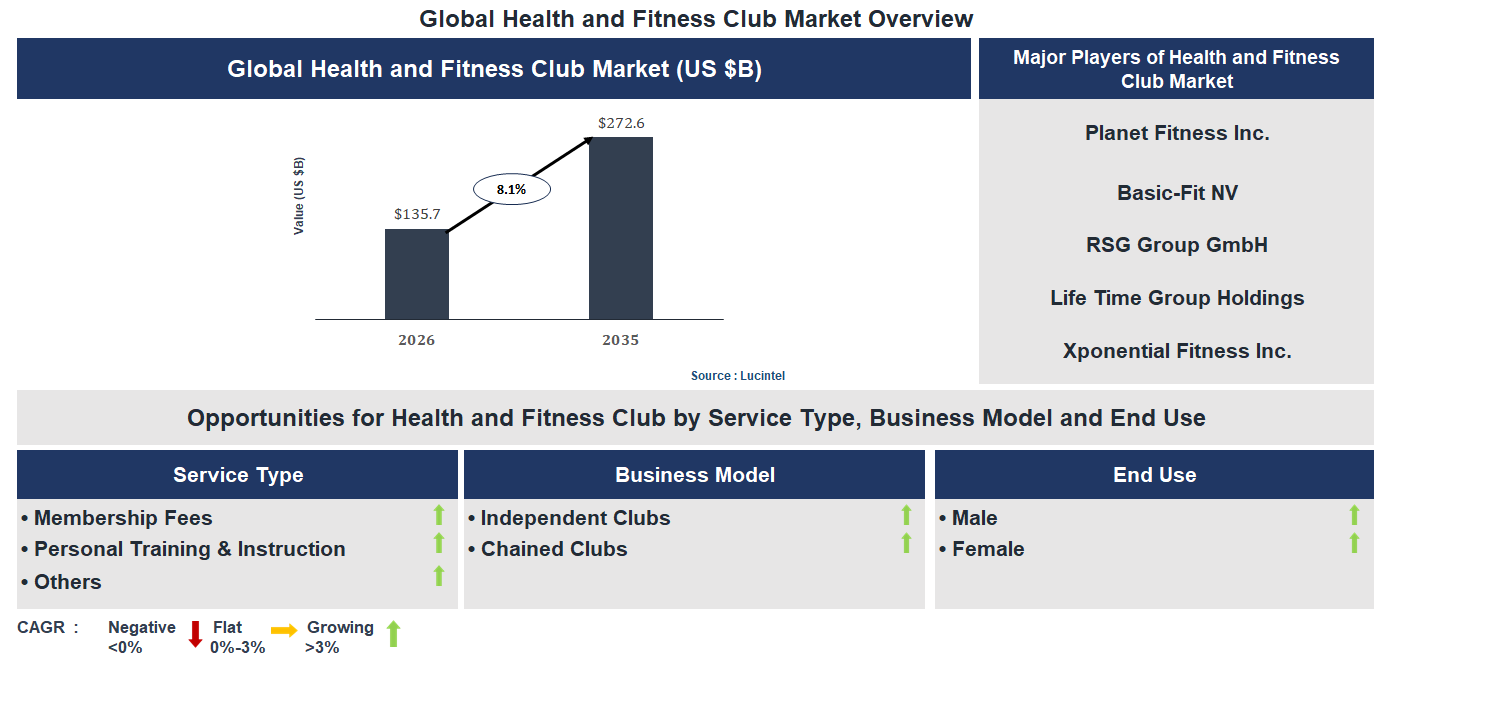
Key data points: The market size in 2035 = $272.5 billion, growth forecast = 8.1% annually for the next 8 years. Scroll below to get more insights. This market report covers trends, opportunities and forecasts in health and fitness club market to 2035 by service type (membership fees, personal training & instruction, and others), business model (independent clubs and chained clubs), end use (male and female), and region (North America, Europe, Asia Pacific, and the Rest of the World)
We'll send your sample report shortly.
• Lucintel forecasts that, within the service type category, membership fee is expected to witness higher growth over the forecast period.
• Within the end use category, male is expected to witness higher growth.
• In terms of region, North America is expected to witness the highest growth over the forecast period. Gain valuable insights for your business decisions with our comprehensive 150+ page report. Sample figures with some insights are shown below.
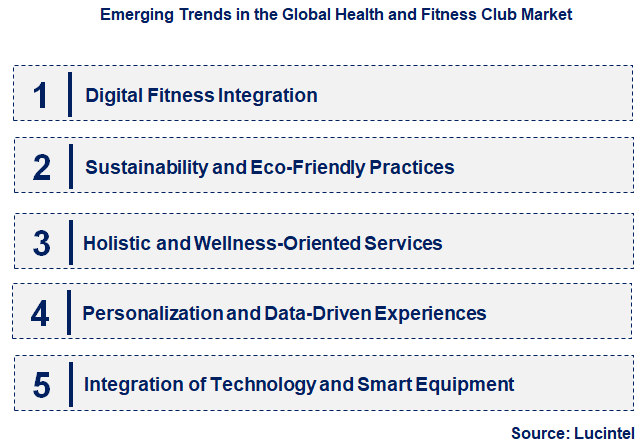
• Digital Fitness Integration: The rise of virtual workouts and mobile apps has expanded access to fitness services beyond traditional gyms. Consumers now prefer on-demand classes, live streaming, and personalized digital coaching, which offer convenience and flexibility. This trend allows clubs to reach a broader audience, including remote users, and provides data-driven insights to tailor programs. It also reduces physical infrastructure costs and enhances user engagement through interactive platforms, making fitness more accessible and adaptable to individual schedules.
• Sustainability and Eco-Friendly Practices: Environmental consciousness is influencing the market, with clubs adopting green initiatives such as energy-efficient equipment, sustainable building materials, and waste reduction programs. These practices appeal to eco-aware consumers and help reduce operational costs. Additionally, some clubs incorporate outdoor activities and natural elements into their design to promote wellness and environmental responsibility. This trend enhances brand reputation and aligns with the growing demand for sustainable lifestyles, ultimately attracting environmentally conscious members.
• Holistic and Wellness-Oriented Services: The market is shifting from purely physical fitness to comprehensive wellness solutions, including mental health support, nutrition counseling, and mindfulness practices. Clubs are expanding their offerings to include spa services, meditation classes, and wellness workshops. This holistic approach addresses the broader health needs of consumers, fostering long-term loyalty and differentiation in a competitive landscape. It also reflects a growing awareness that physical health is interconnected with mental and emotional well-being.
• Personalization and Data-Driven Experiences: Advanced analytics and wearable technology enable clubs to deliver highly personalized fitness programs. Data collected from devices helps tailor workouts, monitor progress, and provide real-time feedback. This customization enhances member satisfaction and motivation, leading to better retention rates. Clubs investing in AI and machine learning are creating smarter, more responsive environments that adapt to individual goals and preferences, transforming the customer experience into a highly engaging and effective journey.
• Integration of Technology and Smart Equipment: The adoption of smart gym equipment and IoT devices is revolutionizing workout experiences. These innovations enable seamless tracking, automated adjustments, and interactive training sessions. Smart equipment also facilitates maintenance and operational efficiency through predictive analytics. This technological integration improves workout effectiveness, safety, and user engagement, making fitness routines more efficient and enjoyable. It also allows clubs to gather valuable data for continuous improvement and personalized service delivery, positioning them at the forefront of innovation in the market. In summary, these emerging trends are fundamentally reshaping the health and fitness club market by enhancing accessibility, sustainability, personalization, and technological integration. They are driving a shift towards more holistic, eco-conscious, and digitally connected fitness experiences, which are crucial for staying competitive in a rapidly evolving industry.
• Integration of Advanced Technology for Member Engagement: The adoption of AI, virtual reality, and wearable devices is revolutionizing member experiences. Clubs are leveraging these tools to personalize workouts, monitor progress, and provide immersive fitness environments. This integration enhances member satisfaction, retention, and attracts tech-savvy consumers. As technology becomes more accessible, clubs that innovate will gain a competitive edge, leading to increased memberships and revenue streams.
• Expansion of Digital and Hybrid Fitness Models: The rise of online classes, mobile apps, and hybrid gym memberships offers flexible options for consumers. This shift caters to busy lifestyles and remote access needs, broadening the market reach. Fitness clubs investing in digital platforms can retain members during disruptions and tap into new demographics. The hybrid model fosters continuous engagement, boosts revenue, and ensures resilience against market fluctuations.
• Focus on Wellness and Holistic Health Services: Beyond traditional workouts, clubs are integrating wellness services such as nutrition counseling, mental health programs, and mindfulness sessions. This holistic approach appeals to health-conscious consumers seeking comprehensive well-being solutions. Offering diverse services enhances member loyalty, attracts a broader audience, and differentiates brands in a competitive market. The trend aligns with the growing emphasis on overall health rather than just physical fitness.
• Adoption of Sustainable and Eco-Friendly Practices: Environmental sustainability is gaining importance among consumers and regulators. Clubs adopting green initiatives like energy-efficient equipment, eco-friendly materials, and waste reduction are enhancing their brand reputation. Sustainable practices attract environmentally conscious members and reduce operational costs. This focus on sustainability not only benefits the planet but also positions clubs as responsible industry leaders, fostering long-term growth and community trust.
• Strategic Partnerships and Corporate Wellness Programs: Collaborations with corporate entities and health tech companies are expanding market reach. Corporate wellness programs promote employee health, reduce healthcare costs, and increase brand visibility. Partnerships with health tech firms enable access to innovative solutions and data analytics. These collaborations create new revenue streams, strengthen market positioning, and meet the rising demand for workplace health initiatives, driving overall industry growth. These developments are significantly impacting the health and fitness club market by fostering innovation, expanding service offerings, and emphasizing sustainability. They enable clubs to attract diverse customer segments, improve member retention, and adapt to evolving consumer preferences. As a result, the industry is poised for sustained growth, increased competitiveness, and enhanced market resilience in the coming years.
• Expansion of Digital and Virtual Fitness Offerings: The rise of online classes, mobile apps, and virtual training sessions provides convenience and accessibility, attracting a broader customer base. Fitness clubs are investing in digital platforms to offer personalized workout plans, live streaming classes, and on-demand content, enabling members to exercise anytime, anywhere. This shift enhances engagement, retention, and revenue streams, especially amid changing consumer preferences for remote and flexible fitness options.
• Growing Focus on Niche and Specialized Fitness Programs: There is increasing demand for niche fitness activities such as yoga, Pilates, HIIT, and functional training. Clubs are diversifying their offerings to cater to specific interests and health goals, attracting targeted demographics. Specialized programs help differentiate brands, foster community building, and improve member satisfaction. This trend supports market expansion by appealing to health-conscious consumers seeking tailored, effective workout experiences.
• Integration of Advanced Technologies for Enhanced Member Experience: Incorporating AI, wearables, and IoT devices enables personalized fitness tracking, real-time feedback, and data-driven insights. These technologies improve workout efficiency, safety, and motivation, leading to higher member engagement. Fitness clubs adopting innovative tech solutions can streamline operations, offer customized services, and stay competitive in a tech-savvy market, ultimately driving growth through improved customer satisfaction and loyalty.
• Strategic Partnerships and Collaborations for Market Penetration: Collaborations with health brands, corporate wellness programs, and technology providers expand reach and service offerings. Partnerships facilitate access to new customer segments, enhance brand visibility, and enable cross-promotional activities. By leveraging external expertise and resources, fitness clubs can accelerate growth, innovate their offerings, and strengthen their market position in a competitive landscape.
• Expansion into Emerging Markets and Demographics: Developing regions and underserved populations present significant growth opportunities due to rising disposable incomes and increasing health awareness. Tailored marketing strategies, affordable membership plans, and culturally relevant programs help penetrate these markets. Targeting diverse age groups, including seniors and youth, broadens the customer base, fostering long-term growth and establishing a global presence for fitness clubs. These growth opportunities collectively position the health and fitness club market for sustained expansion. Embracing digital innovation, niche specialization, technological integration, strategic collaborations, and market diversification will enable industry players to meet evolving consumer demands. As a result, the market is poised for dynamic growth, increased competitiveness, and broader accessibility, ultimately transforming the landscape into a more inclusive and technologically advanced sector.
• Technological Innovation: The integration of digital platforms, wearable devices, and virtual fitness solutions has revolutionized the industry. These technologies enable personalized training, remote coaching, and real-time health monitoring, attracting a broader customer base. The convenience and accessibility offered by technological advancements increase user engagement and retention, fueling market growth. Additionally, data analytics help clubs tailor services to customer preferences, enhancing satisfaction and loyalty. As technology continues to evolve, it will further transform the fitness experience, making it more interactive and personalized, thus driving sustained industry expansion.
• Rising Health Awareness: Increasing awareness about health and wellness among consumers is a significant driver. People are more conscious of the importance of physical activity for overall well-being, leading to higher participation in fitness activities. This trend is supported by social media influence, health campaigns, and a growing aging population seeking active lifestyles. The demand for diverse fitness programs, including weight management, strength training, and mental health initiatives, is expanding. As health consciousness grows, so does the willingness to invest in fitness services, boosting market revenues and encouraging new facility openings.
• Economic Growth and Disposable Income: Economic stability and rising disposable incomes enable more individuals to afford gym memberships and fitness services. As economies grow, consumers prioritize health and fitness as part of their lifestyle, leading to increased spending in this sector. This financial capability allows for premium memberships, advanced equipment, and specialized classes, elevating the overall market quality. Moreover, economic prosperity encourages entrepreneurs to invest in new fitness facilities, fostering competition and innovation. Consequently, economic growth directly correlates with market expansion and diversification of offerings.
• Urbanization and Lifestyle Changes: Rapid urbanization has led to increased demand for accessible fitness options within city environments. Urban dwellers often face time constraints, making convenient, nearby fitness centers attractive. Additionally, changing lifestyles favor group activities, boutique gyms, and specialized fitness studios. The trend towards healthier living in urban areas supports the proliferation of fitness clubs, especially in metropolitan regions. This shift also encourages the development of compact, multi-purpose facilities that cater to busy professionals, thereby expanding the market footprint and encouraging innovation in service delivery.
• Government Initiatives and Policies: Supportive government policies promoting health and wellness significantly impact the market. Initiatives such as subsidies, awareness campaigns, and regulations encouraging physical activity create a conducive environment for growth. Public-private partnerships and incentives for fitness startups further stimulate industry development. Regulatory frameworks ensuring safety standards and quality assurance also boost consumer confidence. These policies help in expanding access to fitness services across different demographics, fostering a healthier population, and expanding the market base. The challenges facing the health and fitness club market include:-
• Regulatory and Safety Concerns: Stringent regulations related to safety standards, licensing, and health protocols pose operational challenges for fitness clubs. Compliance costs can be high, especially for small and new entrants, limiting market entry and expansion. Additionally, ensuring adherence to safety guidelines during health crises, such as pandemics, can restrict operations and impact revenue. The evolving regulatory landscape requires continuous adaptation, which can be resource-intensive. Failure to meet standards can lead to penalties, reputational damage, and loss of consumer trust, hindering overall industry growth.
• High Competition and Market Saturation: The increasing number of fitness centers, boutique gyms, and online platforms intensifies competition. Market saturation in urban areas makes customer acquisition and retention challenging, leading to price wars and reduced profit margins. Differentiating services becomes critical but difficult, especially for new entrants. The proliferation of low-cost gyms and virtual fitness options also pressures traditional clubs to innovate and lower prices. This competitive environment demands significant marketing and operational investments, which can strain financial resources and impede sustainable growth.
• Economic Uncertainty and Consumer Spending: Fluctuations in economic conditions, such as recessions or inflation, impact consumer discretionary spending on fitness services. During economic downturns, individuals may prioritize essential expenses over gym memberships, leading to decreased revenue for fitness clubs. Uncertainty about future income can cause customers to suspend or cancel memberships, affecting cash flow. Additionally, rising operational costs, including rent, wages, and equipment, further strain profitability. This economic volatility necessitates adaptive strategies to maintain market stability and retain customer loyalty amid financial uncertainties. In summary, the health and fitness club market is driven by technological advancements, increasing health awareness, economic growth, urbanization, and supportive policies. However, it faces challenges such as regulatory hurdles, intense competition, and economic fluctuations. These factors collectively influence the industrys trajectory, requiring stakeholders to innovate, adapt, and strategize effectively. While growth prospects remain promising, addressing these challenges is crucial for sustainable development and long-term success in this dynamic market.
• Planet Fitness Inc.
• Basic-Fit NV
• RSG Group GmbH
• Life Time Group Holdings
• Xponential Fitness Inc.
• Equinox Holdings Inc.
• Fitness International LLC
• Self Esteem Brands
• F45 Training Holdings Inc.
• The Gym Group plc
• Membership Fees
• Personal Training & Instruction
• Others
• Independent Clubs
• Chained Clubs
• Male
• Female
• North America
• Europe
• Asia Pacific
• The Rest of the World
• United States: The US market has seen a surge in boutique fitness studios and digital fitness platforms, driven by consumer demand for personalized experiences. Major chains are investing in virtual classes and hybrid models, combining in-person and online services. Wellness technology, such as wearable devices and fitness apps, is increasingly integrated into club offerings. There is also a focus on inclusivity and diversity, with clubs expanding accessible programs for all demographics. Additionally, sustainability initiatives, like eco-friendly facilities, are gaining importance among consumers.
• China: Chinas fitness market is rapidly expanding, fueled by rising middle-class income and health awareness. Digital fitness apps and live-streamed classes are popular, with many clubs adopting smart gym equipment and AI-driven personal training. Government policies promote fitness culture, leading to increased investment in large-scale fitness centers. The market also sees a rise in fitness tourism and wellness retreats. Local brands are innovating with culturally tailored programs, and there is a growing emphasis on youth engagement and community-based fitness initiatives.
• Germany: The German fitness industry is characterized by a focus on quality, sustainability, and innovation. Many clubs are integrating eco-friendly practices and energy-efficient equipment. Digitalization is prominent, with virtual classes and app-based booking systems becoming standard. There is a strong emphasis on functional training and holistic wellness, including mental health services. The market is also witnessing increased participation from older adults, with specialized programs for seniors. Regulatory standards ensure high safety and hygiene levels, which have become even more critical post-pandemic.
• India: The Indian fitness market is experiencing rapid growth, driven by urbanization and increasing health consciousness. Affordable gym chains and boutique studios are expanding across cities. Digital fitness platforms and mobile apps are gaining popularity, making fitness more accessible. There is a rising trend of corporate wellness programs and fitness festivals. The market also sees a shift toward holistic health, including yoga, Ayurveda, and wellness retreats. Investments in infrastructure and technology are boosting the quality and reach of fitness services, catering to a diverse and growing population.
• Japan: Japans fitness market is evolving with a focus on aging populations and preventive health. Clubs are incorporating advanced technology, such as robotics and AI, to enhance member engagement. There is a notable increase in low-impact and functional training tailored for older adults. Wellness and mental health services are becoming integral parts of fitness offerings. The market emphasizes convenience, with many facilities adopting 24-hour access and digital booking. Sustainability and eco-friendly practices are also gaining traction, aligning with Japans environmental consciousness. The industry continues to innovate to meet the needs of a health-aware, aging society.


• Planet Fitness Inc.
• Basic-Fit NV
• RSG Group GmbH
• Life Time Group Holdings
• Xponential Fitness Inc.
• Equinox Holdings Inc.
• Fitness International LLC
• Self Esteem Brands
• F45 Training Holdings Inc.
• The Gym Group plc Q6. Which health and fitness club market segment will be the largest in future? Answer: Lucintel forecasts that, within the service type category, membership fee is expected to witness higher growth over the forecast period. Q7. In health and fitness club market, which region is expected to be the largest in next 5 years? Answer: In terms of region, North America is expected to witness the highest growth over the forecast period. Q8. Do we receive customization in this report? Answer: Yes, Lucintel provides 10% customization without any additional cost.


Choose a license that fits your team. Instant PDF delivery.
Prices exclude taxes. Instant delivery. Custom licensing available on request.
Market Report · July 22, 2026
Market Report · July 16, 2026
Market Report · May 18, 2026
Trusted partner for strategic intelligence and business growth


Receive a complimentary market analysis tailored to your industry. Our analysts will identify key growth opportunities and competitive dynamics specific to your business.

Market size, growth rate, and key trend analysis for your specific sector.

Top competitor positioning and market share analysis.

Strategic recommendations backed by data-driven insights.
Get curated market intelligence and competitive moves straight to your inbox.
By subscribing, you agree to receive our monthly insights. Unsubscribe anytime.
Receive a complimentary market analysis tailored to your industry. Our analysts will identify key growth opportunities and competitive dynamics specific to your business.
Market size, growth rate, and key trend analysis for your specific sector.
Top competitor positioning and market share analysis.
Strategic recommendations backed by data-driven insights.
Get curated market intelligence, emerging trends, and competitive moves straight to your inbox each month.
By subscribing, you agree to receive our monthly insights. Unsubscribe anytime.
We'll send your sample report shortly.