
Report Feature
Headphone Lithium Battery Market Trends and Forecast
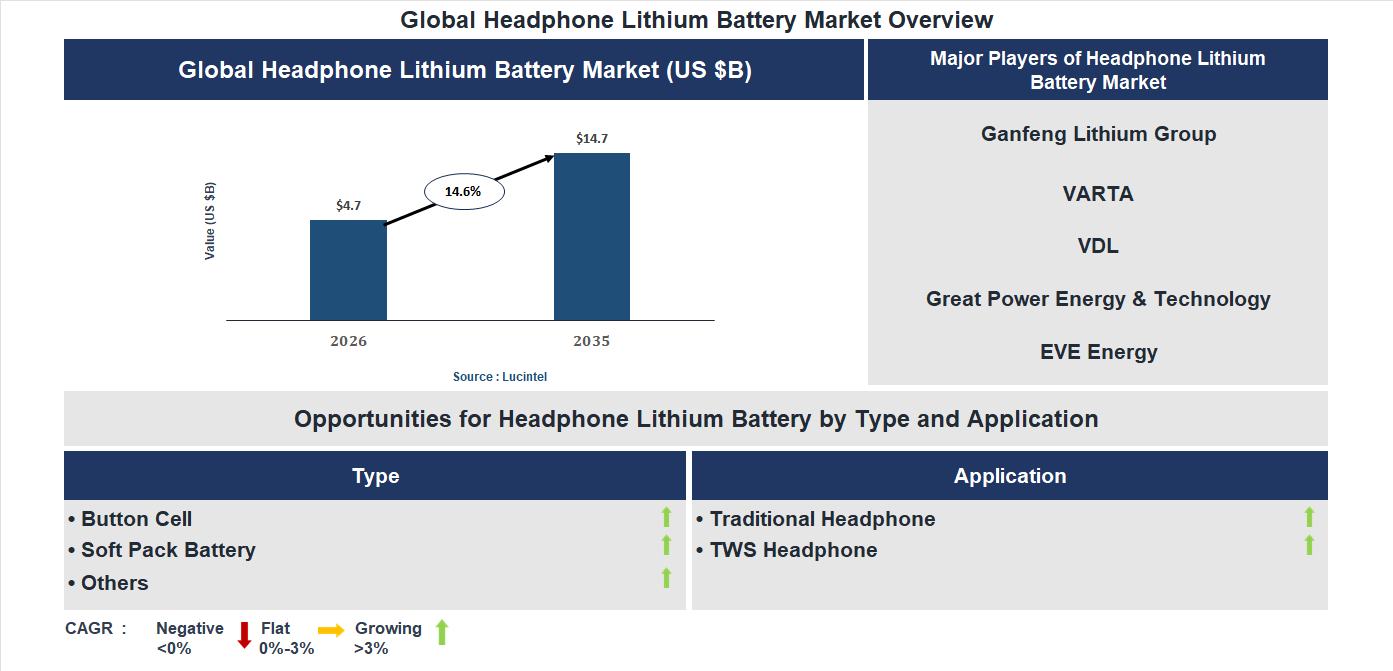
The future of the global headphone lithium battery market looks promising with opportunities in the traditional headphone and TWS headphone markets. The global headphone lithium battery market is expected to reach an estimated $14.7 billion by 2035 with a CAGR of 14.6% from 2026 to 2035. The major drivers for this market are the increasing demand for wireless headphones, the rising adoption of smart audio devices, and the growing preference for portable electronics.• Lucintel forecasts that, within the type category, soft pack battery is expected to witness higher growth over the forecast period.
• Within the application category, TWS headphone is expected to witness higher growth.
• In terms of region, APAC is expected to witness the highest growth over the forecast period. Gain valuable insights for your business decisions with our comprehensive 150+ page report. Sample figures with some insights are shown below.
Emerging Trends in the Headphone Lithium Battery Market
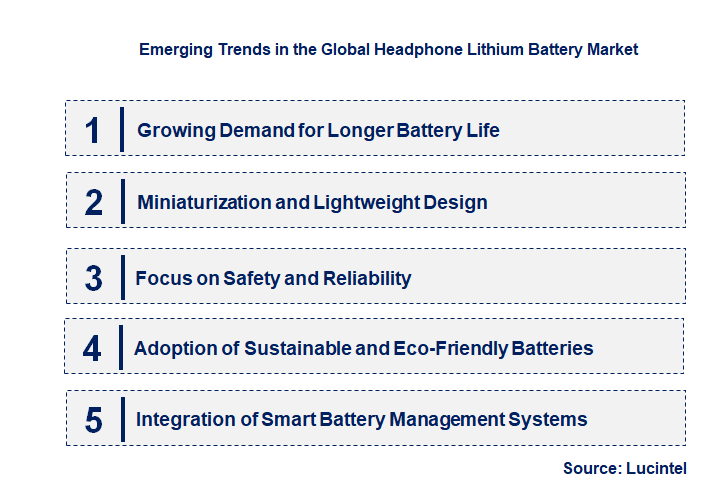
The headphone lithium battery market is experiencing rapid evolution driven by technological advancements, increasing consumer demand for longer-lasting and lightweight audio devices, and a shift towards sustainable energy solutions. As wireless headphones become more popular, the need for compact, high-capacity batteries is intensifying. Manufacturers are innovating to improve battery life, safety, and environmental impact, which is reshaping the competitive landscape. These developments are not only enhancing user experience but also influencing product design and manufacturing processes. The following key trends highlight the major shifts currently shaping this dynamic market.• Growing Demand for Longer Battery Life : Consumers seek headphones with extended usage times, prompting manufacturers to develop higher-capacity lithium batteries that are lightweight and efficient. This trend enhances user convenience, especially for outdoor and active users, and drives innovation in battery chemistry and design to balance size, weight, and performance.
• Miniaturization and Lightweight Design : The market is moving towards smaller, more compact batteries to fit into increasingly slim headphone models. Advances in lithium battery technology enable manufacturers to produce batteries that are both powerful and space-efficient, improving comfort and portability without compromising performance.
• Focus on Safety and Reliability : As lithium batteries are prone to safety issues like overheating and short circuits, there is a rising emphasis on developing safer battery chemistries and incorporating advanced safety features. This trend ensures consumer safety, reduces recalls, and builds trust in wireless headphone products.
• Adoption of Sustainable and Eco-Friendly Batteries : Environmental concerns are pushing manufacturers to explore recyclable and biodegradable lithium batteries. Innovations include the use of eco-friendly materials and improved recycling processes, aligning with global sustainability goals and appealing to environmentally conscious consumers.
• Integration of Smart Battery Management Systems : Advanced battery management systems (BMS) are being integrated to monitor, optimize, and extend battery life. These systems improve safety, provide real-time performance data, and enhance user experience by preventing overcharging and discharging, thus increasing overall battery efficiency. These trends are collectively transforming the headphone lithium battery market by enhancing device performance, safety, and sustainability. They are driving innovation, influencing product design, and meeting evolving consumer expectations, ultimately leading to a more efficient, safe, and environmentally responsible industry landscape.
Recent Development in the Headphone Lithium Battery Market
The headphone lithium battery market is experiencing rapid growth driven by increasing demand for wireless audio devices, advancements in battery technology, and consumer preference for longer-lasting, lightweight headphones. As technology evolves, manufacturers are focusing on enhancing battery performance, safety, and sustainability. These developments are shaping the future of portable audio solutions, creating new opportunities for innovation and market expansion. The following key developments highlight the current trends and their implications for the industry.• Growing Demand for Wireless Headphones: The shift towards wireless audio devices is fueling the need for compact, high-capacity lithium batteries. Consumers prioritize convenience, portability, and longer usage times, prompting manufacturers to develop batteries that support extended playback and quick charging. This trend is expanding the market as more brands adopt wireless technology, leading to increased production and innovation in lithium battery design for headphones.
• Advances in Battery Technology: Innovations such as solid-state batteries and improved energy density are enhancing headphone lithium batteries. These advancements result in longer battery life, faster charging, and increased safety. As a result, consumers benefit from more reliable and durable headphones, encouraging brand loyalty and market growth. Manufacturers are investing heavily in research to stay competitive and meet evolving consumer expectations.
• Focus on Sustainability and Eco-Friendly Materials: The industry is shifting towards environmentally sustainable batteries by incorporating recyclable materials and reducing hazardous substances. This development aligns with global environmental regulations and consumer preferences for eco-conscious products. Sustainable lithium batteries not only reduce ecological impact but also appeal to a broader customer base, fostering market expansion and encouraging manufacturers to innovate greener solutions.
• Integration of Smart Features and Wireless Charging: The incorporation of smart functionalities, such as wireless charging and battery status indicators, is transforming headphone design. These features improve user experience by offering seamless charging options and real-time battery monitoring. The integration of such technologies is driving demand for compatible lithium batteries, prompting manufacturers to develop specialized solutions that support these advanced features, thereby expanding market opportunities.
• Regulatory and Safety Standards Enhancement: Stricter safety regulations and standards for lithium batteries are prompting manufacturers to improve battery design and manufacturing processes. Enhanced safety features, such as thermal management and overcharge protection, are becoming standard. This focus on safety boosts consumer confidence, reduces product recalls, and encourages market growth by ensuring reliable and secure headphone batteries, aligning industry practices with global safety requirements. The overall impact of these developments is a dynamic, innovative market characterized by improved product performance, safety, and sustainability. These trends are driving increased consumer adoption, expanding market size, and fostering technological advancements, positioning the headphone lithium battery industry for sustained growth and competitiveness.
Strategic Growth Opportunities in the Headphone Lithium Battery Market
The headphone lithium battery market is experiencing rapid growth driven by increasing demand for wireless audio devices, advancements in battery technology, and consumer preference for longer-lasting, lightweight, and eco-friendly power sources. As audio devices become more sophisticated, the need for reliable, high-capacity batteries is essential. Market players are focusing on innovation, strategic partnerships, and expanding applications to capitalize on emerging opportunities. This dynamic environment offers significant potential for growth across various segments, shaping the future landscape of portable audio technology.• Growing Demand for Wireless Headphones Drives Lithium Battery Adoption: The surge in wireless headphone usage necessitates compact, high-capacity lithium batteries that provide longer playback times and quick charging. Consumers seek convenience and mobility, prompting manufacturers to develop batteries that meet these needs. As wireless audio devices become mainstream, the demand for efficient, lightweight lithium batteries increases, creating substantial growth opportunities for market players to innovate and expand their product offerings.
• Technological Advancements Enhance Battery Performance and Safety: Innovations in lithium battery chemistry and design improve energy density, lifespan, and safety features. Developments such as solid-state batteries and fast-charging capabilities enable headphones to deliver better performance while reducing risks like overheating or leakage. These technological improvements attract manufacturers aiming to meet consumer expectations for durable, reliable, and eco-friendly power sources, thereby fueling market growth and opening avenues for new product development.
• Expansion of Smart and Wearable Audio Devices Presents New Opportunities: The proliferation of smart headphones, earbuds, and wearable audio devices requires specialized lithium batteries that are small, lightweight, and capable of supporting additional functionalities like noise cancellation and biometric sensors. This expanding application base encourages innovation in battery design to accommodate increased power demands without compromising portability. Market players can leverage this trend to diversify their product portfolio and capture emerging segments within the wearable technology market.
• Increasing Focus on Eco-Friendly and Sustainable Battery Solutions: Environmental concerns and regulatory pressures drive the adoption of sustainable lithium batteries with reduced toxic materials and improved recyclability. Companies investing in eco-friendly battery technologies can differentiate themselves and meet consumer demand for greener products. The shift towards sustainable solutions presents growth opportunities in developing recyclable batteries, establishing recycling infrastructure, and complying with environmental standards, ultimately shaping a more responsible and resilient market landscape.
• Strategic Collaborations and Partnerships Accelerate Market Penetration: Collaborations between battery manufacturers, headphone brands, and technology firms facilitate innovation, cost reduction, and faster time-to-market for advanced lithium battery solutions. Strategic alliances enable sharing of expertise, resources, and distribution channels, expanding market reach. These partnerships are crucial for developing next-generation batteries that meet evolving consumer needs, thus accelerating market growth and fostering a competitive environment that benefits both producers and consumers. These growth opportunities collectively drive innovation, sustainability, and market expansion in the headphone lithium battery industry. By capitalizing on technological advancements, eco-friendly solutions, and strategic collaborations, market players can enhance product performance, meet consumer expectations, and secure a competitive edge. The evolving landscape promises sustained growth and diversification, shaping the future of portable audio technology worldwide.
Headphone Lithium Battery Market Driver and Challenges
The headphone lithium battery market is influenced by a variety of technological, economic, and regulatory factors that shape its growth trajectory. Rapid advancements in battery technology, increasing consumer demand for longer-lasting and lightweight headphones, and the proliferation of wireless audio devices are key drivers. Additionally, economic factors such as rising disposable incomes and decreasing battery costs contribute to market expansion. Regulatory standards concerning safety and environmental impact also play a significant role. However, the market faces challenges including technological limitations, environmental concerns, and regulatory hurdles that could impede growth. Understanding these drivers and challenges is essential for stakeholders to navigate the evolving landscape effectively. The factors responsible for driving the headphone lithium battery market include:• Technological Innovation: The continuous development of high-capacity, fast-charging lithium batteries has significantly enhanced headphone performance. Manufacturers are investing in research to improve energy density, reduce charging times, and extend battery life, which directly benefits consumers seeking reliable, long-lasting wireless headphones. These innovations enable the production of sleeker, more efficient devices, fueling market growth. As technology advances, the integration of smart features and improved safety mechanisms further boosts consumer confidence and adoption rates, making technological innovation a primary driver.
• Rising Consumer Demand for Wireless Headphones: The shift from wired to wireless audio devices is driven by consumer preferences for convenience, portability, and improved user experience. Wireless headphones require compact, lightweight batteries with high energy density, which lithium batteries provide. The increasing popularity of streaming services and mobile devices amplifies this demand, encouraging manufacturers to develop better battery solutions. This trend is expected to continue, with consumers prioritizing longer battery life and quick charging, thereby propelling the lithium battery market for headphones.
• Cost Reduction and Economies of Scale: As lithium battery manufacturing processes become more efficient, costs are decreasing, making these batteries more affordable for headphone manufacturers. Economies of scale achieved through mass production further reduce prices, enabling companies to offer competitively priced wireless headphones. Lower costs encourage wider adoption across different market segments, including budget-friendly options, thus expanding the overall market. This economic factor not only benefits manufacturers but also enhances consumer access to advanced wireless audio devices, reinforcing market growth.
• Regulatory and Environmental Standards: Increasing regulations concerning battery safety, recycling, and environmental impact influence market dynamics. Governments and regulatory bodies are imposing stricter standards to ensure consumer safety and reduce ecological footprints. Compliance requires manufacturers to adopt safer, more sustainable lithium battery technologies, which can involve additional costs and R&D efforts. While these standards may pose challenges, they also drive innovation toward greener, safer battery solutions, shaping the future landscape of the headphone lithium battery market. The challenges facing this headphone lithium battery market include:
• Technological Limitations: Despite advancements, lithium batteries face issues such as limited energy density, thermal management problems, and degradation over time. These limitations restrict battery performance, impacting the overall user experience with wireless headphones. Overcoming these technical challenges requires significant R&D investment, which can delay product launches and increase costs. Additionally, safety concerns related to overheating and potential fires necessitate rigorous testing and innovation, posing ongoing hurdles for manufacturers aiming to deliver reliable, high-performance batteries.
• Environmental Concerns and Recycling Challenges: The environmental impact of lithium mining and battery disposal is a significant concern. Lithium batteries contain hazardous materials that require proper recycling to prevent ecological damage. However, recycling infrastructure is still developing, and the process can be costly and inefficient. These environmental challenges may lead to regulatory restrictions and consumer pushback, potentially limiting market growth. Manufacturers are under pressure to develop sustainable battery solutions, but the transition to eco-friendly alternatives involves technical and economic hurdles that could slow market expansion.
• Regulatory and Safety Standards: Stringent safety regulations and standards for lithium batteries increase compliance costs for manufacturers. Ensuring battery safety involves rigorous testing, certification, and adherence to international standards, which can delay product development and increase expenses. Non-compliance risks include legal penalties and damage to brand reputation. As regulations evolve, manufacturers must continuously adapt their designs and manufacturing processes, which can be resource-intensive. These regulatory challenges may constrain innovation and market entry, impacting overall growth prospects. The headphone lithium battery market is driven by technological advancements, consumer preferences, cost efficiencies, and regulatory trends. However, it faces significant challenges related to technological limitations, environmental concerns, and regulatory compliance. These factors collectively influence the pace and direction of market development. While innovation and sustainability efforts are likely to foster growth, addressing safety, environmental, and technical issues remains crucial. The markets future will depend on how effectively stakeholders can balance these drivers and challenges to deliver safe, efficient, and eco-friendly battery solutions for wireless headphones.
List of Headphone Lithium Battery Companies
Companies in the market compete on the basis of product quality offered. Major players in this market focus on expanding their manufacturing facilities, R&D investments, infrastructural development, and leverage integration opportunities across the value chain. With these strategies headphone lithium battery companies cater increasing demand, ensure competitive effectiveness, develop innovative products & technologies, reduce production costs, and expand their customer base. Some of the headphone lithium battery companies profiled in this report include-• Ganfeng Lithium Group
• VARTA
• VDL
• Great Power Energy & Technology
• EVE Energy
• Sunwoda Electronic
• Guoguang Electric
• EEMB Battery
• Plantronics
• Grepow Battery
Headphone Lithium Battery Market by Segment
The study includes a forecast for the global headphone lithium battery market by type, application, and region.Headphone Lithium Battery Market by Type [Value from 2019 to 2035]:
• Button Cell
• Soft Pack Battery
• Others
Headphone Lithium Battery Market by Application [Value from 2019 to 2035]:
• Traditional Headphone
• TWS Headphone
Headphone Lithium Battery Market by Region [Value from 2019 to 2035]:
• North America
• Europe
• Asia Pacific
• The Rest of the World
Country Wise Outlook for the Headphone Lithium Battery Market
The headphone lithium battery market has experienced significant growth driven by the rising demand for wireless audio devices, advancements in battery technology, and increasing consumer preference for portable electronics. As the market evolves, key players are focusing on enhancing battery life, safety, and sustainability. Different regions are adopting unique strategies based on technological innovation, regulatory frameworks, and consumer preferences. The United States, China, Germany, India, and Japan are leading the way with distinct developments that shape the global landscape of headphone lithium batteries.• United States: The US market has seen substantial innovation in battery safety and energy density, with major companies investing in research to extend battery life and improve charging efficiency. Regulatory standards are tightening around safety and environmental impact, prompting manufacturers to adopt sustainable materials. Consumer demand for high-performance wireless headphones continues to drive technological advancements, including fast-charging and longer-lasting batteries. The US also witnesses increased integration of smart features, requiring more sophisticated power solutions.
• China: China remains a dominant player in the headphone lithium battery market, focusing on mass production and cost reduction. Companies are investing heavily in R&D to develop lightweight, high-capacity batteries suitable for compact wireless headphones. The government’s support for green energy initiatives encourages the adoption of eco-friendly battery materials. Additionally, China’s rapid technological innovation and large manufacturing base enable quick deployment of new battery technologies, boosting exports and domestic consumption.
• Germany: Germany emphasizes high-quality, durable batteries with a focus on safety and sustainability. The country’s strong automotive and electronics sectors influence the development of advanced lithium batteries for headphones, integrating cutting-edge materials and manufacturing processes. German firms are also investing in recycling technologies to promote circular economy practices. The market benefits from strict regulatory standards and a consumer base that values premium, eco-conscious products, fostering innovation in battery longevity and environmental safety.
• India: The Indian market is witnessing rapid growth driven by increasing smartphone and wireless headphone adoption. Local manufacturers are focusing on affordable, reliable lithium batteries to cater to price-sensitive consumers. There is a rising trend toward integrating batteries with smart features and longer life spans. Government initiatives promoting electronics manufacturing and renewable energy are encouraging the development of sustainable battery solutions. Additionally, startups and established firms are exploring innovative battery chemistries to improve performance and safety.
• Japan: Japan continues to lead in battery technology innovation, emphasizing high safety standards and advanced materials. The country’s focus on miniaturization and energy efficiency has resulted in compact, high-capacity batteries suitable for premium wireless headphones. Japanese companies are investing in research to enhance battery lifespan and reduce environmental impact through recycling and eco-friendly materials. The market benefits from a strong technological ecosystem and consumer preference for high-quality, reliable products, fostering continuous improvements in lithium battery performance for headphones.

Features of the Global Headphone Lithium Battery Market
Market Size Estimates: Headphone lithium battery market size estimation in terms of value ($B). Trend and Forecast Analysis: Market trends (2019 to 2025) and forecast (2026 to 2035) by various segments and regions. Segmentation Analysis: Headphone lithium battery market size by type, application, and region in terms of value ($B). Regional Analysis: Headphone lithium battery market breakdown by North America, Europe, Asia Pacific, and Rest of the World. Growth Opportunities: Analysis of growth opportunities in different types, applications, and regions for the headphone lithium battery market. Strategic Analysis: This includes M&A, new product development, and competitive landscape of the headphone lithium battery market. Analysis of competitive intensity of the industry based on Porter’s Five Forces model.
FAQ
Q1. What is the market size and growth forecast for headphone lithium battery market? Answer: The global headphone lithium battery market is expected to reach an estimated $14.7 billion by 2035 and grow with a CAGR of 14.6% from 2026 to 2035. Q2. What are the major drivers influencing the growth of the headphone lithium battery market? Answer: The major drivers for this market are the increasing demand for wireless headphones, the rising adoption of smart audio devices, and the growing preference for portable electronics. Q3. What are the major segments for headphone lithium battery market? Answer: The future of the headphone lithium battery market looks promising with opportunities in the traditional headphone and TWS headphone markets. Q4. Who are the key headphone lithium battery market companies? Answer: Some of the key headphone lithium battery companies are as follows:• Ganfeng Lithium Group
• VARTA
• VDL
• Great Power Energy & Technology
• EVE Energy
• Sunwoda Electronic
• Guoguang Electric
• EEMB Battery
• Plantronics
• Grepow Battery Q5. Which headphone lithium battery market segment will be the largest in future? Answer: Lucintel forecasts that, within the type category, soft pack battery is expected to witness higher growth over the forecast period. Q6. In headphone lithium battery market, which region is expected to be the largest in next 5 years? Answer: In terms of region, APAC is expected to witness the highest growth over the forecast period. Q7. Do we receive customization in this report? Answer: Yes, Lucintel provides 10% customization without any additional cost.
Table of Contents
List of Figures
List of Tables
Methodology
- In-depth interviews of the major players in this market
- Detailed secondary research from competitors’ financial statements and published data
- Extensive searches of published works, market, and database information pertaining to industry news, company press releases, and customer intentions
- A compilation of the experiences, judgments, and insights of Lucintel’s professionals, who have analyzed and tracked this market over the years.


Buy Now
Choose a license that fits your team. Instant PDF delivery.
Prices exclude taxes. Instant delivery. Custom licensing available on request.
Key Questions
- • What are some of the most promising, high-growth opportunities for the headphone lithium battery market by type (button cell, soft pack battery, and others), application (traditional headphone and TWS headphone), and region (North America, Europe, Asia Pacific, and the Rest of the World)?
- • Which segments will grow at a faster pace and why?
- • Which region will grow at a faster pace and why?
- • What are the key factors affecting market dynamics? What are the key challenges and business risks in this market?
- • What are the business risks and competitive threats in this market?
- • What are the emerging trends in this market and the reasons behind them?
- • What are some of the changing demands of customers in the market?
- • What are the new developments in the market? Which companies are leading these developments?
- • Who are the major players in this market? What strategic initiatives are key players pursuing for business growth?
- • What are some of the competing products in this market and how big of a threat do they pose for loss of market share by material or product substitution?
- • What M&A activity has occurred in the last 7 years and what has its impact been on the industry? For any questions related to Headphone Lithium Battery Market, Headphone Lithium Battery Market Size, Headphone Lithium Battery Market Growth, Headphone Lithium Battery Market Analysis, Headphone Lithium Battery Market Report, Headphone Lithium Battery Market Share, Headphone Lithium Battery Market Trends, Headphone Lithium Battery Market Forecast, Headphone Lithium Battery Companies, write Lucintel analyst at email: helpdesk@lucintel.com. We will be glad to get back to you soon.


