
Market Report · July 31, 2026

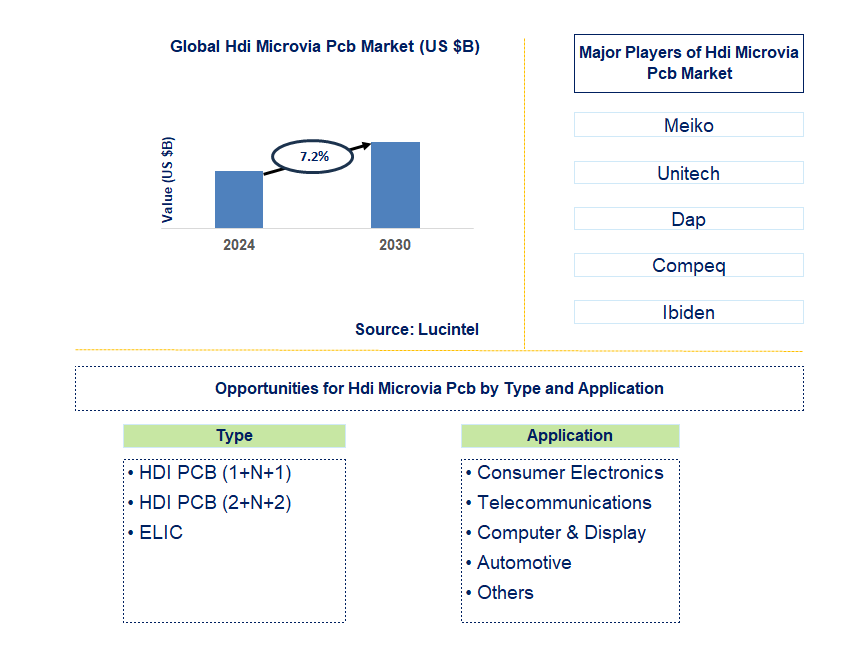
Key data points: The growth forecast = 7.2% annually for the next 6 years. Scroll below to get more insights. This market report covers trends, opportunities, and forecasts in the global HDI microvia PCB market to 2030 by type (HDI PCB (1+n+1), HDI PCB (2+n+2), and elic (every layer interconnection)), application (consumer electronics, telecommunications, computer & display, automotive, and others), and region (North America, Europe, Asia Pacific, and the Rest of the World)
We'll send your sample report shortly.
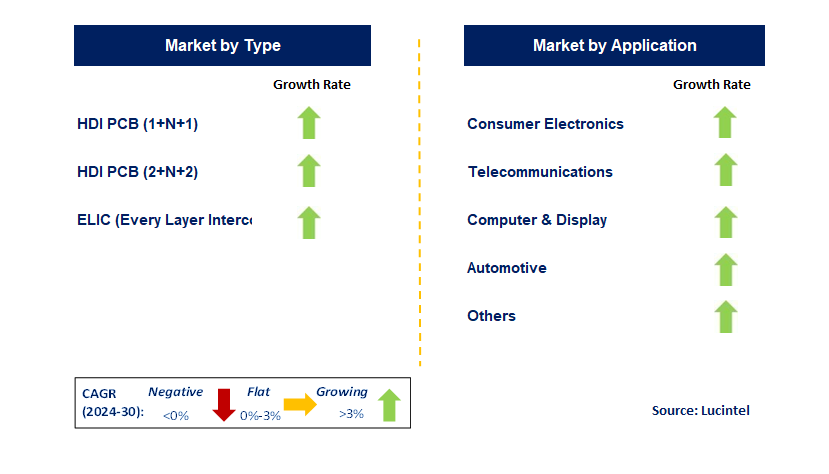
• Lucintel forecasts that, within the type category, HDI PCB (1+n+1) is expected to witness the highest growth over the forecast period.
• Within the application category, consumer electronic is expected to witness the highest growth.
• In terms of region, North America is expected to witness the highest growth over the forecast period. A more than 150-page report is developed to help in your business decisions.
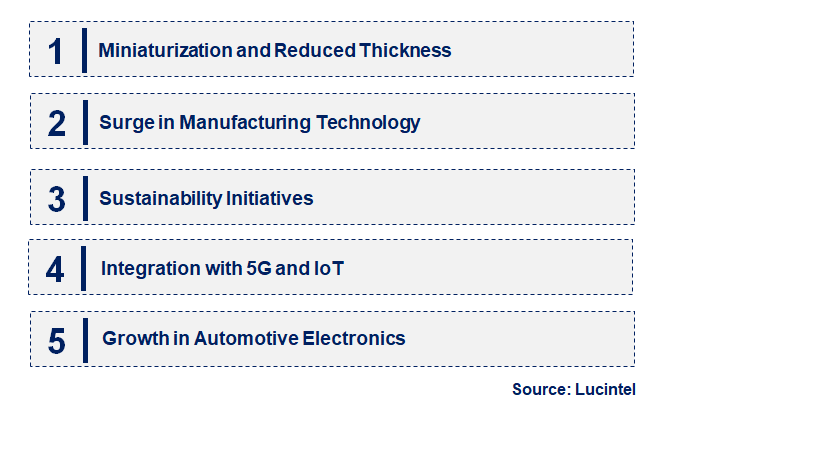
• Miniaturization and Reduced Thickness: Electronic products have become physically smaller, allowing for the adoption of more complex functions in those devices, leading to more applications for the miniaturization of HDI PCBs. This trend requires producers to develop new microvia technologies that enhance the density of the circuits while ensuring that performance is not degraded. This is a necessity for new devices such as wearables and IoT devices.
• Surge in Manufacturing Technology: New manufacturing processes, like laser drilling and sequential lamination, are expanding the potential of HDI PCBs. These technologies enhance the establishment of microvias in the intermediate layers, permitting the stacking of the layers to improve electrical reliability, which is especially important in high-frequency applications.
• Sustainability Initiatives: The sustainability trend is also affecting the HDI PCB market as companies are looking for green materials and processes. The urge to minimize waste and energy use has led manufacturers to embrace more energy-efficient processes in adherence to global sustainability goals and regulatory standards.
• Integration with 5G and IoT: The introduction of 5G technology and the wide use of IoT applications are key factors driving positive growth in the HDI microvia PCB market. These technologies require very high-speed and high-frequency PCBs to meet the demand for high data transfer, leading to advancements in PCB design and manufacturing.
• Growth in Automotive Electronics: The evolving automotive industry, with a focus on electric and autonomous vehicles, is opening new opportunities for HDI microvia PCBs. These applications require revolutionized PCBs to integrate advanced electronic systems, creating a niche for high-density interconnect technologies. The new trends in the HDI microvia PCB market are focused on innovative and environmentally friendly solutions. Different trends are driving the need for size reduction and the integration of advanced technologies, such as the 5G system, that are altering product development. These trends encourage industries to grow their capacity and commit to supporting environmental sustainability to remain relevant in a changing marketplace.
• Innovative Manufacturing Processes: Advanced production methods, such as laser drilling and contemporary lamination processes, have improved the manufacturing accuracy and dependability of HDI microvias. These innovations enable the formation of PCBs characterized by increased circuit fanouts and improved operational attributes, thus satisfying modern electronic devices.
• Material Advancements: Ongoing studies are focused on developing advanced materials, such as high-frequency laminates and eco-friendly substrate materials. These materials will improve the performance of HDI PCBs while enabling greener production processes.
• Investment in Automation: The growing trend of manufacturers automating their production facilities is simplifying operations and lowering labor costs. Technological advancements provide a competitive advantage, as every company seeks to enhance its products and broaden its market reach.
• Collaboration and Partnerships: Manufacturers, technology service providers, and research institutions are gradually forming partnerships. These collaborations are essential as they merge different techniques to develop next-generation HDI PCBs to meet growing market demands.
• Expansion into Emerging Markets: Various manufacturers are seeking new business directions due to the growth of electronics usage and the corresponding development of government policies as incentives. This growth provides enterprises with new market opportunities to increase profits while developing both local and international markets. Current developments in the HDI microvia PCB market indicate the effectiveness of the industry in adapting to technological advancements and market needs. Other developments in manufacturing and favorable changes in materials are making products more efficient and eco-friendly, enhancing the industry's prospects for growth and competitiveness.
• Telecommunications: One of the areas with rapid growth prospects is the telecommunications industry, particularly with the advent of 5G technology. With the growing need for high-speed data transfer and advanced communication systems, HDI PCBs are critical to this technology, leading to more investments in this area.
• Consumer Electronics: Due to the continuous size reduction in consumer electronics appliances, high-density PCBs are in demand. This trend presents an opportunity for manufacturers to meet the demand for small-sized, high-power electronic devices.
• Automotive Applications: The emergence of electric and self-driving vehicles is opening up significant growth potential for the HDI microvia PCB market. These vehicles require advanced, reliable PCBs to facilitate high-performance systems.
• Industrial Electronics: The rise in automation in industrial applications is driving the growing demand for HDI PCBs. Special attention is being given to the fabrication of specialized PCBs for industrial automation and control systems, which continue to expand with the increasing demand for electronic devices.
• Medical Devices: There are high expectations for electronics in the healthcare industry, which is increasing the demand for high-quality HDI PCBs in medical devices. Manufacturers have the opportunity to create PCBs that meet higher quality standards while remaining effective in critical applications. The strategic growth opportunities in the HDI microvia PCB market are driven by changing trends in various industries. By focusing on strategic applications such as telecommunications, consumer electronics, and automotive, manufacturers can improve their competitiveness and foster industry growth.
• Technological Advancements: Continuous changes in technology related to PCB manufacturing are a core driving force in the production of more complex and high-performing HDI PCBs. Innovations such as laser drilling and advanced materials improve the efficiency and usability of PCBs across various industries.
• Increasing Demand for Miniaturization: The miniaturization of electronics increases the demand for HDI microvia PCBs. As integrated devices evolve, manufacturers must create PCBs that accommodate smaller circuit footprints without compromising performance.
• Development of Emerging Markets: The rise of emerging economies, especially in Asia, presents great potential for the growth of the HDI microvia PCB market. The rising demand for electronics in these regions, along with favorable government policies, encourages investment in PCB manufacturing. Challenges in the HDI microvia PCB market include:
• High Production Costs: The increase in production costs due to sophisticated manufacturing methodologies and technologies can limit profitability. Organizations must find ways to improve their processes and cut costs without compromising quality in order to survive.
• Regulatory Compliance: Meeting stringent industrial policies and standards set by regulatory bodies is a challenge faced by manufacturers. Ensuring that products meet these requirements while maintaining high quality and functionality is crucial for penetrating the market.
• Skills Gap in the Workforce: The lack of skilled workers proficient in modern PCB technologies is a major hurdle. This shortage creates a gap in the supply of HDI microvia PCBs, making it difficult for companies to meet market demand with qualified personnel. The HDI microvia PCB market is shaped by major drivers and challenges that also influence the strategies of stakeholders. Key growth factors include technological advances and the need for miniaturization. Overcoming challenges such as high production costs and compliance with regulatory policies is crucial for companies that want to remain competitive.
• Meiko
• Unitech
• Dap
• Compeq
• Ibiden
• Young Poong
• Daeduck
• HDI PCB (1+N+1)
• HDI PCB (2+N+2)
• ELIC (Every Layer Interconnection)
• Consumer Electronics
• Telecommunications
• Computer & Display
• Automotive
• Others
• North America
• Europe
• Asia Pacific
• The Rest of the World
• United States: The HDI microvia PCB market in the U.S. is growing due to the rapidly expanding consumer electronics market and developments in automotive technology. Market participants are working on improving manufacturing technologies to enhance performance and reduce product costs. There is also growing interest in extending design capabilities to support the increasing circuit pack density required for IoT and AI applications.
• China: China’s HDI microvia PCB market is experiencing rapid growth, driven by the country's strong electronics manufacturing capabilities. The push for 5G technology and the development of electric vehicles are fueling demand for high-end PCBs. Manufacturers are implementing advanced strategies to produce microvias with higher dimension ratios, supporting better signal output and lower interference—critical factors for modern devices.
• Germany: Germany has heavily invested in expanding the technological boundaries of the HDI microvia PCB industry, particularly in automotive and industrial electronics. The pursuit of reliability and durability has led to advancements in materials and processing through research. Additionally, the trend toward sustainability is prompting manufacturers to explore alternative structures, in line with broader EU regulatory frameworks.
• India: India’s HDI microvia PCB market is emerging and has proven productive due to higher local consumption of electronics and various government programs aimed at increasing local production. The “Make in India” initiative has attracted growing investments into PCB manufacturing capabilities, resulting in the establishment of new plants. This development is further supported by increasing foreign demand, particularly in telecommunications and medical devices.
• Japan: Japan’s HDI microvia PCB market focuses on customer satisfaction through the use of the latest technologies to achieve high-quality standards. Companies are working to expand their product ranges for precision electronic devices such as health smart devices. Collaboration between industry players and academic institutions is enabling the manufacture of innovative materials and processes, placing Japan at the forefront of high.


• Meiko
• Unitech
• Dap
• Compeq
• Ibiden
• Young Poong
• Daeduck Q5. Which HDI microvia PCB market segment will be the largest in future? Answer: Lucintel forecasts that HDI PCB (1+n+1) is expected to witness the highest growth over the forecast period. Q6. In HDI microvia PCB market, which region is expected to be the largest in next 5 years? Answer: North America is expected to witness highest growth over the forecast period. Q.7 Do we receive customization in this report? Answer: Yes, Lucintel provides 10% customization without any additional cost.


Choose a license that fits your team. Instant PDF delivery.
Prices exclude taxes. Instant delivery. Custom licensing available on request.
Market Report · July 31, 2026
Market Report · July 31, 2026
Market Report · July 31, 2026
Trusted partner for strategic intelligence and business growth


Receive a complimentary market analysis tailored to your industry. Our analysts will identify key growth opportunities and competitive dynamics specific to your business.

Market size, growth rate, and key trend analysis for your specific sector.

Top competitor positioning and market share analysis.

Strategic recommendations backed by data-driven insights.
Get curated market intelligence and competitive moves straight to your inbox.
By subscribing, you agree to receive our monthly insights. Unsubscribe anytime.
Receive a complimentary market analysis tailored to your industry. Our analysts will identify key growth opportunities and competitive dynamics specific to your business.
Market size, growth rate, and key trend analysis for your specific sector.
Top competitor positioning and market share analysis.
Strategic recommendations backed by data-driven insights.
Get curated market intelligence, emerging trends, and competitive moves straight to your inbox each month.
By subscribing, you agree to receive our monthly insights. Unsubscribe anytime.
We'll send your sample report shortly.