
Market Report · July 29, 2026

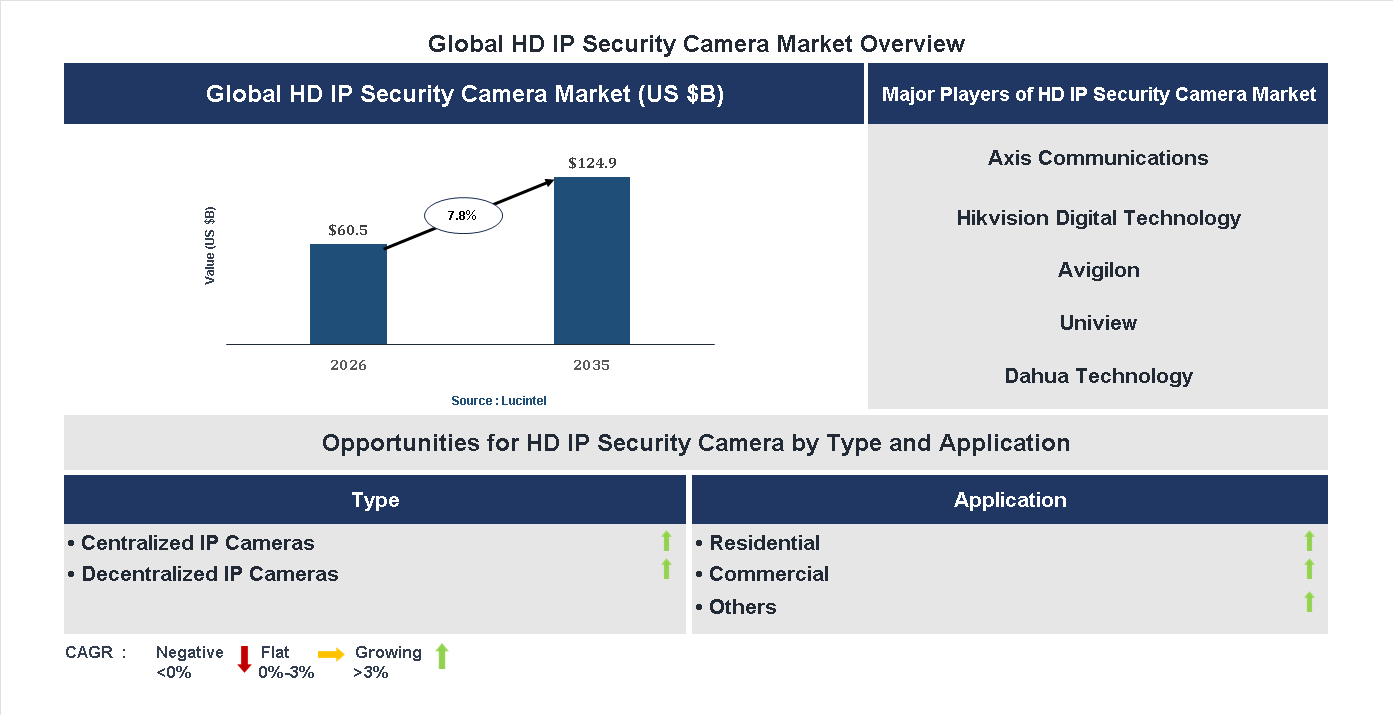
Key data points: The market size in 2035 = $124.9 billion, growth forecast = 7.8% annually for the next 8 years. Scroll below to get more insights. This market report covers trends, opportunities and forecasts in HD IP security camera market to 2035 by type (centralized IP cameras and decentralized IP cameras), application (residential, commercial, and others), and region (North America, Europe, Asia Pacific, and the Rest of the World)
We'll send your sample report shortly.
• Lucintel forecasts that, within the type category, decentralized IP camera is expected to witness higher growth over the forecast period.
• Within the application category, commercial is expected to witness higher growth.
• In terms of region, APAC is expected to witness the highest growth over the forecast period. Gain valuable insights for your business decisions with our comprehensive 150+ page report. Sample figures with some insights are shown below.
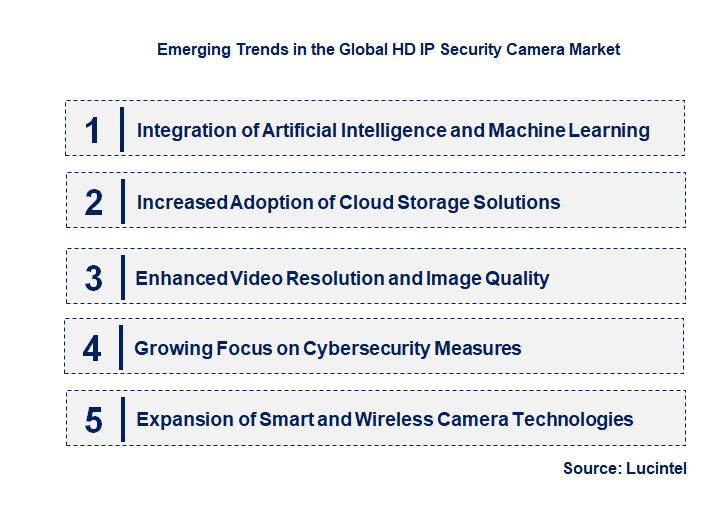
• Integration of Artificial Intelligence and Machine Learning: AI and ML are revolutionizing security cameras by enabling real-time analytics, facial recognition, and behavior prediction. These features improve threat detection accuracy, reduce false alarms, and allow for proactive security measures. As a result, security systems become more intelligent, autonomous, and capable of providing actionable insights, which enhances overall safety and operational efficiency for businesses and homeowners alike.
• Increased Adoption of Cloud Storage Solutions: Cloud-based storage offers scalable, cost-effective, and remote access to security footage. This trend reduces reliance on physical storage devices, simplifies data management, and enhances security through encrypted access. Cloud integration also facilitates seamless updates and remote monitoring, making security systems more flexible and user-friendly. As internet connectivity improves, cloud solutions are becoming the preferred choice for both small-scale and enterprise security deployments.
• Enhanced Video Resolution and Image Quality: The demand for higher resolution cameras, such as 4K and beyond, is rising to capture clearer, more detailed footage. Improved image quality aids in better identification and analysis during investigations. This trend is driven by decreasing hardware costs and consumer expectations for professional-grade surveillance. Enhanced video resolution ensures that security footage remains useful for forensic purposes, thereby increasing the overall effectiveness of security systems.
• Growing Focus On Cybersecurity Measures: As IP cameras become more connected, they are increasingly vulnerable to cyber threats. The market is responding with advanced cybersecurity protocols, including encryption, secure firmware updates, and network segmentation. This focus on cybersecurity is critical to protect sensitive data and prevent unauthorized access. Strengthening security measures ensures the integrity and reliability of surveillance systems, fostering greater trust among users and compliance with data protection regulations.
• Expansion of Smart and Wireless Camera Technologies: Wireless cameras and smart features such as motion detection, remote control, and integration with smart home ecosystems are gaining popularity. These technologies offer easier installation, flexibility in placement, and enhanced user control. The proliferation of IoT devices further accelerates this trend, enabling comprehensive, interconnected security solutions. As consumers seek convenience and automation, wireless and smart cameras are becoming essential components of modern security infrastructure. In summary, these trends are significantly reshaping the HD IP security camera market by making surveillance systems more intelligent, flexible, and secure. The integration of AI, cloud storage, higher resolution imaging, cybersecurity enhancements, and smart wireless technologies is driving innovation, expanding market reach, and improving overall security effectiveness. These developments are setting new standards for safety, convenience, and data protection in the evolving landscape of security technology.
• Growing Adoption of Smart Surveillance Systems: The integration of AI and IoT in HD IP security cameras enhances real-time monitoring, analytics, and automation. This trend improves security efficiency, reduces false alarms, and enables remote management, making surveillance more proactive and intelligent. As a result, demand from commercial, residential, and public sectors is surging, driving market growth and encouraging innovation in smart security solutions.
• Expansion of Cloud-Based Security Solutions: Cloud technology offers scalable, flexible, and cost-effective storage and management of security footage. The shift towards cloud-based systems allows users to access live feeds and recordings remotely, facilitating better security oversight. This development is attracting small and medium-sized enterprises, boosting market penetration. The increased adoption of cloud services is also fostering partnerships between security providers and cloud platform companies, accelerating market expansion.
• Increasing Use of High-Resolution Cameras: The demand for 4K and higher resolution cameras is rising due to the need for clearer images for identification and evidence collection. High-resolution cameras improve surveillance accuracy, especially in large or complex environments. This trend is prompting manufacturers to develop advanced sensors and lenses, which enhances overall market competitiveness. The focus on image quality is also influencing regulatory standards and customer preferences, further propelling market growth.
• Rising Focus on Cybersecurity in Surveillance Systems: As IP cameras become more connected, cybersecurity concerns grow. Developing secure hardware and software solutions is critical to prevent hacking and data breaches. Market players are investing in encryption, secure firmware, and regular updates to safeguard surveillance networks. This emphasis on cybersecurity is building consumer trust, expanding market reach, and ensuring compliance with data protection regulations, thereby strengthening the overall market ecosystem.
• Increasing Demand for Wireless and PTZ Cameras: Wireless and Pan-Tilt-Zoom (PTZ) cameras offer flexible installation and comprehensive coverage, ideal for dynamic environments. Their ease of deployment and remote control capabilities make them popular in large facilities, outdoor areas, and temporary setups. The technological improvements in wireless connectivity and motorized controls are expanding their applications. This growth is driving innovation, reducing installation costs, and broadening market opportunities across various sectors. The overall impact of these developments is a more advanced, secure, and accessible HD IP security camera market. Enhanced features, increased adoption, and improved cybersecurity are fostering market growth, attracting new customers, and encouraging technological innovation. These trends are shaping a more resilient and intelligent security infrastructure, meeting the evolving needs of global users.
• Enterprise Security and Commercial Applications: The demand for HD IP security cameras in enterprise and commercial sectors is rising due to the need for comprehensive surveillance solutions that ensure safety, prevent theft, and monitor operations. These cameras offer high-resolution imaging, remote access, and integration with existing security systems, making them ideal for large-scale facilities, retail stores, and corporate offices. The increasing adoption of smart security systems and IoT connectivity further enhances their appeal, creating significant growth potential in this segment.
• Residential Security and Smart Home Integration: Growing awareness of home security and the proliferation of smart home devices are driving the adoption of HD IP security cameras in residential settings. Consumers prefer cameras with high-definition video, night vision, and remote monitoring capabilities for enhanced safety. Integration with voice assistants and home automation systems is expanding their functionality. As urbanization continues and security concerns rise, the residential segment offers substantial opportunities for manufacturers to develop innovative, user-friendly solutions.
• Public Infrastructure and Transportation Security: HD IP security cameras are increasingly deployed in public infrastructure such as airports, railway stations, and city surveillance systems to enhance safety and manage crowd control. These cameras provide real-time monitoring, high-resolution imaging, and analytics for threat detection and incident response. Governments and municipalities are investing heavily in upgrading surveillance infrastructure, creating a lucrative market for advanced HD IP security solutions that can operate in diverse and challenging environments.
• Healthcare and Hospital Security: The healthcare sector is adopting HD IP security cameras to ensure patient safety, secure sensitive areas, and monitor staff activities. These cameras facilitate remote monitoring, compliance with safety regulations, and quick incident response. The integration of AI and analytics helps in identifying unusual activities and managing access control. As healthcare facilities modernize and prioritize security, the demand for high-quality, reliable surveillance solutions is expected to grow significantly in this sector.
• Industrial and Manufacturing Facility Surveillance: Industrial environments require robust security solutions to monitor operations, prevent theft, and ensure safety compliance. HD IP security cameras offer high-resolution imaging, durability, and remote management capabilities suitable for harsh conditions. The integration of AI for predictive maintenance and anomaly detection enhances operational efficiency. As industries adopt smart manufacturing practices, the need for advanced surveillance systems becomes critical, presenting substantial growth opportunities for HD IP security camera providers in this domain. Conclusion: The HD IP security camera market is poised for substantial growth across diverse applications driven by technological innovation, increasing security demands, and the need for remote monitoring. These opportunities enable providers to expand their market share, improve security infrastructure, and meet the evolving needs of various sectors. As adoption accelerates, the market will continue to evolve with smarter, more integrated solutions, shaping the future of security technology globally.
• Technological Advancements: The rapid evolution of HD imaging, wireless connectivity, and AI-powered analytics enhances security capabilities, making IP cameras more effective and appealing to consumers and enterprises alike. These innovations improve image quality, enable remote monitoring, and facilitate intelligent threat detection, thereby increasing market demand. As technology continues to advance, the integration of IoT and cloud-based solutions further expands the scope and functionality of security cameras, fostering market growth.
• Increasing Security Concerns: Growing concerns over crime, terrorism, and vandalism globally are prompting governments, businesses, and homeowners to invest heavily in surveillance solutions. The need for real-time monitoring and evidence collection drives demand for high-quality IP cameras. This heightened focus on security, especially in public spaces, commercial establishments, and critical infrastructure, significantly contributes to market expansion.
• Infrastructure Development and Urbanization: Rapid urbanization and infrastructure development in emerging economies create a substantial demand for surveillance systems to ensure safety and compliance. Smart city initiatives incorporate integrated security solutions, including HD IP cameras, to monitor traffic, public spaces, and transportation hubs. These developments foster a conducive environment for market growth, especially in regions experiencing rapid urban expansion.
• Cost-Effectiveness and Ease of Installation: The affordability of HD IP cameras, coupled with advancements in wireless technology and simplified installation processes, makes them attractive for a broad customer base. Reduced maintenance costs and scalability options further enhance their appeal. As organizations seek cost-efficient security solutions, the market benefits from increased adoption across various sectors. The challenges facing this HD IP security camera market include:-
• Data Privacy and Cybersecurity Regulations: Stringent data privacy laws and cybersecurity standards pose significant hurdles for market players. Ensuring compliance while maintaining data security and user privacy requires substantial investment in secure infrastructure and ongoing updates. Non-compliance can lead to legal penalties and damage to reputation, which hampers market growth and innovation.
• Integration and Compatibility Issues: The diverse ecosystem of security devices and platforms often results in compatibility challenges. Integrating HD IP cameras with existing security infrastructure can be complex and costly, especially for legacy systems. This fragmentation limits seamless deployment and may slow down adoption rates, particularly in large-scale or legacy environments.
• Technological Obsolescence and Market Saturation: Rapid technological changes can render existing products obsolete quickly, pressuring manufacturers to continuously innovate. Additionally, market saturation in developed regions limits growth opportunities, compelling companies to seek new markets or diversify offerings. This constant evolution increases R&D costs and operational risks. In summary, the HD IP security camera market is driven by technological innovations, rising security concerns, infrastructure development, and cost advantages. However, it faces challenges related to regulatory compliance, integration complexities, and rapid technological obsolescence. These factors collectively influence market growth, requiring stakeholders to adapt strategically. While opportunities abound in emerging markets and smart city projects, addressing regulatory and technological hurdles is crucial for sustained expansion. Overall, the markets future hinges on balancing innovation with compliance and integration, ensuring robust growth amid evolving challenges.
• Axis Communications
• Hikvision Digital Technology
• Avigilon
• Uniview
• Dahua Technology
• Tyco
• Panasonic
• Bosch
• Sony
• Honeywell
• Centralized IP Cameras
• Decentralized IP Cameras
• Residential
• Commercial
• Others
• North America
• Europe
• Asia Pacific
• The Rest of the World
• United States: The US market has seen rapid adoption of AI-powered HD IP security cameras, especially in commercial and government sectors. Innovations in cloud storage and remote access have enhanced user convenience. Major players are investing in cybersecurity features to address privacy concerns. The rise of smart cities and increased security budgets post-pandemic have further fueled growth. Regulatory standards are evolving to ensure data protection, encouraging the deployment of compliant solutions. Overall, the US remains a leader in integrating advanced surveillance technology with IoT and AI capabilities.
• China: China’s HD IP security camera market is characterized by rapid manufacturing scale and technological advancements. Domestic companies are leading in AI integration and facial recognition features. The government’s emphasis on urban security and smart city projects has accelerated deployment. Price competitiveness and innovation in 4K resolution cameras have expanded market reach. Local firms are also focusing on integrating cloud-based management systems. The market is driven by both public safety initiatives and consumer demand for home security solutions, making China a significant player in the global landscape.
• Germany: Germany’s market emphasizes high-quality, reliable security solutions with strict adherence to data privacy regulations such as GDPR. There is a strong focus on industrial and critical infrastructure security. Innovations include thermal imaging and advanced analytics for threat detection. The adoption of IP cameras is increasing in retail, transportation, and public spaces. German companies are investing in cybersecurity features to protect sensitive data. The market is also witnessing a trend towards energy-efficient and sustainable surveillance systems, aligning with broader environmental goals.
• India: The Indian HD IP security camera market is expanding rapidly due to urbanization and increasing safety concerns. Affordable, feature-rich cameras are popular among consumers and small businesses. The government’s initiatives for smart cities and rural security projects are boosting demand. Local manufacturers are offering cost-effective solutions with cloud connectivity and remote monitoring. The market is also witnessing growth in residential security systems and the retail sectors. As internet penetration increases, the adoption of IP-based surveillance solutions is expected to rise further, supported by government policies promoting digital infrastructure.
• Japan: Japan’s market is characterized by high-end, technologically advanced security systems tailored for urban and industrial applications. There is a focus on integrating AI for facial recognition and behavior analysis. The country emphasizes cybersecurity and data privacy in surveillance solutions. Adoption of 4K and 8K resolution cameras is increasing in public transportation and corporate sectors. Japan is also exploring energy-efficient and environmentally friendly surveillance options. The market benefits from strong R&D investments and collaborations with global tech firms, maintaining its position as a leader in innovative security technology.


• Axis Communications
• Hikvision Digital Technology
• Avigilon
• Uniview
• Dahua Technology
• Tyco
• Panasonic
• Bosch
• Sony
• Honeywell Q6. Which HD IP security camera market segment will be the largest in future? Answer: Lucintel forecasts that, within the type category, decentralized IP camera is expected to witness higher growth over the forecast period. Q7. In HD IP security camera market, which region is expected to be the largest in next 5 years? Answer: In terms of region, APAC is expected to witness the highest growth over the forecast period. Q8. Do we receive customization in this report? Answer: Yes, Lucintel provides 10% customization without any additional cost.


Choose a license that fits your team. Instant PDF delivery.
Prices exclude taxes. Instant delivery. Custom licensing available on request.
Market Report · July 29, 2026
Market Report · July 20, 2026
Market Report · July 20, 2026
Trusted partner for strategic intelligence and business growth


Receive a complimentary market analysis tailored to your industry. Our analysts will identify key growth opportunities and competitive dynamics specific to your business.

Market size, growth rate, and key trend analysis for your specific sector.

Top competitor positioning and market share analysis.

Strategic recommendations backed by data-driven insights.
Get curated market intelligence and competitive moves straight to your inbox.
By subscribing, you agree to receive our monthly insights. Unsubscribe anytime.
Receive a complimentary market analysis tailored to your industry. Our analysts will identify key growth opportunities and competitive dynamics specific to your business.
Market size, growth rate, and key trend analysis for your specific sector.
Top competitor positioning and market share analysis.
Strategic recommendations backed by data-driven insights.
Get curated market intelligence, emerging trends, and competitive moves straight to your inbox each month.
By subscribing, you agree to receive our monthly insights. Unsubscribe anytime.
We'll send your sample report shortly.