
Market Report · July 29, 2026

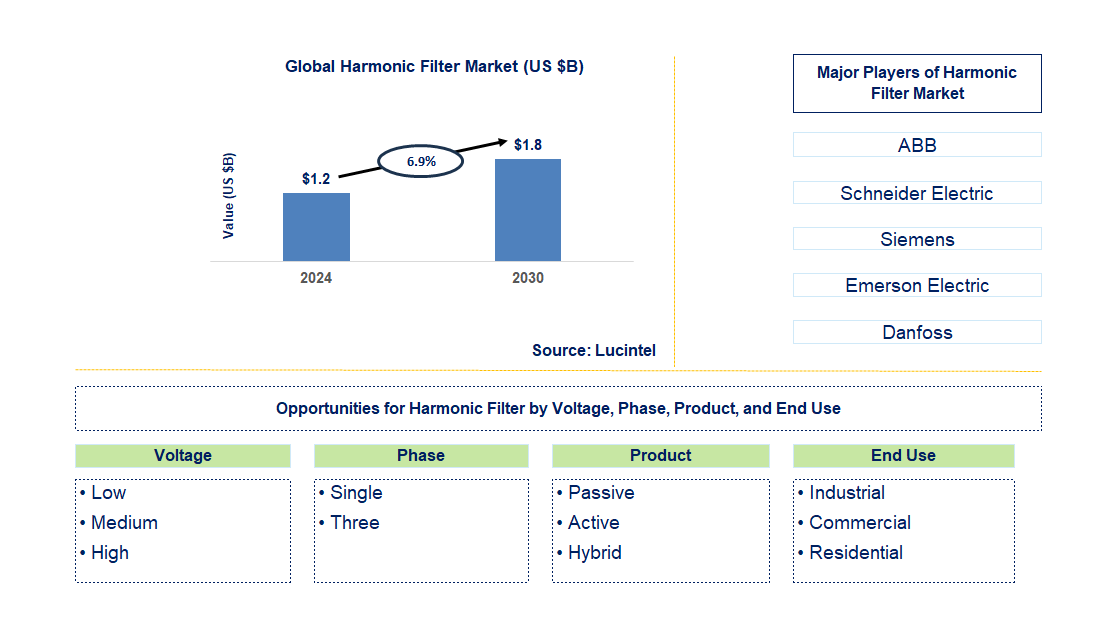
Key data points: The market size in 2030 = $1.8 billion, growth forecast = 6.9% annually for the next 6 years. Scroll below to get more insights. This market report covers trends, opportunities, and forecasts in the global harmonic filter market to 2030 by voltage (low, medium, and high), phase (single and three), product (passive, active, and hybrid), end use (industrial, commercial, residential, and others), and region (North America, Europe, Asia Pacific, and the Rest of the World)
We'll send your sample report shortly.
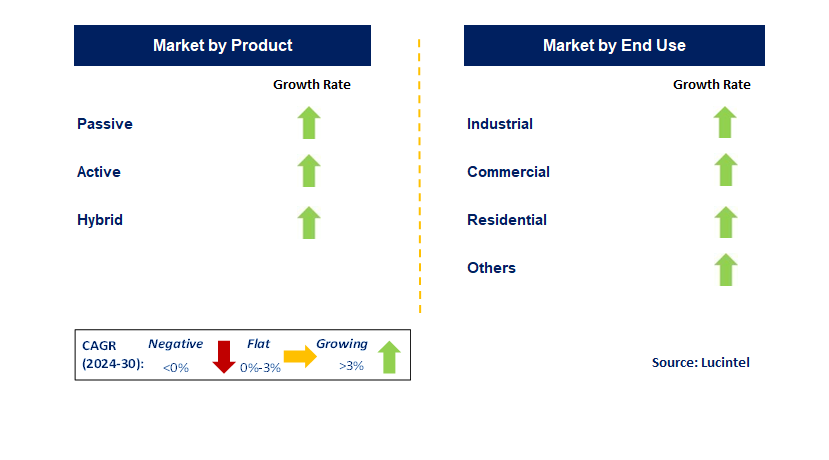
• Lucintel forecasts that, within the product type category, passive will remain the largest segment over the forecast period due to several industrial applications such as uninterruptible power supply (UPS) and VFDs for motors, rectifiers, transformers, and others.
• In terms of regions, APAC is expected to witness highest growth over the forecast period due to high use of harmonic filters in the energy and electricity and manufacturing sectors, particularly in developing nations like China and India. Gain valuable insights for your business decisions with our comprehensive 150+ page report
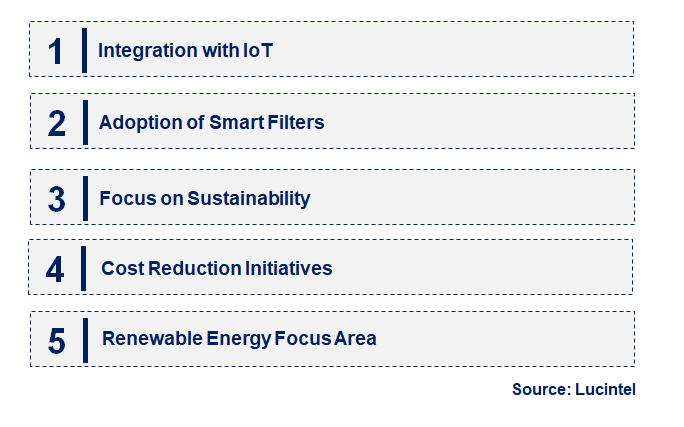
• Integration with IoT: Harmonic filters have been integrated with IoT, which is used to provide real-time monitoring and control of devices. This ensures fewer system breakdowns, as maintenance is performed before faults arise, which increases the system's performance.
• Adoption of Smart Filters: Research on smart filters has progressed to the incorporation of intelligent control, which is more effective than passive harmonic filters. These filters can adjust to varying load conditions to maintain power quality and lower losses.
• Focus on Sustainability: The establishment of eco-friendly harmonic filters has gained traction. This trend follows environmental regulations and seeks to reduce the impact of filter manufacturing and usage on the environment.
• Cost Reduction Initiatives: Due to innovations in the manufacturing process of harmonic filters, their prices are decreasing. This trend enables more industries to adopt these filters, making them more affordable than high-end options.
• Renewable Energy Focus Area: With the increased deployment of harmonic filters, renewable energy systems are becoming more power-quality friendly and reliable. This development facilitates the efficient use of renewable energy. These positive developments are transforming the landscape of the Harmonic Filters industry by improving product quality, lowering prices, and encouraging green practices, resulting in the positive development of the industry in terms of technology.
• Advanced Digital Filters: In modern digital filters, a new range of digital harmonic filters has emerged, which includes a wider operational range. These filters provide real-time monitoring and system improvement, enhancing power quality and operational efficiency.
• Development of Smart Filters: Self-adapting smart harmonic filters are gradually gaining market traction. These devices automatically adjust their mode of operation based on the load, optimizing performance and minimizing energy usage.
• Eco-Friendly Materials: There is a growing trend of incorporating eco-friendly materials in the construction of filters. This development helps achieve lower emissions and pollution control standards while supporting an environmentally conscious manufacturing process.
• Cost-Effective Solutions: Changes in filter design and production systems have made harmonic filters cheaper. This trend is encouraging growth in the adoption of harmonic filters across various industries, including smaller businesses that previously could not justify the investment.
• Expansion into New Markets: Harmonic filters are being adapted for new applications such as renewable energy and data centers. This expansion reflects the versatility of the technology and the increasing demand for these solutions in different sectors. These developments are driving breakthroughs in the Harmonic Filter market by advancing research and development, extending applications, lowering costs, and fostering industry growth.
• Industrial Automation: The growing adoption of harmonic filters in industrial automation systems presents significant growth opportunities. These filters help control power quality and increase system efficiency, fostering industrial growth.
• Renewable Energy Systems: The stabilization of power quality is a key function of harmonic filters, which is essential for renewable energy systems. This application supports the integration of solar and wind power into electrical grids, contributing to market expansion.
• Data Centers: The increased use of harmonic filters in data centers is driven by the need for constant power supply and energy efficiency. This segment represents a significant market for high-grade filter solutions.
• Commercial Buildings: The use of harmonic filters in commercial buildings is rising to address power quality issues and comply with energy efficiency requirements. This presents an opportunity for expanding commercial real estate developments.
• Transportation and Electric Vehicles: Power quality issues and performance improvements in transportation systems and electric vehicles are making harmonic filters essential components. This new application provides additional growth prospects. These growth areas are driving the evolution of the Harmonic Filter market by extending the range of applications and stimulating consumption across various sectors, influencing industrial progress and market growth.
• Technological Advancements: The introduction of new technologies in power filters, especially digital and smart filters, is improving the quality and efficiency of the output. These innovations promote market development by offering new solutions for power quality issues.
• Increasing Demand for Energy Efficiency: The growing emphasis on power quality and energy efficiency in various applications is a key factor driving the adoption of harmonic filters. This trend is beneficial for market growth and technological advancement.
• Stricter Regulations: Developments in environmental and power quality standards have led industries to adopt harmonic filters. The need to comply with these regulations is fueling market growth and adoption.
• Cost Reduction in Manufacturing: Advances in manufacturing processes have lowered the price of harmonic filters. This reduction makes it possible to provide high-quality filters at more affordable prices, promoting faster market penetration.
• Expansion of Industrial Uses: The increasing use of harmonic filters in diverse industrial applications, such as renewable energy and data centers, is boosting market growth. This trend underscores the technology’s impact and its expanding range of applications. Challenges in the harmonic filter market are:
• High Initial Costs: Despite price reductions, the upfront cost of installing harmonic filters remains high. This challenge may limit adoption in cost-sensitive sectors, including small and medium-sized enterprises.
• Complex Integration: Integrating harmonic filters into existing systems can be difficult. Achieving optimal results requires careful planning and technical expertise.
• Regulatory Compliance: There are rigorous and multifaceted compliance requirements that may pose challenges for market players. Meeting these standards is critical for market success and avoiding legal and operational issues. The factors and challenges influencing the Harmonic Filter market impact its development in terms of technology adoption, market growth, and compliance structures, which will ultimately affect the industry’s future growth.
• ABB
• Schneider Electric
• Siemens
• Emerson Electric
• Danfoss
• Schaffner Holding
• TDK
• Eaton
• Comsys
• MTE
• Low
• Medium
• High
• Single
• Three
• Passive
• Active
• Hybrid
• Industrial
• Commercial
• Residential
• Others
• North America
• Europe
• Asia Pacific
• The Rest of the World
• United States: In the U.S., the focus is on advancing digital technologies embedded within harmonic filters to improve performance and monitoring efficacy. New products, such as high-level smart filters, are enhancing system performance and helping comply with energy efficiency standards.
• China: Several factors, including stricter emission regulations, have made it necessary for industries in China to adopt harmonic filters. Domestic companies are conducting extensive research to produce filters at lower costs while meeting industrial standards.
• Germany: German companies are leading the development of high-efficiency harmonic filters made from durable materials. The goal is to create filters that minimize environmental harm during manufacturing while maintaining high performance according to stringent European Union regulations.
• India: Higher market adoption of harmonic filters is being observed in India as industries are compelled to meet increasing power quality standards. Additionally, the trend of low-cost harmonic filters for small businesses is making these products more accessible due to local manufacturing.
• Japan: Japan has been advancing harmonic filter technology by utilizing innovative materials and design solutions. Recent trends focus on creating compact, high-performance filters to meet the country’s industrial needs and stringent energy efficiency regulations.


• ABB
• Schneider Electric
• Siemens
• Emerson Electric
• Danfoss
• Schaffner Holding
• TDK
• Eaton
• Comsys
• MTE Q6. Which harmonic filter market segment will be the largest in future? Answer: Lucintel forecasts that passive will remain the largest segment over the forecast period due to several industrial applications such as uninterruptible power supply (UPS) and VFDs for motors, rectifiers, transformers, and others. Q7. In harmonic filter market, which region is expected to be the largest in next 5 years? Answer: APAC is expected to witness highest growth over the forecast period due to high use of harmonic filters in the energy and electricity and manufacturing sectors, particularly in developing nations like China and India. Q.8 Do we receive customization in this report? Answer: Yes, Lucintel provides 10% customization without any additional cost.


Choose a license that fits your team. Instant PDF delivery.
Prices exclude taxes. Instant delivery. Custom licensing available on request.
Market Report · July 29, 2026
Market Report · July 20, 2026
Market Report · July 20, 2026
Trusted partner for strategic intelligence and business growth


Receive a complimentary market analysis tailored to your industry. Our analysts will identify key growth opportunities and competitive dynamics specific to your business.

Market size, growth rate, and key trend analysis for your specific sector.

Top competitor positioning and market share analysis.

Strategic recommendations backed by data-driven insights.
Get curated market intelligence and competitive moves straight to your inbox.
By subscribing, you agree to receive our monthly insights. Unsubscribe anytime.
Receive a complimentary market analysis tailored to your industry. Our analysts will identify key growth opportunities and competitive dynamics specific to your business.
Market size, growth rate, and key trend analysis for your specific sector.
Top competitor positioning and market share analysis.
Strategic recommendations backed by data-driven insights.
Get curated market intelligence, emerging trends, and competitive moves straight to your inbox each month.
By subscribing, you agree to receive our monthly insights. Unsubscribe anytime.
We'll send your sample report shortly.