
Market Report · July 22, 2026

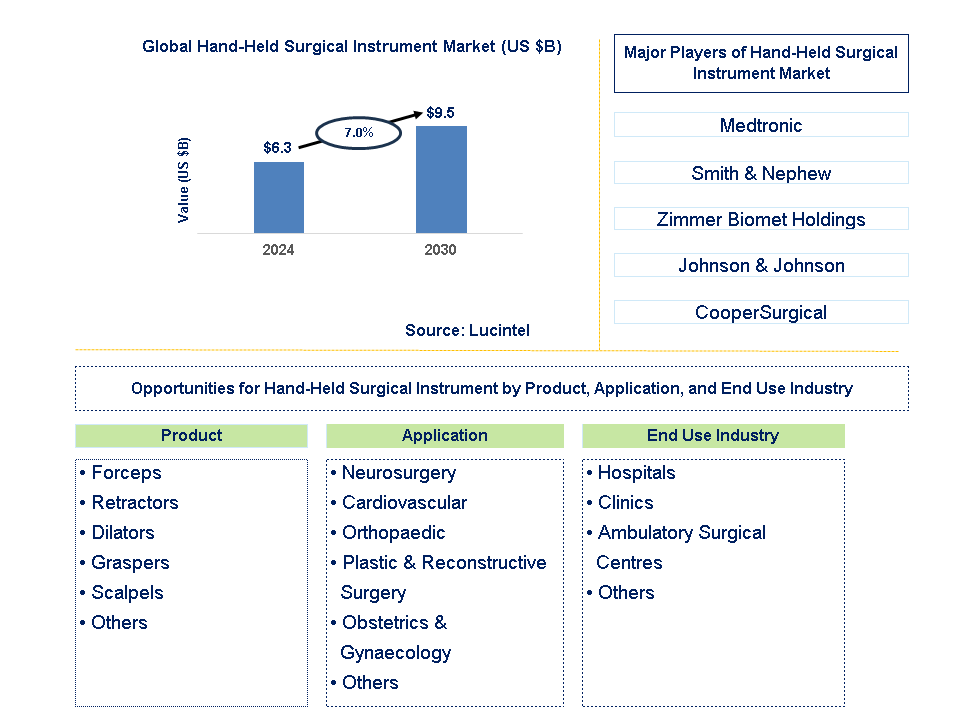
Key data points: The market size in 2030 = $9.5 billion, growth forecast = 7.0% annually for the next 6 years. Scroll below to get more insights. This market report covers trends, opportunities, and forecasts in the global hand-held surgical instrument market to 2030 by product (forceps, retractors, dilators, graspers, scalpels, and others), application (neurosurgery, cardiovascular, orthopaedic, plastic & reconstructive surgery, obstetrics & gynaecology, and others), end use industry (hospitals, clinics, ambulatory surgical centres, and others), and region (North America, Europe, Asia Pacific, and the Rest of the World)
We'll send your sample report shortly.
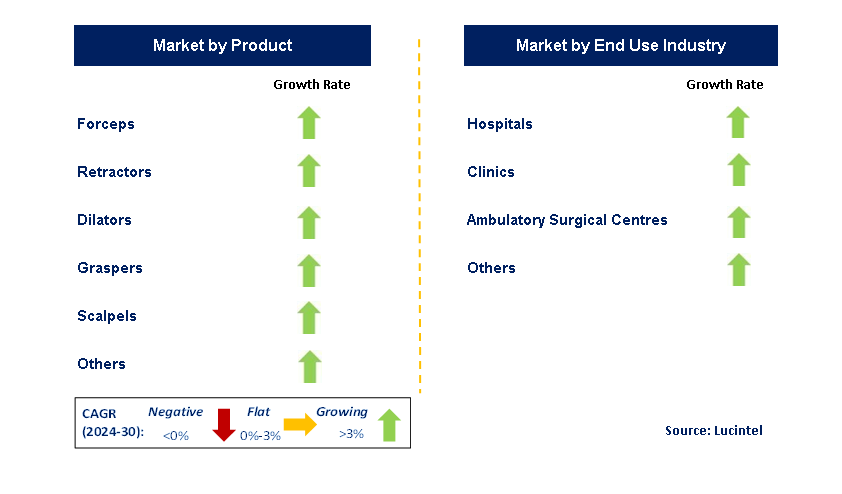
• Lucintel forecasts that, within the product category, forceps will remain the largest segment over the forecast period because it assists in eliminating the requirement to handle small objects with one's hands and reduces the risk of contamination.
• Within the end use industry category, hospitals will remain the largest segment over the forecast period due to significant volume of cases and preventive surgical procedures being conducted within these environments, along with presence of comprehensive array of surgical instruments and access to highly skilled professionals.
• In terms of regions, APAC will remain the highest growing region over the forecast period due to rise in population, high incidence of chronic illnesses, and increased consumer purchasing power in the region. Gain valuable insights for your business decisions with our comprehensive 150+ page report.
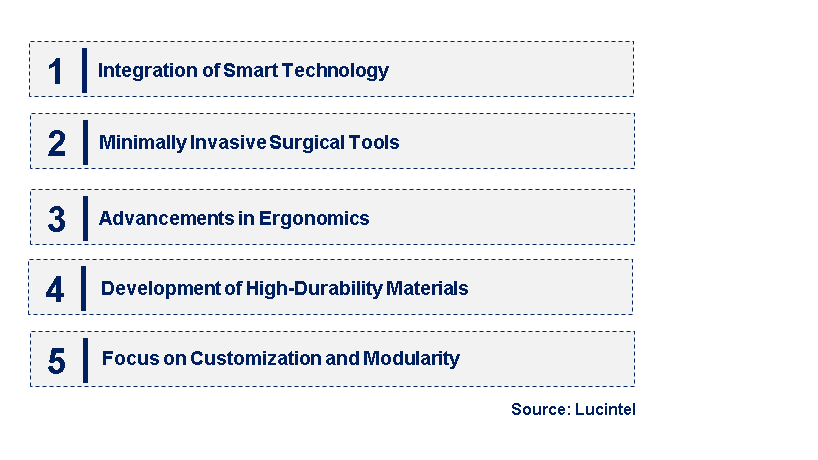
• Integration of Smart Technology: Integration of smart technology into handheld surgical instruments is a general trend that is witnessed. The instruments are more often enhancing active assistance from imaging systems, and real mono-directional feedback available at the operation. This practice is aimed at enhancing precision lowering mistakes and increasing patient’s welfare by specific pertinent information and help.
• Minimally Invasive Surgical Tools: The demand for minimally invasive surgical tools is growing. Further and further percutaneous, laparoscopic and endoscopic instruments are being enhanced in ergonomics and efficiency making it easier and more accurate to work with. This trend is indicative of a more general trend towards less invasive approaches which have clear advantages like shorten healing and reduce the pain after surgery.
• Advancements in Ergonomics: With regards to hand-held surgical instrumentation management, ergonomics is one of the main factors for the improvement of instruments. Industry is trying to develop safe and comfortable handling instruments used for long periods of time that causes fatigue for the surgeon. More handles can be made adjustable, light materials can be used, controls can be adopted that are not so tedious and as such the outcome of the surgery improved and less physical stress imposed.
• Development of High-Durability Materials: Instrument development is one area that is experiencing a remarkable development trend, that is the high-durability materials development trend. These instruments are constructed with high-tech materials that are wear-resistant, corrosion-resistant, and resistant to sterilization. This trend will enhance the utility of surgical instruments and operationalize operations, which are essential to ensure complaints about the quality of surgical surgery are addressed.
• Focus on Customization and Modularity: Customization and conceptual modularity are becoming important factors as far as handheld surgical instruments are concerned. Suppliers are providing tools that are fixed with neutral adapters and can be clinically modified depending on the type of operation being conducted. The elements of modularity placed due to design features though to the changeability of design do not aggravate but rather increase the range of application of these instruments at various surgical procedures or situations. These emerging trends are adding new and even transforming existing features in the hand-held surgical instrument market with regard to new functionality, precision, and user experience. The trends in smart technology embedded instruments, general minimization of the instruments and improvement of ergonomics, material science and nursing apparatus, and the concept of an individual approach portability have led to ideation in introduction of new generation instruments.
• Creation of Smart Implements: The creation of the smart hand-held surgical instruments for the first time is rather impressive. These instruments also contain built-in sensors and feedback systems farmers that offer additional useful information to surgeons during operation. This turned out to be a plus in terms of accuracy as well as minimizing errors hence better surgical results and safety to the patient.
• Improvements in Ergonomics: The recent technologies in ergonomic design are enhancing the comfort and efficiency of use of the surgical instruments. These include the use of light weight materials, adjustinsel handles and improved gripping areas. Such improvements help in reducing the amount of fatigue experienced and the control in the hands of the surgeon making the surgical operations more accurate and less cumbersome.
• Introduction of High Strength Materials: Incorporating high strength materials in hand held surgical instruments is another positive development. Advanced polymers/ coatings materials make instruments, more wear, corrosion and sterilisation resistant. This further ensures that the instruments are durable without any change in the functionality and reliability of the instruments.
• Expansion of Lesser Invasive tools: The trade is expanding in instruments utilized in endoscope and laparoscopes which are less invasive to the patient’s body cavity. These types of instruments are made with features that facilitate better movement and accuracy so as to protect the movement towards less invasive operative procedures which are comfortable and have least recovery time and post-operative pain.
• Expansion of Modular Instrument Systems: The adoption of modular instrument systems is on the rise. Modular systems allow different components of the device to be fitted or exchanged, thus enabling dependence on one or more surgeons in one or several procedures. This advancement meets the increasing requirement of versatile as well as adjustable surgical devices. These past decade changes are fostering growth in the Hand-Held Surgical Instrument industry by improving the instruments’ capabilities, reliability and multifunctionality. In as much as technology is on the rise, these innovations will continue determining the future of surgical instruments and the health sector in general.
• Expansion in Minimally Invasive Surgery: The expansion in minimally invasive surgery presents a brilliant growth area with great potential for a medical market. There is also a need to manufact latitude in laparoscopic and endoscopic practices so as to satisfy the patients need for less invasive procedures. This opportunity is in line with the growing need for better surgical outcomes and quicker patient's recovery.
• Uptrend in Durability of Instruments: New instruments made of advanced materials have potential for growth. Placing an emphasis on materials which withstand abrasion or chemistry and sterilization may extend the service life and the operational parameters of the instrument. This opportunity falls to the need for effective and durable surgical devices that can be utilized in different health care facilities.
• Incorporation of Smart Features: Declining handheld surgical instruments while integrating smart technologies is projected to provide immense opportunities for growth. Devices that have sensors, feedback mechanisms and imaging features have been proven to enhance surgical procedures. This trend favors the increasing adoption of advanced technologies in the health sector.
• Personalization and Modularity: There are opportunities of growth utilizing personalization and modularity in instrument design. Sections of instruments that are designed to accommodate the needs and preferences of different types of surgeries and modular instruments, the components of which can be interchanged, are aimed at surgery market which is demanding and dynamic.
• New Path for Growth: There is an opportunity for growth through the onset of eco-friendly hand-held surgical instruments. Concentrating on eco-friendly raw materials and processes may fit in the worldwide and legislative demands on sustainability. Such an opportunity favors the transitioning of the industry towards greener practices and products. These strategic growth opportunities enumerate factors that would warrant growth in the hand-held surgical instrument market. Targeting minimally invasive approaches, high-performance tools, integration of smart solutions, individualization and eco-friendliness, industry participants are well positioned to seize opportunities and foster development within the sector.
• Technological Advancements: Technological advancements are a major driver in the hand-held surgical instrument market. New products such as smart sensors, imaging systems and other new materials raise the performance level and accuracy of surgical instruments. Such improvements will make the performances of surgeries better and form the grounds for the application of new technologies in the health system.
• Growing Demand for Minimally Invasive Surgery: The increasing need for minimal invasive surgery acts as a booster to the market for the advanced hand-held instruments. That is increasing availability of less invasive procedures, gives rise to the need for instruments that are best suited for use in laparoscopic and endoscopic procedures. All this helps in supporting the market in growth and also new innovations.
• Focus on Ergonomics and Comfort: There is a strong focus on improving the ergonomics and comfort of surgical instruments. Innovations in design, such as lightweight materials and ergonomic handles, reduce surgeon fatigue and enhance performance. This driver supports the development of more user-friendly and effective surgical tools.
• Investment in R&D: Investment in research and development is a key driver of market growth. Companies are investing in new technologies and innovations to stay competitive and meet evolving healthcare needs. R&D efforts lead to the development of advanced instruments with enhanced capabilities and performance.
• Regulatory Compliance: Compliance with regulatory standards is driving improvements in product safety and quality. Adhering to stringent regulations ensures that instruments meet high standards of performance and safety, which is crucial for market acceptance and success. Challenges in the hand-held surgical instrument market are:
• Regulatory Complexity: Regulatory complexity poses a challenge for the market. Navigating the various regulations and standards across different regions can be cumbersome and time-consuming. Ensuring compliance with regulatory requirements is essential but can impact product development and market entry.
• High Production Costs: High production costs are a challenge for manufacturers. The use of advanced materials and technologies can increase the cost of production, affecting pricing strategies and profitability. Managing production costs while maintaining quality is a key challenge.
• Intense Market Competition: The market is highly competitive, with numerous players and rapid technological advancements. Differentiating products and maintaining a competitive edge requires continuous innovation and investment. Intense competition can impact market share and profitability. The key growth factors of the hand-held surgical instrument market have been identified as tech development, the rise of minimally invasive surgery, the desire for user-friendly devices, R&D spending, and compliance. However, factors like complicated regulations, and high production costs, and high market competition are hindering the industry. Overcoming these challenges is essential for any player willing to thrive in the changing market.
• Medtronic
• Smith & Nephew
• Zimmer Biomet Holdings
• Johnson & Johnson
• CooperSurgical
• Integra LifeSciences Corporation
• Thompson Surgical
• Forceps
• Retractors
• Dilators
• Graspers
• Scalpels
• Others
• Neurosurgery
• Cardiovascular
• Orthopaedic
• Plastic & Reconstructive Surgery
• Obstetrics & Gynaecology
• Others
• Hospitals
• Clinics
• Ambulatory Surgical Centres
• Others
• North America
• Europe
• Asia Pacific
• The Rest of the World
• United States: There has been a remarkable rise in the number of advanced hand-held surgical instruments that come with technology integration in the United States. What are the innovations include instruments with inbuilt imaging systems, picture sensors for image capture and feedback during the operation. Usual behavior is also to enhance tools with enabling features of simple tedious and destructive activities such as stressing within the boundaries of the waist and tiredness in controlling the angled screwing of miniature devices. In the U.S. market, this is supplemented by numerous Tuesday and high market needs in the direction of minimal invasive surgical procedures.
• China: China's hand-held surgical instrument market is rapidly booming as a result of more developments in health care and more funding towards health equipment. New product developments now include development of reasonable price, good quality products and new advanced materials that enhance the use of the products. Domestic companies are actively improving their product portfolio with the latest designs and enhanced functionalities to cater to both local and export markets.
• India: The hand-held surgical instruments market in India is on the rise due to the increased penetration of healthcare and also due to the rising need for better surgical instruments. Some developments that have been witnessed include the design of cheap but efficient instruments very ideal for the public and private healthcare settings. Efforts have been made to improve on the usability and lifespan in the meantime cutting down on the cost. Indian manufacturers are adding advanced, less invasive surgical instruments line to their portfolio.
• Japan: The U S markets her share of the surgery by the provision of surgical tools emphasizing on the combination of technology and precision. More developments are witnessed by the introduction of imaging and navigator based hand held surgical instruments. Japanese manufacturers have also channelized research towards improvement of the tool’s functionality and ergonomics. The emphasis on innovativeness develops Japan as a hub for advanced medical equipment devices and correlates with better surgery results.


• Medtronic
• Smith & Nephew
• Zimmer Biomet Holdings
• Johnson & Johnson
• CooperSurgical
• Integra LifeSciences Corporation
• Thompson Surgical Q6. Which hand-held surgical instrument market segment will be the largest in future? Answer: Lucintel forecasts that forceps will remain the largest segment over the forecast period because it assists in eliminating the requirement to handle small objects with one's hands and reduces the risk of contamination. Q7. In hand-held surgical instrument market, which region is expected to be the largest in next 5 years? Answer: APAC will remain the highest growing region over the forecast period due to rise in population, high incidence of chronic illnesses, and increased consumer purchasing power in the region. Q.8 Do we receive customization in this report? Answer: Yes, Lucintel provides 10% customization without any additional cost.


Choose a license that fits your team. Instant PDF delivery.
Prices exclude taxes. Instant delivery. Custom licensing available on request.
Market Report · July 22, 2026
Market Report · July 22, 2026
Market Report · July 22, 2026
Trusted partner for strategic intelligence and business growth


Receive a complimentary market analysis tailored to your industry. Our analysts will identify key growth opportunities and competitive dynamics specific to your business.

Market size, growth rate, and key trend analysis for your specific sector.

Top competitor positioning and market share analysis.

Strategic recommendations backed by data-driven insights.
Get curated market intelligence and competitive moves straight to your inbox.
By subscribing, you agree to receive our monthly insights. Unsubscribe anytime.
Receive a complimentary market analysis tailored to your industry. Our analysts will identify key growth opportunities and competitive dynamics specific to your business.
Market size, growth rate, and key trend analysis for your specific sector.
Top competitor positioning and market share analysis.
Strategic recommendations backed by data-driven insights.
Get curated market intelligence, emerging trends, and competitive moves straight to your inbox each month.
By subscribing, you agree to receive our monthly insights. Unsubscribe anytime.
We'll send your sample report shortly.