
Market Report · July 31, 2026

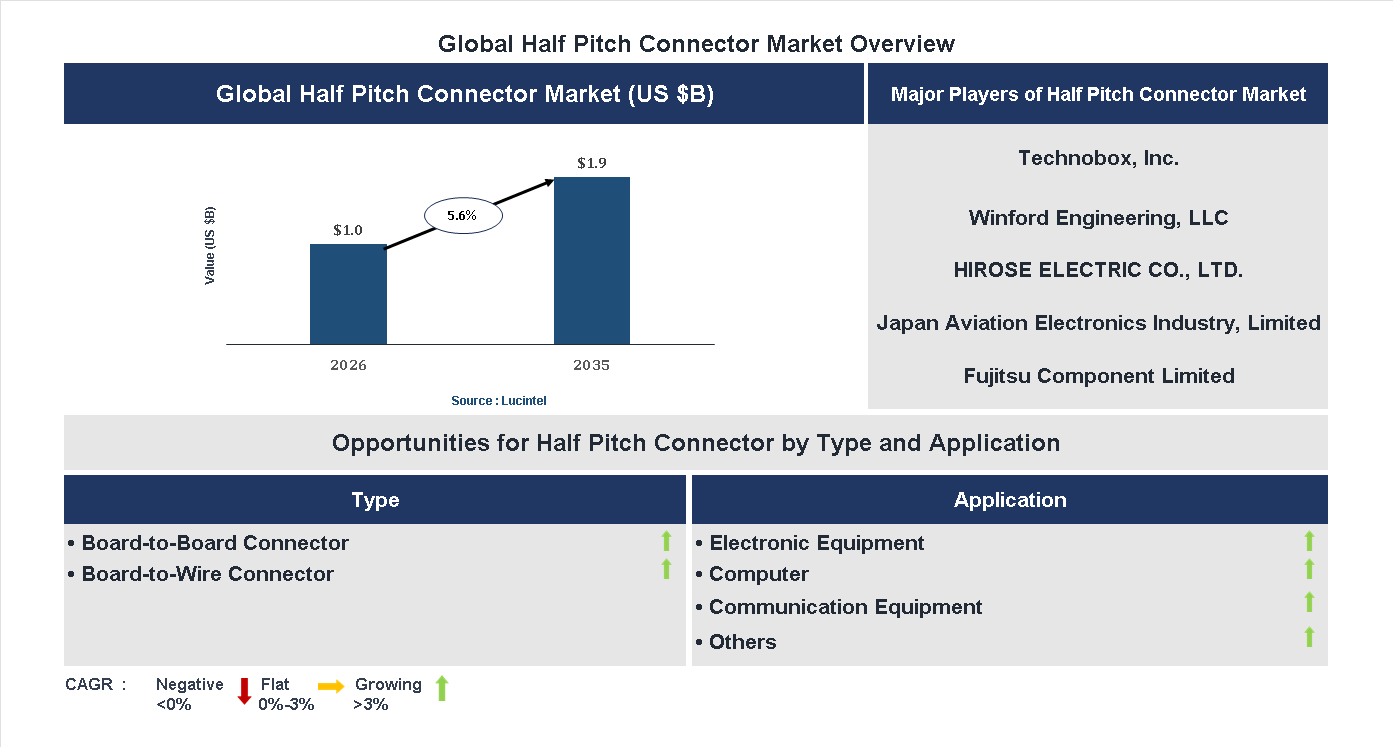
Key data points: The market size in 2035 = $1.9 billion, growth forecast = 5.6% annually for the next 8 years. Scroll below to get more insights. This market report covers trends, opportunities and forecasts in half pitch connector market to 2035 by type (board-to-board connector and board-to-wire connector), application (electronic equipment, computer, communication equipment, and others), and region (North America, Europe, Asia Pacific, and the Rest of the World)
We'll send your sample report shortly.
• Lucintel forecasts that, within the type category, board-to-board connector is expected to witness higher growth over the forecast period.
• Within the application category, communication equipment is expected to witness the highest growth.
• In terms of region, APAC is expected to witness the highest growth over the forecast period. Gain valuable insights for your business decisions with our comprehensive 150+ page report. Sample figures with some insights are shown below.
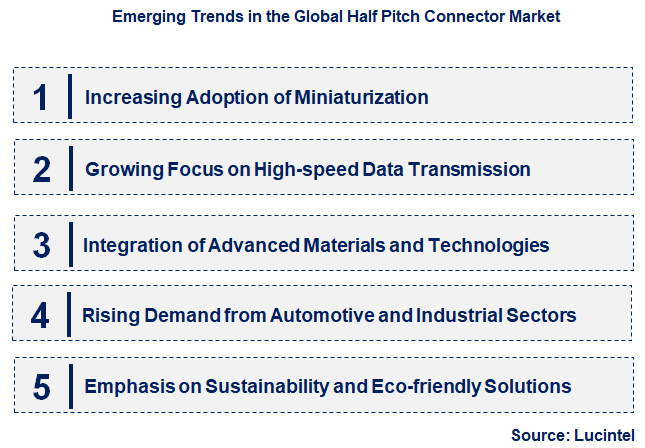
• Increasing Adoption of Miniaturization: As electronic devices become smaller and more portable, the demand for compact connectors like half-pitch connectors is rising. This trend is driven by the need for space-saving solutions without compromising performance. Manufacturers are developing thinner, more efficient connectors that fit into tight spaces, especially in consumer electronics, wearables, and automotive applications. The miniaturization trend enhances device functionality and aesthetics, leading to increased market demand. It also encourages innovation in connector design, materials, and manufacturing techniques to meet the evolving size and performance requirements.
• Growing Focus on High-speed Data Transmission: The demand for faster data transfer rates is pushing the development of high-performance half pitch connectors. Industries such as telecommunications, data centers, and automotive are requiring connectors capable of supporting high bandwidths with minimal signal loss. Advances in materials and contact design are enabling connectors to handle higher frequencies and data rates, which is critical for applications like 5G, IoT, and autonomous vehicles. This trend improves overall system efficiency and reliability, making high-speed connectors a key differentiator in the market.
• Integration of Advanced Materials and Technologies: The market is witnessing increased use of innovative materials such as thermoplastics, composites, and conductive polymers to enhance connector durability, flexibility, and performance. Additionally, technologies like surface coatings and plating are improving corrosion resistance and electrical conductivity. These advancements extend the lifespan of connectors and enable their use in harsh environments, including automotive and industrial settings. The integration of advanced materials and technologies is also facilitating the development of more environmentally friendly and cost-effective products, aligning with sustainability goals and regulatory standards.
• Rising Demand from Automotive and Industrial Sectors: The automotive industry, with the rise of electric vehicles and advanced driver-assistance systems, is a significant driver for half pitch connectors. Similarly, industrial automation and robotics require reliable, high-density connectors for complex machinery. These sectors demand connectors that can withstand extreme conditions, provide high-speed data transfer, and support miniaturization. The increasing adoption of smart and connected devices in these sectors is fueling market growth, prompting manufacturers to innovate and tailor products to meet specific industry needs.
• Emphasis on Sustainability and Eco-friendly Solutions: Environmental concerns are prompting manufacturers to develop sustainable connectors with reduced environmental impact. This includes using recyclable materials, reducing hazardous substances, and designing energy-efficient manufacturing processes. Eco-friendly connectors appeal to environmentally conscious consumers and comply with stringent regulations. This trend is reshaping the market by encouraging innovation in materials and design, fostering a shift towards greener practices, and opening new opportunities for companies that prioritize sustainability in their product offerings. In summary, these emerging trends are significantly reshaping the half pitch connector market by driving innovation, enhancing performance, and expanding application areas. The focus on miniaturization, high-speed data transfer, advanced materials, industry-specific solutions, and sustainability is creating new opportunities while challenging manufacturers to adapt quickly. As these trends continue to evolve, they will define the future landscape of the market, making it more dynamic, competitive, and aligned with technological and environmental advancements.
• Growing Demand for Compact Connectors: The miniaturization of electronic devices and equipment is driving the need for smaller, space-saving half pitch connectors. This trend enhances device portability and design flexibility, making connectors more versatile. As consumer electronics and IoT devices proliferate, the demand for compact connectors increases, leading to innovations in connector architecture. This growth opportunity is expected to significantly boost market revenue and expand application scope across multiple sectors.
• Technological Innovations in Connector Design: Advances in materials and manufacturing processes are enabling the development of more durable, high-performance half pitch connectors. Innovations such as improved insulation, corrosion resistance, and enhanced electrical conductivity are increasing reliability and lifespan. These technological improvements are crucial for demanding applications like automotive and industrial automation, where performance and safety are paramount. This evolution is fostering competitive advantages and opening new markets for manufacturers.
• Expansion in Automotive and Industrial Applications: The automotive industry’s shift towards electric vehicles and automation is creating substantial demand for reliable connectors. Similarly, industrial automation requires robust, high-capacity connectors for machinery and control systems. The increasing integration of sensors and electronic components in these sectors is expanding the application scope of half pitch connectors. This trend offers significant growth opportunities, encouraging manufacturers to develop specialized solutions tailored to these high-demand markets.
• Rising Adoption of Wireless and Modular Systems: The transition towards wireless communication and modular electronic systems is influencing connector design and usage. Half pitch connectors are increasingly integrated into modular systems for ease of assembly and maintenance. Wireless applications reduce the need for traditional connectors, but hybrid systems still rely heavily on reliable connectors for power and data transfer. This shift is prompting innovation in connector features, fostering new market segments and expanding overall market size.
• Focus on Sustainability and Eco-Friendly Materials: Environmental concerns are prompting manufacturers to adopt sustainable materials and eco-friendly manufacturing practices. The use of recyclable plastics and reduced hazardous substances in connector production is gaining importance. These initiatives not only meet regulatory standards but also appeal to environmentally conscious consumers and companies. The focus on sustainability is driving product innovation, enhancing brand reputation, and opening new avenues for market growth aligned with global green initiatives. The overall impact of these developments is transforming the half pitch connector market into a more innovative, versatile, and sustainable industry. Increased application diversity, technological advancements, and a focus on eco-friendly solutions are expanding market size and competitiveness. These opportunities are attracting new entrants and encouraging existing players to innovate, ultimately fostering a dynamic and resilient market landscape.
• Growing Adoption in Consumer Electronics: The increasing integration of half pitch connectors in smartphones, tablets, and wearable devices is fueling market growth. As devices become more compact and feature-rich, the demand for space-efficient, high-performance connectors rises. Manufacturers are developing miniaturized connectors that offer reliable electrical connections while maintaining durability and ease of assembly, thus expanding their application scope in consumer electronics.
• Expansion in Automotive and Transportation Applications: The automotive industry’s shift towards electric vehicles and advanced driver-assistance systems (ADAS) is driving the need for robust, high-quality connectors. Half pitch connectors are favored for their compact size and reliable performance in harsh environments. The growing demand for lightweight, space-saving components in vehicles is prompting manufacturers to innovate and develop connectors that meet stringent safety and durability standards.
• Increasing Use in Industrial Automation and Robotics: The industrial sector’s move towards automation and robotics requires connectors that can withstand high vibrations, temperature fluctuations, and frequent connections/disconnections. Half pitch connectors offer the necessary compactness and reliability for such applications. As industries adopt Industry 4.0 standards, the demand for efficient, high-density connectors is expected to rise, creating opportunities for market expansion through technological improvements.
• Rising Demand in Medical Devices and Equipment: The medical sector’s push for miniaturized, reliable electronic components is boosting the adoption of half pitch connectors. These connectors are used in diagnostic equipment, portable devices, and implantable systems where space constraints and safety are critical. Innovations aimed at improving biocompatibility, sterilization resistance, and electrical performance are opening new avenues for growth within medical applications.
• Technological Innovations and Customization Opportunities: Advances in materials, contact design, and manufacturing processes are enabling the development of highly customized half pitch connectors tailored to specific industry needs. The ability to offer tailored solutions with enhanced performance, environmental resistance, and ease of integration is creating competitive advantages. This trend is expected to foster innovation, expand application areas, and drive overall market growth through increased product differentiation. The overall market outlook remains positive, with these growth opportunities collectively contributing to increased demand, technological advancements, and broader application across diverse sectors, ensuring sustained expansion of the half pitch connector market.
• Technological Innovation: The rapid evolution of electronic devices necessitates smaller, more efficient connectors. Half pitch connectors enable high-density connections, supporting miniaturization in smartphones, wearables, and IoT devices. Innovations in materials and manufacturing processes improve durability and performance, fostering market growth. As technology advances, demand for these connectors increases, pushing manufacturers to develop more sophisticated solutions that meet the needs of high-speed data transfer and compact design.
• Growing Electronics Industry: The expanding consumer electronics sector, including smartphones, tablets, and laptops, significantly boosts demand for half pitch connectors. The rise of smart appliances and wearable devices further amplifies this trend. As electronic devices become more integrated and complex, the need for reliable, space-saving connectors becomes critical, driving manufacturers to innovate and expand their product offerings to meet market needs.
• Automation and Industrial Applications: The increasing adoption of automation in manufacturing and industrial processes relies heavily on efficient electronic connections. Half pitch connectors are essential in robotics, control systems, and machinery, where space constraints and high performance are crucial. This industrial growth creates a steady demand for high-quality, durable connectors capable of withstanding harsh environments, thereby expanding market opportunities.
• Regulatory Standards and Certifications: Stringent safety, environmental, and quality standards influence product development and market entry. Compliance with regulations such as RoHS, REACH, and industry-specific certifications ensures product reliability and safety, fostering consumer trust. Manufacturers investing in compliance can access broader markets and avoid penalties, thus driving market growth through quality assurance and regulatory adherence. The challenges facing the half pitch connector market include:
• Technological Complexity: Developing half pitch connectors that meet high-speed data transfer, durability, and miniaturization requirements involves complex engineering and manufacturing processes. Ensuring compatibility across various devices and standards adds to the complexity, potentially increasing costs and development time. Overcoming these technical challenges is essential for innovation, but it can slow market growth and limit entry for smaller players.
• Supply Chain Disruptions: The global supply chain for electronic components faces disruptions due to geopolitical tensions, pandemics, and logistical issues. Shortages of raw materials and manufacturing delays can hinder production schedules and increase costs. These disruptions threaten the timely delivery of products, impacting market stability and growth prospects, especially for companies heavily reliant on international supply networks.
• Regulatory Compliance Costs: Meeting diverse and evolving regulatory standards across different regions requires significant investment in testing, certification, and quality assurance. These costs can be prohibitive for smaller manufacturers and may delay product launches. Navigating complex regulatory landscapes can also restrict market entry and expansion, posing a challenge to overall market growth. In summary, the half pitch connector market is driven by technological advancements, expanding electronics and industrial sectors, and regulatory compliance, which collectively foster innovation and growth. However, technological complexities, supply chain issues, and regulatory costs pose significant challenges that could hinder market expansion. Overall, the markets future depends on how effectively stakeholders can leverage opportunities while mitigating these challenges, ensuring sustainable growth and technological progress.
• Technobox, Inc.
• Winford Engineering, LLC
• HIROSE ELECTRIC CO., LTD.
• Japan Aviation Electronics Industry, Limited
• Fujitsu Component Limited
• DDK Ltd.
• Omron Corporation
• Antenk Electronics
• Morethanall
• Centenary Materials
• Board-to-Board Connector
• Board-to-Wire Connector
• Electronic Equipment
• Computer
• Communication Equipment
• Others
• North America
• Europe
• Asia Pacific
• The Rest of the World
• United States: The US market has seen substantial innovation in half pitch connectors, focusing on high-speed data transfer and miniaturization. Leading companies are investing in R&D to develop connectors that support 5G infrastructure, autonomous vehicles, and advanced computing systems. The adoption of automation and Industry 4.0 practices has further driven demand for reliable, durable connectors with enhanced performance. Additionally, strategic partnerships and acquisitions are strengthening the USs position as a key player in this sector, with a growing emphasis on environmentally sustainable manufacturing processes.
• China: China remains a dominant force in the half pitch connector market, driven by rapid industrialization and technological adoption. The country is heavily investing in electric vehicles, consumer electronics, and telecommunications infrastructure, which require advanced connector solutions. Local manufacturers are expanding their product portfolios to include high-density, cost-effective connectors that cater to domestic and export markets. Government initiatives supporting innovation and manufacturing upgrades are fostering a competitive environment, leading to increased R&D activities and the development of customized connector solutions tailored to specific industry needs.
• Germany: Germanys market is characterized by a focus on high-quality, precision-engineered half pitch connectors, primarily serving automotive, industrial automation, and aerospace sectors. The country emphasizes innovation, with companies integrating smart features such as IoT connectivity and enhanced durability for harsh environments. Germanys strong engineering tradition and adherence to strict quality standards ensure the development of reliable, long-lasting connectors. The push toward electric mobility and Industry 4.0 has further accelerated demand for advanced connector solutions that facilitate seamless integration and high performance in complex systems.
• India: The Indian market is witnessing rapid growth driven by expanding electronics manufacturing, automotive, and telecommunications sectors. Local companies are increasingly adopting innovative designs to meet the rising demand for miniaturized, efficient connectors suitable for compact devices and vehicles. Government initiatives promoting Make in India and digital infrastructure development are boosting market opportunities. Additionally, the focus on cost-effective solutions has led to the emergence of domestic manufacturers capable of producing high-quality half pitch connectors, supporting the countrys goal of becoming a global manufacturing hub.
• Japan: Japan continues to lead in technological innovation within the half pitch connector market, emphasizing high reliability and advanced features. The country’s strong automotive and electronics industries are driving demand for connectors that support autonomous driving, robotics, and consumer electronics. Japanese firms are investing in R&D to develop connectors with enhanced electromagnetic compatibility, durability, and miniaturization. The focus on sustainability and energy efficiency is also influencing product development, with an increasing number of eco-friendly manufacturing practices and materials being adopted to meet global standards and customer expectations.


• Technobox, Inc.
• Winford Engineering, LLC
• HIROSE ELECTRIC CO., LTD.
• Japan Aviation Electronics Industry, Limited
• Fujitsu Component Limited
• DDK Ltd.
• Omron Corporation
• Antenk Electronics
• Morethanall
• Centenary Materials Q6. Which half pitch connector market segment will be the largest in future? Answer: Lucintel forecasts that, within the type category, board-to-board connector is expected to witness higher growth over the forecast period. Q7. In half pitch connector market, which region is expected to be the largest in next 5 years? Answer: In terms of region, APAC is expected to witness the highest growth over the forecast period. Q8. Do we receive customization in this report? Answer: Yes, Lucintel provides 10% customization without any additional cost.


Choose a license that fits your team. Instant PDF delivery.
Prices exclude taxes. Instant delivery. Custom licensing available on request.
Market Report · July 31, 2026
Market Report · July 31, 2026
Market Report · July 31, 2026
Trusted partner for strategic intelligence and business growth


Receive a complimentary market analysis tailored to your industry. Our analysts will identify key growth opportunities and competitive dynamics specific to your business.

Market size, growth rate, and key trend analysis for your specific sector.

Top competitor positioning and market share analysis.

Strategic recommendations backed by data-driven insights.
Get curated market intelligence and competitive moves straight to your inbox.
By subscribing, you agree to receive our monthly insights. Unsubscribe anytime.
Receive a complimentary market analysis tailored to your industry. Our analysts will identify key growth opportunities and competitive dynamics specific to your business.
Market size, growth rate, and key trend analysis for your specific sector.
Top competitor positioning and market share analysis.
Strategic recommendations backed by data-driven insights.
Get curated market intelligence, emerging trends, and competitive moves straight to your inbox each month.
By subscribing, you agree to receive our monthly insights. Unsubscribe anytime.
We'll send your sample report shortly.