
Market Report · July 22, 2026

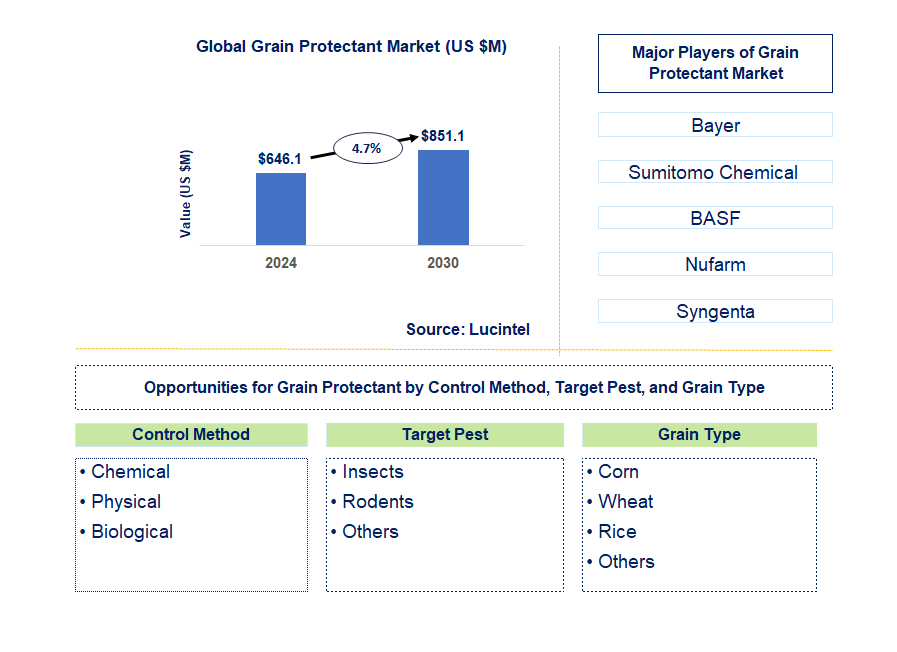
Key data points: The market size in 2030 = $851.1 million, growth forecast = 4.7% annually for the next 6 years. Scroll below to get more insights. This market report covers trends, opportunities, and forecasts in the global grain protectant market to 2030 by control method (chemical, physical, and biological), target pest (insects, rodents, and others), grain type (corn, wheat, rice, and others), and region (North America, Europe, Asia Pacific, and the Rest of the World)
We'll send your sample report shortly.
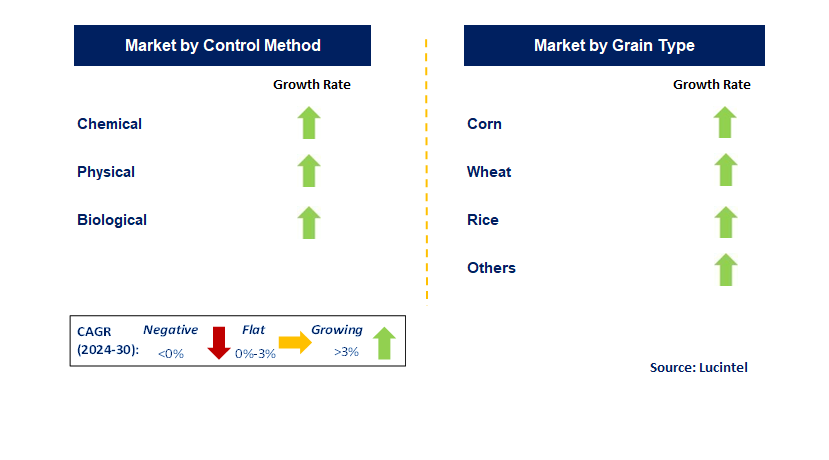
• Lucintel forecasts that, within the control method category, the chemical is expected to witness the highest growth over the forecast period due to effectiveness compared to other control methods, such as physical and biological.
• In terms of regions, North America will remain the largest region over the forecast period due to the existence of numerous grain processing facilities and storage facilities, as well as, rising desire to satisfy requirements while storing grains in warehouses and rising demand for food safety. Gain valuable insights for your business decisions with our comprehensive 150+ page report.
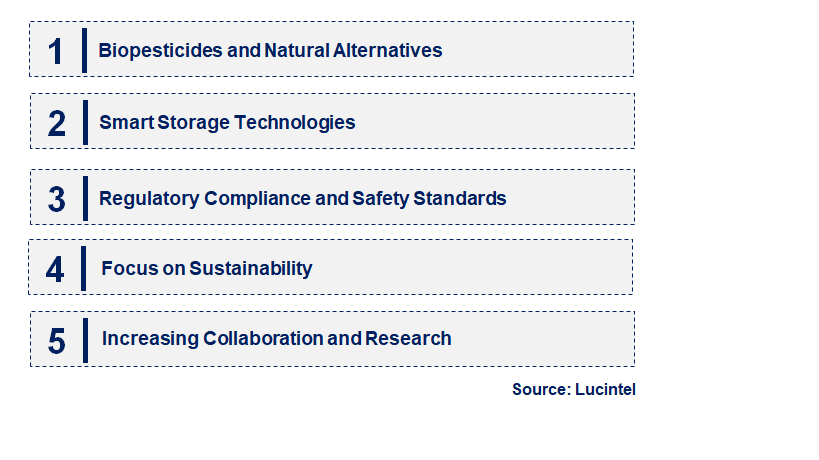
• Biopesticides and natural alternatives: The shift towards biopesticides and natural alternatives is a significant trend in the grain protectant market. With growing consumer awareness of health and environmental issues, there is a rising demand for products derived from natural sources. These alternatives offer effective pest control while minimizing harmful residues, making them more appealing to consumers and regulators alike. The increasing research into plant-based protectants and microbial solutions is contributing to this trend, providing sustainable options for grain preservation.
• Smart storage technologies: The adoption of smart storage technologies is revolutionizing grain protection. IoT-enabled devices allow farmers to monitor storage conditions in real time, ensuring optimal temperature and humidity levels. This technology helps prevent pest infestations and spoilage, thereby reducing post-harvest losses. The integration of data analytics into these systems provides valuable insights, enabling more informed decision-making regarding grain management.
• Regulatory compliance and safety standards: Stringent regulatory frameworks are shaping the grain protectant market, with an increasing focus on safety and environmental impact. Governments worldwide are implementing stricter guidelines for chemical usage, prompting manufacturers to innovate and comply with these regulations. This trend is driving the development of safer, eco-friendly products that meet both market demands and regulatory requirements, ultimately benefiting consumers and the environment.
• Focus on sustainability: Sustainability has become a cornerstone of agricultural practices, and the grain protectant market is no exception. Stakeholders are increasingly prioritizing sustainable methods, such as integrated pest management (IPM) and the use of organic protectants. This shift not only addresses environmental concerns but also aligns with consumer preferences for responsibly sourced food products. The focus on sustainability is pushing manufacturers to develop more eco-friendly solutions.
• Increasing collaboration and research: Collaboration between agricultural firms, research institutions, and government agencies is enhancing innovation in the grain protectant market. These partnerships are crucial for developing new technologies and methods that improve grain storage and protection. Increased funding for research initiatives is also leading to breakthroughs in effective protectants that meet the demands of a changing market, fostering a more resilient agricultural sector. These emerging trends are reshaping the grain protectant market by promoting innovation, sustainability, and regulatory compliance. As stakeholders adapt to these changes, the market is likely to see continued growth and development, ultimately enhancing food security and reducing waste in grain production and storage.
• Advancement in biopesticides: Recent developments in biopesticides are significantly impacting the grain protectant market. Research has led to the discovery of new natural compounds that effectively combat pests while minimizing chemical residues. These products align with the growing consumer preference for organic options and are gaining traction among farmers. As regulatory bodies approve more biopesticide formulations, the market is poised for substantial growth, shifting away from traditional chemical protectants.
• Integrated pest management (IPM): The implementation of integrated pest management (IPM) practices is becoming increasingly prominent in grain storage. This holistic approach combines biological, cultural, and chemical methods to manage pests more effectively and sustainably. By educating farmers on IPM strategies, stakeholders are promoting better grain preservation practices and reducing reliance on chemical treatments, which can be harmful to both the environment and human health.
• Adoption of smart technologies: The integration of smart technologies into grain storage facilities is enhancing pest management and overall grain protection. IoT devices equipped with sensors provide real-time data on environmental conditions, helping farmers to proactively manage storage environments. These technologies reduce the risk of pest infestations and spoilage, leading to improved quality and reduced post-harvest losses, ultimately benefiting farmers' bottom lines.
• Focus on regulatory compliance: Stricter regulations governing chemical usage in agriculture are pushing manufacturers to innovate and comply with safety standards. This focus on regulatory compliance is driving the development of safer, environmentally friendly grain protectants. Companies are investing in research to ensure their products meet these standards while still providing effective pest control solutions, thereby fostering consumer trust and expanding market opportunities.
• Growth of e-commerce platforms: The rise of e-commerce platforms is revolutionizing the distribution of grain protectants. Farmers now have easier access to a wider range of products, including new and innovative protectants that may not have been available locally. This trend is particularly impactful in rural areas, where traditional supply chains can be limited. The convenience of online purchasing is facilitating greater adoption of effective grain protection solutions. These recent developments are significantly impacting the grain protectant market by driving innovation, promoting sustainability, and enhancing food security. As the industry continues to evolve, stakeholders are increasingly focusing on effective, eco-friendly solutions that address the challenges of pest management and grain preservation.
• Enhanced storage solutions: Innovations in grain storage technology present substantial growth opportunities. Advanced materials and designs, such as moisture-resistant silos and temperature-controlled storage, enhance the effectiveness of grain protectants. By improving storage conditions, these solutions reduce the risk of infestations and spoilage, leading to lower post-harvest losses. As awareness of the importance of proper storage grows, stakeholders can capitalize on this demand by providing cutting-edge products that ensure grain quality over time.
• E-commerce and online distribution: The rise of e-commerce platforms creates a significant opportunity for the grain protectant market. Farmers and distributors increasingly prefer the convenience of online purchasing, allowing them to access a broader range of products. This shift enables companies to reach untapped markets, particularly in rural areas, while also providing educational resources about effective grain protection strategies. E-commerce can streamline supply chains and improve product availability, driving overall market growth.
• Biopesticide development: The growing consumer preference for organic and environmentally friendly products highlights the potential for biopesticide development. As regulatory pressures increase to reduce chemical residues, investment in biopesticides derived from natural sources can meet market demands. Companies focusing on research and development in this area can capture a significant share of the market by offering effective, sustainable alternatives to traditional chemical protectants, appealing to eco-conscious consumers and farmers alike.
• Integrated pest management (IPM) practices: Implementing integrated pest management (IPM) strategies offers a comprehensive approach to grain protection. By combining biological, cultural, and chemical methods, IPM minimizes pest damage while promoting sustainability. Companies that provide IPM solutions can enhance their market presence by educating farmers on best practices and offering tailored products. As more farmers adopt these strategies, the demand for integrated solutions will drive growth in the grain protectant market.
• Regulatory compliance innovations: With increasing regulations surrounding food safety and chemical use, opportunities exist for companies that can innovate to comply with these standards. Developing products that meet strict regulatory requirements can position firms as leaders in the market. Companies focusing on transparency and traceability in their supply chains can build trust with consumers and stakeholders, ultimately enhancing their competitive advantage and expanding market reach. These strategic growth opportunities are reshaping the grain protectant market by promoting innovation, sustainability, and accessibility. As stakeholders leverage these avenues, the market is likely to see increased investments and enhanced solutions that address contemporary challenges in grain preservation, thus contributing to global food security.
• Technological advancements: The rapid development of new technologies in grain protection is a key driver of market growth. Innovations such as IoT-enabled monitoring systems, smart storage solutions, and advanced biopesticides enhance pest management and grain quality. These technologies enable more efficient tracking of environmental conditions and timely interventions against pests. As farmers adopt these advanced solutions, they can reduce post-harvest losses and increase productivity, thereby fueling market expansion.
• Rising consumer awareness: Increased consumer awareness regarding food safety and sustainability is driving demand for effective grain protectants. As consumers become more concerned about chemical residues and environmental impacts, they are pushing for more transparent practices in agriculture. This shift is prompting manufacturers to invest in safer, eco-friendly grain protection solutions that align with consumer values. Consequently, businesses that prioritize sustainable products can capture a larger market share.
• Government initiatives and regulations: Government initiatives aimed at improving food security and sustainability are significant drivers in the grain protectant market. Supportive policies, funding for research, and regulations promoting safe agricultural practices encourage investment in new technologies and methods. By complying with stringent regulations, companies can not only enhance their product offerings but also gain consumer trust, facilitating market growth.
• Global food security concerns: As the global population continues to rise, the need for efficient grain storage and protection becomes critical to ensure food security. The increasing pressure to minimize post-harvest losses and maximize food availability is pushing stakeholders to seek effective grain protectants. Companies that provide innovative solutions to enhance storage conditions and reduce spoilage can capitalize on this growing concern, driving demand in the market.
• Sustainability trends in agriculture: The shift towards sustainable agricultural practices is fostering demand for eco-friendly grain protectants. With an emphasis on reducing chemical inputs and adopting organic farming methods, stakeholders are increasingly looking for sustainable alternatives. This trend is prompting investments in biopesticides and integrated pest management solutions, allowing companies to differentiate themselves in a competitive market. Challenges in the grain protectant market are:
• Stringent regulatory compliance: While regulatory frameworks can drive innovation, they also pose challenges for manufacturers. Complying with complex regulations regarding chemical use and safety standards can be resource-intensive and costly. Companies must invest in research and development to ensure their products meet evolving regulatory requirements. Failure to comply can result in penalties and loss of market access, making regulatory navigation a critical challenge for stakeholders.
• Market competition: The grain protectant market is becoming increasingly competitive, with numerous players vying for market share. This competition can drive down prices and profit margins, making it challenging for companies to maintain sustainable operations. Additionally, the rapid pace of innovation means that firms must continuously adapt to new technologies and consumer preferences to remain relevant. This pressure necessitates ongoing investment in research and marketing strategies.
• Consumer skepticism: Despite rising consumer awareness, skepticism about agricultural chemicals persists, particularly regarding their safety and environmental impact. This skepticism can hinder the acceptance of traditional grain protectants, prompting consumers to seek organic or natural alternatives. Companies must work to build trust and educate consumers about the safety and efficacy of their products, which requires substantial marketing efforts and transparency. The interplay of these drivers and challenges significantly impacts the grain protectant market. While technological advancements and consumer awareness foster growth, regulatory compliance and competition present obstacles that stakeholders must navigate. By understanding and addressing these dynamics, companies can better position themselves for success in the evolving landscape of grain protection.
• Bayer
• Sumitomo Chemical
• BASF
• Nufarm
• Syngenta
• Central Life Sciences
• Hedley Technologies
• UPL
• FMC Corporation
• Degesch
• Chemical
• Physical
• Biological
• Insects
• Rodents
• Others
• Corn
• Wheat
• Rice
• Others
• North America
• Europe
• Asia Pacific
• The Rest of the World
• United States: In the U.S., there has been a marked increase in the adoption of biological grain protectants, driven by a shift towards sustainable agriculture. Regulatory agencies are increasingly approving products derived from natural sources, appealing to environmentally conscious consumers. Additionally, innovations in nanotechnology are enabling more effective pest control with lower chemical residues. Furthermore, precision agriculture technologies are allowing farmers to monitor grain storage conditions more closely, enhancing protection against infestations and spoilage.
• China: China's grain protectant market is evolving rapidly due to government initiatives aimed at improving food security. Investments in research and development have led to the introduction of advanced insecticides and integrated pest management systems. The rise of e-commerce platforms has also facilitated access to innovative grain protectants for farmers in rural areas. Moreover, awareness campaigns about safe grain storage practices are helping to mitigate post-harvest losses, reflecting a holistic approach to grain protection.
• Germany: Germany is at the forefront of developing eco-friendly grain protectants, with a strong emphasis on organic farming practices. The European Union's strict regulations on chemical use have spurred innovation in biopesticides and other sustainable alternatives. Recent collaborations between agricultural firms and research institutions have led to breakthroughs in natural repellents derived from plant extracts. Additionally, the increasing focus on traceability and quality assurance in the supply chain is pushing manufacturers to adopt more transparent practices.
• India: In India, the grain protectant market is experiencing growth driven by rising demand for food security and effective pest control. Recent developments include the introduction of low-cost, biodegradable protectants that cater to smallholder farmers. Government subsidies for adopting modern storage techniques have also improved grain preservation. Furthermore, educational initiatives are empowering farmers with knowledge about integrated pest management, which is critical in combating the significant post-harvest losses faced in the country.
• Japan: Japan's grain protectant market is evolving with a strong focus on technological innovation and sustainability. The integration of smart storage solutions, such as IoT devices, allows for real-time monitoring of grain conditions, minimizing pest risks. There is a growing trend toward using organic and biopesticide options, aligning with consumer preferences for natural products. Additionally, Japan's stringent food safety regulations are driving research into more effective protectants that meet both safety standards and environmental considerations.


• Bayer
• Sumitomo Chemical
• BASF
• Nufarm
• Syngenta
• Central Life Sciences
• Hedley Technologies
• UPL
• FMC Corporation
• Degesch Q6. Which grain protectant market segment will be the largest in future? Answer: Lucintel forecasts that chemical is expected to witness the highest growth over the forecast period due to effectiveness compared to other control methods, such as physical and biological. Q7. In grain protectant market, which region is expected to be the largest in next 5 years? Answer: North America will remain the largest region over the forecast period due to the existence of numerous grain processing facilities and storage facilities, as well as, rising desire to satisfy requirements while storing grains in warehouses and rising demand for food safety. Q.8 Do we receive customization in this report? Answer: Yes, Lucintel provides 10% customization without any additional cost.


Choose a license that fits your team. Instant PDF delivery.
Prices exclude taxes. Instant delivery. Custom licensing available on request.
Market Report · July 22, 2026
Market Report · July 20, 2026
Market Report · July 20, 2026
Trusted partner for strategic intelligence and business growth


Receive a complimentary market analysis tailored to your industry. Our analysts will identify key growth opportunities and competitive dynamics specific to your business.

Market size, growth rate, and key trend analysis for your specific sector.

Top competitor positioning and market share analysis.

Strategic recommendations backed by data-driven insights.
Get curated market intelligence and competitive moves straight to your inbox.
By subscribing, you agree to receive our monthly insights. Unsubscribe anytime.
Receive a complimentary market analysis tailored to your industry. Our analysts will identify key growth opportunities and competitive dynamics specific to your business.
Market size, growth rate, and key trend analysis for your specific sector.
Top competitor positioning and market share analysis.
Strategic recommendations backed by data-driven insights.
Get curated market intelligence, emerging trends, and competitive moves straight to your inbox each month.
By subscribing, you agree to receive our monthly insights. Unsubscribe anytime.
We'll send your sample report shortly.