
Market Report · July 22, 2026

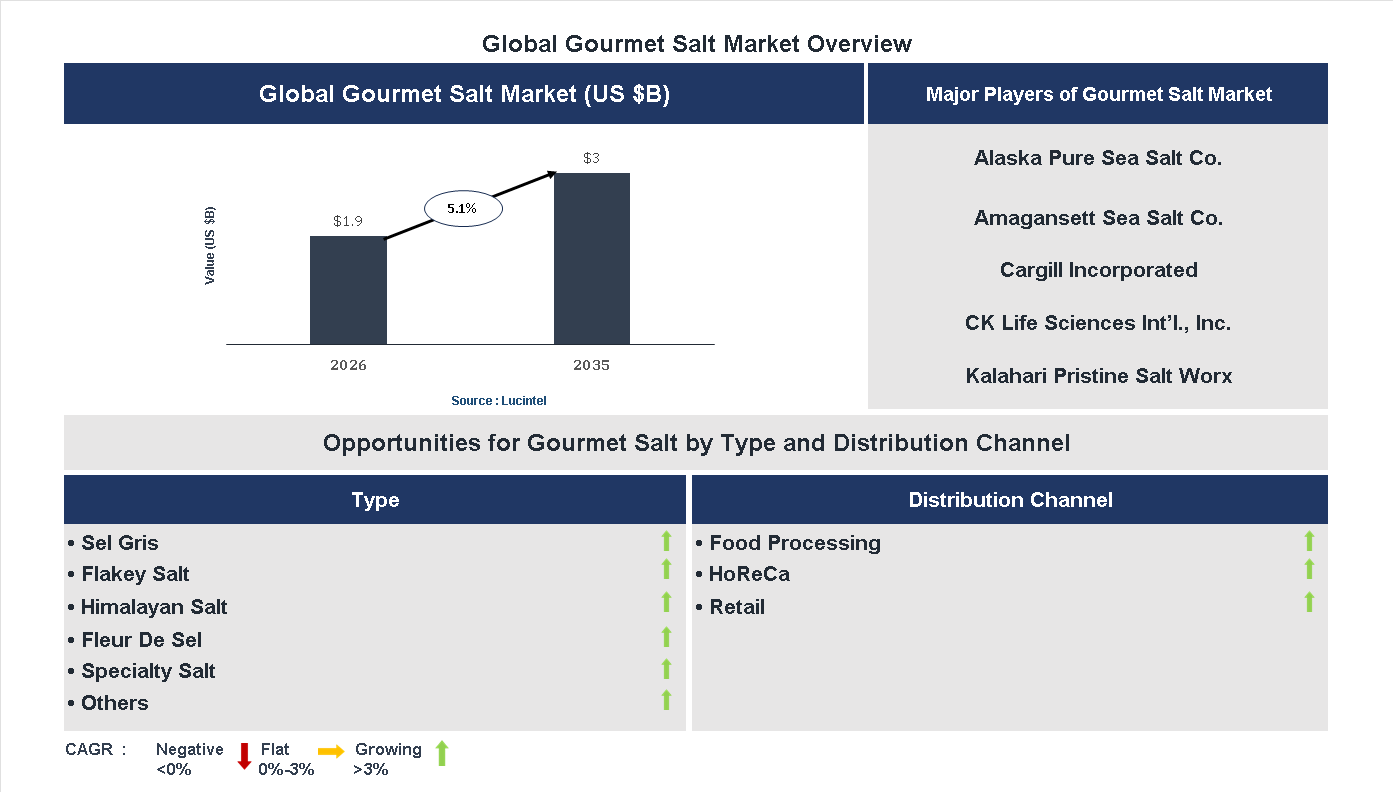
Key data points: The market size in 2035 = $3 billion, growth forecast = 5.1% annually for the next 8 years. Scroll below to get more insights. This market report covers trends, opportunities and forecasts in gourmet salt market to 2035 by type (sel gris, flakey salt, himalayan salt, fleur de sel, specialty salt, and others), distribution channel (food processing, HoReCa, and retail), and region (North America, Europe, Asia Pacific, and the Rest of the World)
We'll send your sample report shortly.
• Lucintel forecasts that, within the type category, fleur de sel is expected to witness the highest growth over the forecast period.
• Within the distribution channel category, retail is expected to witness the highest growth.
• In terms of region, North America is expected to witness the highest growth over the forecast period. Gain valuable insights for your business decisions with our comprehensive 150+ page report. Sample figures with some insights are shown below.
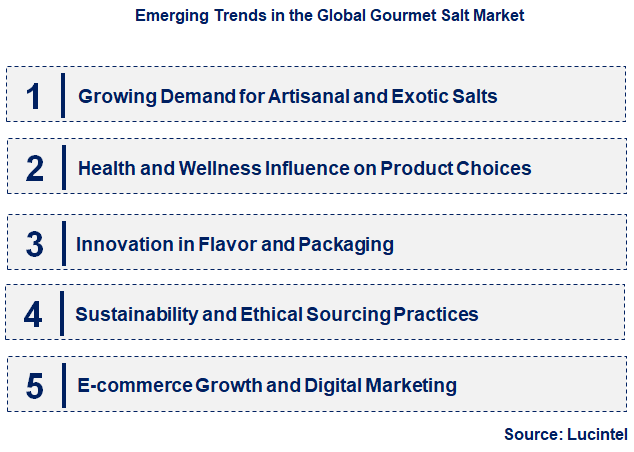
• Growing Demand for Artisanal and Exotic Salts: Consumers are increasingly seeking unique, high-quality salts such as Himalayan pink salt, sea salts, and flavored varieties. This trend is driven by a desire for premium ingredients that enhance culinary experiences and offer health benefits. Artisanal salts are often perceived as more natural and ethically sourced, appealing to health-conscious and environmentally aware consumers. This shift is encouraging producers to innovate and diversify their product lines, creating a niche market for specialty salts that command higher prices and foster brand loyalty.
• Health and Wellness Influence on Product Choices: The rising awareness of health benefits associated with certain salts, such as mineral-rich Himalayan salt, is significantly impacting consumer preferences. Many consumers are opting for salts with added health benefits or lower sodium content, aligning with broader wellness trends. This has led to increased demand for unrefined, natural salts that are free from additives and chemicals. Manufacturers are responding by emphasizing the purity, mineral content, and health benefits of their products, which enhances their appeal in a health-conscious market and encourages product differentiation.
• Innovation in Flavor and Packaging: To attract modern consumers, companies are introducing flavored salts infused with herbs, spices, and other natural ingredients. These innovative products cater to culinary experimentation and gourmet cooking at home. Additionally, packaging advancements such as resealable pouches, eco-friendly containers, and attractive designs are enhancing shelf appeal and convenience. This trend not only broadens the usage occasions for gourmet salts but also helps brands stand out in a competitive market. It encourages consumers to explore new flavor profiles and incorporate gourmet salts into everyday cooking.
• Sustainability and Ethical Sourcing Practices: Environmental concerns and ethical considerations are increasingly influencing purchasing decisions. Consumers prefer salts that are sustainably harvested, ethically sourced, and produced with minimal environmental impact. Producers are adopting eco-friendly extraction methods, transparent supply chains, and certifications to meet these expectations. This focus on sustainability enhances brand reputation and appeals to eco-conscious consumers. It also encourages industry-wide shifts toward responsible practices, fostering a market that values environmental stewardship alongside product quality, thus aligning with global sustainability goals.
• E-commerce Growth and Digital Marketing: The rise of online shopping platforms has expanded access to gourmet salts beyond traditional retail outlets. E-commerce enables brands to reach a global audience, showcase their unique offerings, and provide detailed product information. Digital marketing strategies, including social media, influencer collaborations, and targeted advertising, are increasing brand visibility and consumer engagement. This trend facilitates direct-to-consumer sales, offers personalized shopping experiences, and supports small artisanal producers. As a result, the market is becoming more dynamic, competitive, and accessible, driving innovation and consumer choice in the gourmet salt industry. These trends are collectively reshaping the gourmet salt market by emphasizing quality, health, innovation, sustainability, and digital engagement. They are fostering a more diverse, responsible, and consumer-centric industry that is poised for continued growth and evolution.
• Growing Demand for Artisanal and Premium Salts: The market is expanding as consumers seek high-quality, unique salts like Himalayan, fleur de sel, and smoked varieties. This trend is driven by a desire for enhanced flavor profiles and gourmet cooking experiences. Artisanal salts are perceived as healthier and more natural, boosting their appeal. Producers are investing in sourcing and branding to capitalize on this demand, leading to increased product innovation and premium pricing. This growth is fostering a more diverse and sophisticated market landscape.
• Innovation in Packaging and Sustainability: Companies are adopting eco-friendly packaging solutions to appeal to environmentally conscious consumers. Innovations include biodegradable containers, minimalistic designs, and resealable pouches that preserve freshness. Sustainable packaging not only reduces environmental impact but also enhances brand image. This shift encourages consumer loyalty and aligns with global sustainability goals. As packaging evolves, it influences purchasing decisions, driving market growth and encouraging brands to adopt greener practices.
• Expansion of E-commerce and Digital Marketing: The rise of online retail platforms has broadened access to gourmet salts worldwide. Digital marketing strategies, including social media and influencer collaborations, have increased brand visibility and consumer engagement. E-commerce provides convenience and detailed product information, encouraging trial and repeat purchases. This expansion has lowered entry barriers for new brands and allowed niche products to reach broader audiences. The digital shift is transforming distribution channels and accelerating market growth.
• Focus on Health and Wellness Benefits: Consumers are increasingly interested in salts with added health benefits, such as mineral-rich or low-sodium options. Functional salts infused with herbs, vitamins, or antioxidants are gaining popularity. This trend aligns with the broader health-conscious movement, influencing product development and marketing. Brands are emphasizing health benefits to differentiate offerings and meet consumer demand for wellness-oriented products. This focus is expanding the market to health-focused demographics and encouraging innovation.
• Geographic Market Expansion and New Consumer Segments: Emerging markets in Asia, Latin America, and Africa are experiencing rising demand for gourmet salts due to urbanization and increasing disposable incomes. Additionally, culinary tourism and food culture globalization are introducing new consumer segments. Companies are tailoring products to local tastes and preferences, expanding distribution channels, and establishing regional production facilities. This geographic diversification is fueling overall market growth and creating opportunities for local and international brands to capture new markets. These developments are significantly impacting the gourmet salt market by fostering innovation, expanding consumer bases, and emphasizing sustainability and health. The growth in premium and artisanal salts, coupled with digital expansion and geographic diversification, is creating a dynamic and competitive landscape. As consumer preferences evolve towards quality, health, and sustainability, market players are adapting strategies accordingly. Overall, these trends are driving sustained growth and transforming the market into a more sophisticated and globalized industry.
• Expanding Organic and Natural Gourmet Salt Offerings: Growing consumer demand for organic and natural products is prompting brands to develop gourmet salts that are free from additives and artificial processing. This trend emphasizes purity, health benefits, and environmental sustainability, creating opportunities for new product lines that cater to health-conscious and eco-friendly consumers. Companies investing in organic certification and transparent sourcing can differentiate themselves and build brand loyalty in this competitive market.
• Leveraging E-commerce for Global Market Penetration: The rise of online retail platforms offers a cost-effective channel to reach international markets and niche customer segments. E-commerce enables brands to showcase diverse salt varieties, provide detailed product information, and engage directly with consumers. Developing robust digital marketing strategies and user-friendly online stores will facilitate market expansion, increase sales, and enhance brand visibility across regions with limited physical retail presence.
• Innovating with Flavored and Infused Gourmet Salts: Consumers are increasingly seeking unique flavor profiles to elevate their culinary experiences. Developing flavored and infused salts—such as smoked, herb-infused, or spicy varieties—presents a lucrative growth avenue. Innovation in packaging and marketing these products as gourmet ingredients for home cooking and gifting can attract food enthusiasts and professional chefs, thereby expanding the product portfolio and increasing market share.
• Focusing on Sustainability and Ethical Sourcing: Sustainability concerns are influencing consumer purchasing decisions, prompting brands to adopt eco-friendly harvesting and packaging practices. Ethical sourcing of salts from environmentally responsible suppliers enhances brand reputation and appeals to socially conscious consumers. Incorporating sustainable practices can also reduce costs and foster long-term supplier relationships, positioning companies as leaders in responsible production within the gourmet salt industry.
• Developing Premium and Luxury Salt Products for Niche Markets: The demand for exclusive, high-end salts—such as Himalayan pink, fleur de sell, and rare mineral salts—continues to grow among gourmet chefs and affluent consumers. Creating premium products with unique origins, artisanal processing, and elegant packaging can command higher price points and establish a luxury brand image. Targeting niche markets through specialty stores, fine dining establishments, and luxury gifting channels will further strengthen market positioning. These strategic growth opportunities ranging from product innovation and sustainability to digital expansion are poised to significantly influence the gourmet salt market. Embracing these trends will enable companies to meet evolving consumer preferences, differentiate their offerings, and expand their global footprint. As a result, the market is expected to experience sustained growth, increased competition, and the emergence of innovative, premium products that cater to diverse customer needs.
• Increasing Consumer Demand for Premium and Artisanal Products: Consumers are seeking high-quality, unique, and natural flavor enhancers, which has led to a surge in gourmet salt consumption. This trend is driven by a growing interest in culinary experiences and health-conscious choices, encouraging manufacturers to innovate with diverse salt varieties like Himalayan, sea, and fleur de sel. The premium positioning of these salts allows brands to command higher prices, boosting market revenue. As consumers become more discerning, the demand for authentic, ethically sourced, and artisanal salts continues to grow, fostering market expansion.
• Technological Advancements in Extraction and Packaging: Innovations in salt extraction, refining, and packaging have improved product quality, shelf life, and safety. Modern extraction techniques preserve mineral content and natural flavors, appealing to health-conscious consumers. Advanced packaging solutions, such as resealable pouches and eco-friendly materials, enhance convenience and sustainability. These technological improvements reduce costs and improve product differentiation, enabling companies to meet evolving consumer preferences and regulatory standards. Consequently, technological progress supports market growth by offering higher-quality products and expanding distribution channels.
• Rising Health Awareness and Clean-Label Trends: Consumers are increasingly prioritizing health and wellness, seeking natural, additive-free, and minimally processed products. Gourmet salts, often perceived as healthier alternatives to processed seasonings, benefit from this trend. The mineral-rich composition of certain salts, like Himalayan and sea salts, appeals to health-conscious buyers. The demand for clean-label products encourages manufacturers to highlight natural sourcing and minimal processing, which enhances brand trust and loyalty. This health-driven consumer behavior significantly propels the market forward, fostering innovation and product diversification.
• Expansion of Culinary and Hospitality Sectors: The global rise in fine dining, gourmet restaurants, and culinary tourism has increased demand for premium ingredients, including gourmet salts. Chefs and culinary enthusiasts prefer high-quality salts to enhance flavors and presentation. The hospitality industry’s focus on offering unique dining experiences drives the adoption of artisanal salts. This expansion creates new opportunities for market players to supply specialty salts to restaurants, hotels, and gourmet food stores, further fueling market growth and diversification.
• Growing E-Commerce and Retail Distribution Channels: The proliferation of online retail platforms has made gourmet salts more accessible to a broader consumer base. E-commerce enables brands to reach niche markets and offer a wide variety of salts directly to consumers, bypassing traditional retail limitations. Additionally, retail chains and specialty stores are increasing shelf space for gourmet products, enhancing visibility and availability. This expansion of distribution channels supports market growth by increasing consumer access, facilitating product innovation, and enabling targeted marketing strategies. The challenges facing the gourmet salt market include:
• Fluctuating Raw Material Costs and Supply Chain Disruptions: The availability and cost of raw materials like sea salt and mineral salts are subject to environmental factors, climate change, and geopolitical issues. These fluctuations can lead to increased production costs and supply shortages, impacting profit margins. Disruptions in the supply chain, such as transportation delays or raw material scarcity, can hinder production schedules and product availability. Managing these uncertainties requires strategic sourcing and inventory management, which can increase operational complexity and costs, potentially restraining market growth.
• Regulatory Compliance and Labeling Standards: The gourmet salt industry must adhere to strict food safety, quality, and labeling regulations across different regions. Variations in standards can complicate international trade and increase compliance costs. Mislabeling or non-compliance risks legal penalties and damage to brand reputation. As consumers demand transparency and authenticity, companies must invest in quality assurance and certification processes. Navigating these regulatory landscapes poses ongoing challenges, especially for small and medium-sized enterprises, potentially limiting market expansion and innovation.
• Intense Competition and Market Saturation: The increasing popularity of gourmet salts has led to a crowded marketplace with numerous local and international brands. Differentiating products becomes challenging, and price wars may erode profit margins. New entrants face barriers related to sourcing, branding, and distribution. Additionally, competition from alternative flavoring options like herbs, spices, and processed seasonings can divert consumer attention. Market saturation in certain regions may slow growth, requiring companies to innovate continuously and develop unique value propositions to maintain a competitive advantage. The gourmet salt market is driven by consumer preferences for premium, natural, and artisanal products, supported by technological innovations and expanding distribution channels. However, it faces challenges such as raw material price volatility, regulatory complexities, and intense competition. These factors collectively influence market dynamics, requiring stakeholders to adapt strategically. While growth opportunities are substantial, success depends on effective supply chain management, regulatory compliance, and product differentiation. Overall, the markets future hinges on balancing innovation with operational resilience amidst evolving consumer and regulatory landscapes.
• Alaska Pure Sea Salt Co.
• Amagansett Sea Salt Co.
• Cargill Incorporated
• CK Life Sciences Int’l., Inc.
• Kalahari Pristine Salt Worx
• Maldon Crystal Salt Co.
• Morton Salt Inc.
• Murray River Salt
• Pyramid Salt Pty Ltd.
• SaltWorks Inc.
• Sel Gris
• Flakey Salt
• Himalayan Salt
• Fleur De Sel
• Specialty Salt
• Others
• Food Processing
• HoReCa
• Retail
• North America
• Europe
• Asia Pacific
• The Rest of the World
• United States: The U.S. market has seen a surge in organic and ethically sourced gourmet salts, with increased demand for Himalayan pink salt and sea salts. Premium brands are expanding their product lines, emphasizing health benefits and sustainable harvesting practices. E-commerce platforms have boosted accessibility, and culinary influencers are promoting gourmet salts as essential kitchen staples. Restaurants and gourmet food stores are increasingly incorporating these salts into their menus, driving market growth.
• China: China’s gourmet salt market is expanding rapidly, driven by rising disposable incomes and a growing interest in health and wellness. Local consumers are exploring exotic salts like black sea salt and flavored varieties. E-commerce sales are booming, supported by social media marketing. Traditional Chinese cuisine is integrating gourmet salts to enhance flavor profiles, and domestic producers are investing in quality improvements and branding to compete globally.
• Germany: The German market emphasizes organic and sustainably produced gourmet salts, aligning with the country’s strong environmental values. There is a notable trend toward artisanal and locally sourced salts, with consumers willing to pay premium prices. Gourmet salts are increasingly used in fine dining and specialty food stores. Regulatory standards for food safety and quality are strict, encouraging high-quality product offerings. Innovation in packaging and flavor infusions is also prominent.
• India: The Indian gourmet salt market is witnessing growth due to rising awareness of health benefits and culinary diversity. Himalayan pink salt and sea salts are gaining popularity among urban consumers. The market is characterized by a blend of traditional and modern marketing strategies, with local brands emphasizing purity and natural sourcing. E-commerce platforms are expanding their reach, and gourmet salts are being incorporated into traditional Indian dishes as well as international cuisines.
• Japan: Japan’s gourmet salt market is driven by a focus on health, purity, and culinary excellence. Sea salts infused with herbs and minerals are popular, and there is a trend toward artisanal and handcrafted salts. Consumers are interested in unique textures and flavors, often used in high-end restaurants and specialty stores. The market benefits from Japan’s strong food safety standards and a culture that values innovation in gastronomy. Local producers are also exploring sustainable harvesting methods to appeal to environmentally conscious consumers.


• Alaska Pure Sea Salt Co.
• Amagansett Sea Salt Co.
• Cargill Incorporated
• CK Life Sciences Int’l., Inc.
• Kalahari Pristine Salt Worx
• Maldon Crystal Salt Co.
• Morton Salt Inc.
• Murray River Salt
• Pyramid Salt Pty Ltd.
• SaltWorks Inc. Q6. Which gourmet salt market segment will be the largest in future? Answer: Lucintel forecasts that, within the type category, fleur de sel is expected to witness the highest growth over the forecast period. Q7. In gourmet salt market, which region is expected to be the largest in next 5 years? Answer: In terms of region, North America is expected to witness the highest growth over the forecast period. Q8. Do we receive customization in this report? Answer: Yes, Lucintel provides 10% customization without any additional cost.


Choose a license that fits your team. Instant PDF delivery.
Prices exclude taxes. Instant delivery. Custom licensing available on request.
Market Report · July 22, 2026
Market Report · July 22, 2026
Market Report · July 22, 2026
Trusted partner for strategic intelligence and business growth


Receive a complimentary market analysis tailored to your industry. Our analysts will identify key growth opportunities and competitive dynamics specific to your business.

Market size, growth rate, and key trend analysis for your specific sector.

Top competitor positioning and market share analysis.

Strategic recommendations backed by data-driven insights.
Get curated market intelligence and competitive moves straight to your inbox.
By subscribing, you agree to receive our monthly insights. Unsubscribe anytime.
Receive a complimentary market analysis tailored to your industry. Our analysts will identify key growth opportunities and competitive dynamics specific to your business.
Market size, growth rate, and key trend analysis for your specific sector.
Top competitor positioning and market share analysis.
Strategic recommendations backed by data-driven insights.
Get curated market intelligence, emerging trends, and competitive moves straight to your inbox each month.
By subscribing, you agree to receive our monthly insights. Unsubscribe anytime.
We'll send your sample report shortly.