
Market Report · July 22, 2026

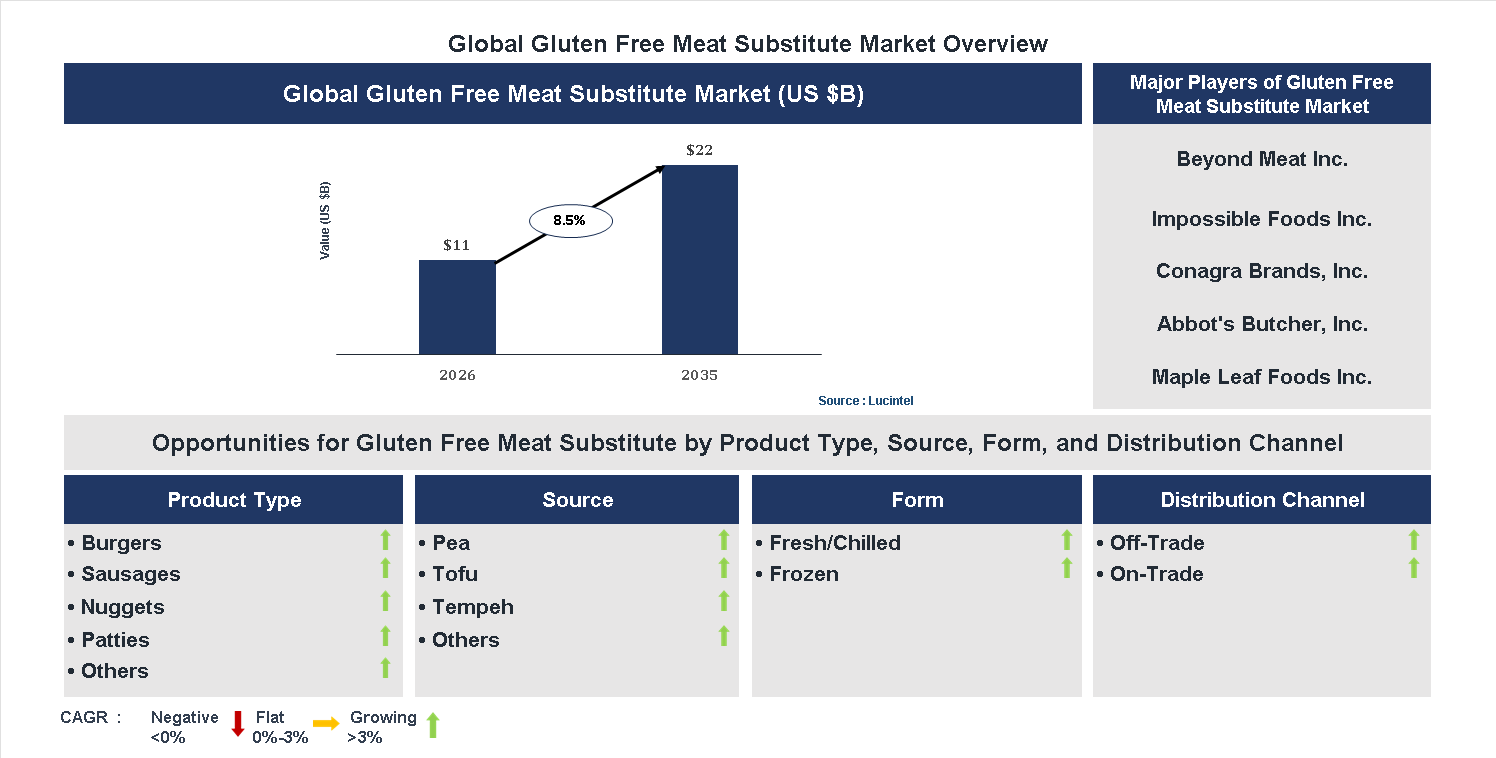
Key data points: The market size in 2035 = $22 billion, growth forecast = 8.5% annually for the next 8 years. Scroll below to get more insights. This market report covers trends, opportunities and forecasts in gluten free meat substitute market to 2035 by product type (burgers, sausages, nuggets, patties, and others), source (pea, tofu, tempeh, and others), form (fresh/chilled and frozen), distribution channel (off-trade and on-trade), and region (North America, Europe, Asia Pacific, and the Rest of the World)
We'll send your sample report shortly.
• Lucintel forecasts that, within the product type category, burger is expected to witness the highest growth over the forecast period.
• Within the distribution channel category, off-trade is expected to witness higher growth.
• In terms of region, North America is expected to witness the highest growth over the forecast period. Gain valuable insights for your business decisions with our comprehensive 150+ page report. Sample figures with some insights are shown below.
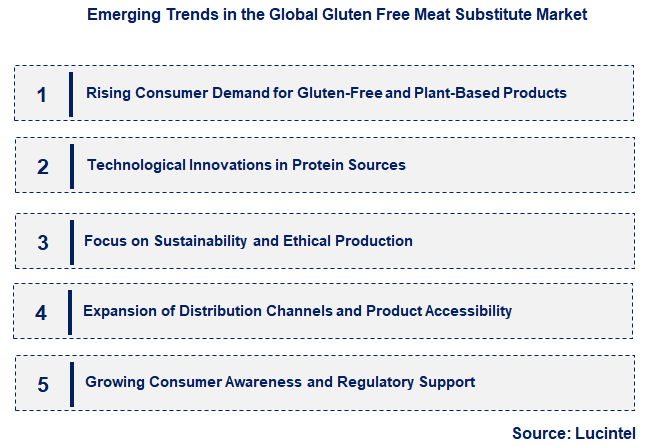
• Rising Consumer Demand for Gluten-Free and Plant-Based Products: Consumers are increasingly seeking gluten-free meat substitutes due to health concerns, allergies, and dietary preferences. This trend is driven by a growing awareness of gluten intolerance and celiac disease, alongside a shift towards plant-based diets for ethical and environmental reasons. Manufacturers are responding by developing innovative, tasty, and nutritious gluten-free options that cater to this demographic. The market is witnessing a surge in product variety, including burgers, sausages, and deli slices, which are now more accessible and appealing to mainstream consumers. This trend is expanding the market’s reach and encouraging product innovation.
• Technological Innovations in Protein Sources: Advances in food technology are enabling the development of more realistic and nutritious meat substitutes. Techniques such as extrusion, fermentation, and 3D printing are being used to create textures and flavors that closely mimic real meat. Novel protein sources like pea, lentil, and chickpea proteins are gaining popularity due to their sustainability and nutritional profile. These innovations improve product quality, shelf life, and consumer acceptance, making gluten-free meat substitutes more appealing. As technology progresses, the market is expected to see even more sophisticated products that satisfy taste, texture, and health requirements, further driving growth.
• Focus on Sustainability and Ethical Production: Consumers are increasingly concerned about the environmental impact of their food choices. The gluten free meat substitute market is benefiting from this shift by emphasizing sustainable ingredients and ethical production practices. Plant-based proteins require fewer resources and generate lower greenhouse gas emissions compared to traditional meat. Companies are adopting eco-friendly sourcing, biodegradable packaging, and transparent supply chains to appeal to environmentally conscious consumers. This focus on sustainability not only enhances brand reputation but also aligns with global efforts to reduce carbon footprints, making gluten-free meat substitutes a preferred choice for eco-aware buyers.
• Expansion of Distribution Channels and Product Accessibility: The market is witnessing a broadening of distribution channels, including online platforms, specialty health stores, and mainstream supermarkets. E-commerce has made it easier for consumers to access a wide range of gluten-free meat substitutes, often with detailed product information and reviews. Retailers are increasing shelf space and promotional efforts to meet rising demand. Additionally, foodservice providers are incorporating these products into menus, expanding their reach. This increased accessibility is crucial for market growth, enabling consumers to incorporate gluten-free meat substitutes into their daily diets more conveniently and encouraging trial and adoption.
• Growing Consumer Awareness and Regulatory Support: Education campaigns and regulatory frameworks are playing a vital role in shaping the market. Increased awareness about gluten-related disorders and the benefits of plant-based diets are encouraging consumers to explore gluten-free meat substitutes. Governments and health organizations are providing guidelines and certifications that assure product safety and quality, boosting consumer confidence. Labeling standards and clear ingredient disclosures help consumers make informed choices. This supportive environment fosters market expansion by building trust, reducing misconceptions, and promoting healthier, sustainable eating habits aligned with evolving consumer values. These trends are collectively reshaping the gluten free meat substitute market by fostering innovation, expanding accessibility, and aligning products with consumer health and environmental priorities. As these developments continue, the market is poised for sustained growth, driven by a more health-conscious, eco-aware, and inclusive consumer base.
• Growing Consumer Demand for Gluten-Free Products: The rising awareness of gluten intolerance and celiac disease has increased demand for gluten-free meat substitutes. Consumers are prioritizing health and wellness, leading to a surge in products that cater to these dietary needs. This trend encourages manufacturers to develop innovative, tasty, and nutritious gluten-free options, expanding market reach and driving sales growth. The increased demand also fosters product diversification and competitive pricing strategies.
• Innovation in Plant-Based Protein Sources: Advances in plant-based ingredients like pea, soy, and mushroom proteins are revolutionizing meat substitutes. These innovations improve texture, flavor, and nutritional value, making products more appealing to a broader audience. Enhanced formulations support sustainability goals by reducing reliance on animal agriculture. This development boosts product quality, encourages new product launches, and strengthens the market position of gluten-free meat substitutes, attracting both health-conscious and environmentally aware consumers.
• Expansion of Retail and Foodservice Channels: Retailers and foodservice providers are increasingly offering gluten-free meat substitutes to meet consumer demand. This expansion enhances product accessibility and visibility, encouraging trial and adoption among new customers. Strategic partnerships and dedicated sections in stores facilitate consumer education and convenience. The growth of these channels accelerates market penetration, increases sales volume, and supports brand recognition, ultimately contributing to the overall market expansion.
• Rising Investment in Product Development and Marketing: Companies are investing heavily in R&D to create innovative, gluten-free meat substitute products that meet evolving consumer preferences. Marketing campaigns focus on health benefits, sustainability, and taste, boosting consumer awareness and loyalty. These investments lead to product differentiation and competitive advantage, fostering market growth. Enhanced branding and targeted advertising also attract new customer segments, further fueling industry expansion and innovation.
• Increasing Focus on Sustainability and Ethical Consumption: Consumers are prioritizing environmentally friendly and ethically produced food options. Gluten-free meat substitutes, often plant-based, align with these values by reducing carbon footprint and supporting animal welfare. This focus drives demand for sustainably sourced ingredients and transparent supply chains. Companies adopting eco-friendly practices gain a competitive edge, influencing market trends and encouraging industry-wide sustainability initiatives, which ultimately expand the market and promote responsible consumption. The recent developments in the gluten free meat substitute market are significantly shaping its growth trajectory. Increased consumer awareness, product innovation, expanded distribution channels, strategic investments, and sustainability focus are collectively driving market expansion. These factors are not only broadening consumer choices but also encouraging industry innovation and sustainability practices, leading to a more dynamic, competitive, and resilient market landscape.
• Expanding Plant-Based Protein Options for Meat Substitutes: The rising demand for plant-based diets is prompting companies to develop diverse gluten-free meat alternatives using ingredients like soy, pea protein, and jackfruit. These options cater to health-conscious consumers, vegetarians, and vegans seeking nutritious, sustainable, and allergen-free products. Continuous innovation in flavor, texture, and nutritional profile is essential to compete with traditional meat and attract a broader audience, thereby driving market growth.
• Increasing Adoption in Foodservice and Restaurant Sectors: Restaurants, cafes, and fast-food chains are increasingly incorporating gluten-free meat substitutes into their menus to meet consumer demand for healthier, allergen-free options. This trend enhances product visibility and accessibility, encouraging trial and repeat purchases. Strategic partnerships with foodservice providers and menu innovation are critical for expanding market reach, boosting sales volume, and establishing the gluten-free meat substitute as a mainstream choice.
• Rising Consumer Awareness and Demand for Clean Label Products: Consumers are increasingly seeking transparent, minimally processed, and allergen-free food options. This shift drives demand for gluten-free meat substitutes with clean labels, natural ingredients, and clear nutritional information. Companies focusing on transparency and quality assurance can build consumer trust, differentiate their products, and capture market share. This trend supports sustained growth as health and wellness remain top priorities for consumers.
• Innovation in Texture and Flavor to Mimic Traditional Meat: Developing meat substitutes with authentic texture and flavor profiles is vital for consumer acceptance. Advances in food technology enable the creation of products that closely resemble real meat in taste, juiciness, and mouthfeel, encouraging meat reducers and flexitarians to switch. Investment in research and development to improve sensory attributes will be key to expanding the market and increasing consumer loyalty.
• Strategic Expansion into Emerging Markets: Growing awareness of plant-based diets and gluten-free lifestyles in emerging economies presents significant growth opportunities. Localizing product offerings to suit regional tastes, preferences, and dietary habits can facilitate market entry. Establishing distribution networks and educating consumers about benefits will accelerate adoption, enabling companies to tap into new customer bases and diversify revenue streams in the global gluten free meat substitute market. The overall market outlook is positively influenced by these growth opportunities, promising increased innovation, consumer engagement, and geographic expansion. Companies that strategically leverage these trends can strengthen their market position, meet evolving consumer demands, and capitalize on the expanding gluten-free meat substitute landscape.
• Growing Health Consciousness: Consumers are increasingly aware of health issues related to gluten consumption and meat intake. This awareness drives demand for gluten-free and plant-based meat alternatives, as people seek healthier, allergen-free options. The shift towards healthier lifestyles, combined with concerns about obesity and chronic diseases, encourages consumers to explore gluten-free meat substitutes, fueling market growth.
• Rising Prevalence of Gluten Intolerance and Celiac Disease: The increasing diagnosis of gluten intolerance and celiac disease worldwide has significantly boosted demand for gluten-free products. Consumers with these conditions actively seek safe, tasty meat substitutes that do not trigger adverse health effects. This demographic shift creates a substantial market opportunity for manufacturers to develop specialized gluten-free meat alternatives.
• Technological Innovations in Food Processing: Advances in food technology have enabled the development of more realistic, nutritious, and appealing gluten-free meat substitutes. Techniques such as extrusion, fermentation, and plant protein fortification improve texture, flavor, and nutritional profile, making these products more attractive to consumers. Continuous innovation helps companies differentiate their offerings and expand their market share.
• Expansion of Plant-Based Diet Trends: The global shift towards vegetarian, vegan, and flexitarian diets is a major driver. Consumers are seeking sustainable, ethical, and health-conscious food options, leading to increased demand for plant-based meat substitutes that are gluten-free. This trend is supported by social media influence, celebrity endorsements, and environmental concerns, further accelerating market growth. The challenges in the gluten free meat substitute market are:
• High Product Costs: Developing gluten-free meat substitutes often involves expensive ingredients and advanced processing techniques, resulting in higher retail prices. This cost barrier limits accessibility for price-sensitive consumers and hampers mass adoption. Manufacturers face the challenge of balancing quality and affordability to expand their customer base.
• Limited Consumer Acceptance: Despite growing awareness, some consumers remain hesitant to try or regularly purchase gluten-free meat substitutes due to unfamiliarity, taste preferences, or skepticism about product authenticity. Overcoming these barriers requires continuous product innovation, marketing efforts, and consumer education to build trust and acceptance.
• Regulatory and Labeling Challenges: The market faces complex regulatory frameworks related to food safety, labeling standards, and health claims. Variations across regions can complicate product development and distribution. Ensuring compliance while effectively communicating product benefits is critical, but regulatory hurdles can delay product launches and increase costs. The gluten free meat substitute market is driven by increasing health awareness, technological advancements, and evolving dietary trends, which collectively foster growth opportunities. However, high costs, consumer acceptance issues, and regulatory complexities pose significant challenges. Navigating these factors effectively will determine the markets future trajectory, requiring strategic innovation, affordability, and compliance to capitalize on emerging opportunities and sustain growth.
• Beyond Meat Inc.
• Impossible Foods Inc.
• Conagra Brands, Inc.
• Abbots Butcher, Inc.
• Maple Leaf Foods Inc.
• Monde Nissin Corporation
• Hain Celestial Group Inc.
• Hodo, Inc.
• Dr. Praegers Sensible Foods, Inc.
• Amys Kitchen Inc.
• Burgers
• Sausages
• Nuggets
• Patties
• Others
• Pea
• Tofu
• Tempeh
• Others
• Fresh/Chilled
• Frozen
• Off-Trade
• On-Trade
• North America
• Europe
• Asia Pacific
• The Rest of the World
• United States: The U.S. market has seen rapid growth with major brands launching innovative gluten-free meat substitutes, including plant-based burgers and nuggets. Consumer awareness about health and sustainability has driven demand, supported by favorable regulatory policies and increased retail availability. Companies are investing heavily in R&D to improve taste, texture, and nutritional profiles, while new startups are entering the space with niche products. The rise of vegan and flexitarian diets has further boosted market expansion, with online sales channels gaining prominence. Overall, the U.S. remains a leader in product innovation and market penetration.
• China: China’s gluten free meat substitute market is emerging, driven by rising health consciousness and urbanization. Domestic companies are developing localized products that cater to traditional flavors while ensuring gluten-free certification. The government’s focus on food safety and quality standards is encouraging industry growth. International brands are entering the market through e-commerce platforms, gaining popularity among young, health-conscious consumers. Additionally, the increasing adoption of vegetarian diets and environmental concerns are influencing consumer choices. Investments in manufacturing infrastructure and product innovation are expected to accelerate market development in the coming years.
• Germany: Germany’s market is characterized by a strong emphasis on organic and sustainable products, with gluten-free meat substitutes gaining popularity among health-conscious consumers. Local companies are innovating with plant-based proteins that mimic traditional meat textures, often emphasizing natural ingredients and eco-friendly production methods. The country’s strict food regulations ensure high product quality and safety standards, boosting consumer confidence. Retail chains are expanding their gluten-free offerings, and there is a growing trend toward flexitarian diets. The market benefits from Germany’s robust organic food sector and increasing consumer awareness about environmental impacts of food choices.
• India: The gluten free meat substitute market in India is in its nascent stage but shows promising growth potential. Rising awareness about gluten intolerance and health issues is driving demand for allergen-free products. Local startups are developing affordable, culturally relevant plant-based options, often incorporating traditional spices and flavors. The increasing adoption of vegetarian and vegan diets, coupled with urbanization and changing lifestyles, supports market expansion. E-commerce platforms are playing a crucial role in product distribution, making gluten-free options more accessible. Government initiatives promoting sustainable and healthy eating are expected to further boost market development in the near future.
• Japan: Japan’s gluten free meat substitute market is expanding steadily, driven by health-conscious consumers and aging population concerns. Local companies are innovating with products that align with traditional Japanese flavors and dietary preferences. The focus on natural ingredients and minimal processing appeals to consumers seeking healthier options. Regulatory standards for gluten-free labeling are strict, ensuring product safety and quality. The market benefits from a strong culture of innovation in food technology and a growing interest in plant-based diets. Retailers are increasing shelf space for gluten-free products, and collaborations with international brands are enhancing product diversity and availability.


• Beyond Meat Inc.
• Impossible Foods Inc.
• Conagra Brands, Inc.
• Abbots Butcher, Inc.
• Maple Leaf Foods Inc.
• Monde Nissin Corporation
• Hain Celestial Group Inc.
• Hodo, Inc.
• Dr. Praegers Sensible Foods, Inc.
• Amys Kitchen Inc. Q6. Which gluten free meat substitute market segment will be the largest in future? Answer: Lucintel forecasts that, within the product type category, burger is expected to witness the highest growth over the forecast period. Q7. In gluten free meat substitute market, which region is expected to be the largest in next 8 years? Answer: In terms of region, North America is expected to witness the highest growth over the forecast period. Q8. Do we receive customization in this report? Answer: Yes, Lucintel provides 10% customization without any additional cost.


Choose a license that fits your team. Instant PDF delivery.
Prices exclude taxes. Instant delivery. Custom licensing available on request.
Market Report · July 22, 2026
Market Report · July 22, 2026
Market Report · July 22, 2026
Trusted partner for strategic intelligence and business growth


Receive a complimentary market analysis tailored to your industry. Our analysts will identify key growth opportunities and competitive dynamics specific to your business.

Market size, growth rate, and key trend analysis for your specific sector.

Top competitor positioning and market share analysis.

Strategic recommendations backed by data-driven insights.
Get curated market intelligence and competitive moves straight to your inbox.
By subscribing, you agree to receive our monthly insights. Unsubscribe anytime.
Receive a complimentary market analysis tailored to your industry. Our analysts will identify key growth opportunities and competitive dynamics specific to your business.
Market size, growth rate, and key trend analysis for your specific sector.
Top competitor positioning and market share analysis.
Strategic recommendations backed by data-driven insights.
Get curated market intelligence, emerging trends, and competitive moves straight to your inbox each month.
By subscribing, you agree to receive our monthly insights. Unsubscribe anytime.
We'll send your sample report shortly.