
Market Report · July 31, 2026

We'll send your sample report shortly.
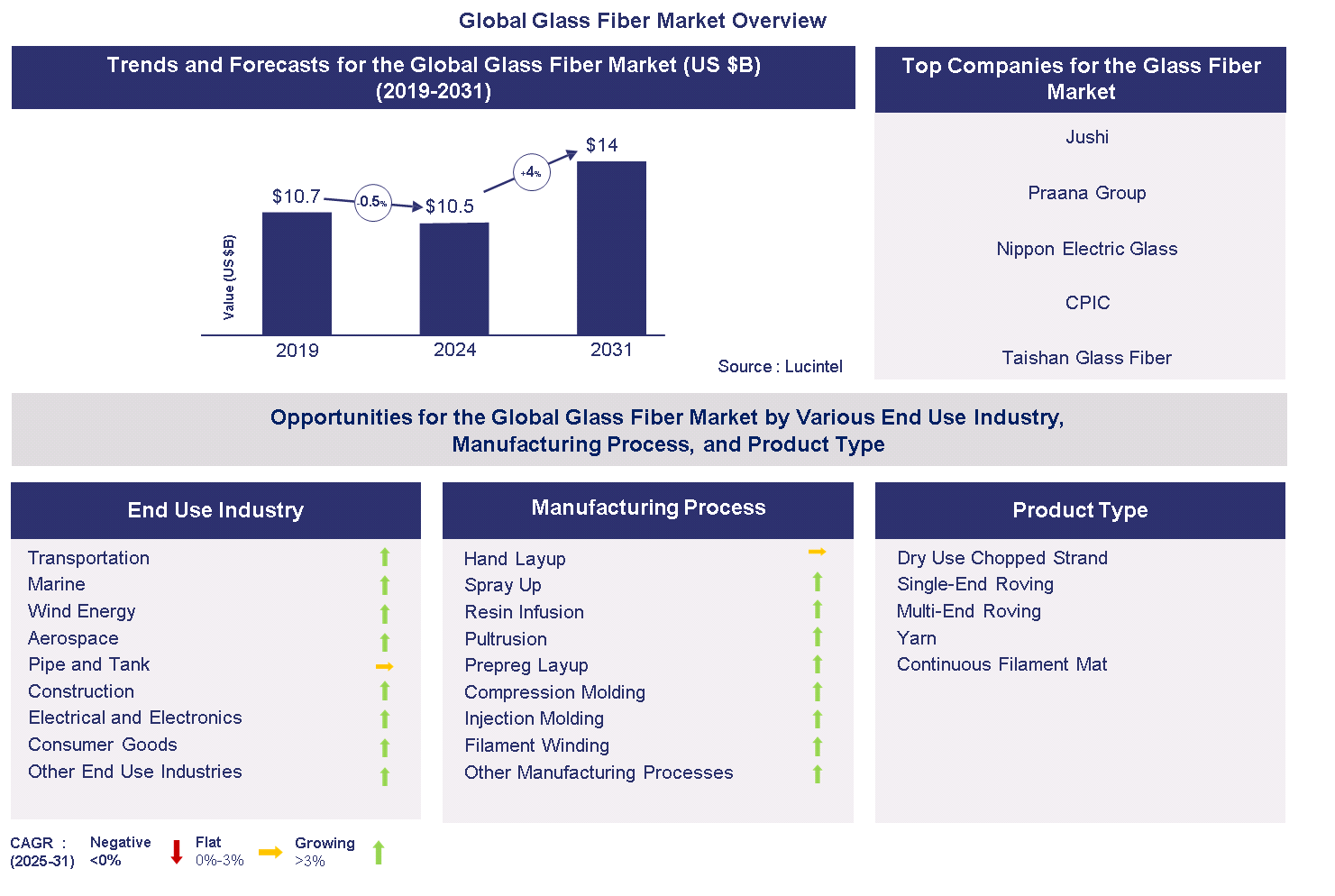
• Lucintel forecasts that construction will remain the largest end use industry by value and volume due to growing infrastructure development and rising demand for energy-efficient buildings. Aerospace is expected to witness highest growth over the forecast period.
• Single end roving will remain the largest product type by volume over the forecast period.
• Asia Pacific is expected to remain the largest region by value and volume over the forecast period because of growth in construction, pipe and tanks, and the electrical and electronics segments. Growing economy, growth in population, and urbanization are the major forces that drive the construction segment, especially in China and India and it is also expected to witness the highest growth over the forecast period.
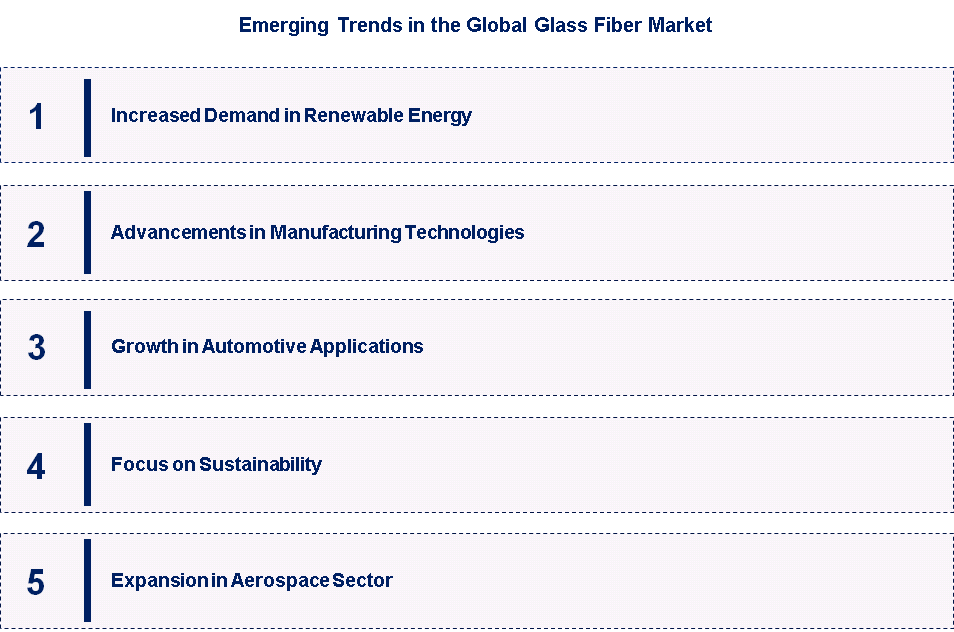
• Increased Demand in Renewable Energy: The push for renewable energy sources, particularly wind and solar, is driving the demand for glass fiber composites. These materials are essential for manufacturing wind turbine blades and solar panel structures, offering strength and lightweight properties that enhance efficiency and performance.
• Advancements in Manufacturing Technologies: Innovations in manufacturing processes, such as automated fiber placement and 3D printing, are improving the efficiency and precision of glass fiber production. These advancements reduce waste and costs while enabling the creation of complex shapes and designs, making glass fiber more accessible for various applications.
• Growth in Automotive Applications: The automotive industry is increasingly adopting glass fiber composites to reduce vehicle weight and improve fuel efficiency. As regulations on emissions tighten, manufacturers are turning to glass fiber for its ability to enhance performance while maintaining safety standards, leading to a surge in demand for these materials.
• Focus on Sustainability: There is a growing emphasis on sustainable practices within the glass fiber market. Manufacturers are exploring bio-based glass fibers and recycling methods to minimize environmental impact. This trend not only meets consumer demand for eco-friendly products but also aligns with global sustainability goals, making it a key driver of innovation.
• Expansion in Aerospace Sector: The aerospace industry is increasingly utilizing glass fiber composites for their lightweight and high-strength characteristics. As airlines seek to improve fuel efficiency and reduce operational costs, the adoption of glass fiber in aircraft interior parts is expected to rise, further propelling market growth.
• Development of Eco-Friendly Glass Fibers: Manufacturers are increasingly focusing on producing eco-friendly glass fibers using recycled materials and sustainable practices. This shift not only reduces environmental impact but also meets the growing consumer demand for sustainable products, enhancing brand reputation and market competitiveness.
• Advancements in Manufacturing Technologies: Innovations in manufacturing processes, such as the introduction of automated production lines and advanced curing techniques, have improved efficiency and reduced costs. These advancements enable manufacturers to produce high-quality glass fibers at a lower price, making them more accessible to a wider range of industries.
• Expansion in Wind Energy Applications: The demand for glass fiber in wind energy applications has surged due to the global push for renewable energy sources. Glass fiber composites are essential for manufacturing wind turbine blades, which require lightweight and durable materials. This trend is expected to drive significant growth in the glass fiber market as countries invest in renewable energy infrastructure.
• Increased Use in Automotive Industry: The automotive sector is increasingly adopting glass fiber composites to reduce vehicle weight and improve fuel efficiency. This trend is driven by stringent regulations on emissions and a growing consumer preference for eco-friendly vehicles. As a result, the glass fiber market is witnessing a rise in demand from automotive manufacturers.
• Growth in Aerospace Applications: The aerospace industry is leveraging glass fiber composites for their lightweight and high-strength properties, particularly in aircraft components. Recent developments in this sector are focused on enhancing performance and safety, leading to increased investments in research and development. This growth is expected to significantly contribute to the overall expansion of the glass fiber market.
• Construction: The construction industry is increasingly adopting glass fiber reinforced polymer (GFRP) materials for their strength and lightweight properties. This shift is driven by the need for durable, corrosion-resistant materials that can withstand harsh environmental conditions. GFRP is being used in structural applications, such as bridges and buildings, leading to reduced maintenance costs and extended service life.
• Automotive: The automotive sector is leveraging glass fiber composites to reduce vehicle weight and improve fuel efficiency. As regulations on emissions tighten, manufacturers are turning to glass fiber for components like body panels and interior parts. This trend not only enhances performance but also supports the industry‘s shift towards electric vehicles, where weight reduction is critical for battery efficiency.
• Aerospace: In aerospace applications, glass fiber is gaining traction due to its high strength-to-weight ratio and resistance to fatigue. The material is being utilized in aircraft components, contributing to improved fuel efficiency and reduced operational costs. As the aerospace industry continues to innovate, the demand for advanced composite materials, including glass fiber, is expected to rise significantly.
• Electronics: The electronics industry is increasingly incorporating glass fiber in printed circuit boards (PCBs) due to its excellent dielectric properties and thermal stability. This application is crucial for the development of high-performance electronic devices, including smartphones and computers. As technology advances, the demand for reliable and efficient PCBs will drive growth in the glass fiber market.
• Wind Energy: The renewable energy sector, particularly wind energy, is a burgeoning application for glass fiber. Wind turbine blades made from glass fiber composites offer the necessary strength and lightweight characteristics to enhance energy efficiency. As the global focus on sustainable energy sources intensifies, the demand for glass fiber in wind energy applications is expected to grow, supporting the transition to greener technologies.
• Increasing demand for lightweight materials: The automotive and aerospace industries are increasingly adopting glass fiber due to its lightweight properties, which enhance fuel efficiency and reduce emissions.
• Growth in construction activities: The rising construction sector, particularly in emerging economies, is driving the demand for glass fiber reinforced composites in building materials, offering strength and durability.
• Advancements in manufacturing technologies: Innovations in production techniques, such as automated fiber placement, are improving the efficiency and quality of glass fiber products, making them more appealing to manufacturers.
• Rising environmental awareness: The shift towards sustainable materials is boosting the use of glass fiber, as it is recyclable and has a lower environmental impact compared to traditional materials.
• Expanding applications in wind energy: The growing wind energy sector is increasing the demand for glass fiber in turbine blades, as it provides the necessary strength and flexibility to withstand harsh conditions.
• Volatility in raw material prices: Fluctuations in the prices of silica and other raw materials can impact production costs, leading to uncertainty for manufacturers and potentially higher prices for consumers.
• Stringent regulatory requirements: Compliance with environmental regulations and safety standards can pose challenges for manufacturers, requiring investments in technology and processes to meet these demands.
• Competition from alternative materials: The emergence of advanced composites and other lightweight materials presents a competitive threat to glass fiber, as industries may opt for alternatives that offer similar or superior performance.
• Praana Group
• Jushi Group Co., Ltd.
• Chongqing Polycomp International Corporation
• Taishan Fiberglass Inc.
• Taiwan Glass Group
• Nippon Electric Glass Co. Ltd.
• Sichuan Weibo. Co. Ltd
• Johns Manville Corporation
• Nitto Boseki Co. Ltd
• Marine
• Transportation
• Pipe and Tank
• Aerospace
• Construction
• Electrical & Electronics
• Consumer Goods
• Wind Energy
• Other End Use Industries
• Hand Lay-Up
• Spray Up
• Resin Infusion
• Filament Winding
• Pultrusion
• Compression Molding
• Prepreg Layup
• Injection Molding
• Other Manufacturing Processes
• Single End Roving
• Multi End Roving
• DUCS
• Yarn
• CFM
• North America
• US
• Canada
• Mexico
• Europe
• Germany
• United Kingdom
• Spain
• France
• Italy
• Asia Pacific
• China
• India
• Japan
• Taiwan
• Rest of the World
• Brazil

• Market Size Estimates: Glass fiber market size estimation in terms of value ($B) and volume (M lbs.).
• Trend and Forecast Analysis: Market trends (2019-2025) and forecast (2026-2035) by various segments and regions.
• Segmentation Analysis: Glass fiber market size by various segments, such as end use industry, manufacturing process, and product type in terms of value and volume.
• Regional Analysis: Glass fiber market breakdown by North America, Europe, Asia Pacific, and Rest of the World.
• Growth Opportunities: Analysis on growth opportunities in different end use industry, manufacturing process, product type, and regions for the glass fiber market.
• Strategic Analysis: This includes M&A, new product development, and competitive landscape for the global glass fiber market.
• Analysis of competitive intensity of the industry based on Porter’s Five Forces model.

• Praana Group (Owens Corning)
• Jushi Group Co., Ltd.
• Chongqing Polycomp International Corporation
• Taishan Fiberglass Inc.
• Taiwan Glass Group
• Nippon Electric Glass Co. Ltd.
• Sichuan Weibo. Co. Ltd
• Johns Manville Corporation
• Nitto Boseki Co. Ltd
Q7. In glass fiber market, which region is expected to be the largest in next 10 years?

Choose a license that fits your team. Instant PDF delivery.
Prices exclude taxes. Instant delivery. Custom licensing available on request.
Market Report · July 31, 2026
Market Report · May 18, 2026
Market Report · May 16, 2026
Trusted partner for strategic intelligence and business growth


Receive a complimentary market analysis tailored to your industry. Our analysts will identify key growth opportunities and competitive dynamics specific to your business.

Market size, growth rate, and key trend analysis for your specific sector.

Top competitor positioning and market share analysis.

Strategic recommendations backed by data-driven insights.
Get curated market intelligence and competitive moves straight to your inbox.
By subscribing, you agree to receive our monthly insights. Unsubscribe anytime.
Receive a complimentary market analysis tailored to your industry. Our analysts will identify key growth opportunities and competitive dynamics specific to your business.
Market size, growth rate, and key trend analysis for your specific sector.
Top competitor positioning and market share analysis.
Strategic recommendations backed by data-driven insights.
Get curated market intelligence, emerging trends, and competitive moves straight to your inbox each month.
By subscribing, you agree to receive our monthly insights. Unsubscribe anytime.
We'll send your sample report shortly.