
Market Report · July 22, 2026

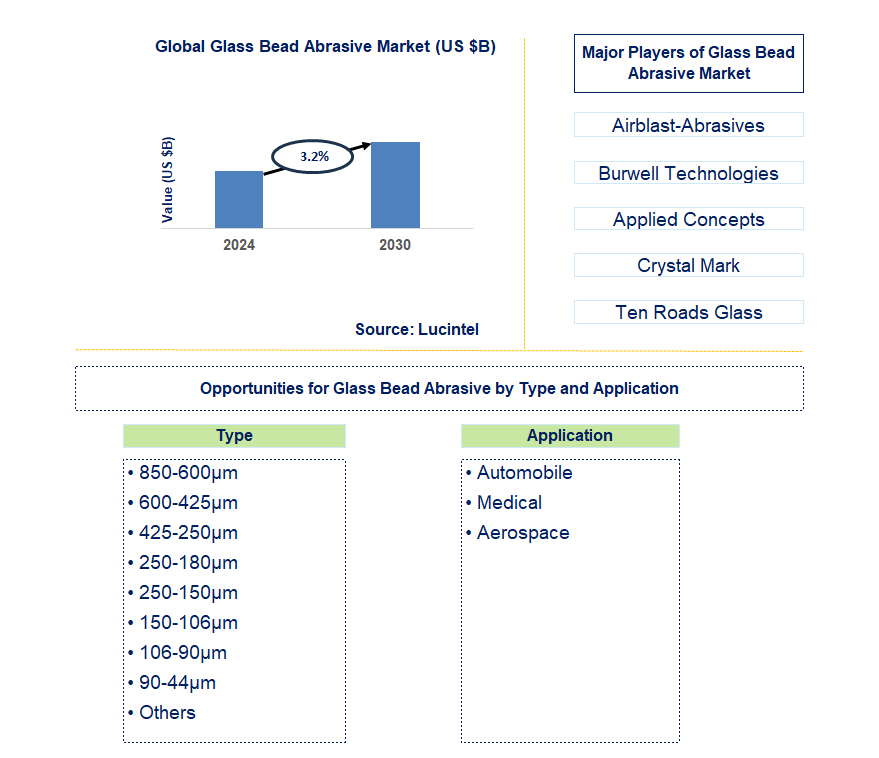
Key data points: The growth forecast = 3.2% annually for the next 6 years. Scroll below to get more insights. This market report covers trends, opportunities, and forecasts in the global glass bead abrasive market to 2030 by type (850-600µm, 600-425µm, 425-250µm, 250-180µm, 250-150µm, 150-106µm, 106-90µm, 90-44µm, and others), application (automobile, medical, and aerospace), and region (North America, Europe, Asia Pacific, and the Rest of the World)
We'll send your sample report shortly.
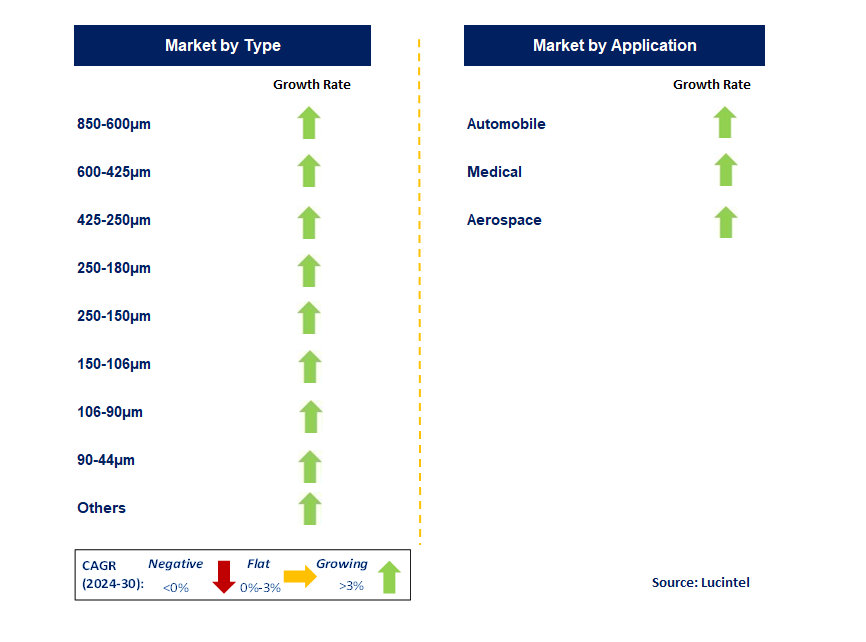
• Lucintel forecasts that, within the type category, 850-600µm is expected to witness the highest growth over the forecast period.
• Within this application category, the automobile is expected to witness the highest growth over the forecast period.
• In terms of regions, APAC is expected to witness the highest growth over the forecast period. A more than 150-page report is developed to help in your business decisions.
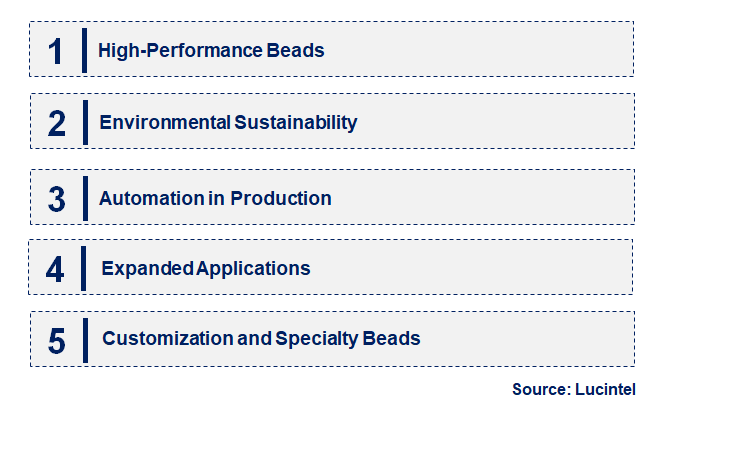
• High-Performance Beads: Advances in manufacturing are producing high-performance glass beads with improved durability and consistency. These beads enhance abrasive efficiency and are increasingly used in precision cleaning and surface preparation applications.
• Environmental Sustainability: There is a growing emphasis on environmentally friendly glass bead production. Innovations include using recycled glass and reducing waste in manufacturing processes, reflecting the industry's shift towards sustainability.
• Automation in Production: The integration of automated systems in the production of glass bead abrasives is increasing efficiency and precision. Automation technologies are improving consistency in bead sizing and quality control, leading to better product performance.
• Expanded Applications: Glass bead abrasives are finding new applications in industries such as aerospace and automotive. Innovations are expanding the use of glass beads in specialized cleaning and finishing processes, broadening their market reach.
• Customization and Specialty Beads: There is a rising demand for customized and specialty glass beads tailored to specific applications. This trend is driven by the need for specialized abrasives that meet the unique requirements of various industrial processes. These trends are reshaping the glass bead abrasive market by enhancing product performance, promoting sustainability, and expanding applications, leading to a more dynamic and innovative industry landscape.
• Advanced Manufacturing Techniques: New manufacturing techniques, such as automated production and high-precision sizing, are improving the quality and performance of glass bead abrasives. These advancements enhance product consistency and durability.
• Increased Focus on Sustainability: The industry is adopting more sustainable practices, including the use of recycled glass in production. This shift reflects a growing commitment to reducing environmental impact and improving the ecological footprint of glass bead abrasives.
• Growth in Industrial Applications: There is a rising demand for glass bead abrasives in industrial applications, such as surface preparation and cleaning. This growth is driven by the need for effective and efficient abrasive solutions in various manufacturing processes.
• Technological Innovations: Innovations in technology are enhancing the performance of glass bead abrasives. Developments include improved bead strength and durability, which are increasing the effectiveness of abrasives in demanding applications.
• Expansion of Market Reach: The market is expanding into new regions and applications, driven by increased production capacity and technological advancements. This expansion is enabling glass bead abrasives to reach new industries and geographic areas. These developments are impacting the glass bead abrasive market by improving product quality, promoting sustainability, and expanding applications, contributing to overall growth and innovation in the industry.
• Automotive Industry: There is significant potential for growth in the automotive sector, where glass bead abrasives are used for surface preparation and finishing. Opportunities include developing specialized abrasives for precision cleaning and coating applications.
• Aerospace Sector: The aerospace industry presents growth opportunities for glass bead abrasives used in cleaning and surface treatment of aircraft components. Innovations in bead performance and durability are key to meeting the stringent requirements of this sector.
• Construction and Infrastructure: Glass bead abrasives are increasingly used in construction and infrastructure projects for surface preparation and finishing. Opportunities include expanding product offerings for various applications, such as concrete cleaning and metal surface treatment.
• Medical Devices: The medical device industry offers growth potential for glass bead abrasives used in cleaning and finishing precision components. Developing high-quality, contamination-free abrasives can cater to the rigorous standards of this industry.
• Marine and Shipbuilding: The marine and shipbuilding industries are expanding their use of glass bead abrasives for cleaning and maintenance. Opportunities include creating specialized abrasives for harsh environments and improving bead performance for effective surface treatment. These growth opportunities are driving the expansion of the glass bead abrasive market by targeting key applications and industries, fostering innovation, and meeting the evolving needs of various sectors.
• Technological Advancements: Innovations in manufacturing technologies are improving the quality and performance of glass bead abrasives. Advances such as automation and high-precision production are enhancing product consistency and effectiveness.
• Growing Industrial Demand: Increasing demand in industries such as automotive, aerospace, and construction is driving growth in the glass bead abrasive market. The need for efficient surface preparation and cleaning solutions is expanding market opportunities.
• Sustainability Trends: The shift towards environmentally friendly practices, including the use of recycled glass, is driving market growth. Sustainable production methods are becoming a key selling point for glass bead abrasives.
• Expansion of Applications: The widening range of applications for glass bead abrasives, including specialized industries like medical devices and marine, is fueling market growth. This diversification is opening new revenue streams for manufacturers.
• Global Market Expansion: Increased production capacity and market reach are enabling glass bead abrasives to enter new geographic regions. Expanding into emerging markets presents significant growth opportunities for the industry. Challenges in the glass bead abrasive market are:
• Regulatory Compliance: Navigating regulatory requirements for glass bead abrasives can be complex. Compliance with health, safety, and environmental regulations impacts production processes and market access.
• Cost Pressures: Rising production costs, including raw materials and advanced manufacturing technologies, can impact profitability. Managing costs while maintaining product quality is a key challenge for manufacturers.
• Quality Consistency: Ensuring consistent quality and performance of glass bead abrasives is challenging. Variability in bead size and strength can affect product effectiveness and market acceptance.
• Market Competition: The glass bead abrasive market is competitive, with numerous players offering similar products. Differentiating products and maintaining a competitive edge requires innovation and effective marketing.
• Economic Fluctuations: Economic conditions, such as fluctuations in demand and pricing pressures, can impact market stability. Economic downturns or shifts in industrial activity can affect market growth and profitability. The glass bead abrasive market is shaped by technological advancements, growing demand, and sustainability trends, while facing challenges such as regulatory compliance and cost pressures. Addressing these factors is crucial for navigating market dynamics and achieving sustained growth.
• Airblast-Abrasives
• Burwell Technologies
• Applied Concepts
• Crystal Mark
• Ten Roads Glass
• MANUS Abrasive Systems
• IST Blast
• SIGG
• Swarco
• Zhejiang Tongbao Surface Processing Equipment Technology
• 850-600µm
• 600-425µm
• 425-250µm
• 250-180µm
• 250-150µm
• 150-106µm
• 106-90µm
• 90-44µm
• Others
• Automobile
• Medical
• Aerospace
• North America
• Europe
• Asia Pacific
• The Rest of the World
• United States: The U.S. has seen advancements in the production of glass bead abrasives, focusing on improving bead consistency and durability. New manufacturing techniques are enhancing the efficiency of abrasive performance, leading to increased adoption in industrial cleaning and surface preparation applications.
• China: China is advancing in the development of high-performance glass bead abrasives, with innovations aimed at improving the quality and cost-effectiveness of products. The country is also expanding its production capacity to meet growing domestic and international demand.
• Germany: Germany is leading in the integration of advanced technologies in glass bead abrasive production. Innovations include the use of automated systems for precise bead sizing and quality control, which are enhancing product performance and reliability in automotive and industrial applications.
• India: In India, there is a growing focus on developing cost-effective glass bead abrasives to cater to various industrial sectors. Recent developments include improving the environmental impact of production processes and increasing the availability of high-quality products for diverse applications.
• Japan: Japan is innovating in the field of glass bead abrasives with an emphasis on enhancing the durability and performance of the beads. The country is also exploring new applications for glass bead abrasives in precision engineering and advanced manufacturing sectors.


• Airblast-Abrasives
• Burwell Technologies
• Applied Concepts
• Crystal Mark
• Ten Roads Glass
• MANUS Abrasive Systems
• IST Blast
• SIGG
• Swarco
• Zhejiang Tongbao Surface Processing Equipment Technology Q5. Which glass bead abrasive market segment will be the largest in future? Answer: Lucintel forecasts that 850-600µm is expected to witness the highest growth over the forecast period. Q6. In glass bead abrasive market, which region is expected to be the largest in next 5 years? Answer: APAC is expected to witness the highest growth over the forecast period. Q.7 Do we receive customization in this report? Answer: Yes, Lucintel provides 10% customization without any additional cost.


Choose a license that fits your team. Instant PDF delivery.
Prices exclude taxes. Instant delivery. Custom licensing available on request.
Market Report · July 22, 2026
Market Report · July 22, 2026
Market Report · July 22, 2026
Trusted partner for strategic intelligence and business growth


Receive a complimentary market analysis tailored to your industry. Our analysts will identify key growth opportunities and competitive dynamics specific to your business.

Market size, growth rate, and key trend analysis for your specific sector.

Top competitor positioning and market share analysis.

Strategic recommendations backed by data-driven insights.
Get curated market intelligence and competitive moves straight to your inbox.
By subscribing, you agree to receive our monthly insights. Unsubscribe anytime.
Receive a complimentary market analysis tailored to your industry. Our analysts will identify key growth opportunities and competitive dynamics specific to your business.
Market size, growth rate, and key trend analysis for your specific sector.
Top competitor positioning and market share analysis.
Strategic recommendations backed by data-driven insights.
Get curated market intelligence, emerging trends, and competitive moves straight to your inbox each month.
By subscribing, you agree to receive our monthly insights. Unsubscribe anytime.
We'll send your sample report shortly.