
Report Feature
Giemsa Stain Market Trends and Forecast
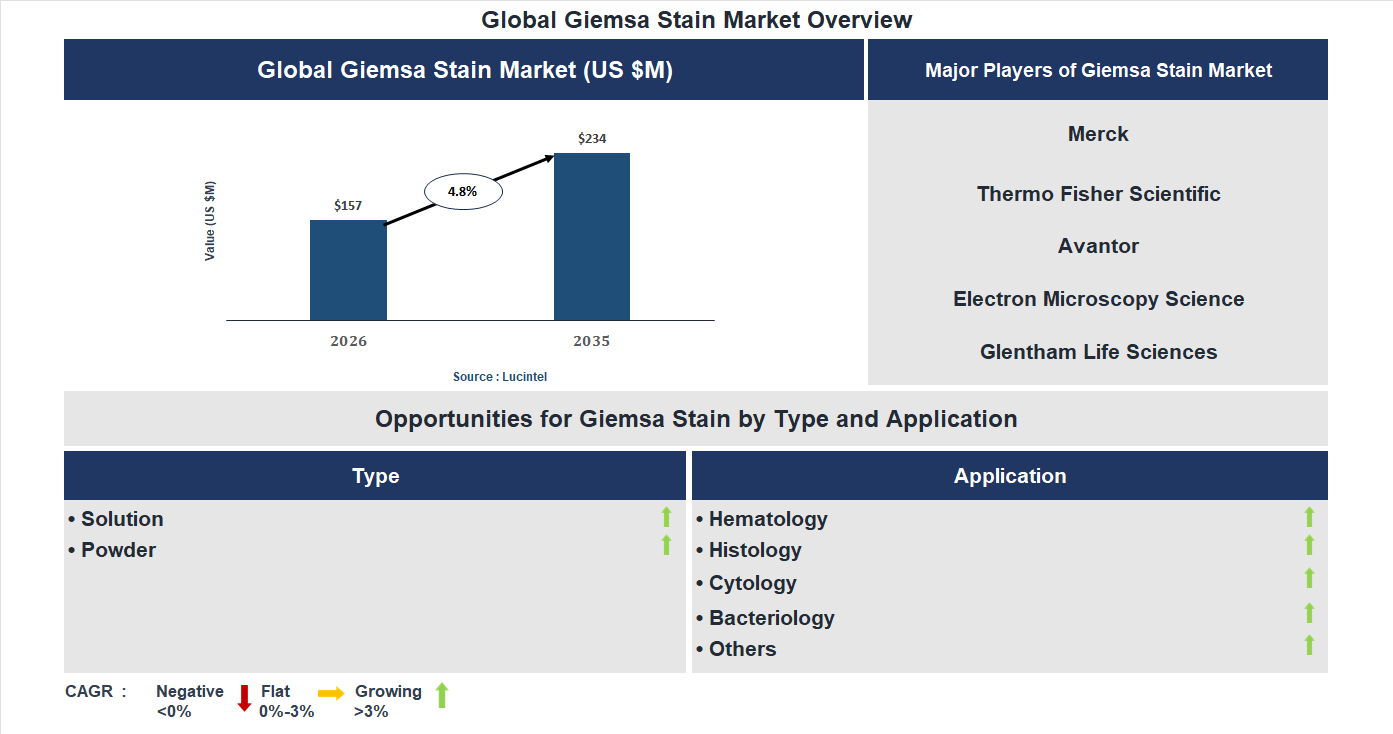
The future of the global giemsa stain market looks promising with opportunities in the hematology, histology, cytology, and bacteriology markets. The global giemsa stain market is expected to reach an estimated $234 million by 2035 with a CAGR of 4.8% from 2026 to 2035. The major drivers for this market are the increasing demand for diagnostic testing, the rising prevalence of infectious diseases, and the growing focus on hematology research.• Lucintel forecasts that, within the type category, solution is expected to witness higher growth over the forecast period.
• Within the application category, hematology is expected to witness the highest growth.
• In terms of region, APAC is expected to witness the highest growth over the forecast period. Gain valuable insights for your business decisions with our comprehensive 150+ page report. Sample figures with some insights are shown below.
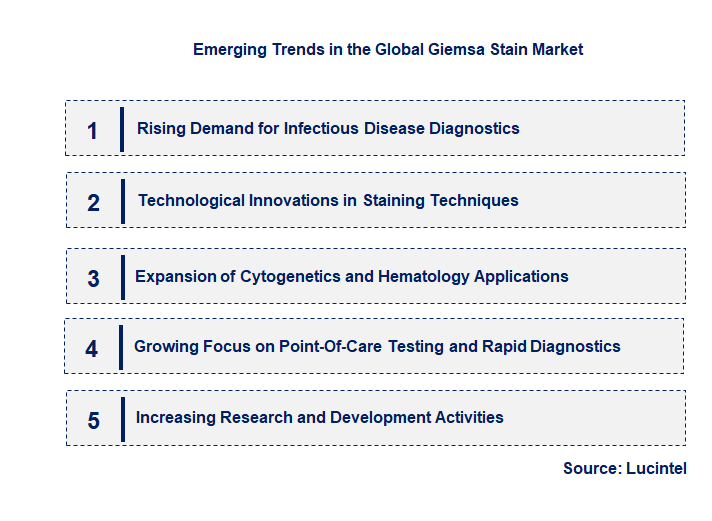
Emerging Trends in the Giemsa Stain Market
The giemsa stain market is experiencing significant evolution driven by advancements in diagnostic techniques, increasing prevalence of infectious diseases, and technological innovations in laboratory practices. As healthcare systems worldwide focus on early detection and accurate diagnosis, the demand for Giemsa stain, a vital cytogenetic and histopathological tool, is expanding. Emerging trends are shaping the market landscape by improving diagnostic efficiency, expanding application areas, and fostering new product development. These developments are not only enhancing clinical outcomes but also influencing market dynamics, competitive strategies, and research investments. Understanding these trends is essential for stakeholders aiming to capitalize on the markets growth potential.• Rising Demand for Infectious Disease Diagnostics: The increasing prevalence of infectious diseases such as malaria, leishmaniasis, and certain bacterial infections is driving the demand for Giemsa stain. Its ability to identify parasites and bacteria in blood smears and tissue samples makes it indispensable in clinical laboratories. As global health initiatives focus on disease control and eradication, the need for reliable, cost-effective diagnostic tools like Giemsa stain is growing, leading to market expansion and increased product adoption.
• Technological Innovations in Staining Techniques: Advances in staining protocols and automation are transforming the giemsa stain market. Automated staining systems improve consistency, reduce turnaround times, and enhance laboratory efficiency. Innovations such as digital microscopy integration allow for better visualization and analysis of stained samples. These technological improvements are making Giemsa staining more accessible and reliable, thereby broadening its application scope and increasing its adoption in both developed and developing regions.
• Expansion of Cytogenetics and Hematology Applications: Beyond infectious disease diagnosis, Giemsa stain is increasingly used in cytogenetics and hematology for chromosome analysis and blood cell identification. The rising prevalence of genetic disorders and blood cancers like leukemia is fueling demand for Giemsa-based cytogenetic testing. This expansion into new diagnostic areas is diversifying the market, encouraging product development tailored for specific applications, and boosting overall market growth.
• Growing Focus on Point-of-Care Testing and Rapid Diagnostics: The shift towards decentralized testing and rapid diagnostics is influencing the giemsa stain market. Portable and easy-to-use staining kits are being developed for use in field settings, remote areas, and small clinics. This trend enhances early detection capabilities and improves healthcare access, especially in resource-limited regions. The market is witnessing increased investments in developing user-friendly Giemsa staining solutions that support point-of-care testing, thereby expanding its reach and impact.
• Increasing Research and Development Activities: Investment in research to improve Giemsa stain formulations and application methods is a key trend. R&D efforts aim to enhance stain sensitivity, reduce processing time, and develop multiplexed staining techniques. These innovations are facilitating more detailed cellular and molecular analysis, supporting personalized medicine, and expanding research applications. The focus on R&D is driving product innovation, creating new market opportunities, and strengthening the competitive landscape. These emerging trends are collectively reshaping the giemsa stain market by improving diagnostic accuracy, expanding application areas, and fostering technological advancements. They are enabling healthcare providers to deliver faster, more reliable diagnoses, which ultimately enhances patient outcomes and drives market growth. As these trends continue to evolve, the giemsa stain market is poised for sustained expansion and innovation.
Recent Development in the Giemsa Stain Market
The giemsa stain market is experiencing significant growth driven by advancements in diagnostic techniques and increasing demand for accurate disease detection. Innovations in microscopy and automation are enhancing the efficiency of Giemsa staining procedures. The rising prevalence of infectious diseases, particularly malaria and other parasitic infections, is fueling market expansion. Additionally, expanding research activities in microbiology and cytogenetics are contributing to increased adoption. The markets evolution is also supported by technological improvements and growing awareness among healthcare providers about the benefits of Giemsa staining in diagnostics.• Growing Demand for Accurate Diagnostic Tools: The increasing prevalence of infectious diseases like malaria and parasitic infections is driving the need for precise diagnostic methods. Giemsa stain offers reliable visualization of blood parasites, making it essential in clinical laboratories. The demand for rapid, accurate, and cost-effective diagnostic solutions is boosting market growth. Healthcare providers are adopting Giemsa stain for early detection, which improves patient outcomes and reduces disease transmission. This trend is expected to continue as disease burden rises globally.
• Technological Advancements in Staining Techniques: Innovations in microscopy and automation are transforming Giemsa staining procedures. Automated staining systems improve consistency, reduce manual errors, and increase throughput in laboratories. Enhanced imaging technologies allow for better visualization and analysis of stained samples. These advancements are making Giemsa stain more accessible and efficient, encouraging adoption in research and clinical settings. As technology progresses, the market benefits from increased precision and reduced turnaround times, supporting broader applications.
• Rising Research and Development Activities: Increased investment in microbiology, cytogenetics, and pathology research is expanding the use of Giemsa stain. Researchers utilize it for chromosome analysis, blood smears, and pathogen identification. Growing R&D activities are leading to the development of improved staining protocols and new diagnostic applications. This trend is fostering innovation and expanding the market beyond traditional uses. The focus on personalized medicine and molecular diagnostics further amplifies the importance of Giemsa stain in research.
• Increasing Adoption in Veterinary Diagnostics: The veterinary sector is increasingly adopting Giemsa stain for diagnosing parasitic and infectious diseases in animals. It is used for blood smears and tissue analysis, aiding in early detection and treatment. The rise in pet ownership and livestock farming is contributing to market growth. Veterinary laboratories are investing in Giemsa staining techniques to improve diagnostic accuracy. This expanding application segment is expected to significantly impact the overall market, especially in regions with high animal health concerns.
• Expansion of Diagnostic Laboratories and Healthcare Infrastructure: The global expansion of diagnostic laboratories and healthcare infrastructure is facilitating wider adoption of Giemsa stain. Developing countries are investing in laboratory modernization, increasing access to advanced diagnostic tools. This growth supports the use of Giemsa stain in routine diagnostics, research, and disease surveillance. The increasing number of laboratories and healthcare facilities enhances market reach and drives demand. Improved healthcare infrastructure ensures better disease management, further propelling market growth. These developments are collectively transforming the giemsa stain market by enhancing diagnostic accuracy, expanding application areas, and improving technological efficiency. The increasing prevalence of infectious diseases, coupled with advancements in laboratory infrastructure and research, is fueling market growth. As these trends continue, the market is poised for sustained expansion, offering new opportunities for innovation and improved healthcare outcomes worldwide.
Strategic Growth Opportunities in the Giemsa Stain Market
The giemsa stain market is experiencing significant growth driven by increasing demand in medical diagnostics, research, and microbiology. Advances in staining techniques and automation are enhancing accuracy and efficiency, expanding application areas. The rising prevalence of infectious diseases and cancer diagnostics further fuels market expansion. Additionally, technological innovations and growing awareness about early detection are creating new opportunities for manufacturers and healthcare providers. This dynamic environment offers substantial potential for strategic investments and product development to meet evolving industry needs.• Growing Demand in Hematology and Cytogenetics: The increasing prevalence of blood disorders and genetic abnormalities is boosting the use of Giemsa stain for blood smears, bone marrow analysis, and cytogenetic studies. Improved diagnostic accuracy and early detection capabilities are driving laboratories to adopt Giemsa staining techniques, supporting market growth. The need for precise, reliable staining methods in clinical settings is further fueling demand, especially in developed and emerging markets.
• Expansion in Microbiology and Pathology Applications: Giemsa stain is essential for identifying parasites, bacteria, and other microorganisms in microbiology labs. Its ability to differentiate cellular components makes it valuable in pathology for tumor and tissue analysis. Growing research activities and diagnostic testing for infectious diseases like malaria, leishmaniasis, and bacterial infections are expanding the application scope. This trend enhances market opportunities, especially in regions with high infectious disease burdens.
• Technological Innovations and Automation in Staining Procedures: The development of automated staining systems and digital imaging technologies is transforming the giemsa stain market. These innovations improve consistency, reduce turnaround times, and enhance diagnostic accuracy. Automation also minimizes human error and labor costs, making the process more efficient. As laboratories seek high-throughput solutions, the adoption of advanced staining platforms is expected to accelerate market growth and expand application capabilities.
• Rising Prevalence of Infectious Diseases and Cancer: The global increase in infectious diseases such as malaria and leishmaniasis, along with rising cancer incidence, is driving demand for reliable diagnostic tools like Giemsa stain. Early and accurate detection is critical for effective treatment, prompting healthcare providers to invest in advanced staining techniques. This trend supports sustained market growth, especially in developing regions where infectious diseases remain prevalent and diagnostic infrastructure is expanding.
• Increasing Focus on Research and Development Activities: Growing investments in biomedical research and clinical studies are boosting the use of Giemsa stain for laboratory investigations. Researchers rely on it for cytogenetic analysis, drug development, and disease mechanism studies. The expanding research landscape, coupled with collaborations between academia and industry, is fostering innovation in staining methods and applications. This ongoing R&D activity is expected to create new market segments and enhance the overall growth trajectory. The overall impact of these opportunities is a robust expansion of the giemsa stain market, driven by technological advancements, increasing disease burden, and evolving diagnostic needs. Strategic focus on innovation, automation, and expanding application areas will further strengthen the market position. As healthcare systems worldwide prioritize early detection and precise diagnostics, the market is poised for sustained growth and diversification.
Giemsa Stain Market Driver and Challenges
The giemsa stain market is influenced by a variety of technological, economic, and regulatory factors that shape its growth and development. Advances in diagnostic techniques and laboratory automation have increased demand for reliable staining methods. Economic factors such as healthcare expenditure and research funding impact market expansion, while regulatory standards ensure safety and efficacy. Additionally, the increasing prevalence of infectious diseases and cancer drives the need for accurate diagnostic tools like Giemsa staining. However, challenges such as technological limitations, regulatory hurdles, and competition from alternative diagnostic methods also affect market dynamics. Understanding these drivers and challenges is essential for stakeholders aiming to capitalize on market opportunities and address potential barriers effectively. The factors responsible for driving the giemsa stain market include:• Technological Advancements: The development of automated staining systems and digital microscopy has significantly improved the efficiency, accuracy, and reproducibility of Giemsa staining procedures. These innovations reduce manual errors and turnaround times, making the process more suitable for high-throughput laboratories. As technology continues to evolve, laboratories are increasingly adopting these advanced systems, which boosts market growth. Moreover, innovations in reagent formulations enhance stain quality and stability, further supporting diagnostic accuracy. The integration of artificial intelligence with digital microscopy also opens new avenues for automated image analysis, expanding the application scope of Giemsa stains in research and clinical diagnostics.
• Rising Prevalence of Infectious Diseases and Cancers: The global increase in infectious diseases such as malaria, leishmaniasis, and bacterial infections necessitates reliable diagnostic tools like Giemsa stain. It remains a gold standard for identifying blood parasites and other pathogens. Similarly, the rising incidence of cancers, particularly hematological malignancies like leukemia and lymphoma, increases demand for cytogenetic and histopathological analysis, where Giemsa staining is crucial. This growing disease burden directly correlates with increased testing and diagnostic procedures, thereby expanding the market. Additionally, improved awareness and screening programs contribute to higher utilization of Giemsa stain in clinical settings.
• Growing Research and Development Activities: Increased investment in biomedical research and diagnostics has led to the development of new applications for Giemsa stain, including in molecular biology and genetic studies. Research institutions and pharmaceutical companies are exploring innovative uses that expand the market beyond traditional diagnostics. The demand for high-quality staining in research laboratories supports the growth of specialized Giemsa stain products. Furthermore, collaborations between academia and industry foster product innovation, leading to improved formulations and application techniques. This ongoing R&D activity ensures the market remains dynamic and responsive to emerging scientific needs.
• Expansion of Diagnostic Laboratories and Healthcare Infrastructure: The global expansion of healthcare infrastructure, especially in emerging economies, has increased access to diagnostic services. The proliferation of diagnostic laboratories, hospitals, and clinics enhances the demand for Giemsa stain as a fundamental diagnostic reagent. Investments in laboratory automation and quality assurance programs further promote the adoption of standardized staining procedures. As healthcare systems prioritize early and accurate diagnosis, the reliance on Giemsa stain for blood smears, cytogenetics, and histopathology grows. This infrastructure expansion directly contributes to increased market penetration and revenue generation.
• Increasing Adoption of Point-of-Care Testing: The shift towards decentralized and point-of-care testing (POCT) in resource-limited settings is a significant driver. Giemsa stains simplicity and cost-effectiveness make it suitable for use in portable diagnostic kits and field settings. The demand for rapid, on-site diagnosis of infectious diseases and blood disorders is fueling the development of simplified staining protocols and kits. This trend enhances accessibility and reduces dependence on centralized laboratories, broadening the market scope. As POCT gains popularity globally, especially in rural and underserved areas, the market for Giemsa stain is expected to grow substantially. The challenges facing the giemsa stain market include:
• Technological Limitations and Variability: Despite advancements, Giemsa staining still faces issues related to variability in stain quality and reproducibility across different laboratories. Manual staining procedures can lead to inconsistent results, affecting diagnostic accuracy. The need for skilled personnel and standardized protocols remains a barrier, especially in resource-limited settings. Additionally, emerging molecular and automated techniques may reduce reliance on traditional Giemsa staining, posing a threat to its long-term market sustainability. Overcoming these technological limitations requires ongoing innovation and quality control measures, which can be resource-intensive.
• Regulatory and Quality Standards: Stringent regulatory requirements for diagnostic reagents and laboratory practices pose challenges for market players. Compliance with international standards such as ISO and FDA regulations involves extensive testing, documentation, and validation processes, increasing time and costs. Variability in regulatory frameworks across regions complicates market entry and expansion strategies. Moreover, ensuring consistent quality and safety of Giemsa stains is critical to maintain trust and meet clinical standards. Navigating these regulatory landscapes can delay product launches and limit market growth, especially for smaller manufacturers.
• Competition from Alternative Diagnostic Methods: The emergence of molecular diagnostics, immunohistochemistry, and automated analyzers offers alternatives to traditional Giemsa staining. These methods often provide faster, more sensitive, and specific results, challenging Giemsa stains dominance in certain applications. The high cost and complexity of some advanced techniques may limit their adoption in low-resource settings, but they still pose a competitive threat. Market players must innovate and demonstrate the unique advantages of Giemsa stain to maintain relevance. The shift towards integrated diagnostic platforms could further diminish the market share of traditional staining methods. The giemsa stain market is driven by technological innovations, increasing disease prevalence, research activities, healthcare infrastructure expansion, and the adoption of point-of-care testing. However, it faces challenges related to technological variability, regulatory hurdles, and competition from advanced diagnostic techniques. These factors collectively influence market growth, requiring stakeholders to focus on innovation, quality assurance, and strategic positioning. Overall, the markets future will depend on balancing these drivers and overcoming challenges to meet evolving diagnostic needs globally.
List of Giemsa Stain Companies
Companies in the market compete on the basis of product quality offered. Major players in this market focus on expanding their manufacturing facilities, R&D investments, infrastructural development, and leverage integration opportunities across the value chain. With these strategies giemsa stain companies cater increasing demand, ensure competitive effectiveness, develop innovative products & technologies, reduce production costs, and expand their customer base. Some of the giemsa stain companies profiled in this report include-• Merck
• Thermo Fisher Scientific
• Avantor
• Electron Microscopy Science
• Glentham Life Sciences
• Suvchem
• Azer Scientific
• Ricca Chemical
• Hardy Diagnostics
• Diagnostic BioSystems
Giemsa Stain Market by Segment
The study includes a forecast for the global giemsa stain market by type, application, and region.Giemsa Stain Market by Type [Value from 2019 to 2035]:
• Solution
• Powder
Giemsa Stain Market by Application [Value from 2019 to 2035]:
• Hematology
• Histology
• Cytology
• Bacteriology
• Others
Giemsa Stain Market by Region [Value from 2019 to 2035]:
• North America
• Europe
• Asia Pacific
• The Rest of the World
Country Wise Outlook for the Giemsa Stain Market
The giemsa stain market has experienced notable developments driven by advancements in diagnostic techniques, increasing disease prevalence, and technological innovations. Countries are investing in research and development to improve staining methods, enhance diagnostic accuracy, and expand application areas such as microbiology, hematology, and pathology. The markets growth is also influenced by rising awareness of infectious diseases and the need for precise diagnostic tools. Regulatory approvals and collaborations between biotech firms further propel market expansion. As healthcare systems evolve, countries are adopting newer, more efficient Giemsa staining techniques to meet clinical and research demands, shaping the future landscape of this essential diagnostic tool.• United States: The US market has seen significant growth due to technological innovations and increased adoption in clinical laboratories. Advances in automation and digital microscopy have improved diagnostic efficiency. Rising prevalence of infectious diseases and hematological disorders has driven demand for Giemsa stains. Regulatory approvals and collaborations with biotech firms have further expanded market opportunities. The US also invests heavily in research to develop enhanced staining protocols, improving sensitivity and specificity. Additionally, the integration of Giemsa staining with molecular diagnostics is gaining traction, broadening its application scope in personalized medicine and research.
• China: Chinas Giemsa stain market is rapidly expanding, fueled by increasing healthcare infrastructure and a rising burden of infectious diseases such as malaria and tuberculosis. The government’s focus on improving diagnostic capabilities and disease control programs has boosted demand. Local manufacturers are investing in R&D to develop cost-effective and efficient staining solutions. The adoption of automation and digital microscopy is increasing, enhancing diagnostic accuracy. Moreover, collaborations with international firms are facilitating technology transfer and innovation. The growing research community and expanding clinical laboratories are key drivers of market growth, positioning China as a significant player in the global giemsa stain market.
• Germany: Germanys market is characterized by high-quality standards and technological advancements. The country emphasizes precision diagnostics, with a focus on hematology and microbiology applications. Innovations in automation and digital imaging have improved workflow efficiency. Germanys strong healthcare infrastructure and research institutions support the ongoing development of advanced Giemsa staining techniques. Regulatory compliance and quality assurance are priorities, ensuring high market standards. The increasing prevalence of blood disorders and infectious diseases has further driven demand. Additionally, Germanys collaborations with biotech companies and research organizations foster innovation, maintaining its position as a key market in Europe.
• India: The Indian giemsa stain market is experiencing rapid growth due to the rising burden of infectious diseases like malaria, dengue, and tuberculosis. The expanding healthcare infrastructure and government initiatives to improve diagnostic services are significant drivers. Local manufacturers are focusing on producing affordable, high-quality staining solutions to meet the demand in rural and urban areas. The adoption of automation and digital microscopy is gradually increasing, enhancing diagnostic accuracy. Moreover, the growing research and academic sectors are utilizing Giemsa stains for various studies. The markets expansion is also supported by increasing awareness and training programs for healthcare professionals, making India a vital emerging market.
• Japan: Japans giemsa stain market is driven by advanced healthcare infrastructure and a focus on precision diagnostics. The country emphasizes research and development to improve staining techniques and diagnostic tools. Automation and digital imaging technologies are widely adopted, increasing efficiency and accuracy. Japans aging population has led to a rise in hematological and infectious disease diagnostics, boosting demand. The country also invests in innovative research collaborations to develop new applications for Giemsa stains. Regulatory standards are stringent, ensuring high-quality products. Overall, Japan maintains a steady growth trajectory, leveraging technological advancements and a robust healthcare system to sustain its market position.

Features of the Global Giemsa Stain Market
Market Size Estimates: Giemsa stain market size estimation in terms of value ($M). Trend and Forecast Analysis: Market trends (2019 to 2025) and forecast (2026 to 2035) by various segments and regions. Segmentation Analysis: Giemsa stain market size by type, application, and region in terms of value ($M). Regional Analysis: Giemsa stain market breakdown by North America, Europe, Asia Pacific, and Rest of the World. Growth Opportunities: Analysis of growth opportunities in different types, applications, and regions for the giemsa stain market. Strategic Analysis: This includes M&A, new product development, and competitive landscape of the giemsa stain market. Analysis of competitive intensity of the industry based on Porter’s Five Forces model.
FAQ
Q1. What is the market size and growth forecast for giemsa stain market? Answer: The global giemsa stain market is expected to reach an estimated $234 million by 2035 and grow with a CAGR of 4.8% from 2026 to 2035. Q2. What are the major drivers influencing the growth of the giemsa stain market? Answer: The major drivers for this market are the increasing demand for diagnostic testing, the rising prevalence of infectious diseases, and the growing focus on hematology research. Q3. What are the major segments for giemsa stain market? Answer: The future of the giemsa stain market looks promising with opportunities in the hematology, histology, cytology, and bacteriology markets. Q4. Who are the key giemsa stain market companies? Answer: Some of the key giemsa stain companies are as follows:• Merck
• Thermo Fisher Scientific
• Avantor
• Electron Microscopy Science
• Glentham Life Sciences
• Suvchem
• Azer Scientific
• Ricca Chemical
• Hardy Diagnostics
• Diagnostic BioSystems Q5. Which giemsa stain market segment will be the largest in future? Answer: Lucintel forecasts that, within the type category, solution is expected to witness higher growth over the forecast period. Q6. In giemsa stain market, which region is expected to be the largest in next 5 years? Answer: In terms of region, APAC is expected to witness the highest growth over the forecast period. Q7. Do we receive customization in this report? Answer: Yes, Lucintel provides 10% customization without any additional cost.
Table of Contents
List of Figures
List of Tables
Methodology
- In-depth interviews of the major players in this market
- Detailed secondary research from competitors’ financial statements and published data
- Extensive searches of published works, market, and database information pertaining to industry news, company press releases, and customer intentions
- A compilation of the experiences, judgments, and insights of Lucintel’s professionals, who have analyzed and tracked this market over the years.


Buy Now
Choose a license that fits your team. Instant PDF delivery.
Prices exclude taxes. Instant delivery. Custom licensing available on request.
Key Questions
- • What are some of the most promising, high-growth opportunities for the giemsa stain market by type (solution and powder), application (hematology, histology, cytology, bacteriology, and others), and region (North America, Europe, Asia Pacific, and the Rest of the World)?
- • Which segments will grow at a faster pace and why?
- • Which region will grow at a faster pace and why?
- • What are the key factors affecting market dynamics? What are the key challenges and business risks in this market?
- • What are the business risks and competitive threats in this market?
- • What are the emerging trends in this market and the reasons behind them?
- • What are some of the changing demands of customers in the market?
- • What are the new developments in the market? Which companies are leading these developments?
- • Who are the major players in this market? What strategic initiatives are key players pursuing for business growth?
- • What are some of the competing products in this market and how big of a threat do they pose for loss of market share by material or product substitution?
- • What M&A activity has occurred in the last 7 years and what has its impact been on the industry? For any questions related to Giemsa Stain Market, Giemsa Stain Market Size, Giemsa Stain Market Growth, Giemsa Stain Market Analysis, Giemsa Stain Market Report, Giemsa Stain Market Share, Giemsa Stain Market Trends, Giemsa Stain Market Forecast, Giemsa Stain Companies, write Lucintel analyst at email: helpdesk@lucintel.com. We will be glad to get back to you soon.


