
Market Report · July 22, 2026

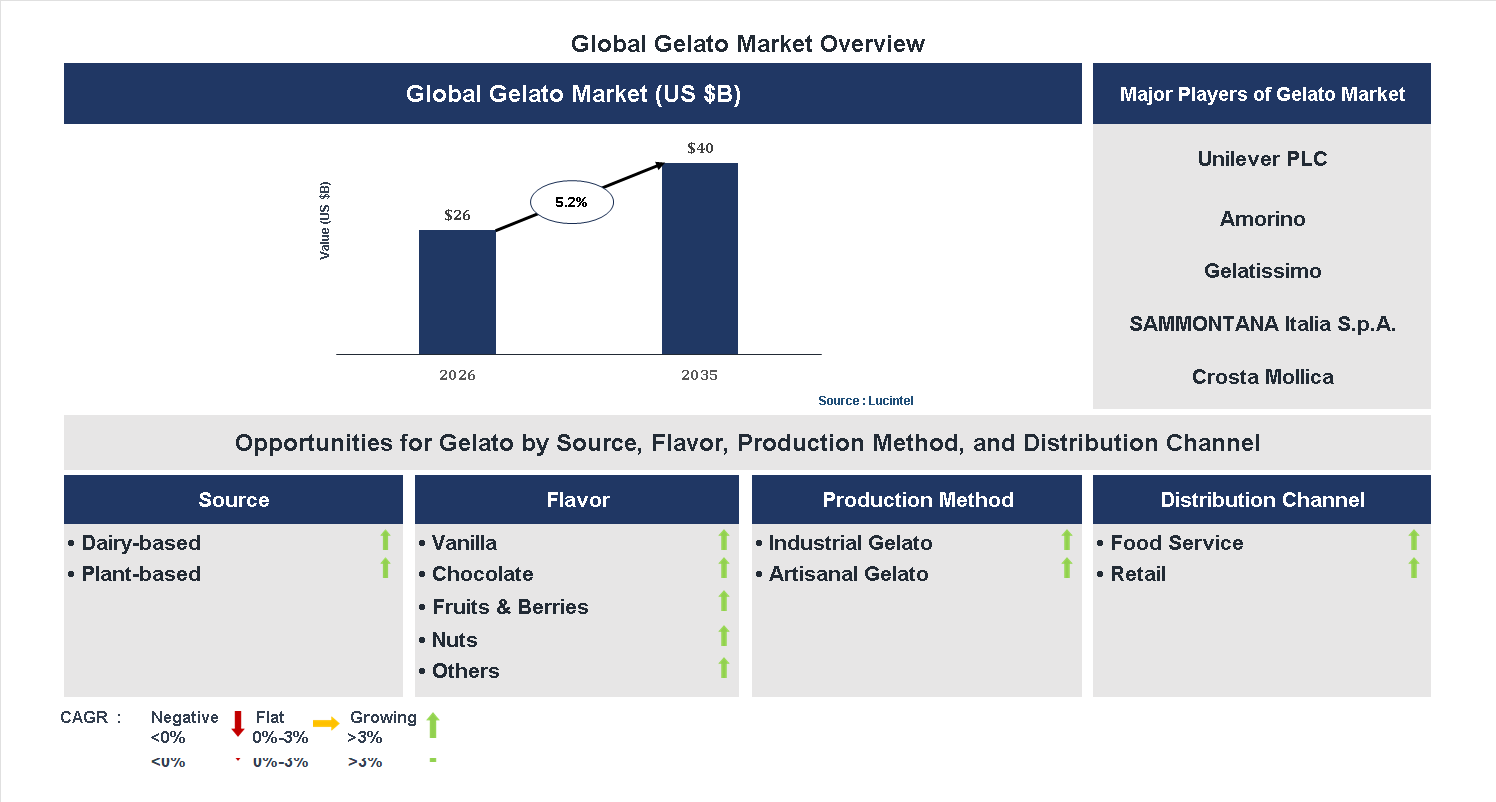
Key data points: The market size in 2035 = $40 billion, growth forecast = 5.2% annually for the next 8 years. Scroll below to get more insights. This market report covers trends, opportunities and forecasts in gelato market to 2035 by source (dairy-based and plant-based), flavor (vanilla, chocolate, fruits & berries, nuts, and others), production method (industrial gelato and artisanal gelato), distribution channel (food service and retail), and region (North America, Europe, Asia Pacific, and the Rest of the World)
We'll send your sample report shortly.
• Lucintel forecasts that, within the source category, dairy-based is expected to witness higher growth over the forecast period.
• Within the distribution channel category, retail is expected to witness higher growth.
• In terms of region, Europe is expected to witness the highest growth over the forecast period. Gain valuable insights for your business decisions with our comprehensive 150+ page report. Sample figures with some insights are shown below.
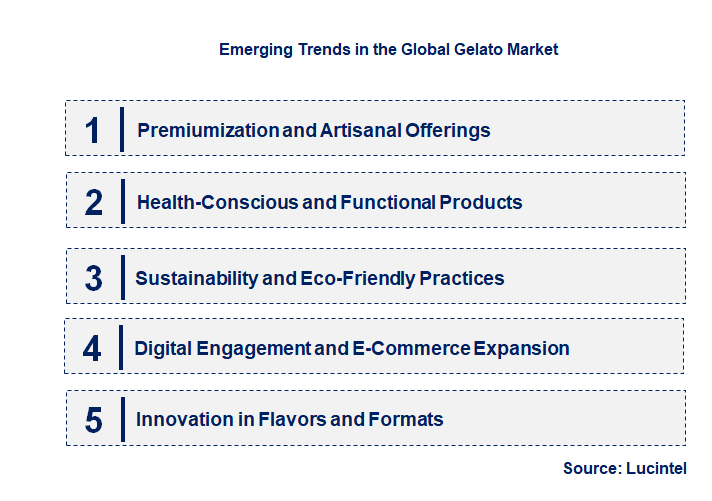
• Premiumization and Artisanal Offerings: Consumers are increasingly seeking high-quality, handcrafted gelato with authentic ingredients. This trend emphasizes artisanal techniques, natural flavors, and unique recipes, which appeal to a growing demographic of food connoisseurs. Premium gelato often features organic, locally sourced ingredients, and innovative flavor combinations, elevating the product from a simple dessert to a gourmet experience. This shift is driving brands to focus on craftsmanship and storytelling, thereby commanding higher price points and fostering brand loyalty.
• Health-Conscious and Functional Products: The rising awareness of health and wellness is influencing gelato formulations. Market players are introducing low-sugar, dairy-free, vegan, and probiotic options to cater to health-conscious consumers. Functional ingredients such as superfoods, antioxidants, and adaptogens are being incorporated to enhance health benefits. This trend broadens the market by attracting consumers with dietary restrictions or those seeking indulgence without guilt, thus expanding the customer base and encouraging innovation in product development.
• Sustainability and Eco-Friendly Practices: Environmental concerns are prompting brands to adopt sustainable sourcing, eco-friendly packaging, and waste reduction initiatives. Using biodegradable containers, recyclable materials, and ethically sourced ingredients aligns with consumer values and enhances brand reputation. Transparency about sustainability efforts is becoming a key differentiator in the market. This trend not only appeals to eco-conscious consumers but also encourages industry-wide shifts towards greener practices, fostering long-term growth and social responsibility.
• Digital Engagement and E-Commerce Expansion: The digital revolution is transforming how consumers discover and purchase gelato. Brands are leveraging social media, influencer marketing, and online platforms to reach wider audiences. E-commerce channels enable direct-to-consumer sales, subscription models, and virtual tasting experiences. Additionally, digital tools facilitate personalized marketing and customer engagement. This trend accelerates market penetration, especially among younger demographics, and provides valuable data insights for product innovation and targeted marketing strategies.
• Innovation in Flavors and Formats: Continuous experimentation with flavors, textures, and formats is a hallmark of the evolving gelato market. Trendy ingredients like exotic fruits, spices, and alcohol-infused varieties are gaining popularity. Moreover, new formats such as gelato bars, bites, and plant-based options are emerging to suit on-the-go lifestyles. This innovation attracts adventurous consumers and creates opportunities for niche markets. It also encourages brands to differentiate themselves through creative offerings, thereby fueling market growth and consumer excitement. These trends are reshaping the gelato market by emphasizing quality, health, sustainability, digital engagement, and innovation. They are expanding consumer choices, fostering brand differentiation, and driving industry growth in a competitive landscape. As these developments continue, the market is poised for sustained evolution, blending tradition with modernity to meet diverse consumer needs.
• Growing Demand for Premium and Artisanal Gelato: The market is witnessing a surge in consumer preference for high-quality, handcrafted gelato with unique flavors. This trend is driven by consumers seeking authentic, gourmet experiences, leading to increased sales of artisanal products. Small-scale producers and boutique brands are gaining popularity, offering innovative ingredients and traditional recipes. The premium segments growth is also encouraging product diversification, including organic and locally sourced options, which appeal to health-conscious and environmentally aware consumers.
• Innovation in Flavors and Ingredients: Manufacturers are expanding flavor profiles to attract diverse customer segments. Incorporating exotic fruits, superfoods, and regional ingredients enhances product appeal. Functional ingredients like probiotics and low-sugar formulations are also gaining traction, catering to health-conscious consumers. This innovation not only boosts sales but also helps brands differentiate themselves in a competitive market. The development of seasonal and limited-edition flavors further stimulates consumer interest and repeat purchases, fostering brand loyalty.
• Rising Demand for Healthier and Dietary-Friendly Options: Consumers are increasingly seeking gelato options that align with health and wellness trends. Low-calorie, sugar-free, dairy-free, and vegan gelatos are gaining popularity, expanding market reach. These products cater to dietary restrictions and lifestyle choices, opening new customer segments. Companies investing in R&D are developing innovative formulations that maintain taste and texture while meeting health standards. This shift enhances market inclusivity and encourages product innovation, ultimately broadening the consumer base.
• Technological Advancements in Production and Distribution: Automation, improved freezing techniques, and quality control technologies are enhancing product consistency and efficiency. E-commerce platforms and direct-to-consumer models are expanding market reach, especially in remote areas. Innovations in packaging, such as eco-friendly and resealable containers, improve shelf life and sustainability. These technological developments streamline supply chains, reduce costs, and increase accessibility, enabling brands to scale operations and meet growing demand more effectively.
• Expansion of Market Through Geographic and Demographic Diversification: Emerging markets in Asia, Africa, and Latin America present new growth opportunities due to rising disposable incomes and urbanization. Additionally, targeting younger demographics and health-conscious consumers through marketing campaigns and product offerings boosts market penetration. Strategic partnerships and local sourcing help brands adapt to regional preferences. This geographic and demographic diversification enhances market resilience and drives overall growth, positioning the gelato industry as a global, versatile sector with broad consumer appeal. These developments are significantly transforming the gelato market by fostering innovation, expanding consumer choices, and improving accessibility. Premiumization, flavor innovation, health-focused options, technological advancements, and geographic expansion collectively drive growth and competitiveness. As consumer preferences evolve, companies that adapt to these trends will strengthen their market position. Overall, these opportunities are creating a dynamic environment that encourages sustainable growth, diversification, and increased global reach within the gelato industry.
• Product Innovation and Flavor Diversification: The market is witnessing a surge in unique flavors, organic ingredients, and functional gelato options. Consumers seek novel taste experiences, prompting brands to develop innovative recipes such as vegan, keto-friendly, and low-sugar variants. Artisanal and locally sourced ingredients are also gaining popularity, allowing companies to cater to health-conscious and premium-seeking customers. This diversification enhances consumer engagement and expands the customer base across different demographics and regions.
• Expansion of Retail and Foodservice Channels: Growing availability of gelato in supermarkets, convenience stores, and specialty outlets is broadening market access. Foodservice sectors, including cafes, restaurants, and ice cream parlors, are increasingly incorporating gelato into their menus. Mobile carts and pop-up shops are also emerging as effective channels for brand visibility and consumer interaction. This channel expansion boosts sales volume, enhances brand recognition, and provides opportunities for experiential marketing.
• Rising Demand for Organic and Plant-Based Gelato: Consumers are increasingly prioritizing health, sustainability, and ethical sourcing, driving demand for organic and plant-based gelato options. Brands are developing dairy-free, soy-free, and gluten-free formulations using ingredients like coconut, almond, and oat milk. These products appeal to vegans, lactose-intolerant individuals, and environmentally conscious consumers. The growth of this segment is expected to significantly influence market expansion, encouraging innovation and catering to diverse dietary preferences.
• Geographic Market Penetration and Regional Growth: Emerging markets in Asia-Pacific, Latin America, and Africa present substantial growth opportunities due to rising disposable incomes and urbanization. Local flavors and culturally relevant ingredients are being incorporated to cater to regional tastes. Strategic partnerships and localized marketing are essential for market entry and expansion. Increased infrastructure and retail development in these regions are expected to accelerate gelato adoption, making regional markets key drivers of overall industry growth.
• Adoption of Sustainable Packaging and Eco-Friendly Practices: Environmental concerns are prompting brands to adopt sustainable packaging solutions such as biodegradable cups, spoons, and wrappers. Eco-friendly practices, including responsible sourcing and waste reduction, are becoming integral to brand positioning. These initiatives appeal to environmentally conscious consumers and enhance corporate social responsibility profiles. As sustainability becomes a key purchasing criterion, companies investing in green practices are likely to gain competitive advantage and foster long-term customer loyalty. These growth opportunities are poised to significantly influence the gelato market by fostering innovation, expanding distribution channels, and aligning with consumer values. Emphasizing regional preferences, health-conscious options, and sustainability will enable brands to capture new customer segments and sustain competitive advantage. Overall, strategic focus on these areas will drive market expansion, profitability, and long-term industry resilience.
• Innovation in Flavors and Production Techniques: The continuous development of unique flavors and advanced production methods enhances product appeal and quality. Artisanal and organic gelato options attract health-conscious consumers, expanding market reach. Investment in R&D enables brands to differentiate themselves, fostering customer loyalty and increasing sales. Moreover, technological advancements like automated equipment improve efficiency and consistency, reducing costs and enabling scalability. As consumers seek novel and premium experiences, innovation remains a key driver for market growth and competitiveness.
• Rising Consumer Preference for Premium and Artisanal Products: Increasing demand for high-quality, handcrafted gelato reflects a shift towards premium, authentic experiences. Consumers are willing to pay more for artisanal, locally sourced, and natural ingredients, which boosts profit margins for producers. This trend is driven by a growing awareness of health and wellness, as well as a desire for unique flavors and traditional recipes. The premium segments expansion encourages new entrants and encourages existing players to upgrade their offerings, thereby fueling overall market growth and diversification.
• Expansion of Distribution Channels: The growth of modern retail outlets, specialty stores, and online platforms has broadened access to gelato products. E-commerce enables brands to reach a wider audience beyond traditional storefronts, facilitating direct-to-consumer sales and brand engagement. Additionally, the rise of foodservice channels such as cafes, restaurants, and catering services increases product visibility and consumption. Strategic partnerships and distribution agreements help brands penetrate new markets and demographics, supporting sustained growth and market penetration.
• Impact of Tourism and Urbanization: Increased tourism, especially in urban and emerging markets, significantly boosts gelato sales as tourists seek local and international flavors. Urbanization leads to higher foot traffic in shopping districts and entertainment hubs, creating opportunities for gelato parlors and kiosks. The influx of tourists and urban dwellers elevates demand for convenient, on-the-go treats, encouraging the proliferation of small outlets and mobile vendors. This demographic shift supports market expansion, especially in regions experiencing rapid urban growth and tourism development. The challenges facing the gelato market include:-
• Stringent Food Safety and Regulatory Standards: Compliance with evolving food safety laws and labeling requirements poses operational challenges. Manufacturers must invest in quality control, traceability, and certification processes, increasing costs. Non-compliance can lead to legal penalties, product recalls, and damage to brand reputation. Navigating diverse regulations across regions complicates international expansion. Additionally, strict ingredient sourcing and labeling standards may limit innovation and product differentiation, impacting market agility and profitability.
• Volatility in Raw Material Prices: Fluctuations in the costs of key ingredients such as dairy, sugar, and flavorings directly affect profit margins. Price volatility is driven by factors like climate change, supply chain disruptions, and global market dynamics. Producers face the challenge of managing costs while maintaining product quality and competitive pricing. Hedging strategies and diversified sourcing can mitigate risks, but persistent price instability remains a significant concern, potentially constraining growth and investment in innovation.
• Consumer Trends Toward Healthier Alternatives: Growing awareness of health issues prompts consumers to seek low-sugar, low-fat, and allergen-free options, challenging traditional gelato formulations. Producers must adapt recipes and introduce healthier variants without compromising taste and texture, which can be technically complex and costly. Failure to meet these evolving preferences may result in declining sales and market share. Balancing indulgence with health-conscious offerings requires innovation and strategic marketing, adding pressure on manufacturers to diversify their product portfolios. The gelato markets growth is driven by innovation, premiumization, expanding distribution channels, and tourism, which create numerous opportunities for stakeholders. However, challenges such as regulatory compliance, raw material price volatility, and shifting consumer health preferences pose significant risks. Navigating these drivers and challenges requires strategic agility, technological adaptation, and consumer-centric innovation. Overall, the markets future depends on how effectively companies can leverage opportunities while mitigating risks, ensuring sustainable growth and competitive advantage in a dynamic environment.
• Unilever PLC
• Amorino
• Gelatissimo
• SAMMONTANA Italia S.p.A.
• Crosta Mollica
• Righteous Gelato Ltd.
• Hackney Gelato
• Baskin-Robbins, Inc.
• Ulis Gelato
• G.S. Gelato & Desserts, Inc.
• Dairy-based
• Plant-based
• Vanilla
• Chocolate
• Fruits & Berries
• Nuts
• Others
• Industrial Gelato
• Artisanal Gelato
• Food Service
• Retail
• North America
• Europe
• Asia Pacific
• The Rest of the World
• United States: The U.S. gelato market has seen rapid expansion, driven by a growing preference for artisanal and organic products. Major brands are introducing innovative flavors and healthier options, such as low-sugar and dairy-free varieties. The rise of specialty gelato shops and increased online sales through food delivery apps have contributed to market growth. Consumer interest in sustainable packaging and local sourcing is also influencing product offerings. Additionally, the U.S. market is witnessing a surge in premium and luxury gelato brands targeting high-income consumers seeking unique experiences.
• China: Chinas gelato market is experiencing robust growth, fueled by rising disposable incomes and urbanization. Consumers are increasingly seeking premium and international flavors, with a focus on quality and presentation. Domestic brands are expanding rapidly, often incorporating local ingredients to appeal to regional tastes. E-commerce platforms and social media marketing play a crucial role in brand promotion and sales. The market is also seeing a trend toward healthier options, including plant-based and low-fat gelato. International brands are entering the market through partnerships and local outlets, further diversifying the offerings.
• Germany: The German gelato market is characterized by a strong emphasis on quality, tradition, and sustainability. Artisanal gelato shops are prevalent, often sourcing ingredients locally and emphasizing organic and eco-friendly practices. Consumers are increasingly interested in innovative flavors and gluten-free or vegan options. The market benefits from a well-established coffee culture, with gelato often served alongside coffee. Seasonal and regional variations influence product offerings, and there is a growing trend toward eco-conscious packaging. The market is also supported by tourism, especially in major cities and tourist destinations.
• India: The Indian gelato market is rapidly expanding, driven by urbanization, rising incomes, and changing consumer preferences. International brands are entering the market, offering a variety of flavors tailored to local tastes, such as saffron, pistachio, and mango. The demand for premium and healthier options, including sugar-free and dairy-free gelato, is increasing. Local gelato startups are gaining popularity by emphasizing affordability and innovative flavors. E-commerce and delivery services are making gelato more accessible in Tier 2 and Tier 3 cities. The market is also influenced by the growing trend of experiential desserts and premium retail outlets.
• Japan: Japans gelato market is characterized by a focus on high-quality ingredients, presentation, and unique flavor combinations. Consumers favor artisanal and boutique gelato shops that emphasize craftsmanship and seasonal ingredients. The market is influenced by Japan’s strong food culture, with a preference for subtle, refined flavors and health-conscious options like low-sugar and dairy-free varieties. Innovative collaborations with local brands and limited-edition flavors are common. The rise of specialty cafes and the integration of gelato into traditional Japanese desserts are notable trends. Sustainability and eco-friendly packaging are increasingly important to consumers.


• Unilever PLC
• Amorino
• Gelatissimo
• SAMMONTANA Italia S.p.A.
• Crosta Mollica
• Righteous Gelato Ltd.
• Hackney Gelato
• Baskin-Robbins, Inc.
• Ulis Gelato
• G.S. Gelato & Desserts, Inc. Q6. Which gelato market segment will be the largest in future? Answer: Lucintel forecasts that, within the source category, dairy-based is expected to witness higher growth over the forecast period. Q7. In gelato market, which region is expected to be the largest in next 8 years? Answer: In terms of region, Europe is expected to witness the highest growth over the forecast period. Q8. Do we receive customization in this report? Answer: Yes, Lucintel provides 10% customization without any additional cost.


Choose a license that fits your team. Instant PDF delivery.
Prices exclude taxes. Instant delivery. Custom licensing available on request.
Market Report · July 22, 2026
Market Report · July 22, 2026
Market Report · July 22, 2026
Trusted partner for strategic intelligence and business growth


Receive a complimentary market analysis tailored to your industry. Our analysts will identify key growth opportunities and competitive dynamics specific to your business.

Market size, growth rate, and key trend analysis for your specific sector.

Top competitor positioning and market share analysis.

Strategic recommendations backed by data-driven insights.
Get curated market intelligence and competitive moves straight to your inbox.
By subscribing, you agree to receive our monthly insights. Unsubscribe anytime.
Receive a complimentary market analysis tailored to your industry. Our analysts will identify key growth opportunities and competitive dynamics specific to your business.
Market size, growth rate, and key trend analysis for your specific sector.
Top competitor positioning and market share analysis.
Strategic recommendations backed by data-driven insights.
Get curated market intelligence, emerging trends, and competitive moves straight to your inbox each month.
By subscribing, you agree to receive our monthly insights. Unsubscribe anytime.
We'll send your sample report shortly.