
Market Report · July 22, 2026

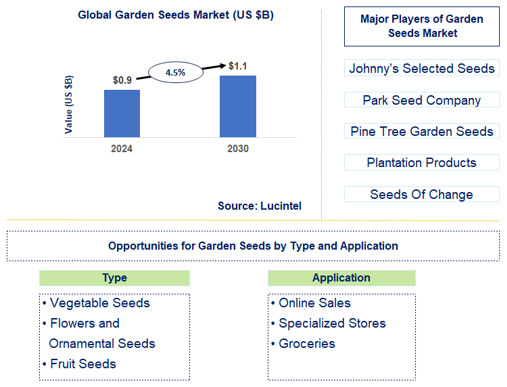
Key data points: The market size in 2030 = $1.1 billion, growth forecast = 4.5% annually for the next 6 years. Scroll below to get more insights. This market report covers trends, opportunities, and forecasts in the global garden seeds market to 2030 by type (vegetable seeds, flower and ornamental seeds, and fruit seeds), application (online sales, specialized stores, and groceries), and region (North America, Europe, Asia Pacific, and the Rest of the World)
We'll send your sample report shortly.
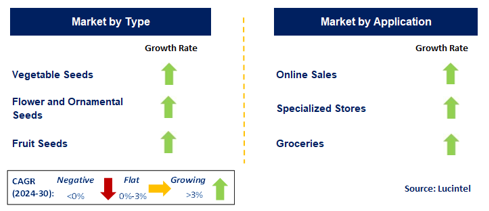
• Lucintel forecasts that, within the type category, vegetable seeds is expected to witness the highest growth over the forecast period.
• In terms of regions, APAC is expected to witness the highest growth over the forecast period. A more than 150-page report is developed to help in your business decisions.
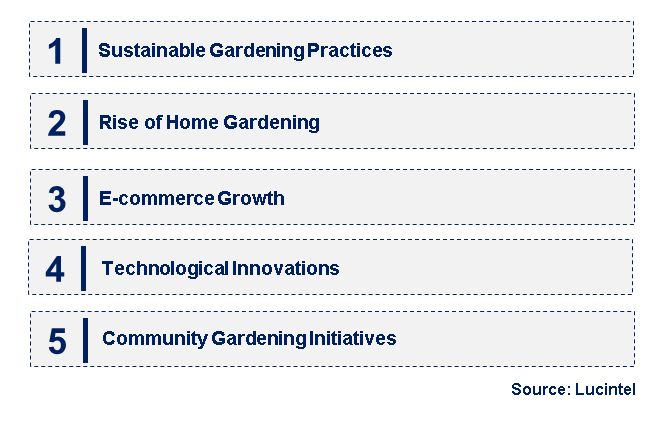
• Sustainable Gardening Practices: Increasing awareness of environmental issues is driving demand for sustainable gardening practices. Consumers are seeking organic seeds and eco-friendly gardening solutions that promote biodiversity and reduce chemical use. This trend encourages seed companies to invest in organic and heirloom varieties, meeting the needs of environmentally conscious gardeners.
• Rise of Home Gardening: The COVID-19 pandemic has sparked a renewed interest in home gardening. More individuals are turning to gardening as a hobby, leading to increased demand for a variety of garden seeds. This trend has prompted companies to diversify their product offerings, catering to both novice and experienced gardeners and enhancing community engagement through local gardening initiatives.
• E-commerce Growth: The shift to online shopping is transforming how consumers purchase garden seeds. E-commerce platforms are providing greater access to a wide range of seed varieties and related gardening products. This trend is particularly significant in urban areas, where convenience and variety are paramount. As a result, companies are focusing on improving their online presence and marketing strategies.
• Technological Innovations: Advances in seed technology, including genetic modification and hybridization, are leading to the development of resilient seed varieties. These innovations are enhancing crop yields and improving pest resistance, catering to the needs of both home and commercial gardeners. As research continues, these technologies will likely play a crucial role in addressing food security challenges.
• Community Gardening Initiatives: Community gardening initiatives are gaining momentum as more people seek to connect with their neighbors and promote local food production. These initiatives foster a sense of community and encourage sustainable practices. Seed companies are increasingly partnering with community organizations to support local gardening projects, enhancing their brand visibility and promoting biodiversity. These emerging trends are significantly reshaping the garden seeds market, emphasizing sustainability, convenience, and community engagement. As consumers become more environmentally conscious and technology-driven, the market is adapting to meet these evolving preferences, driving innovation and growth.
• Increased Organic Seed Offerings: The demand for organic gardening has led to a significant increase in organic seed offerings. Companies are focusing on developing certified organic seeds that meet strict environmental standards. This shift not only caters to health-conscious consumers but also supports sustainable farming practices, contributing to biodiversity and soil health.
• Technological Advancements in Seed Production: Advancements in seed production technology, such as precision agriculture and genetic engineering, are enhancing the quality and yield of garden seeds. These innovations enable the development of pest-resistant and climate-adaptable varieties, meeting the needs of gardeners in diverse environments and contributing to food security.
• E-commerce and Direct-to-Consumer Sales: The rise of e-commerce is transforming how consumers access garden seeds. Online platforms are expanding rapidly, providing consumers with a broader selection of seeds and gardening supplies. This shift is particularly beneficial for urban gardeners, who value convenience and variety, and encourages companies to enhance their online marketing strategies.
• Community Engagement and Education: There is a growing emphasis on community engagement and education in gardening. Organizations are offering workshops and resources to educate consumers about sustainable practices and the benefits of home gardening. This trend fosters a sense of community and encourages individuals to grow their own food, contributing to local food security.
• Regulatory Support for Sustainable Practices: Governments are increasingly supporting sustainable gardening practices through favorable regulations and incentives. Initiatives promoting organic farming and biodiversity conservation are encouraging seed companies to invest in sustainable product lines. This regulatory support not only enhances market growth but also aligns with global sustainability goals. The recent developments in the garden seeds market highlight a strong focus on sustainability, technological innovation, and community engagement. These changes are driving growth and positioning the market for future advancements as consumer preferences continue to evolve.
• Urban Gardening Solutions: The rise of urban gardening offers significant growth potential for garden seed companies. As more city dwellers embrace gardening in limited spaces, there is a demand for compact and easy-to-grow seed varieties. Companies can develop tailored products and resources that cater to urban gardeners, tapping into this expanding market.
• Organic and Heirloom Seeds: The increasing consumer preference for organic and heirloom seeds presents a lucrative opportunity. Companies can focus on developing and marketing these varieties, appealing to health-conscious consumers and those interested in preserving traditional gardening practices. This shift aligns with the growing trend toward sustainable food sources.
• Educational Platforms and Resources: As interest in gardening grows, so does the need for education and resources. Companies can invest in creating online platforms and workshops that educate consumers about gardening techniques, sustainable practices, and product offerings. This engagement not only builds brand loyalty but also fosters a community of knowledgeable gardeners.
• Collaborations with Local Communities: Collaborating with local communities and organizations can enhance market reach and brand visibility. Companies can support community gardening initiatives, providing seeds and expertise while promoting biodiversity. These partnerships help build strong relationships with consumers and contribute to local food security.
• Technology-Driven Innovations: The integration of technology in seed development and distribution is a key growth opportunity. Companies can leverage advancements in genetics and precision agriculture to create high-quality seed varieties that meet evolving consumer needs. Additionally, utilizing digital marketing and e-commerce strategies can enhance product accessibility and engagement. The strategic growth opportunities in the garden seeds market reflect a strong alignment with sustainability, community engagement, and technological advancements. By focusing on urban gardening, organic products, educational initiatives, collaborations, and technological innovations, companies can effectively capitalize on emerging trends and strengthen their market position.
• Increasing Interest in Gardening: The rising interest in home gardening, particularly following the pandemic, is a significant driver for the garden seeds market. More consumers are seeking to grow their own food and engage in sustainable practices, leading to increased demand for a variety of seeds and gardening products.
• Focus on Sustainability: Sustainability is a key driver in the garden seeds market. Consumers are increasingly favoring organic and environmentally friendly gardening solutions, prompting companies to invest in sustainable seed development and eco-friendly practices. This trend aligns with global efforts to reduce carbon footprints and enhance biodiversity.
• Technological Innovations: Advancements in seed technology, including genetic modification and hybridization, are enhancing the performance and resilience of garden seeds. These innovations cater to the needs of gardeners seeking higher yields and pest-resistant varieties, driving market growth and competitiveness.
• E-commerce Expansion: The growth of e-commerce is transforming the distribution of garden seeds. Online platforms provide consumers with greater access to diverse seed varieties and gardening resources, increasing sales opportunities for companies. This trend is particularly significant in urban areas, where convenience is paramount.
• Government Support for Sustainable Practices: Government initiatives promoting sustainable gardening and organic farming provide a favorable regulatory environment for the garden seeds market. Support for biodiversity conservation and local food production encourages investment in sustainable seed development, driving growth in this sector. Challenges in the garden seeds market include:
• Climate Change Impacts: Climate change poses challenges to the garden seeds market, affecting seed production and agricultural practices. Changing weather patterns can lead to crop failures and reduced yields, necessitating the development of climate-resilient seed varieties to mitigate these risks.
• Competition from Imported Seeds: The garden seeds market faces competition from imported seeds, which can often be cheaper. This competition challenges local producers to differentiate their products and maintain market share, requiring ongoing investment in quality and innovation.
• Regulatory Compliance: Navigating complex regulatory frameworks regarding seed production and distribution can be challenging for companies. Compliance with environmental and agricultural regulations requires significant resources and can hinder market entry for new players. The major drivers and challenges in the garden seeds market highlight the complexities of the industry. Increasing interest in gardening, sustainability, technological innovations, e-commerce growth, and government support are driving market expansion. However, challenges related to climate change, competition from imports, and regulatory compliance necessitate strategic management to ensure long-term success in this dynamic landscape.
• Johnny’s Selected Seeds
• Park Seed Company
• Pine Tree Garden Seeds
• Plantation Products
• Seeds Of Change
• Southern Exposure Seed Exchange
• Seed Savers Exchange
• Vegetable Seeds
• Flower and Ornamental Seeds
• Fruit Seeds
• Online Sales
• Specialized Stores
• Groceries
• North America
• Europe
• Asia Pacific
• The Rest of the World
• United States: In the U.S., the garden seeds market is thriving, largely due to the COVID-19 pandemic's boost to home gardening. Companies are increasingly offering organic and heirloom seed varieties to meet rising consumer demand for sustainable practices. Digital platforms for seed purchasing are expanding, allowing consumers to access a broader range of products. Additionally, community-supported agriculture (CSA) initiatives are gaining popularity, linking local growers with consumers, enhancing food security, and promoting biodiversity.
• China: China's garden seeds market is experiencing rapid growth, driven by increasing urbanization and the rise of home gardening. Government initiatives promoting agricultural innovation have led to investments in research and development of high-yield, pest-resistant seed varieties. E-commerce platforms are becoming vital channels for seed distribution, making it easier for consumers to access diverse options. Additionally, there is a notable trend toward sustainable practices, with a growing interest in organic and traditional seed varieties.
• Germany: Germany's garden seeds market is characterized by a strong emphasis on sustainability and organic gardening. Recent developments include the introduction of environmentally friendly packaging and the promotion of local seed varieties to enhance biodiversity. The market is also witnessing a shift toward online sales, driven by the increasing popularity of home gardening. Companies are investing in R&D to develop resilient seed varieties that can withstand climate change, meeting the demands of environmentally conscious consumers.
• India: In India, the garden seeds market is expanding rapidly, driven by urban gardening trends and an increasing focus on organic produce. Government initiatives promoting kitchen gardens and home farming are boosting consumer interest. Companies are introducing hybrid and drought-resistant seed varieties to cater to diverse climatic conditions. E-commerce platforms are gaining traction, enabling easy access to a variety of seeds. Additionally, the emphasis on sustainable practices is leading to a rise in organic seed offerings.
• Japan: Japan's garden seeds market is evolving, with a growing interest in home gardening, particularly among younger consumers. Innovations in seed technology are leading to the development of compact and disease-resistant varieties, ideal for urban gardening. The government is promoting sustainability in agriculture, encouraging the use of organic seeds and eco-friendly gardening practices. E-commerce is also gaining ground, allowing consumers to purchase seeds more conveniently and fostering a community around gardening.


• Johnny’s Selected Seeds
• Park Seed Company
• Pine Tree Garden Seeds
• Plantation Products
• Seeds Of Change
• Southern Exposure Seed Exchange
• Seed Savers Exchange Q6. Which garden seeds market segment will be the largest in future? Answer: Lucintel forecasts that vegetable seeds is expected to witness the highest growth over the forecast period. Q7. In garden seeds market, which region is expected to be the largest in next 5 years? Answer: APAC is expected to witness the highest growth over the forecast period. Q.8 Do we receive customization in this report? Answer: Yes, Lucintel provides 10% customization without any additional cost.


Choose a license that fits your team. Instant PDF delivery.
Prices exclude taxes. Instant delivery. Custom licensing available on request.
Market Report · July 22, 2026
Market Report · July 20, 2026
Market Report · July 20, 2026
Trusted partner for strategic intelligence and business growth


Receive a complimentary market analysis tailored to your industry. Our analysts will identify key growth opportunities and competitive dynamics specific to your business.

Market size, growth rate, and key trend analysis for your specific sector.

Top competitor positioning and market share analysis.

Strategic recommendations backed by data-driven insights.
Get curated market intelligence and competitive moves straight to your inbox.
By subscribing, you agree to receive our monthly insights. Unsubscribe anytime.
Receive a complimentary market analysis tailored to your industry. Our analysts will identify key growth opportunities and competitive dynamics specific to your business.
Market size, growth rate, and key trend analysis for your specific sector.
Top competitor positioning and market share analysis.
Strategic recommendations backed by data-driven insights.
Get curated market intelligence, emerging trends, and competitive moves straight to your inbox each month.
By subscribing, you agree to receive our monthly insights. Unsubscribe anytime.
We'll send your sample report shortly.