
Market Report · July 31, 2026

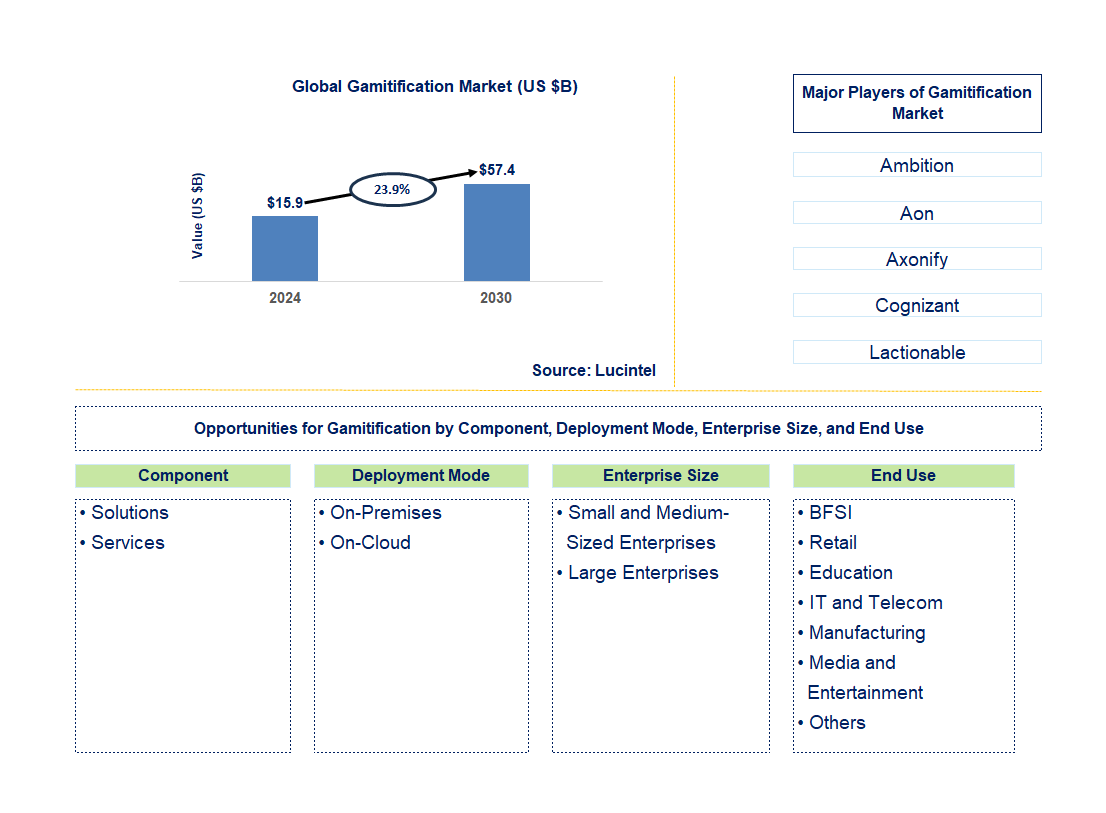
Key data points: The market size in 2030 = $57.4 billion, growth forecasts = 23.9% annually for the next 6 years. Scroll below to get more insights. This market report covers trends, opportunities, and forecasts in the global gamitification market to 2030 by component (solutions and services), deployment mode (on-premises and on-cloud), enterprise size (small and medium-sized enterprises and large enterprises), end use (BFSI, retail, education, IT and telecom, manufacturing, media and entertainment, and others), and region (North America, Europe, Asia Pacific, and the Rest of the World)
We'll send your sample report shortly.
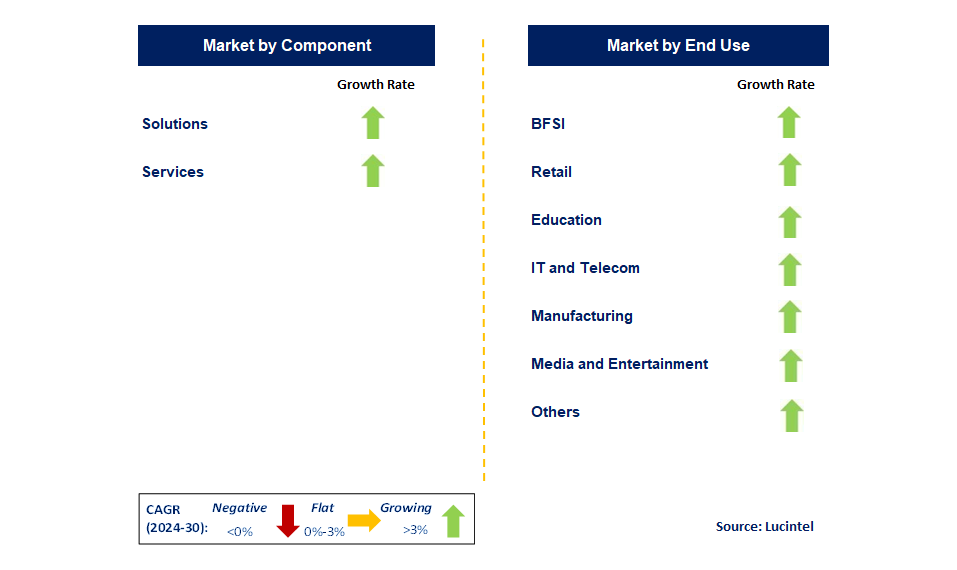
• Lucintel forecasts that, within the component category, solutions will remain a larger segment over the forecast period because the solutions creates compelling experiences that encourage desired behaviors and results using game elements including incentives, badges, challenges, leaderboards, and immersive narratives.
• In terms of regions, North America will remain the largest region over the forecast period because of dominance in ecosystems with modern technologies and broad use of state-of-the-art technology offers a strong basis for the integration of solutions across several industries. Gain Valuable insights for your business decisions with our comprehensive 150+ page report.
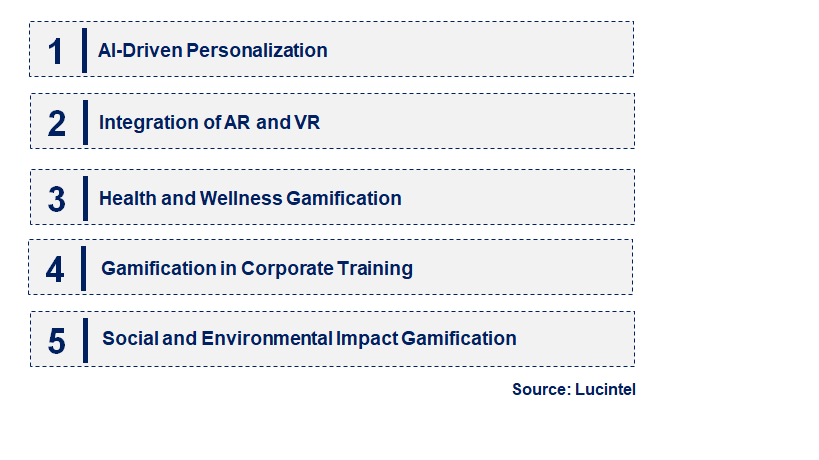
• AI-Driven Personalization: AI is revolutionizing gamification by enabling highly personalized experiences. AI algorithms analyze user data to tailor game mechanics and rewards to individual preferences and behaviors. This personalized approach enhances user engagement and effectiveness, as it provides a more relevant and rewarding experience. AI-driven gamification is being used in areas such as education, where adaptive learning platforms adjust content based on student performance, and in business, where personalized gamified incentives drive employee motivation.
• Integration of AR and VR: Augmented Reality (AR) and Virtual Reality (VR) are creating immersive gamification experiences that go beyond traditional screens. AR and VR technologies are being used to develop interactive and engaging gamified applications in various fields, including retail, education, and training. These technologies allow users to interact with gamified content in a more engaging and realistic way, enhancing learning experiences and improving customer interactions by creating more vivid and memorable experiences.
• Health and Wellness Gamification: Gamification is increasingly being applied to health and wellness, with a focus on encouraging healthy behaviors and improving patient outcomes. Gamified health apps use challenges, rewards, and tracking systems to motivate users to achieve fitness goals, adhere to treatment plans, and manage chronic conditions. This trend reflects a growing recognition of gamification's potential to support behavior change and promote overall well-being, leveraging game elements to make health management more engaging and effective.
• Gamification in Corporate Training: Corporate training programs are adopting gamification to enhance learning and development. Gamified training solutions include simulations, role-playing scenarios, and interactive modules that make learning more engaging and effective. This approach not only increases employee participation and retention but also improves the application of skills and knowledge in real-world situations. Companies are leveraging gamification to create dynamic training environments that drive better performance and employee satisfaction.
• Social and Environmental Impact Gamification: Gamification is being utilized to address social and environmental challenges by encouraging positive behavior and fostering community engagement. Initiatives include gamified programs for environmental conservation, social impact projects, and corporate social responsibility efforts. By incorporating game elements into these areas, organizations aim to drive participation, raise awareness, and achieve tangible outcomes, leveraging gamification’s motivational power to support meaningful causes and community involvement. These emerging trends in gamification are reshaping the market by enhancing personalization, integrating advanced technologies, and expanding into new sectors. AI, AR, and VR are elevating user experiences, while applications in health, corporate training, and social impact are demonstrating gamification’s versatility and potential for driving engagement and achieving diverse goals. Together, these trends reflect the evolving nature of gamification and its growing influence across various domains.
• Advanced Analytics and Data Integration: The integration of advanced analytics and data into gamification platforms has revolutionized how user engagement is measured and optimized. Modern gamification systems use data analytics to track user behavior, assess the effectiveness of game mechanics, and refine strategies in real-time. This development enables businesses and educators to tailor gamified experiences more precisely, leading to improved outcomes and increased user satisfaction.
• Expansion into Healthcare: Gamification is increasingly being applied in healthcare to promote patient engagement and support behavioral change. Innovative solutions include gamified fitness apps, mental health platforms, and chronic disease management tools. These applications use game elements to encourage adherence to treatment plans, track progress, and motivate patients to make healthier choices, demonstrating gamification’s potential to enhance healthcare outcomes and patient experiences.
• Enhanced Mobile Gamification: Mobile technology has driven the expansion of gamification into new areas, with an emphasis on mobile-first solutions. Mobile apps now incorporate gamified features to engage users in activities ranging from fitness tracking to financial management. This development reflects the growing importance of mobile platforms in delivering gamified experiences, catering to the increasing use of smartphones and tablets for various daily tasks and interactions.
• Corporate Gamification for Employee Engagement: Corporations are increasingly adopting gamification to boost employee engagement and productivity. Gamified systems in the workplace include performance tracking dashboards, rewards programs, and interactive training modules. These tools help foster a more dynamic and motivating work environment, enhancing employee satisfaction and performance. This development underscores the role of gamification in transforming corporate cultures and driving business success.
• Integration with Emerging Technologies: The integration of gamification with emerging technologies, such as AI, AR, and VR, is creating more immersive and impactful experiences. These technologies enable new forms of interaction and engagement, allowing for more personalized and realistic gamified applications. The use of AR and VR in gamification is particularly notable in sectors like retail and education, where they provide enhanced user experiences and new opportunities for engagement. Recent developments in gamification are shaping the market by introducing advanced analytics, expanding into new sectors like healthcare, enhancing mobile applications, and integrating with emerging technologies. These developments reflect the growing sophistication and versatility of gamification, highlighting its increasing importance in engaging users and achieving diverse objectives across various domains.
• Corporate Training and Employee Engagement: Gamification in corporate training is a major growth opportunity. By incorporating game mechanics into training programs, companies can enhance employee engagement, retention, and performance. Interactive elements such as leaderboards, badges, and rewards make learning more engaging and fun, encouraging employees to participate actively and complete training modules. This approach not only improves knowledge retention but also fosters a competitive and collaborative work environment, leading to better overall job performance and satisfaction.
• Healthcare and Patient Adherence: In healthcare, gamification offers significant opportunities to improve patient adherence and health outcomes. By integrating game elements into health management apps, patients can be incentivized to follow treatment plans, track their health metrics, and make healthier lifestyle choices. Features such as challenges, rewards, and progress tracking can motivate patients to engage with their health management routines more consistently, thereby enhancing treatment adherence and overall well-being.
• Education and E-Learning: The education sector presents a robust opportunity for gamification, particularly in e-learning platforms. Gamified educational tools can make learning more interactive and enjoyable, catering to various learning styles and improving student engagement. By incorporating elements like quizzes, interactive simulations, and achievement badges, educational institutions and e-learning providers can enhance student motivation, participation, and knowledge retention. This trend supports the development of personalized and adaptive learning experiences that can cater to individual student needs.
• Customer Engagement and Loyalty Programs: Gamification is increasingly used in marketing and customer engagement to create more interactive and rewarding experiences. Businesses can implement gamified loyalty programs that offer points, badges, and rewards for customer interactions and purchases. These programs enhance customer engagement by making interactions more enjoyable and providing incentives for continued participation. Gamification in marketing helps build stronger customer relationships, drive repeat business, and increase brand loyalty by creating a more engaging and rewarding customer experience.
• Health and Wellness Apps: The rise of health and wellness apps presents a significant growth opportunity for gamification. By incorporating game mechanics into fitness and wellness applications, developers can encourage users to set and achieve personal health goals. Features such as progress tracking, virtual challenges, and social sharing can enhance user motivation and adherence to fitness routines. Gamified health apps provide users with a fun and interactive way to maintain a healthy lifestyle, driving user engagement and increasing app retention. Strategic growth opportunities in the gamification market are broad and impactful, spanning corporate training, healthcare, education, customer engagement, and health and wellness. By leveraging gamification, organizations can enhance engagement, improve performance, and drive positive behavioral changes. As technology continues to advance and consumer expectations evolve, the potential applications of gamification are expanding, offering new avenues for innovation and business growth. Embracing these opportunities allows businesses to create more engaging, effective, and rewarding experiences for their audiences, positioning themselves for success in a competitive and dynamic market.
• Technological Advancements: The rise of advanced technologies such as AI, AR/VR, and mobile platforms has made gamification more accessible and effective. AI algorithms can create personalized experiences, while AR/VR provides immersive environments for engaging gameplay. These technologies enhance the functionality and appeal of gamification solutions, driving their adoption across various industries and applications.
• Increased Focus on Employee Engagement: Organizations are increasingly prioritizing employee engagement to improve productivity and retention. Gamification offers a proven strategy to enhance engagement by making work more interactive and rewarding. As companies seek innovative ways to motivate their workforce, the demand for gamified solutions in employee training, performance management, and recognition is growing.
• Consumer Demand for Interactive Experiences: Consumers are looking for more engaging and interactive experiences, which gamification can provide. In sectors like retail and education, gamified elements offer a way to capture consumer attention and enhance user experience. This growing demand drives businesses to incorporate gamification into their offerings to meet consumer expectations and stay competitive.
• Rise of Digital and Mobile Platforms: The proliferation of digital and mobile platforms has facilitated the widespread adoption of gamification. Mobile apps and online platforms can easily integrate gamified features, making it simpler for users to engage with content. This trend is expanding gamification's reach and making it a viable option for various applications across different devices.
• Data-Driven Insights: Gamification provides valuable data on user behavior and engagement, which organizations can leverage to optimize their strategies. By analyzing game-related metrics, businesses can gain insights into user preferences and performance, allowing them to refine their approaches and improve outcomes. This data-driven aspect enhances the appeal of gamification solutions for organizations seeking measurable results. Challenges in the gamitification market are:
• User Fatigue and Overuse: As gamification becomes more prevalent, there is a risk of user fatigue. Overuse of gamified elements can lead to diminished effectiveness and reduced user interest. To maintain engagement, it is crucial to balance gamification with other strategies and ensure that game elements are thoughtfully integrated and relevant to the user experience.
• Privacy and Data Security: Gamification often involves collecting user data to personalize experiences and track progress. This raises concerns about data privacy and security, particularly in regulated industries. Ensuring compliance with data protection regulations and implementing robust security measures is essential to address these concerns and build trust with users.
• Implementation Costs and Complexity: Developing and implementing gamified solutions can be resource-intensive and complex. Organizations must invest in technology, design, and ongoing maintenance to create effective gamification systems. The associated costs and complexity can be a barrier for some businesses, particularly small and medium-sized enterprises with limited budgets. The gamification market is experiencing significant growth driven by technological advancements, increasing consumer demand for interactive experiences, and the focus on employee engagement. However, challenges such as user fatigue, privacy concerns, and implementation costs pose obstacles to widespread adoption. As the market continues to evolve, balancing innovation with practical considerations will be key to leveraging the full potential of gamification and addressing the diverse needs of users and organizations.
• Ambition
• Aon
• Axonify
• Cognizant
• Lactionable
• Microsoft Corporation
• Verint Systems
• Solutions
• Services
• On-premises
• On-Cloud
• Small and Medium-sized Enterprises
• Large Enterprises
• BFSI
• Retail
• Education
• IT and Telecom
• Manufacturing
• Media and Entertainment
• Others
• North America
• Europe
• Asia Pacific
• The Rest of the World
• United States: In the U.S gamification has gained traction across multiple sectors, especially in education and business. Companies are increasingly using gamified systems to enhance employee engagement and productivity. Education technology firms are developing interactive platforms that make learning more engaging. Major corporations and startups alike are investing in gamification strategies to drive customer loyalty and improve user experiences. The rise of AI and machine learning is also allowing for more personalized and adaptive gamification approaches.
• China: China has seen rapid growth in gamification, particularly in the e-commerce and fintech sectors. Companies like Alibaba and Tencent are leveraging gamification to increase user engagement and drive sales through interactive features and rewards systems. Additionally, there is a notable integration of gamified elements in educational apps and platforms, catering to the growing demand for innovative learning solutions. The Chinese government is also exploring gamification for public health campaigns and social credit systems.
• Germany: In Germany, gamification is prominently used in corporate training and development. German companies are adopting gamified learning platforms to enhance employee skills and foster better workplace environments. The automotive and manufacturing sectors are integrating gamification to streamline processes and improve productivity. Moreover, there is a growing interest in using gamification for sustainable practices and social responsibility initiatives, reflecting Germany's commitment to environmental and social goals.
• India: India is experiencing a surge in gamification, particularly in the education and health sectors. Educational technology startups are creating gamified learning experiences to address diverse educational needs and enhance student engagement. In healthcare, gamified solutions are being developed to promote healthy behaviors and manage chronic diseases. Additionally, Indian businesses are exploring gamification to drive customer engagement and loyalty, leveraging the country’s growing digital landscape.
• Japan: Japan continues to be a leader in gamification, driven by its strong gaming culture. Gamified elements are prevalent in various sectors, including retail, where companies use them to enhance customer experiences. The integration of gamification in health and wellness applications is also notable, with a focus on improving lifestyle habits through interactive features. Japanese firms are also experimenting with advanced technologies like AR and VR to create immersive gamified experiences.


• Ambition
• Aon
• Axonify
• Cognizant
• Lactionable
• Microsoft Corporation
• Verint Systems Q6. Which gamitification market segment will be the largest in future? Answer: Lucintel forecasts that solutions will remain the larger segment over the forecast period because the solutions creates compelling experiences that encourage desired behaviors and results using game elements including incentives, badges, challenges, leaderboards, and immersive narratives. Q7. In gamitification market, which region is expected to be the largest in next 5 years? Answer: North America will remain the largest region over the forecast period because of dominance in ecosystems with modern technologies and broad use of state-of-the-art technology offers a strong basis for the integration of solutions across several industries. Q.8 Do we receive customization in this report? Answer: Yes, Lucintel provides 10% customization without any additional cost.


Choose a license that fits your team. Instant PDF delivery.
Prices exclude taxes. Instant delivery. Custom licensing available on request.
Market Report · July 31, 2026
Market Report · July 31, 2026
Market Report · July 31, 2026
Trusted partner for strategic intelligence and business growth


Receive a complimentary market analysis tailored to your industry. Our analysts will identify key growth opportunities and competitive dynamics specific to your business.

Market size, growth rate, and key trend analysis for your specific sector.

Top competitor positioning and market share analysis.

Strategic recommendations backed by data-driven insights.
Get curated market intelligence and competitive moves straight to your inbox.
By subscribing, you agree to receive our monthly insights. Unsubscribe anytime.
Receive a complimentary market analysis tailored to your industry. Our analysts will identify key growth opportunities and competitive dynamics specific to your business.
Market size, growth rate, and key trend analysis for your specific sector.
Top competitor positioning and market share analysis.
Strategic recommendations backed by data-driven insights.
Get curated market intelligence, emerging trends, and competitive moves straight to your inbox each month.
By subscribing, you agree to receive our monthly insights. Unsubscribe anytime.
We'll send your sample report shortly.