
Report Feature
Gaming Advertising Service Market Trends and Forecast
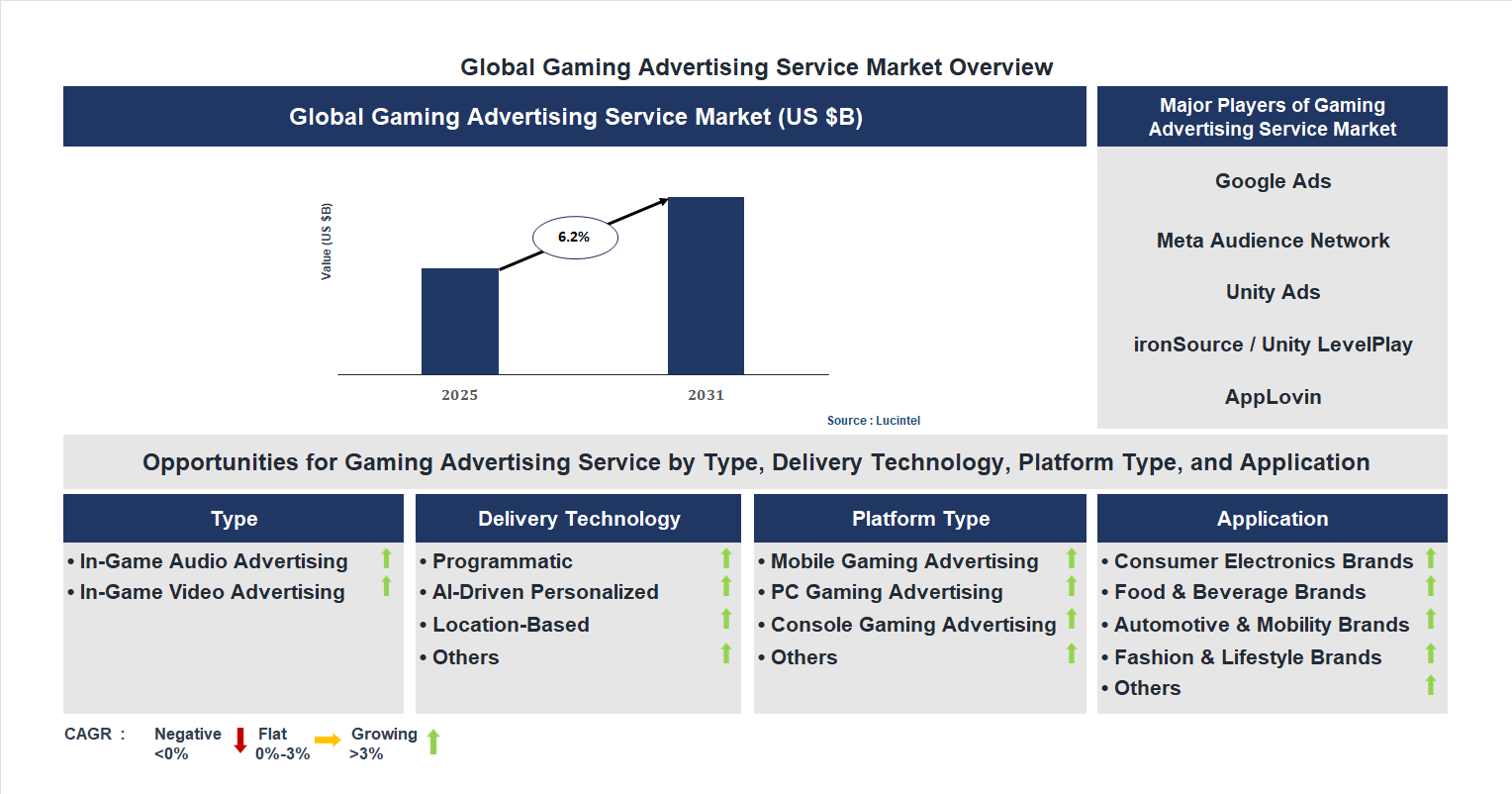
The future of the global gaming advertising service market looks promising with opportunities in the consumer electronics brand, food & beverage brand, automotive & mobility brand, and fashion & lifestyle brand markets. The global gaming advertising service market is expected to grow with a CAGR of 6.2% from 2025 to 2031. The major drivers for this market are the increasing popularity of mobile & online games, the rising investment in interactive advertising campaigns, and the growing focus on personalized gamer experiences.• Lucintel forecasts that, within the type category, in-game video advertising is expected to witness higher growth over the forecast period.
• Within the application category, consumer electronics brand is expected to witness the highest growth.
• In terms of region, APAC is expected to witness the highest growth over the forecast period. Gain valuable insights for your business decisions with our comprehensive 150+ page report. Sample figures with some insights are shown below.
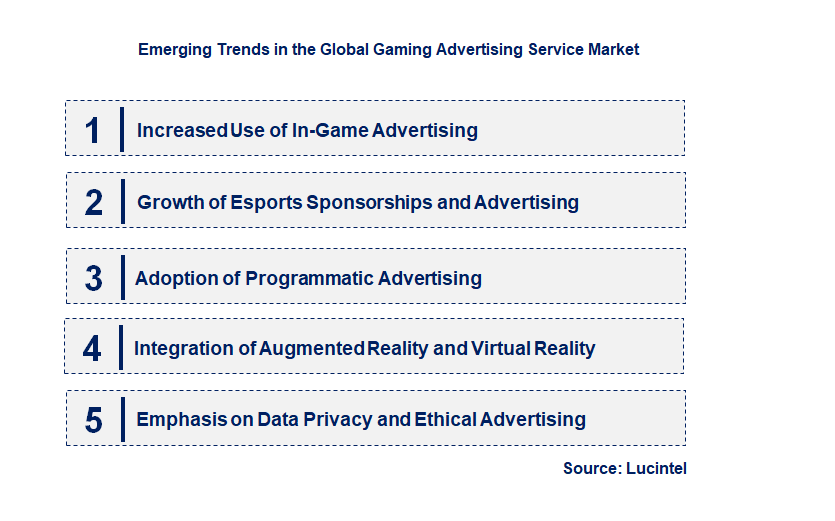
Emerging Trends in the Gaming Advertising Service Market
The gaming advertising service market is experiencing rapid evolution driven by technological advancements, changing consumer behaviors, and innovative marketing strategies. As the gaming industry continues to grow exponentially, advertisers are seeking new ways to engage audiences and maximize their reach within this dynamic environment. Emerging trends are shaping how brands connect with gamers, influencing advertising formats, targeting methods, and overall market strategies. These developments are not only expanding market opportunities but also redefining the landscape of gaming advertising, making it more personalized, immersive, and data-driven. Understanding these key trends is essential for stakeholders aiming to stay competitive and leverage new growth avenues.• Increased Use of In-Game Advertising: Integration of ads directly into gameplay environments is becoming more prevalent. This trend allows brands to reach engaged audiences seamlessly without disrupting the gaming experience. In-game advertising offers high visibility and contextual relevance, making it an effective marketing tool. As technology advances, dynamic and interactive ads are becoming more sophisticated, enabling real-time updates and personalized content. This approach enhances user engagement and provides measurable ROI for advertisers, transforming traditional advertising into an immersive experience within the gaming ecosystem.
• Growth of Esports Sponsorships and Advertising: The rise of esports has created a new frontier for advertising opportunities. Brands are increasingly sponsoring teams, tournaments, and streaming platforms to target dedicated gaming audiences. Esports events attract millions of viewers worldwide, offering high exposure and engagement levels. Advertising during live streams, branded content, and sponsorships are becoming integral to esports marketing strategies. This trend not only boosts brand visibility but also fosters deeper connections with a highly engaged demographic, driving revenue growth and expanding the scope of gaming advertising.
• Adoption of Programmatic Advertising: Programmatic advertising is gaining traction in the gaming sector, enabling automated, data-driven ad placements. This technology allows marketers to target specific audience segments with precision, optimizing ad spend and improving campaign effectiveness. Real-time bidding and analytics facilitate personalized ad experiences, increasing relevance and engagement. As programmatic platforms evolve, they offer better targeting capabilities, fraud prevention, and performance tracking. This trend is making gaming advertising more efficient, scalable, and tailored to individual user preferences, ultimately enhancing the overall effectiveness of marketing efforts within the gaming market.
• Integration of Augmented Reality (AR) and Virtual Reality (VR): AR and VR technologies are transforming gaming advertising by creating immersive brand experiences. Brands are developing interactive AR filters, virtual showrooms, and branded VR environments to engage users in innovative ways. These technologies enable advertisers to deliver memorable, experiential content that resonates with gamers. As AR and VR adoption increases, so does the potential for highly engaging, personalized advertising campaigns. This trend is pushing the boundaries of traditional advertising, fostering deeper emotional connections and offering unique opportunities for brand storytelling within virtual spaces.
• Emphasis on Data Privacy and Ethical Advertising: With increasing concerns over data privacy, the gaming advertising market is witnessing a shift towards more transparent and ethical practices. Regulations like GDPR and CCPA are prompting advertisers to adopt privacy-first strategies, focusing on consent-based data collection and user control. This trend encourages the development of privacy-compliant targeting methods, such as contextual advertising and anonymized data use. Ethical advertising practices build trust with consumers and ensure long-term sustainability. As data privacy becomes a priority, the market is adapting to balance effective targeting with respect for user rights, shaping a more responsible advertising landscape. In summary, these emerging trends are fundamentally reshaping the gaming advertising service market by making advertising more immersive, targeted, and ethical. They are expanding opportunities for brands to connect with gamers in innovative ways while emphasizing user experience and privacy. As these developments continue, the market is poised for significant growth, driven by technological innovation and evolving consumer expectations.
Recent Development in the Gaming Advertising Service Market
The gaming advertising service market is experiencing rapid growth driven by technological advancements, increased mobile device usage, and evolving consumer engagement strategies. As brands recognize the potential of gaming platforms for targeted advertising, the industry is adapting to new formats and monetization models. This dynamic environment presents significant opportunities for market expansion, innovation, and increased revenue streams, shaping the future landscape of digital marketing within the gaming sector.• Expansion of In-Game Advertising: The integration of ads directly into gaming environments offers brands immersive exposure. This approach enhances user engagement and provides precise targeting options, leading to higher conversion rates. As game developers incorporate native advertising, the market is expected to see substantial growth, creating new revenue streams for both developers and advertisers. This trend is transforming traditional advertising models into more interactive and contextually relevant experiences.
• Rise of Programmatic Advertising in Gaming: Programmatic advertising automates the buying and placement of ads, increasing efficiency and targeting accuracy. In gaming, this allows for real-time ad customization based on user behavior and preferences. The adoption of programmatic solutions is streamlining campaign management, reducing costs, and improving ROI for advertisers. As technology advances, programmatic advertising is becoming a core component of gaming marketing strategies, fostering more personalized and scalable ad experiences.
• Growth of Mobile Gaming Advertising: Mobile gaming's popularity continues to surge, making it a prime platform for advertising. Mobile ads are highly accessible and can be tailored to individual user profiles, increasing engagement and effectiveness. The proliferation of smartphones and tablets has expanded the reach of gaming ads, enabling brands to target diverse demographics globally. This growth is driving innovation in ad formats, including rewarded videos and interactive ads, further enhancing user experience and monetization potential.
• Integration of Augmented Reality (AR) and Virtual Reality (VR): AR and VR technologies are creating immersive advertising experiences within gaming. These innovations allow brands to develop interactive campaigns that blend seamlessly with gameplay, increasing user engagement and brand recall. As AR and VR adoption accelerates, the market is witnessing a shift toward more experiential advertising formats. This evolution offers unique opportunities for brands to connect with consumers in novel, memorable ways, expanding the scope of gaming advertising.
• Adoption of Data-Driven Personalization Strategies: Leveraging big data and analytics enables highly targeted advertising in gaming. Personalization enhances user experience by delivering relevant content, increasing engagement, and conversion rates. Data-driven strategies facilitate precise audience segmentation and real-time campaign adjustments, maximizing effectiveness. As data collection and analysis tools improve, the market is moving toward more sophisticated, personalized advertising approaches, fostering stronger brand loyalty and higher revenue generation within the gaming advertising ecosystem. Conclusion: These developments are significantly transforming the gaming advertising service market by enabling more targeted, immersive, and efficient marketing strategies. The integration of advanced technologies and data analytics is driving growth, expanding opportunities for brands and developers alike. As the market evolves, these innovations will continue to shape consumer engagement, increase monetization potential, and redefine the future landscape of gaming advertising.
Strategic Growth Opportunities in the Gaming Advertising Service Market
The gaming advertising service market is experiencing rapid expansion driven by increasing digital engagement, technological advancements, and the growing popularity of gaming platforms. As brands seek targeted and immersive advertising solutions, opportunities arise across various applications, including mobile, console, and cloud gaming. This dynamic environment offers significant potential for market players to innovate, expand their reach, and capitalize on emerging consumer behaviors, ultimately transforming how brands connect with gaming audiences worldwide.• Mobile Gaming Advertising Growth: Mobile gaming continues to dominate the market, offering vast user bases and high engagement levels. Advertising opportunities within mobile games, such as in-app ads, rewarded videos, and branded content, enable brands to reach diverse demographics effectively. The proliferation of smartphones and improved mobile internet connectivity further enhances these opportunities, allowing advertisers to deliver personalized, location-based, and real-time campaigns that drive user interaction and brand awareness.
• Expansion of Cloud Gaming Advertising: Cloud gaming's rise provides new avenues for advertising without the need for high-end hardware. As cloud platforms grow, they enable seamless integration of ads within streaming environments, offering immersive and non-intrusive experiences. This shift allows brands to target users across multiple devices, leverage data-driven insights for personalized campaigns, and capitalize on the increasing adoption of cloud gaming services, thereby expanding advertising reach and engagement in a rapidly evolving digital landscape.
• In-Game Advertising Innovations: In-game advertising is evolving with dynamic, context-aware, and native ad formats that blend seamlessly into gameplay. These innovations improve user experience while providing brands with highly targeted exposure. The integration of augmented reality (AR) and virtual reality (VR) further enhances immersive advertising opportunities, allowing brands to create interactive campaigns that resonate with gamers. This trend supports increased ad spend and opens new revenue streams for game developers and advertisers alike.
• Growth of Esports and Competitive Gaming Sponsorships: The booming esports industry offers lucrative advertising and sponsorship opportunities. Brands can engage with highly engaged audiences through event sponsorships, branded content, and influencer collaborations. The global reach of esports tournaments and streaming platforms enables targeted marketing to specific demographics, increasing brand visibility and loyalty. As esports continues to grow, so does the potential for innovative advertising strategies that capitalize on this vibrant, engaged community.
• Adoption of Data-Driven and Programmatic Advertising: The integration of data analytics and programmatic advertising in gaming allows for precise targeting and real-time campaign optimization. Leveraging user data, behavioral insights, and AI algorithms, advertisers can deliver highly relevant ads, increasing conversion rates and ROI. This approach also enables scalable campaigns across multiple gaming platforms, ensuring consistent messaging and efficient ad spend. As data privacy regulations evolve, adaptive strategies will be essential for maintaining effectiveness and compliance in this competitive market. Conclusion: These growth opportunities collectively position the gaming advertising service market for substantial expansion, driven by technological innovation and shifting consumer preferences. By leveraging mobile, cloud, in-game, esports, and data-driven advertising strategies, market players can enhance engagement, increase revenue streams, and establish a competitive edge. As the gaming ecosystem continues to evolve, embracing these opportunities will be crucial for sustained growth and market leadership.
Gaming Advertising Service Market Driver and Challenges
The gaming advertising service market is influenced by a variety of technological, economic, and regulatory factors that shape its growth and development. Rapid advancements in digital technology, increasing internet penetration, and the proliferation of mobile devices have created new opportunities for targeted advertising within gaming platforms. Economic factors such as rising consumer spending on gaming and advertising budgets further propel market expansion. However, regulatory challenges related to data privacy, advertising standards, and platform restrictions pose significant hurdles. Understanding these drivers and challenges is essential for stakeholders to navigate the evolving landscape and capitalize on emerging opportunities effectively. The factors responsible for driving the gaming advertising service market include:-• Technological Innovation: The rapid evolution of gaming technology, including augmented reality (AR), virtual reality (VR), and cloud gaming, has transformed user engagement and advertising possibilities. These innovations enable highly immersive and interactive ad experiences, increasing user engagement and ad effectiveness. As technology becomes more sophisticated and accessible, advertisers can target audiences more precisely, leading to higher conversion rates. The integration of AI and data analytics further enhances personalization, making gaming ads more relevant and impactful. This continuous technological progress is a key driver fueling market growth and expanding advertising capabilities within gaming ecosystems.
• Growing Gaming Audience: The expanding global gaming community, driven by increased smartphone penetration and affordable gaming devices, has created a vast and diverse audience. This demographic includes various age groups, geographies, and interests, offering advertisers a broad spectrum of target markets. The rise of casual and mobile gaming has particularly contributed to this growth, providing more opportunities for in-game advertising. As the gaming audience continues to grow, advertisers recognize the potential for high engagement and brand visibility, which significantly boosts demand for gaming advertising services. This demographic expansion is a major factor propelling market development.
• Increasing Investment by Brands: Major brands across sectors such as consumer electronics, automotive, fashion, and entertainment are increasingly allocating budgets to gaming advertising. They recognize gaming platforms as effective channels for reaching younger, tech-savvy consumers. The integration of branded content, sponsorships, and in-game product placements enhances brand visibility and consumer engagement. This trend is supported by the measurable ROI and targeted advertising capabilities offered by gaming platforms. As brand investments grow, the market experiences heightened competition and innovation, further driving the expansion of gaming advertising services and creating new revenue streams.
• Regulatory and Privacy Developments: Evolving regulations related to data privacy, such as GDPR and CCPA, influence how gaming advertising is conducted. These regulations require stricter data handling and user consent protocols, impacting targeting strategies and ad personalization. While they pose compliance challenges, they also encourage the development of privacy-centric advertising solutions, fostering innovation. Companies that adapt effectively can build trust with consumers and avoid penalties, gaining a competitive advantage. The regulatory landscape's complexity necessitates ongoing adjustments, but it ultimately promotes responsible advertising practices that can benefit the market in the long term. The challenges facing this gaming advertising service market include:-
• Data Privacy and Security Concerns: Increasing regulatory scrutiny and consumer awareness about data privacy pose significant challenges for gaming advertisers. Strict data protection laws limit the extent of user data collection and targeting, reducing the effectiveness of personalized advertising. Additionally, data breaches and security issues can damage brand reputation and lead to legal penalties. Companies must invest in secure data management systems and transparent privacy policies, which can increase operational costs. Balancing personalization with privacy compliance remains a critical challenge, impacting the ability to deliver highly targeted and effective advertising campaigns within the gaming ecosystem.
• Platform Restrictions and Policies: Major gaming platforms such as consoles, app stores, and social media networks impose strict advertising policies and restrictions. These policies can limit ad formats, placement options, and targeting capabilities, constraining marketers' flexibility. Platform-specific rules may also require additional approvals and compliance measures, increasing campaign complexity and costs. Such restrictions can hinder innovative advertising approaches and reduce overall market agility. Navigating these policies requires strategic planning and adaptation, which can delay campaign execution and impact ROI, posing a significant challenge for market growth.
• Market Fragmentation and Competition: The gaming advertising landscape is highly fragmented, with numerous platforms, formats, and regional markets. This fragmentation complicates campaign management, audience targeting, and measurement. Intense competition among advertisers also drives up costs and reduces margins. Smaller players may struggle to compete with larger brands that have more resources and data capabilities. Additionally, rapid technological changes demand continuous investment in new tools and skills. This competitive environment and market complexity challenge companies to maintain effective, scalable advertising strategies, potentially limiting overall market expansion. In summary, the gaming advertising service market is driven by technological advancements, expanding audiences, and increased brand investments, which collectively foster growth and innovation. However, regulatory complexities, privacy concerns, platform restrictions, and market fragmentation pose significant challenges that require strategic adaptation. The interplay of these drivers and challenges shapes a dynamic landscape, offering substantial opportunities for growth while demanding careful navigation. Stakeholders who effectively leverage technological trends and address regulatory hurdles can capitalize on the market's potential, ensuring sustainable development amid evolving conditions.
List of Gaming Advertising Service Companies
Companies in the market compete on the basis of product quality offered. Major players in this market focus on expanding their manufacturing facilities, R&D investments, infrastructural development, and leverage integration opportunities across the value chain. With these strategies gaming advertising service companies cater increasing demand, ensure competitive effectiveness, develop innovative products & technologies, reduce production costs, and expand their customer base. Some of the gaming advertising service companies profiled in this report include-• Google Ads
• Meta Audience Network
• Unity Ads
• ironSource / Unity LevelPlay
• AppLovin
• Digital Turbine / Fyber
• Tencent Marketing Solutions
• TikTok Pangle
• InMobi Gaming Ads
• AdColony
Gaming Advertising Service Market by Segment
The study includes a forecast for the global gaming advertising service market by type, delivery technology, platform type, application, and region.Gaming Advertising Service Market by Type [Value from 2019 to 2031]:
• In-Game Audio Advertising
• In-Game Video Advertising
Gaming Advertising Service Market by Delivery Technology [Value from 2019 to 2031]:
• Programmatic
• AI-Driven Personalized
• Location-Based
• Others
Gaming Advertising Service Market by Platform Type [Value from 2019 to 2031]:
• Mobile Gaming Advertising
• PC Gaming Advertising
• Console Gaming Advertising
• Others
Gaming Advertising Service Market by Application [Value from 2019 to 2031]:
• Consumer Electronics Brands
• Food & Beverage Brands
• Automotive & Mobility Brands
• Fashion & Lifestyle Brands
• Others
Gaming Advertising Service Market by Region [Value from 2019 to 2031]:
• North America
• Europe
• Asia Pacific
• The Rest of the World
Country Wise Outlook for the Gaming Advertising Service Market
The gaming advertising service market has experienced rapid growth driven by technological advancements, increased mobile device usage, and evolving consumer engagement strategies. As digital entertainment becomes more integrated into daily life, countries are adopting innovative advertising solutions to capture gamers' attention and maximize revenue. Each nation’s unique technological landscape, regulatory environment, and consumer preferences influence its market developments. These trends reflect a broader shift towards personalized, immersive advertising experiences within the gaming industry, shaping future growth trajectories and competitive dynamics across the globe.• United States: The US market has seen significant growth with major tech companies investing heavily in gaming advertising. Innovations include programmatic ad placements and in-game sponsorships, enhancing targeted marketing. The rise of esports and streaming platforms has created new advertising opportunities, while regulations around data privacy are prompting advertisers to adopt more transparent practices. Major publishers are partnering with brands to develop immersive ad experiences, boosting revenue streams and user engagement.
• China: China’s gaming advertising market is expanding rapidly, driven by a large, tech-savvy population and government support for digital entertainment. Local platforms like Tencent and NetEase are integrating advertising seamlessly into popular games, utilizing AI for personalized ads. Regulatory restrictions on content and advertising practices are evolving, requiring advertisers to adapt strategies. The growth of mobile gaming has further fueled ad spend, with brands leveraging influencer collaborations and short video ads to reach younger audiences.
• Germany: Germany’s market is characterized by a focus on quality and user privacy, with advertisers emphasizing non-intrusive ad formats. The adoption of augmented reality (AR) and virtual reality (VR) in gaming advertising is gaining traction, offering immersive brand experiences. Regulatory frameworks such as GDPR influence how data is collected and used, prompting more ethical advertising practices. The market also benefits from a strong gaming community and technological infrastructure, fostering innovative advertising campaigns.
• India: India’s gaming advertising sector is experiencing rapid expansion due to increasing smartphone penetration and affordable internet access. Local developers are collaborating with brands to create region-specific ad content, often leveraging popular local celebrities and influencers. The rise of hyper-casual games provides new avenues for advertising, with brands adopting in-game ads and rewarded videos. The market is also witnessing a surge in digital ad spend, supported by government initiatives promoting digital literacy and infrastructure development.
• Japan: Japan’s gaming advertising market is evolving with a focus on mobile and console gaming. Innovative ad formats such as interactive ads and branded content are becoming popular. The integration of AI and data analytics helps tailor advertising to individual preferences, increasing effectiveness. Cultural nuances influence ad content, emphasizing storytelling and aesthetics. The market benefits from a mature gaming industry and high consumer spending, with brands exploring collaborations with game developers to create engaging advertising experiences.

Features of the Global Gaming Advertising Service Market
Market Size Estimates: Gaming advertising service market size estimation in terms of value ($B). Trend and Forecast Analysis: Market trends (2019 to 2024) and forecast (2025 to 2031) by various segments and regions. Segmentation Analysis: Gaming advertising service market size by various segments, such as by type, delivery technology, platform type, application, and region in terms of value ($B). Regional Analysis: Gaming advertising service market breakdown by North America, Europe, Asia Pacific, and Rest of the World. Growth Opportunities: Analysis of growth opportunities in different types, delivery technologies, platform types, applications, and regions for the gaming advertising service market. Strategic Analysis: This includes M&A, new product development, and competitive landscape of the gaming advertising service market. Analysis of competitive intensity of the industry based on Porter’s Five Forces model.
FAQ
Q1. What is the growth forecast for gaming advertising service market? Answer: The global gaming advertising service market is expected to grow with a CAGR of 6.2% from 2025 to 2031. Q2. What are the major drivers influencing the growth of the gaming advertising service market? Answer: The major drivers for this market are the increasing popularity of mobile & online games, the rising investment in interactive advertising campaigns, and the growing focus on personalized gamer experiences. Q3. What are the major segments for gaming advertising service market? Answer: The future of the gaming advertising service market looks promising with opportunities in the consumer electronics brand, food & beverage brand, automotive & mobility brand, and fashion & lifestyle brand markets. Q4. Who are the key gaming advertising service market companies? Answer: Some of the key gaming advertising service companies are as follows:• Google Ads
• Meta Audience Network
• Unity Ads
• ironSource / Unity LevelPlay
• AppLovin
• Digital Turbine / Fyber
• Tencent Marketing Solutions
• TikTok Pangle
• InMobi Gaming Ads
• AdColony Q5. Which gaming advertising service market segment will be the largest in future? Answer: Lucintel forecasts that, within the type category, in-game video advertising is expected to witness higher growth over the forecast period. Q6. In gaming advertising service market, which region is expected to be the largest in next 5 years? Answer: In terms of region, APAC is expected to witness the highest growth over the forecast period. Q7. Do we receive customization in this report? Answer: Yes, Lucintel provides 10% customization without any additional cost.
Table of Contents
List of Figures
List of Tables
Methodology
- In-depth interviews of the major players in this market
- Detailed secondary research from competitors’ financial statements and published data
- Extensive searches of published works, market, and database information pertaining to industry news, company press releases, and customer intentions
- A compilation of the experiences, judgments, and insights of Lucintel’s professionals, who have analyzed and tracked this market over the years.


Buy Now
Choose a license that fits your team. Instant PDF delivery.
Prices exclude taxes. Instant delivery. Custom licensing available on request.
Key Questions
- • What are some of the most promising, high-growth opportunities for the gaming advertising service market by type (in-game audio advertising and in-game video advertising), delivery technology (programmatic, AI-driven personalized, location-based, and others), platform type (mobile gaming advertising, PC gaming advertising, console gaming advertising, and others), application (consumer electronics brands, food & beverage brands, automotive & mobility brands, fashion & lifestyle brands, and others), and region (North America, Europe, Asia Pacific, and the Rest of the World)?
- • Which segments will grow at a faster pace and why?
- • Which region will grow at a faster pace and why?
- • What are the key factors affecting market dynamics? What are the key challenges and business risks in this market?
- • What are the business risks and competitive threats in this market?
- • What are the emerging trends in this market and the reasons behind them?
- • What are some of the changing demands of customers in the market?
- • What are the new developments in the market? Which companies are leading these developments?
- • Who are the major players in this market? What strategic initiatives are key players pursuing for business growth?
- • What are some of the competing products in this market and how big of a threat do they pose for loss of market share by material or product substitution?
- • What M&A activity has occurred in the last 6 years and what has its impact been on the industry? For any questions related to Gaming Advertising Service Market, Gaming Advertising Service Market Size, Gaming Advertising Service Market Growth, Gaming Advertising Service Market Analysis, Gaming Advertising Service Market Report, Gaming Advertising Service Market Share, Gaming Advertising Service Market Trends, Gaming Advertising Service Market Forecast, Gaming Advertising Service Companies, write Lucintel analyst at email: helpdesk@lucintel.com. We will be glad to get back to you soon.


