
Report Feature
Furniture Damping Hinge Market Trends and Forecast
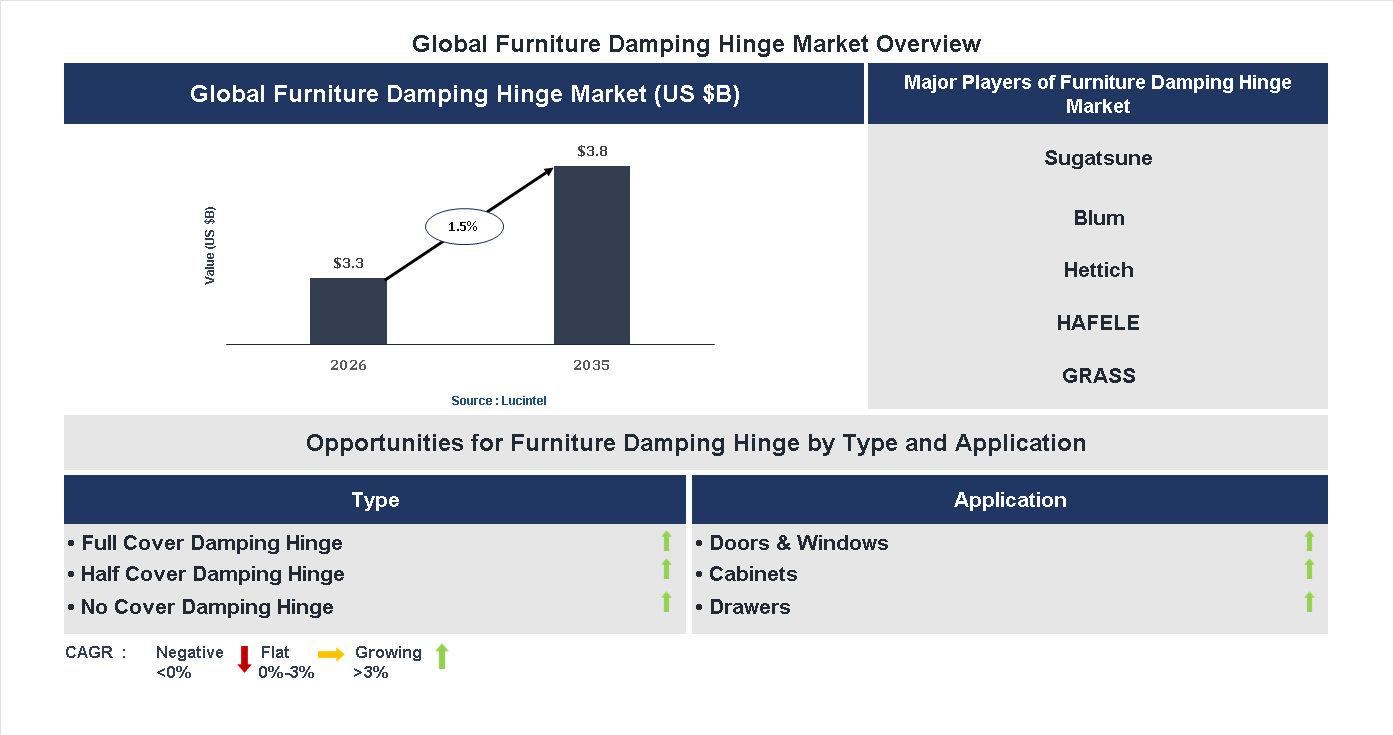
The future of the global furniture damping hinge market looks promising with opportunities in the door & window, cabinet, and drawer markets. The global furniture damping hinge market is expected to reach an estimated $3.8 billion by 2035 with a CAGR of 1.5% from 2026 to 2035. The major drivers for this market are the increasing demand for modular furniture solutions, the rising preference for soft close cabinet hardware, and the growing adoption in residential kitchen cabinetry.• Lucintel forecasts that, within the type category, full cover damping hinge is expected to witness the highest growth over the forecast period.
• Within the application category, cabinet is expected to witness the highest growth.
• In terms of region, APAC is expected to witness the highest growth over the forecast period. Gain valuable insights for your business decisions with our comprehensive 150+ page report. Sample figures with some insights are shown below.
Emerging Trends in the Furniture Damping Hinge Market
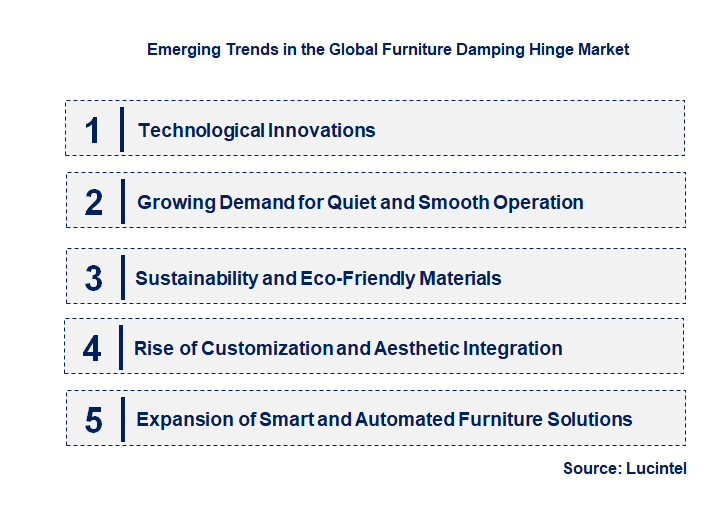
The furniture damping hinge market is experiencing rapid growth driven by technological advancements, changing consumer preferences, and increasing demand for comfort and durability in furniture. As consumers seek quieter, smoother, and more reliable furniture mechanisms, manufacturers are innovating to meet these needs. The market is also influenced by the rise of smart furniture, eco-friendly materials, and customization options. These trends are transforming the industry landscape, creating new opportunities for innovation and competition. Understanding these key developments is essential for stakeholders aiming to capitalize on emerging opportunities and stay ahead in this evolving market.• Technological Innovations: The market is witnessing the incorporation of smart technology into damping hinges, such as sensors that enable automatic closing or opening. Advanced materials like high-performance polymers and eco-friendly composites are being used to enhance durability and sustainability. These innovations improve user experience by providing smoother, quieter operation and longer lifespan. Manufacturers investing in R&D are gaining competitive advantages by offering more sophisticated, reliable, and eco-conscious products. This trend is also driving the development of customizable hinges that can be tailored to specific furniture designs, boosting market versatility and consumer appeal.
• Growing Demand for Quiet and Smooth Operation: Consumers increasingly prioritize furniture that operates quietly and smoothly, especially in residential and office environments. Damping hinges that reduce noise and prevent abrupt closures are becoming standard features in high-end and mid-range furniture. This demand is driven by a desire for comfort, safety, and a premium user experience. As a result, manufacturers are focusing on enhancing damping mechanisms to deliver superior performance. This trend is expanding the market for premium hinges and encouraging innovation in damping technology, ultimately elevating the overall quality standards within the industry.
• Sustainability and Eco-Friendly Materials: Environmental concerns are significantly influencing market trends, with a shift toward sustainable and eco-friendly damping hinge solutions. Manufacturers are adopting biodegradable, recyclable, and low-impact materials to meet regulatory standards and consumer expectations. This shift not only reduces the environmental footprint but also appeals to eco-conscious buyers. The use of sustainable materials is also driving innovation in manufacturing processes, such as reducing waste and energy consumption. As sustainability becomes a key purchasing criterion, the market is likely to see increased adoption of green hinge solutions, fostering a more environmentally responsible industry.
• Rise of Customization and Aesthetic Integration: Customization options are gaining popularity as consumers seek furniture that aligns with their personal style and functional needs. Damping hinges are now available in various finishes, sizes, and configurations to seamlessly integrate with diverse furniture designs. This trend allows manufacturers to cater to niche markets and premium segments, offering tailored solutions for bespoke furniture. Aesthetic integration is also crucial, with hinges designed to be discreet or decorative, enhancing overall furniture appeal. The ability to customize damping hinges is reshaping product development strategies and expanding market opportunities across residential, commercial, and luxury furniture sectors.
• Expansion of Smart and Automated Furniture Solutions: The integration of damping hinges into smart furniture is opening new avenues for growth. Automated closing mechanisms, voice-controlled features, and connectivity with smart home systems are becoming more prevalent. These innovations enhance convenience, safety, and user engagement, especially in modern, tech-savvy households. The rise of IoT-enabled furniture components is driving demand for intelligent damping hinges that can be monitored and controlled remotely. This trend is transforming traditional furniture into connected, interactive systems, creating a significant impact on the market by attracting a broader customer base and encouraging technological innovation. These emerging trends are fundamentally reshaping the furniture damping hinge market by emphasizing innovation, sustainability, customization, and smart integration. They are driving product development, expanding market segments, and elevating consumer expectations, ultimately fostering a more dynamic and competitive industry landscape.
Recent Development in the Furniture Damping Hinge Market
The furniture damping hinge market is experiencing rapid growth driven by increasing demand for modern, noise-free, and durable furniture solutions worldwide. Innovations in hinge technology, rising consumer preferences for comfort, and the expansion of the furniture industry are fueling this trend. Market players are focusing on product development, strategic partnerships, and expanding regional presence to capitalize on these opportunities. These developments are transforming the industry landscape, creating new avenues for growth and competition.• Technological Innovations in Damping Mechanisms: Advancements in soft-close and self-closing hinge technology are enhancing furniture functionality. These innovations improve user experience by reducing noise and wear, leading to increased consumer satisfaction. Manufacturers are investing in R&D to develop more efficient, durable, and cost-effective damping solutions, which are gaining popularity across residential and commercial sectors. This trend is expected to boost market growth and expand application scope.
• Rising Demand for Customizable and Aesthetic Furniture: Consumers increasingly prefer furniture with sleek, modern designs that incorporate advanced damping hinges for smooth operation. Customizable hinges allow manufacturers to meet diverse aesthetic and functional needs, driving innovation in product offerings. The trend is particularly prominent in high-end and luxury furniture segments, encouraging brands to develop tailored solutions. This shift is expanding market opportunities in both residential and commercial markets.
• Expansion of the Furniture Industry in Emerging Markets: Rapid urbanization and rising disposable incomes in regions like Asia-Pacific and Latin America are fueling furniture demand. The adoption of damping hinges is increasing as consumers seek quieter, more durable furniture options. Local manufacturers are adopting advanced hinge technologies to compete globally, leading to increased market penetration. This expansion is creating significant growth opportunities and diversifying the market landscape.
• Strategic Partnerships and Mergers: Companies are forming alliances to enhance product portfolios and expand regional reach. Mergers and acquisitions facilitate access to new technologies, markets, and distribution channels. These strategic moves enable firms to innovate faster and meet evolving customer demands effectively. The consolidation trend is strengthening industry competitiveness and accelerating market development, especially in mature and emerging markets.
• Focus on Sustainability and Eco-Friendly Materials: The industry is shifting towards environmentally sustainable damping solutions, using recyclable and eco-friendly materials. This focus aligns with global sustainability goals and consumer preferences for green products. Manufacturers are investing in eco-conscious production processes and materials, which appeal to environmentally aware consumers. This development is fostering innovation and opening new market segments dedicated to sustainable furniture solutions. The overall impact of these developments is a dynamic, innovative, and expanding market landscape. Increased technological advancements, regional growth, strategic collaborations, and sustainability initiatives are collectively driving market growth, enhancing product quality, and broadening application areas. These factors are positioning the furniture damping hinge market for sustained future growth and competitiveness.
Strategic Growth Opportunities in the Furniture Damping Hinge Market
The furniture damping hinge market is experiencing significant growth driven by increasing demand for enhanced furniture comfort, durability, and safety features. Innovations in hinge technology and rising consumer preferences for modern, noise-free furniture are expanding market opportunities. Key applications across residential, commercial, and industrial sectors are fueling this growth, supported by advancements in materials and manufacturing processes. Companies are focusing on product differentiation and expanding regional presence to capture emerging markets, making this a dynamic landscape with substantial potential for strategic expansion.• Market Penetration in Residential Furniture: The rising demand for noise-free, smooth-operating furniture in homes is creating substantial opportunities for damping hinge manufacturers. Consumers increasingly prefer modern, ergonomic designs that incorporate damping technology to improve comfort and safety. This trend is particularly prominent in kitchen cabinets, wardrobes, and living room furniture, where silent operation enhances user experience. Manufacturers are developing innovative, cost-effective damping solutions tailored to various residential furniture segments, driving overall market growth.
• Expansion in Commercial and Office Furniture Applications: The commercial sector, including office furniture, is adopting damping hinges to improve user comfort and furniture longevity. As workplaces prioritize ergonomic and quiet environments, damping hinges are increasingly integrated into desks, conference tables, and storage units. The growth of co-working spaces and modern office designs further accelerates demand. Companies are investing in R&D to develop durable, high-performance hinges suitable for heavy-use commercial furniture, opening new revenue streams and expanding market share.
• Technological Innovations in Hinge Design and Materials: Advances in materials such as high-strength plastics and lightweight metals are enabling the development of more durable, efficient damping hinges. Innovations like soft-close mechanisms, self-closing features, and adjustable damping parameters are enhancing product appeal. Integration of smart technology, such as sensors for automatic closing, is also emerging. These technological improvements are expanding application possibilities, reducing manufacturing costs, and enabling customization, thereby broadening the market scope across various furniture types and price points.
• Regional Market Growth in Asia-Pacific and Emerging Economies: Rapid urbanization and rising disposable incomes in Asia-Pacific and other emerging economies are fueling demand for modern, high-quality furniture with damping features. Local manufacturers are adopting advanced damping hinge technologies to meet increasing consumer expectations. Additionally, global companies are establishing regional production facilities to reduce costs and improve supply chains. This regional expansion is creating new growth avenues, with significant potential for market penetration and increased sales volumes in these high-growth areas.
• Strategic Partnerships and Product Diversification: Companies are forming alliances with furniture manufacturers and material suppliers to develop integrated damping solutions tailored to specific applications. Diversification into related segments such as cabinetry, wardrobes, and specialized industrial furniture is also underway. These collaborations facilitate innovation, reduce time-to-market, and expand product portfolios. By offering customized, comprehensive solutions, firms can strengthen their market position, address diverse customer needs, and capitalize on the growing demand for damping hinges across multiple furniture segments. The overall impact of these opportunities is set to significantly accelerate market growth, foster innovation, and expand regional presence. Companies that strategically leverage technological advancements, regional expansion, and collaborative approaches will be well-positioned to capture emerging demand. As consumer preferences shift towards quieter, more durable furniture, the market is poised for sustained expansion, offering lucrative prospects for industry stakeholders and driving the evolution of furniture damping hinge solutions worldwide.
Furniture Damping Hinge Market Driver and Challenges
The furniture damping hinge market is influenced by a variety of technological, economic, and regulatory factors that shape its growth trajectory. Technological advancements enable the development of innovative damping hinge solutions, improving functionality and durability. Economic factors such as rising construction activities and increasing consumer spending on home improvement projects drive demand. Regulatory standards related to safety and environmental sustainability influence product design and manufacturing processes. Additionally, shifting consumer preferences towards modern, sleek furniture with enhanced features further propel market expansion. However, the market also faces challenges including high manufacturing costs, stringent regulatory compliance, and fluctuating raw material prices, which can hinder growth. Understanding these drivers and challenges is essential for stakeholders to navigate the evolving landscape effectively. The factors responsible for driving the furniture damping hinge market include:-• Technological Innovation: The development of advanced damping mechanisms and materials enhances hinge performance, durability, and ease of installation. Innovations such as soft-close and self-closing hinges meet consumer demand for convenience and safety, boosting market growth. Manufacturers investing in R&D are able to introduce differentiated products, capturing a larger market share. The integration of smart technology and automation further expands application possibilities, making damping hinges more versatile and appealing across residential and commercial sectors.
• Growing Construction and Renovation Activities: An increase in new residential and commercial construction projects globally fuels demand for furniture fittings, including damping hinges. Renovation trends, especially in developed regions, lead homeowners and interior designers to prefer high-quality, functional furniture components. This surge in construction activity directly correlates with higher consumption of damping hinges, supporting market expansion. Moreover, urbanization and rising disposable incomes contribute to increased spending on premium furniture, which often incorporates damping hinges for enhanced user experience.
• Consumer Preference for Modern and Functional Furniture: Evolving consumer tastes favor furniture that combines aesthetics with functionality. Damping hinges provide smooth, silent closing and prevent damage, aligning with modern design principles. As consumers seek furniture that offers convenience, safety, and longevity, demand for damping hinges increases. This shift in preferences encourages manufacturers to innovate and diversify their product offerings, thereby expanding the market. Additionally, the emphasis on ergonomic and user-friendly furniture in both residential and commercial spaces further propels the adoption of damping hinge technology.
• Regulatory and Environmental Standards: Stringent safety and environmental regulations influence manufacturing practices and product design. Compliance with standards related to VOC emissions, recyclability, and safety certifications ensures market access and consumer trust. Manufacturers are compelled to adopt eco-friendly materials and sustainable production processes, which can increase costs but also open opportunities for premium, compliant products. Regulatory frameworks also drive innovation towards more energy-efficient and environmentally sustainable damping hinge solutions, shaping the competitive landscape.
• Increasing Adoption of Smart and Automated Furniture: The integration of smart technology in furniture, including automated closing mechanisms, is a significant growth driver. Damping hinges equipped with sensors and automation features cater to the demand for intelligent home solutions. This trend enhances user convenience and safety, especially in high-end and luxury furniture segments. The rise of IoT-enabled furniture components encourages manufacturers to develop innovative damping hinge products that can be integrated into smart home ecosystems, thereby expanding market opportunities and driving technological progress. The challenges facing the furniture damping hinge market include:-
• High Manufacturing Costs: Producing damping hinges with advanced features and durable materials involves significant expenses. The costs associated with R&D, quality control, and compliance with regulatory standards can be substantial, impacting profit margins. Small and medium-sized manufacturers may struggle to compete with larger players who benefit from economies of scale. Additionally, fluctuations in raw material prices, such as metals and plastics, further escalate manufacturing costs, potentially limiting price competitiveness and market accessibility.
• Stringent Regulatory Compliance: Navigating complex safety, environmental, and quality standards poses a challenge for manufacturers. Ensuring compliance across different regions requires substantial investment in testing, certification, and documentation. Non-compliance can lead to product recalls, legal penalties, and damage to brand reputation. As regulations evolve, companies must continuously adapt their processes, which can delay product launches and increase operational costs, thereby hindering market growth.
• Volatility in Raw Material Prices: The prices of key raw materials like metals, plastics, and rubber are subject to global market fluctuations. These variations directly impact manufacturing costs and profit margins. Suppliers geopolitical issues, supply chain disruptions, and environmental policies can exacerbate price volatility. Manufacturers may face difficulties in maintaining stable pricing strategies, which can affect product pricing, competitiveness, and overall market stability, especially during periods of economic uncertainty. The furniture damping hinge market is driven by technological innovations, construction growth, changing consumer preferences, regulatory standards, and smart furniture adoption. However, high manufacturing costs, regulatory complexities, and raw material price volatility pose significant challenges. These factors collectively influence market dynamics, requiring stakeholders to innovate and adapt strategically. The interplay of drivers and challenges will determine the pace and nature of market growth, emphasizing the importance of technological advancement, regulatory compliance, and cost management for sustained success.
List of Furniture Damping Hinge Companies
Companies in the market compete on the basis of product quality offered. Major players in this market focus on expanding their manufacturing facilities, R&D investments, infrastructural development, and leverage integration opportunities across the value chain. With these strategies furniture damping hinge companies cater increasing demand, ensure competitive effectiveness, develop innovative products & technologies, reduce production costs, and expand their customer base. Some of the furniture damping hinge companies profiled in this report include-• Sugatsune
• Blum
• Hettich
• HAFELE
• GRASS
• Ferrari
• Dorma
• FGV
• ITW Proline
• Zoo Hardware
Furniture Damping Hinge Market by Segment
The study includes a forecast for the global furniture damping hinge market by type, application, and region.Furniture Damping Hinge Market by Type [Value from 2019 to 2035]:
• Full Cover Damping Hinge
• Half Cover Damping Hinge
• No Cover Damping Hinge
Furniture Damping Hinge Market by Application [Value from 2019 to 2035]:
• Doors & Windows
• Cabinets
• Drawers
Furniture Damping Hinge Market by Region [Value from 2019 to 2035]:
• North America
• Europe
• Asia Pacific
• The Rest of the World
Country Wise Outlook for the Furniture Damping Hinge Market
The furniture damping hinge market has experienced significant growth driven by increasing demand for ergonomic and silent furniture solutions worldwide. Technological innovations, sustainability initiatives, and evolving consumer preferences are shaping the market landscape across major economies. Countries are adopting advanced manufacturing techniques and expanding their product portfolios to meet rising consumer expectations. The markets development is also influenced by regulatory standards and the push for eco-friendly materials. As the furniture industry continues to evolve, these countries are playing pivotal roles in driving innovation, expanding market share, and setting new benchmarks for quality and sustainability in damping hinge solutions.• United States: The US market has seen a surge in demand for high-quality, durable damping hinges, driven by the growing popularity of smart and ergonomic furniture. Manufacturers are investing in R&D to develop noise-free, long-lasting hinges with enhanced load capacity. The rise of e-commerce platforms has facilitated wider distribution channels, boosting sales. Additionally, sustainability initiatives are prompting companies to adopt eco-friendly materials and manufacturing processes. The US government’s regulations on furniture safety and environmental standards are also influencing product development and innovation in this sector.
• China: China remains a dominant player in the furniture damping hinge market, with rapid industrial growth and a large manufacturing base. The country is focusing on automation and advanced production techniques to improve product quality and reduce costs. Domestic demand for modern, functional furniture is increasing, prompting local manufacturers to innovate. Export opportunities are expanding due to the global demand for affordable yet high-quality damping hinges. The Chinese government’s support for technological advancement and sustainable manufacturing practices is further strengthening its market position.
• Germany: Germany is recognized for its high standards of quality and precision engineering in the damping hinge market. The country is leading in the development of innovative, space-saving hinge designs that cater to modern furniture trends. German companies are investing heavily in R&D to enhance product durability and ease of installation. Sustainability is a key focus, with a shift towards recyclable and eco-friendly materials. The market benefits from strong export networks within Europe and globally, and regulatory compliance with strict European standards ensures high product reliability and safety.
• India: The Indian furniture damping hinge market is experiencing rapid growth due to increasing urbanization and rising disposable incomes. Local manufacturers are adopting advanced manufacturing technologies to improve product quality and reduce costs. The demand for modular and space-efficient furniture is fueling innovation in hinge design. The government’s initiatives to promote manufacturing and exports are providing a boost to the industry. Additionally, the growing awareness of ergonomic furniture among consumers is driving demand for damping hinges that offer smooth, silent operation and enhanced durability.
• Japan: Japan’s market is characterized by a focus on technological innovation and high-quality standards. Japanese manufacturers are developing damping hinges with advanced features such as self-closing mechanisms and enhanced load capacity. The emphasis on sustainability and eco-friendly materials aligns with Japan’s environmental policies. The market is also driven by the aging population, which increases demand for easy-to-use, ergonomic furniture solutions. Japan’s strong export network and reputation for precision engineering continue to support the growth of innovative damping hinge products in both domestic and international markets.

Features of the Global Furniture Damping Hinge Market
Market Size Estimates: Furniture damping hinge market size estimation in terms of value ($B). Trend and Forecast Analysis: Market trends (2019 to 2025) and forecast (2026 to 2035) by various segments and regions. Segmentation Analysis: Furniture damping hinge market size by type, application, and region in terms of value ($B). Regional Analysis: Furniture damping hinge market breakdown by North America, Europe, Asia Pacific, and Rest of the World. Growth Opportunities: Analysis of growth opportunities in different types, applications, and regions for the furniture damping hinge market. Strategic Analysis: This includes M&A, new product development, and competitive landscape of the furniture damping hinge market. Analysis of competitive intensity of the industry based on Porter’s Five Forces model.
FAQ
Q1. What is the furniture damping hinge market size? Answer: The global furniture damping hinge market is expected to reach an estimated $3.8 billion by 2035. Q2. What is the growth forecast for furniture damping hinge market? Answer: The global furniture damping hinge market is expected to grow with a CAGR of 1.5% from 2026 to 2035. Q3. What are the major drivers influencing the growth of the furniture damping hinge market? Answer: The major drivers for this market are the increasing demand for modular furniture solutions, the rising preference for soft close cabinet hardware, and the growing adoption in residential kitchen cabinetry. Q4. What are the major segments for furniture damping hinge market? Answer: The future of the furniture damping hinge market looks promising with opportunities in the door & window, cabinet, and drawer markets. Q5. Who are the key furniture damping hinge market companies? Answer: Some of the key furniture damping hinge companies are as follows:• Sugatsune
• Blum
• Hettich
• HAFELE
• GRASS
• Ferrari
• Dorma
• FGV
• ITW Proline
• Zoo Hardware Q6. Which furniture damping hinge market segment will be the largest in future? Answer: Lucintel forecasts that, within the type category, full cover damping hinge is expected to witness the highest growth over the forecast period. Q7. In furniture damping hinge market, which region is expected to be the largest in next 5 years? Answer: In terms of region, APAC is expected to witness the highest growth over the forecast period. Q8. Do we receive customization in this report? Answer: Yes, Lucintel provides 10% customization without any additional cost.
Table of Contents
List of Figures
List of Tables
Methodology
- In-depth interviews of the major players in this market
- Detailed secondary research from competitors’ financial statements and published data
- Extensive searches of published works, market, and database information pertaining to industry news, company press releases, and customer intentions
- A compilation of the experiences, judgments, and insights of Lucintel’s professionals, who have analyzed and tracked this market over the years.


Buy Now
Choose a license that fits your team. Instant PDF delivery.
Prices exclude taxes. Instant delivery. Custom licensing available on request.
Key Questions
- • What are some of the most promising, high-growth opportunities for the furniture damping hinge market by type (full cover damping hinge, half cover damping hinge, and no cover damping hinge), application (doors & windows, cabinets, and drawers), and region (North America, Europe, Asia Pacific, and the Rest of the World)?
- • Which segments will grow at a faster pace and why?
- • Which region will grow at a faster pace and why?
- • What are the key factors affecting market dynamics? What are the key challenges and business risks in this market?
- • What are the business risks and competitive threats in this market?
- • What are the emerging trends in this market and the reasons behind them?
- • What are some of the changing demands of customers in the market?
- • What are the new developments in the market? Which companies are leading these developments?
- • Who are the major players in this market? What strategic initiatives are key players pursuing for business growth?
- • What are some of the competing products in this market and how big of a threat do they pose for loss of market share by material or product substitution?
- • What M&A activity has occurred in the last 7 years and what has its impact been on the industry? For any questions related to Furniture Damping Hinge Market, Furniture Damping Hinge Market Size, Furniture Damping Hinge Market Growth, Furniture Damping Hinge Market Analysis, Furniture Damping Hinge Market Report, Furniture Damping Hinge Market Share, Furniture Damping Hinge Market Trends, Furniture Damping Hinge Market Forecast, Furniture Damping Hinge Companies, write Lucintel analyst at email: helpdesk@lucintel.com. We will be glad to get back to you soon.


