
Market Report · July 22, 2026

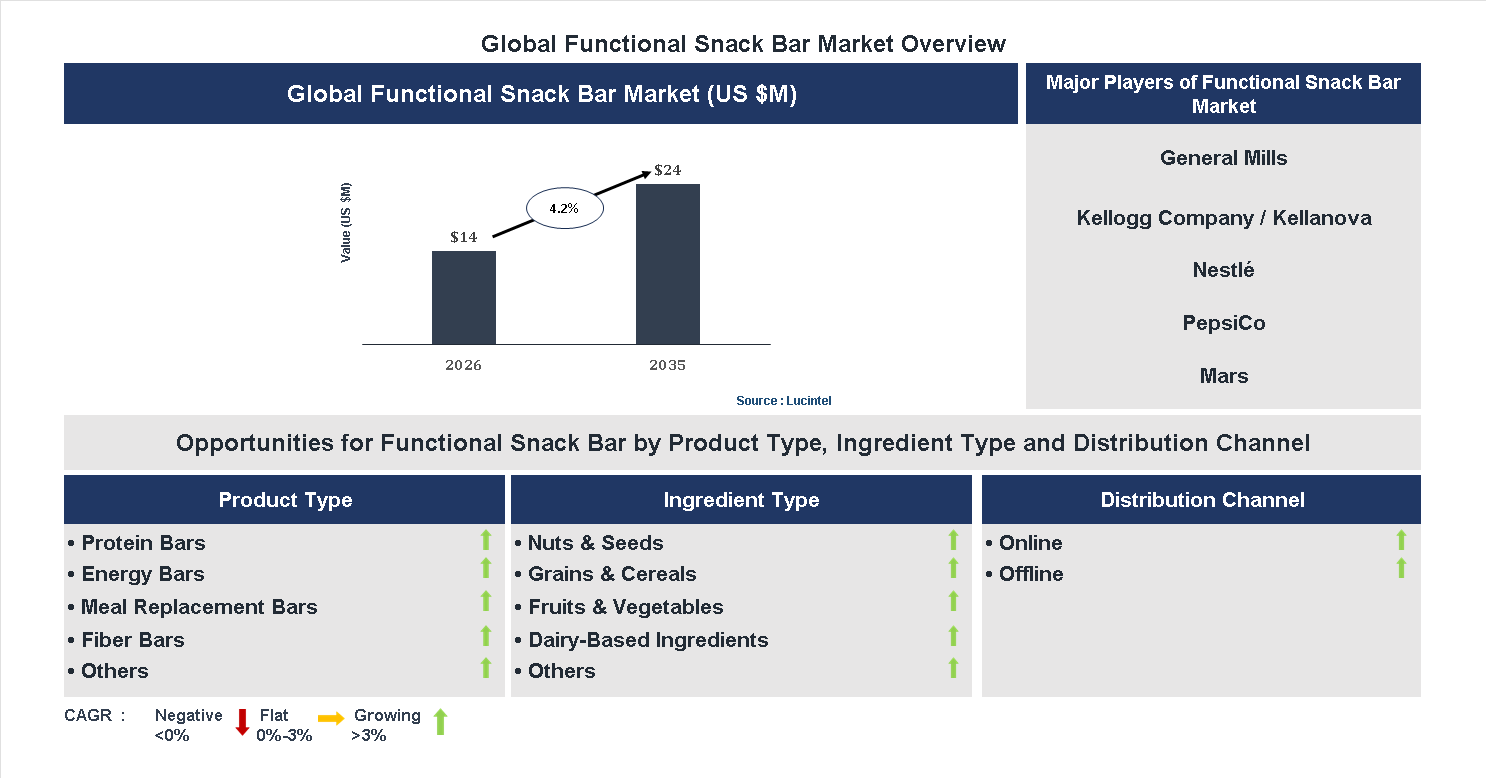
Key data points: The market size in 2035 = $24 million, growth forecast = 4.2% annually for the next 8 years. Scroll below to get more insights. This market report covers trends, opportunities and forecasts in functional snack bar market to 2035 by product type (protein bars, energy bars, meal replacement bars, fiber bars, and others), ingredient type (nuts & seeds, grains & cereals, fruits & vegetables, dairy-based ingredients, and others), distribution channel (online and offline), and region (North America, Europe, Asia Pacific, and the Rest of the World)
We'll send your sample report shortly.
• Lucintel forecasts that, within the product type category, protein bar is expected to witness higher growth over the forecast period.
• Within the ingredient type category, nut & seed is expected to witness the highest growth.
• In terms of region, APAC is expected to witness the highest growth over the forecast period. Gain valuable insights for your business decisions with our comprehensive 150+ page report. Sample figures with some insights are shown below.
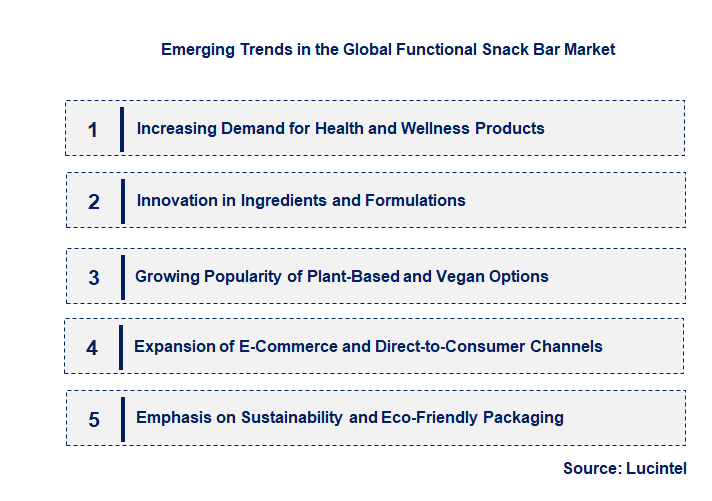
• Increasing Demand for Health and Wellness Products: Consumers are prioritizing health, leading to a surge in functional snack bars that offer added benefits like protein, vitamins, and superfoods. This trend reflects a broader shift towards preventive health and personalized nutrition, prompting brands to innovate with ingredients that support immunity, digestion, and energy. As a result, the market is witnessing a rise in products tailored to specific health concerns, driving growth and diversification in the segment.
• Innovation in Ingredients and Formulations: Companies are investing in research to develop unique, functional ingredients such as adaptogens, probiotics, and plant-based proteins. These innovations enhance product efficacy and appeal to health-conscious consumers seeking natural, clean-label options. The focus on sustainable sourcing and allergen-free formulations further boosts consumer confidence and expands market reach, fostering a competitive environment driven by product differentiation.
• Growing Popularity of Plant-Based and Vegan Options: The shift towards plant-based diets is significantly impacting the snack bar market. Vegan and plant-based functional bars are gaining popularity due to their health benefits, environmental sustainability, and ethical considerations. This trend encourages brands to develop innovative recipes that cater to vegan consumers, broadening the market and encouraging inclusivity while aligning with global sustainability goals.
• Expansion of E-commerce and Direct-to-Consumer Channels: Digital platforms are transforming how consumers access functional snack bars. E-commerce offers convenience, personalized recommendations, and a wider product selection, fueling market growth. Brands are leveraging social media and online marketing to build brand loyalty and educate consumers about product benefits. This shift enables faster innovation cycles and direct feedback, making the market more dynamic and responsive to consumer preferences.
• Emphasis on Sustainability and Eco-Friendly Packaging: Environmental concerns are prompting brands to adopt sustainable practices, including eco-friendly packaging and responsible sourcing. Consumers increasingly favor brands that demonstrate environmental responsibility, influencing purchasing decisions. This trend encourages innovation in biodegradable packaging and transparent supply chains, aligning market growth with sustainability goals and enhancing brand reputation. These emerging trends are fundamentally reshaping the functional snack bar market by emphasizing health, innovation, sustainability, and digital engagement. They are driving product diversification, expanding consumer bases, and fostering a more competitive, responsive industry landscape. As these trends continue to evolve, they will likely lead to more personalized, sustainable, and accessible options for consumers worldwide.
• Growing Consumer Awareness of Health Benefits: The rising awareness of health benefits associated with functional snack bars is significantly impacting the market. Consumers are increasingly seeking products that offer added nutritional value, such as vitamins, minerals, and probiotics. This shift is encouraging brands to innovate with functional ingredients, leading to a broader product portfolio. As a result, market demand is expanding, attracting new customer segments and fostering competitive growth. Companies investing in health-focused formulations are gaining a competitive edge, driving overall market expansion.
• Innovation in Ingredient Formulations: Advances in ingredient technology are enabling the development of more effective and appealing functional snack bars. Natural, plant-based, and clean-label ingredients are gaining popularity, aligning with consumer preferences for transparency and healthfulness. Innovations such as adaptogens, superfoods, and functional fibers are enhancing product efficacy and taste. This trend is encouraging manufacturers to differentiate their offerings, leading to increased product diversity and consumer engagement. The focus on innovative formulations is fueling market growth and expanding consumer choice.
• Expansion of Distribution Channels: The growth of online retail and specialty stores is broadening the reach of functional snack bars. E-commerce platforms provide convenience and access to a wider audience, including health-conscious consumers seeking personalized options. Additionally, partnerships with gyms, wellness centers, and supermarkets are strengthening physical distribution. This multi-channel expansion is increasing product visibility and availability, boosting sales. As distribution channels evolve, brands are better positioned to meet consumer demand, fostering market growth and competitive positioning.
• Rising Demand For Plant-Based And Vegan Options: The increasing preference for plant-based and vegan products is shaping the functional snack bar market. Consumers are prioritizing sustainability, ethical sourcing, and health benefits, prompting brands to develop plant-based formulations. These bars often contain superfoods, nuts, seeds, and plant proteins, appealing to a broad demographic. The trend is driving innovation and product diversification, leading to higher market penetration. As demand for vegan options grows, companies are expanding their offerings, contributing to overall market expansion and consumer loyalty.
• Adoption Of Sustainable Packaging Practices: Sustainability initiatives are becoming integral to market growth strategies. Brands are adopting eco-friendly packaging materials to reduce environmental impact and meet consumer expectations. Innovations include biodegradable wrappers, recyclable containers, and minimal packaging designs. These practices enhance brand reputation and appeal to environmentally conscious consumers. The shift towards sustainable packaging is influencing purchasing decisions and fostering brand loyalty. As sustainability becomes a key differentiator, it is driving market growth and encouraging industry-wide adoption of eco-friendly practices. The recent developments in health awareness, ingredient innovation, distribution expansion, plant-based demand, and sustainability are collectively transforming the functional snack bar market. These opportunities are driving consumer engagement, product diversity, and market penetration, resulting in sustained growth and competitive advantage for brands. Overall, these trends are shaping a more dynamic, health-focused, and environmentally responsible market landscape.
• Growing Consumer Demand for Health-Boosting Ingredients: The increasing awareness of health and wellness is driving demand for snack bars enriched with functional ingredients like vitamins, minerals, probiotics, and superfoods. Consumers prefer products that support immunity, digestion, and overall well-being, prompting manufacturers to innovate with nutrient-dense formulations. This trend encourages product differentiation and expansion into new health-focused segments, boosting market growth.
• Expansion of E-Commerce and Retail Channels: The rise of online shopping platforms and modern retail outlets has enhanced product accessibility for consumers worldwide. E-commerce enables brands to reach niche markets and offer personalized options, while retail expansion increases shelf space and visibility. This dual-channel growth facilitates wider consumer adoption, accelerates product launches, and supports regional market penetration, significantly contributing to overall market expansion.
• Innovation in Flavours and Packaging to Attract Consumers: Continuous innovation in flavors, textures, and packaging attracts diverse consumer preferences and enhances product appeal. Functional snack bars with unique taste profiles and convenient, eco-friendly packaging meet modern consumer expectations for sustainability and portability. These innovations help brands differentiate themselves in a competitive market, increase consumer engagement, and drive sales, thereby fueling overall market growth.
• Increasing Focus on Plant-Based and Natural Ingredients: The shift towards plant-based diets and natural ingredients influences product development in the functional snack bar market. Consumers seek clean-label, vegan, and organic options that align with their health and ethical values. This trend encourages manufacturers to reformulate products with plant-based proteins, natural sweeteners, and organic ingredients, expanding the consumer base and opening new market segments.
• Rising Awareness of Personalized Nutrition Solutions: Advances in nutrigenomics and personalized health insights are prompting companies to develop tailored snack bar options that meet individual nutritional needs. Customized products targeting specific health concerns like weight management, energy, or immunity are gaining popularity. This personalized approach enhances consumer engagement, loyalty, and market differentiation, creating new growth avenues and expanding the overall market scope. The overall impact of these opportunities is a dynamic and expanding functional snack bar market, driven by innovation, consumer preferences, and distribution advancements. Companies that capitalize on these trends can achieve competitive advantages, foster brand loyalty, and unlock new revenue streams, ensuring sustained growth in a competitive landscape.
• Technological Advancements: The development of innovative food processing techniques and ingredient formulations has enabled manufacturers to create functional snack bars with enhanced nutritional profiles, improved taste, and longer shelf life. These technological innovations facilitate the incorporation of superfoods, probiotics, and other functional ingredients, meeting consumer demand for health-oriented products. Moreover, advancements in packaging technology improve product freshness and convenience, further boosting market appeal. As R&D efforts continue, the market benefits from a broader array of functional options, fostering consumer interest and expanding market reach.
• Rising Health Consciousness: Increasing awareness about health, wellness, and nutrition among consumers is a primary driver. Consumers are seeking convenient, on-the-go snack options that support their active lifestyles and specific health goals such as weight management, immunity boosting, and digestive health. This shift in consumer preferences has led to a surge in demand for functional snack bars that offer added health benefits beyond basic nutrition. The trend is reinforced by social media influence and health campaigns, encouraging consumers to choose products that align with their wellness objectives, thereby expanding the market.
• Urbanization and Changing Lifestyles: Rapid urbanization has resulted in busier lifestyles, reducing the time available for traditional meal preparation. Consumers increasingly prefer quick, portable, and nutritious snack options, making functional snack bars an ideal choice. The rise of dual-income households and the need for convenient nutrition solutions during commutes, work, or travel further propel demand. Urban consumers are also more exposed to global health trends and innovative products, which encourages manufacturers to develop diverse, functional offerings tailored to urban lifestyles, thus expanding market penetration.
• Growing E-commerce and Digital Marketing: The proliferation of online retail channels and digital marketing strategies has significantly expanded the reach of functional snack bars. E-commerce platforms provide consumers with easy access to a wide variety of products, detailed nutritional information, and customer reviews, influencing purchasing decisions. Digital marketing enables brands to target specific demographics, promote health benefits, and launch personalized campaigns. This direct-to-consumer approach reduces distribution barriers, increases brand visibility, and accelerates market growth, especially among younger, tech-savvy consumers seeking convenience and transparency.
• Increasing Investment in Product Innovation: Companies are investing heavily in research and development to introduce novel functional snack bar formulations that cater to emerging health trends. Innovations include plant-based ingredients, allergen-free options, and products tailored for specific dietary needs such as keto or gluten-free. Investment in sustainable sourcing and eco-friendly packaging also appeals to environmentally conscious consumers. These innovations help brands differentiate themselves in a competitive market, attract new customer segments, and respond swiftly to evolving consumer preferences, thereby fueling market expansion. The challenges facing the functional snack bar market include:
• Regulatory Uncertainties: The lack of standardized regulations regarding health claims, ingredient disclosures, and nutritional labeling creates ambiguity for manufacturers. Differing regional standards can complicate product development, marketing, and compliance, increasing costs and time-to-market. Regulatory uncertainties may also hinder innovation, as companies may hesitate to introduce new ingredients or claims without clear guidelines. This environment can lead to legal risks, consumer mistrust, and market fragmentation, ultimately impeding growth and market stability.
• Intense Competition and Market Saturation: The rapid proliferation of brands and product variants has led to a highly competitive landscape. Market saturation makes it difficult for new entrants to establish a foothold and for existing players to differentiate their offerings. Price wars, promotional activities, and innovation races can erode profit margins. Additionally, consumer loyalty is often fragmented, requiring continuous marketing efforts. This intense competition pressures companies to innovate constantly and manage costs effectively, posing significant challenges to sustainable growth.
• Supply Chain Disruptions: The functional snack bar market relies heavily on a complex supply chain for sourcing raw ingredients, manufacturing, and distribution. Disruptions caused by geopolitical tensions, pandemics, or climate change can lead to ingredient shortages, increased costs, and delays in product delivery. Such disruptions threaten product availability and can damage brand reputation. Ensuring a resilient supply chain requires substantial investment and strategic planning, which may be challenging for smaller players, thereby impacting overall market stability and growth prospects. The functional snack bar market is driven by technological innovations, health-conscious consumer behavior, urbanization, digital marketing, and product innovation investments. However, regulatory uncertainties, intense competition, and supply chain vulnerabilities pose significant challenges. These factors collectively influence market dynamics, requiring stakeholders to adapt strategically. While growth opportunities are substantial, navigating regulatory landscapes, differentiating offerings, and ensuring supply chain resilience are critical for sustained success. Overall, the market's future hinges on balancing innovation with compliance and operational efficiency amidst evolving consumer preferences and external pressures.
• General Mills
• Kellogg Company / Kellanova
• Nestlé
• PepsiCo
• Mars
• Protein Bars
• Energy Bars
• Meal Replacement Bars
• Fiber Bars
• Others
• Nuts & Seeds
• Grains & Cereals
• Fruits & Vegetables
• Dairy-Based Ingredients
• Others
• Online
• Offline
• North America
• Europe
• Asia Pacific
• The Rest of the World
• United States: The US market has seen a surge in plant-based and protein-enriched snack bars, driven by health trends and vegan consumer demand. Major brands are investing in clean-label ingredients and sustainable packaging. Innovation in functional benefits such as gut health, immunity, and energy boosts is prominent. E-commerce sales are growing rapidly, and new product launches focus on organic and non-GMO certifications. The market is also witnessing increased interest in allergen-free options, catering to diverse dietary needs.
• China: China's functional snack bar market is expanding rapidly, fueled by rising disposable incomes and health awareness. Local brands are innovating with traditional ingredients like herbs and teas, blending them with modern formulations. There is a strong focus on functional benefits such as digestion, energy, and mental focus. E-commerce platforms and social media marketing play a crucial role in consumer engagement. Additionally, international brands are entering the market, adapting products to local tastes and preferences, which boosts competition and innovation.
• Germany: The German market emphasizes organic, gluten-free, and low-sugar snack bars, aligning with European health standards. Consumers are increasingly interested in sustainable sourcing and environmentally friendly packaging. Functional benefits such as immune support and energy are popular, with a focus on clean-label ingredients. Local companies are innovating with regional superfoods and natural flavors. Retail channels are expanding to include health food stores and online platforms, facilitating wider access. Regulatory standards for health claims are strictly followed, ensuring product transparency and trust.
• India: The Indian market is witnessing rapid growth due to rising health consciousness and urbanization. Local companies are developing affordable, nutrient-dense snack bars incorporating traditional ingredients like turmeric, fenugreek, and jaggery. There is a focus on functional benefits such as energy, immunity, and digestion. The market is driven by increasing penetration of e-commerce and modern retail outlets. Consumer preferences are shifting towards natural, organic, and gluten-free options. Startups and established brands are collaborating to introduce innovative products tailored to regional tastes and dietary habits.
• Japan: Japan's functional snack bar market is characterized by a focus on health, longevity, and traditional ingredients like matcha and seaweed. Consumers prefer low-sugar, high-fiber options with added functional benefits such as antioxidant properties and digestive health. The market is driven by aging populations seeking health maintenance solutions. Local brands emphasize natural ingredients and minimal processing. Convenience and portability are key selling points, with a growing trend toward premium, artisanal products. Regulatory compliance and product transparency are prioritized, fostering consumer trust and loyalty.


• General Mills
• Kellogg Company / Kellanova
• Nestlé
• PepsiCo
• Mars Q6. Which functional snack bar market segment will be the largest in future? Answer: Lucintel forecasts that, within the product type category, protein bar is expected to witness higher growth over the forecast period. Q7. In functional snack bar market, which region is expected to be the largest in next 5 years? Answer: In terms of region, APAC is expected to witness the highest growth over the forecast period. Q8. Do we receive customization in this report? Answer: Yes, Lucintel provides 10% customization without any additional cost.


Choose a license that fits your team. Instant PDF delivery.
Prices exclude taxes. Instant delivery. Custom licensing available on request.
Market Report · July 22, 2026
Market Report · July 22, 2026
Market Report · July 22, 2026
Trusted partner for strategic intelligence and business growth


Receive a complimentary market analysis tailored to your industry. Our analysts will identify key growth opportunities and competitive dynamics specific to your business.

Market size, growth rate, and key trend analysis for your specific sector.

Top competitor positioning and market share analysis.

Strategic recommendations backed by data-driven insights.
Get curated market intelligence and competitive moves straight to your inbox.
By subscribing, you agree to receive our monthly insights. Unsubscribe anytime.
Receive a complimentary market analysis tailored to your industry. Our analysts will identify key growth opportunities and competitive dynamics specific to your business.
Market size, growth rate, and key trend analysis for your specific sector.
Top competitor positioning and market share analysis.
Strategic recommendations backed by data-driven insights.
Get curated market intelligence, emerging trends, and competitive moves straight to your inbox each month.
By subscribing, you agree to receive our monthly insights. Unsubscribe anytime.
We'll send your sample report shortly.