
Market Report · July 22, 2026

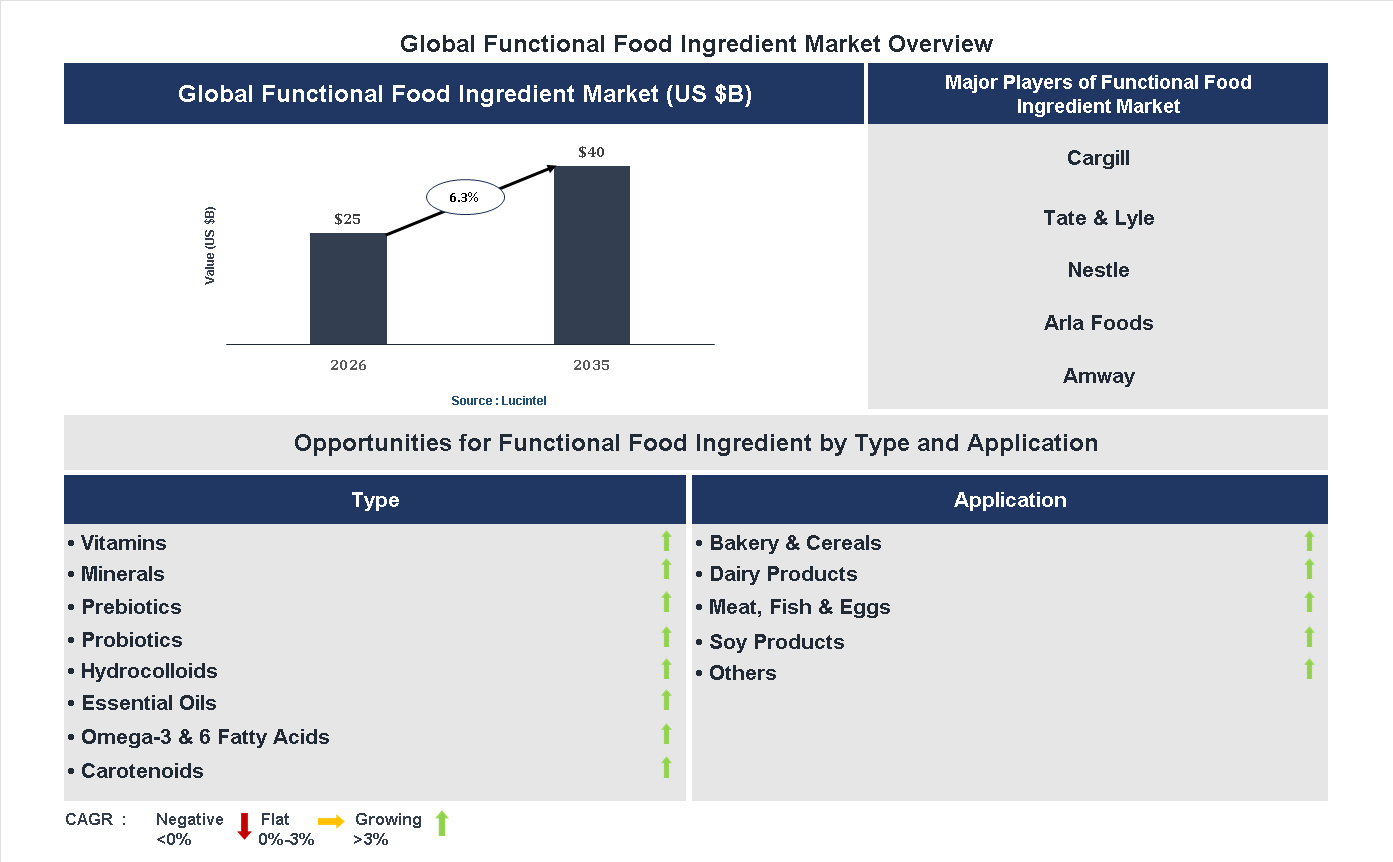
Key data points: The market size in 2035 = $40 billion, growth forecast = 6.3% annually for the next 8 years. Scroll below to get more insights. This market report covers trends, opportunities and forecasts in functional food ingredient market to 2035 by type (vitamins, minerals, prebiotics, probiotics, hydrocolloids, essential oils, omega-3 & 6 fatty acids, and carotenoids), application (bakery & cereals, dairy products, meat, fish & eggs, soy products, and others), and region (North America, Europe, Asia Pacific, and the Rest of the World)
We'll send your sample report shortly.
• Lucintel forecasts that, within the type category, probiotic is expected to witness the highest growth over the forecast period.
• Within the application category, dairy product is expected to witness the highest growth.
• In terms of region, APAC is expected to witness the highest growth over the forecast period. Gain valuable insights for your business decisions with our comprehensive 150+ page report. Sample figures with some insights are shown below.
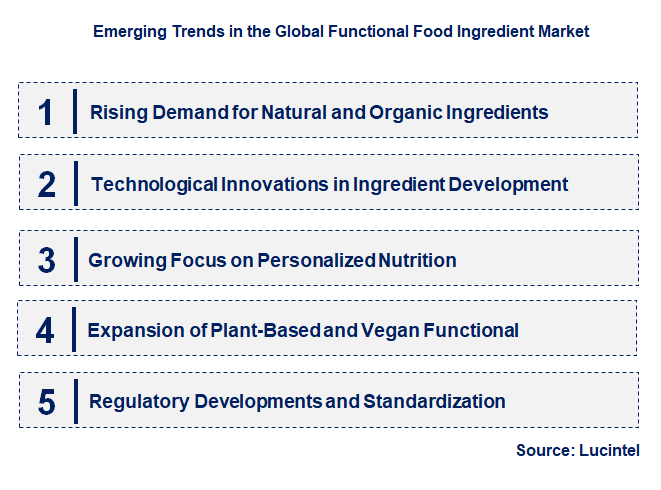
• Rising Demand for Natural and Organic Ingredients: Consumers are increasingly prioritizing natural, organic, and clean-label ingredients in their food choices. This trend is driven by growing health consciousness and concerns over synthetic additives. As a result, manufacturers are investing in sourcing high-quality, plant-based, and minimally processed ingredients such as botanicals, probiotics, and superfoods. This shift enhances product credibility and appeals to health-conscious consumers, fostering innovation in natural functional ingredients and expanding the market for organic-certified products.
• Technological Innovations in Ingredient Development: Advances in biotechnology, extraction techniques, and nanotechnology are enabling the development of more effective and bioavailable functional ingredients. These innovations improve ingredient stability, potency, and targeted delivery, leading to more efficacious products. For example, microencapsulation techniques protect sensitive ingredients and enhance their absorption. Such technological progress allows companies to create novel formulations that meet specific health needs, thereby broadening the scope of functional foods and increasing consumer trust in scientifically backed products.
• Growing Focus on Personalized Nutrition: The market is witnessing a shift towards personalized nutrition solutions tailored to individual health profiles, genetics, and lifestyle. This trend is facilitated by the rise of digital health tools, wearable devices, and data analytics. Companies are developing customized functional food ingredients that address specific health concerns such as gut health, immunity, or cognitive function. Personalized products foster higher consumer engagement and loyalty, and they open new avenues for targeted marketing and product innovation, making functional foods more relevant and effective.
• Expansion of Plant-Based and Vegan Functional Ingredients: The increasing adoption of plant-based diets is fueling demand for vegan and plant-derived functional ingredients. These include plant proteins, fibers, and extracts that offer health benefits comparable to animal-based ingredients. The trend aligns with sustainability goals and ethical considerations, appealing to a broader consumer base. The development of innovative plant-based ingredients enhances product diversity and caters to the growing vegan population, thereby expanding market reach and encouraging sustainable practices within the industry.
• Regulatory Developments and Standardization: Evolving regulations and standards for functional food ingredients are shaping market dynamics. Governments and regulatory bodies are establishing clearer guidelines for ingredient safety, health claims, and labeling, which influence product formulation and marketing strategies. Compliance with these standards ensures consumer safety and builds trust, while also encouraging innovation within a regulated framework. Companies are investing in research and certification processes to meet these standards, which ultimately enhances product credibility and facilitates market expansion across different regions. These emerging trends are transforming the functional food ingredient market by fostering innovation, emphasizing natural and personalized solutions, and ensuring regulatory compliance. This evolution is leading to more targeted, effective, and sustainable products, thereby reshaping the industry landscape and offering new growth opportunities for stakeholders.
• Growing Demand for Natural and Organic Ingredients: The shift towards clean-label products is boosting demand for natural, organic, and plant-based ingredients. Consumers seek transparency and health benefits, prompting manufacturers to incorporate ingredients like botanicals, probiotics, and superfoods. This trend enhances product credibility and appeals to health-conscious buyers, expanding market share for natural ingredient suppliers. It also encourages innovation in sourcing and processing, leading to a broader range of functional food options that meet consumer preferences for sustainability and wellness.
• Advances in Ingredient Technology and Formulation: Innovations in encapsulation, stabilization, and delivery systems are improving the efficacy and shelf life of functional ingredients. These technological advancements enable better bioavailability and targeted health benefits, making products more appealing and effective. Companies investing in R&D are developing novel formulations such as microencapsulated vitamins and probiotics, which can be seamlessly integrated into various food matrices. This progress enhances product differentiation and opens new avenues for functional food development across multiple segments.
• Expansion of Application Sectors: The use of functional ingredients is broadening beyond traditional sectors like dairy and beverages into snacks, bakery, and confectionery. This diversification allows manufacturers to tap into new consumer segments and occasions, increasing market penetration. For example, functional snacks with added fiber or antioxidants are gaining popularity among busy consumers seeking convenient health solutions. Such expansion supports market growth by creating diverse product portfolios that cater to evolving dietary preferences and lifestyles.
• Rising Focus on Personalized Nutrition: The trend towards personalized nutrition is influencing the functional food ingredient market by encouraging tailored formulations based on individual health needs and genetic profiles. Companies are developing customized products with specific ingredients like omega-3s, vitamins, or probiotics to address unique health concerns. This approach enhances consumer engagement and loyalty, driving demand for bespoke functional foods. It also fosters innovation in ingredient combinations and delivery formats, positioning the market for sustained growth in personalized health solutions.
• Increasing Regulatory Support and Standardization: Governments and industry bodies are implementing regulations and standards to ensure the safety, efficacy, and transparency of functional ingredients. This regulatory framework boosts consumer confidence and encourages market expansion. Clear labeling and quality assurance facilitate market entry for new products and attract investment. As regulatory clarity improves, more companies are willing to innovate and introduce novel functional ingredients, fostering a competitive environment that accelerates market growth and product diversity. These recent developments are significantly transforming the functional food ingredient market by enhancing product innovation, expanding application sectors, and aligning with consumer health trends. The focus on natural ingredients, technological advancements, personalized nutrition, and regulatory support is creating a dynamic landscape. As a result, the market is poised for sustained growth, offering diverse opportunities for manufacturers, suppliers, and consumers seeking healthier, functional food options that meet evolving wellness demands.
• Innovative Natural Ingredients for Functional Foods: The development of plant-based, probiotic, and antioxidant-rich ingredients is a major growth driver. These ingredients cater to consumer preferences for clean-label, organic, and minimally processed products. Sub-segments like botanicals, fibers, and vitamins are gaining popularity, enabling manufacturers to create targeted health benefits such as immunity boosting, digestive health, and cognitive support. Continuous research and sustainable sourcing are critical to expanding these offerings and capturing market share.
• Growing Demand for Personalized Nutrition Solutions: Advances in genomics and biomarker analysis are enabling tailored functional food products. Consumers seek personalized solutions for specific health concerns like weight management, heart health, and mental well-being. Companies are investing in customized formulations, functional beverages, and supplements that address individual needs. This trend is expected to drive innovation, increase consumer engagement, and open new revenue streams in the market.
• Expansion of Functional Beverages and Snacks: The rising popularity of functional drinks, including energy, sports, and wellness beverages, is a key growth area. Similarly, functional snacks infused with vitamins, minerals, and probiotics are gaining traction among busy consumers. These convenient formats meet the demand for on-the-go health solutions. Innovations in flavor, packaging, and ingredient combinations are enhancing appeal, expanding market penetration across retail channels and geographic regions.
• Increasing Adoption in Dietary Supplements and Meal Replacements: The supplement segment continues to grow with products targeting immunity, joint health, and cognitive function. Meal replacements and protein-based products are also expanding, driven by busy lifestyles and health-conscious consumers. These segments benefit from regulatory support and technological advancements in ingredient stability and bioavailability, enabling brands to offer effective, appealing options that support weight management and overall wellness.
• Focus on Sustainable and Clean-Label Ingredients: Consumers are increasingly demanding transparency, sustainability, and natural sourcing in functional ingredients. This trend encourages the development of eco-friendly extraction methods, biodegradable packaging, and ethically sourced raw materials. Market players investing in sustainable practices can differentiate their products, meet regulatory standards, and appeal to environmentally conscious consumers. This focus is expected to shape future product development and supply chain strategies. The overall market outlook is positively influenced by these growth opportunities, fostering innovation, expanding consumer bases, and enhancing competitive positioning. As companies leverage these trends, the functional food ingredient market is poised for sustained growth, driven by evolving consumer preferences and technological advancements. Strategic focus on innovation, sustainability, and personalization will be crucial for capturing emerging market potential.
• Technological Innovation: The development of novel ingredients through advanced extraction and processing techniques enhances product efficacy and consumer appeal. Innovations such as plant-based, clean-label, and bioactive ingredients meet rising health-conscious demands, fostering market expansion. Companies investing in R&D can differentiate their offerings, leading to increased market share and consumer loyalty. The rapid pace of technological progress also enables cost-effective production, making functional ingredients more accessible and affordable, thus broadening their application across various food segments.
• Rising Consumer Health Awareness: Increasing awareness about preventive healthcare and wellness has driven demand for functional foods containing ingredients that promote immunity, digestion, and overall health. Consumers are seeking products with scientifically backed benefits, which encourages manufacturers to incorporate functional ingredients into everyday foods. This trend is supported by a growing aging population and lifestyle-related health issues, creating a sustained demand for innovative, health-enhancing products. As a result, market players are expanding their portfolios to include a wider range of functional ingredients tailored to consumer needs.
• Regulatory Support and Initiatives: Governments and regulatory bodies worldwide are implementing policies to promote healthy eating and functional foods. Clear guidelines and standards for ingredient safety and health claims boost consumer confidence and facilitate market growth. Regulatory approvals also enable companies to market their products more effectively across different regions. Additionally, initiatives such as health campaigns and subsidies for research foster innovation and adoption of functional ingredients, further accelerating market development and international trade.
• Economic Growth and Urbanization: Economic development in emerging markets increases disposable incomes, enabling consumers to spend more on health-oriented products. Urbanization leads to changing lifestyles, with busy schedules prompting demand for convenient, functional foods. This economic shift supports the expansion of retail channels and enhances distribution networks, making functional ingredients more accessible. Moreover, rising income levels encourage product innovation and premium offerings, which can command higher prices and margins, fueling overall market growth.
• Strategic Collaborations and Mergers: Partnerships between ingredient suppliers, food manufacturers, and research institutions facilitate innovation and market penetration. Collaborations enable sharing of expertise, resources, and technology, leading to the development of novel functional ingredients. Mergers and acquisitions also help companies expand their product portfolios and geographic reach, strengthening their competitive position. These strategic moves are crucial for staying ahead in a rapidly evolving market, ensuring continuous innovation, and capturing new customer segments. The challenges facing the functional food ingredient market include:-
• Stringent Regulatory Frameworks: The increasing complexity of regulations related to health claims, safety standards, and ingredient approvals can delay product launches and increase compliance costs. Navigating diverse regional regulations requires significant legal expertise and resources, which can be burdensome for small and medium-sized enterprises. Non-compliance risks include product recalls, legal penalties, and damage to brand reputation, all of which hinder market growth and innovation.
• High R&D and Production Costs: Developing effective and safe functional ingredients involves extensive research, clinical testing, and quality assurance, which are costly and time-consuming. These high costs can limit innovation, especially for startups and smaller companies, reducing market competitiveness. Additionally, scaling up production while maintaining ingredient efficacy and safety adds to operational expenses, impacting profit margins and pricing strategies.
• Supply Chain Disruptions: The global supply chain for raw materials, especially botanicals and bioactive compounds, is vulnerable to geopolitical tensions, climate change, and logistical issues. Disruptions can lead to shortages, increased costs, and delays in product availability. These uncertainties affect manufacturers ability to meet consumer demand and maintain consistent product quality, ultimately impacting market stability and growth prospects. The functional food ingredient market is shaped by rapid technological advancements, increasing health awareness, supportive regulations, economic growth, and strategic collaborations. However, challenges such as regulatory complexities, high R&D costs, and supply chain issues pose significant risks. The overall impact of these drivers and challenges creates a dynamic environment that offers substantial opportunities for innovation and expansion, provided stakeholders effectively navigate regulatory landscapes and supply chain complexities. Continuous adaptation and strategic planning are essential for sustained growth and competitive advantage in this evolving market.
• Cargill
• Tate & Lyle
• Nestle
• Arla Foods
• Amway
• Kerry
• Ingredion
• DSM
• Archer Daniels Midland
• Hearthside Food Solutions
• Vitamins
• Minerals
• Prebiotics
• Probiotics
• Hydrocolloids
• Essential Oils
• Omega-3 & 6 Fatty Acids
• Carotenoids
• Bakery & Cereals
• Dairy Products
• Meat, Fish & Eggs
• Soy Products
• Others
• North America
• Europe
• Asia Pacific
• The Rest of the World
• United States, the market is characterized by innovation and high consumer demand for clean-label and plant-based ingredients. Leading companies are investing in R&D to develop personalized nutrition solutions, and regulatory agencies are supporting transparency and safety standards. The focus on immune health and gut health has driven growth, with functional ingredients like probiotics and botanicals gaining popularity.
• China is witnessing rapid expansion due to rising health consciousness and government initiatives promoting health foods. Local companies are innovating with traditional herbs and ingredients, integrating them into modern functional foods. The market is also benefiting from increased imports of advanced ingredients and a growing middle class seeking premium health products.
• Germanys market emphasizes natural and organic ingredients, driven by consumer preferences for sustainable and clean-label products. The country is a leader in research on plant-based and allergen-free ingredients. Regulatory frameworks are strict, ensuring high-quality standards, and collaborations between academia and industry are fostering innovation in functional food development.
• India is experiencing significant growth fueled by increasing awareness of lifestyle diseases and a shift towards preventive healthcare. Traditional ingredients like turmeric, ashwagandha, and fenugreek are being incorporated into functional foods. The market is also seeing a rise in domestic manufacturing and government support for health-focused food products, catering to a large and diverse population.
• Japan remains a mature market with a strong focus on traditional ingredients like seaweed, green tea, and fermented foods. Innovation is driven by aging demographics seeking products that support cognitive and joint health. The country emphasizes scientific validation of ingredients, and collaborations between food companies and research institutions are common to develop evidence-based functional foods.


• Cargill
• Tate & Lyle
• Nestle
• Arla Foods
• Amway
• Kerry
• Ingredion
• DSM
• Archer Daniels Midland
• Hearthside Food Solutions Q6. Which functional food ingredient market segment will be the largest in future? Answer: Lucintel forecasts that, within the type category, probiotic is expected to witness the highest growth over the forecast period. Q7. In functional food ingredient market, which region is expected to be the largest in next 8 years? Answer: In terms of region, APAC is expected to witness the highest growth over the forecast period. Q8. Do we receive customization in this report? Answer: Yes, Lucintel provides 10% customization without any additional cost.


Choose a license that fits your team. Instant PDF delivery.
Prices exclude taxes. Instant delivery. Custom licensing available on request.
Market Report · July 22, 2026
Market Report · July 22, 2026
Market Report · July 22, 2026
Trusted partner for strategic intelligence and business growth


Receive a complimentary market analysis tailored to your industry. Our analysts will identify key growth opportunities and competitive dynamics specific to your business.

Market size, growth rate, and key trend analysis for your specific sector.

Top competitor positioning and market share analysis.

Strategic recommendations backed by data-driven insights.
Get curated market intelligence and competitive moves straight to your inbox.
By subscribing, you agree to receive our monthly insights. Unsubscribe anytime.
Receive a complimentary market analysis tailored to your industry. Our analysts will identify key growth opportunities and competitive dynamics specific to your business.
Market size, growth rate, and key trend analysis for your specific sector.
Top competitor positioning and market share analysis.
Strategic recommendations backed by data-driven insights.
Get curated market intelligence, emerging trends, and competitive moves straight to your inbox each month.
By subscribing, you agree to receive our monthly insights. Unsubscribe anytime.
We'll send your sample report shortly.