
Market Report · July 31, 2026

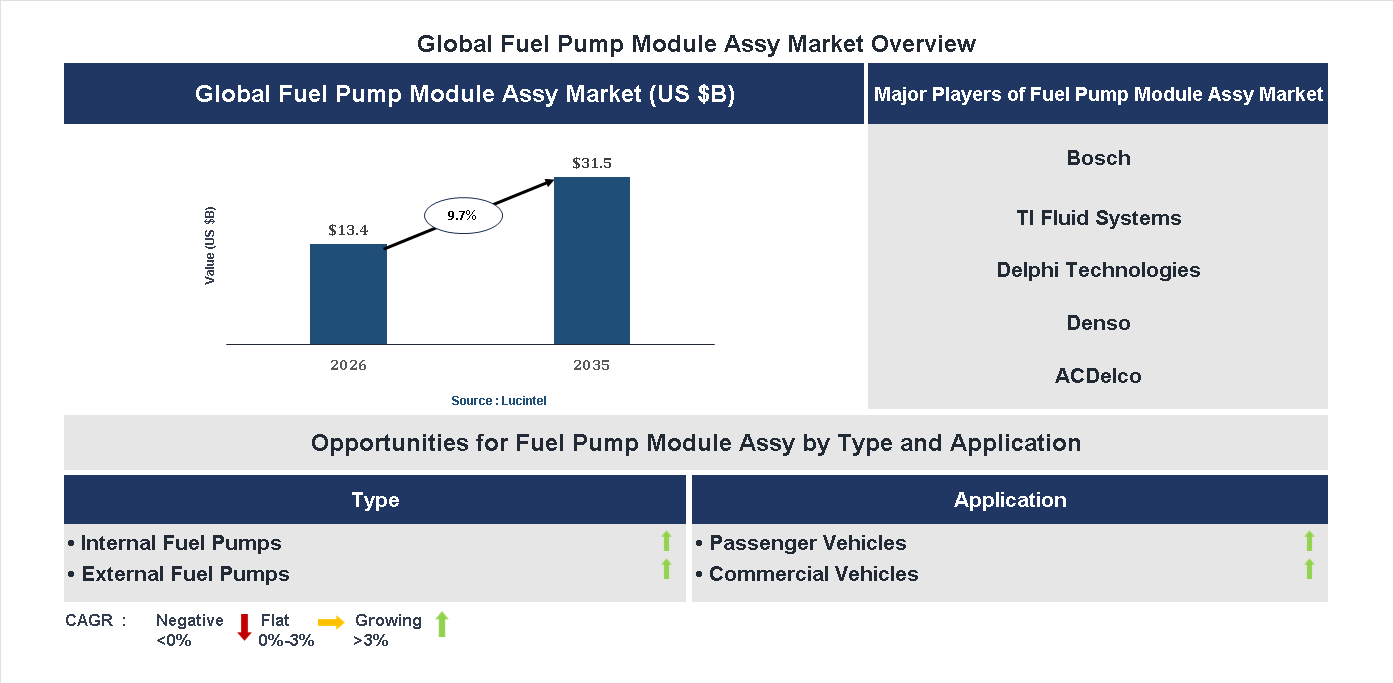
Key data points: The market size in 2035 = $31.5 billion, growth forecast = 9.7% annually for the next 8 years. Scroll below to get more insights. This market report covers trends, opportunities and forecasts in fuel pump module assy market to 2035 by type (internal fuel pumps and external fuel pumps), application (passenger vehicles and commercial vehicles), and region (North America, Europe, Asia Pacific, and the Rest of the World)
We'll send your sample report shortly.
• Lucintel forecasts that, within the type category, internal fuel pump is expected to witness higher growth over the forecast period.
• Within the application category, passenger vehicle is expected to witness higher growth.
• In terms of region, APAC is expected to witness the highest growth over the forecast period. Gain valuable insights for your business decisions with our comprehensive 150+ page report. Sample figures with some insights are shown below.
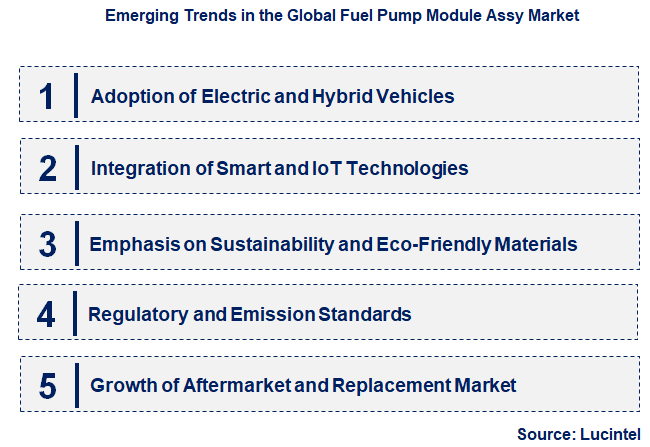
• Adoption of Electric and Hybrid Vehicles: Shift towards electric and hybrid vehicles is reducing demand for traditional fuel pump modules. As automakers focus on electrification, the need for specialized fuel systems diminishes, prompting manufacturers to innovate or diversify their product offerings. This trend impacts the market by decreasing reliance on conventional fuel pump modules and encouraging the development of integrated electric vehicle components, thus reshaping supply chains and investment priorities.
• Integration of Smart and IoT Technologies: The incorporation of smart sensors and IoT connectivity in fuel pump modules enhances vehicle diagnostics and maintenance. These advanced modules enable real-time monitoring of fuel system performance, improving reliability and reducing downtime. This trend boosts market value by creating opportunities for premium, connected fuel pump solutions and fostering a shift toward more intelligent, data-driven automotive components.
• Emphasis on Sustainability and Eco-Friendly Materials: Growing environmental concerns are pushing manufacturers to adopt sustainable materials and eco-friendly manufacturing processes. Use of recyclable components and reduction of hazardous substances in fuel pump modules align with global regulations. This trend influences the market by encouraging innovation in material science, leading to greener products that appeal to eco-conscious consumers and comply with stricter environmental standards.
• Regulatory and Emission Standards: Stricter government regulations worldwide are demanding higher efficiency and lower emissions from vehicles. Fuel pump modules are being redesigned to meet these standards, often requiring enhanced precision and performance. This trend drives technological innovation, increases R&D investments, and influences market competitiveness by ensuring compliance and supporting the development of cleaner, more efficient fuel systems.
• Growth of Aftermarket and Replacement Market: The increasing vehicle age and demand for maintenance parts are expanding the aftermarket for fuel pump modules. This segment offers significant growth opportunities, especially for cost-effective, reliable replacement parts. The trend impacts the market by fostering innovation in aftermarket products, expanding distribution channels, and creating a competitive landscape focused on quality and affordability. In summary, these emerging trends are fundamentally reshaping the fuel pump module assy market by driving technological innovation, promoting sustainability, and adapting to changing regulatory and consumer demands. The shift toward electrification and smart technologies is creating new opportunities while challenging traditional manufacturers to innovate and diversify. As a result, the market is becoming more dynamic, competitive, and aligned with the future of automotive mobility.
• Technological Innovations in Fuel Pump Design: Advancements in materials and manufacturing processes are leading to more durable, efficient, and compact fuel pump modules. These innovations improve vehicle performance, reduce emissions, and enhance fuel economy. As automakers focus on lightweight and reliable components, the market benefits from increased demand for high-quality, innovative fuel pump assemblies. This trend is expected to continue, driving growth and competitiveness in the industry.
• Rising Adoption of Electric Vehicles (EVs): The shift towards electric mobility is transforming the fuel pump market, with traditional fuel pump modules being replaced or adapted for EV applications. Manufacturers are developing new pump systems for hybrid and electric vehicles, focusing on energy efficiency and integration with battery systems. This transition presents both challenges and opportunities, encouraging innovation and diversification within the market, and expanding its scope beyond conventional fuel systems.
• Growing Aftermarket Demand: The aftermarket segment is witnessing increased demand for fuel pump modules due to vehicle aging, maintenance needs, and replacement requirements. Consumers and repair shops seek reliable, cost-effective solutions, prompting manufacturers to expand their product offerings. This growth in aftermarket sales sustains revenue streams and encourages product innovation tailored to repair and replacement needs, further boosting the overall market size.
• Expansion in Emerging Markets: Rapid urbanization and increasing vehicle ownership in regions like Asia-Pacific and Latin America are driving demand for fuel pump modules. Local automakers and international companies are investing in manufacturing facilities to cater to these markets. This expansion enhances supply chain efficiency, reduces costs, and opens new revenue channels, significantly impacting global market growth and competitiveness.
• Focus on Sustainability and Regulatory Compliance: Stricter emissions standards and environmental regulations are compelling manufacturers to develop eco-friendly fuel pump modules. Innovations include the use of recyclable materials and energy-efficient designs. Compliance with these standards not only ensures market access but also enhances brand reputation. This focus on sustainability is shaping product development and influencing market dynamics, fostering a more environmentally conscious industry. The overall impact of these developments is a dynamic, innovative, and expanding Fuel Pump Module Assy Market. Technological progress, market diversification, and regulatory compliance are driving growth, creating new opportunities, and fostering competition. As the industry adapts to changing demands and technological shifts, it is poised for sustained expansion and increased global influence.
• Market Expansion in Electric Vehicles: As electric vehicles (EVs) gain popularity, the demand for specialized fuel pump modules tailored for hybrid and alternative fuel vehicles is rising. Manufacturers are developing innovative, lightweight, and efficient pump systems compatible with EV architectures, opening new revenue streams. The shift towards sustainable transportation fuels and government incentives further accelerates this growth, prompting companies to diversify product portfolios and invest in R&D to meet evolving market needs.
• Integration of Smart Technologies for Enhanced Performance: Incorporating smart sensors and IoT-enabled features into fuel pump modules offers real-time monitoring, predictive maintenance, and improved fuel efficiency. These technological advancements enable manufacturers to deliver more reliable and efficient systems, reducing vehicle downtime and maintenance costs. The integration of such intelligent features aligns with the automotive industrys move towards connected vehicles, creating opportunities for differentiation and value-added services in the fuel pump module market.
• Growing Demand in Emerging Markets: Rapid urbanization and increasing vehicle ownership in emerging economies are fueling the need for durable and cost-effective fuel pump modules. Local manufacturers are expanding their production capacities and adopting global standards to cater to these markets. Additionally, government policies promoting vehicle adoption and infrastructure development are expected to boost sales, making emerging markets a significant growth avenue for industry players seeking to expand their global footprint.
• Focus on Lightweight and Compact Designs: The push for fuel efficiency and emission reduction has led to a demand for lightweight, space-saving fuel pump modules. Innovations in materials and design techniques enable manufacturers to produce compact, high-performance modules that fit into smaller engine compartments. This trend benefits vehicle manufacturers aiming to meet stringent fuel economy standards while maintaining performance, creating opportunities for suppliers to develop advanced, lightweight components that can be integrated into a wide range of vehicle types.
• Strategic Collaborations and Mergers for Innovation: Partnerships between automotive OEMs, component manufacturers, and technology firms are fostering innovation in fuel pump module design and functionality. Mergers and acquisitions facilitate access to new technologies, expand product offerings, and accelerate time-to-market. Such collaborations enable companies to share expertise, reduce R&D costs, and develop next-generation fuel delivery systems that meet evolving regulatory and consumer demands, ensuring competitive advantage in a dynamic market environment. The overall impact of these growth opportunities is poised to significantly enhance market size, innovation, and competitiveness. Companies that strategically leverage these trends can capitalize on emerging demands, improve product offerings, and expand their global presence. As the industry evolves, embracing technological advancements and market diversification will be crucial for sustained growth and leadership in the fuel pump module assy market.
• Technological Innovation: The development of advanced fuel pump modules with improved durability, efficiency, and integration with vehicle systems drives market growth. Innovations such as electric fuel pumps and smart modules enhance performance and reliability, meeting the demands of modern vehicles. As automakers focus on reducing emissions and improving fuel economy, these technological advancements become critical. Moreover, integration with vehicle electronics and telematics systems offers added value, encouraging manufacturers to adopt newer, more efficient modules. This continuous innovation cycle sustains market expansion and competitiveness.
• Increasing Vehicle Production: Rising global vehicle manufacturing, especially in emerging markets, significantly boosts demand for fuel pump modules. As automakers expand their product lines to include more models, the need for reliable fuel delivery systems grows. The surge in passenger cars, commercial vehicles, and electric vehicles directly correlates with increased component requirements. Economic growth, urbanization, and infrastructure development further stimulate vehicle sales, thereby propelling the market forward. This trend ensures a steady demand for fuel pump modules across various vehicle segments, supporting industry growth.
• Stringent Regulatory Standards: Governments worldwide are implementing strict emission norms and safety regulations that influence fuel system designs. These regulations compel manufacturers to develop more efficient, environmentally friendly fuel pump modules that reduce emissions and improve fuel economy. Compliance often involves adopting innovative materials and manufacturing techniques, which can increase costs but also open avenues for technological differentiation. Regulatory pressures also encourage the development of electric and hybrid vehicle fuel systems, expanding market opportunities. Staying ahead of evolving standards is vital for market players to maintain competitiveness and avoid penalties.
• Growing Adoption of Electric Vehicles: The shift towards electric vehicles (EVs) is transforming the fuel pump module market. As EVs do not require traditional fuel systems, the demand for conventional fuel pump modules may decline; however, hybrid vehicles still require specialized fuel delivery components. The development of electric fuel pumps and related modules tailored for EVs and hybrids presents new growth avenues. This transition challenges existing manufacturers to innovate and diversify their product portfolios. The increasing adoption of EVs globally, driven by environmental concerns and government incentives, influences the overall market dynamics significantly.
• Aftermarket Expansion: The aftermarket segment offers substantial growth opportunities due to vehicle aging and maintenance needs. As vehicles remain in use longer, the demand for replacement fuel pump modules increases. This segment benefits from technological improvements that extend component lifespan and enhance performance, encouraging consumers to opt for upgraded modules. Additionally, the rise of e-commerce and specialized service centers facilitates easier access to aftermarket products. Market players investing in aftermarket distribution channels and product innovation can capitalize on this steady demand, ensuring sustained revenue streams beyond original equipment manufacturing. The challenges facing this Market include:-
• Technological Obsolescence: Rapid technological advancements can render existing fuel pump modules obsolete, forcing manufacturers to continuously innovate. Keeping pace with evolving vehicle technologies, such as electrification and automation, requires significant R&D investments. Failure to adapt may lead to loss of market share and reduced competitiveness. Additionally, integrating new features while maintaining cost-effectiveness presents a complex challenge, especially for smaller players. The risk of investing in outdated technologies can hinder growth and profitability, making it essential for companies to stay ahead of industry trends.
• Supply Chain Disruptions: The fuel pump module market relies heavily on a complex global supply chain for raw materials and components. Disruptions caused by geopolitical tensions, pandemics, or natural disasters can lead to delays, increased costs, and inventory shortages. Such disruptions impact production schedules and delivery timelines, affecting customer satisfaction and profitability. Ensuring supply chain resilience through diversification and strategic sourcing is critical but challenging, especially amid fluctuating global trade policies and economic uncertainties.
• Regulatory and Environmental Challenges: While regulations drive innovation, they also pose compliance challenges. Stricter emission standards and safety requirements often necessitate costly modifications and testing, increasing overall production costs. Non-compliance can result in penalties, product recalls, and damage to brand reputation. Additionally, evolving environmental policies may restrict the use of certain materials or manufacturing processes, requiring continuous adaptation. Navigating these regulatory landscapes demands significant resources and expertise, posing ongoing challenges for market participants. In summary, the fuel pump module assy market is shaped by technological advancements, increasing vehicle production, regulatory standards, and the shift towards electric vehicles. However, it faces challenges such as technological obsolescence, supply chain disruptions, and regulatory compliance issues. These drivers and challenges collectively influence market growth, requiring stakeholders to innovate, adapt, and strategize effectively. The industry’s future will depend on how well companies can leverage technological opportunities while managing regulatory and supply chain risks, ensuring sustainable growth in a rapidly evolving automotive landscape.
• Bosch
• TI Fluid Systems
• Delphi Technologies
• Denso
• ACDelco
• Aisin Corporation
• Hitachi
• Spectra Premium
• Carter
• Airtex
• Internal Fuel Pumps
• External Fuel Pumps
• Passenger Vehicles
• Commercial Vehicles
• North America
• Europe
• Asia Pacific
• The Rest of the World
• United States: The US market has seen a surge in electric vehicle adoption, prompting manufacturers to innovate fuel pump modules compatible with hybrid systems. Regulatory standards for emissions and fuel efficiency are driving investments in lightweight, durable components. Major automakers are also focusing on integrating smart fuel management systems to optimize performance and reduce emissions, with increased R&D funding supporting these advancements.
• China: China remains the largest automotive market, with rapid growth in electric and hybrid vehicles influencing the FPMA sector. Local manufacturers are investing heavily in developing cost-effective, high-performance fuel pump modules to meet domestic demand. Government policies promoting new energy vehicles (NEVs) are accelerating innovation, including the adoption of intelligent fuel systems and integration with vehicle telematics for better fuel management.
• Germany: As a leader in automotive engineering, Germanys market emphasizes high-quality, efficient fuel pump modules for traditional and electric vehicles. Innovations include the development of lightweight, corrosion-resistant materials and the integration of electronic control units for enhanced fuel delivery precision. German automakers are also focusing on sustainability, with efforts to improve recyclability and reduce the environmental footprint of fuel pump components.
• India: The Indian market is witnessing increased demand for affordable, reliable fuel pump modules due to rising vehicle ownership and infrastructure development. Manufacturers are focusing on cost reduction and local sourcing to meet price-sensitive consumer needs. There is also a growing trend toward integrating fuel pump systems with vehicle electronics to improve efficiency and comply with evolving emission standards.
• Japan: Japans market is characterized by advanced technological integration, with a focus on improving fuel pump efficiency and durability for both conventional and hybrid vehicles. Innovations include the use of advanced ceramics and composites to enhance performance and lifespan. Japanese automakers are also investing in smart fuel management systems and exploring alternative fuel delivery solutions to align with global sustainability goals.


• Bosch
• TI Fluid Systems
• Delphi Technologies
• Denso
• ACDelco
• Aisin Corporation
• Hitachi
• Spectra Premium
• Carter
• Airtex Q6. Which fuel pump module assy market segment will be the largest in future? Answer: Lucintel forecasts that, within the type category, internal fuel pump is expected to witness higher growth over the forecast period. Q7. In fuel pump module assy market, which region is expected to be the largest in next 5 years? Answer: In terms of region, APAC is expected to witness the highest growth over the forecast period. Q8. Do we receive customization in this report? Answer: Yes, Lucintel provides 10% customization without any additional cost.


Choose a license that fits your team. Instant PDF delivery.
Prices exclude taxes. Instant delivery. Custom licensing available on request.
Market Report · July 31, 2026
Market Report · July 22, 2026
Market Report · July 17, 2026
Trusted partner for strategic intelligence and business growth


Receive a complimentary market analysis tailored to your industry. Our analysts will identify key growth opportunities and competitive dynamics specific to your business.

Market size, growth rate, and key trend analysis for your specific sector.

Top competitor positioning and market share analysis.

Strategic recommendations backed by data-driven insights.
Get curated market intelligence and competitive moves straight to your inbox.
By subscribing, you agree to receive our monthly insights. Unsubscribe anytime.
Receive a complimentary market analysis tailored to your industry. Our analysts will identify key growth opportunities and competitive dynamics specific to your business.
Market size, growth rate, and key trend analysis for your specific sector.
Top competitor positioning and market share analysis.
Strategic recommendations backed by data-driven insights.
Get curated market intelligence, emerging trends, and competitive moves straight to your inbox each month.
By subscribing, you agree to receive our monthly insights. Unsubscribe anytime.
We'll send your sample report shortly.