
Report Feature
Fresh Cherry Market Trends and Forecast
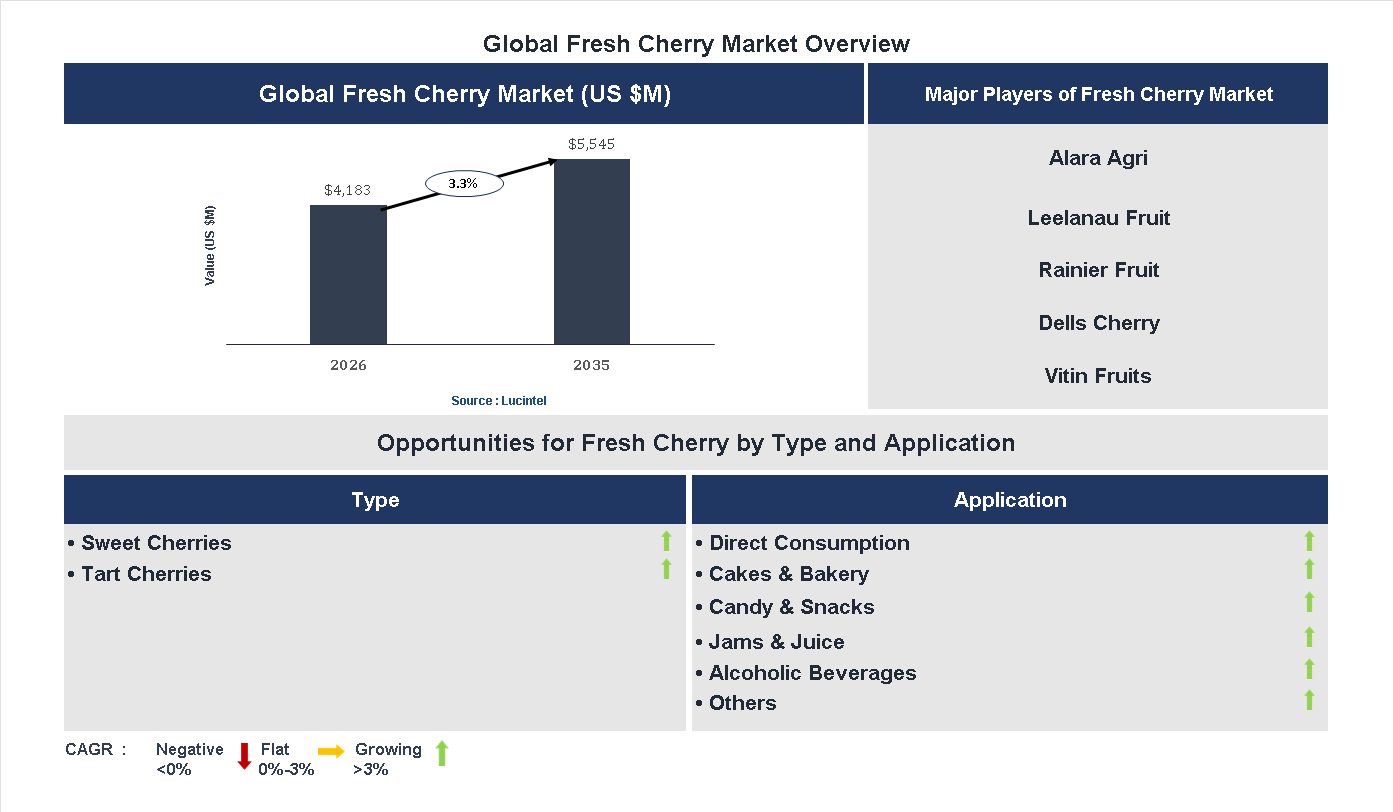
The future of the global fresh cherry market looks promising with opportunities in the direct consumption, cake & bakery, candy & snack, jam & juice, and alcoholic beverage markets. The global fresh cherry market is expected to reach an estimated $5,545.0 million by 2035 with a CAGR of 3.3% from 2026 to 2035. The major drivers for this market are the increasing demand for fresh cherries, the rising popularity of healthy snacking, and the growing interest in local produce.• Lucintel forecasts that, within the type category, sweet cherry is expected to witness higher growth over the forecast period.
• Within the application category, direct consumption is expected to witness the highest growth.
• In terms of region, APAC is expected to witness the highest growth over the forecast period. Gain valuable insights for your business decisions with our comprehensive 150+ page report. Sample figures with some insights are shown below.
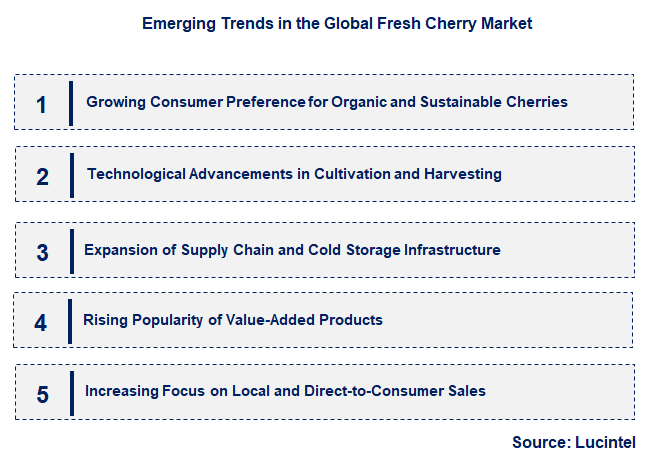
Emerging Trends in the Fresh Cherry Market
The fresh cherry market is experiencing significant transformation driven by changing consumer preferences, technological advancements, and environmental considerations. As demand for high-quality, sustainable, and locally sourced produce grows, industry players are adapting to meet these expectations. Innovations in supply chain management, packaging, and cultivation practices are also shaping the market landscape. These emerging trends are not only influencing product offerings but also redefining marketing strategies and distribution channels. Understanding these developments is crucial for stakeholders aiming to capitalize on opportunities and navigate challenges in this dynamic sector.• Growing Consumer Preference for Organic and Sustainable Cherries: Consumers are increasingly seeking organic and sustainably farmed cherries, driven by health consciousness and environmental awareness. This trend encourages growers to adopt eco-friendly practices, which can lead to premium pricing and brand loyalty. The demand for transparency in sourcing and production methods is also rising, prompting companies to highlight their sustainability credentials. As a result, the market is witnessing a shift towards more responsible cultivation and marketing strategies that appeal to eco-conscious buyers, ultimately fostering a more sustainable industry.
• Technological Advancements in Cultivation and Harvesting: Innovations such as precision agriculture, drone technology, and improved irrigation systems are enhancing cherry cultivation efficiency. These technologies enable better pest management, optimized water use, and higher yield quality. Automated harvesting methods are reducing labor costs and minimizing fruit damage, leading to fresher products reaching consumers faster. The integration of technology not only boosts productivity but also ensures consistent quality, which is vital for maintaining competitiveness in the global market. This trend is transforming traditional farming practices into more efficient, data-driven operations.
• Expansion of Supply Chain and Cold Storage Infrastructure: To meet rising demand and ensure year-round availability, investments in cold storage facilities and streamlined logistics are increasing. Enhanced supply chain infrastructure reduces transit times and minimizes spoilage, preserving cherry freshness and flavor. This development allows for wider distribution networks, including international markets, and supports just-in-time delivery models. Improved cold chain management also enables producers to access distant markets, expanding their customer base. As a result, consumers benefit from fresher cherries with extended shelf life, while producers gain access to new revenue streams.
• Rising Popularity of Value-Added Products: The market is witnessing a surge in demand for processed cherry products such as dried cherries, cherry jams, juices, and confectionery. These products cater to diverse consumer preferences and extend the product lifecycle beyond the fresh market. Value addition allows producers to command higher margins and diversify revenue streams. Additionally, innovative packaging and branding strategies are enhancing product appeal. This trend not only boosts market growth but also helps stabilize prices during off-season periods, providing economic resilience for growers and manufacturers.
• Increasing Focus on Local and Direct-to-Consumer Sales: Consumers are favoring locally sourced cherries and direct purchasing channels like farmers markets, online platforms, and subscription boxes. This shift is driven by a desire for fresher produce, transparency, and supporting local economies. Producers are establishing direct relationships with consumers, reducing reliance on intermediaries, and gaining better profit margins. E-commerce platforms and social media marketing are facilitating this transition, making it easier for growers to reach niche markets. This trend fosters community engagement, enhances brand loyalty, and encourages sustainable practices aligned with consumer values. In summary, these emerging trends are reshaping the fresh cherry market by promoting sustainability, technological innovation, expanded distribution, product diversification, and direct consumer engagement. Collectively, they are driving growth, improving product quality, and creating new opportunities for stakeholders in this vibrant industry.
Recent Development in the Fresh Cherry Market
The fresh cherry market is experiencing rapid growth driven by increasing consumer demand for healthy, natural snacks and the expanding global agricultural sector. Innovations in cultivation techniques, supply chain improvements, and rising awareness of nutritional benefits are fueling this expansion. Market players are focusing on sustainable practices and product diversification to meet diverse consumer preferences. These developments are shaping a dynamic landscape, offering new opportunities for investors and producers alike, while also addressing challenges related to climate change and seasonal limitations.• Growing Consumer Demand for Healthy Snacks: Increasing health consciousness among consumers is boosting demand for fresh cherries as a nutritious, natural snack option, leading to higher consumption and market expansion worldwide.
• Technological Advancements in Cultivation: Innovations such as precision agriculture and improved irrigation techniques are enhancing cherry yield and quality, reducing costs, and enabling producers to meet rising global demand efficiently.
• Supply Chain Optimization: Implementation of cold chain logistics and better transportation infrastructure is reducing spoilage and ensuring fresher cherries reach markets faster, thus expanding market reach and consumer satisfaction.
• Sustainability and Organic Production: A shift towards organic and sustainable farming practices is attracting environmentally conscious consumers, creating new market segments and premium pricing opportunities.
• Market Expansion in Emerging Economies: Increased investment and improved distribution channels in developing countries are opening new markets for fresh cherries, contributing to overall industry growth and diversification. The overall impact of these developments is a robust, innovative market that is expanding rapidly, driven by consumer preferences and technological progress. Enhanced supply chains, sustainable practices, and market diversification are positioning the fresh cherry industry for sustained growth while addressing environmental and logistical challenges. This evolution is creating lucrative opportunities for stakeholders and shaping the future landscape of the market.
Strategic Growth Opportunities in the Fresh Cherry Market
The fresh cherry market is experiencing significant growth driven by increasing consumer demand for healthy, natural snacks and premium fruit options. Innovations in supply chain management, expanding geographic reach, and rising awareness of nutritional benefits are fueling market expansion. Additionally, seasonal and organic cherry varieties are gaining popularity, creating new opportunities for producers and retailers. As consumer preferences shift towards quality and sustainability, the market is poised for sustained growth across various applications and regions, offering numerous strategic opportunities for industry stakeholders.• Expanding Organic Cherry Production to Meet Health-Conscious Consumer Demand: Organic cherries are increasingly favored due to their perceived health benefits and environmental sustainability. Growing consumer awareness about pesticide use and chemical residues is driving demand for organic options. Producers are investing in organic farming practices, certification processes, and supply chain enhancements to meet this demand. This expansion not only caters to health-conscious buyers but also allows brands to command premium prices, thereby boosting overall market growth and encouraging sustainable agricultural practices.
• Leveraging E-commerce Platforms for Broader Market Reach: The rise of online grocery shopping and direct-to-consumer sales channels presents significant growth opportunities for fresh cherry vendors. E-commerce platforms enable producers to reach a wider geographic audience, including remote and international markets, with reduced distribution costs. Digital marketing strategies, subscription models, and online promotions can enhance brand visibility and consumer engagement. This shift towards online sales channels is expected to accelerate market penetration, especially among younger, tech-savvy consumers seeking convenience and quality assurance.
• Developing New Varieties and Flavored Cherry Products to Enhance Consumer Appeal: Innovation in cherry varieties, including sweeter, larger, and more durable types, can attract diverse consumer segments. Additionally, introducing flavored cherry products such as dried, infused, or preserved cherries can diversify offerings and extend shelf life. These product innovations cater to evolving tastes and usage occasions, from snacking to culinary applications. Developing such varieties and products can create new revenue streams, increase market share, and strengthen brand differentiation in a competitive landscape.
• Strengthening Supply Chain and Cold Storage Infrastructure for Year-Round Availability: To capitalize on seasonal demand and reduce wastage, investments in cold storage and efficient logistics are crucial. Improved supply chain infrastructure ensures cherries remain fresh during transit and storage, enabling year-round availability. This stability supports consistent supply to retailers and consumers, reduces price volatility, and enhances customer satisfaction. Enhanced infrastructure also facilitates export opportunities, allowing producers to access international markets and meet global demand with high-quality products.
• Promoting Sustainability and Eco-Friendly Practices to Appeal to Ethical Consumers: Sustainability initiatives such as water conservation, eco-friendly packaging, and reduced carbon footprint are increasingly influencing purchasing decisions. Cherry producers adopting environmentally responsible practices can differentiate their brands and appeal to ethically conscious consumers. Certifications and transparent sustainability reporting can build trust and loyalty. Emphasizing eco-friendly practices aligns with global trends towards responsible consumption, potentially opening access to premium markets and fostering long-term growth in the fresh cherry industry. The overall market outlook is positively impacted by these strategic growth opportunities, fostering innovation, expanding consumer bases, and enhancing sustainability. As stakeholders capitalize on these trends, the fresh cherry market is expected to experience robust growth, increased competitiveness, and greater global reach, ultimately benefiting producers, retailers, and consumers alike.
Fresh Cherry Market Driver and Challenges
The fresh cherry market is influenced by a variety of technological, economic, and regulatory factors that shape its growth and sustainability. Advances in agricultural technology, such as improved cultivation techniques and pest control, enhance yield quality and volume. Economic factors like consumer demand, disposable income, and global trade dynamics significantly impact market expansion. Regulatory policies concerning food safety, import-export restrictions, and pesticide use also play a crucial role in shaping market operations. Additionally, climate change and environmental concerns are increasingly affecting cherry production and supply chains. Understanding these drivers and challenges is essential for stakeholders aiming to capitalize on opportunities and mitigate risks within this vibrant market. The factors responsible for driving the fresh cherry market include:• Technological Advancements: Innovation in cultivation and harvesting techniques Total 150 words: Technological progress has revolutionized cherry farming, enabling higher yields and better quality. Precision agriculture, drone monitoring, and improved irrigation systems help optimize resource use and reduce waste. Post-harvest technologies, such as cold storage and packaging innovations, extend shelf life and maintain freshness, opening new markets. These advancements reduce costs and increase efficiency, making cherries more accessible and appealing to consumers worldwide. As technology continues to evolve, farmers can better predict yields, manage pests, and adapt to climate variations, ensuring consistent supply. This ongoing innovation drives market growth by meeting rising consumer demand for high-quality, fresh cherries and expanding distribution channels globally.
• Growing Consumer Demand: Increasing preference for healthy, natural foods Total 150 words: Consumers worldwide are increasingly prioritizing health and wellness, leading to a surge in demand for fresh, natural fruits like cherries. Rich in antioxidants, vitamins, and dietary fiber, cherries are perceived as a superfood, boosting their popularity. The trend towards organic and clean-label products further fuels this demand, encouraging farmers and suppliers to adopt organic practices and obtain certifications. Additionally, the rise of e-commerce and premium retail outlets makes cherries more accessible to a broader audience. This heightened consumer interest not only boosts sales but also encourages innovation in product offerings, such as cherry-based snacks, juices, and supplements. As health consciousness continues to grow, the market for fresh cherries is expected to expand significantly.
• Expansion of Cultivation Regions: New geographic areas and climate adaptability Total 150 words: The expansion of cherry cultivation into new regions is a key driver, driven by climate adaptability and technological support. Traditionally grown in temperate zones, cherries are now being cultivated in regions with diverse climates due to improved varieties and farming techniques. This geographic diversification reduces dependency on specific areas, mitigates risks from climate change, and ensures year-round supply. Governments and private investors are supporting new orchards through subsidies and research, further accelerating growth. Additionally, the development of cold-hardy cherry varieties allows cultivation in colder or less traditional zones. This expansion broadens the market reach, stabilizes supply, and creates new opportunities for local economies, ultimately fueling global market growth.
• Supply Chain Optimization: Efficient logistics and distribution networks Total 150 words: Efficient supply chain management is crucial for maintaining freshness and reducing costs in the cherry market. Advances in cold chain logistics, transportation, and inventory management enable faster, more reliable delivery from farms to consumers. This reduces spoilage and waste, ensuring high-quality cherries reach markets worldwide. Improved forecasting and demand planning help prevent overproduction and stock shortages, stabilizing prices. Additionally, integration of digital platforms facilitates real-time tracking and better coordination among growers, distributors, and retailers. These improvements expand market access, especially in distant or emerging markets, and support seasonal availability. As supply chains become more resilient and responsive, the market can better meet consumer expectations for fresh, high-quality cherries year-round, fostering sustained growth.
• Market Penetration and Export Growth: Increasing international trade and market access Total 150 words: International trade and export expansion are significant drivers for the fresh cherry market. Countries with favorable climates are increasing exports to meet rising global demand, especially in regions with limited local production. Trade agreements, reduced tariffs, and improved logistics facilitate cross-border movement, opening new markets. Emerging economies with growing middle classes are becoming key consumers, further boosting exports. Market penetration strategies, including branding and quality certifications, help establish a strong presence in competitive markets. Additionally, collaborations between producers and international retailers expand distribution channels. This global outreach not only increases sales volume but also stabilizes prices and encourages investment in cultivation and infrastructure. As export opportunities grow, the market is poised for sustained expansion driven by international demand and strategic trade initiatives. The challenges facing the fresh cherry market include:
• Climate Change and Environmental Factors: Impact on cultivation and yield stability Total 150 words: Climate change poses a significant threat to the fresh cherry market by affecting growing conditions and yield stability. Unpredictable weather patterns, such as late frosts, droughts, and excessive rainfall, can damage crops and reduce harvest quality. Rising temperatures may also shift suitable cultivation zones, requiring adaptation and new varieties, which involve costs and research. Water scarcity and soil degradation further complicate cultivation efforts, increasing production costs and risking supply shortages. These environmental challenges threaten to disrupt supply chains, inflate prices, and limit market growth. Farmers and stakeholders must invest in resilient farming practices, climate-smart agriculture, and sustainable resource management to mitigate these impacts. Failure to adapt could lead to decreased production, higher prices, and reduced consumer confidence, ultimately constraining market expansion.
• Regulatory and Trade Barriers: Import-export restrictions and compliance issues Total 150 words: Regulatory and trade barriers significantly impact the growth and stability of the fresh cherry market. Stringent food safety standards, pesticide regulations, and phytosanitary requirements can delay shipments and increase compliance costs for exporters. Import restrictions and tariffs imposed by different countries can limit market access and reduce profit margins. Additionally, inconsistent regulations across regions create complexities for international trade, requiring extensive documentation and certification processes. These barriers can lead to supply chain disruptions, increased lead times, and higher prices for consumers. Moreover, evolving regulations around organic certification and sustainable practices demand continuous adaptation from producers. Navigating these regulatory landscapes requires significant investment in compliance infrastructure and legal expertise. Failure to meet regulatory standards can result in rejected shipments, financial losses, and diminished market competitiveness, hindering overall market growth.
• Price Volatility and Market Fluctuations: Impact of supply-demand dynamics Total 150 words: Price volatility remains a critical challenge in the fresh cherry market, driven by seasonal fluctuations, weather conditions, and supply-demand imbalances. Sudden weather changes can lead to poor harvests, causing supply shortages and price spikes. Conversely, bumper crops can lead to oversupply, depressing prices and squeezing profit margins for growers. Global demand fluctuations, influenced by consumer preferences and economic conditions, also contribute to market instability. This unpredictability complicates planning for farmers, distributors, and retailers, potentially deterring investment and affecting profitability. Price swings can also impact consumer confidence and purchasing behavior, leading to market uncertainty. To mitigate these effects, stakeholders need to adopt better forecasting, diversify supply sources, and develop flexible marketing strategies. Managing price volatility is essential for ensuring sustainable growth and stability in the competitive fresh cherry market. In summary, the fresh cherry market is shaped by technological innovations, rising consumer health awareness, geographic expansion, and improved logistics, which collectively drive growth. However, environmental challenges, regulatory complexities, and market fluctuations pose significant hurdles. Addressing these challenges through sustainable practices, regulatory compliance, and market diversification will be crucial for long-term success. Overall, the market's future depends on balancing innovation and resilience to capitalize on emerging opportunities while mitigating risks. Strategic adaptation to these drivers and challenges will determine the market's trajectory in a competitive global landscape.
List of Fresh Cherry Companies
Companies in the market compete on the basis of product quality offered. Major players in this market focus on expanding their manufacturing facilities, R&D investments, infrastructural development, and leverage integration opportunities across the value chain. With these strategies fresh cherry companies cater increasing demand, ensure competitive effectiveness, develop innovative products & technologies, reduce production costs, and expand their customer base. Some of the fresh cherry companies profiled in this report include-• Alara Agri
• Leelanau Fruit
• Rainier Fruit
• Dells Cherry
• Vitin Fruits
• Hood River Cherry
• Global Green Company
• Smeltzer Orchard
• Orchard View Inc.
• Koala Cherries
Fresh Cherry Market by Segment
The study includes a forecast for the global fresh cherry market by type, application, and region.Fresh Cherry Market by Type [Value from 2019 to 2035]:
• Sweet Cherries
• Tart Cherries
Fresh Cherry Market by Application [Value from 2019 to 2035]:
• Direct Consumption
• Cakes & Bakery
• Candy & Snacks
• Jams & Juice
• Alcoholic Beverages
• Others
Fresh Cherry Market by Region [Value from 2019 to 2035]:
• North America
• Europe
• Asia Pacific
• The Rest of the World
Country Wise Outlook for the Fresh Cherry Market
The fresh cherry market has experienced significant shifts driven by technological advancements, changing consumer preferences, and global trade dynamics. As demand for high-quality, sustainably sourced cherries increases, countries are adopting innovative cultivation techniques and expanding export capacities. Climate change and supply chain disruptions also influence market trends, prompting producers to adapt strategies to meet rising global demand. Each key player in the United States, China, Germany, India, and Japan is contributing uniquely to the evolving landscape, reflecting regional preferences, technological adoption, and trade policies. These developments collectively shape the future trajectory of the fresh cherry industry worldwide.• United States: The U.S. has seen increased investment in sustainable farming practices and precision agriculture, improving yield quality and efficiency. Expansion of organic cherry cultivation and the adoption of cold storage technology have extended shelf life, boosting exports. Market demand for premium cherries, especially during the holiday season, continues to grow, supported by strong domestic consumption and international trade partnerships.
• China: China is rapidly expanding its cherry cultivation area, focusing on high-yield varieties and modern orchard management. The country is investing in cold chain logistics and retail infrastructure to meet rising domestic demand. E-commerce platforms are playing a crucial role in increasing accessibility and sales, while government initiatives promote sustainable farming practices to improve quality and export potential.
• Germany: Germany remains a key importer and distributor of cherries within Europe, emphasizing quality and organic options. The market is witnessing a shift towards locally sourced, sustainable cherries, driven by consumer awareness. Innovations in packaging and cold chain logistics are enhancing freshness and shelf life, supporting both retail and wholesale sectors.
• India: India is experiencing a growing demand for cherries, primarily in urban centers. Farmers are adopting improved cultivation techniques, including drip irrigation and pest management, to increase yield. The market is still developing, with imports supplementing domestic production, and e-commerce platforms helping to expand reach to consumers seeking premium and imported cherries.
• Japan: Japans cherry market is characterized by a focus on high-quality, premium cherries, often associated with luxury and gift-giving. Advanced cultivation techniques, including controlled environment agriculture, are used to produce consistent quality. The country emphasizes sustainable practices and innovative packaging to maintain freshness, catering to a discerning consumer base that values both quality and presentation.

Features of the Global Fresh Cherry Market
Market Size Estimates: Fresh cherry market size estimation in terms of value ($M). Trend and Forecast Analysis: Market trends (2019 to 2025) and forecast (2026 to 2035) by various segments and regions. Segmentation Analysis: Fresh cherry market size by type, application, and region in terms of value ($M). Regional Analysis: Fresh cherry market breakdown by North America, Europe, Asia Pacific, and Rest of the World. Growth Opportunities: Analysis of growth opportunities in different types, applications, and regions for the fresh cherry market. Strategic Analysis: This includes M&A, new product development, and competitive landscape of the fresh cherry market. Analysis of competitive intensity of the industry based on Porter’s Five Forces model.
FAQ
Q1. What is the fresh cherry market size? Answer: The global fresh cherry market is expected to reach an estimated $5,545.0 million by 2035. Q2. What is the growth forecast for fresh cherry market? Answer: The global fresh cherry market is expected to grow with a CAGR of 3.3% from 2026 to 2035. Q3. What are the major drivers influencing the growth of the fresh cherry market? Answer: The major drivers for this market are the increasing demand for fresh cherries, the rising popularity of healthy snacking, and the growing interest in local produce. Q4. What are the major segments for fresh cherry market? Answer: The future of the fresh cherry market looks promising with opportunities in the direct consumption, cake & bakery, candy & snack, jam & juice, and alcoholic beverage markets. Q5. Who are the key fresh cherry market companies? Answer: Some of the key fresh cherry companies are as follows:• Alara Agri
• Leelanau Fruit
• Rainier Fruit
• Dells Cherry
• Vitin Fruits
• Hood River Cherry
• Global Green Company
• Smeltzer Orchard
• Orchard View Inc.
• Koala Cherries Q6. Which fresh cherry market segment will be the largest in future? Answer: Lucintel forecasts that, within the type category, sweet cherry is expected to witness higher growth over the forecast period. Q7. In fresh cherry market, which region is expected to be the largest in next 5 years? Answer: In terms of region, APAC is expected to witness the highest growth over the forecast period. Q8. Do we receive customization in this report? Answer: Yes, Lucintel provides 10% customization without any additional cost.
Table of Contents
List of Figures
List of Tables
Methodology
- In-depth interviews of the major players in this market
- Detailed secondary research from competitors’ financial statements and published data
- Extensive searches of published works, market, and database information pertaining to industry news, company press releases, and customer intentions
- A compilation of the experiences, judgments, and insights of Lucintel’s professionals, who have analyzed and tracked this market over the years.


Buy Now
Choose a license that fits your team. Instant PDF delivery.
Prices exclude taxes. Instant delivery. Custom licensing available on request.
Key Questions
- • What are some of the most promising, high-growth opportunities for the fresh cherry market by type (sweet cherries and tart cherries), application (direct consumption, cakes & bakery, candy & snacks, jams & juice, alcoholic beverages, and others), and region (North America, Europe, Asia Pacific, and the Rest of the World)?
- • Which segments will grow at a faster pace and why?
- • Which region will grow at a faster pace and why?
- • What are the key factors affecting market dynamics? What are the key challenges and business risks in this market?
- • What are the business risks and competitive threats in this market?
- • What are the emerging trends in this market and the reasons behind them?
- • What are some of the changing demands of customers in the market?
- • What are the new developments in the market? Which companies are leading these developments?
- • Who are the major players in this market? What strategic initiatives are key players pursuing for business growth?
- • What are some of the competing products in this market and how big of a threat do they pose for loss of market share by material or product substitution?
- • What M&A activity has occurred in the last 7 years and what has its impact been on the industry? For any questions related to Fresh Cherry Market, Fresh Cherry Market Size, Fresh Cherry Market Growth, Fresh Cherry Market Analysis, Fresh Cherry Market Report, Fresh Cherry Market Share, Fresh Cherry Market Trends, Fresh Cherry Market Forecast, Fresh Cherry Companies, write Lucintel analyst at email: helpdesk@lucintel.com. We will be glad to get back to you soon.


