
Market Report · July 29, 2026

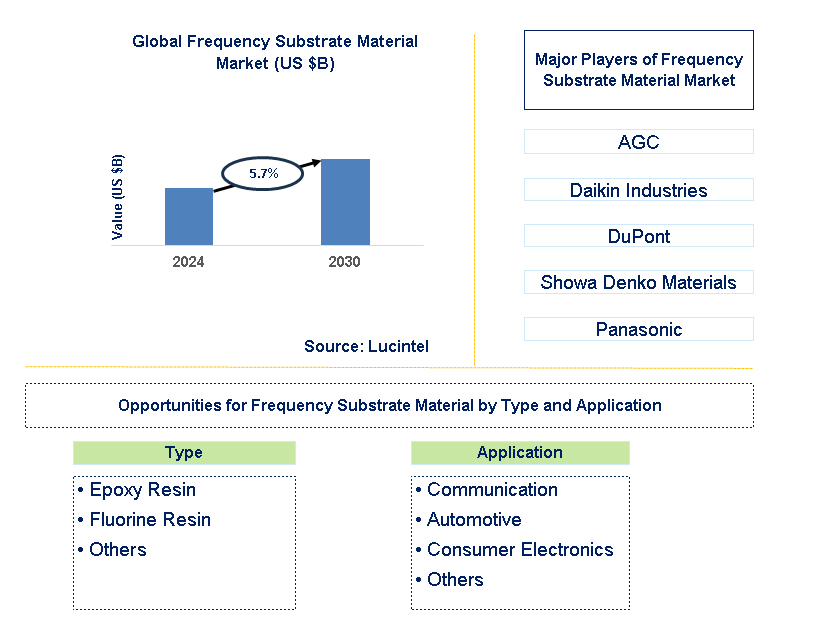
Key data points: The growth forecast = 5.7% annually for the next 6 years. Scroll below to get more insights. This market report covers trends, opportunities, and forecasts in the global frequency substrate material market to 2030 by type (epoxy resin, fluorine resin, and others), application (communication, automotive, consumer electronics, and others), and region (North America, Europe, Asia Pacific, and the Rest of the World)
We'll send your sample report shortly.
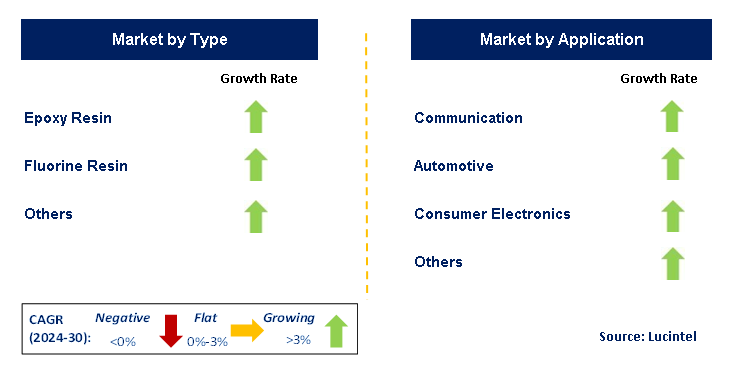
• Lucintel forecasts that, within the type category, fluorine resin will remain the larger segment over the forecast period.
• In terms of regions, APAC will remain the largest region over the forecast period due to growing demand for electronic devices and communication infrastructure. Gain valuable insights for your business decisions with our 150+ page report.
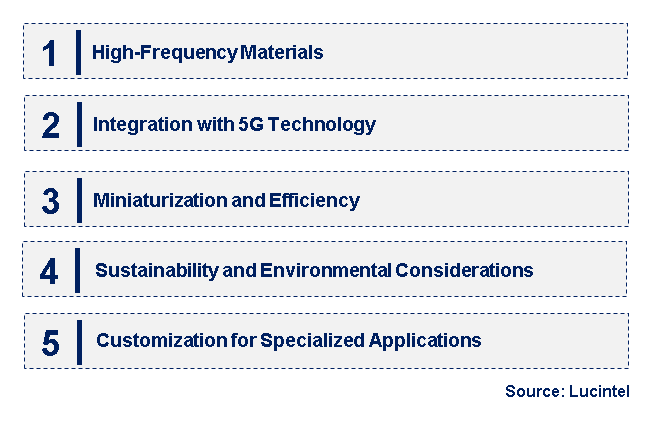
• High-Frequency Materials: The market is driven by innovations in high-frequency materials, as newer materials possess better dielectric properties with low loss, enhancing signal integrity and performance in telecommunication and electronic devices. This, in turn, supports the development of faster and more reliable communication systems.
• Integration with 5G Technology: High-performance frequency substrates are increasingly in demand with the roll-out of 5G technology. It is true that 5G infrastructure requires more material stability in frequency and low attenuation, acting as a driver for innovation and production in the sector. These factors are hastening the pace of development of advanced substrates for 5G applications.
• Miniaturization and Efficiency: Compact and high-performance electronic devices are driving demand for miniaturization and efficiency in frequency substrates. Innovations in material sciences enable smaller, more efficient substrates without apparent performance trade-offs, supporting the trend for devices that are smaller yet more powerful.
• Sustainability and Environmental Considerations: Other newer trends in the substrate material market for frequency include sustainability. Companies are seeking greener materials and processes that reduce their footprint, driven by international sustainability goals and increased regulations on environmental practices. All of this influences product development and market dynamics.
• Customization for Specialized Applications: The market is witnessing higher demand for tailor-made frequency substrates catering to specific applications. The use of customized solutions guarantees better performance in select sub-applications within the automotive, aerospace, and industrial sectors. This trend supports the development of substrates that meet unique requirements and performance criteria. The frequency substrate material market is experiencing trends related to the development of high-frequency materials, in association with 5G technology, miniaturization and efficiency, sustainability, and personalization. Each of these trends acts as a driver, responding to changing industry requirements for innovation, thereby placing the market in an ongoing growth and development phase.
• Introduction of Improved Materials: Advanced performance materials with superior dielectric properties are being designed. These materials improve signal integrity and reduce losses, further encouraging growth in telecommunications and high-frequency applications. Innovation and performance in frequency substrates are driven by material sciences.
• Production Capacity Expansion: Manufacturing firms are scaling their production capacities to meet the increase in product demand. They are investing in new facilities and technologies that improve output and efficiency. This expansion supports the growing need for high-frequency substrates in various industries, including telecommunications and consumer electronics.
• Cost-Effective Solution Development: Cost-effective frequency substrate materials are being developed with price-sensitive markets in mind. This is achieved by optimizing manufacturing processes and materials with a holistic perspective on cost reduction, without compromising performance standards. The development enables access to advanced substrates for a larger number of applications.
• Higher Performance for 5G Applications: Substrates are being optimized for frequencies in 5G technology, enhancing frequency stability and signal strength. This becomes crucial in supporting the infrastructure and performance requirements of 5G, thus driving innovation and market growth.
• Environmental Sustainability: There is also an increase in the use of environmentally sustainable practices and materials by manufacturers, including recyclable materials, to help minimize environmental impact through more efficient production. Sustainability-related initiatives within the market also meet regulatory standards and market demand for greener solutions. Recent developments in the frequency substrate material market show improvements in material properties, production capabilities, and cost-efficient approaches. The two main factors driving market growth and future trends are performance improvement for 5G applications and sustainability concerns.
• Telecommunications and 5G Infrastructure: This is one of the biggest industries and is normally referred to as the 5G infrastructure. Telecommunications present many prospects for frequency substrates, especially the advanced ones, which can support quick data transfer and improved connectivity within the 5G network. This is driving demand for advanced materials and technologies in this industry.
• Consumer Electronics: With the demand for advanced consumer electronics, such as smartphones and wearable devices, the frequency substrates present numerous opportunities. Advanced developments in material science enable substrate miniaturization and high-performance manufacturing, which enhances functionality and device efficiency.
• Automotive Industry: Frequency substrates find their application in the automotive industry, mainly for ADAS (Advanced Driver Assistance Systems) and electric vehicles. High-performance substrates are crucial for reliable communication and control systems, thereby fostering growth in this segment.
• Industrial and Aerospace Applications: Frequency substrates are finding an increasing number of applications in industrial automation and aerospace. Further opportunities are created for substrates designed to high-performance standards, driven by the demand for high reliability and performance in harsh conditions.
• Medical Devices: Medical devices offer an avenue for frequency substrates, as medical diagnostics require accurate and reliable electronic parts. Advanced substrates enable enhanced medical imaging and diagnostic equipment. The strategic growth opportunities in the frequency substrate material market are driven by applications from telecommunications, consumer electronics, automotive, industrial, and medical sectors. This is changing market dynamics and forcing the development of advanced materials to cater to evolving industry requirements.
• Technological Advances: The prevalence of material science and manufacturing technologies acts as a driver that promotes market growth. Advancements in frequency substrates improve performance and reliability for high-frequency applications across sectors like telecommunications, automotive, and consumer electronics.
• Growing Demand for 5G Technology: The introduction of 5G networks is creating market demand for high-performance frequency substrates. These materials provide the speed and efficiency needed for 5G infrastructure, driving innovation and growth in the sector.
• Growth in Consumer Electronics: The increasing demand for value-added consumer electronics, such as smartphones and wearables, creates significant demand for high-performance frequency substrates. This is driven by the miniaturization of electronic devices and increased functionality, further driving market growth.
• Automotive Industry Developments: The prevalence of frequency substrates in automotive applications, such as ADAS and electric vehicles, opens avenues for growth. High-performance substrates form the foundation of reliable communication and control systems for modern vehicles.
• Focus on Sustainable Practices: The shift toward eco-friendly materials and processes affects market development. Manufacturers continue to seek environmentally friendly solutions and production processes that comply with regulatory standards and meet market demands. Challenges in the frequency substrate material market include:
• High Production Costs: The high development and manufacturing costs of advanced frequency substrates impact affordability and scalability, particularly in price-sensitive markets.
• Complex Manufacturing Processes: The production technology for high-performance frequency substrates is complex. Achieving precise material properties requires the use of advanced technologies and expert capabilities.
• Regulatory Compliance: Meeting regulatory requirements, from environmental standards to material safety, has become a challenging task. Compliance with these regulations leads to additional costs, affecting the development and deployment of new frequency substrate technologies. Technological advancements, demand for 5G, and growth in consumer electronics and automotive industries are some of the drivers in the frequency substrate material market. Challenges include high production costs, complex manufacturing processes, and regulatory compliance. Balancing these factors is essential for the continued growth and development of the market.
• AGC
• Daikin Industries
• DuPont
• Showa Denko Materials
• Panasonic
• Avient
• Rogers
• Sumitomo Chemical
• The Chemours
• Taiwan Union Technology
• Epoxy Resin
• Fluorine Resin
• Others
• Communication
• Automotive
• Consumer Electronics
• Others
• North America
• Europe
• Asia Pacific
• The Rest of the World
• United States: In the United States, great attention is given to developing high-performance frequency substrate materials to meet the demands of advanced telecommunications and 5G infrastructure. New developments involve improved materials with high-frequency stability and lower loss, enabling efficient data transmission at high speeds and enhancing communication systems.
• China: China is advancing frequency substrate material technology to support growing industries in electronics and telecommunications. Research and development are underway to offer superior performance high-frequency substrates for applications related to 5G and consumer electronics. Increased domestic production aims to reduce reliance on imports.
• Germany: Germany is currently leading in the development of frequency substrate materials, focusing on precision and quality. New materials and manufacturing processes have been introduced by German companies, with claims to further enhance substrate performance in high-frequency automotive and industrial electronics applications. Improved durability with low signal loss remains a primary focus.
• India: With steadily growing demand in the electronics and telecommunications markets, frequency substrate materials have garnered increasing interest in India. Improvements in material properties are a key focus of development at various Indian research and development institutions. Low-cost electronic components are another growth area, and their demand is being met through cost-effective solutions developed by Indian manufacturers.
• Japan: Japan is at the forefront of new technological developments in frequency substrate materials, emphasizing performance and high reliability. Japanese companies are developing advanced materials for high-frequency applications such as 5G and highly precise electronics. The focus is on innovation and integrating new advanced materials to maintain competitiveness.


• AGC
• Daikin Industries
• DuPont
• Showa Denko Materials
• Panasonic
• Avient
• Rogers
• Sumitomo Chemical
• The Chemours
• Taiwan Union Technology Q5. Which frequency substrate material market segment will be the largest in future? Answer: Lucintel forecasts that fluorine resin will remain the larger segment over the forecast period. Q6. In frequency substrate material market, which region is expected to be the largest in next 5 years? Answer: APAC will remain the largest region over the forecast period due to growing demand for electronic devices and communication infrastructure. Q.7 Do we receive customization in this report? Answer: Yes, Lucintel provides 10% customization without any additional cost.


Choose a license that fits your team. Instant PDF delivery.
Prices exclude taxes. Instant delivery. Custom licensing available on request.
Market Report · July 29, 2026
Market Report · July 20, 2026
Market Report · July 20, 2026
Trusted partner for strategic intelligence and business growth


Receive a complimentary market analysis tailored to your industry. Our analysts will identify key growth opportunities and competitive dynamics specific to your business.

Market size, growth rate, and key trend analysis for your specific sector.

Top competitor positioning and market share analysis.

Strategic recommendations backed by data-driven insights.
Get curated market intelligence and competitive moves straight to your inbox.
By subscribing, you agree to receive our monthly insights. Unsubscribe anytime.
Receive a complimentary market analysis tailored to your industry. Our analysts will identify key growth opportunities and competitive dynamics specific to your business.
Market size, growth rate, and key trend analysis for your specific sector.
Top competitor positioning and market share analysis.
Strategic recommendations backed by data-driven insights.
Get curated market intelligence, emerging trends, and competitive moves straight to your inbox each month.
By subscribing, you agree to receive our monthly insights. Unsubscribe anytime.
We'll send your sample report shortly.