
Market Report · May 18, 2026

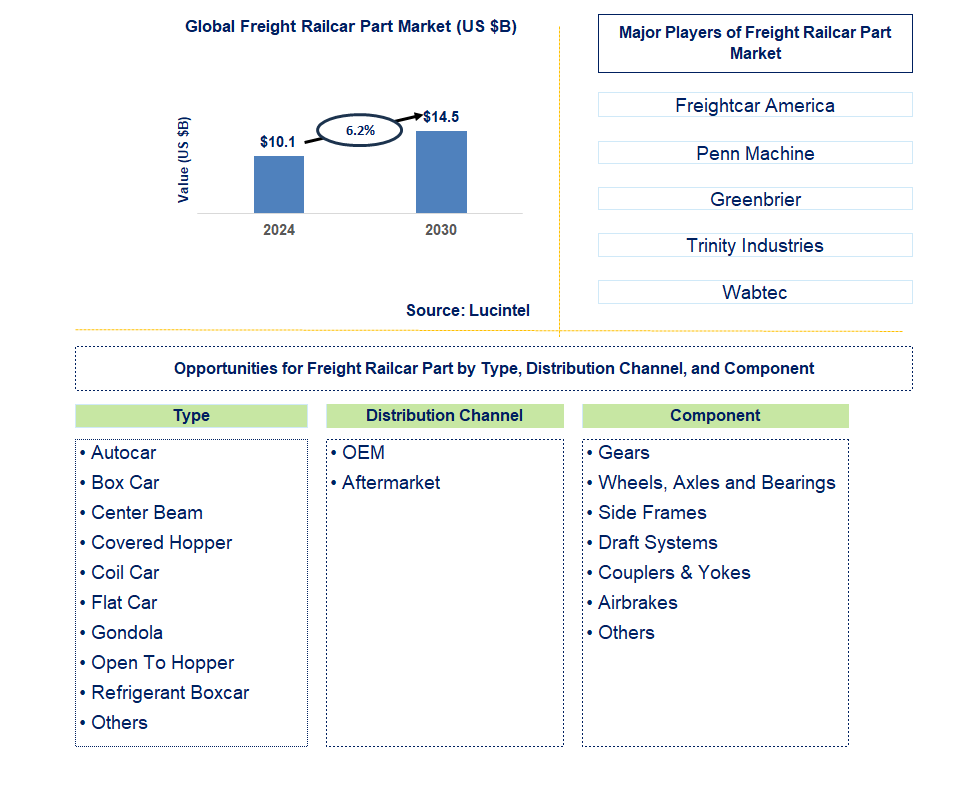
Key data points: The market size in 2030 = $14.5 billion, growth forecast = 6.2% annually for the next 6 years. Scroll below to get more insights. This market report covers trends, opportunities, and forecasts in the global freight railcar part market to 2030 by type (autocar, box car, center beam, covered hopper, coil car, flat car, gondola, open to hopper, refrigerant boxcar, and others), distribution channel (OEM and aftermarket), component (gears, wheels, axles and bearings, side frames, draft systems, couplers & yokes, airbrakes, and others), and region (North America, Europe, Asia Pacific, and the Rest of the World)
We'll send your sample report shortly.
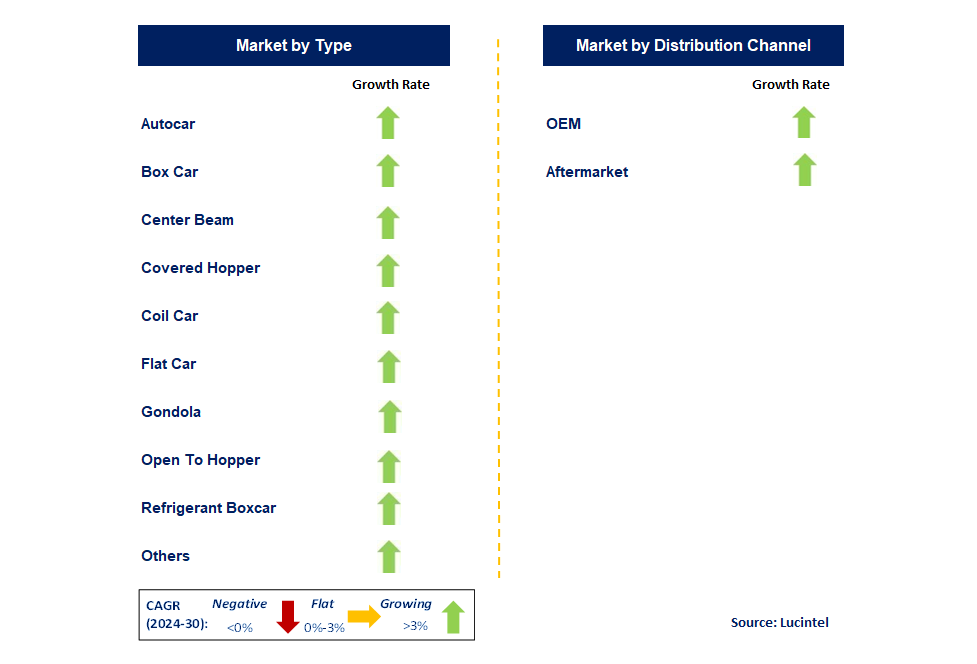
• Lucintel forecasts that, within the type category, autocar segment is expected to witness the highest growth over the forecast period due to high demand for automotive transportation.
• Within the distribution channel category, the OEM segment will remain a larger segment due to the rising demand for high-speed freight trains across emerging countries.
• In terms of regions, North America is expected to witness the highest growth over the forecast period due to growing demand for rail transportation and rising R&D investments in the development of new material railcar parts. Gain valuable insights for your business decisions with our comprehensive 150+ page report.
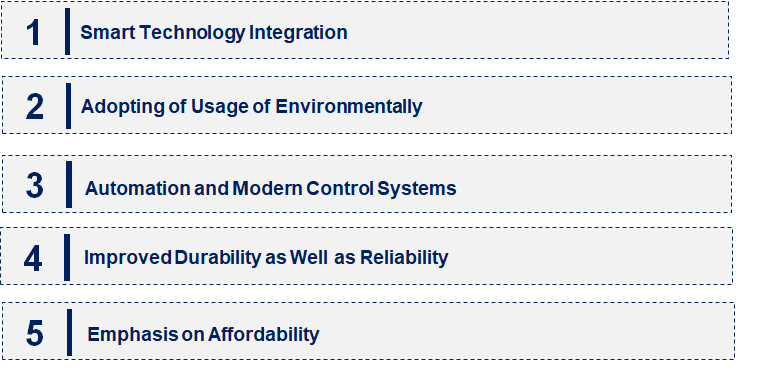
• Smart Technology Integration: As a result of the increased use of smart technologies, more companies now design smarter freight railcar parts that monitor themselves better than ever before. If we gather data on how our wagons perform under various conditions, we should be able to predict their next breakdowns and therefore avoid some downtime while waiting to fix what went wrong. This ensures more efficient transportation by allowing a timely response based on operational data.
• Adoption of Environmentally Friendly Materials: The use of sustainable materials in making parts for railway carriages is gaining popularity. Manufacturers are now developing eco-friendly materials that have a lower environmental impact but remain durable and effective. This trend is consistent with global sustainability goals and regulatory requirements, leading to greener rail transport solutions.
• Automation and Modern Control Systems: Automated systems and advanced control systems are increasingly integrated into contemporary freight cars. Some of these technologies include automated coupling, decoupling, and braking systems that improve efficiency as well as safety in operations. Manual labor is reduced by automation, cutting costs while lowering the chances of error in human activities.
• Improved Durability and Reliability: Advances made in engineering alongside material sciences have resulted in the production of more reliable and long-lasting freight car parts. New designs based on high-strength materials are being developed to match harsh operational conditions with heavy loads. Maintenance needs have been reduced due to this approach, while the components last longer.
• Emphasis on Affordability: Increasing emphasis has been placed on affordable freight car parts that balance performance and cost-effectiveness. Innovations in manufacturing processes, including material choices, aim to reduce costs while maintaining quality standards. This has supported economic viability within rail transport operations, mainly targeting emerging economies. These trends promote technological advancements, enhance sustainability, and improve operational efficiencies, thus transforming the industry for railcars carrying freight.
• Advanced Braking Systems: Modern freight trains contain advanced braking systems that ensure safe delivery along with good performance rates. Among other things, there are electronic braking mechanisms and improved air brakes that provide better stopping power and quicker response times than before; this helps reduce accident rates, enhancing operational safety.
• Lightweight yet Sturdy Materials: The use of lightweight and durable materials in freight railcar parts is becoming more prevalent. Advanced composites and high-strength alloys are being utilized to reduce weight while maintaining structural integrity. This development improves fuel efficiency and reduces operating costs for rail operators.
• Smart Monitoring and Predictive Maintenance: Smart monitoring systems have become part of the components that make up freight cars, offering real-time data on component performance. Such data can be used to predict maintenance schedules through the use of predictive maintenance techniques. This helps reduce downtime and increases the lifespan of railcar components.
• Automation Technologies: Nowadays, automation technologies are being integrated into freight railcar parts, thus improving manufacturers' overall logistics performance. Automated coupling, decoupling, and load handling systems are enhancing efficiency and reducing manual labor. This development supports higher throughput and lower operational costs in rail transportation.
• Sustainable Design with Eco-Friendly Materials: The inclusion of sustainability design features has become a priority among many manufacturers who are developing railway carriages using eco-friendly materials. These practices include those that mitigate environmental effects, such as the use of recyclable materials or energy-efficient manufacturing processes employed by manufacturers involved in this industry to align with global goals for sustainable development as well as regulatory requirements. These developments shape the future of railcar technology toward better performance, safety, and an environmentally friendly approach.
• Expansion into Emerging Markets: There is potential for significant growth in expanding freight railcar parts into emerging markets. This can be achieved by developing robust and cost-effective railcar designs that are localized to these areas, helping them meet their transportation needs as they grow. Thus, this is an opportunity to expand the rail infrastructure and improve logistics in fast-growing economies.
• Integration with Automation Technologies: The integration of freight railcar parts with automation technologies offers a growth prospect. Automatic systems, including coupling, braking, and load handling, can augment operational efficiency while reducing labor costs. This integration aligns with the current trend in the industry toward higher levels of automation and smart technology.
• Adoption of Sustainable Practices: Embracing sustainable practices and materials provides a strategic avenue for growth. By enacting energy-efficient manufacturing procedures and producing eco-friendly railcar components, it will be possible to address environmental concerns and comply with regulatory stipulations. This possibility underpins the sector’s transformation to greener and more sustainable transport solutions.
• Advanced Monitoring and Predictive Maintenance Solutions: Investing in advanced monitoring and predictive maintenance solutions provides growth potential. Real-time data collection systems combined with analysis enhance maintenance practices, leading to an extended lifespan of railcar components. This opportunity boosts operational efficiencies while lowering maintenance costs.
• Development of High-Capacity Railcar Designs: To meet ever-growing cargo requirements, there is a chance to develop high-capacity railcar designs. Improvements in railway car designs that can handle heavier loads contribute to increasing businesses in sectors like mining and logistics. In doing so, there will be improved carriage capacity as well as advancements in efficiency. These opportunities will continue shaping the future of freight railcar parts by driving innovation, extending market reach, and improving sustainability.
Freight rail car parts depend on many drivers such as technological advancement, economic conditions, and government policy regulations, among others. These factors influence the development and sophistication of rail car parts. The factors responsible for driving the freight railcar part market include:• Technological Advancements: Technological advancement is the main factor that triggers changes within the freight railcar part industry. Innovations in materials, automation, and smart technology improve performance, safety, and efficiency in the sector. These developments contribute to making railcar components more reliable and cost-effective, thus enhancing the industry’s future.
• Increased Demand for Efficiency: A drive to increase efficiency requirements in rail transportation leads to the development of advanced freight rail car parts. Better operational efficiencies at low costs result from enhanced braking systems, lightweight materials, and automated technologies. This trend aligns with the industry's goal of optimizing such concerns, thereby reducing environmental impact while improving performance.
• Regulatory Requirements: The development of freight rail car parts is also influenced by regulatory requirements. Ongoing innovation and adaptation are required, as safety, environmental, and performance standards must be adhered to. Compliance with these regulations is important for market acceptance and successful operations, especially in areas with strict laws. Challenges in the freight railcar part market are:
• Economic Pressures: The development processes of freight railcar parts are influenced by economic pressures along with their costs. Fluctuating price levels can affect material costs, manufacturing expenses, and market competition, which influences profitability ratios. A balance must be struck between cost and quality to maintain financial viability within this business sector.
• Sustainability and Environmental Concerns: The adoption of eco-friendly materials and practices in freight railcar parts is driven by sustainability and environmental concerns. Today, recyclable substances and energy-efficient production methods have become commonplace globally, as this sector strives to reduce environmental impact. These drivers and challenges determine how the freight rail car parts market develops; therefore, strategies required for success must be aligned accordingly since it operates within a dynamic industry characterized by change.
• Freightcar America
• Penn Machine
• Greenbrier
• Trinity Industries
• Wabtec
• New York Air Brake
• Progress Rail
• Autocar
• Box Car
• Center Beam
• Covered Hopper
• Coil Car
• Flat Car
• Gondola
• Open To Hopper
• Refrigerant Boxcar
• Others
• OEM
• Aftermarket
• Gears
• Wheels, Axles and Bearings
• Side Frames
• Draft Systems
• Couplers & Yokes
• Airbrakes
• North America
• Europe
• Asia Pacific
• The Rest of the World
• US: In the case of the US, recent trends regarding freight railcar parts have been directed towards ensuring safety and efficiency. This includes advanced braking systems and collision avoidance technologies meant to improve rail car safety. Moreover, there is an emphasis on lightweight materials that can withstand impacts to reduce fuel consumption costs in running trains. Predictive maintenance techniques are also becoming increasingly popular, with the objective of minimizing downtime periods while extending the lives of the components comprising railcars.
• Chinese: China is making progress in freight railcar technology by designing high-capacity automated railcars. These newer models accommodate larger and stronger cars capable of carrying heavier and bulkier commodities. To increase operational efficiencies and reduce labor costs, China is incorporating automation technologies such as automated coupling and decoupling systems into its railway operations. Therefore, these advancements support China's vast network for railways, coupled with the increasing demand for effective means of moving goods.
• Germany: Germany has become a leader in using sustainable materials and smart technologies for its freight railcars. New designs include green materials that have less impact on the environment, such as eco-friendly components, metal sheets, or panels used in making wagons, while others are plastic products instead of metallic ones to reduce weight, thereby saving fuel consumed during transportation. This involves utilizing predictive maintenance tools such as real-time monitoring devices that enable monitoring of functional activities taking place along the railway line. Additionally, it is possible to keep an eye on performance indicators to ensure they are properly maintained and promptly serviced over time. These improvements align with Germany's broader sustainability and smart infrastructure goals.
• Indian: India is developing low-cost but strong railcar designs that cater to the diverse needs of its widespread railway network. Recent developments have included using long-lasting and simpler materials to minimize production and operational costs. The aim is to make freight cars cheaper while improving their quality to meet the growing demands of Indian railways.
• Japan: Japan has introduced advanced technology into freight railcar parts that allow for high-precision operations and efficiency gains. Among these are highly accurate components, including sensors, monitors, and detectors, designed specifically to improve safety levels associated with equipment like railcars and locomotives. Japan also seeks automation and smart technology to ease operation and reduce human error, thereby ensuring it maintains its industry reputation for quality products supported by technological innovations.


• Freightcar America
• Penn Machine
• Greenbrier
• Trinity Industries
• Wabtec
• New York Air Brake
• Progress Rail Q6. Which freight railcar part market segment will be the largest in future? Answer: Lucintel forecasts that autocar segment is expected to witness the highest growth over the forecast period due to high demand for automotive transportation. Q7. In freight railcar part market, which region is expected to be the largest in next 5 years? Answer: North America is expected to witness highest growth over the forecast period due to growing demand for rail transportation and rising R&D investments in the development of new material railcar parts. Q8. Do we receive customization in this report? Answer: Yes, Lucintel provides 10% customization without any additional cost.


Choose a license that fits your team. Instant PDF delivery.
Prices exclude taxes. Instant delivery. Custom licensing available on request.
Market Report · May 18, 2026
Market Report · May 18, 2026
Market Report · May 18, 2026
Trusted partner for strategic intelligence and business growth


Receive a complimentary market analysis tailored to your industry. Our analysts will identify key growth opportunities and competitive dynamics specific to your business.

Market size, growth rate, and key trend analysis for your specific sector.

Top competitor positioning and market share analysis.

Strategic recommendations backed by data-driven insights.
Get curated market intelligence and competitive moves straight to your inbox.
By subscribing, you agree to receive our monthly insights. Unsubscribe anytime.
Receive a complimentary market analysis tailored to your industry. Our analysts will identify key growth opportunities and competitive dynamics specific to your business.
Market size, growth rate, and key trend analysis for your specific sector.
Top competitor positioning and market share analysis.
Strategic recommendations backed by data-driven insights.
Get curated market intelligence, emerging trends, and competitive moves straight to your inbox each month.
By subscribing, you agree to receive our monthly insights. Unsubscribe anytime.
We'll send your sample report shortly.