
Market Report · July 22, 2026

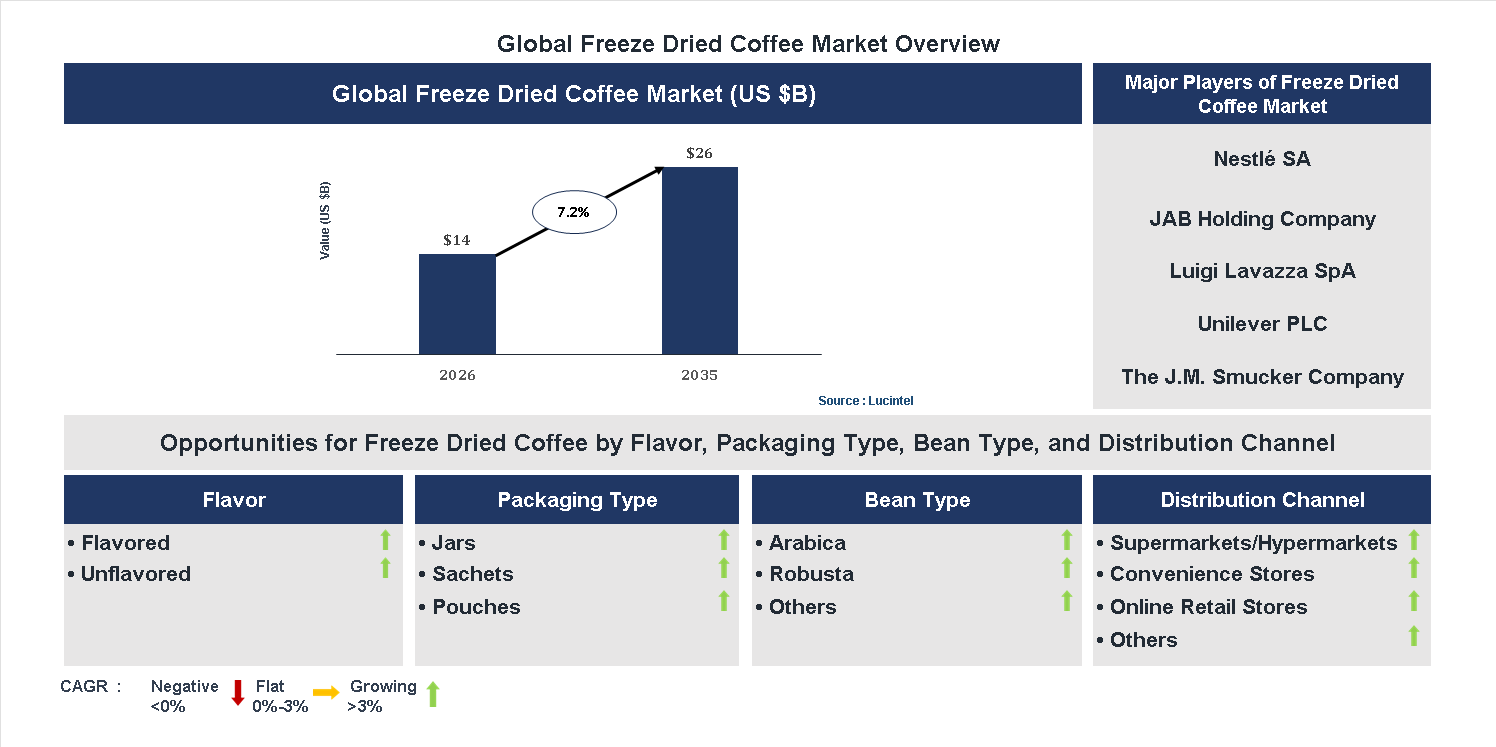
Key data points: The market size in 2035 = $26 billion, growth forecast = 7.2% annually for the next 8 years. Scroll below to get more insights. This market report covers trends, opportunities and forecasts in freeze dried coffee market to 2035 by flavor (flavored and unflavored), packaging type (jars, sachets, and pouches), bean type (arabica, robusta, and others), distribution channel (supermarkets/hypermarkets, convenience stores, online retail stores, and others), and region (North America, Europe, Asia Pacific, and the Rest of the World)
We'll send your sample report shortly.
• Lucintel forecasts that, within the flavor category, unflavored is expected to witness higher growth over the forecast period.
• Within the packaging type category, sachet is expected to witness the highest growth.
• In terms of region, APAC is expected to witness the highest growth over the forecast period. Gain valuable insights for your business decisions with our comprehensive 150+ page report. Sample figures with some insights are shown below.
• Rising Demand for Convenience Products: The busy lifestyles of consumers are fueling the demand for instant coffee options like freeze-dried coffee. This trend emphasizes quick preparation and portability, making freeze-dried coffee a preferred choice for on-the-go consumption. Manufacturers are focusing on enhancing product portability, packaging, and ease of use to attract time-constrained consumers. The convenience factor is also driving innovations such as single-serve sachets and instant coffee sticks, broadening the market reach across various demographics and regions.
• Technological Innovations in Freeze-Drying Processes: Advances in freeze-drying technology are improving the quality, flavor retention, and shelf life of freeze-dried coffee. New methods such as sublimation and vacuum freeze-drying are enabling manufacturers to produce more aromatic and flavorful coffee powders. These innovations reduce production costs and energy consumption, making premium quality products more accessible. As a result, the market is witnessing an increase in the availability of high-quality, specialty freeze-dried coffees that appeal to discerning consumers seeking gourmet experiences.
• Growing Preference for Premium and Specialty Coffee: Consumers are increasingly seeking high-quality, specialty coffee options, which extend into freeze-dried formats. This trend is driven by a desire for unique flavors, ethical sourcing, and artisanal qualities. Manufacturers are responding by offering single-origin, organic, and sustainably sourced freeze-dried coffee products. This segment commands higher price points and attracts a niche market of coffee connoisseurs. The premiumization trend is elevating the overall market perception and encouraging innovation in flavor profiles and packaging to cater to sophisticated tastes.
• Sustainability and Eco-Friendly Packaging: Environmental concerns are influencing consumer choices and prompting companies to adopt sustainable practices. The market is witnessing a shift towards eco-friendly packaging materials such as biodegradable sachets and recyclable containers. Additionally, efforts to reduce carbon footprints during production are gaining importance. These initiatives not only appeal to environmentally conscious consumers but also help brands differentiate themselves in a competitive market. Sustainable practices are becoming a key factor in brand loyalty and market positioning, shaping the future of the freeze-dried coffee industry.
• Expansion of E-commerce and Direct-to-Consumer Channels: The rise of online shopping platforms is significantly impacting the distribution of freeze-dried coffee. E-commerce enables brands to reach a broader audience, including remote and international markets. Direct-to-consumer models facilitate personalized marketing, subscription services, and customer engagement, fostering brand loyalty. Digital marketing strategies and online reviews further influence purchasing decisions. This trend is accelerating market penetration, especially among younger consumers who prefer online shopping. The expansion of e-commerce channels is thus vital for growth, innovation, and capturing emerging market segments. These trends are collectively transforming the freeze dried coffee market by emphasizing convenience, quality, sustainability, and digital engagement. They are driving innovation, expanding consumer choices, and reshaping competitive dynamics, ultimately leading to a more dynamic and diverse market landscape.

• Growing Demand for Convenience: The increasing busy lifestyles have boosted the popularity of freeze-dried coffee, which offers quick preparation and long shelf life. Consumers prefer instant solutions without compromising flavor, leading to higher adoption rates across regions. This trend is encouraging manufacturers to innovate with packaging and product formats, expanding market reach. The convenience factor is also attracting new customer segments, including office workers and travelers, thereby broadening the market scope.
• Innovation in Flavors and Varieties: Companies are introducing diverse flavors such as caramel, vanilla, and specialty blends to cater to evolving taste preferences. This innovation enhances consumer experience and differentiates products in a competitive market. Premium and organic options are gaining traction, appealing to health-conscious and environmentally aware consumers. These flavor innovations are driving sales and encouraging brand loyalty, ultimately expanding the product portfolio and market penetration.
• Sustainability and Eco-Friendly Packaging: The industry is focusing on reducing environmental impact through sustainable sourcing and eco-friendly packaging solutions. Biodegradable and recyclable packaging materials are being adopted to meet consumer demand for environmentally responsible products. These initiatives improve brand image and compliance with regulations, fostering consumer trust. Sustainability efforts are also opening new market segments, especially among eco-conscious buyers, and encouraging industry-wide adoption of greener practices.
• Technological Advancements in Production: Innovations in freeze-drying technology have improved product quality, flavor retention, and production efficiency. Automation and precision control systems reduce costs and enhance scalability, enabling manufacturers to meet rising demand. These technological improvements also allow for customization and new product development, increasing competitiveness. Enhanced shelf stability and faster production cycles are further supporting market growth and expanding global distribution capabilities.
• Expansion into Emerging Markets: Companies are targeting developing regions with rising disposable incomes and growing coffee consumption. Localized marketing strategies and affordable pricing are facilitating market entry and expansion. This growth is driven by increasing urbanization and changing lifestyles, which favor instant coffee options. Market penetration in these regions is expected to significantly boost overall industry revenue, creating opportunities for new entrants and strengthening existing players’ global presence. The recent developments in convenience, flavor innovation, sustainability, technology, and emerging markets are collectively transforming the freeze-dried coffee industry. These trends are driving increased consumer engagement, expanding product offerings, and enhancing operational efficiencies. As a result, the market is experiencing accelerated growth, with companies gaining competitive advantages and capturing new customer segments. Overall, these developments are positioning the freeze dried coffee market for sustained expansion and innovation in the coming years.
• Product Innovation and Premium Offerings: Developing specialty freeze dried coffees such as organic, single-origin, and flavored variants can attract discerning consumers. Introducing functional options like added vitamins or adaptogens caters to health-conscious buyers. Premium packaging and limited-edition flavors enhance brand appeal, allowing companies to differentiate themselves in a competitive market. These innovations meet diverse consumer preferences and expand market reach across different regions and demographics.
• Expansion in Emerging Markets: Growing coffee consumption in Asia-Pacific, Latin America, and Africa presents substantial opportunities. Localizing products to suit regional tastes and preferences, establishing distribution channels, and forming strategic partnerships can accelerate market penetration. Increasing urbanization and rising disposable incomes support demand for convenient coffee options. Tailoring marketing strategies to cultural nuances and investing in infrastructure will facilitate sustainable growth in these emerging markets.
• E-commerce and Direct-to-Consumer Sales Channels: The rise of online retail platforms offers brands a direct connection with consumers, enabling personalized marketing and faster product launches. E-commerce provides access to a broader customer base, especially in remote areas. Subscription models and online promotions foster brand loyalty and recurring sales. Leveraging social media and digital advertising enhances visibility, making e-commerce a vital channel for expanding market share and driving growth in the freeze dried coffee segment.
• Sustainability and Eco-Friendly Packaging Solutions: Consumers increasingly prioritize environmentally responsible products. Developing biodegradable, recyclable, or reusable packaging reduces ecological impact and appeals to eco-conscious buyers. Implementing sustainable sourcing practices for coffee beans and reducing carbon footprints in production further enhance brand reputation. These initiatives align with global sustainability trends, attracting a broader customer base and complying with regulatory standards, thereby strengthening market position and fostering long-term growth.
• Technological Advancements in Freeze Drying Processes: Innovations in freeze drying technology improve efficiency, product quality, and shelf life. Enhanced equipment reduces energy consumption and operational costs, enabling competitive pricing. Improved preservation techniques retain flavor and aroma better, elevating consumer satisfaction. Adoption of automation and smart manufacturing systems increases scalability and consistency. These technological improvements support product diversification, meet increasing demand, and enable manufacturers to stay ahead in a rapidly evolving market landscape. These strategic growth opportunities collectively position the freeze dried coffee market for sustained expansion. Innovation, market diversification, technological advancements, and sustainability initiatives will drive competitive advantage and meet evolving consumer preferences. As companies capitalize on these opportunities, the market is poised for robust growth, increased global penetration, and enhanced brand loyalty, ultimately shaping a dynamic and resilient industry landscape.
• Technological Advancements: The development of sophisticated freeze-drying techniques has significantly improved the preservation of flavor, aroma, and nutritional content in coffee. Innovations such as vacuum freeze-drying and cryogenic methods enable manufacturers to produce high-quality, instant coffee with minimal loss of sensory attributes. These technological improvements also reduce production costs and energy consumption, making freeze-dried coffee more accessible and appealing to consumers. As a result, companies can offer a wider variety of flavors and formats, catering to diverse preferences and increasing market penetration.
• Rising Consumer Demand for Convenience: Modern consumers increasingly seek quick, easy-to-prepare beverages that fit into busy lifestyles. Freeze-dried coffee offers the convenience of instant preparation without compromising on taste or aroma, making it highly attractive. The portability and long shelf life of freeze-dried coffee products also appeal to travelers, office workers, and outdoor enthusiasts. This demand for convenience drives manufacturers to innovate and expand product lines, fueling market growth as consumers prioritize ease of use alongside quality.
• Growing Preference for Premium and Specialty Coffee: Consumers are shifting towards premium, specialty, and artisanal coffee experiences, even in instant formats. Freeze-dried coffee can retain complex flavor profiles and aromatic qualities, enabling brands to offer gourmet options. The ability to produce high-quality, specialty-grade freeze-dried coffee helps companies differentiate themselves in a competitive market. This trend encourages investment in sourcing high-quality beans and refining processing techniques, ultimately expanding the market to include more sophisticated and discerning consumers.
• Expansion of E-commerce and Retail Channels: The proliferation of online shopping platforms and modern retail outlets has increased accessibility to freeze-dried coffee products. E-commerce enables brands to reach a broader audience, including niche markets and international consumers, with ease. Retail partnerships and shelf placements in supermarkets and convenience stores further enhance product visibility. This expansion of distribution channels facilitates market growth by making freeze-dried coffee more readily available, convenient, and appealing to a diverse consumer base.
• Increasing Focus on Sustainability and Ethical Sourcing: Environmental concerns and ethical considerations are influencing consumer choices and industry practices. Companies are adopting sustainable sourcing methods, reducing carbon footprints, and using eco-friendly packaging to appeal to environmentally conscious buyers. Certifications such as Fair Trade and Organic are becoming more prevalent, enhancing brand reputation and consumer trust. This focus on sustainability not only aligns with regulatory trends but also creates opportunities for innovation and differentiation within the market, encouraging responsible growth. The challenges facing the freeze dried coffee market include:
• Stringent Regulatory Standards: The food and beverage industry faces increasing regulatory scrutiny concerning safety, labeling, and quality standards. Compliance with these regulations can be complex and costly, especially for international players. Variations across regions may require multiple formulations and packaging adjustments, complicating production and distribution. Non-compliance risks legal penalties, product recalls, and damage to brand reputation, which can hinder market expansion and innovation efforts.
• Volatility in Raw Material Prices: The cost of coffee beans, particularly high-quality Arabica and Robusta varieties, is subject to fluctuations due to climate change, geopolitical issues, and supply-demand imbalances. These price volatilities impact production costs and profit margins for manufacturers. Companies may face challenges in maintaining consistent pricing and product quality, which can affect consumer trust and market stability. Managing supply chain risks and securing sustainable sourcing are critical to mitigating this challenge.
• Environmental Impact and Sustainability Pressures: While sustainability presents opportunities, it also poses challenges. The environmental footprint of freeze-drying processes, packaging waste, and sourcing practices can attract criticism and regulatory pressure. Companies must invest in eco-friendly technologies and sustainable supply chains, which can increase operational costs. Balancing environmental responsibility with profitability requires strategic planning and innovation, making sustainability a complex but essential aspect of market competitiveness. The freeze dried coffee market is shaped by technological innovations, consumer preferences for convenience and premium quality, expanding distribution channels, and sustainability initiatives. However, regulatory complexities, raw material price volatility, and environmental concerns pose significant challenges. Navigating these drivers and challenges requires strategic agility, technological investment, and a focus on sustainability to sustain growth and meet evolving market demands. The overall impact is a dynamic, competitive landscape that offers opportunities for innovation while demanding responsible and adaptive business practices.
• Nestlé SA
• JAB Holding Company
• Luigi Lavazza SpA
• Unilever PLC
• The J.M. Smucker Company
• Tata Coffee Ltd
• Buencafé
• Strauss Group Ltd
• Starbucks Corporation
• Kraft Heinz Co.
• Flavored
• Unflavored
• Jars
• Sachets
• Pouches
• Arabica
• Robusta
• Others
• Supermarkets/Hypermarkets
• Convenience Stores
• Online Retail Stores
• Others
• North America
• Europe
• Asia Pacific
• The Rest of the World
• United States: The US market has seen increased adoption of organic and specialty freeze-dried coffees, with brands focusing on sustainability and ethical sourcing. Innovations in packaging extend shelf life and preserve flavor, while e-commerce channels boost accessibility. Consumer interest in health benefits and convenience continues to drive product diversification, including single-serve options and flavored varieties. Major players are investing in marketing campaigns emphasizing quality and origin transparency, fueling market expansion.
• China: Chinas freeze dried coffee market is rapidly growing, fueled by rising urbanization and a burgeoning middle class seeking premium coffee experiences. Local brands are emerging alongside international giants, emphasizing innovative flavors and packaging tailored to Chinese tastes. E-commerce platforms and social media marketing play crucial roles in reaching younger consumers. Additionally, coffee cafes and instant coffee consumption are increasing, with freeze-dried products gaining popularity for their convenience and quality.
• Germany: Germany remains a mature market with a strong preference for high-quality, sustainably sourced freeze-dried coffee. Companies are focusing on eco-friendly production methods and fair-trade certifications to appeal to environmentally conscious consumers. Innovations include enhanced aroma preservation techniques and eco-packaging solutions. The market also benefits from a well-established coffee culture, with specialty and artisanal brands gaining traction through direct-to-consumer sales and online retail channels.
• India: The Indian freeze dried coffee market is experiencing rapid growth driven by urbanization, rising disposable incomes, and a shift towards premium coffee products. Local brands are expanding their product portfolios with innovative flavors and convenient packaging. The increasing popularity of instant coffee among young consumers and working professionals is boosting demand. Companies are also investing in marketing campaigns that highlight quality and convenience, while e-commerce platforms facilitate wider distribution and accessibility.
• Japan: Japans market for freeze-dried coffee is characterized by a preference for high-quality, premium products with unique flavors. Consumers value convenience but also seek artisanal and specialty options. Technological advancements in freeze-drying processes improve flavor retention and aroma. The market is driven by a sophisticated coffee culture, with brands emphasizing sustainability and innovative packaging. Limited edition and seasonal flavors are popular, and online retail channels are expanding the reach of premium products to a broader audience.


• Nestlé SA
• JAB Holding Company
• Luigi Lavazza SpA
• Unilever PLC
• The J.M. Smucker Company
• Tata Coffee Ltd
• Buencafé
• Strauss Group Ltd
• Starbucks Corporation
• Kraft Heinz Co. Q6. Which freeze dried coffee market segment will be the largest in future? Answer: Lucintel forecasts that, within the flavor category, unflavored is expected to witness higher growth over the forecast period. Q7. In freeze dried coffee market, which region is expected to be the largest in next 8 years? Answer: In terms of region, APAC is expected to witness the highest growth over the forecast period. Q8. Do we receive customization in this report? Answer: Yes, Lucintel provides 10% customization without any additional cost.


Choose a license that fits your team. Instant PDF delivery.
Prices exclude taxes. Instant delivery. Custom licensing available on request.
Market Report · July 22, 2026
Market Report · July 22, 2026
Market Report · July 22, 2026
Trusted partner for strategic intelligence and business growth


Receive a complimentary market analysis tailored to your industry. Our analysts will identify key growth opportunities and competitive dynamics specific to your business.

Market size, growth rate, and key trend analysis for your specific sector.

Top competitor positioning and market share analysis.

Strategic recommendations backed by data-driven insights.
Get curated market intelligence and competitive moves straight to your inbox.
By subscribing, you agree to receive our monthly insights. Unsubscribe anytime.
Receive a complimentary market analysis tailored to your industry. Our analysts will identify key growth opportunities and competitive dynamics specific to your business.
Market size, growth rate, and key trend analysis for your specific sector.
Top competitor positioning and market share analysis.
Strategic recommendations backed by data-driven insights.
Get curated market intelligence, emerging trends, and competitive moves straight to your inbox each month.
By subscribing, you agree to receive our monthly insights. Unsubscribe anytime.
We'll send your sample report shortly.