
Market Report · May 18, 2026

This market report covers trends, opportunities, and forecasts in the global free space detector market to 2031 by technology (less than 400nm wavelength detectors, 400–1100nm wavelength detectors, more than 1100nm wavelength detectors, high-speed data transmission systems, and integrated infrared sensing technologies), application (optical, education, research, industrial, and biochemical), and region (North America, Europe, Asia Pacific, and the Rest of the World)
We'll send your sample report shortly.
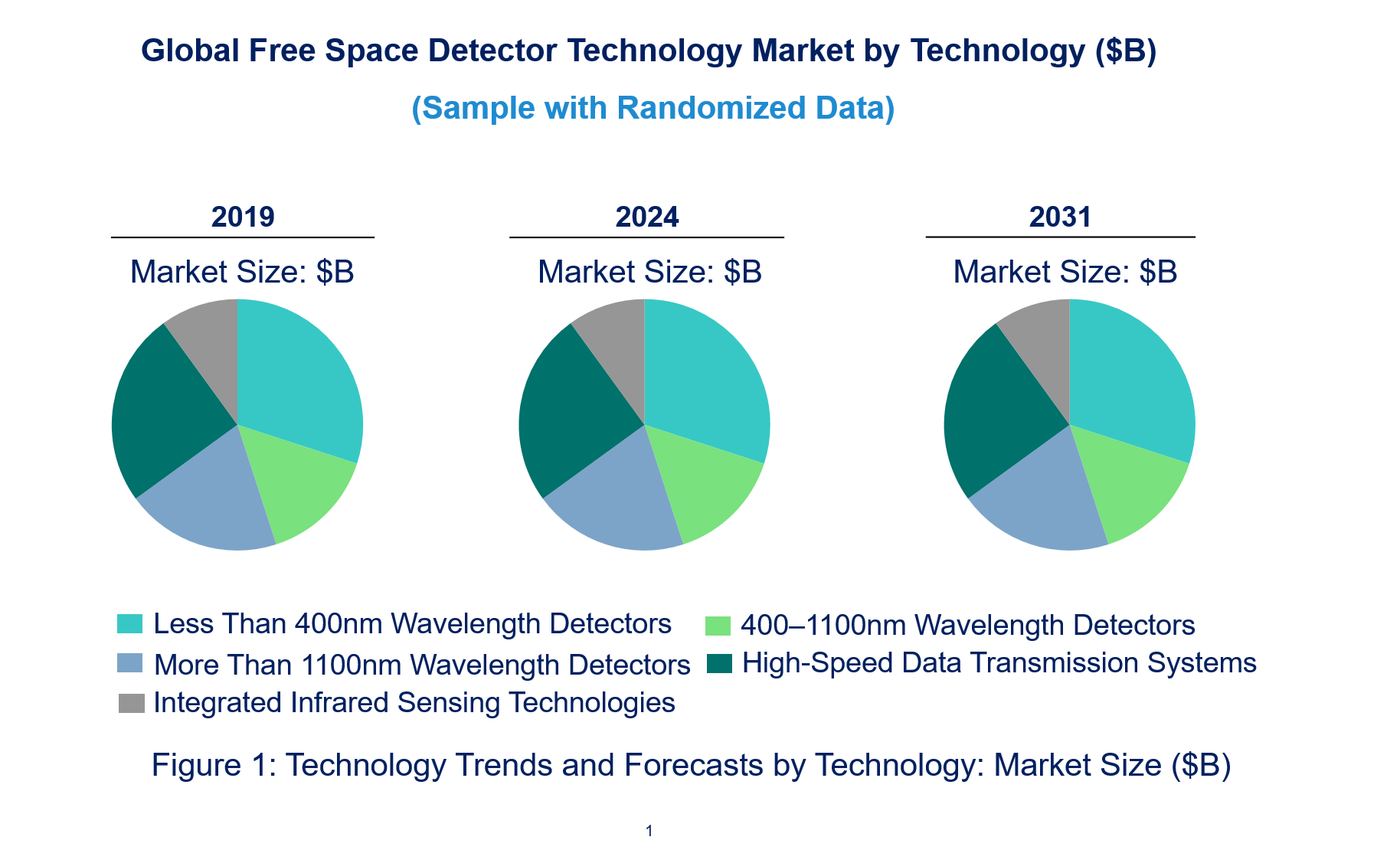
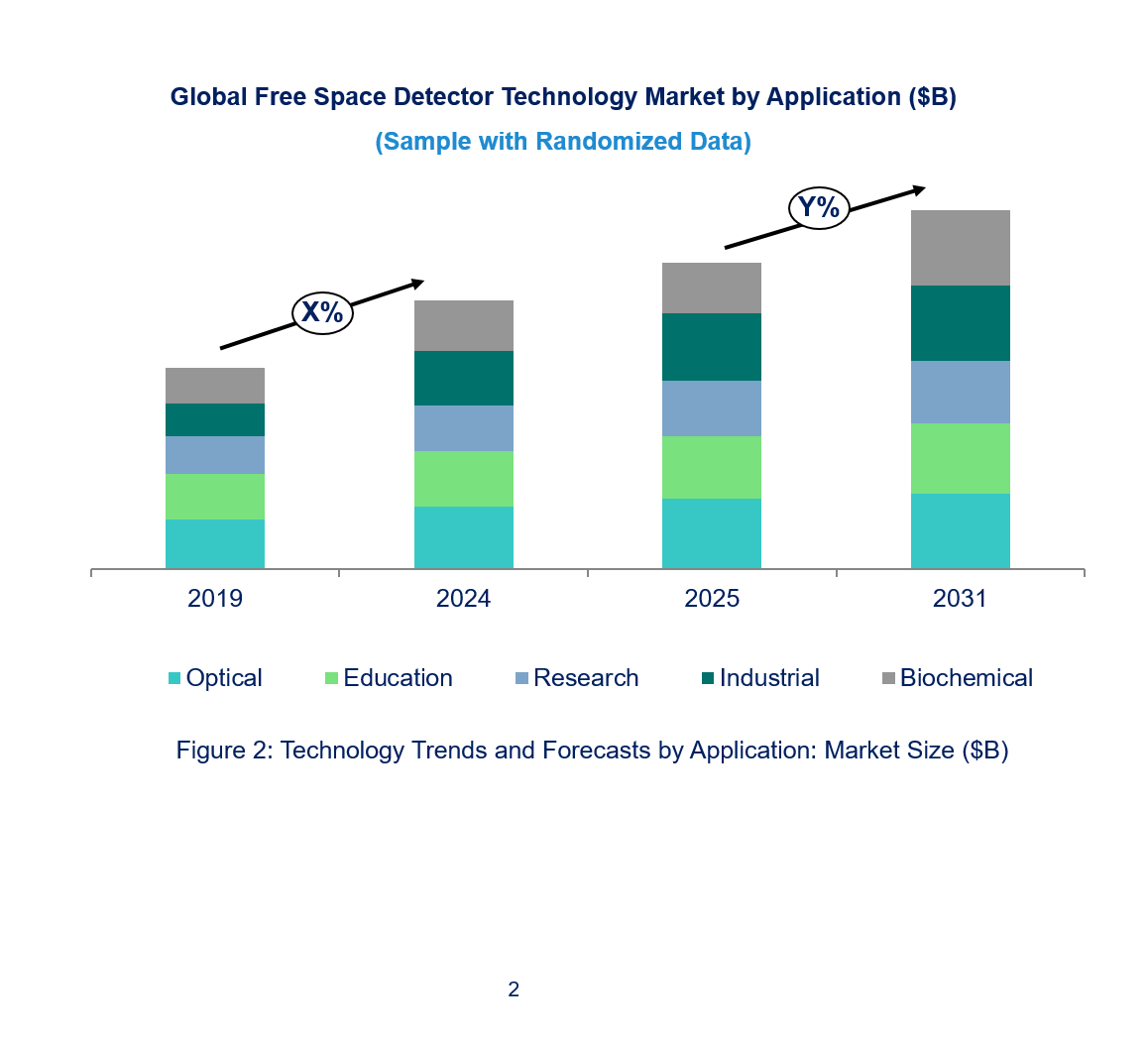
• Multi-Wavelength Detectors: There is a growing demand for multi-wavelength detectors that can work across a variety of wavelengths, such as 400–1100nm, as their flexibility is useful in applications like industrial and biochemical sensing.
• Integration of Infrared Sensing Technologies: There is a growing trend toward integrating infrared sensing technologies into detectors, providing enhanced sensitivity and performance, particularly for industrial and security applications.
• Miniaturization of Detectors: Smaller, more compact detectors are gaining popularity because they allow easier integration into portable and embedded systems, particularly in research and education settings.
• Advancements in High-Speed Data Transmission: The incorporation of high-speed data transmission capabilities into free space detectors is driving advancements in real-time applications, including aerospace and telecommunications.
• Increase in Biochemical Applications: The growing need for precision sensing in biochemical applications is driving the development of specialized detectors, improving diagnostics and sensor capabilities in medical fields. These technology trends are driving the market toward higher performance, greater efficiency, and broader application ranges, reshaping the free space detector market.
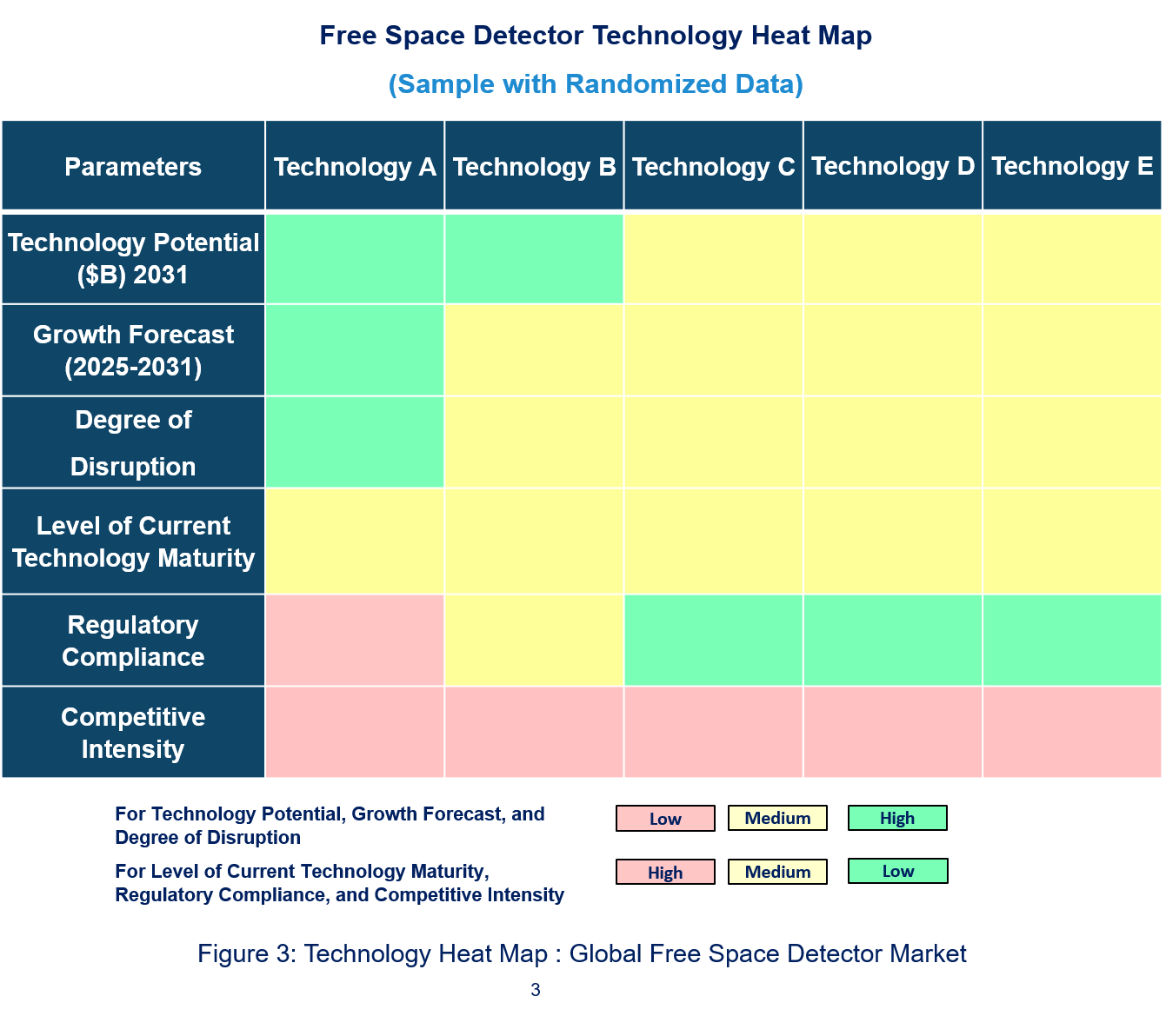
• Potential in Technology: The market has huge potential, driven by advancements in infrared sensing technologies and high-speed detectors. These innovations are poised to enhance applications in sectors like industrial, optical, education, research, and biochemistry, improving efficiency, safety, and data processing speeds. Degree of Disruption: Detection of free spaces by free space detection technologies poses a moderate level of disruption since they are developing the capabilities of existing systems. Although not transformative per se, they are increasing the precision of communication and sensing applications when compared to more traditional methods.
• Current Technology Maturity Level: The technology is fairly mature, with detectors for visible and infrared wavelengths already established in industries such as telecommunications and environmental monitoring. However, data transmission speed and sensor integration continue to improve.
• Regulatory Compliance: This is an important factor, particularly in the use of infrared and other radiation-based technologies. Safety, electromagnetic interference, and environmental impact standards must be followed, although regulations differ from industry to industry and region to region. Free space detector technologies are poised for growth, with strong potential for impact across various sectors.
• Thorlabs Inc. has introduced next-generation wavelength detectors that offer extended wavelength ranges, improving their versatility in both academic and industrial research.
• MKS Instruments, Inc. has improved its high-speed data transmission systems that integrate optical sensors to increase the speed and accuracy of readings in industrial and research applications.
• Standa Ltd. advanced its detector designs by improving sensitivity in the infrared spectrum and positioning its products as ideal for industrial and medical sensing.
• ALPHALAS GmbH designed innovative multi-wavelength detectors to meet the rising demand for detectors that provide larger ranges and support more varied applications.
• TeraVil Ltd. introduced detector systems with new designs optimized for high-speed data transmission, targeting the growing need for real-time data processing in aerospace and telecommunications.
• QUBIG GmbH focused on better integrating infrared sensors, thereby providing solutions for advanced research environments and precision diagnostics.
• Menlo Systems has led the way in packaging visible and infrared wavelength capabilities into compact, high-performance detectors for various scientific applications.
• Electro-Optics Technology, Inc. improved the energy efficiency and responsiveness of their free space detectors, enhancing their applications in industrial and biomedical fields.
• Sciencetech-Inc developed more reliable and cost-effective detectors with integrated high-speed data transmission capabilities, targeting broad industrial adoption.
• Opto Diode Corp. has emphasized developing rugged and accurate detectors, especially for use in industrial environments. The free space detector market is advancing rapidly with innovations in wavelength range, sensitivity, and data transmission, catering to diverse applications in research, industrial, and medical sectors. These developments are enhancing performance and driving adoption across a wide array of industries.
• Technological Advancements: Multi-wavelength detectors and high-speed data transmission systems are opening new possibilities for research, industrial, and biochemical applications, driving market growth.
• Increasing Demand for Biochemical Sensing: The need for high-precision detectors in medical diagnostics and biochemical research is fueling demand for more specialized, sensitive detector technologies.
• Growth in Research and Education Sectors: The use of advanced free space detectors is growing in the research and education sectors as they enhance scientific investigations with accurate and versatile measurement tools.
• The Growing Industrial Automation Industry: The demand for high-speed, infrared, and multi-wavelength free space detectors has expanded as industries increasingly rely on automation and real-time data. Challenges in the free space detector market include:
• High Cost of Advanced Detectors: The complex technology behind high-performance detectors translates into high manufacturing costs, making these systems less accessible to smaller companies and research labs.
• Complexity of Integration: Advanced technologies such as infrared sensing and high-speed data transmission are difficult to integrate into existing systems, which is technically challenging and resource-intensive for end-users.
• Regulatory Hurdles: New detector technologies must meet different international standards and regulations, making it difficult to achieve global acceptance. Technological trends and developments in the free space detector market have led to significant growth across all sectors. As drivers in this market are primarily technological advancements and increasing demand for biochemical sensing, there are also some challenges, such as high costs and integration complexity, that must be addressed to unlock the full potential of this rapidly evolving market.
• Thorlabs Inc
• MKS Instruments
• Standa Ltd
• Alphalas Gmbh
• Teravil Ltd
• Qubig Gmbh
• Technology Readiness by Technology Type: Less Than 400nm wavelength detectors are mature and ready for high-precision applications. 400–1100nm wavelength detectors are moderately advanced, with growing commercial use. More than 1100nm wavelength detectors are specialized but ready for military and industrial sectors. High-speed data transmission systems are highly developed for telecommunications. Integrated infrared sensing technologies are well-established in healthcare and security, with evolving uses in autonomous systems.
• Competitive Intensity and Regulatory Compliance: The free space detector market is highly competitive, with strict regulatory standards for technologies like less than 400nm and 400–1100nm wavelength detectors in optical communication and research. More than 1100nm wavelength detectors face regulations in military and industrial uses, while high-speed data transmission systems comply with data security standards. Integrated infrared sensing technologies meet stringent safety regulations in the medical and automotive sectors.
• Disruption Potential by Technology Type: Technologies such as less than 400nm and 400–1100nm wavelength detectors provide wide detection ranges that lead to further developments in optical communication and security. More than 1100nm wavelength detectors allow infrared imaging and long-range detection for military and surveillance applications. High-speed data transmission systems enhance communication networks, and integrated infrared sensing technologies improve sensing capabilities in healthcare, automotive, and security applications while reducing energy consumption.
• Less Than 400nm Wavelength Detectors
• 400–1100nm Wavelength Detectors
• More Than 1100nm Wavelength Detectors
• High-Speed Data Transmission Systems
• Integrated Infrared Sensing Technologies
• Optical
• Education
• Research
• Industrial
• Biochemical
• North America
• Europe
• Asia Pacific
• The Rest of the World
• Latest Developments and Innovations in the Free Space Detector Technologies
• Companies / Ecosystems
• Strategic Opportunities by Technology Type




Choose a license that fits your team. Instant PDF delivery.
Prices exclude taxes. Instant delivery. Custom licensing available on request.
Market Report · May 18, 2026
Market Report · May 18, 2026
Market Report · May 18, 2026
Trusted partner for strategic intelligence and business growth


Receive a complimentary market analysis tailored to your industry. Our analysts will identify key growth opportunities and competitive dynamics specific to your business.

Market size, growth rate, and key trend analysis for your specific sector.

Top competitor positioning and market share analysis.

Strategic recommendations backed by data-driven insights.
Get curated market intelligence and competitive moves straight to your inbox.
By subscribing, you agree to receive our monthly insights. Unsubscribe anytime.
Receive a complimentary market analysis tailored to your industry. Our analysts will identify key growth opportunities and competitive dynamics specific to your business.
Market size, growth rate, and key trend analysis for your specific sector.
Top competitor positioning and market share analysis.
Strategic recommendations backed by data-driven insights.
Get curated market intelligence, emerging trends, and competitive moves straight to your inbox each month.
By subscribing, you agree to receive our monthly insights. Unsubscribe anytime.
We'll send your sample report shortly.