
Report Feature
Fortified Breakfast Cereal Market Trends and Forecast
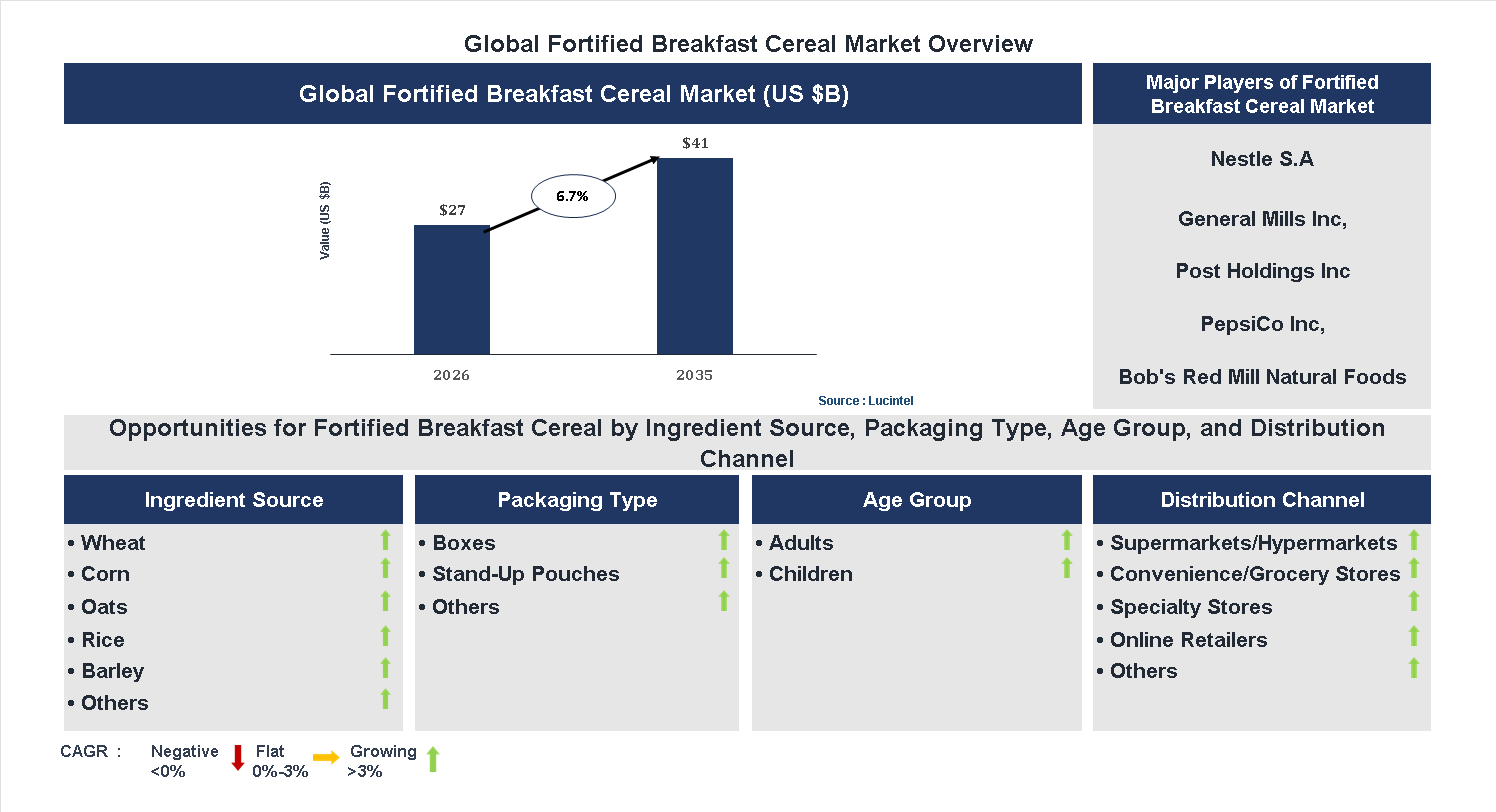
The future of the global fortified breakfast cereal market looks promising with opportunities in the box and stand-up pouch markets. The global fortified breakfast cereal market is expected to reach an estimated $41 billion by 2035 with a CAGR of 6.7% from 2026 to 2035. The major drivers for this market are the increasing demand for nutrient rich breakfast options, the rising awareness of fortified food benefits, and the growing consumption of ready to eat cereals.• Lucintel forecasts that, within the ingredient source category, wheat is expected to witness the highest growth over the forecast period.
• Within the packaging type category, box is expected to witness higher growth.
• In terms of region, North America is expected to witness the highest growth over the forecast period. Gain valuable insights for your business decisions with our comprehensive 150+ page report. Sample figures with some insights are shown below.
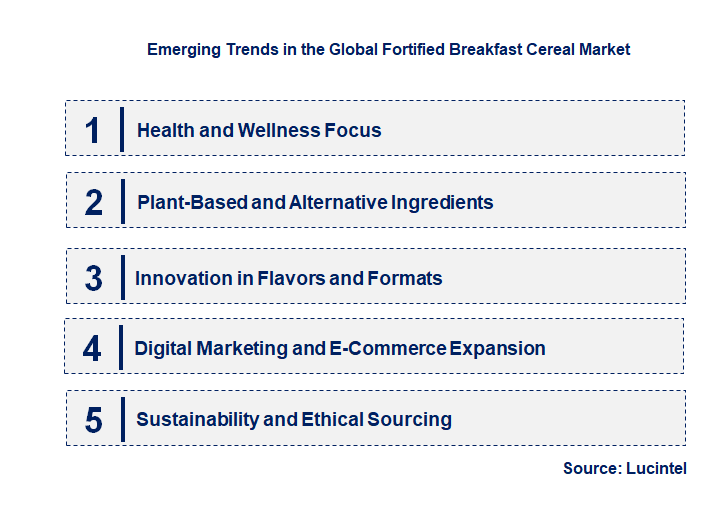
Emerging Trends in the Fortified Breakfast Cereal Market
The fortified breakfast cereal market is experiencing rapid growth driven by increasing health consciousness, evolving consumer preferences, and technological advancements. As consumers seek nutritious, convenient, and functional food options, manufacturers are innovating to meet these demands. The market is also influenced by demographic shifts, urbanization, and a rising focus on wellness. These factors are fostering new product development, marketing strategies, and distribution channels, ultimately reshaping the competitive landscape. Understanding these emerging trends is crucial for stakeholders aiming to capitalize on opportunities and navigate challenges in this dynamic industry.• Health and Wellness Focus: Consumers are increasingly prioritizing health, leading to demand for cereals fortified with vitamins, minerals, and superfoods. This trend drives product innovation aimed at supporting immunity, digestion, and overall well-being. Brands are emphasizing natural ingredients, low sugar content, and functional benefits to attract health-conscious buyers. The market is witnessing a surge in organic and non-GMO options, catering to the growing preference for clean-label products. This shift enhances brand loyalty and opens avenues for premium pricing, ultimately expanding the market scope.
• Plant-Based and Alternative Ingredients: The rise of plant-based diets influences the development of cereals made from alternative grains like quinoa, millet, and amaranth. These ingredients appeal to vegetarians, vegans, and flexitarians seeking nutritious, sustainable options. Fortification with plant-based proteins and fibers enhances the nutritional profile, attracting a broader consumer base. This trend also aligns with environmental concerns, promoting eco-friendly sourcing and production. As a result, manufacturers are diversifying product lines to include gluten-free, allergen-free, and organic options, broadening market reach and consumer engagement.
• Innovation in Flavors and Formats: To cater to evolving taste preferences, companies are introducing diverse flavors, textures, and formats such as granola bars, snack packs, and ready-to-eat cereals. This innovation enhances convenience and appeal, especially among younger consumers and busy professionals. Incorporating exotic spices, natural sweeteners, and unique combinations helps differentiate products in a competitive market. Additionally, packaging innovations improve portability and shelf life, boosting consumer satisfaction. These developments foster brand differentiation and stimulate market growth by attracting a wider demographic seeking variety and convenience.
• Digital Marketing and E-Commerce Expansion: The proliferation of digital platforms and e-commerce channels is transforming how consumers discover and purchase fortified cereals. Brands leverage social media, influencer marketing, and targeted advertising to reach health-conscious and millennial audiences. Online sales channels provide convenience, personalized recommendations, and access to niche products, expanding market penetration. Data analytics enable brands to tailor offerings and marketing strategies effectively. This trend accelerates product launches and market responsiveness, fostering direct consumer engagement and loyalty, and reshaping traditional retail dynamics.
• Sustainability and Ethical Sourcing: Consumers increasingly demand environmentally responsible products, prompting companies to adopt sustainable sourcing, eco-friendly packaging, and transparent supply chains. Certifications like Fair Trade and Organic are gaining importance, influencing purchasing decisions. Brands are investing in sustainable agriculture practices and reducing carbon footprints to appeal to eco-conscious buyers. This trend not only enhances brand reputation but also aligns with regulatory pressures and societal expectations. As sustainability becomes a key differentiator, it drives innovation and investment in greener production methods, ultimately shaping a more responsible and resilient market landscape. These emerging trends—centered around health, innovation, digital engagement, and sustainability—are fundamentally transforming the fortified breakfast cereal market. They are fostering product diversification, expanding consumer bases, and encouraging sustainable practices, thereby creating a more dynamic, competitive, and future-ready industry.
Recent Development in the Fortified Breakfast Cereal Market
The fortified breakfast cereal market is experiencing rapid growth driven by increasing health consciousness, evolving consumer preferences, and innovative product offerings. As consumers seek nutritious options that support active lifestyles, manufacturers are expanding their portfolios with functional ingredients and targeted marketing strategies. Technological advancements and strategic partnerships are further fueling market expansion. This dynamic environment presents significant opportunities for brands to capture new customer segments and enhance market share through product differentiation and health-focused innovations.• Growing Health Consciousness: Increased awareness of nutrition and wellness is driving demand for fortified cereals. Consumers seek products with added vitamins, minerals, and functional benefits like immunity support and digestive health. This shift encourages manufacturers to develop nutrient-rich options, catering to health-conscious demographics. The trend also promotes the adoption of organic and non-GMO ingredients, boosting product credibility and consumer trust. As a result, the market is expanding with diverse offerings tailored to specific health needs.
• Innovation in Product Formulations: Companies are investing in R&D to create innovative cereal formulations with unique ingredients such as superfoods, probiotics, and plant-based proteins. These innovations enhance product appeal and meet the needs of various dietary preferences, including gluten-free and low-sugar options. The introduction of flavor enhancements and convenient packaging also attracts a broader consumer base. Such developments foster brand differentiation and enable companies to tap into niche markets, driving overall market growth.
• Strategic Partnerships and Collaborations: Collaborations between cereal manufacturers and health organizations, ingredient suppliers, and retail chains are strengthening market presence. These partnerships facilitate access to new distribution channels, co-branding opportunities, and shared expertise in health and nutrition. For example, collaborations with fitness brands promote active lifestyles, boosting product visibility among target consumers. These alliances help companies innovate faster, expand their reach, and build consumer trust, ultimately accelerating market growth.
• Digital Marketing and E-commerce Expansion: The rise of digital marketing strategies and e-commerce platforms is significantly impacting the market. Brands leverage social media, influencer partnerships, and targeted online advertising to reach health-conscious consumers. E-commerce channels provide convenience and wider product availability, especially in emerging markets. This digital shift enables personalized marketing, subscription models, and direct consumer engagement, resulting in increased sales and brand loyalty. The expansion of online retail is a key driver of market growth and consumer accessibility.
• Focus on Sustainability and Clean Label Products: Consumers increasingly prefer sustainable and transparent products, prompting manufacturers to adopt eco-friendly packaging and clean label ingredients. This focus enhances brand reputation and appeals to environmentally conscious buyers. Companies are investing in sustainable sourcing, biodegradable packaging, and clear labeling of nutritional benefits. These initiatives not only meet consumer expectations but also differentiate products in a competitive market. The emphasis on sustainability is shaping product development and influencing purchasing decisions, contributing to market expansion. These developments collectively are transforming the fortified breakfast cereal market by fostering innovation, expanding consumer reach, and emphasizing health and sustainability. The integration of functional ingredients, strategic collaborations, and digital marketing is creating new growth avenues. As consumer preferences shift towards healthier, transparent, and eco-friendly options, the market is poised for sustained expansion. These opportunities are enabling brands to strengthen their market position and meet evolving demands effectively.
Strategic Growth Opportunities in the Fortified Breakfast Cereal Market
The fortified breakfast cereal market is experiencing significant growth driven by increasing health consciousness, rising demand for functional foods, and evolving consumer preferences for nutritious, convenient breakfast options. Innovations in product formulations, expanding distribution channels, and targeted marketing strategies are further fueling market expansion. As consumers seek healthier lifestyles, manufacturers are focusing on fortification with vitamins, minerals, and other beneficial nutrients, creating diverse opportunities across various segments. This dynamic environment presents numerous avenues for strategic growth and market penetration.• Product Innovation and Diversification: Developing new fortified cereal variants with added vitamins, minerals, probiotics, and superfoods caters to health-conscious consumers. Sub-segments like gluten-free, organic, and low-sugar options are gaining popularity, expanding the market reach. Innovation in flavors, packaging, and functional ingredients enhances consumer appeal and loyalty, driving sales growth across retail and online channels.
• Expansion in Emerging Markets: Growing urbanization, rising disposable incomes, and increasing awareness of health benefits are boosting demand in developing regions such as Asia-Pacific, Latin America, and Africa. Localized product offerings, strategic partnerships, and distribution expansion are key strategies to tap into these high-growth markets, offering significant revenue opportunities for manufacturers.
• Focus on Organic and Natural Fortified Cereals: Consumers are increasingly seeking organic, non-GMO, and natural ingredients in their breakfast choices. This trend drives the development of organic fortified cereals with clean labels, appealing to health-conscious and environmentally aware demographics. Certification and transparency in sourcing further strengthen brand trust and market share in this segment.
• Strategic Mergers, Acquisitions, and Partnerships: Collaborations between established players and startups foster innovation, expand product portfolios, and enhance market presence. Mergers and acquisitions facilitate access to new distribution channels, technologies, and consumer bases, enabling companies to stay competitive and meet evolving consumer demands efficiently.
• Growing Demand for Convenient and On-the-Go Options: Busy lifestyles increase the preference for ready-to-eat, portable fortified cereals suitable for quick breakfasts and snacks. Packaging innovations like single-serve sachets and resealable packs improve convenience and shelf life. This segment caters to working professionals, students, and travelers, expanding the overall market and creating opportunities for targeted marketing and product development. The overall impact of these growth opportunities is a robust expansion of the fortified breakfast cereal market, driven by innovation, geographic diversification, and changing consumer preferences. Companies that strategically leverage these avenues can enhance their market share, meet diverse consumer needs, and sustain long-term growth in a competitive landscape.
Fortified Breakfast Cereal Market Driver and Challenges
The fortified breakfast cereal market is influenced by a variety of technological, economic, and regulatory factors that shape its growth and development. Advances in food processing technology enable the production of healthier, nutrient-rich cereals, attracting health-conscious consumers. Economic factors such as rising disposable incomes and urbanization increase demand for convenient breakfast options. Regulatory standards regarding food safety and labeling influence product formulation and marketing strategies. Additionally, consumer awareness about nutrition and wellness trends drives innovation and product diversification. These drivers collectively propel market expansion, while challenges like regulatory hurdles, health concerns, and intense competition pose obstacles to sustained growth. Understanding these factors is essential for stakeholders to navigate the evolving landscape effectively. The factors responsible for driving the fortified breakfast cereal market include:-• Technological Innovations: Advances in food processing and fortification techniques allow manufacturers to develop cereals with enhanced nutritional profiles, including added vitamins, minerals, and fiber. These innovations meet consumer demand for healthier options and enable product differentiation. Automation and packaging improvements also reduce costs and improve shelf life, boosting market competitiveness. As consumers become more health-conscious, companies investing in R&D to create functional cereals gain a competitive edge, fostering market growth.
• Rising Health Awareness: Increasing awareness about nutrition, wellness, and lifestyle diseases encourages consumers to choose fortified cereals as a convenient, nutritious breakfast option. The trend towards preventive healthcare and clean-label products influences purchasing decisions. This shift in consumer preferences drives manufacturers to innovate with health-focused formulations, expanding product portfolios to cater to specific dietary needs such as gluten-free, low-sugar, or high-protein cereals, thereby fueling market expansion.
• Urbanization and Changing Lifestyles: Rapid urbanization leads to busier lifestyles, increasing demand for quick, easy-to-prepare breakfast foods. Fortified cereals offer convenience without compromising nutritional value, making them popular among working professionals and students. The growing urban middle class seeks products that align with modern, health-conscious living, prompting manufacturers to develop innovative packaging and marketing strategies to capture this segment, thus propelling market growth.
• Economic Growth and Disposable Income: Rising disposable incomes in emerging economies enable consumers to spend more on premium and branded fortified cereals. Economic development also correlates with increased retail infrastructure, expanding product availability. As consumers prioritize health and convenience, manufacturers benefit from higher sales volumes and premium pricing strategies, which further stimulate market growth across various regions.
• Product Innovation and Diversification: Continuous innovation in flavors, ingredients, and packaging attracts a broader consumer base. Introduction of organic, gluten-free, and allergen-free options caters to niche markets, while functional cereals with added benefits appeal to health-conscious consumers. Diversification strategies help companies differentiate their offerings, increase market share, and adapt to evolving consumer preferences, thereby supporting sustained growth in the fortified breakfast cereal market. The challenges facing the fortified breakfast cereal market include:-
• Regulatory and Labeling Constraints: Stringent food safety regulations and labeling requirements pose compliance challenges for manufacturers. Variations across regions complicate product formulation and marketing strategies, potentially delaying product launches and increasing costs. Non-compliance risks legal penalties and damage to brand reputation. Navigating these regulatory landscapes requires significant investment in quality assurance and legal expertise, which can hinder innovation and market expansion.
• Health Concerns and Consumer Skepticism: Despite the popularity of fortified cereals, concerns about added sugars, artificial ingredients, and preservatives persist among health-conscious consumers. Negative publicity regarding sugar content and health risks associated with processed foods can impact brand perception. Manufacturers must balance fortification with health considerations, often leading to reformulation challenges and increased R&D costs to meet consumer expectations for clean-label products.
• Intense Market Competition: The market is highly competitive, with numerous local and international players vying for market share. Price wars, promotional activities, and product proliferation intensify competition, squeezing profit margins. Smaller companies face challenges in establishing brand recognition against established giants. To stay competitive, firms must invest heavily in marketing, innovation, and distribution channels, which can strain resources and impact profitability. The fortified breakfast cereal market is driven by technological advancements, health awareness, urbanization, economic growth, and product innovation. However, regulatory complexities, health concerns, and fierce competition present significant hurdles. These factors collectively influence market dynamics, requiring stakeholders to adapt strategies to capitalize on opportunities while mitigating risks. Overall, the markets future growth hinges on balancing innovation with regulatory compliance and consumer trust, ensuring sustainable development amid evolving consumer preferences and industry standards.
List of Fortified Breakfast Cereal Companies
Companies in the market compete on the basis of product quality offered. Major players in this market focus on expanding their manufacturing facilities, R&D investments, infrastructural development, and leverage integration opportunities across the value chain. With these strategies fortified breakfast cereal companies cater increasing demand, ensure competitive effectiveness, develop innovative products & technologies, reduce production costs, and expand their customer base. Some of the fortified breakfast cereal companies profiled in this report include-• Nestle S.A
• General Mills Inc,
• Post Holdings Inc
• PepsiCo Inc,
• Bobs Red Mill Natural Foods
• Natures Path Foods Inc.
• B&G Foods Inc,
• The Kellog Company
• Post Consumer Brands, LLC.
• Marico Limited
Fortified Breakfast Cereal Market by Segment
The study includes a forecast for the global fortified breakfast cereal market by ingredient source, packaging type, age group, distribution channel, and region.Fortified Breakfast Cereal Market by Ingredient Source [Value from 2019 to 2035]:
• Wheat
• Corn
• Oats
• Rice
• Barley
• Others
Fortified Breakfast Cereal Market by Packaging Type [Value from 2019 to 2035]:
• Boxes
• Stand-Up Pouches
• Others
Fortified Breakfast Cereal Market by Age Group [Value from 2019 to 2035]:
• Adults
• Children
Fortified Breakfast Cereal Market by Distribution Channel [Value from 2019 to 2035]:
• Supermarkets/Hypermarkets
• Convenience/Grocery Stores
• Specialty Stores
• Online Retailers
• Others
Fortified Breakfast Cereal Market by Region [Value from 2019 to 2035]:
• North America
• Europe
• Asia Pacific
• The Rest of the World
Country Wise Outlook for the Fortified Breakfast Cereal Market
The fortified breakfast cereal market has experienced significant shifts driven by health consciousness, innovation, and changing consumer preferences across the globe. As consumers seek nutritious options, companies are investing in product development, sustainability, and marketing strategies to capture market share. Technological advancements and regulatory changes also influence market dynamics, prompting brands to adapt quickly. The United States, China, Germany, India, and Japan are key players with unique trends shaping their markets. Understanding these developments provides insight into future growth opportunities and challenges in the fortified breakfast cereal industry.• United States: The US market has seen increased demand for organic and gluten-free cereals, driven by health-conscious consumers. Major brands are launching functional cereals with added vitamins, minerals, and probiotics. Plant-based ingredients and sustainable packaging are gaining popularity, aligning with environmental concerns. Retailers are expanding shelf space for innovative products, and e-commerce sales are rising rapidly. Regulatory focus on labeling transparency and health claims is strengthening, encouraging brands to prioritize clear communication. Overall, the US market is characterized by innovation, health focus, and sustainability initiatives.
• China: Chinas fortified cereal market is rapidly expanding due to rising urbanization and disposable incomes. Consumers are increasingly seeking convenient, nutritious breakfast options, prompting local and international brands to introduce fortified products tailored to local tastes. Functional benefits such as immunity boosting and digestive health are emphasized. E-commerce platforms are crucial distribution channels, with online sales growing significantly. The market also sees a trend toward smaller packaging and affordable pricing to attract middle-class consumers. Regulatory standards are evolving to ensure product safety and quality, fostering consumer trust and market growth.
• Germany: The German market emphasizes organic, natural, and minimally processed cereals, reflecting the countrys strong health and environmental consciousness. There is a growing preference for cereals with added superfoods, fiber, and low sugar content. Sustainability practices, including eco-friendly packaging and ethical sourcing, are increasingly important. Retail chains are expanding their organic and health-focused sections, and private labels are gaining traction. Consumer education campaigns about nutrition and health benefits are prevalent. The market is also influenced by European Union regulations on food labeling and health claims, ensuring transparency and safety.
• India: The fortified breakfast cereal market in India is experiencing rapid growth due to urbanization, changing lifestyles, and increasing awareness of nutrition. Local brands are innovating with flavors and ingredients suited to Indian tastes, such as millet and jaggery. The focus is on affordability and accessibility, with smaller pack sizes and competitive pricing. Health benefits like immunity enhancement and energy boosting are key marketing points. E-commerce and modern retail outlets are expanding reach, especially in urban centers. Regulatory frameworks are strengthening to ensure product safety and quality, encouraging consumer confidence and market expansion.
• Japan: Japans market for fortified cereals is characterized by a focus on functional benefits, including digestive health and aging-related nutrition. Consumers prefer products with added probiotics, fiber, and low sugar content. The market is driven by an aging population seeking convenient, health-promoting foods. Innovative packaging and branding emphasize quality and safety, aligning with Japanese consumer preferences. Retail channels include supermarkets, convenience stores, and online platforms. Regulatory standards for health claims are strict, ensuring product credibility. Overall, the Japanese market is marked by a blend of tradition and innovation, catering to health-conscious, aging consumers.

Features of the Global Fortified Breakfast Cereal Market
Market Size Estimates: Fortified breakfast cereal market size estimation in terms of value ($B). Trend and Forecast Analysis: Market trends (2019 to 2025) and forecast (2026 to 2035) by various segments and regions. Segmentation Analysis: Fortified breakfast cereal market size by various segments, such as by ingredient source, packaging type, age group, distribution channel, and region in terms of value ($B). Regional Analysis: Fortified breakfast cereal market breakdown by North America, Europe, Asia Pacific, and Rest of the World. Growth Opportunities: Analysis of growth opportunities in different ingredient sources, packaging types, age groups, distribution channels, and regions for the fortified breakfast cereal market. Strategic Analysis: This includes M&A, new product development, and competitive landscape of the fortified breakfast cereal market. Analysis of competitive intensity of the industry based on Porter’s Five Forces model.
FAQ
Q1. What is the fortified breakfast cereal market size? Answer: The global fortified breakfast cereal market is expected to reach an estimated $41 billion by 2035. Q2. What is the growth forecast for fortified breakfast cereal market? Answer: The global fortified breakfast cereal market is expected to grow with a CAGR of 6.7% from 2026 to 2035. Q3. What are the major drivers influencing the growth of the fortified breakfast cereal market? Answer: The major drivers for this market are the increasing demand for nutrient rich breakfast options, the rising awareness of fortified food benefits, and the growing consumption of ready to eat cereals. Q4. What are the major segments for fortified breakfast cereal market? Answer: The future of the fortified breakfast cereal market looks promising with opportunities in the box and stand-up pouch markets. Q5. Who are the key fortified breakfast cereal market companies? Answer: Some of the key fortified breakfast cereal companies are as follows:• Nestle S.A
• General Mills Inc,
• Post Holdings Inc
• PepsiCo Inc,
• Bobs Red Mill Natural Foods
• Natures Path Foods Inc.
• B&G Foods Inc,
• The Kellog Company
• Post Consumer Brands, LLC.
• Marico Limited Q6. Which fortified breakfast cereal market segment will be the largest in future? Answer: Lucintel forecasts that, within the ingredient source category, wheat is expected to witness the highest growth over the forecast period. Q7. In fortified breakfast cereal market, which region is expected to be the largest in next 8 years? Answer: In terms of region, North America is expected to witness the highest growth over the forecast period. Q8. Do we receive customization in this report? Answer: Yes, Lucintel provides 10% customization without any additional cost.
Table of Contents
List of Figures
List of Tables
Methodology
- In-depth interviews of the major players in this market
- Detailed secondary research from competitors’ financial statements and published data
- Extensive searches of published works, market, and database information pertaining to industry news, company press releases, and customer intentions
- A compilation of the experiences, judgments, and insights of Lucintel’s professionals, who have analyzed and tracked this market over the years.


Buy Now
Choose a license that fits your team. Instant PDF delivery.
Prices exclude taxes. Instant delivery. Custom licensing available on request.
Key Questions
- • What are some of the most promising, high-growth opportunities for the fortified breakfast cereal market by ingredient source (wheat, corn, oats, rice, barley, and others), packaging type (boxes, stand-up pouches, and others), age group (adults and children), distribution channel (supermarkets/hypermarkets, convenience/grocery stores, specialty stores, online retailers, and others), and region (North America, Europe, Asia Pacific, and the Rest of the World)?
- • Which segments will grow at a faster pace and why?
- • Which region will grow at a faster pace and why?
- • What are the key factors affecting market dynamics? What are the key challenges and business risks in this market?
- • What are the business risks and competitive threats in this market?
- • What are the emerging trends in this market and the reasons behind them?
- • What are some of the changing demands of customers in the market?
- • What are the new developments in the market? Which companies are leading these developments?
- • Who are the major players in this market? What strategic initiatives are key players pursuing for business growth?
- • What are some of the competing products in this market and how big of a threat do they pose for loss of market share by material or product substitution?
- • What M&A activity has occurred in the last 7 years and what has its impact been on the industry? For any questions related to Fortified Breakfast Cereal Market, Fortified Breakfast Cereal Market Size, Fortified Breakfast Cereal Market Growth, Fortified Breakfast Cereal Market Analysis, Fortified Breakfast Cereal Market Report, Fortified Breakfast Cereal Market Share, Fortified Breakfast Cereal Market Trends, Fortified Breakfast Cereal Market Forecast, Fortified Breakfast Cereal Companies, write Lucintel analyst at email: helpdesk@lucintel.com. We will be glad to get back to you soon.


